

P0204 on 2013-2016 Dodge Dart 2.4L: Cylinder 4 Injector Circuit Malfunction Causes and Fixes
This code indicates an electrical problem with the fuel injector for cylinder #4. On the 2.4L Dart, this is most often a failed fuel injector. However, always check the engine oil level first, as low oil can cause identical symptoms on this engine. Expect to pay $130-$200 for an OEM injector and around $40-$60 for an aftermarket one. Replacement is a moderately difficult DIY job.
- P0204 means there's an electrical problem with the fuel injector circuit for cylinder #4, which is on the driver's side.
- **Check your oil level first!** Low oil on the 2.4L MultiAir engine can cause identical symptoms and is a very common issue.
- If the oil level is good, the most likely cause on a 2013-2016 Dart is a failed fuel injector itself.
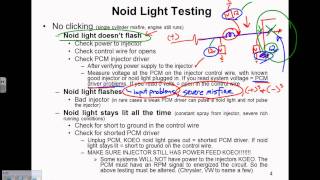
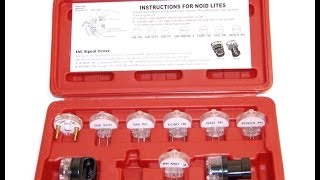
- A simple 'noid light' test can quickly tell you if the problem is the injector or the wiring/computer.
- Do not immediately replace the spark plug or ignition coil; this code points specifically to a fuel circuit issue.
- Driving with this code can lead to catalytic converter damage, so it's best to address it promptly.
What's Unique About the 2013-2016 Dodge Dart
The 2.4L MultiAir engine is used across many Dodge, Jeep, and Chrysler vehicles. For the Dodge Dart, there are no widely documented, unique design flaws like the wiring-in-gasket issues seen on older Dodge V8 trucks. The most common failure point leading to a P0204 code on this platform is simply a faulty fuel injector. However, a critical characteristic of the 2.4L MultiAir engine is its known tendency for high oil consumption. Low or dirty engine oil can starve the MultiAir valve actuation system, leading to misfires, rough idle, and stalling—symptoms that are nearly identical to a bad fuel injector. Therefore, checking the oil level is the most important first step before diagnosing a P0204 on this engine.
Symptoms You May Notice
- Check Engine Light is on
- Rough or unstable idle
- Engine misfire, which may feel like shaking or stumbling
- Hesitation or lack of power during acceleration
- Reduced fuel economy
- Strong smell of raw gasoline, especially if the injector is leaking
- Hard starting or long crank times if the injector is leaking fuel into the cylinder after shutdown
- Transmission-related issues such as a 1-2 upshift clunk or bump, or a 4-5 upshift clunk, as noted in some manufacturer records associated with this code
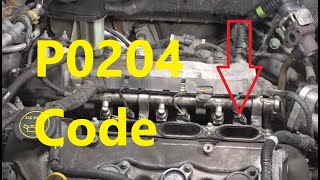
- Replacing the spark plug or ignition coil for cylinder 4. While these parts can cause a misfire (P0304), they will not cause an injector circuit code (P0204). Always diagnose the specific code that is present. 🎬 Watch: Understanding the common causes and fixes for P0204.
- Assuming a fuel injector fault when the engine oil level is low. On the 2.4L MultiAir, low oil can cause the valve actuation system to malfunction, creating identical symptoms like misfiring and rough idle. Always check the oil level first.
Most Likely Causes
- Failed Cylinder 4 Fuel Injector 🔴 High Probability → Shop Fuel Injector Fuel injectors are a known common failure item on this generation of Dodge Dart.
How to confirm: After confirming a signal with a noid light, swap the cylinder 4 injector with another cylinder (e.g., cylinder 3). Clear the codes and drive the vehicle. If the code changes to P0203, the injector is faulty. Alternatively, measure the injector's resistance with a multimeter; it should be between 11-16 ohms, with a more precise OEM spec of 12 ohms. A good injector should also measure within 0.5 ohms of the other injectors on the engine. A reading of infinity (open) or zero (short) indicates a failed injector.
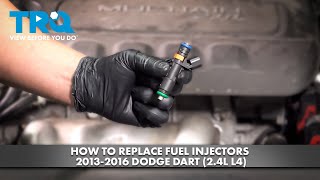
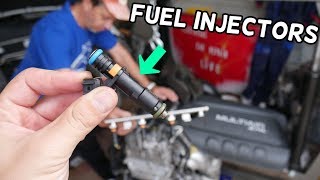
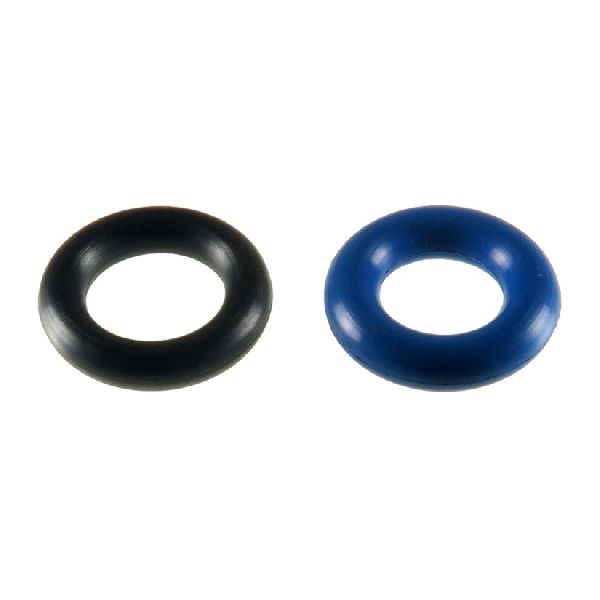
Typical fix: Replace the faulty fuel injector. It is often recommended to replace all four injectors as a set on higher mileage vehicles to ensure balanced fuel delivery. Always use new O-rings lubricated with clean engine oil during installation.
Est. part cost: $40-$200 - Wiring Harness or Connector Issue 🟡 Medium Probability Engine heat and vibration can cause wiring to become brittle or insulation to chafe over time, leading to shorts or open circuits. Common chafe points on vehicles include where harnesses are secured by clips or rub against sharp edges of brackets or the engine itself. Manufacturer TSB Bulletin #9002688 advises technicians to ensure that the wiring loom or the connector in the valve cover gasket is not the root cause before replacing injectors for circuit codes.
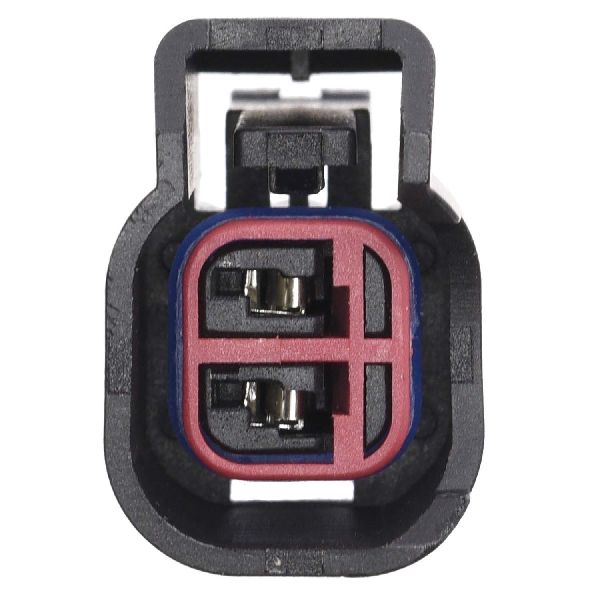
How to confirm: Perform a 'noid light' test on the cylinder 4 injector connector. If the light does not flash when the engine is cranked, there is no signal from the PCM. Visually inspect the wiring harness leading to the injector for any signs of chafing, melting, or corrosion, paying close attention to where the harness may contact other engine components. Check the connector for bent, corroded, or pushed-out pins.
Typical fix: Repair the damaged section of wiring or clean/replace the electrical connector pigtail.
Est. part cost: $10-$50 - Faulty Powertrain Control Module (PCM) ⚪ Low Probability → Shop Engine Control Module (ECM)
How to confirm: This is a diagnosis of exclusion. If the fuel injector and the wiring harness (including continuity back to the PCM connector) have both been tested and confirmed to be good, the fault lies with the PCM's internal injector driver circuit. An oscilloscope can definitively confirm this by showing a lack of the pulsed ground signal at the PCM output pin. TSB Bulletin #1810216 notes that P0204 can sometimes appear alongside P0606 (Internal Control Processor), which may point toward a module-level failure.
Typical fix: The PCM must be repaired by a specialist or replaced and programmed to the vehicle.
Est. part cost: $200-$900
Diagnosis Steps
- Check Engine Oil Level. Before any other diagnosis, verify the engine oil is full and clean. Low oil levels are a known issue on the 2.4L MultiAir engine and can cause misfires and rough running that mimic injector problems.
- Connect an OBD-II scanner and confirm that P0204 is the active code. Note any other codes, such as P0304.
- Visually inspect the wiring harness and connector for cylinder 4's fuel injector. Look for obvious signs of damage, such as melted plastic, frayed wires, or corrosion.
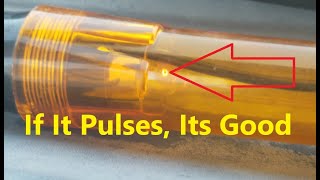
- Disconnect the injector and plug a 'noid light' into the harness connector. Crank the engine. The noid light should flash steadily. If it does, the wiring and PCM are likely okay, and the injector is the prime suspect. If it does not flash, the problem is in the wiring or PCM.
- If the noid light test passed, test the injector. Use a multimeter set to Ohms to measure the electrical resistance across the two pins on the injector. A typical reading should be between 11 and 16 ohms. A reading far outside this range (like 0 ohms or infinite/OL) indicates a failed injector.
- For definitive proof, swap the cylinder 4 fuel injector with an adjacent one (e.g., cylinder 3). Clear the codes and run the engine. If the code returns as P0203, the injector is confirmed to be faulty. If P0204 returns, the issue is in the wiring or PCM.
- If the noid light test failed, use a multimeter to check for continuity on the two wires between the injector connector and the PCM connector to rule out a broken wire.
Parts You'll Likely Need
- Fuel Injector
(OEM #4593986AB)— This is the most common cause of a P0204 code on the 2.4L Dodge Dart.
Trusted brands: Mopar, VDO, Standard Motor Products (SMP), GB Remanufacturing, TRQ
OEM price range: $130-$200
Aftermarket price range: $40-$80
Related Codes That Often Appear With This One
- P0304 — P0304 means 'Cylinder 4 Misfire Detected.' Since P0204 indicates a fuel delivery circuit problem for cylinder 4, the cylinder cannot fire correctly, which directly causes a misfire.
- P0108 & P113E — According to TSB Bulletin #1810216, P0204 may appear in conjunction with Manifold Absolute Pressure and O2 sensor slow response codes during certain failure modes.
Technical Service Bulletins (TSBs) & Recalls
- TSB 18-034-16: A PCM software update for 2016 models with the 2.4L engine that addresses various DTCs and could improve overall engine management and performance. This may be a relevant step if diagnostics on the injector and wiring are inconclusive.
- TSB Bulletin #9002688: Highlights that for injector circuit codes P0201 through P0206, technicians should verify the integrity of the wiring loom and connectors within the valve cover gasket area before replacing the fuel injectors.
- TSB Bulletin #1810216: Notes that P0204 (Fuel Injector 4 Circuit/Open) can be accompanied by internal control processor codes and specific transmission shift clunks or bumps.
Mechanic-Grade Diagnostic Values
- Fuel Injector Coil Resistance — expected: 11-16 Ohms, with a specific OEM target of 12 Ohms.. Failure: A reading of infinite/OL (Open) or near zero (Short) indicates a failed injector coil.
- Injector Pulse Width (Live Scan Data) — expected: 2 to 4 milliseconds (ms) at idle, increasing to 15-18 ms at wide-open throttle.. Failure: A value that is zero or does not change with engine RPM/load suggests a command or circuit issue.
- Injector Control Circuit Voltage (Oscilloscope) — expected: A pulsed waveform. When the injector is off, the circuit shows battery voltage (~12V). When the PCM commands it on, the voltage is pulled to ground (~0V).. Failure: No voltage pulse, or voltage stuck at 12V or 0V, indicates a wiring or PCM driver fault.
- Injector Inductive Kick (Oscilloscope) — expected: A sharp voltage spike of 60 to 80 volts immediately after the PCM turns the injector off.. Failure: Absence of this voltage spike is what the PCM primarily uses to detect an open circuit and set code P0204.
- Injector Low Side Voltage (Fault Condition) — expected: Voltage should be above 4.0V when the injector is in the 'Off' state.. Failure: If the PCM sees a voltage less than 4.0V on the control side when the injector should be off, it interprets this as a short to ground or an open injector coil and sets the code.
Scan Tool Commands That Help
- Chrysler Witech or equivalent professional scanner: Injector Kill Test — This bidirectional function allows a technician to disable individual injectors one at a time while the engine is running. If disabling cylinder 4 has no effect on the engine's idle, it confirms that cylinder is not contributing, pointing towards a problem in that circuit.
- Professional Scan Tool: Fuel Injector Balance Test — This test pulses each injector for a set duration and measures the corresponding drop in fuel rail pressure. While P0204 is an electrical code, if the circuit tests good, a balance test can identify a mechanically faulty (clogged) injector that might be causing related drivability issues.
Wiring & Ground Locations
- PCM Location — Bolted to the vehicle body in the left front of the engine compartment, near the battery.. This is the source of the control signal for the fuel injector. All wiring tests for the injector circuit will terminate at the PCM's connectors.
- PCM Power Fuses — In the under-hood fuse box, identified as fuses F11, F16, F18, and F24.. A blown fuse supplying power to the PCM or its driver circuits can cause a P0204 and other codes. These should be checked early in the diagnostic process.
- Injector #4 Driver Pin (PCM) — Varies by specific PCM/harness. One common Chrysler pinout shows it as Pin 16 on a 40-pin connector, with a Light Blue/Brown wire. Another for a similar 2.4L application shows it as Pin 24, also with a Light Blue/Brown wire. A Jeep with the same engine family uses a Brown/Light Green wire.. This is the specific pin on the PCM that provides the pulsed ground to fire the #4 injector. A continuity test must be performed from this pin to the injector connector to rule out a broken wire. Always verify with a vehicle-specific diagram.
- Injector Power Supply Wire — At the fuel injector connector. This wire provides constant battery voltage when the key is on.. This is the power feed for the injector coil. It is typically a shared power wire for multiple injectors (e.g., Pink/Tan wire). A noid light test failing to illuminate could be due to a lack of power on this wire, pointing to a fuse or relay issue upstream.
- Main Engine/Chassis Grounds (G100/G102) — On the driver's side frame rail in the engine compartment, often near or under the battery tray.. While not specific to one injector, a corroded or loose main ground is a known issue on the Dart platform and can cause a wide range of erratic electrical problems, including false sensor readings and module faults. Cleaning these grounds is a good preventative and diagnostic step.
OEM Part Supersession History
4593986AA→4593986AB— Standard part revision and update by the manufacturer.
Diagnostic Flowchart
Used vs. New Parts: Buying Guide for This Vehicle
When a used part is the smart pick: For a DIY repair on a budget, a used OEM fuel injector from a reputable salvage yard is a viable option. Given that the part is relatively easy to access and swap, the financial risk is low if the used part fails prematurely.
Donor-vehicle mileage cap: roughly under 80000 miles for the part to have meaningful remaining life.
What to inspect on the donor part:
- Look for a donor vehicle with verifiable low mileage (under 80k miles is ideal).
- Inspect the injector's electrical connector for any signs of corrosion, cracks, or heat damage.
- Ensure the plastic body of the injector is not cracked or showing signs of heat stress.
- Ask the seller if they offer a short-term warranty (e.g., 30-90 days) against DOA parts.
OEM-only on this vehicle (don't cheap out):
- Powertrain Control Module (PCM) - Due to the need for VIN-specific programming, a new or professionally remanufactured and programmed unit from Mopar or a specialist is required.
Aftermarket brands forum-validated for this vehicle:
- VDO (often the OEM supplier)
- Standard Motor Products (SMP)
- TRQ
Brands owners have reported issues with on this vehicle:
- Unbranded, no-name injectors from online marketplaces should be avoided, as flow rates and reliability can be inconsistent, leading to performance issues.
Real Owner Stories
Aggregated from forums and TSBs cited above. Mileages and costs reflect what owners reported in those sources.
2013-2016 Dodge Dart 2.4L
Symptoms: engine stalling and running issues
What fixed it: The cause was traced to the wiring going to the fuel injectors, which required repair.
Source hint: reddit.com/r/dodgedart
2013-2016 Dodge Dart 2.4L
Symptoms: drivability issues like stalling and misfiring
What fixed it: The problem was resolved by correcting a low engine oil level, which was causing the symptoms before the fuel injector was determined to be at fault.
Source hint: Various owner forums (Jeep, Chrysler) and repair sites for vehicles with the 2.4L MultiAir engine
Related OBD-II Codes
Frequently Asked Questions
My Dart is running rough, but I'm not sure it's the injector. What's the first thing I should check on this specific 2.4L MultiAir engine?
Is P0204 a common problem on the 2013-2016 Dodge Dart 2.4L?
I'm testing the fuel injector on my 2015 Dart. What resistance reading should I look for?
I have a 2016 Dart with a P0204 code. Is there a software update that could help?
If I have to replace the cylinder 4 injector, should I replace all of them at the same time?
My mechanic thinks the PCM is the problem. How likely is that?
I'm looking at other cars with the same 2.4L engine. Do they have this same P0204 issue?
Helpful Videos
We Have This Part in Stock



The information in this article is provided for general reference and educational purposes only. Vehicle specifications, procedures, and part compatibility can vary by production date, trim level, and region. Always consult your vehicle's factory service manual and verify part numbers before purchasing or performing repairs. Safety-critical components such as airbags, seat belts, and braking systems should be installed by a qualified professional.
- Dodge Dart:
- 🧭 Diagnostic Flowchart
- 🎬 Helpful Videos
- 🛍️ Shop This Part
- What's Unique About the 2013-2016 Dodge Dart
- Symptoms You May Notice
- Most Likely Causes
- Diagnosis Steps
- Parts You'll Likely Need
- Related Codes That Often Appear With This One
- Technical Service Bulletins (TSBs) & Recalls
- Mechanic-Grade Diagnostic Values
- Scan Tool Commands That Help
- Wiring & Ground Locations
- OEM Part Supersession History
- Used vs. New Parts: Buying Guide for This Vehicle
- Real Owner Stories
- 2013-2016 Dodge Dart 2.4L
- 2013-2016 Dodge Dart 2.4L
- Related OBD-II Codes
- Frequently Asked Questions
- 🎟️ Get 5% Off