

P0204 on 2016-2019 Ford Explorer 2.3L: Injector Circuit Malfunction Causes and Fixes
P0204 on a 2016-2019 Ford Explorer 2.3L EcoBoost means there's an electrical fault in the cylinder 4 fuel injector circuit. The most likely causes are a failed fuel injector or a wiring problem. Expect to pay $65-$95 for a new Motorcraft injector.
- P0204 is an electrical circuit code for the #4 fuel injector, not a misfire code, though it will cause a misfire (P0304).
- The most likely culprit is a failed fuel injector, which can be confirmed by testing its resistance with a multimeter.
- Before replacing the injector, always check the wiring and connector for damage and use a noid light to ensure the PCM is sending a signal.
- On the 2.3L EcoBoost engine, cylinder 4 is the one at the back of the engine, closest to the firewall.
- Do not waste money on spark plugs or ignition coils to fix a P0204 code; the problem is in the fuel injector circuit.
What's Unique About the 2016-2019 Ford Explorer
The 2016-2019 Explorer uses a 2.3L EcoBoost engine with Gasoline Direct Injection (GDI). Unlike traditional port injection, GDI injectors are high-pressure components that spray fuel directly into the combustion chamber. This makes them more precise but also more sensitive to electrical issues. While issues like carbon buildup are common on GDI engines and can cause misfires, the P0204 code points specifically to an electrical circuit failure, not a mechanical blockage. Diagnosis requires electrical testing, not just swapping parts like spark plugs.
Symptoms You May Notice
- Check Engine Light is on (may be flashing in severe cases)
- Engine runs rough and shakes, especially at idle
- Noticeable loss of power and sluggish acceleration
- Engine misfire, which may feel like a stumble or hesitation
- Reduced fuel economy
- Strong fuel smell from the exhaust
- Hard starting or stalling
- Replacing the spark plug or ignition coil on cylinder 4. While these parts can cause a misfire (P0304), they will not cause an injector *circuit* code like P0204. The code P0204 is specifically for an electrical fault in the injector circuit, not a combustion or ignition problem.
Most Likely Causes
- Failed Fuel Injector 🔴 High Probability → Shop Fuel Injector Fuel injectors can fail electrically over time due to internal coil windings breaking (open circuit) or shorting out from heat cycles and vibration. This is a common failure point for this specific code.
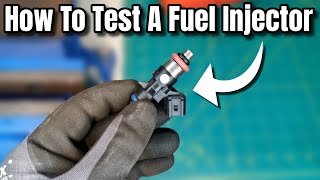
How to confirm: Disconnect the injector and measure its resistance with a multimeter. 🎬 Watch: 5 simple DIY methods to test your fuel injectors. A healthy injector will have a specific resistance (typically 11-14 ohms, but check service manual for exact spec). An infinite reading means an open circuit, and a near-zero reading means a short circuit. Compare the reading from cylinder 4 to a known-good cylinder.
Typical fix: Replace the faulty fuel injector. It is often recommended to replace all four injectors at the same time 🎬 Watch this step-by-step guide to replacing 2.3L EcoBoost fuel injectors. on a high-mileage GDI engine to ensure balanced flow.
Est. part cost: $65-$95 for one OEM injector. - Wiring Harness or Connector Issue 🟡 Medium Probability The engine wiring harness is exposed to heat, vibration, and environmental factors that can cause wires to chafe, break, or corrode over time. A common scenario involves the harness being pinched or damaged during other repairs near the engine. The connector itself can also become loose, have its pins back out, or develop corrosion.
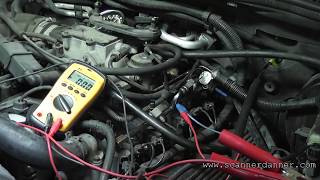
How to confirm: Visually inspect the wiring going to the cylinder 4 injector for any signs of damage, melting, or corrosion. Unplug the connector and check for bent, loose, or corroded pins. Use a 'noid light' to verify that the PCM is sending a pulse signal 🎬 See how to test an injector circuit with basic tools. to the connector. A 'wiggle test' on the harness while the engine is running can sometimes reveal an intermittent connection.
Typical fix: Repair the damaged section of wire or replace the injector connector pigtail if the connector is damaged.
Est. part cost: $15-$40 for a connector pigtail. - Powertrain Control Module (PCM) Failure ⚪ Low Probability → Shop Engine Control Module (ECM) While rare, the internal driver circuit within the PCM that controls the injector can fail due to heat-related stress or internal shorts. This is much less common than an injector or wiring fault.
How to confirm: This is a diagnosis of last resort. If the fuel injector and the wiring (including continuity and checks for shorts to power/ground) between the injector and the PCM have both been tested and are confirmed to be good, the fault lies with the PCM.
Typical fix: Replace and reprogram the Powertrain Control Module.
Est. part cost: $600-$1200
Diagnosis Steps
- Confirm the presence of the P0204 code using an OBD-II scanner. Note any other codes present, such as P0304.
- Locate cylinder 4. On the 2.3L EcoBoost, it is the cylinder closest to the firewall/transmission.
- Perform a thorough visual inspection of the wiring harness and connector for the cylinder 4 fuel injector. Look for any obvious signs of damage, such as chafing, melting, rodent damage, or corrosion.
- Check for a signal at the injector connector. Disconnect the harness and plug in a noid light. Start the engine; a flashing noid light indicates the PCM is sending a signal. If it does not flash, there is a problem with the wiring or the PCM.
- If the noid light flashes, the problem is likely the injector itself. Turn off the vehicle and disconnect the injector.
- Measure the resistance of the fuel injector's two electrical pins using a multimeter set to ohms. Compare the reading to the specification in the service manual (typically 11-14 ohms) or to a reading from an adjacent, working injector. A reading that is significantly different (very high/infinite for an open, or near-zero for a short) confirms a bad injector.
- If the noid light did not flash, check for continuity on the two wires running from the injector connector back to the PCM. Also check for shorts to ground or voltage on the signal wire.
- If all wiring and the injector test good, the fault may be a rare failure of the injector driver inside the PCM.
Parts You'll Likely Need
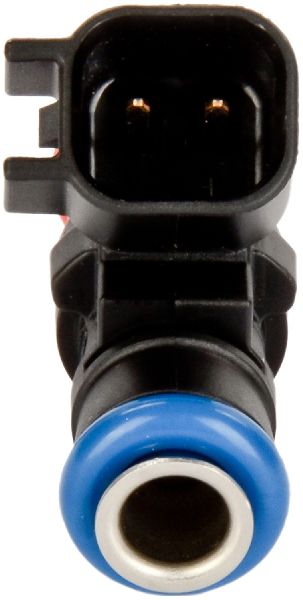
- Fuel Injector
(OEM #CM-5279)— This is the most common cause of a P0204 circuit code, indicating an internal electrical failure of the injector.
Trusted brands: Motorcraft, Bosch
OEM price range: $65-$95
Aftermarket price range: $45-$75 - Fuel Injector Connector Pigtail
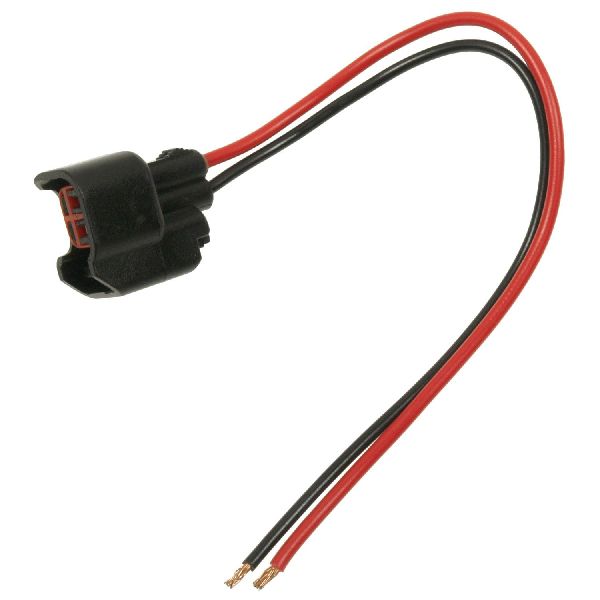
(OEM #WPT-1262 (Motorcraft))— If the electrical connector or the wiring immediately attached to it is damaged or corroded, replacing the pigtail is the standard repair.
Trusted brands: Motorcraft, Standard Motor Products
OEM price range: $25-$40
Aftermarket price range: $15-$25
Related Codes That Often Appear With This One
- P0304 — P0304 means 'Cylinder 4 Misfire Detected.' Since P0204 indicates the fuel injector for cylinder 4 isn't working electrically, that cylinder cannot get fuel to combust, which guarantees a misfire will be detected.
- P0300 — This code for 'Random/Multiple Cylinder Misfire' may appear if the electrical issue is intermittent or if a wiring problem is affecting other injectors as well.
- P0316 — This code indicates a 'Misfire Detected on Startup (First 1000 Revolutions)' and is often logged alongside a specific cylinder misfire code like P0304.
Platform-Specific Known Issues
- Pinched Harness During Transmission Service: In some cases, the engine wiring harness can be inadvertently pinched between the engine and transmission during major service like a transmission replacement. This can damage the injector control wires, leading to an open or short circuit and a P0204 code.
Technical Service Bulletins (TSBs) & Recalls
- Bulletin #SSM 49759: This manufacturer bulletin notes that there may be an illuminated malfunction indicator lamp (MIL) with diagnostic trouble codes P0201, P0202, P0203, P0204, P0205 or P0206, and advises following appropriate Pinpoint Tests in the Powertrain Control/Emissions Diagnosis Manual.
- Bulletin #TSB 16-0163: A manufacturer service bulletin describes an illuminated MIL with various drivability issues and one or more DTCs ranging from P0201-P0204, along with misfire codes P0300-P0304 and P0316.
Mechanic-Grade Diagnostic Values
- Fuel Injector Coil Resistance (GDI) — expected: 1 to 2 ohms. Failure: A reading of infinite ohms (open circuit) or near-zero (short circuit). Note: This is much lower than traditional port injectors (10-18 ohms).
- Injector Power Supply Voltage — expected: Approximately 12V (Battery Voltage) with Key On, Engine Off. Failure: No voltage at the power supply pin of the injector connector points to a problem with the fuse, relay, or power feed wiring.
- Injector Driver Signal (via Oscilloscope) — expected: Clean square wave pulse from 0V to ~12V during engine operation. Pulse width typically 1-10 ms depending on load.. Failure: No pulse, a noisy waveform, or a signal that is stuck high or low indicates a wiring or PCM driver fault.
- Ground Path Resistance — expected: Less than 0.1 ohm. Failure: Higher resistance indicates a poor ground connection, which can cause a variety of electrical issues.
Scan Tool Commands That Help
- Ford IDS (Integrated Diagnostic System): Power Balance Test — This bidirectional test allows a technician to command each cylinder off one by one while monitoring the RPM drop. If disabling cylinder 4 results in no change to engine RPM, it confirms that cylinder 4 was not contributing, which is expected with a P0204. This helps verify the fault location before disassembly.
- Professional OBD-II Scanner: Mode $06 — Mode $06 can provide access to non-continuous monitor test results, which may include data on injector circuit checks. This can sometimes reveal intermittent issues or faults that haven't yet matured into a hard code.
Wiring & Ground Locations
- C1551E — The topmost plug on the Powertrain Control Module (PCM).. This connector contains the pins for the fuel injector control circuits. The control wire for the cylinder 4 injector can be tested for continuity at this connector.
- Injector 4 Control Wire — Pin 42 at PCM connector C1551E (based on similar 2.3L EcoBoost wiring).. This is the specific pin on the PCM that sends the ground pulse to fire the cylinder 4 injector. Testing continuity from this pin to the injector connector is a definitive way to check the control wire.
- Main Engine/Chassis Grounds — Key ground points are located on the frame rail near the battery, from the block to the chassis (often near a motor mount), and on the inner fenders near the brake master cylinder and fuse box.. A poor engine or PCM ground can cause erratic voltage and trigger false circuit codes. While not the most common cause for a single injector code, verifying major grounds are clean and tight is a crucial step if direct circuit tests are inconclusive.
Real Owner Repair Stories
- Ford F-150 Forum (Ford F-150 with 2.7L EcoBoost (similar GDI system)) — P0204 code, rough running.
❌ Tried (didn't work) Swapping fuel injectors, Swapping ignition coils, Checking for signal with a noid light (it flashed)
✅ What actually fixed it The wiring harness had been pinched between the engine and transmission during a recent transmission reinstallation, causing an intermittent short in the cylinder 4 injector wire. Repairing the damaged wire resolved the code. - NHTSA ODI #10405277: An owner reported that their vehicle stalled on the highway with codes P0201, P0202, P0203, and P0204. A dealer checked the electrical connections and reassembled the components, though the issue recurred later.
OEM Part Supersession History
EJ7Z-9F593-A, EJ7Z-9F593-B, EJ7Z-9F593-C, CM-5232, CM-5251→CM-5279— Standard part evolution, likely for improved reliability or manufacturing process changes.
Heads up: CM-5279 is the current correct service part for the specified vehicle range and is backward compatible with the older numbers.
Diagnostic Flowchart
Other Known Issues on This Vehicle
Issues unrelated to this code that are worth knowing about as an owner of this generation:
- Coolant Intrusion into Cylinders 🔴 High — A widely documented issue, particularly with cylinder head design on some 2.3L EcoBoost engines. Can occur at various mileages, sometimes under 100k miles. (Ref: While no direct recall exists for the Explorer, this issue is part of a class-action lawsuit and has related TSBs for other models. Ford's TSB 21-2350 addresses this for some Focus/Escape models, indicating awareness of the problem.)
- Power Transfer Unit (PTU) Failure 🔴 High — Common on AWD models. The PTU fluid overheats due to proximity to the exhaust and lack of a drain plug from the factory, leading to gear oil breakdown and failure, often before 100,000 miles. (Ref: No recall, but it's a well-known failure. Symptoms include a grinding noise or a strong, propane-like smell from burning gear oil. Preventative maintenance (adding a drain plug, frequent fluid changes) is the only owner recourse.)
- Intake Valve Carbon Buildup 🟠 Medium — Inherent to all GDI engines, including the 2.3L EcoBoost. Becomes noticeable with rough idle, hesitation, and reduced fuel economy, typically after 50,000-80,000 miles. (Ref: No TSB or recall as it's considered a maintenance issue. The only effective cleaning method is walnut shell media blasting, as chemical cleaners are not recommended by Ford.)
- Internal Water Pump Failure (3.5L V6 specific, but relevant context) 🔴 High — This is a notorious issue on the V6 Explorer engines where the water pump is internal and chain-driven. While the 2.3L EcoBoost has an external water pump and is not affected by this specific design flaw, it's a major issue for the platform that buyers often confuse. (Ref: None, but it's a major repair cost driver for the V6 models of the same generation.)
- Turbocharger Failure 🟠 Medium — More common on earlier 2015-2017 models. Failures can be caused by oil coking or bearing wear. Symptoms include loss of power, whistling noises, and smoke from the exhaust.
Used vs. New Parts: Buying Guide for This Vehicle
When a used part is the smart pick: A used wiring harness or connector pigtail from a junkyard can be a cost-effective solution if the original is damaged, provided the donor part is in excellent physical condition with no corrosion or brittleness.
Donor-vehicle mileage cap: roughly under 80000 miles for the part to have meaningful remaining life.
What to inspect on the donor part:
- For wiring: Check for flexibility (not stiff or brittle), intact insulation with no cracks or exposed copper, and clean connector pins.
- For injectors: Visually inspect for cracks in the plastic body and ensure the nozzle tip is not heavily carboned or damaged. However, internal electrical condition cannot be visually verified.
- Verify the donor vehicle was not in a front-end collision that could have stressed the engine harness.
OEM-only on this vehicle (don't cheap out):
- Fuel Injector: Due to the high pressures and precise nature of GDI injectors, using a new OEM (Motorcraft) or reputable OE supplier (Bosch) injector is strongly recommended. Remanufactured or used injectors carry a higher risk of incorrect flow rates or premature failure.
Aftermarket brands forum-validated for this vehicle:
- Bosch (often the OE manufacturer for Ford)
- Motorcraft (Ford's OEM parts brand)
Brands owners have reported issues with on this vehicle:
- Unnamed, no-brand injectors from online marketplaces should be avoided due to inconsistent quality control, which can lead to poor performance and potential engine damage.
Real Owner Stories
Aggregated from forums and TSBs cited above. Mileages and costs reflect what owners reported in those sources.
Ford F-150 (Platform Mate)
Symptoms: P0204 code appeared following a major repair.
What fixed it: Traced the issue to a pinched wiring harness that occurred during a transmission reinstallation.
Source hint: Ford F150 Forum
2016-2019 Ford Explorer 2.3L EcoBoost
Symptoms: Rough idle and acceleration issues.
What fixed it: Replacing fuel system components like injectors after ruling out spark plugs and ignition coils.
Source hint: reddit.com/r/FordExplorer
Ford Fusion (Cross-Model Reference)
Symptoms: Vehicle stalled on the highway with codes P0010, P0201, P0202, P0203, and P0204.
What fixed it: Traced to electrical connections; the dealer checked and reassembled the connections, though the issue was reported to have recurred (NHTSA ODI #10405277).
Source hint: NHTSA ODI #10405277
Related OBD-II Codes
Frequently Asked Questions
Where is cylinder 4 located on my 2.3L EcoBoost Explorer?
Can a recent transmission service cause a P0204 code on my Ford Explorer?
What is the typical resistance for a healthy fuel injector on this engine?
Is there a TSB for the coolant intrusion issue mentioned in the context?
Should I replace just the cylinder 4 injector or all of them?
What are the symptoms of carbon buildup on the 2.3L EcoBoost?
Helpful Videos

We Have This Part in Stock


The information in this article is provided for general reference and educational purposes only. Vehicle specifications, procedures, and part compatibility can vary by production date, trim level, and region. Always consult your vehicle's factory service manual and verify part numbers before purchasing or performing repairs. Safety-critical components such as airbags, seat belts, and braking systems should be installed by a qualified professional.
- Ford Explorer:
- 🧭 Diagnostic Flowchart
- 🎬 Helpful Videos
- 🛍️ Shop This Part
- What's Unique About the 2016-2019 Ford Explorer
- Symptoms You May Notice
- Most Likely Causes
- Diagnosis Steps
- Parts You'll Likely Need
- Related Codes That Often Appear With This One
- Platform-Specific Known Issues
- Technical Service Bulletins (TSBs) & Recalls
- Mechanic-Grade Diagnostic Values
- Scan Tool Commands That Help
- Wiring & Ground Locations
- Real Owner Repair Stories
- OEM Part Supersession History
- Other Known Issues on This Vehicle
- Used vs. New Parts: Buying Guide for This Vehicle
- Real Owner Stories
- Ford F-150 (Platform Mate)
- 2016-2019 Ford Explorer 2.3L EcoBoost
- Ford Fusion (Cross-Model Reference)
- Related OBD-II Codes
- Frequently Asked Questions
- 🎟️ Get 5% Off