

P0204 on 2011-2014 Ford Mustang 3.7L V6: Injector Circuit Causes and Fixes
This code means there's an electrical problem with the fuel injector in cylinder #4. The most common fix is replacing the faulty fuel injector, which costs about $40-$90 for the part. Before replacing, check the wiring for damage and use a noid light to confirm the injector is the problem.
- P0204 on your Mustang points to an electrical fault with the cylinder 4 fuel injector, not a spark or ignition problem.
- Cylinder 4 is the easiest to access on the driver's side, located at the very front of the engine.
- The most likely cause is a bad fuel injector, which can be confirmed by swapping it with a neighboring injector or by testing its resistance (should be 11-18 ohms).
- Before buying parts, always inspect the wiring harness for damage and test for a signal at the connector with a noid light.
What's Unique About the 2011-2014 Ford Mustang
On the 3.7L V6 Mustang, the engine is mounted longitudinally (front to back). Cylinder #4 is the front-most cylinder on the driver's side (Bank 2) of the engine, making it relatively accessible for inspection and testing. While there are no widespread, documented issues specific to this platform, owner experiences suggest that rodent damage to the injector wiring harness can be a cause, due to the engine bay layout. One forum user noted the factory wiring insulation can become brittle from heat cycles, leading to shorts or breaks in the conductor wire inside the insulation.
Symptoms You May Notice
- Check Engine Light is on
- Rough, shaking, or stumbling idle.
- Noticeable loss of engine power and poor acceleration.
- Engine hesitation, especially under load.
- Decreased fuel economy.
- A raw fuel smell from the exhaust if the injector is stuck open.
- Engine may be hard to start.
- Replacing the spark plug or ignition coil on cylinder 4. While these parts can cause a misfire (P0304), they will not cause an injector circuit code (P0204), which is specifically an electrical fault.
Most Likely Causes
- Faulty Cylinder 4 Fuel Injector 🔴 High Probability → Shop Fuel Injector Injectors on the 3.7L Cyclone engine family are known to fail internally. The fine wire coil inside the injector can break, creating an open circuit. This failure is often temperature-sensitive, appearing when the engine is cold and sometimes disappearing once it warms up.
How to confirm: With the engine cold, unplug the injector and test its resistance with a multimeter. A good injector should read between 11-18 ohms. An infinite reading ('O.L.') confirms an open circuit. Alternatively, swap the cylinder 4 injector with an adjacent one (like cylinder 5). Clear the codes and run the engine. If the code changes to P0205, the injector is confirmed to be faulty.
Typical fix: Replace the faulty fuel injector. It is often recommended to replace all six injectors as a set if they are high-mileage, but it is not strictly necessary.
Est. part cost: $40-$90 for a single Motorcraft injector. - Damaged Wiring Harness or Connector 🟡 Medium Probability Wiring in the engine bay is exposed to heat and vibration. The plastic loom and wire insulation can become brittle over time. Rodents have also been known to chew through the injector wiring on these cars. A Reddit user with a similar Ford V6 traced P0204 and P0304 to an exposed section of wire that was shorting.
How to confirm: Visually inspect the wiring harness leading to the cylinder 4 injector for any signs of chafing, melting, corrosion, or breaks. Use a noid light at the injector connector; if the light does not flash when the engine is cranked, the problem is in the wiring or PCM.
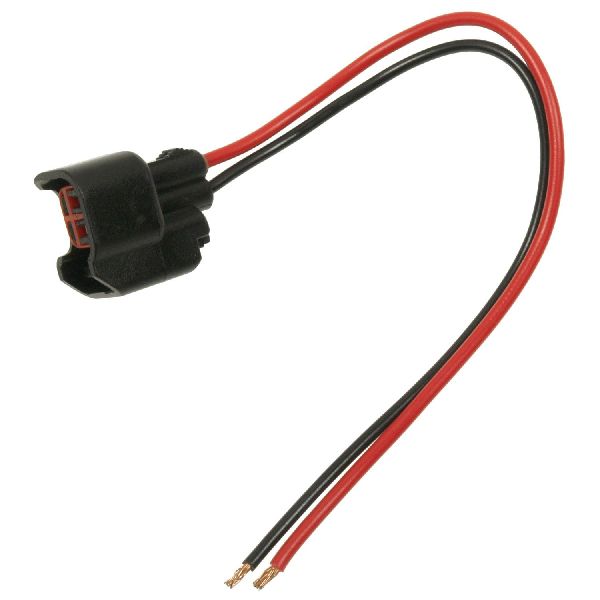
Typical fix: Repair the damaged section of the wire or replace the connector pigtail. The correct Motorcraft pigtail is WPT-1051.
Est. part cost: $10-$35 for a connector pigtail or wire repair supplies. - Loose or Corroded Injector Connector ⚪ Low Probability
How to confirm: Wiggle the connector at the fuel injector while the engine is running to see if it causes the misfire to change. Unplug the connector and inspect the pins for green or white corrosion or damage. Ensure the locking tab clicks securely into place.
Typical fix: Clean the connector terminals with electrical contact cleaner and apply dielectric grease. If the locking tab is broken, replace the connector pigtail (Motorcraft WPT-1051).
Est. part cost: $0-$35
Rare But Worth Checking
- Faulty Powertrain Control Module (PCM): → Shop Engine Control Module (ECM) This is the least likely cause. The internal driver circuit for the injector can fail. This should only be considered after the injector and wiring have been definitively ruled out as the cause.
Technical Service Bulletins (TSBs) & Recalls
- Bulletin #SSM 49759: A manufacturer service bulletin notes that there may be an illuminated malfunction indicator lamp (MIL) with diagnostic trouble codes including P0204. It advises following appropriate Pinpoint Tests in the Powertrain Control/Emissions Diagnosis Manual.
- Bulletin #TSB 16-0163: This bulletin describes an illuminated MIL with various drivability issues and one or more DTCs, specifically including the range P0201-P0204.
Diagnosis Steps
- Confirm the code P0204 is present using an OBD-II scanner. Check for any other codes, especially P0304 (misfire) or P0174 (lean bank 2).
- Locate cylinder #4. On the 3.7L Mustang, this is the front-most cylinder on the driver's side (Bank 2).
- Visually inspect the electrical connector and wiring going to the fuel injector. Look for any obvious signs of damage, such as melted plastic, chafed wires, or rodent damage.
- Disconnect the injector and plug a 'noid light' into the harness connector. Crank the engine. The noid light should flash steadily.
- If the noid light flashes: The wiring and PCM are likely good. The problem is almost certainly the fuel injector itself. Proceed to step 7.
- If the noid light does NOT flash (or stays on solid): The problem is in the wiring harness or the PCM. Check for 12V power on one wire of the connector with the key on. Then, check the continuity of the signal (ground) wire from the injector connector back to the PCM.
- To confirm a bad injector (Method A - Resistance Test): With the engine off and connector unplugged, use a multimeter to measure the resistance across the two pins on the injector itself. A good injector will read between 11-18 ohms. A reading of infinity (O.L.) or close to zero indicates a failed injector.
- To confirm a bad injector (Method B - Injector Swap): Swap the cylinder 4 injector with the cylinder 5 injector (the middle one on the driver's side). Clear the codes, start the car, and see which code returns.
- If code P0205 appears, the faulty injector has moved to cylinder 5, and you need a new fuel injector.
- If code P0204 returns, the problem is not the injector and is an intermittent issue in the wiring that was missed in the initial inspection.
Parts You'll Likely Need
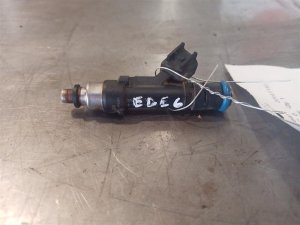
- Fuel Injector
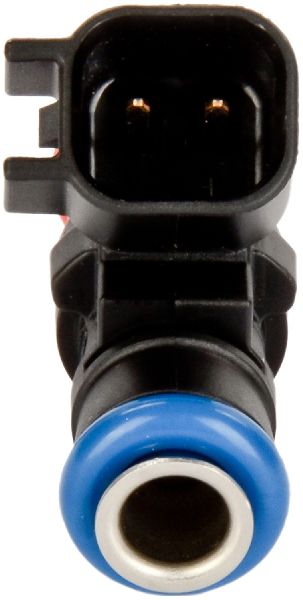
(OEM #Motorcraft CM-5188 (Service Part), BR3Z-9F593-A (Ford Part))— This is the most common cause of a P0204 code, due to an internal electrical failure of the injector's coil.
Trusted brands: Motorcraft, Bosch, Standard Motor Products, Walker
OEM price range: $70-$100
Aftermarket price range: $40-$75 - Fuel Injector Connector Pigtail
(OEM #Motorcraft WPT-1051)— Needed if the original connector or its locking tab is broken, or if wiring near the connector is damaged.
Trusted brands: Motorcraft, Standard Motor Products, Dorman
OEM price range: $25-$35
Aftermarket price range: $10-$20
Related Codes That Often Appear With This One
- P0304 — P0304 means 'Cylinder 4 Misfire Detected'. Since P0204 indicates a problem with the fuel supply to cylinder 4, a misfire is a direct and expected result.
- P0300 — This indicates a 'Random/Multiple Cylinder Misfire'. While less common, a severe issue with one injector can sometimes affect engine balance enough for the PCM to detect misfires on other cylinders.
- P0174 — This code means 'System Too Lean (Bank 2)'. Bank 2 is the driver's side bank (cylinders 4-5-6). If injector #4 isn't firing, that cylinder is pumping pure air into the exhaust. The Bank 2 oxygen sensor sees this excess oxygen and reports a lean condition for the entire bank.
Platform-Specific Known Issues
- Repair Story: Intermittent Wiring Short: A user on Reddit with a Ford V6 engine experienced intermittent P0204 and P0304 codes even after replacing the fuel injector. A mechanic ultimately traced the problem to an exposed section of wire in the harness that was shorting out, causing the circuit fault. This highlights the importance of thoroughly inspecting the wiring loom for damage that may not be immediately obvious.
Mechanic-Grade Diagnostic Values
- Injector Pulse Width at Idle (Warm Engine) — expected: 2.0 - 4.0 milliseconds (ms). Failure: A value of 0 ms or an erratic reading for cylinder 4 while other cylinders are stable points to a circuit fault or PCM driver issue.
- Injector Control Wire Voltage (Key On, Engine Off) — expected: ~12V (Battery Voltage). Failure: 0V on the control wire (when the power wire is confirmed good) points to an open circuit inside the fuel injector's coil.
- PCM Injector Driver Circuit Resistance to Ground (PCM disconnected) — expected: Greater than 10,000 Ohms (10 kΩ). Failure: A low resistance reading indicates a short to ground in the wiring harness.
- Injector #4 Wire Colors — expected: Power: Varies by year, often Red (RD). Control/Signal: Violet/Orange (VT-OG) at injector, connects to PCM.. Failure: N/A - for identification during testing.
Scan Tool Commands That Help
- Ford IDS (or FORScan): Power Balance Test — This is the most definitive bidirectional test. It graphically displays the power contribution of each cylinder. For a P0204, it will visually confirm a significant performance drop on cylinder 4, helping to isolate the issue from other potential misfires without disassembly.
- Ford IDS (or high-end bidirectional scanner): Injector Buzz Test / Actuator Activation — With the engine off, this command individually fires each injector, creating an audible click. If cylinder 4 is silent while others click (and a noid light confirms signal), it proves the injector itself is mechanically or electrically failed internally.
Wiring & Ground Locations
- G106 — On the 3.7L engine, this ground is located on the left (driver's) side of the engine.. This is a primary engine ground. A loose or corroded connection here can cause a host of intermittent electrical issues, including erratic sensor readings and injector circuit faults.
- G201 — Located on the passenger side kick panel, near the PCM.. This is a critical ground for the Powertrain Control Module (PCM). A fault at G201 can directly impact the PCM's ability to properly control and monitor the injector circuits, potentially causing a P0204 code.
- C175B — This is the main inline connector for the engine harness to the Powertrain Control Module (PCM).. The control wire for the cylinder 4 injector passes through this connector. When diagnosing a 'no-flash' on a noid light test, checking for continuity and pin integrity through C175B is a critical step to rule out a harness issue between the PCM and the engine.
Real Owner Repair Stories
- Car Talk Community Forum (2005 Jeep Liberty 3.7L (platform-mate engine)) — P0204 code and a rev-limiter-like cutout at 2000 RPM.
❌ Tried (didn't work) Replacing PCM, Swapping coils
✅ What actually fixed it The issue was traced to the alternator. When the alternator was disconnected, the engine would rev normally. Replacing the alternator with a known-good unit resolved the cutout issue. This suggests a faulty alternator can introduce electrical noise or voltage spikes that cause the PCM to incorrectly flag an injector circuit fault and engage a limp mode. - World Mechanics YouTube Channel (on a similar GM vehicle) (GM SUV with P0204) — Check Engine Light with P0204, engine misfiring.
❌ Tried (didn't work) Initial diagnosis pointed to a bad injector.
✅ What actually fixed it The wiring connector for the cylinder 4 injector was not fully seated because the metal retaining clip was missing. Pushing the connector on firmly and securing it with a new clip resolved the code. This highlights the importance of checking for simple mechanical connection issues. - NHTSA ODI #10405277: An owner reported that their vehicle stalled on the highway with codes P0010, P0201, P0202, P0203, and P0204. The dealer checked the electrical connections and reassembled them, but the issue recurred.
Model Year Variations Within This Range
- 2011-2014: The 2011 model year marked the introduction of the 3.7L Cyclone V6, replacing the previous 4.0L V6. All 2011-2014 models use this same engine and have functionally identical fuel systems and electronics related to this code. There are no significant year-to-year variations within this range that would affect the diagnosis or repair of P0204.
Diagnostic Flowchart
Other Known Issues on This Vehicle
Issues unrelated to this code that are worth knowing about as an owner of this generation:
- Internal Water Pump Failure 🔴 High — Can occur anytime after 60,000 miles. While the Mustang's RWD setup is considered less prone than transverse applications, failure is still a known risk. The primary issue is the seal failing, leaking coolant directly into the engine oil. (Ref: No specific recall, but multiple class-action lawsuits have been filed concerning this design on the broader Cyclone engine family.)
- Timing Chain Rattle / Wear 🟠 Medium — Less common than the water pump issue but can occur, especially on higher mileage (100k+) vehicles or those with poor oil change history. Often presents as a startup rattle or a rattle as RPMs decrease. Oil contamination from a failing water pump can accelerate timing component wear.
- Driveshaft Vibration or Clunking 🟡 Low — A commonly reported issue on forums for the S197 platform, particularly with the two-piece factory driveshaft. Owners report clunking when shifting into reverse or vibrations at highway speeds.
Used vs. New Parts: Buying Guide for This Vehicle
When a used part is the smart pick: A used wiring harness pigtail from a junkyard is a smart choice if only the plastic connector is broken and the wires are intact. It's often cheaper and higher quality than some aftermarket pigtails. Buying a used fuel injector is generally not recommended due to unknown history and high failure rates.
Donor-vehicle mileage cap: roughly under 80000 miles for the part to have meaningful remaining life.
What to inspect on the donor part:
- For a pigtail, ensure the plastic is not brittle and the locking tab is intact.
- Check for any signs of corrosion (green or white powder) on the metal pins.
- Inspect the donor vehicle's engine bay for signs of rodent damage or fire before pulling parts.
OEM-only on this vehicle (don't cheap out):
- Powertrain Control Module (PCM) - Used PCMs often have anti-theft (PATS) issues and require dealer programming, making a professionally remanufactured or new unit a better choice.
Aftermarket brands forum-validated for this vehicle:
- Bosch (often the OEM supplier)
- Standard Motor Products (SMP)
- DeatschWerks (for performance upgrades)
- Fuel Injector Clinic (FIC) (for performance upgrades)
Brands owners have reported issues with on this vehicle:
- Unbranded, no-name injectors from online marketplaces are frequently reported as being poorly manufactured, having inconsistent flow rates, or failing prematurely.
Real Owner Stories
Aggregated from forums and TSBs cited above. Mileages and costs reflect what owners reported in those sources.
2012 Ford Mustang 3.7L V6
Symptoms: Open fuel injector circuits caused by rodent damage to the injector wiring harness.
What fixed it: Repairing the damaged wiring harness.
Source hint: YouTube - 'Open fuel injector circuits (example uses 2012 Mustang 3.7L)'
2014 Ford Mustang 3.7L V6
Symptoms: P0204 code present; owner advised to use a noid light and perform an injector swap.
What fixed it: Diagnostic confirmed the need to swap or replace the injector based on standard procedures.
Source hint: CarKiller.com - P0204 Code and fix
Ford V6 (Cyclone family)
Symptoms: Intermittent P0204 and P0304 codes and misfiring even after the fuel injector was replaced.
What fixed it: Traced to an exposed section of wire in the harness that was shorting out; repaired the damaged section of wire.
Source hint: Reddit r/MechanicAdvice - Intermittent misfire even after replacing fuel injector
Related OBD-II Codes
Frequently Asked Questions
Where is cylinder #4 located on my 2011-2014 Mustang 3.7L V6?
What is the correct replacement part for a broken injector connector on my Mustang?
My P0204 code only happens when the engine is cold. Is this common for the 3.7L engine?
What resistance should I see when testing the cylinder 4 injector with a multimeter?
Can I just swap injectors to see if the problem moves?
Are there any other major engine issues I should watch for while fixing this code?
Helpful Videos
Used OEM Parts in Stock
New Aftermarket Parts Available


The information in this article is provided for general reference and educational purposes only. Vehicle specifications, procedures, and part compatibility can vary by production date, trim level, and region. Always consult your vehicle's factory service manual and verify part numbers before purchasing or performing repairs. Safety-critical components such as airbags, seat belts, and braking systems should be installed by a qualified professional.
- Ford Mustang:
- 🧭 Diagnostic Flowchart
- 🎬 Helpful Videos
- 🛍️ Shop This Part
- What's Unique About the 2011-2014 Ford Mustang
- Symptoms You May Notice
- Most Likely Causes
- Rare But Worth Checking
- Technical Service Bulletins (TSBs) & Recalls
- Diagnosis Steps
- Parts You'll Likely Need
- Related Codes That Often Appear With This One
- Platform-Specific Known Issues
- Mechanic-Grade Diagnostic Values
- Scan Tool Commands That Help
- Wiring & Ground Locations
- Real Owner Repair Stories
- Model Year Variations Within This Range
- Other Known Issues on This Vehicle
- Used vs. New Parts: Buying Guide for This Vehicle
- Real Owner Stories
- 2012 Ford Mustang 3.7L V6
- 2014 Ford Mustang 3.7L V6
- Ford V6 (Cyclone family)
- Related OBD-II Codes
- Frequently Asked Questions
- 🎟️ Get 5% Off