

P0204 on 2007-2012 Lincoln MKZ 3.5L: Injector Circuit Malfunction Causes and Fixes
The P0204 code on a 2007-2012 Lincoln MKZ indicates an electrical fault in the fuel injector circuit for cylinder #4. The most common cause is a failed fuel injector, followed by wiring or connector issues. While the injector itself is relatively inexpensive ($50-$150), accessing it on the front bank is easier than the rear. Expect to pay $50-$150 for a replacement injector.
- P0204 on your Lincoln MKZ means the computer has detected an electrical problem with the fuel injector on cylinder 4.
- The most likely culprit is a bad fuel injector, which is a common wear-and-tear item.
- A simple and effective diagnostic step is to swap the cylinder 4 injector with another one (like cylinder 5) and see if the trouble code follows the injector (e.g., changes to P0205).
- Cylinder 4 is located on the front bank of the engine (closest to the radiator), on the passenger side.
- Ignoring this code can lead to a rough running engine, poor fuel economy, and potential damage to your catalytic converter.
What's Unique About the 2007-2012 Lincoln MKZ
The 3.5L Duratec V6 in the Lincoln MKZ is a widely used and generally reliable engine, also found in various Ford and Mazda vehicles. For this P0204 code, there are no major platform-specific weaknesses or design flaws that make it uniquely prone to this issue. The causes are typical for most modern port-injected engines: the fuel injector itself fails electrically, or the wiring harness develops a fault. Diagnosis is straightforward and follows standard procedures. However, a critical design flaw to be aware of on this platform is the internal, timing-chain-driven water pump, which can fail and leak coolant into the engine oil, leading to catastrophic engine failure.
Generation note: The 2007-2012 year range covers the first generation of the Lincoln MKZ. This includes the initial 2007-2009 models and the facelifted 2010-2012 models. The 3.5L Duratec V6 engine was used throughout this generation, so the causes and fixes for a P0204 code are consistent across these years.
Symptoms You May Notice
- Check Engine Light is on
- Engine misfire, which may feel like shaking or stumbling, especially at idle
- Reduced engine power and poor acceleration
- Rough or unstable idle
- Decreased fuel economy
- The engine may hesitate or stumble when you press the gas pedal
- Replacing the spark plug or ignition coil for cylinder 4. While these parts can cause a misfire code (P0304), they will not cause an injector circuit code (P0204). The P0204 code is specifically for an electrical fault in the injector circuit, which then causes the P0304 misfire.
Most Likely Causes
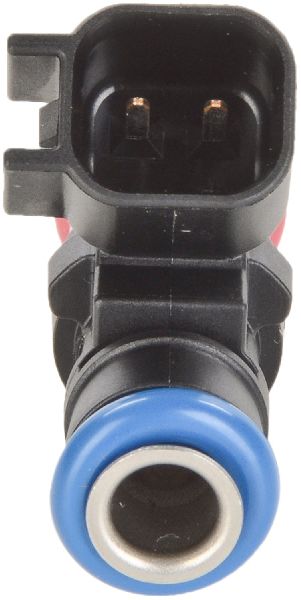
- Failed Fuel Injector (Cylinder 4) 🔴 High Probability → Shop Fuel Injector Fuel injectors are electro-mechanical parts that wear out over time. The internal coil winding can develop an open or short circuit, which is a common failure mode that prevents the injector from firing.
How to confirm: Swap the cylinder 4 injector with an adjacent one (e.g., cylinder 5). Clear the codes and drive the vehicle. If the code changes to P0205, the injector is confirmed bad. Alternatively, test the injector's resistance with a multimeter; it should be within the manufacturer's specified range (typically 11-16 ohms). A reading of 'OL' (Open Loop) indicates a failed injector.
Typical fix: Replace the faulty fuel injector. Some owners recommend replacing all injectors on a high-mileage vehicle to ensure balanced performance and avoid future failures.
Est. part cost: $50 - $150 - Wiring Harness Damage 🟡 Medium Probability Engine bay heat and vibrations can cause wiring insulation to become brittle and crack, leading to a short or open circuit. While no specific chafe point is widely documented for the MKZ, other Ford platforms with this engine family have known issues where the harness rubs against A/C line studs or other brackets, causing injector circuit faults.
How to confirm: Visually inspect the wiring harness leading to the cylinder 4 fuel injector for any signs of chafing, melting, or breaks. Pay close attention to where the harness might contact sharp edges on the engine or brackets. Perform a continuity test with a multimeter from the injector connector to the PCM connector to check for open circuits or shorts to ground.
Typical fix: Repair the damaged section of the wire. In severe cases, a new connector pigtail or harness section may be needed.
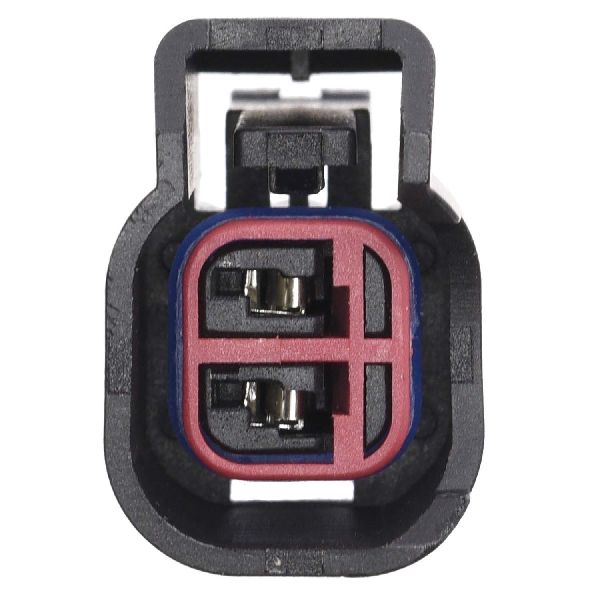
Est. part cost: $10 - $50 - Bad Injector Connector ⚪ Low Probability The plastic locking tab on the connector can become brittle and break, causing a loose connection. This is sometimes caused by improper removal during previous service. Pins can also become corroded from moisture or contaminated with oil from a leaky valve cover gasket or spilled oil during a change.
How to confirm: Wiggle the connector for the cylinder 4 injector while the engine is running to see if it affects the misfire. Disconnect it and inspect the pins for corrosion, damage, or being 'backed out'. Ensure it clicks securely into place.
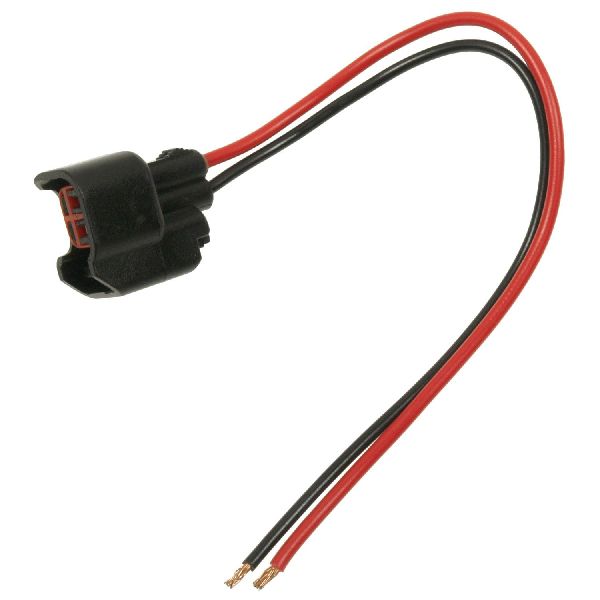
Typical fix: Clean the connector pins with electrical contact cleaner and apply dielectric grease. If the connector or its locking tab is broken, replace it with a new pigtail connector.
Est. part cost: $15 - $30
Rare But Worth Checking
- Faulty Powertrain Control Module (PCM): → Shop Engine Control Module (ECM) This is the least likely cause. The internal driver circuit for the cylinder 4 injector can fail due to heat or internal solder joint fatigue. This should only be considered after all other possibilities (injector, wiring, connectors) have been exhaustively ruled out. A professional diagnosis is recommended before replacing the PCM.
Diagnosis Steps
- Verify the code with an OBD-II scanner. Note if any other codes, like P0304, are present.
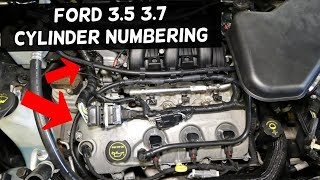
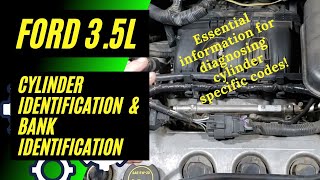
- Locate cylinder 4 on the 3.5L V6 engine. For this transverse-mounted engine, the cylinders against the firewall are Bank 1 (1-2-3, passenger to driver side), and the cylinders near the radiator are Bank 2 (4-5-6, passenger to driver side). Cylinder 4 is the first one on the front bank, closest to the passenger side.
- Visually inspect the wiring and connector for fuel injector #4. Look for any obvious signs of damage, corrosion, or looseness. Check for broken connector clips, which are a common issue.
- Perform a 'noid light' test. Disconnect the injector and plug a noid light into the connector. Crank the engine. The light should flash, indicating the PCM is sending a signal. If it doesn't flash, the problem is in the wiring or the PCM. If it does flash, the problem is likely the injector itself.
- To confirm a bad injector, swap the fuel injector from cylinder 4 with the one from cylinder 5. Clear the codes and run the engine until the Check Engine Light returns. If the code has changed to P0205 (Injector Circuit Malfunction - Cylinder 5), you have confirmed the fuel injector is the faulty part.
- If the noid light doesn't flash, or if the code P0204 returns after the injector swap, test the wiring. Use a multimeter to check for continuity between the injector connector and the PCM. Also, check for a short to ground or a short to power in the harness. A user on Reddit noted the power wire is typically Violet/Orange and the control wire is Yellow/Orange on this model.
- If wiring and the injector test good, the final, rare possibility is a failed injector driver in the PCM.
Parts You'll Likely Need
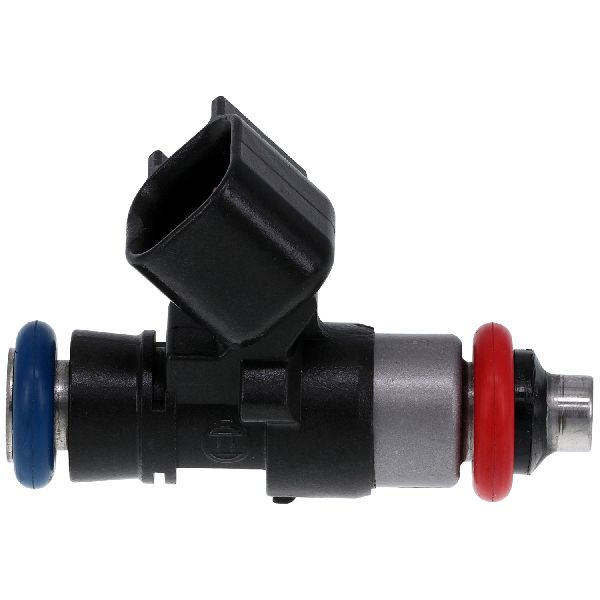
- Fuel Injector
(OEM #7T4Z-9F593-B)— This is the most common cause for a P0204 code, as the internal electronics of the injector fail over time. This part number is specific to the port fuel injection system on the 3.5L Duratec.
Trusted brands: Motorcraft, Bosch, Delphi, Standard Motor Products
OEM price range: $100-$160
Aftermarket price range: $50-$100 - Fuel Injector Connector Pigtail
(OEM #WPT-159 (Motorcraft))— Needed if the original connector or its wiring is corroded, melted, or has a broken locking tab, preventing a secure connection. This is a common repair item when the original connector becomes brittle from heat cycles.
Trusted brands: Motorcraft, Dorman
OEM price range: $25-$40
Aftermarket price range: $15-$30
Related Codes That Often Appear With This One
- P0304 — P0304 means 'Cylinder 4 Misfire Detected'. Since the P0204 code indicates the injector for cylinder 4 isn't working electrically, that cylinder won't get fuel, which will almost always cause a misfire.
- P0172 — P0172 means 'System Too Rich (Bank 1)'. If the injector is shorted and stuck open, it can dump excess fuel into the cylinder, causing a rich condition on that bank.
- P0174 — P0174 means 'System Too Lean (Bank 2)'. Since cylinder 4 is on Bank 2, a non-functioning injector means no fuel is delivered to that cylinder. The oxygen sensor detects the excess unburnt oxygen in the exhaust from that bank and reports a lean condition.
Mechanic-Grade Diagnostic Values
- Fuel Injector Coil Resistance — expected: 11 - 16 Ohms. Failure: A reading of infinity (Open Loop) or near-zero Ohms (short circuit) indicates a failed injector.
- Injector Power Wire Voltage (Key On, Engine Off) — expected: ~12 Volts (Battery Voltage). Failure: Low or no voltage indicates a problem in the power supply wiring or fuse, before the injector.
- Injector Control Wire Voltage (Engine Running) — expected: A pulsing signal between ~12V and ~0V (best viewed on an oscilloscope or with a noid light).. Failure: A steady 12V signal means the PCM is not commanding the injector to fire. A steady 0V signal could indicate a short to ground in the wiring or a failed PCM driver.
Scan Tool Commands That Help
- Ford IDS (or FORScan): Power Balance Test — This is a crucial bidirectional test to confirm which cylinder is not contributing to engine power. When the technician manually disables cylinder 4 via the scan tool, there should be little to no change in engine RPM or smoothness, confirming the misfire is on that cylinder. This isolates the fault before touching any parts.
- Ford IDS (or FORScan): KOEO Injector Electrical Self Test (Buzz Test) — This Key-On, Engine-Off test commands the PCM to cycle each injector's solenoid. The technician can listen for an audible 'buzz' or 'click' from each injector. An absent or weak sound from cylinder 4 points directly to a fault in the injector's coil or the wiring circuit leading to it.
Wiring & Ground Locations
- Cylinder 4 Injector Wiring — Connector for the fuel injector on the front bank (near radiator), passenger side.. Specific wire colors for testing are Violet/Orange (power feed) and Yellow/Orange (PCM control/ground pulse). Knowing these colors is critical for accurate multimeter testing of the circuit.
- PCM Connector C175B — The main engine harness connector at the Powertrain Control Module, typically located on the firewall.. This is the termination point for the injector control wires. Advanced diagnosis requires checking for continuity and shorts between the injector connector pins and the corresponding pins at this PCM connector.
- G104 (Ground) — Right front of the engine compartment.. This is a primary engine compartment ground. While the injector is controlled via a PCM driver, the PCM itself relies on clean grounds like this one to function correctly. A poor ground at G104 could cause erratic behavior across multiple systems, including the PCM's injector drivers.
- G100 / G101 (Grounds) — Located on the left front strut tower in the engine compartment.. These are additional key chassis grounds for the engine bay. Verifying these grounds are clean and tight is a good practice when diagnosing any electrical fault, as a bad ground can cause unpredictable voltage drops and intermittent issues.
Real Owner Repair Stories
- Reddit user on r/Cartalk (2007 Lincoln MKZ AWD with 111k miles) — Shaking, Check Engine Light with codes P0204 and P0304.
❌ Tried (didn't work) The user first suspected other issues due to the intermittent nature of the problem.
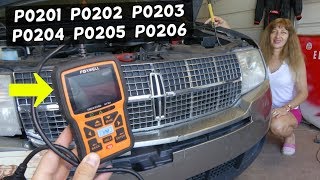
✅ What actually fixed it The issue was resolved by replacing the fuel injector for cylinder 4. - YouTube video 'Electrical Car Repair LIVE' (Ford/Lincoln Hybrid platform (Fusion/MKZ/C-Max)) — Multiple injector circuit codes (P0201, P0202, P0203, P0204).
✅ What actually fixed it The root cause was engine oil that had been spilled during a previous oil change, which then seeped into the fuel injector electrical connectors, causing a short or poor connection. The fix was to thoroughly clean the oil out of the connectors with electrical contact cleaner.
OEM Part Supersession History
7T4Z-9F593-A→7T4Z-9F593-B— Standard part revision and improvement by the manufacturer.7T4Z-9F593-B (Ford)→0280158091 (Bosch), FJ1000 (Standard Motor Products)— These are the equivalent part numbers from major OEM suppliers and aftermarket brands.
Heads up: These are direct cross-references for the port-injected 3.5L V6 and are compatible.
Model Year Variations Within This Range
- 2007-2012: No significant variations are documented for the port fuel injection system, wiring, or diagnostic procedure for a P0204 code across the 2007-2009 (pre-facelift) and 2010-2012 (post-facelift) models of the first-generation MKZ with the 3.5L V6 engine. The same fuel injector part number is used for the entire range.
Diagnostic Flowchart
Other Known Issues on This Vehicle
Issues unrelated to this code that are worth knowing about as an owner of this generation:
- Internal Water Pump Failure 🔴 High — A well-known and critical design flaw. Failure can occur anywhere from 60,000 to 150,000 miles. When the pump fails, it leaks coolant directly into the engine oil pan, leading to catastrophic engine damage if not caught immediately.
- Electronic Throttle Body (ETB) Failure 🟠 Medium — Common across many Ford models with this engine, causing the vehicle to suddenly lose power and enter a 'limp-home' mode. This can trigger codes like P2111 and P2112. Ford issued a customer satisfaction program (13N03) extending the warranty for this part. (Ref: Customer Satisfaction Program 13N03)
- Harsh Shifting / Transmission Problems 🟠 Medium — Many owners of 2007-2012 models report harsh shifting, flaring between gears, or transmission slippage, particularly when hot. This is sometimes attributed to the 'sealed for life' transmission fluid breaking down or issues with the valve body or shift solenoids.
- Dashboard Material Bubbling/Warping 🟡 Low — A cosmetic issue where the dashboard material, particularly around the passenger airbag and vents, can bubble, warp, or lift. This was more common on the 2007-2009 models.
Used vs. New Parts: Buying Guide for This Vehicle
When a used part is the smart pick: A used part is generally not recommended for fuel injectors due to unknown history and wear. However, a used wiring harness pigtail or a complete engine harness from a low-mileage, non-collision donor vehicle can be a viable and cost-effective repair for a wiring fault.
Donor-vehicle mileage cap: roughly under 80000 miles for the part to have meaningful remaining life.
What to inspect on the donor part:
- For wiring harnesses: Inspect for any signs of cracking, brittleness, previous repairs (tape, butt connectors), or melted insulation.
- For injectors (if unavoidable): Purchase from a reputable recycler who offers a warranty or has flow-tested and cleaned the units. Visually, there is no way to determine an injector's internal condition.
OEM-only on this vehicle (don't cheap out):
- While not strictly 'OEM-only', fuel injectors are a critical component where quality matters. Using injectors from a reputable OEM supplier like Motorcraft or Bosch is highly recommended over cheap, unbranded online alternatives to avoid performance issues and premature failure.
Aftermarket brands forum-validated for this vehicle:
- Bosch (often the original OEM manufacturer)
- Standard Motor Products (SMP)
- Delphi
Brands owners have reported issues with on this vehicle:
- Unbranded, 'white-box' injectors from online marketplaces should be avoided as their quality control, flow rates, and spray patterns are often inconsistent, which can lead to persistent performance problems.
Real Owner Stories
Aggregated from forums and TSBs cited above. Mileages and costs reflect what owners reported in those sources.
2007 Lincoln MKZ AWD 3.5L V6 — 111000 miles
Symptoms: The car sat for a couple of hours, then upon starting, it began shaking and the Check Engine Light came on with codes P0204 and P0304.
What fixed it: The owner was advised to test the injector circuit using the violet/orange power wire and yellow/orange control wire to determine if the injector or the wiring was at fault.
Source hint: Reddit r/Cartalk - 2007 Lincoln MKZ (AWD) 111K trouble codes P0204& P0304
2008 Lincoln MKX 3.5L V6
Symptoms: Multiple injector fault codes including P0201, P0202, and P0204. The vehicle had broken injector connector clips from a previous repair attempt.
What fixed it: The diagnosis involved identifying the broken connector clips and investigating a potential PCM injector driver failure.
Source hint: YouTube - 2008 LINCOLN MKX FORD EDGE P0201 P0202 P0204 INJECTOR DRIVER FAILURE
Related OBD-II Codes
Frequently Asked Questions
Where is cylinder 4 located on my 2007-2012 Lincoln MKZ 3.5L V6?
Is there a specific TSB for the P0204 code on my MKZ?
What are the specific wire colors I should look for when testing the cylinder 4 injector circuit?
Could my MKZ's P0204 code be caused by a computer failure instead of the injector?
Are there common wiring issues I should check for on the Duratec 35 engine?
Should I replace all the injectors if only cylinder 4 is failing?
Helpful Videos
We Have This Part in Stock


The information in this article is provided for general reference and educational purposes only. Vehicle specifications, procedures, and part compatibility can vary by production date, trim level, and region. Always consult your vehicle's factory service manual and verify part numbers before purchasing or performing repairs. Safety-critical components such as airbags, seat belts, and braking systems should be installed by a qualified professional.
- Lincoln MKZ:
- 🧭 Diagnostic Flowchart
- 🎬 Helpful Videos
- 🛍️ Shop This Part
- What's Unique About the 2007-2012 Lincoln MKZ
- Symptoms You May Notice
- Most Likely Causes
- Rare But Worth Checking
- Diagnosis Steps
- Parts You'll Likely Need
- Related Codes That Often Appear With This One
- Mechanic-Grade Diagnostic Values
- Scan Tool Commands That Help
- Wiring & Ground Locations
- Real Owner Repair Stories
- OEM Part Supersession History
- Model Year Variations Within This Range
- Other Known Issues on This Vehicle
- Used vs. New Parts: Buying Guide for This Vehicle
- Real Owner Stories
- 2007 Lincoln MKZ AWD 3.5L V6 — 111000 miles
- 2008 Lincoln MKX 3.5L V6
- Related OBD-II Codes
- Frequently Asked Questions
- 🎟️ Get 5% Off