

P0204 on 2014-2016 Mazda 3: Injector Circuit Malfunction Causes and Fixes
On a 2014-2016 Mazda 3, code P0204 often points to a known PCM (engine computer) failure, especially if code P0201 is also present. This is documented in Mazda TSB #01-017/16 and the superseding TSB #01-004/17. If P0204 appears alone, the cause is more likely a faulty cylinder 4 fuel injector or its wiring.
- Before buying any parts, scan for codes. If P0204 appears with P0201, the PCM is the most likely culprit per Mazda TSB #01-017/16.
- If P0204 appears alone, the cylinder 4 fuel injector is the primary suspect.
- Do not immediately replace spark plugs or ignition coils; this code is for an electrical fault in the fuel circuit.
- Continued driving is not recommended as the resulting misfire can damage the catalytic converter.
- If the PCM is the cause, it will need to be replaced and programmed by a dealer or qualified shop.
What's Unique About the 2014-2016 Mazda 3
For this generation of Mazda 3, P0204 has a very specific and documented history. Mazda issued Technical Service Bulletins (TSB #01-017/16, later updated by #01-004/17) for a known issue where an internal failure in certain DENSO-made PCMs causes injector circuit codes to appear in pairs (P0201 with P0204, or P0202 with P0203). This means that unlike many other vehicles where P0204 points directly to the injector or its wiring, on this specific Mazda 3 it is a strong indicator of a faulty engine computer, especially on Japan-built models with VINs lower than JM1BM**352403, produced before May 23, 2016.
Symptoms You May Notice
- Check Engine Light is on
- Rough or shaking engine idle
- Engine misfire, which may feel like a stumble or hesitation
- Reduced engine power and poor acceleration
- Decreased fuel economy
- Hard starting or stalling
- Replacing the cylinder 4 fuel injector when codes P0201 and P0204 are present together. The paired codes strongly indicate a PCM failure per the TSB.
- Replacing spark plugs or ignition coils. This code specifically points to an electrical fault in the fuel injector circuit, not the ignition system.
Most Likely Causes
- Internal Powertrain Control Module (PCM) Failure 🔴 High Probability → Shop Engine Control Module (ECM) A known issue documented in Mazda TSBs #01-017/16 and #01-004/17 affects certain DENSO-made PCMs in Japan-built vehicles produced before May 23, 2016.
How to confirm: Scan the vehicle for codes. If P0204 is present along with P0201, a PCM failure is the most likely cause. The TSB also applies if P0202 and P0203 are found together. A technician can confirm by inspecting the label on the PCM to verify it is a DENSO unit as described in the TSB.
Typical fix: Replace the PCM. The new PCM will require programming by a Mazda dealer or a qualified independent shop with the proper equipment. Updated PCMs have the internal fault corrected.
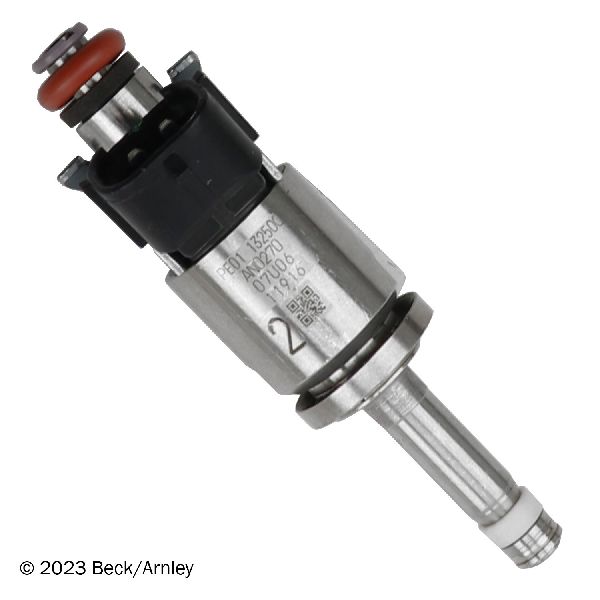
Est. part cost: $800-$1300 - Faulty Fuel Injector (Cylinder 4) 🟡 Medium Probability → Shop Fuel Injector This is the most likely cause if P0204 appears by itself, without P0201. Injectors can fail electrically (internal coil opens or shorts) or mechanically over time.
How to confirm: Swap the cylinder 4 fuel injector with another cylinder (e.g., cylinder 3). Clear the codes and run the engine. If the code changes to P0203, the injector is faulty. Alternatively, use a multimeter to check the injector's resistance; an open or shorted reading indicates failure. The official Mazda specification is 1.6–2.52 ohms.
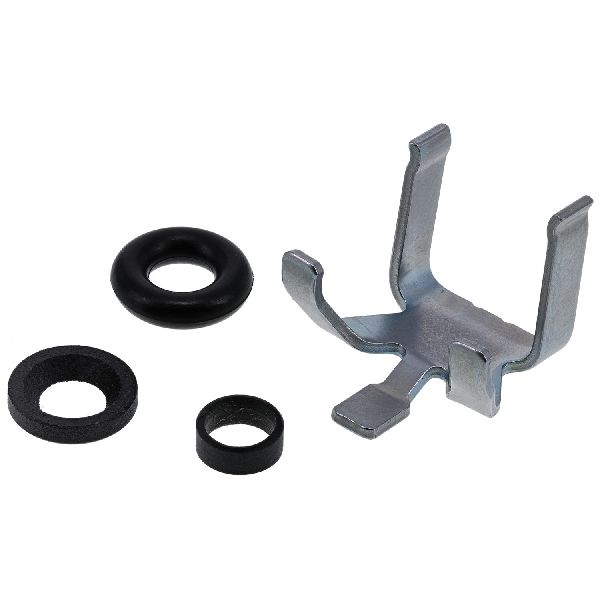
Typical fix: Replace the faulty fuel injector and its associated seals.
Est. part cost: $80-$200 - Wiring Harness or Connector Issue ⚪ Low Probability
How to confirm: Visually inspect the wiring harness and connector for cylinder 4's injector for any signs of damage, corrosion, or loose pins. A 'noid' light can be used to check for a pulse signal at the connector. Use a multimeter to check for continuity and shorts in the circuit between the PCM and the injector connector.
Typical fix: Repair the damaged section of the wiring harness or replace the faulty connector pigtail.
Est. part cost: $10-$50
Rare But Worth Checking
- Blown Fuse:
Diagnosis Steps
- Connect an OBD-II scanner and check for all stored codes. Pay close attention to whether P0204 appears alone or is paired with P0201.
- If P0201 and P0204 are present together, refer to TSB #01-017/16 or #01-004/17. The PCM is the likely culprit, especially on Japan-built models before May 2016.
- If P0204 is the only injector code, proceed with further diagnosis.
- Visually inspect the wiring and connector for the cylinder 4 fuel injector. Look for any chafing, melting, corrosion, or loose pins. Check the connector's retaining clip.
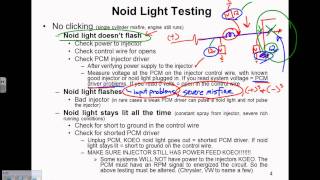
- Use a noid light to test for an electrical pulse at the cylinder 4 injector connector. Disconnect the injector, plug in the light, and crank the engine. A flashing light indicates the PCM and wiring are likely sending a signal. No light or a constantly-on light points to a wiring or PCM issue. 🎬 See how to test injector circuits with a noid light
- To test the injector itself, swap the cylinder 4 injector with one from another cylinder (e.g., cylinder 2). Clear the codes, start the engine, and see which code returns. If the code is now P0202, the injector you moved is faulty.
- If code P0204 returns after the swap, the problem lies in the wiring or the PCM driver for that circuit.
- If wiring is suspected, use a multimeter to perform a continuity test on the power and ground wires between the PCM connector and the injector connector. Also check for shorts to ground and power.
- If the wiring and injector are confirmed to be good, the PCM's injector driver for cylinder 4 is likely faulty, even if P0201 is not present.
Parts You'll Likely Need
- Powertrain Control Module (PCM)
(OEM #PE07-18-881M, PE19-18-881A, PEDM-18-881, PSZK-18-881D (Part number is VIN-specific, always verify with dealer))— This is the most common fix when P0204 is paired with P0201, due to a known internal failure documented in TSBs #01-017/16 and #01-004/17.
Trusted brands: Mazda (OEM)
OEM price range: $800-$1300
Aftermarket price range: $400-$700 (Remanufactured) - Fuel Injector
(OEM #PE01-13-250D (replaces PE01-13-250B, PE01-13-250C, PEAR-13-250))— This is the likely fix if P0204 appears as a standalone code.
Trusted brands: Bosch (OEM supplier), Mazda (OEM)
OEM price range: $120-$200
Aftermarket price range: $60-$160
Related Codes That Often Appear With This One
- P0201 — According to Mazda TSBs #01-017/16 and #01-004/17, an internal PCM failure often causes injector circuit codes for cylinders 1 and 4 to appear together. This is the strongest indicator that the PCM is the root cause.
- P0304 — This code means 'Cylinder 4 Misfire Detected.' Since P0204 indicates a problem with fuel delivery to cylinder 4, a misfire is an expected and direct consequence. The TSBs confirm misfire codes are usually stored at the same time.
- P0300 — This code for a random/multiple cylinder misfire can be triggered if the fault in the cylinder 4 injector circuit is severe enough to disrupt the engine's overall balance, or if the PCM fault is causing issues on multiple cylinders.
Technical Service Bulletins (TSBs) & Recalls
- 01-017/16 - "ENGINE RUNS ROUGH AND CHECK ENGINE LIGHT ON WITH DTCS P0201 AND P0204 OR P0202 AND P0203". The original bulletin identifying the DENSO PCM failure on Mazda3, Mazda6, and CX-5 models.
- 01-004/17 - A bulletin that supersedes and updates 01-017/16, reiterating the same diagnostic procedure and confirming that replacement PCMs have the internal failure corrected.
- TSB Bulletin #01-004-17 - A multi-model bulletin noting that the engine may run rough with the check engine light on specifically when DTCs P0201 and P0204 or P0202 and P0203 are present.
- TSB Bulletin #01-004-17-3317a - This manufacturer record notes that engine misfire related DTCs (P0301, P0302, P0303, P0304) are usually stored at the same time as the injector circuit codes.
Platform-Specific Known Issues
- A known internal failure of the DENSO-made PCM can cause injector circuit codes P0201 and P0204 (or P0202 and P0203) to be stored simultaneously. This is covered by Mazda TSBs #01-017/16 and #01-004/17 and affects Japan-built models with VINs lower than JM1BM**352403, produced before May 23, 2016.
Mechanic-Grade Diagnostic Values
- Fuel Injector Resistance — expected: 1.6–2.52 ohms (at 0–80 °C / 32–176 °F). Failure: A reading of 0 ohms (shorted) or OL/infinity (open) on a multimeter.
- Injector Pulse Width (IPW) at idle — expected: 1-5 milliseconds (ms). Failure: A value of 0 ms for cylinder 4 while other cylinders show normal readings points to a circuit or PCM driver failure.
- High-Pressure Fuel System (Direct Injection) — expected: 3.0 MPa (435 psi) or more at idle.. Failure: Pressure significantly below 435 psi at idle could indicate a failing high-pressure fuel pump (HPFP), though this would likely affect all cylinders, not just one.
- Low-Pressure Fuel System (In-tank pump) — expected: 45-50 psi (Key On, Engine Off). Failure: Pressure below 45 psi indicates a weak in-tank fuel pump, clogged filter, or relay issue. This would typically cause issues on more than just one cylinder.
- Injector Connector Voltage (Key On, Engine Off) — expected: Approximately 12V (Battery Voltage) on the power supply wire.. Failure: Low or no voltage points to a problem in the power supply circuit, such as a fuse or relay.
Hidden / Shadow Codes Worth Checking
- P0204:00: This is the full Mazda-specific DTC format, where ':00' is a component fault subtype. While not truly a 'hidden' code, its presence in the TSB confirms the specific nature of the fault the PCM is identifying. (see via Most professional OBD-II scanners and Mazda's M-MDS will display the full code with the subtype.)
Scan Tool Commands That Help
- Mazda M-MDS (or advanced aftermarket like Autel): Fuel Pump Active Test — While P0204 is an injector circuit code, if multiple injector codes are present or fuel pressure is suspected, this command allows a technician to manually turn the in-tank low-pressure fuel pump on and off to verify its operation without starting the engine.
- Mazda M-MDS (or equivalent J2534 device): Module Reprogramming (PCM) — This function is required after replacing the PCM. It involves installing the latest calibration file and configuring the new module to the vehicle's VIN and immobilizer system.
- Mazda M-MDS: PID Monitoring (FUEL_PRES, RPM, LOAD) — This allows a technician to monitor live data for the high-pressure fuel pump to ensure it meets the minimum pressure specification of 435 psi at idle, helping to rule out a systemic fuel delivery issue.
Wiring & Ground Locations
- PCM Connector Pin 1DS — At the main PCM electrical connector in the engine bay.. This is the specific terminal for the cylinder 4 fuel injector control (ground pulse) wire. A continuity test between this pin and the corresponding pin at the injector connector will confirm if the control wire is intact or has an open/short.
- Fuel Injector No. 4 Connector — On the cylinder 4 fuel injector, accessible after removing the engine cover.. This is the primary point for testing. A noid light can verify the pulse signal here, and a multimeter can test for power and the injector's internal resistance. The connector itself can be a point of failure due to corrosion or damaged pins.
- Main Engine/Body Grounds — Key ground points are located on the passenger side fender brace near the headlight, on the transmission housing, and from the passenger motor mount to the chassis.. A poor or corroded main ground can cause erratic electrical behavior across multiple systems, including the PCM's injector drivers. While less likely to cause a single injector code, it's a crucial check for intermittent or difficult-to-diagnose electrical faults.
Real Owner Repair Stories
- Mazdaspeeds.org forum user (2013 Mazdaspeed3 (similar SKYACTIV-era engine architecture), 85k miles) — P0204 and P0304 codes appearing only on cold starts. The engine would misfire on startup but run perfectly fine after being restarted once or twice.
❌ Tried (didn't work) The user had previously cleaned the intake valves and had the injectors professionally cleaned and installed with new seals. The problem appeared 3 months after this service.
✅ What actually fixed it The user suspected an intermittent electrical failure within the cylinder 4 fuel injector itself, which was only present when cold. The resolution was to replace the cylinder 4 fuel injector, which solved the cold-start misfire and codes.
OEM Part Supersession History
PE01-13-250B, PE01-13-250C, PEAR-13-250→PE01-13-250D— Standard part revision and improvement by the manufacturer.
Heads up: The listed part numbers are interchangeable for this application.
Model Year Variations Within This Range
- 2014-2016 (pre-May 23, 2016): Japan-built models (VIN starting with JM1) with VINs lower than JM1BM**352403 are susceptible to the DENSO PCM failure described in TSB #01-004/17. Vehicles built after this date or in Mexico are not affected by this specific TSB.
Diagnostic Flowchart
Other Known Issues on This Vehicle
Issues unrelated to this code that are worth knowing about as an owner of this generation:
- Corroding Rear Brake Caliper Actuator Shaft 🔴 High — Widespread enough to trigger a recall (Mazda recall 1217F / NHTSA #17V-393) affecting 2014-2016 models. Water can enter the caliper and cause corrosion, leading to the parking brake either not engaging fully or dragging while driving. (Ref: Recall 1217F)
- Mazda Connect Infotainment System Glitches 🟡 Low — Common owner complaint. Issues include screen freezing, random reboots, ghost touches, and Bluetooth connectivity problems. Often resolved by a software update or a system reset (holding NAV+Mute+Back buttons). (Ref: Various software update TSBs exist, e.g., for rebooting issues.)
- Premature Rear Brake Wear 🟠 Medium — Frequently reported by owners of 2014-2015 models. Often characterized by squealing noises caused by burrs on the brake pad backing plate affecting alignment.
- Intake Valve Carbon Buildup 🟠 Medium — A long-term concern inherent to all direct-injection (GDI) engines, including SKYACTIV-G. While Mazda's design is considered more resistant than some competitors, buildup can occur over 100k+ miles, potentially causing reduced performance. Regular spirited driving is often recommended to help mitigate buildup.
Used vs. New Parts: Buying Guide for This Vehicle
When a used part is the smart pick: A used fuel injector from a reputable salvage yard can be a cost-effective option, especially if P0204 appears as a standalone code. It is highly recommended to have the used injector professionally cleaned and flow-tested before installation.
Donor-vehicle mileage cap: roughly under 80000 miles for the part to have meaningful remaining life.
What to inspect on the donor part:
- Verify the donor vehicle was not in a major front-end collision.
- Inspect the injector for physical damage, cracks, or heavy corrosion.
- Ensure the electrical connector pins are straight and clean.
- If possible, get the resistance reading of the used injector before purchase to ensure it's within the 1.6-2.52 ohm spec.
OEM-only on this vehicle (don't cheap out):
- Powertrain Control Module (PCM): Due to the specific internal failure documented in the TSB and the absolute requirement for dealer-level programming (M-MDS), using a used PCM is extremely risky. A new OEM or professionally remanufactured unit that specifically addresses the TSB fault is the only reliable option.
Aftermarket brands forum-validated for this vehicle:
- Bosch (for fuel injectors, as they are an OEM supplier)
- Standard Motor Products (often re-boxes OEM parts)
Brands owners have reported issues with on this vehicle:
- Unknown, no-name brands from online marketplaces should be avoided for critical components like fuel injectors and PCMs due to inconsistent quality and potential for premature failure.
Real Owner Stories
Aggregated from forums and TSBs cited above. Mileages and costs reflect what owners reported in those sources.
2014 Mazda 3 2.5L
Symptoms: Experienced paired codes P0201 and P0204 along with misfire codes and a rough idle. A shop initially misdiagnosed the problem as a wiring issue.
What fixed it: PCM replacement after finding the relevant TSB regarding DENSO units.
Source hint: Mazda3Revolution Forum - P0201, P0204, P0301, P0304 - PCM Failure Experience
2015 Mazda 3 — 80000 miles
Symptoms: Active misfire (likely P0304 accompanying an injector code) that led to secondary component damage.
What fixed it: Replacement of an ignition coil and the catalytic converter under warranty.
Source hint: Reddit r/mazda3 - User questions reliability, another user reports coil/cat replacement
Related OBD-II Codes
Frequently Asked Questions
My 2015 Mazda 3 has codes P0201 and P0204 at the same time. Does a specific TSB cover this?
How can I tell if my Mazda 3 was built in Japan to see if the PCM TSB applies?
If I only have code P0204, is it still likely to be the PCM?
What is the correct resistance specification for a 2014-2016 Mazda 3 fuel injector?
Can I use a used PCM from a salvage yard to fix the P0204/P0201 issue?
Is there a recall for the injector circuit issues on the 2014-2016 Mazda 3?
Helpful Videos
We Have This Part in Stock



The information in this article is provided for general reference and educational purposes only. Vehicle specifications, procedures, and part compatibility can vary by production date, trim level, and region. Always consult your vehicle's factory service manual and verify part numbers before purchasing or performing repairs. Safety-critical components such as airbags, seat belts, and braking systems should be installed by a qualified professional.
- Mazda 3:
- 🧭 Diagnostic Flowchart
- 🎬 Helpful Videos
- 🛍️ Shop This Part
- What's Unique About the 2014-2016 Mazda 3
- Symptoms You May Notice
- Most Likely Causes
- Rare But Worth Checking
- Diagnosis Steps
- Parts You'll Likely Need
- Related Codes That Often Appear With This One
- Technical Service Bulletins (TSBs) & Recalls
- Platform-Specific Known Issues
- Mechanic-Grade Diagnostic Values
- Hidden / Shadow Codes Worth Checking
- Scan Tool Commands That Help
- Wiring & Ground Locations
- Real Owner Repair Stories
- OEM Part Supersession History
- Model Year Variations Within This Range
- Other Known Issues on This Vehicle
- Used vs. New Parts: Buying Guide for This Vehicle
- Real Owner Stories
- 2014 Mazda 3 2.5L
- 2015 Mazda 3 — 80000 miles
- Related OBD-II Codes
- Frequently Asked Questions
- 🎟️ Get 5% Off