

P0204 on 2016-2023 Mazda CX-9: Cylinder 4 Injector Circuit Malfunction Causes and Fixes
Code P0204 on a 2016-2023 Mazda CX-9 indicates an electrical fault in the cylinder 4 fuel injector circuit. The most common causes are a failed fuel injector or a wiring problem. A new injector costs between $100 and $250, and it's a DIY-friendly repair for many owners.
- P0204 on a 2016-2023 CX-9 means there is an electrical problem with the cylinder 4 fuel injector.
- The most likely cause is a failed fuel injector, followed by a wiring or connector issue.
- Do not immediately replace the spark plug or ignition coil; this code points specifically to the fuel injector circuit.
- A simple diagnostic step is to swap the cylinder 4 injector with another cylinder's injector to see if the code follows the part.
What's Unique About the 2016-2023 Mazda CX-9
While P0204 is a generic code, earlier Mazda models with SKYACTIV engines (like the CX-5 and Mazda3) had a known issue where a faulty PCM would cause P0204 to appear with P0201. This was documented in TSB #01-017/16 for vehicles built before May 2016. Although the 2016-2023 CX-9 falls mostly outside this range, it's a notable part of the platform's history. For the CX-9, the issue is more commonly an isolated injector or wiring failure rather than a PCM problem. The SKYACTIV-G 2.5T engine, introduced in the 2016 CX-9, uses a high-pressure direct injection system and a unique 'Dynamic Pressure Turbo' which operates differently from its non-turbo counterparts.
Symptoms You May Notice
- Engine runs rough, especially at idle
- Hesitation or stumbling during acceleration
- Reduced engine power
- Poor fuel economy
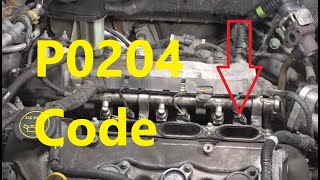
- Check Engine Light is on 🎬 Watch: A breakdown of common P0204 causes and fixes (may be flashing if the misfire is severe)
- Engine stalls or cuts out at idle.
- Replacing the spark plug or ignition coil for cylinder 4. While these parts can cause a misfire (P0304), the P0204 code specifically points to an electrical fault in the fuel injector's circuit, not the ignition system.
Most Likely Causes
- Failed Fuel Injector #4 🔴 High Probability → Shop Fuel Injector Direct injection (GDI) injectors operate under high pressure and are susceptible to electronic failure or clogging over time. Some owners report intermittent issues on cold starts that eventually become permanent.
How to confirm: Swap the fuel injector from cylinder 4 with another cylinder (e.g., cylinder 3). If the code changes to P0203, the injector is bad. Alternatively, check the resistance of the injector with a multimeter; a reading of 0 or infinite ohms indicates failure. Compare the reading to a known-good injector on the same engine.
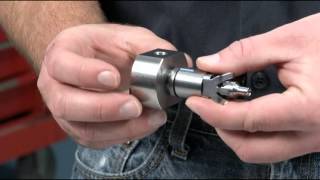
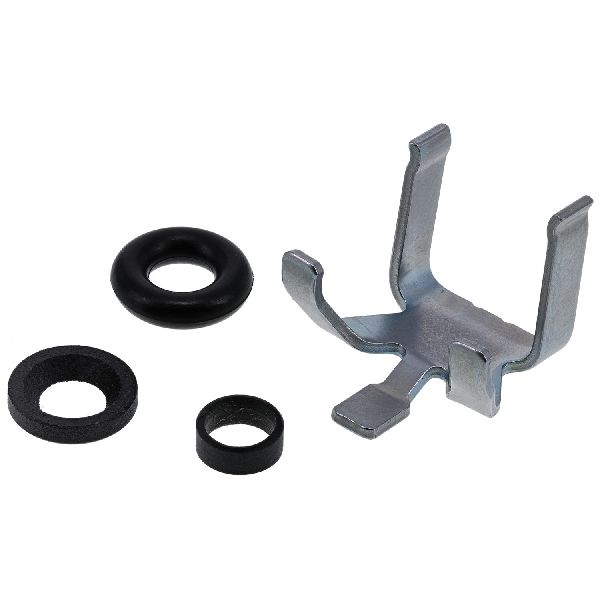
Typical fix: Replace the faulty fuel injector. It is good practice to replace the seals for any injectors that are removed. 🎬 See this walkthrough for replacing SkyActiv injector seals and O-rings The OEM part number for the injector used in many 2.5L SKYACTIV engines is PY01-13-250, though it's critical to verify the correct part for the turbo model.
Est. part cost: $100 - $250 - Wiring Harness or Connector Issue 🟡 Medium Probability Engine vibrations and heat can cause wiring to chafe or connectors to become loose or corroded over time. A 2018 model year recall for wiring harness connector issues highlights potential sensitivity. Spilled oil from a recent oil change has also been anecdotally linked to causing this code if it contaminates the injector wiring.
How to confirm: Visually inspect the wiring harness and connector for cylinder 4's injector for any signs of damage, corrosion, or loose pins. Use a noid light to test for a pulse signal at the injector connector; if the light doesn't flash when the engine is cranked, there's a problem in the circuit. Perform a wiggle test on the harness while the engine is running to see if it induces a stumble.
Typical fix: Repair the damaged section of the wiring harness or clean/replace the faulty connector.
Est. part cost: $10 - $50 - Powertrain Control Module (PCM) Fault ⚪ Low Probability → Shop Engine Control Module (ECM) While less common on this specific model year range, Mazda has a history of PCM failures causing injector circuit codes on other SKYACTIV models, particularly those built before mid-2016. This is typically a diagnosis of last resort after the injector and wiring have been proven good.
How to confirm: This is a diagnosis of exclusion. If the injector and wiring have been tested and are confirmed to be good, the PCM becomes the likely suspect. This step should be performed by a professional with specialized diagnostic tools to check the injector driver circuit within the PCM.
Typical fix: Replace and reprogram the Powertrain Control Module.
Est. part cost: $800 - $1500
Diagnosis Steps
- Read the trouble codes with an OBD-II scanner and confirm P0204 is present. Note any other codes, especially P0304.
- Visually inspect the wiring harness and electrical connector at the #4 fuel injector for obvious signs of damage, corrosion, or a loose connection. Check for oil contamination from previous repairs.
- To definitively test the injector, swap the #4 injector with one from another cylinder (e.g., #3). Clear the codes and run the engine. If the code changes to P0203, the injector itself is faulty and must be replaced.
- If the code remains P0204 after swapping the injector, the problem lies within the wiring or the PCM.
- Disconnect the injector connector and plug in a 'noid light'. Crank the engine. The light should flash steadily. If it does not flash, or if it stays on continuously, there is a problem with the wiring or the PCM driver.
- If the noid light test fails, use a multimeter to check for continuity and voltage on the wiring harness between the PCM and the injector connector to isolate a break or short in the wire.
- Use a multimeter to check the resistance of the fuel injector itself. Compare the reading to the manufacturer's specification or to a known-good injector. An out-of-spec reading confirms a faulty injector.
- If the injector and wiring are confirmed to be good, the fault is likely with the PCM's injector driver, which requires professional diagnosis and likely replacement.
Parts You'll Likely Need
- Fuel Injector
(OEM #PY01-13-250)— This is the most common component to fail in the injector circuit, either electronically or by becoming clogged.
Trusted brands: Bosch, Hitachi, Standard Motor Products, Mazda (Genuine)
OEM price range: $180-$250
Aftermarket price range: $100-$180
Related Codes That Often Appear With This One
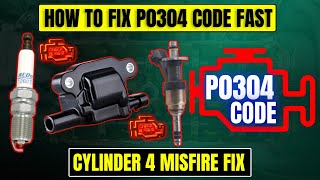
- P0304 — This code means "Cylinder 4 Misfire Detected." Since P0204 indicates a fault in the fuel delivery circuit for cylinder 4, the cylinder will not fire correctly, directly causing a misfire. 🎬 Watch: How to quickly diagnose and fix a cylinder 4 misfire
Technical Service Bulletins (TSBs) & Recalls
- 01-017/16 & 01-004-17: While not directly applicable to most 2016-2023 CX-9s, these TSBs for other Mazda models (CX-5, Mazda3, Mazda6) built before May 2016 document a known PCM failure that causes P0201 and P0204 to appear together.
- TSB Bulletin #01-004-17-3317a: This manufacturer bulletin notes that some vehicles may experience an engine that runs rough with the check engine light on and DTCs P0201 and P0204 or P0202 and P0203 occurring simultaneously.
- TSB Bulletin #01-004-17: A manufacturer service bulletin for related models describes a multi-model issue where the engine runs rough and the check engine light illuminates with DTCs P0201 and P0204 or P0202 and P0203.
Platform-Specific Known Issues
- A recall was issued for some 2018 CX-9 models due to wiring harness connectors having weak retention force, which could lead to various electrical issues. While not specifically calling out P0204, it points to a potential sensitivity in the vehicle's wiring harnesses.
Mechanic-Grade Diagnostic Values
- Fuel Injector Resistance — expected: 1.6 - 2.52 ohms. Failure: A reading of 0 ohms (short), infinite/OL (open), or a value significantly outside the expected range.
- Fuel Injector Resistance (Alternate Spec) — expected: 1.74 - 2.04 ohms at 20°C (68°F). Failure: A reading outside this more precise range.
- Injector Circuit Voltage (Key On, Engine Off) — expected: Approximately 12V (Battery Voltage) at the power feed wire.. Failure: Low or no voltage, indicating a problem with the power supply, fuse, or relay.
- High-Pressure Fuel System Pressure (at idle) — expected: Approximately 3.0 MPa (435 psi) or more.. Failure: Significantly lower pressure reading on a scan tool's 'FUEL_PRES' PID suggests a high-pressure fuel pump issue, not an injector circuit fault.
- Injector Pulse Width (Live Scan Data) — expected: 1-10 ms, varying with engine load and speed.. Failure: A value that is stuck, zero, or does not respond to engine load changes.
Hidden / Shadow Codes Worth Checking
- P0201 + P0204 (Appearing Together): On related Mazda platforms (CX-5, Mazda3/6) built before mid-2016, the simultaneous appearance of injector circuit codes for cylinders 1 and 4 is a strong indicator of a specific internal PCM failure, not individual injector or wiring faults. (see via Standard OBD-II scanner. This is a pattern of standard codes, not a single hidden code. Documented in Mazda TSB #01-017/16.)
Scan Tool Commands That Help
- Mazda IDS / Aftermarket Scan Tool: Injector Test / Active Test — To command the PCM to pulse the injector driver for cylinder 4. While the command is active, a technician can use a multimeter or scope at the injector connector to verify the signal is being sent from the PCM, helping to isolate the fault between the PCM and the injector.
- Mazda IDS: KOER (Key On, Engine Running) Self Test — After a repair (like replacing an injector or fixing wiring) has been completed, running the KOER self-test can help verify that the fault has been resolved and the circuit is now operating correctly under the PCM's supervision.
Wiring & Ground Locations
- PCM Connector Pin — At the Powertrain Control Module connector.. For advanced diagnostics, checking for a pulse or continuity directly at the PCM pin for the cylinder 4 injector is the final step to confirm if the PCM driver is faulty or if there's a break in the harness. A wiring diagram for the specific model year is essential. One source for a diesel Skyactiv engine lists terminal 1EF for injector #4, but this must be verified for the 2.5T petrol engine.
"I Checked Everything" — The Actual Cause
- For this electrical code, the equivalent of a 'smoke test clean' scenario is when a noid light flashes correctly and the injector's resistance measures within spec, yet the P0204 code persists. This diagnostic dead-end often points towards an intermittent connection that doesn't show up during a static test, or more critically, a faulty PCM. On related Mazda models, a known issue documented in TSB #01-017/16 causes the PCM to fail its internal monitoring of the injector circuit and set codes like P0204, even when the external circuit and injector are perfectly functional.
OEM Part Supersession History
PY01-13-250→PY01-13-250 (current)— This part number appears to be stable for the turbo engine.
Heads up: Crucially, do not confuse with part number PYFA-13-250A. While similar, PYFA-13-250A is for the 2.5L *non-turbo* engine and will not work in the 2.5T. Also, it may not be compatible with later non-turbo engines that feature cylinder deactivation.N/A→N/A— N/A
Heads up: Forum discussions among tuners suggest that fuel injectors for the Ford 2.3L EcoBoost engine, such as Motorcraft CM5279, may be physically and electronically compatible with the Mazda 2.5T engine. This is an unverified, advanced-user alternative.
Diagnostic Flowchart
Other Known Issues on This Vehicle
Issues unrelated to this code that are worth knowing about as an owner of this generation:
- Cracked Cylinder Head (Coolant Leak) 🔴 High → Shop Engine Cylinder Head — Common on 2016-2020 models, often appearing between 60k-120k miles. Caused by a casting/design flaw near the integrated exhaust manifold. (Ref: TSB 01-007/22 (supersedes earlier versions), TSB 01-002/23. Mazda also issued a warranty extension (CSP11).)
- Excessive Oil Consumption (Valve Stem Seals) 🔴 High — Primarily affects 2021 models, often appearing early in the vehicle's life. Faulty exhaust valve stem seals allow oil to enter the combustion chamber. (Ref: TSB 01-012/21. A class-action lawsuit settlement also provides an extended warranty and reimbursement for this issue.)
- Premature Turbocharger Failure 🟠 Medium — Can occur at various mileages, often due to oil starvation/contamination or coolant leaks from the cracked cylinder head issue being misdiagnosed as a turbo fault. Average life is often cited as 100k-125k miles.
- Carbon Buildup on Intake Valves 🟡 Low — Inherent to all direct-injection (GDI) engines. Becomes noticeable after 60k-100k miles, potentially causing a rough idle or misfires unrelated to a specific circuit fault.
- Leaking Oil Control Valve (OCV) 🟡 Low — A relatively common, minor issue where the OCV seal seeps oil. Often noted as a moist or dirty area on the top of the engine.
Used vs. New Parts: Buying Guide for This Vehicle
When a used part is the smart pick: For a direct injection (GDI) component like a fuel injector, buying used is generally discouraged unless you are on a strict budget and willing to take on significant risk. A used wiring harness connector or a pigtail from a junkyard can be a smart choice if only the connector is damaged.
Donor-vehicle mileage cap: roughly under 50000 miles for the part to have meaningful remaining life.
What to inspect on the donor part:
- If buying a used injector, ALWAYS have it professionally cleaned, flow-tested, and resistance-tested before installation.
- Demand to see the test results showing a matched set with good spray patterns.
- Inspect the O-rings and pintle caps for any signs of brittleness, cracking, or damage. Assume they will need to be replaced.
- Avoid injectors from engines that show signs of heavy sludge or poor maintenance.
OEM-only on this vehicle (don't cheap out):
- Fuel Injector: Due to the high pressures and fine tolerances of GDI systems, a new OEM or OEM-supplier (Bosch, Denso, Hitachi) injector is strongly recommended for reliability and performance.
- Powertrain Control Module (PCM): A used PCM can be an option but will require professional programming to your vehicle's VIN, which can be complex and costly.
Aftermarket brands forum-validated for this vehicle:
- Bosch
- Hitachi
- Denso
Brands owners have reported issues with on this vehicle:
- Unnamed, no-brand injector sets from online marketplaces. These often have inconsistent flow rates and poor longevity, leading to more problems. One seller explicitly notes that their aftermarket parts should not be mixed with genuine parts due to differences in oil output and atomization.
Real Owner Stories
Aggregated from forums and TSBs cited above. Mileages and costs reflect what owners reported in those sources.
Mazdaspeed3 (2.3L Turbo)
Symptoms: Intermittent P0204 and P0304 codes occurring only on cold starts. The issue started after fuel system work was performed on that specific cylinder.
What fixed it: The source suggests a potential seating issue with the injector or a developing electronic fault in the injector itself.
Source hint: Mazdaspeeds.org: P0204 Injector Circuit Malfunction and Cylinder Misfire
2012 Mazda CX-9 (3.7L V6)
Symptoms: Check Engine Light with multiple simultaneous injector codes: P0201, P0202, P0203, P0204, P0205, P0206, and P0305.
What fixed it: The consensus was a damaged wiring harness, a loose main connector, or a faulty ECU, as six injectors failing at once is unlikely.
Source hint: Mazdas247.com: Check Engine Light came on: Codes P0201, P0202, P0203, P0204, P0205, P0206 & P0305
First-gen Mazda CX-9
Symptoms: Check Engine light stayed on steady even after replacing all fuel injectors.
What fixed it: The repair was unsuccessful because the owner replaced all injectors without a thorough diagnosis (like a noid light test), leading the mechanic to suspect other circuit issues.
Cost: $1,000-$1,100
Source hint: CarGurus: Mazda CX-9 Check Engine light is ON (steady) even after replacing all injectors
2016-2023 Mazda CX-9 2.5T
Symptoms: Engine stalls or cuts out at idle; P0204 code triggered immediately following an oil change.
What fixed it: Cleaning or repairing the wiring harness contaminated by spilled oil.
Source hint: Reddit r/MechanicAdvice: Could someone diagnose this issue? (P0204)
Related OBD-II Codes
Frequently Asked Questions
Is there a recall for the wiring issues on my 2018 Mazda CX-9 that could cause P0204?
Can I use the fuel injectors from a non-turbo Mazda 2.5L SKYACTIV engine in my CX-9 Turbo?
Do TSBs 01-017/16 and 01-004-17 apply to my 2020 CX-9?
I just had an oil change and now P0204 appeared. Could they be related?
How can I tell if the problem is the #4 injector or the PCM?
What should the resistance reading be for a healthy CX-9 fuel injector?
Helpful Videos

We Have This Part in Stock

The information in this article is provided for general reference and educational purposes only. Vehicle specifications, procedures, and part compatibility can vary by production date, trim level, and region. Always consult your vehicle's factory service manual and verify part numbers before purchasing or performing repairs. Safety-critical components such as airbags, seat belts, and braking systems should be installed by a qualified professional.
- Mazda CX-9:
- 🧭 Diagnostic Flowchart
- 🎬 Helpful Videos
- 🛍️ Shop This Part
- What's Unique About the 2016-2023 Mazda CX-9
- Symptoms You May Notice
- Most Likely Causes
- Diagnosis Steps
- Parts You'll Likely Need
- Related Codes That Often Appear With This One
- Technical Service Bulletins (TSBs) & Recalls
- Platform-Specific Known Issues
- Mechanic-Grade Diagnostic Values
- Hidden / Shadow Codes Worth Checking
- Scan Tool Commands That Help
- Wiring & Ground Locations
- "I Checked Everything" — The Actual Cause
- OEM Part Supersession History
- Other Known Issues on This Vehicle
- Used vs. New Parts: Buying Guide for This Vehicle
- Real Owner Stories
- Mazdaspeed3 (2.3L Turbo)
- 2012 Mazda CX-9 (3.7L V6)
- First-gen Mazda CX-9
- 2016-2023 Mazda CX-9 2.5T
- Related OBD-II Codes
- Frequently Asked Questions
- 🎟️ Get 5% Off