

P0205 on 2010-2016 Hyundai Genesis Coupe 3.8L: Injector Circuit Malfunction Cylinder 5
P0205 indicates an electrical fault with the fuel injector in cylinder 5. The most common causes are a failed fuel injector, damaged wiring, or a poor connection at the injector. On the 3.8L V6, cylinder 5 is at the rear of the passenger side, making it difficult to access, often requiring removal of the upper intake manifold. Expect to pay $250-$600 for a professional repair.
- P0205 points to an electrical problem with the fuel injector or its circuit for cylinder 5, not an ignition or mechanical issue.
- The first step in diagnosis should be a visual inspection of the wiring and connector, followed by a resistance test of the injector itself.
- Cylinder 5 is located on the passenger side, rear, against the firewall. Access requires removing the upper intake manifold, making this a more involved repair.
- Be sure to identify your vehicle's generation (BK1: 2010-2012 MPI or BK2: 2013-2016 GDI) before ordering a new fuel injector, as they are not interchangeable.
- Driving with a P0205 code can lead to costly damage to the catalytic converter, so it should be addressed promptly.
What's Unique About the 2010-2016 Hyundai Genesis Coupe
The 2010-2016 Genesis Coupe 3.8L spans two generations with different fuel systems. The 2010-2012 models (BK1) use a standard Multi-Port Injection (MPI) system, while the 2013-2016 models (BK2) use a higher-pressure Gasoline Direct Injection (GDI) system. This means the fuel injectors are not interchangeable between the two generations. On both versions, cylinder 5 is located on the passenger side of the engine (Bank 1), closest to the firewall. This location makes it the most difficult injector to access for diagnosis or replacement, typically requiring the removal of the upper intake manifold.
Generation note: This guide covers two generations of the Genesis Coupe 3.8L: - BK1 (2010-2012): Uses a Multi-Port Injection (MPI) fuel system. - BK2 (2013-2016): Uses a Gasoline Direct Injection (GDI) fuel system. The fuel injectors, fuel pressure requirements, and some related components are different between these two generations. Ensure you are purchasing the correct parts for your specific model year.
Symptoms You May Notice
- Check Engine Light is on (may be flashing in severe cases)
- Rough or unstable idle
- Engine misfires, which may feel like a stumble or hesitation
- Reduced engine power and poor acceleration
- Decreased fuel economy
- Fuel smell from the engine bay or exhaust
- Replacing the spark plug or ignition coil for cylinder 5. While these parts can cause a misfire (P0305), the P0205 code specifically points to an electrical fault in the injector circuit, not the ignition system. It is crucial to diagnose based on the code thrown, as P0355 would point to the coil, while P0205 points to the injector circuit.
Most Likely Causes
- Failed Fuel Injector (Cylinder 5) 🔴 High Probability → Shop Fuel Injector Injectors can fail electrically over time due to heat cycles and internal winding breaks. They can also become clogged with deposits, though P0205 specifically points to an electrical fault.
How to confirm: Disconnect the injector and measure its internal resistance with a multimeter. Compare the reading to the other injectors and the manufacturer's specification. An open circuit (infinite resistance) or a short (near-zero resistance) confirms a bad injector. The expected resistance for a good injector is typically between 12-16 Ohms, but always verify for your specific part.
Typical fix: Replace the faulty fuel injector. It is often recommended to replace all injectors on the same bank or all six for balanced performance, especially on higher mileage vehicles. When replacing GDI injectors, the high-pressure fuel pipe and seals must also be replaced.
Est. part cost: $50 - $180 per injector - Wiring Harness or Connector Issue 🟡 Medium Probability The engine wiring harness, especially the section near the back of the engine, is exposed to significant heat, which can make wires and connectors brittle and prone to cracking or breaking over time. Rodents chewing on wires is also a known, though less common, cause.
How to confirm: Visually inspect the wiring and connector for cylinder 5 for any signs of damage, melting, corrosion, or loose pins. Perform a continuity test on the wires between the PCM and the injector connector. A 'noid light' can also be used to verify if the injector is receiving a pulse signal from the PCM. A user on a forum traced their injector issue to a short in the wire right at the connector.
Typical fix: Repair the damaged section of the wiring harness or replace the injector connector pigtail.
Est. part cost: $15 - $50 for a connector pigtail
Rare But Worth Checking
- Powertrain Control Module (PCM) Fault: → Shop Engine Control Module (ECM) This is the least likely cause. A faulty injector driver within the PCM can cause this code, but all other diagnostic possibilities must be exhausted before condemning the PCM. One owner of a 2013 Genesis Coupe with a persistent misfire on cylinder 5 ultimately traced the issue to a bad ECU after replacing all other common components.
Diagnosis Steps
- Confirm the presence of code P0205 using an OBD-II scanner. Note any other codes, especially P0305.
- Visually inspect the wiring harness and electrical connector at the cylinder 5 fuel injector. Look for any obvious signs of damage, such as chafed or melted wires, or corrosion on the connector pins.
- If the wiring appears intact, disconnect the connector from the cylinder 5 injector.
- Use a multimeter to measure the resistance of the fuel injector. Compare this reading to the other injectors. A reading that is significantly different (especially infinite resistance, indicating an open circuit) means the injector has failed.
- If the injector resistance is within specification, check for power at the injector connector. One of the two pins should have battery voltage when the key is in the 'ON' position.
- Use a 'noid light' plugged into the injector connector to check for a pulsing signal from the PCM while cranking the engine. A flashing light indicates the PCM and wiring are sending the signal to fire the injector. No light or a steady light points to a wiring or PCM issue.
- If the signal is present and the injector's resistance is good, the injector may be mechanically stuck. At this point, swapping the injector with an adjacent cylinder (e.g., cylinder 3) can confirm the diagnosis. If the code follows the injector (e.g., changes to P0203), the injector is the faulty component. Note: This requires significant labor due to the need to remove the intake manifold.
- If the noid light does not flash, perform a continuity test on both wires from the injector connector back to the PCM connector to rule out a break in the harness.
Parts You'll Likely Need
- Fuel Injector (BK1 - MPI)
(OEM #35310-3C200)— This is the most likely component to fail electrically, causing the P0205 code on 2010-2012 models.
Trusted brands: Hyundai (OEM), Bosch, Standard Motor Products
OEM price range: $120-$160
Aftermarket price range: $40-$90 - Fuel Injector (BK2 - GDI)
(OEM #35310-3C560)— This is the most likely component to fail electrically, causing the P0205 code on 2013-2016 GDI models.
Trusted brands: Hyundai (OEM), Bosch
OEM price range: $140-$180
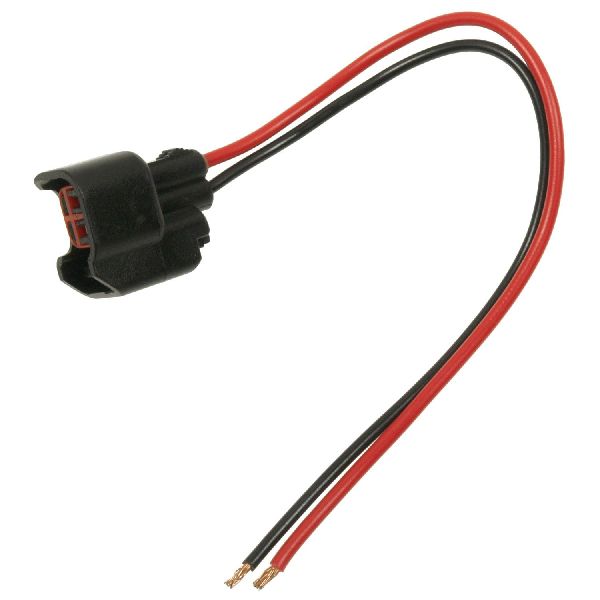
Aftermarket price range: $60-$110 - Fuel Injector Connector Pigtail — The connector itself can become brittle from heat and fail, causing an open circuit. Replacing the pigtail is often necessary if the locking tab is broken or pins are corroded.
Trusted brands: Standard Motor Products, Dorman
OEM price range: $20-$40
Aftermarket price range: $15-$30 - Upper and Lower Intake Manifold Gaskets — These must be replaced anytime the intake manifold is removed to access the fuel injectors on the 3.8L V6. Reusing old gaskets will cause vacuum leaks.
Trusted brands: Hyundai (OEM), Fel-Pro, Mahle
OEM price range: $40-$60
Aftermarket price range: $20-$40
Related Codes That Often Appear With This One
- P0305 — This code means 'Cylinder 5 Misfire Detected.' A P0205 will almost always cause a P0305 because the injector circuit fault prevents fuel from being delivered to cylinder 5, leading to a misfire.
- P0300 — This code for 'Random/Multiple Cylinder Misfire' can sometimes appear alongside P0205 if the single-cylinder misfire is severe enough to affect overall engine stability.
Platform-Specific Known Issues
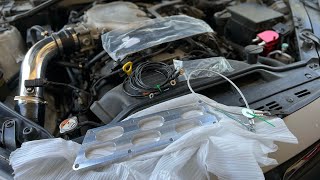
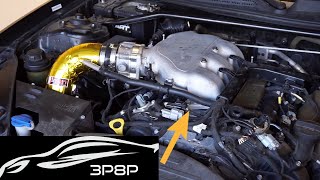
- Access to Cylinder 5 Requires Intake Manifold Removal: → Shop Engine Intake Manifold Unlike some V6 engines, accessing the fuel injectors on the passenger side bank (cylinders 1, 3, 5) of the 3.8L Lambda engine requires removing the upper intake manifold. 🎬 See how to remove the upper intake manifold This adds significant time and complexity to the diagnosis and repair, and requires replacing the intake gaskets.
- Owner Experience: Shorted Wire at Connector: A YouTube video by 'Carma Deez' documents a P0201 (Cylinder 1, same bank) issue on a Genesis Coupe where the problem was not the injector itself, but a short in the wiring right at the pigtail connector. The owner had to cut open the connector's boot to find the break and solder in a new pigtail to resolve the issue. This highlights the importance of thoroughly checking the wiring before replacing the injector.
Mechanic-Grade Diagnostic Values
- Fuel Injector Coil Resistance (Both MPI & GDI) — expected: 12 - 16 Ohms. Failure: A reading of infinity (OL) indicates an open circuit, while a reading near zero indicates a shorted coil. The key is to compare the reading from cylinder 5 to the other cylinders; a significant deviation points to the faulty injector.
- Low-Side Fuel Pressure at Idle (BK2 GDI Models) — expected: 480 - 519 kPa (69.6 - 75.3 psi). Failure: Pressure significantly below this range could indicate a weak in-tank fuel pump, but would typically affect all cylinders, not just one.
- Injector Pulse Width on Scan Tool — expected: Typically 1-10ms, but varies with engine load, temperature, and RPM. At idle, the pulse width for cylinder 5 should be nearly identical to the other five cylinders.. Failure: A pulse width of 0ms for cylinder 5 indicates the PCM is not commanding the injector to fire. A value significantly different from the other cylinders could indicate the PCM is attempting to compensate for another issue, but for a P0205 circuit code, the focus remains on the electrical integrity.
Scan Tool Commands That Help
- Hyundai GDS (Global Diagnostic System): Active Test / Component Activation — This is a crucial bidirectional test to perform after a noid light test comes back negative. This function allows the technician to command the PCM to fire only the cylinder 5 injector with the key on, engine off. Hearing a distinct 'click' from the injector confirms the PCM driver and the entire wiring circuit are functional, pointing definitively to a mechanically stuck or clogged injector. No click indicates a confirmed wiring or PCM driver issue. It can also be used to disable one injector at a time while the engine is running to gauge its effect on idle, confirming if the cylinder was contributing power.
Wiring & Ground Locations
- Engine Control Module (ECM) — Located in the left rear of the engine compartment.. The 'Injector 5 control' wire runs directly from this module to the fuel injector. All continuity tests of the injector harness must terminate at the corresponding pin on the ECM connector to verify the integrity of the entire circuit.
- Engine Ground Points — Key grounds are located on the engine block, intake manifold, and from the block to the chassis. One specific ground strap is located near the engine mount.. While a poor engine ground typically causes multiple, random issues, a corroded or loose ground can introduce electrical noise and voltage drops that could potentially affect the injector driver circuits within the ECM. Verifying clean and tight grounds is a fundamental step in any electrical diagnosis.
Real Owner Repair Stories
- Reddit user on r/mechanics (analogous vehicle) (2010 Ford Escape V6) — Rough idle, Check Engine Light with codes P0205 (Injector Circuit Malfunction Cyl 5) and P0305 (Cylinder 5 Misfire).
❌ Tried (didn't work) Replacing all six fuel injectors., Replacing all spark plugs.
✅ What actually fixed it The issue persisted after replacing the injector. The root cause was a poor connection at the injector's electrical connector (pigtail). The female pins inside the connector had likely been damaged or spread by heat, causing an intermittent open circuit even though a noid light test initially passed. Replacing the pigtail connector resolved the P0205 code.
When the Usual Fixes Don't Work
- While a failed fuel injector is a high-probability cause for P0205, extensive experience from technicians across many vehicle brands shows that the wiring and connector are just as, if not more, likely to be the culprit. On platforms like GM and Ram trucks, chafed wiring harnesses are the number one cause of this code. Before spending significant money on an injector and the labor to replace it (especially for the hard-to-access cylinder 5), it is critical to perform a thorough 'wiggle test' of the harness and closely inspect the connector pins. An intermittent fault in the wiring can mimic the symptoms of a failing injector coil perfectly, leading to a costly and ineffective repair if misdiagnosed.
OEM Part Supersession History
35310-3C550→35310-3C560— Likely an internal revision for reliability or manufacturing improvement.
Heads up: Applies to BK2 (2013-2016) GDI models. These parts are not compatible with BK1 MPI engines.
Model Year Variations Within This Range
- 2013-2016 (BK2): The shift to Gasoline Direct Injection (GDI) introduced a high-pressure fuel system. While P0205 is an electrical code, the injectors themselves are physically different and operate under much higher pressures than the MPI injectors on 2010-2012 models. The GDI engine is also prone to intake valve carbon buildup, which can cause misfires (P0305) but will not cause a P0205 circuit code.
Diagnostic Flowchart
Other Known Issues on This Vehicle
Issues unrelated to this code that are worth knowing about as an owner of this generation:
- Timing Chain Tensioner Wear / Startup Rattle 🔴 High — Becomes more common over 80,000-100,000 miles. A brief rattle on a cold start is the primary symptom. (Ref: No specific recall for the Genesis Coupe, but a known issue in the wider Lambda engine family.)
- GDI Intake Valve Carbon Buildup (BK2 Models) 🟠 Medium — Typically becomes noticeable between 60,000-100,000 miles, causing rough idle, hesitation, and misfire codes (like P0300). (Ref: No TSB; this is an inherent characteristic of GDI engines. Requires manual cleaning (walnut blasting).)
- Manual Transmission Grind / Notchy Shifting 🟠 Medium — Common complaint across all years, particularly in lower gears (1-2, 5-6). Often attributed to poor factory fluid and soft transmission mounts. (Ref: No recall, but owners report significant improvement with aftermarket transmission mounts and higher-quality fluid like Redline MT-85.)
- Taillight Gasket Failure / Water Leak 🟡 Low — Extremely common across all model years. The foam gaskets for the taillights degrade, allowing water into the housings and potentially the trunk.
- Interior Chrome Finish Peeling 🟡 Low — Common cosmetic issue on door handles, steering wheel trim, and cupholders where the clear coat over the 'chrome' plastic flakes off.
Used vs. New Parts: Buying Guide for This Vehicle
When a used part is the smart pick: For this repair, a used part only makes sense for the injector wiring pigtail if you can source one from a low-mileage, corrosion-free donor car. A used wiring harness section could also be viable. Buying used fuel injectors is generally not recommended, especially for the GDI (2013-2016) models.
Donor-vehicle mileage cap: roughly under 60000 miles for the part to have meaningful remaining life.
What to inspect on the donor part:
- For wiring: Check for any signs of brittleness, cracking in the insulation, or previous repairs (splices).
- For connectors: Ensure the locking tab is intact and there is no green or white corrosion on the pins.
- Avoid parts from vehicles in regions with heavy road salt usage.
OEM-only on this vehicle (don't cheap out):
- Fuel Injector (GDI Models): Due to the high pressures and precise nature of GDI injectors, OEM or top-tier remanufactured units (from Bosch, for example) are strongly recommended. Cheap aftermarket GDI injectors often have incorrect spray patterns or flow rates, leading to persistent performance issues.
- Powertrain Control Module (PCM): If the PCM is condemned, a new or professionally remanufactured unit programmed to your vehicle's VIN is the only reliable option.
Aftermarket brands forum-validated for this vehicle:
- Bosch (often the OEM supplier)
- Standard Motor Products (for connectors and some injectors)
- Fel-Pro, Mahle (for intake gaskets)
Brands owners have reported issues with on this vehicle:
- Unnamed, no-brand injectors from online marketplaces. The quality control is often non-existent, and they are a common source of repeat failures.
Real Owner Stories
Aggregated from forums and TSBs cited above. Mileages and costs reflect what owners reported in those sources.
Hyundai Genesis Coupe 3.8L
Symptoms: The owner experienced a P0201 code (same bank as P0205) caused by a short in the wiring right at the pigtail connector.
What fixed it: The owner cut open the connector's boot to find the break and soldered in a new pigtail.
Source hint: YouTube video by 'Carma Deez' cited in vehicle_specific_issues
Hyundai Genesis Coupe
Symptoms: The owner reported cut injector wires causing an open circuit.
What fixed it: The issue was attributed to rodents damaging the wiring harness.
Source hint: Reddit r/genesiscoupe thread titled 'fuel_injector_issue'
2010-2016 Hyundai Genesis Coupe 3.8L
Symptoms: Misfire codes on cylinder 5 (P0305) and ignition coil circuit issues (P0355).
What fixed it: Diagnosis confirmed the location of cylinder 5 as the passenger side near the firewall for troubleshooting.
Source hint: gencoupe.com thread titled 'p0305-and-p0355'
Related OBD-II Codes
Frequently Asked Questions
Where is the cylinder 5 fuel injector located on the 3.8L Lambda RS GDi engine?
Can I replace the cylinder 5 injector myself on my Genesis Coupe 3.8L?
Is there a TSB for the P0205 code or fuel injector failure on the 2010-2016 Genesis Coupe?
What is the correct resistance for a fuel injector on the 3.8L Lambda engine?
Could the P0205 code be caused by something other than the injector itself?
Should I buy a used fuel injector to save money on this repair?
Helpful Videos

Used OEM Parts in Stock
New Aftermarket Parts Available


The information in this article is provided for general reference and educational purposes only. Vehicle specifications, procedures, and part compatibility can vary by production date, trim level, and region. Always consult your vehicle's factory service manual and verify part numbers before purchasing or performing repairs. Safety-critical components such as airbags, seat belts, and braking systems should be installed by a qualified professional.
- Hyundai Genesis Coupe:
- 🧭 Diagnostic Flowchart
- 🎬 Helpful Videos
- 🛍️ Shop This Part
- What's Unique About the 2010-2016 Hyundai Genesis Coupe
- Symptoms You May Notice
- Most Likely Causes
- Rare But Worth Checking
- Diagnosis Steps
- Parts You'll Likely Need
- Related Codes That Often Appear With This One
- Platform-Specific Known Issues
- Mechanic-Grade Diagnostic Values
- Scan Tool Commands That Help
- Wiring & Ground Locations
- Real Owner Repair Stories
- When the Usual Fixes Don't Work
- OEM Part Supersession History
- Model Year Variations Within This Range
- Other Known Issues on This Vehicle
- Used vs. New Parts: Buying Guide for This Vehicle
- Real Owner Stories
- Hyundai Genesis Coupe 3.8L
- Hyundai Genesis Coupe
- 2010-2016 Hyundai Genesis Coupe 3.8L
- Related OBD-II Codes
- Frequently Asked Questions
- 🎟️ Get 5% Off