

P0205 on 2008-2010 Saturn VUE 3.6L: Cylinder 5 Injector Circuit Fixes
For the 2008-2010 Saturn VUE with the 3.6L V6, a P0205 code is most often caused by a chafed wiring harness rubbing against the engine, a known issue covered by GM service bulletin #PIP4924D and its revisions. Before replacing the injector, which is located on the difficult-to-access rear bank, thoroughly inspect the harness for damage where it passes over the valve covers and intake, as a simple wire repair may solve the problem.
- P0205 on this vehicle is an electrical fault, not a fuel pressure or clogged injector issue.
- Always inspect the wiring harness for chafing damage as per TSB #PIP4924D before buying any parts. This is the most probable cause.
- Cylinder 5 is on the rear bank (firewall side), making access difficult. Replacing the injector requires removing the upper intake manifold.
- A noid light is a cheap and effective tool to quickly determine if the problem is the injector or the wiring/PCM.
- If you replace the injector, you must also replace the upper intake manifold gaskets to prevent vacuum leaks.
What's Unique About the 2008-2010 Saturn VUE
The 2008-2010 Saturn VUE with the 3.6L LLT V6 engine is part of a large GM family that includes the Chevy Traverse, GMC Acadia, and Buick Enclave. A widely known GM Technical Service Bulletin, most recently #PIP4924E, specifically addresses injector circuit codes like P0205 across these vehicles. The TSB highlights a common vulnerability where the fuel injector wiring harness rubs against engine components like the intake plenum, valve cover bolts, fuel lines, or the sharp edge of the cylinder head. This makes a wiring fault a higher-than-usual probability compared to other vehicles where the injector itself is almost always the primary suspect. Cylinder 5 is on the rear bank (firewall side), making access for diagnosis and repair labor-intensive as it requires removing the upper intake manifold.
Symptoms You May Notice
- Check Engine Light is on
- Rough or uneven idle
- Engine misfire, felt as a stumble or shudder
- Loss of power and poor acceleration
- Increased fuel consumption
- Engine may be hard to start or stall.
- Strong fuel smell from the exhaust.
- Replacing the spark plug or ignition coil for cylinder 5. While these parts can cause a misfire (code P0305), they will not cause an electrical circuit code like P0205.
Most Likely Causes
- Chafed or Damaged Fuel Injector Wiring Harness 🔴 High Probability → Shop Engine Wiring Harness A known issue documented in GM TSB #PIP4924D and its revisions. The harness is routed in a way that it frequently rubs against the intake plenum, valve cover bolts, fuel lines, or the side of the cylinder head, causing an open or short circuit.
How to confirm: Visually inspect the entire length of the wiring harness for cylinder 5, which is on the rear bank. This requires removing the upper intake manifold. Pay close attention to points where it contacts other engine parts. Perform a "wiggle test" on the harness with the engine running (if possible before disassembly) to see if it affects the idle.
Typical fix: Repair the damaged section of wire using butt connectors and heat shrink tubing. Protect the repaired area with new wire loom or electrical tape. If the damage is at the connector, replace the connector pigtail. Secure the harness away from sharp edges to prevent recurrence.
Est. part cost: $15-$50 - Faulty Cylinder 5 Fuel Injector 🟡 Medium Probability → Shop Fuel Injector The direct injection fuel injectors on the LLT engine operate under high pressure and can fail electrically or mechanically over time.
How to confirm: Swap the cylinder 5 injector with an adjacent one on the same bank (e.g., cylinder 3). Clear the codes and run the engine. If the code changes to P0203 (Cylinder 3 Injector Circuit), the injector is bad. Alternatively, check the injector's resistance with a multimeter. For the LLT engine, the expected resistance is 11.8-12.6 Ohms. An open (infinite resistance) or shorted (zero resistance) reading indicates a bad injector. Note: Some sources incorrectly state a lower resistance (1.2-2.5 Ohms), which applies to the newer LFX engine, not the LLT.
Typical fix: Replace the faulty fuel injector. Since cylinder 5 is on the rear bank, this requires removing the upper intake manifold, so all intake gaskets must be replaced at the same time. It is often recommended to replace all three injectors on the rear bank simultaneously to ensure balanced fuel flow and avoid repeat labor.
Est. part cost: $60-$165 - Corroded or Loose Injector Connector ⚪ Low Probability
How to confirm: After removing the intake manifold, disconnect the electrical connector at the #5 fuel injector. Inspect the pins for corrosion, moisture, or a loose fit. Check for bent or pushed-out terminals.
Typical fix: Clean the connector terminals with electrical contact cleaner or replace the connector pigtail if it's damaged or won't lock securely.
Est. part cost: $15-$40
Rare But Worth Checking
- Faulty Powertrain Control Module (PCM): → Shop Engine Control Module (ECM) This is the least likely cause. The internal driver circuit for the injector can fail. All other possibilities, especially wiring and the injector itself, must be exhaustively ruled out before condemning the PCM.
Diagnosis Steps
- Scan the vehicle for all DTCs. Note if P0305 or other injector codes (P0201, P0203, P2146) are present.
- Identify Cylinder 5: On the transverse 3.6L V6, the rear bank against the firewall contains cylinders 1, 3, and 5, from passenger side to driver's side. Cylinder 5 is the rearmost cylinder on the driver's side.
- Perform a preliminary 'wiggle test' on the visible sections of the engine wiring harness while the engine is idling, listening for any change in engine sound.
- Disconnect the cylinder 5 injector connector (requires intake manifold removal). Test for a signal using a noid light while the engine is cranking. The light should flash steadily. If it's off or stays on solid, the problem is in the wiring or the PCM.
- If the noid light test is inconclusive, check for 12V power on one wire of the connector with the key on. The other wire is the control wire, which the PCM pulses to ground.
- With the engine off, test the fuel injector's resistance using a multimeter. The correct value for the 3.6L LLT engine is 11.8-12.6 Ohms. Compare the reading for cylinder 5 to a known-good injector on the same engine. A reading of infinity (open) or near-zero (short) confirms a failed injector.
- If the injector tests good, perform a thorough visual inspection of the fuel injector wiring harness for cylinder 5, focusing on the chafe points mentioned in TSB #PIP4924D (against the intake plenum, valve cover bolts, fuel lines, and cylinder head edges).
- If no visible damage is found, perform a continuity check on both the power and control wires between the PCM connector and the injector connector to find a hidden open or short to ground. Resistance should be less than 0.5 ohms.
Parts You'll Likely Need
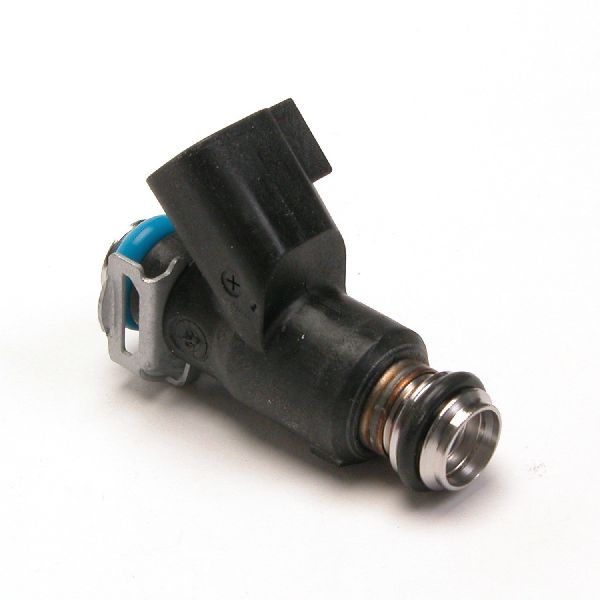
- Fuel Injector
(OEM #12669384)— If the injector's internal coil has failed (open or shorted), it must be replaced. This is the second most common cause after wiring issues. This part number supersedes 12638530, 12611545, and 12632255.
Trusted brands: ACDelco, Bosch, Standard Motor Products
OEM price range: $115-$165
Aftermarket price range: $60-$100 - Fuel Injector Connector Pigtail
(OEM #PT2887)— If the wiring is damaged right at the connector, or the connector itself is broken from heat and vibration, replacing the pigtail is the standard repair.
Trusted brands: ACDelco, Dorman
OEM price range: $25-$40
Aftermarket price range: $15-$25 - Upper Intake Manifold Gasket Set
(OEM #12673300)— Cylinder 5 is on the rear bank, and accessing it requires removing the upper intake manifold. The gaskets are single-use and must be replaced to prevent vacuum leaks.
Trusted brands: ACDelco, Fel-Pro, Mahle
OEM price range: $40-$60
Aftermarket price range: $20-$35
Related Codes That Often Appear With This One
- P0305 — This code means 'Cylinder 5 Misfire Detected.' A P0205 fault directly causes a misfire because the injector isn't delivering fuel, so this code is almost always present.
- P0201, P0203 — If multiple injector codes for the same bank (Bank 1: cylinders 1, 3, 5) appear, it strongly suggests a widespread wiring harness issue or a shared ground fault rather than multiple individual injector failures.
- P2146 — This code means "Fuel Injector Group 'A' Supply Voltage Circuit/Open". Bank 1 (cylinders 1, 3, 5) is Group 'A'. Its presence points towards a problem with the shared power or ground circuit for that entire bank of injectors, often caused by the same chafed harness issue.
Technical Service Bulletins (TSBs) & Recalls
- PIP4924D / PIP4924E: Addresses misfires and various injector circuit DTCs (P0201-P0206, P2146, etc.) on 3.0L and 3.6L engines. It advises technicians to inspect the fuel injector wiring harness for chafing at specific, listed contact points before replacing any parts. Manufacturer TSB #PIP4924D specifically notes that technicians may find DTC P0205 alongside other circuit codes like P2146 or P216A when a misfire is present.
Platform-Specific Known Issues
- The fuel injector wiring harness is known to chafe against the intake plenum, valve cover bolts, fuel lines, and the side of the cylinder head, causing open or short circuits. This is documented in GM TSB #PIP4924D and its later revisions like PIP4924E.
Mechanic-Grade Diagnostic Values
- Fuel Injector Coil Resistance (3.6L LLT Engine) — expected: 11.8 - 12.6 Ohms. Failure: A reading of infinity (Open Loop), near-zero (short), or significantly outside this range indicates a failed injector coil.
- Injector Circuit Continuity — expected: < 0.5 Ohms. Failure: Higher resistance indicates a problem in the wiring between the PCM and the injector connector.
- Injector Pulse Width (at normal idle) — expected: 2 - 4 milliseconds (ms). Failure: A value of 0 ms on cylinder 5 while other cylinders show a normal pulse width indicates the ECM is not commanding the injector.
- High Pressure Fuel System Pressure (at Idle) — expected: Approximately 508 psi (35 bar). Failure: While not a direct cause of a circuit code, significantly low pressure could indicate related fuel system issues that warrant investigation.
Scan Tool Commands That Help
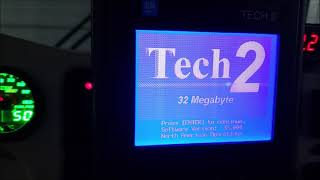
- GM Tech 2 / GDS2: Fuel Injector Balance Test — This bidirectional test is used after electrical circuit integrity is confirmed. The tool commands the fuel pump to prime the rail, then pulses each injector individually and measures the corresponding pressure drop. An injector with a pressure drop significantly different from the others is likely mechanically faulty (clogged or weak), helping to differentiate an electrical P0205 from a flow issue.
- GM Tech 2 / GDS2: Injector Control Circuit Test Status / Active Fuel Injection Test (AFIT) — This function allows a technician to observe the live status of the injector circuits as reported by the ECM while the engine is running. It can help confirm if the ECM is detecting the electrical fault in real-time.
Wiring & Ground Locations
- G103 / G104 — G103 is on the front of the passenger side (Bank 1) cylinder head. G104 is on the rear of the driver's side (Bank 2) cylinder head.. These are primary grounds for the Engine Control Module (ECM). A loose or corroded ground here can cause a host of erratic electrical issues, including false injector circuit codes.
- G107 — Located at the rear of the engine.. This is a major engine block ground. Since the injector circuits are controlled by the ECM grounding the circuit, a solid engine ground is critical for proper operation.
- Injector Circuit Wiring — The wires for each injector run from the ECM to the injector as a twisted pair.. The LLT engine uses a high-side and low-side driver for each injector. For cylinder 5 (Bank 1), this involves two specific control wires from the ECM. Knowing they are a twisted pair helps in locating them within the main harness for continuity testing.
OEM Part Supersession History
12638530, 12611545, 12632255→12669384— Part has been updated by the manufacturer over time for reliability or manufacturing improvements.
Heads up: Ensure you are ordering the correct injector for the LLT engine. The later LFX engine (2012+) uses a physically similar but electrically different low-impedance injector that is not compatible.
Model Year Variations Within This Range
- 2008-2009: The 2008-2009 Saturn VUE could also be equipped with the 3.6L LY7 engine, a port-injected predecessor to the direct-injected LLT. While they share architecture, the fuel system, injectors, and PCM are different. The P0205 diagnosis and the TSB regarding harness chafing are most specifically associated with the direct-injected LLT engine.
Diagnostic Flowchart
Other Known Issues on This Vehicle
Issues unrelated to this code that are worth knowing about as an owner of this generation:
- Premature Timing Chain Stretch 🔴 High — Very common, often appearing between 70,000 and 120,000 miles. Triggers codes like P0008, P0009, P0017, P0019. (Ref: TSB #12-06-01-009F, Special Coverage Adjustment #11340C (Now Expired).)
- Cracked 3-5-R Transmission Wave Plate 🔴 High — Common failure in the 6T70/6T75 automatic transmission, leading to sudden loss of 3rd, 5th, and Reverse gears. (Ref: Special Coverage Adjustment #14404B (Now Expired).)
- Power Steering Fluid Leak 🟠 Medium — A loose nut on the power steering line can cause a fluid leak, which poses a fire risk if it contacts the hot exhaust. (Ref: Safety Recall #08V470000 (GM Recall #08284).)
- Leaking Fuel Injectors 🟠 Medium → Shop Fuel Injector — Injectors can leak fuel into the cylinders when off, causing rich running conditions, hard starting when warm, and codes like P2097. (Ref: TSB #PIP4964F.)
Used vs. New Parts: Buying Guide for This Vehicle
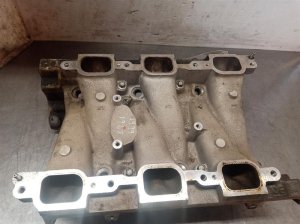
When a used part is the smart pick: A used engine wiring harness from a junkyard can be a cost-effective fix if yours is severely damaged or has had multiple failed repairs. It is often a better choice than attempting to patch numerous brittle wires. A used upper intake manifold is also a viable option if the original is cracked or damaged during removal.
Donor-vehicle mileage cap: roughly under 120000 miles for the part to have meaningful remaining life.
What to inspect on the donor part:
- For a wiring harness: Inspect for flexibility (not brittle or stiff), check for previous repairs (look for butt connectors or electrical tape), and ensure all connector housings are intact and not cracked.
- For a fuel injector: Avoid. The failure rate is moderate and the labor to replace it is high. A used injector's remaining lifespan is unknown, and it could be clogged or have a weak coil.
- For an intake manifold: Check for cracks, especially around bolt holes. Ensure all threaded inserts are present and intact. Verify the gasket surfaces are flat and not warped.
OEM-only on this vehicle (don't cheap out):
- Fuel Injector: While high-quality aftermarket options exist, using an OEM (ACDelco) injector is strongly recommended for direct injection systems to ensure correct flow rates, spray patterns, and longevity under high pressure. The cost savings of a cheap aftermarket injector do not outweigh the risk of a repeat failure and the significant labor involved.
Aftermarket brands forum-validated for this vehicle:
- Intake Gaskets: Fel-Pro, Mahle
Brands owners have reported issues with on this vehicle:
- No-name or unbranded fuel injectors sold on online marketplaces. These often have inconsistent quality control and may fail prematurely or cause performance issues.
Real Owner Stories
Aggregated from forums and TSBs cited above. Mileages and costs reflect what owners reported in those sources.
2009 Chevrolet Traverse (3.6L LLT)
Symptoms: Owner experienced a persistent P0205 code with a noticeable engine misfire and rough running.
What fixed it: The problem was traced to the injector wiring harness, which had rubbed through on a sharp edge of the cylinder head near the firewall. Repairing the damaged wire and protecting the harness with new loom resolved the code.
Source hint: GM Lambda Platform Forums (AcadiaForum.net, TraverseForum.com)
Related OBD-II Codes
Frequently Asked Questions
I have a P0205 code on my 2009 Saturn VUE 3.6L. Is there a TSB for this issue?
Where is cylinder 5 located on the 3.6L V6 in my Saturn VUE?
What is the correct resistance for the cylinder 5 fuel injector on my 2010 VUE LLT engine?
What is the most likely cause of a P0205 code on this specific vehicle?
If I need to replace the fuel injector for cylinder 5, what other parts must I replace at the same time?
Are other GM vehicles with the 3.6L engine known to have this same wiring problem?
Helpful Videos
Used OEM Parts in Stock
New Aftermarket Parts Available



The information in this article is provided for general reference and educational purposes only. Vehicle specifications, procedures, and part compatibility can vary by production date, trim level, and region. Always consult your vehicle's factory service manual and verify part numbers before purchasing or performing repairs. Safety-critical components such as airbags, seat belts, and braking systems should be installed by a qualified professional.
- Saturn VUE:
- 🧭 Diagnostic Flowchart
- 🎬 Helpful Videos
- 🛍️ Shop This Part
- What's Unique About the 2008-2010 Saturn VUE
- Symptoms You May Notice
- Most Likely Causes
- Rare But Worth Checking
- Diagnosis Steps
- Parts You'll Likely Need
- Related Codes That Often Appear With This One
- Technical Service Bulletins (TSBs) & Recalls
- Platform-Specific Known Issues
- Mechanic-Grade Diagnostic Values
- Scan Tool Commands That Help
- Wiring & Ground Locations
- OEM Part Supersession History
- Model Year Variations Within This Range
- Other Known Issues on This Vehicle
- Used vs. New Parts: Buying Guide for This Vehicle
- Real Owner Stories
- 2009 Chevrolet Traverse (3.6L LLT)
- Related OBD-II Codes
- Frequently Asked Questions
- 🎟️ Get 5% Off