

P0206 on 1998-2004 Audi A6: Injector Circuit Malfunction Cylinder 6 Causes and Fixes
P0206 on a C5 Audi A6 indicates an electrical problem with the fuel injector circuit for cylinder 6. The most common causes are a failed fuel injector or damaged wiring. On V6 engines, cylinder 6 is the rearmost cylinder on the driver's side (US). Expect to pay $50-$150 for a quality aftermarket injector and consider it a moderately difficult DIY job due to access, especially on the 2.7T engine.
- P0206 is an electrical circuit code for the cylinder 6 fuel injector, not a general misfire code.
- The most likely cause is a failed fuel injector, which can be confirmed by measuring its resistance or swapping it with another cylinder.
- Always inspect the wiring harness and connector for damage before replacing parts, as brittle wires are common on these older Audis.
- Driving with a flashing Check Engine Light can cause expensive damage to your catalytic converter.
- Replacing the injector seals is mandatory when performing this repair to prevent future leaks.
What's Unique About the 1998-2004 Audi A6
On the 1998-2004 (C5) Audi A6, the V6 engines are known for tightly packed engine bays, especially the twin-turbo 2.7T model where intake plumbing obscures the fuel rails. This can make accessing the fuel injectors and their wiring harnesses more challenging than on other vehicles. The plastic insulation on wiring harnesses and the injector connector clips of this vintage are notoriously brittle from age and countless heat cycles. This increases the likelihood of chafing or breaks in the injector wiring, or a poor connection from a broken connector tab, which are primary causes for a P0206 circuit code.
Symptoms You May Notice
- Check Engine Light is on (may be flashing if the misfire is severe)
- Rough engine idle and shaking
- Noticeable loss of power and sluggish acceleration
- Engine hesitation or stumbling
- Reduced fuel economy
- Strong smell of unburnt fuel from the exhaust
- Engine may be hard to start
- Replacing the spark plug or ignition coil for cylinder 6. While these parts can cause a misfire code (P0306), they will not cause an injector circuit code (P0206). P0206 is specifically an electrical fault related to the fuel injector circuit, not a combustion quality issue.
Most Likely Causes
- Failed Cylinder 6 Fuel Injector 🔴 High Probability → Shop Fuel Injector Fuel injectors are wear-and-tear components. After 20+ years of operation, the internal electronic coil can fail, creating an open or short circuit. Bosch is the original equipment manufacturer (OEM) for these injectors.
How to confirm: Disconnect the injector and measure its resistance with a multimeter. It should typically be between 12-16 ohms. An infinite reading (OL) means an open circuit, while a very low reading indicates a short. The most definitive test is to swap the cylinder 6 injector with an adjacent one (e.g., cylinder 5). Clear the codes and run the engine. If the code changes to P0205, the injector is faulty.
Typical fix: Replace the faulty fuel injector. It is highly recommended to replace the O-rings and seals on all injectors that are removed during the process to prevent fuel and vacuum leaks.
Est. part cost: $50-$150 - Damaged Wiring Harness 🟡 Medium Probability Engine heat and vibrations cause the wiring insulation to become brittle and crack over time. On the C5 platform, the harness can chafe against the firewall or other engine components near the back of the engine bay, leading to a short or open circuit.
How to confirm: Visually inspect the wiring leading to the cylinder 6 injector for any signs of melting, chafing, or breaks. Perform a continuity test from the injector connector back to the ECM plug using a multimeter to find any breaks in the wire. Gently wiggle the harness with the engine running to see if it induces or stops the misfire.
Typical fix: Repair the damaged section of wire using a new connector pigtail or by soldering and heat-shrinking the broken wire. Use automotive-grade wiring and ensure the repair is sealed from moisture.
Est. part cost: $10-$30 - Bad Injector Connector ⚪ Low Probability The plastic locking tab on the injector connector becomes extremely brittle with age and often breaks when disconnected. This can lead to a poor, intermittent connection that vibrates loose. Corrosion can also build up on the pins, causing high resistance.
How to confirm: Wiggle the connector while the engine is running to see if it affects the misfire. Visually inspect the connector pins for green or white corrosion or damage. Check for proper pin tension by ensuring the female pins grip a small pick.
Typical fix: Clean the connector pins with electrical contact cleaner. If the connector is damaged or the locking tab is broken, replace it with a new pigtail connector. The OEM part number for the connector housing is often 443906232.
Est. part cost: $10-$30
Rare But Worth Checking
- Faulty Powertrain Control Module (PCM/ECM): → Shop Engine Control Module (ECM) This is the least likely cause. The internal driver circuit for the #6 injector can fail. This should only be considered after all other possibilities (injector, wiring, connectors) have been exhaustively ruled out. A professional diagnosis is recommended to confirm before replacing the expensive PCM.
Diagnosis Steps
- Scan for Codes: Use an OBD-II scanner to confirm P0206 is the primary code. Note any other codes present, such as P0306 (Cylinder 6 Misfire).
- Visual Inspection: Locate the cylinder 6 fuel injector. On Audi V6 engines, cylinders 4, 5, and 6 are on the driver's side (Bank 2), with cylinder 6 being the rearmost, closest to the firewall. Inspect the injector's electrical connector and wiring for obvious damage, corrosion, or looseness.
- Test the Circuit Pulse with a Noid Light: Disconnect the injector harness and plug in a 'noid' light for European vehicles. Crank the engine. The light should flash steadily. If it flashes, the PCM and wiring are likely okay, pointing to a bad injector. If it does not flash or stays on continuously, there is a problem with the wiring or the PCM itself.
- Check Injector Resistance: Disconnect the injector and use a multimeter set to Ohms (Ω) to measure the resistance between the two pins on the injector. Compare the reading to the manufacturer's specification (typically 12-16 ohms for Bosch injectors). If it's out of spec (e.g., Open Loop 'OL' or zero ohms), the injector has failed.
- Swap the Injector: This is a highly effective real-world test. Swap the cylinder 6 injector with the one from cylinder 5. Clear the codes and run the engine. If the code returns as P0205 ("Injector Circuit / Open - Cylinder 5"), the injector is confirmed to be the faulty part. If P0206 returns, the issue is in the wiring or PCM.
- Check Wiring Continuity: If the injector tests good but the noid light doesn't flash, check for 12V power at one pin of the connector with the key on. Then, check the continuity of the signal (ground) wire from the other pin back to the PCM connector. A wiring diagram is essential for this step. Repair any breaks found.
- Suspect the PCM: If the injector and wiring are confirmed to be good, the final possibility is a failed injector driver in the PCM. This is rare and requires professional diagnosis to confirm before replacement.
Parts You'll Likely Need
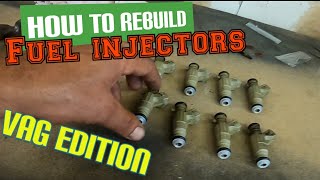
- Fuel Injector
(OEM #2.8L (AHA/ATQ): 078133551BA; 2.7T (APB): 078133551BL; 3.0L (AVK): 06C133551)— This is the most common failure point for a P0206 code, as the internal coil winding fails over time.
Trusted brands: Bosch (OEM), Hitachi
OEM price range: $120-$180
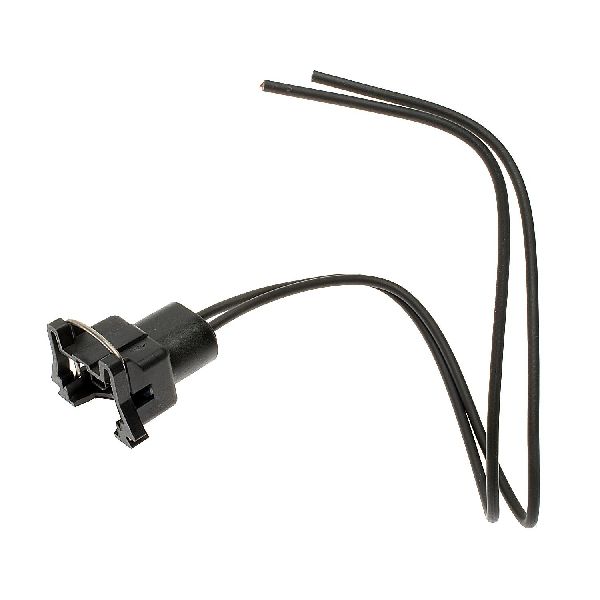
Aftermarket price range: $50-$100 - Fuel Injector Connector Pigtail
(OEM #443906232 (Connector Housing), 06A973722 (Pigtail Assembly))— Needed if the original connector or its wiring is corroded, melted, or has a broken locking tab, which is very common.
Trusted brands: Genuine VW/Audi, Dorman, Standard Motor Products
OEM price range: $25-$40
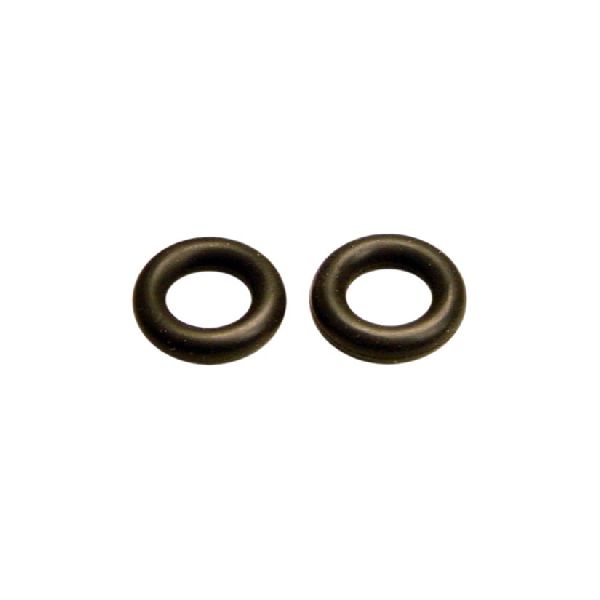
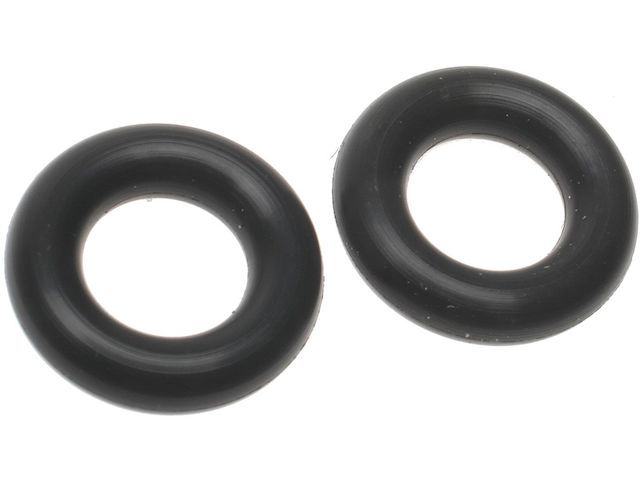
Aftermarket price range: $10-$25 - Fuel Injector Seal Kit — It is critical to replace the rubber O-rings and any other seals whenever an injector is removed to prevent fuel and vacuum leaks. Most new injectors come with these.
Trusted brands: Bosch, Elring, Victor Reinz
OEM price range: $10-$20
Aftermarket price range: $5-$15
Related Codes That Often Appear With This One
- P0306 — P0306 means "Cylinder 6 Misfire Detected." A P0206 fault will prevent the injector from delivering fuel, which directly causes a misfire in that cylinder.
- P0300 — This indicates a "Random/Multiple Cylinder Misfire." While less common, a severe electrical issue or intermittent fault in the injector circuit could potentially be interpreted by the PCM as a random misfire initially.
- P0171 / P0174 — System Too Lean (Bank 1 / Bank 2). If the injector is not firing at all, the oxygen sensor for that bank will detect the excess air (oxygen) from the non-combusting cylinder and may set a lean code for the entire bank.
Platform-Specific Known Issues
- Access on 2.7T Engine: On the 2.7T engine, the fuel injectors are located underneath the upper intake plenum. This plenum must be removed to gain access, adding significant time and complexity to the job compared to the naturally aspirated 2.8L and 3.0L engines.
- Brittle Connector Clips: The plastic locking tabs on the fuel injector connectors become extremely brittle from over two decades of heat cycles. They frequently snap off during removal, preventing the connector from seating securely and leading to intermittent connection faults that can mimic a failed injector.
- Clogged Plenum Drains and ECU Water Damage: The C5 A6 is known for its plenum drains under the windshield cowling becoming clogged with leaves and debris. This allows rainwater to fill the plenum area, potentially flooding the electronics box that houses the Engine Control Unit (ECU). Water damage to the ECU or its connectors is a notorious cause of bizarre electrical faults on this platform, including injector circuit codes like P0206.
Mechanic-Grade Diagnostic Values
- Injector Pulse Width (at warm idle) — expected: 1.5 ms - 2.9 ms. Failure: A value between 2.9 ms and 5.5 ms can indicate a clogged injector causing the ECU to compensate; a value near 0 or excessively high suggests a circuit or ECU driver issue.
- Injector Connector Voltage (cranking) — expected: 4.5 V - 5.5 V. Failure: Values outside this range suggest a circuit fault between the ECU and the injector.
- Injector Coil Resistance — expected: 12 - 16 Ohms. Failure: A reading of infinity (OL) indicates an open coil; a reading near zero indicates a shorted coil. Both require injector replacement.
Hidden / Shadow Codes Worth Checking
- Misfire Counter (VCDS Measuring Blocks 015 & 016): While not a separate trouble code, a VCDS-capable scanner can monitor live misfire counts for each cylinder. This allows a technician to see the frequency and conditions under which cylinder 6 is misfiring, which can help differentiate an intermittent wiring fault from a hard failure. (see via VCDS (VAG-COM) -> Engine (01) -> Measuring Blocks (08) -> Groups 015 (at idle) and 016 (last driving cycle).)
Scan Tool Commands That Help
- VCDS (VAG-COM): Output Tests (Sequential) — Use this function with the engine off to command the ECU to individually cycle each injector. If all other injectors click during the test but cylinder 6 does not, it strongly points to an issue with the injector, its wiring, or the ECU driver for that specific circuit. Note: For injectors, this test often requires pressing the gas pedal to begin.
- VCDS (VAG-COM): Advanced Measuring Values — This allows for simultaneous logging of up to 12 data points, such as injector pulse width for cylinder 6, engine RPM, and short/long term fuel trims for Bank 2. This is useful for diagnosing intermittent faults by correlating the P0206 event with other engine parameters.
Wiring & Ground Locations
- N84 — Cylinder 6 Fuel Injector, located on the driver's side (Bank 2) fuel rail, rearmost position towards the firewall.. This is the component the P0206 code refers to.
- ECU Injector Ground Pin — The ECU provides the switched ground signal to fire the injector. The specific pin varies by ECU part number and engine, but it is the non-common-power wire at the injector connector. For example, on some Motronic systems, the ECU provides ground via pins 16, 17, 34, 35, 36.. A break in this wire between the ECU and injector is a common cause of P0206. When testing for voltage at the injector connector, you must test between the power wire and a known good chassis ground, not across the two pins of the connector itself, as this ground path is only completed when the ECU commands the injector to fire.
- Engine Compartment Ground Points — There are several key ground points in the engine bay. One is on the firewall, and others are on the engine block itself. A wiring diagram shows a primary harness ground point (labeled '85' in some diagrams) in the engine compartment wiring harness.. A poor engine or ECU ground can cause unstable voltages and intermittent electrical problems throughout the engine management system, potentially triggering false circuit codes.
- ECU Electronics Box — Located in the plenum chamber at the base of the windshield, typically on the driver's side.. This area is prone to water collection if the plenum drains are clogged. Water can enter the E-box and corrode the ECU connectors or damage the ECU itself, leading to injector circuit faults.
When the Usual Fixes Don't Work
- While the common misdiagnosis is to suspect ignition components for an injector circuit code, there are rare cases where other electrical faults can be misleading. In one documented case on a different vehicle with a P0206 code, the owner was repeatedly advised to change the injector. The actual problem was a poor ground connection for the ignition coil. After swapping the coil made the misfire move, the final fix was simply cleaning and tightening the coil's ground point, which resolved the P0206 code without replacing any parts. This highlights the importance of checking all related electrical connections, even those not directly in the injector circuit, for looseness or corrosion before replacing expensive components.
OEM Part Supersession History
e.g., 078133551BL (Bulky body)→Modern slim-body EV6/EV14 style injectors— Improved internal electronics, better fuel atomization from multi-hole nozzles (e.g., 4-hole), and improved leak resistance.
Heads up: While a direct plug-and-play fit in terms of length and electrical connection, the physical appearance is very different. A user may think they have received the wrong part if they are not aware of this design update.
Model Year Variations Within This Range
- 1998-2001 (Pre-Facelift) vs 2002-2004 (Facelift): The C5 platform received a facelift for the 2002 model year. The 2.8L V6 was replaced with the 3.0L V6. While the 2.7T was available across the range, ECUs and wiring may differ slightly. Facelift models have a more integrated immobilizer system tied to the ECU, making ECU swaps more complex than on pre-facelift cars.
Diagnostic Flowchart
Other Known Issues on This Vehicle
Issues unrelated to this code that are worth knowing about as an owner of this generation:
- Timing Belt and Related Components Failure 🔴 High — Service interval is critical. Originally 105k miles, but revised to 75k miles for the 3.0L V6. Failure of the belt, tensioner, or water pump is catastrophic for these interference engines.
- Instrument Cluster LCD Pixel Failure 🟡 Low — Extremely common. The central red information display (DIS) loses pixels over time, becoming unreadable, especially in hot weather.
- Torque Converter Failure (Tiptronic Automatic) 🔴 High — Common on 2.7T and 4.2L models, typically after 100k miles. Symptoms include shuddering/vibration under light acceleration between 1500-2500 RPM.
- Oil Sludge Buildup (2.8L & 3.0L V6) 🟠 Medium — Can occur if oil changes are neglected or incorrect oil is used. Sludge can clog the oil pickup tube screen, leading to oil starvation and engine damage.
- Camshaft Chain Tensioner Gaskets & Pads 🟠 Medium — The gaskets and plastic pads on the variable valve timing chain tensioners at the back of the cylinder heads wear out, causing oil leaks and rattling noises on startup.
- Brittle Plastic and Vacuum Lines 🟠 Medium — Very common across all engines. After years of heat cycles, numerous plastic components in the engine bay (PCV system, vacuum lines, connectors) become extremely brittle and break easily during service, leading to vacuum leaks and other issues.
Used vs. New Parts: Buying Guide for This Vehicle
When a used part is the smart pick: A used wiring harness or a connector pigtail from a donor car can be a good value, provided it is carefully inspected for brittleness, cracking, or previous repair attempts. Given the age of these vehicles, a used harness from a lower-mileage, dry-climate car may be in better condition than the original.
Donor-vehicle mileage cap: roughly under 120000 miles for the part to have meaningful remaining life.
What to inspect on the donor part:
- For wiring: Squeeze the plastic conduit; if it crumbles, the wires inside are likely just as brittle.
- For connectors: Check that the locking tab is intact and the plastic isn't chalky or cracked.
- Ask for photos of the part on the donor car before it was pulled, if possible, to assess its condition in-situ.
OEM-only on this vehicle (don't cheap out):
- Powertrain Control Module (ECU): While a used ECU is possible, it often requires specialized programming to match the vehicle's immobilizer and coding. For a guaranteed fix, a new or professionally refurbished, VIN-matched unit is the safest bet.
Aftermarket brands forum-validated for this vehicle:
- Bosch (Injectors - OEM supplier)
- Hitachi (Injectors)
- Standard Motor Products (Connectors)
- Dorman (Connectors)
Brands owners have reported issues with on this vehicle:
- Unnamed, no-brand injectors from online marketplaces. These often have inconsistent flow rates and high failure rates, leading to persistent running issues even if they resolve the initial circuit code.
Real Owner Stories
Aggregated from forums and TSBs cited above. Mileages and costs reflect what owners reported in those sources.
2002 Audi A6 2.7T V6
Symptoms: The car had a rough idle and a check engine light for P0206. Acceleration was sluggish.
What fixed it: After confirming the wiring was okay, the cylinder 6 fuel injector was replaced. This resolved the code.
Source hint: AudiWorld - C5 A6/S6 Discussion
2000 Audi A6 2.8L V6
Symptoms: An intermittent P0206 code kept appearing, causing a rough idle that would sometimes go away on its own.
What fixed it: The wiring harness leading to the cylinder 6 injector was found to be chafing against an engine component. Repairing the broken wire and securing the harness fixed the problem.
Source hint: Audizine Forums - B5/C5 Platform Sections
1999 Audi A6 2.8L V6
Symptoms: The engine would stumble and the P0206 code would appear, especially after the car had been worked on. Wiggling the connector on the injector would affect the idle.
What fixed it: The plastic locking tab on the injector connector was broken, causing a loose fit. Replacing the connector with a new pigtail provided a secure connection and solved the issue.
Source hint: Vehicle Specific Issue: Brittle Connector Clips
2003 Audi A6 3.0L V6
Symptoms: After a heavy rainstorm, the engine ran very poorly with a flashing check engine light and multiple codes, including P0206.
What fixed it: The plenum drains below the windshield were found to be clogged with leaves, which caused water to flood the box containing the ECU. The water-damaged ECU was the cause and had to be replaced.
Source hint: Vehicle Specific Issue: Clogged Plenum Drains and ECU Water Damage
Related OBD-II Codes
Frequently Asked Questions
Where is the cylinder 6 fuel injector located on my Audi A6 V6?
Is it much harder to replace the fuel injectors on my 2.7T engine compared to the 2.8L or 3.0L?
What is the correct electrical resistance for a fuel injector on my 1998-2004 A6?
The plastic clip on my injector connector broke. Is this a common problem?
Could a water leak be the cause of my P0206 code?
What is the most reliable way to confirm the injector is bad before I buy a new one?
Helpful Videos
We Have This Part in Stock


The information in this article is provided for general reference and educational purposes only. Vehicle specifications, procedures, and part compatibility can vary by production date, trim level, and region. Always consult your vehicle's factory service manual and verify part numbers before purchasing or performing repairs. Safety-critical components such as airbags, seat belts, and braking systems should be installed by a qualified professional.
- Audi A6:
- 🧭 Diagnostic Flowchart
- 🎬 Helpful Videos
- 🛍️ Shop This Part
- What's Unique About the 1998-2004 Audi A6
- Symptoms You May Notice
- Most Likely Causes
- Rare But Worth Checking
- Diagnosis Steps
- Parts You'll Likely Need
- Related Codes That Often Appear With This One
- Platform-Specific Known Issues
- Mechanic-Grade Diagnostic Values
- Hidden / Shadow Codes Worth Checking
- Scan Tool Commands That Help
- Wiring & Ground Locations
- When the Usual Fixes Don't Work
- OEM Part Supersession History
- Model Year Variations Within This Range
- Other Known Issues on This Vehicle
- Used vs. New Parts: Buying Guide for This Vehicle
- Real Owner Stories
- 2002 Audi A6 2.7T V6
- 2000 Audi A6 2.8L V6
- 1999 Audi A6 2.8L V6
- 2003 Audi A6 3.0L V6
- Related OBD-II Codes
- Frequently Asked Questions
- 🎟️ Get 5% Off