

P0206 on 1997-2003 BMW 5 Series: Injector Circuit Malfunction Causes and Fixes
P0206 on a BMW E39 5-Series almost always points to a failed fuel injector on cylinder 6. Swapping the injector with an adjacent cylinder is the easiest way to confirm. Expect to pay around $50-$100 for a quality aftermarket injector (like Bosch) and consider it a DIY-friendly job (2/5 difficulty).
- P0206 on your BMW E39 points to an electrical issue with the cylinder 6 fuel injector, not a spark or compression problem.
- The most likely cause is a failed fuel injector, which is a common failure on these older engines.
- The quickest way to diagnose a bad injector is to swap it with one from another cylinder (like cylinder 5) and see if the code follows the injector.
- Driving with this code is not recommended as it can lead to costly damage to your catalytic converter.
- This is a manageable DIY repair for those with basic tools, with the most common fix being a new fuel injector.
What's Unique About the 1997-2003 BMW 5 Series
For the E39 5-Series with the M52 and M54 inline-6 engines, the fuel injection system is robust but not immune to age-related failures. The primary culprits for a P0206 code are either the injector itself failing internally or issues with the wiring harness that becomes brittle over time. The plastic injector wire housing that runs across the engine can become brittle and crack, exposing wires. While a DME (ECU) failure is possible, it is far less common than a simple injector or wiring problem. The diagnostic process is straightforward for this platform, making it a common DIY repair for many owners.
Symptoms You May Notice
- Check Engine Light is on.
- Rough, shaking idle.
- Engine misfires, felt as a stutter or hesitation.
- Reduced engine power and sluggish acceleration. 🎬 Watch: How to fix BMW misfires and rough idle codes
- Decreased fuel economy.
- In some cases, a strong smell of fuel from the exhaust.
- Replacing spark plugs or ignition coils. While these can cause misfires (e.g., code P0306), they will not cause a P0206 circuit code. The P020x series of codes are specifically for the injector's electrical circuit, not combustion quality.
Most Likely Causes
- Failed Cylinder 6 Fuel Injector 🔴 High Probability → Shop Fuel Injector After many years and heat cycles, the internal coil windings of the injector can fail, creating an open circuit. The typical resistance for a healthy M52/M54 injector is between 10-16 ohms. A failed injector will often read as an open circuit (infinite resistance) with a multimeter.
How to confirm: Swap the cylinder 6 fuel injector with the cylinder 5 injector. Clear the codes and run the engine. If the code changes to P0205 (Cylinder 5 Injector Circuit), the injector is confirmed to be faulty. This is the most common and definitive DIY diagnostic step.
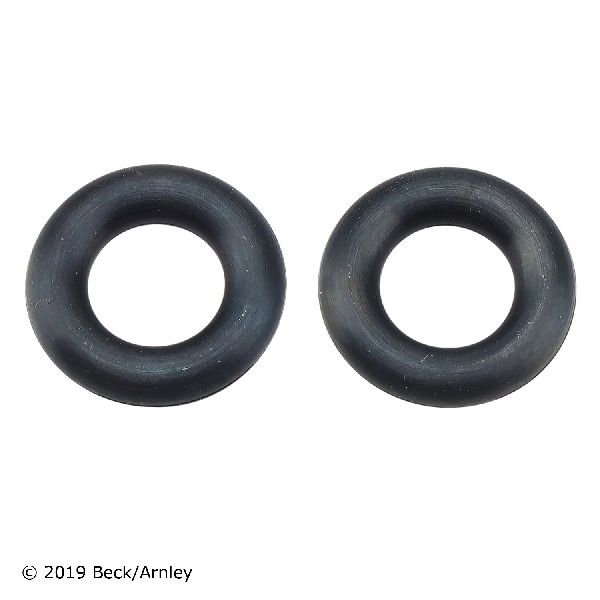
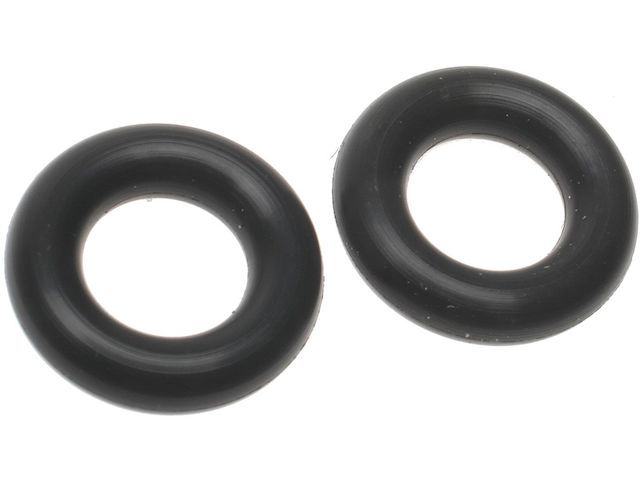
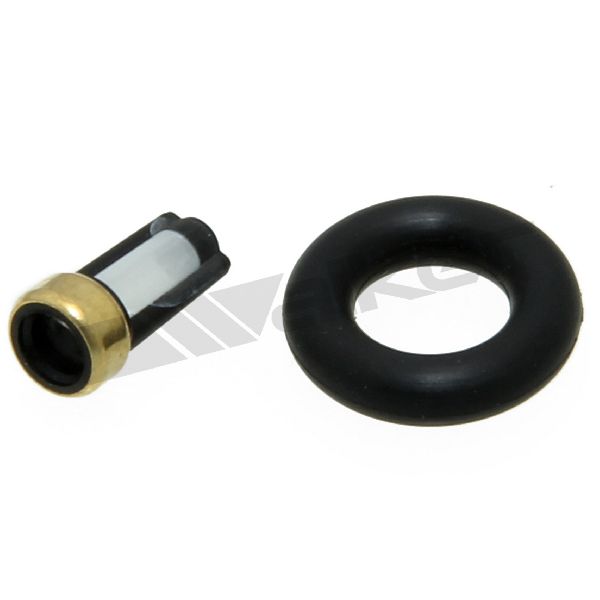
Typical fix: Replace the faulty fuel injector. It is often recommended to replace all six injectors at the same time for balanced performance, especially on high-mileage vehicles, but replacing just the failed one is also an option. Also, replace the injector's O-rings to prevent fuel leaks.
Est. part cost: $50-$120 - Wiring Harness or Connector Issue 🟡 Medium Probability The plastic insulation on the wiring harness in the engine bay can become brittle and crack from age and heat, leading to shorts or open circuits. The connector itself can also become corroded or loose. The injector wiring harness runs under a plastic cover that can also degrade and fail to protect the wires.
How to confirm: Visually inspect the wiring going to the cylinder 6 injector for any signs of cracking, fraying, or melting. Check the connector for corrosion or bent pins. Use a noid light to confirm if the injector is receiving a pulse signal from the DME. If the noid light flashes, the wiring and DME are likely good.
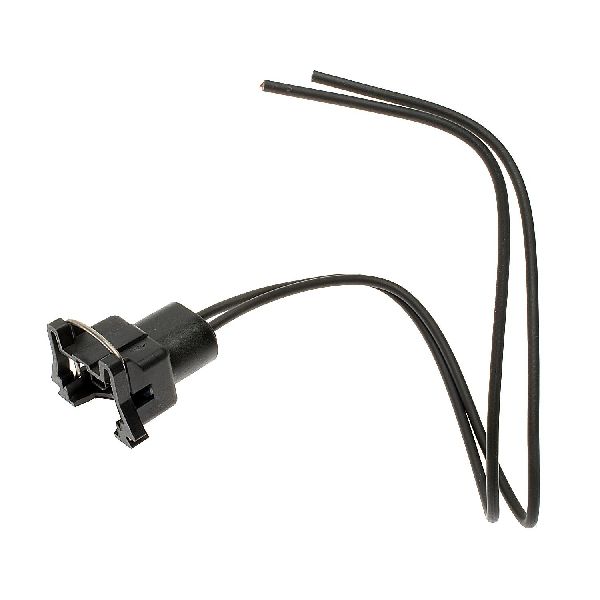
Typical fix: Repair the damaged section of wire or replace the injector pigtail connector.
Est. part cost: $10-$30
Rare But Worth Checking
- Faulty DME (Engine Computer): This is the least likely cause. The internal driver circuit in the DME that controls the injector can fail. This should only be considered after definitively ruling out the injector and wiring. In some forum discussions, owners have reported replacing the DME as a last resort which solved the problem.
Diagnosis Steps
- Read the fault codes with an OBD-II scanner to confirm P0206 and note any other codes present, such as P0306.
- Locate cylinder 6. On BMW inline-6 engines, this is the cylinder closest to the firewall (the rear of the engine bay).
- The easiest diagnostic step is to swap parts. Disconnect the battery. Carefully remove the fuel rail and swap the cylinder 6 injector with the cylinder 5 injector. Reassemble, reconnect the battery, clear the codes, and start the engine.
- Scan for codes again. If the code is now P0205, the fuel injector is bad and needs to be replaced.
- If the code remains P0206, the problem is in the wiring or the DME. The injector is likely good.
- Inspect the wiring harness and connector for cylinder 6. Look for any visible damage, corrosion, or loose connections. Wiggle the harness while the engine is running to see if it induces a change in idle, indicating an intermittent connection.
- Use a noid light to test the injector connector. Unplug the injector and plug in the noid light. Start the engine. The light should flash steadily. If it does not flash, or if it stays on continuously, there is a problem with the wiring or the DME.
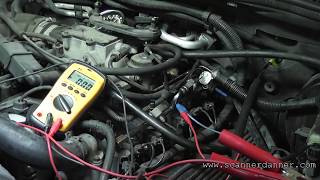
- If there is no pulse from the noid light, use a multimeter to check for 12V power at one pin of the connector with the ignition on. Then, check for continuity on the signal wire between the injector connector and the DME.
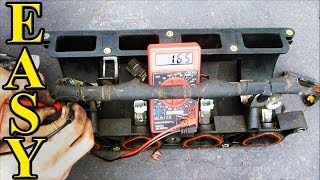
- As a final check, measure the resistance of the fuel injector itself using a multimeter. 🎬 Watch: How to check fuel injector resistance with a multimeter A healthy injector should read between 10-16 ohms. An open circuit (infinite resistance) or a short (very low resistance) confirms a failed injector.
- If wiring and connectors are confirmed to be good and the injector tests fine, the final possibility is a failed injector driver in the DME, which would require DME repair or replacement.
Parts You'll Likely Need
- Fuel Injector
(OEM #13537546245)— This is the most common cause of a P0206 code on the M52/M54 engine due to internal electrical failure over time.
Trusted brands: Bosch, VDO, Siemens
OEM price range: $100-$150
Aftermarket price range: $50-$100
Related Codes That Often Appear With This One
- P0306 — P0306 means "Cylinder 6 Misfire Detected." This is a direct result of the P0206 fault, as the injector circuit malfunction prevents proper fueling, causing the cylinder to misfire.
- P0171/P0174 — System Too Lean codes can sometimes appear if the misfire is intermittent, as the unburnt oxygen from the dead cylinder can confuse the oxygen sensors, making the DME think the engine is running lean.
Platform-Specific Known Issues
- The plastic housing covering the injector wiring is known to become brittle and crack, which can accelerate the degradation of the wires underneath. When removing this cover, do so carefully to avoid causing more damage.
Mechanic-Grade Diagnostic Values
- Fuel Injector Coil Resistance — expected: 10-16 Ohms. Failure: A reading of infinite resistance (open circuit) or very low resistance (short circuit) indicates a failed injector. All injectors should have readings within 0.5 Ohms of each other.
- Injector Pulse Width (at warm idle) — expected: 1.5ms - 2.9ms. Failure: A consistently high pulse width (e.g., > 3.0ms) on other cylinders can indicate the DME is trying to compensate for a vacuum leak or other issue, while a reading of 0ms on cylinder 6 would confirm no signal is being sent or the injector is not activating.
- Voltage at Injector Connector (Key On, Engine Off) — expected: ~12V (Battery Voltage). Failure: No voltage on the power supply wire (typically a red wire with a white stripe on these models) points to a problem with the fuel injector relay or the wiring from the relay.
Hidden / Shadow Codes Worth Checking
- BMW FC 23 / P0206: Injector circuit cyl. 6. The DME final stage sets a flag for a short to ground, short to battery voltage, or an open circuit. (see via BMW-specific scanners like INPA or ISTA.)
- 2E35 (on newer models, but relevant concept): DME: fuel injector, cylinder 6, activation. This is a more specific DME-level fault indicating a problem with the activation signal from the computer. (see via BMW-specific scanners like INPA or ISTA.)
Scan Tool Commands That Help
- ISTA/D: Component Triggering -> Deactivate individual injector — To confirm if the misfire on cylinder 6 disappears when the injector is commanded off. If the engine idle does not change when cylinder 6 injector is deactivated, it confirms that injector was not contributing, pointing to a fault in that circuit.
- ISTA/D: Diagnosis Scan -> View Live Data -> Operational Smoothness — To digitally monitor the engine's running smoothness. High values on cylinder 6 indicate a significant contribution to rough running, which helps confirm the misfire location before physically swapping parts.
- INPA: Engine -> [Select DME] -> F5 (Status) -> F6 (Activations) -> Injector Activation — Allows a technician to individually trigger each injector to listen for a 'click'. If injector 6 does not click while others do, it points to a bad injector or a wiring/DME driver issue for that specific cylinder.
Wiring & Ground Locations
- DME (Engine Computer) — Located in the electronics box (E-box) on the driver's side of the engine bay, near the firewall, under a black plastic cover.. The DME contains the injector driver circuits that send the pulse signal to each fuel injector. A failure of the cylinder 6 driver, though rare, will cause P0206. The injector signal wire runs directly from the DME connector to the injector.
- Fuel Injector Relay (K6327) — Also located in the E-box under the hood, typically a green or white-green relay. It provides the main 12V power to the bank of fuel injectors.. While a failure of this relay would typically affect multiple injectors (often an entire bank of 3), intermittent failure or a problem with the specific power feed wire branching off to injector 6 could theoretically cause this code.
- Main Engine Ground Strap — Connects the engine block to the chassis. On an E39, a primary ground strap is located on the passenger side of the engine, connecting the engine mount arm to the chassis rail. It is often visible from underneath the car.. A corroded or loose main engine ground can cause a wide range of bizarre electrical issues, including intermittent injector faults. The DME and its sensors require a stable ground reference. If the ground path is poor, voltage levels can become unstable, potentially causing the DME to misinterpret the injector circuit's status.
- DME Connector Pin for Injector 6 — On the MS43 DME (used on 2001+ M54 engines), the signal wire for the cylinder 6 injector is Pin 6 on the X60004 connector. For the earlier MS42 DME, the pinout would be different.. This is the specific pin to test for continuity back to the injector connector to rule out a wiring break. It is also the pin where a technician would use an oscilloscope to check the signal pattern directly from the DME.
Real Owner Repair Stories
- r/BmwTech user Quirky-Traffic7202 (2006 BMW 330i (E90), but the diagnostic logic is identical for an E39.) — Car ran fine, then suddenly started misfiring heavily after a restart. Scanned and found P0206. The issue was intermittent; it would sometimes run normally.
❌ Tried (didn't work) Replacing the cylinder 6 fuel injector with a new one.
✅ What actually fixed it As a last resort, the owner removed all six fuel injectors from the fuel rail, mixed them up, and reinstalled them in different cylinders. After this, the problem was resolved and did not return. This suggests the issue may have been a poor electrical connection at the injector connector or a partially clogged but still functional injector that was moved to a different cylinder where it did not cause a detectable fault. - Bimmerpost user (E90 3-Series) — Car shaking, acceleration totally shot, P0206 code present.
❌ Tried (didn't work) Initial diagnosis pointed to plugs and coils, but the specific P0206 code isolated it to the fuel system.
✅ What actually fixed it The user's #6 injector had failed. This is a classic example where the P0206 code directly and accurately pointed to a failed injector.
Model Year Variations Within This Range
- 1997-2000 vs 2001-2003: The DME (engine computer) changed during the E39's lifecycle. Earlier M52TU engines (e.g., in a 1999-2000 528i) use the Siemens MS42 DME. Later M54 engines (e.g., in a 2001-2003 525i/530i) use the Siemens MS43 DME. While the P0206 code's meaning is the same, the physical pinouts on the DME connectors are different, which is critical for advanced wiring diagnostics. Technicians must use the correct wiring diagram for the specific DME version they are working on.
Diagnostic Flowchart
Other Known Issues on This Vehicle
Issues unrelated to this code that are worth knowing about as an owner of this generation:
- Cooling System Failure 🔴 High — Very common. Expansion tanks, radiators (especially the plastic necks), water pumps with plastic impellers, and thermostats are all known weak points. Overhaul is recommended every 60,000-80,000 miles to prevent catastrophic overheating.
- VANOS Seal Degradation 🟠 Medium — Extremely common. The original Buna-N rubber seals in the VANOS unit harden and fail over time, leading to loss of low-RPM torque, rough idle, and decreased fuel economy. Aftermarket Viton seal kits are a popular and permanent fix.
- DISA Valve Failure 🟠 Medium — Common around 70,000-100,000 miles. The plastic flap inside the DISA valve can wear and break, causing a rattling noise, lean codes, and poor performance. In a worst-case scenario, broken pieces can enter the engine.
- Crankcase Ventilation (CCV) System Clogging 🟠 Medium — Common, especially in cold climates or with short-trip driving. The oil separator and its associated hoses clog with sludge, leading to high oil consumption, rough idle, and potential damage to gaskets from incorrect crankcase pressure.
- Window Regulator Failure 🟡 Low — Extremely common. The plastic clips and cables in the window regulators are a known weak point and frequently break, causing the window to fall into the door. It is a very common DIY repair.
- Valve Cover and Oil Filter Housing Gasket Leaks 🟠 Medium → Shop Engine Valve Cover — Very common after 80,000+ miles. The gaskets harden and shrink, causing oil leaks onto the exhaust manifold (smell of burning oil) or onto the alternator/belts.
Used vs. New Parts: Buying Guide for This Vehicle
When a used part is the smart pick: A used fuel injector from a reputable salvage yard can be a cost-effective solution, especially if you are on a tight budget. Since the most common failure is electrical, a used injector that tests within the correct resistance range (10-16 ohms) is likely to be functional.
Donor-vehicle mileage cap: roughly under 120000 miles for the part to have meaningful remaining life.
What to inspect on the donor part:
- Ask for the donor vehicle's mileage. Lower is always better.
- Inspect the electrical connector for any corrosion or physical damage.
- Check the pintle (nozzle) end for heavy carbon buildup or signs of damage.
- If possible, test the resistance with a multimeter before purchase. It should be between 10-16 ohms.
OEM-only on this vehicle (don't cheap out):
- DME/ECU: While used DMEs are available, they are electronically tied to the original car's security system (EWS). Replacing one requires specialized programming to align it with your car's keys and EWS module, making it a complex job not suited for simple part swapping.
Aftermarket brands forum-validated for this vehicle:
- Bosch: Bosch is the Original Equipment Manufacturer (OEM) for these injectors. Buying a Bosch-branded injector is equivalent to getting a dealer part without the dealer markup.
- VDO / Siemens: VDO (part of Continental) was also an OEM supplier for many BMW electronics of this era and is a trusted brand.
Brands owners have reported issues with on this vehicle:
- Unnamed 'no-brand' injectors from online marketplaces. These often have inconsistent flow rates and poor longevity, potentially causing performance issues or failing prematurely. Sticking to OEM or OEM-equivalent brands is highly recommended for fuel system components.
Real Owner Stories
Aggregated from forums and TSBs cited above. Mileages and costs reflect what owners reported in those sources.
BMW 5 Series M52/M54
Symptoms: A persistent P0206 code remained even after replacing the fuel injector, spark plugs, and ignition coil.
What fixed it: The owner was advised by the community to perform further diagnostics, as the issue was not the injector itself. The recommended next steps were to use a noid light to check for a pulse signal at the injector connector and, if no pulse was present, to investigate the wiring or a potentially faulty DME (ECU).
Source hint: r/BmwTech on Reddit
BMW 3 Series (E90)
Symptoms: The owner experienced classic symptoms including a shaking car and 'shot acceleration,' confirming the code's significant impact on driveability.
What fixed it: The source post described the symptoms associated with the code but did not specify the final repair.
Source hint: Bimmerpost Forums (E90)
Related OBD-II Codes
Frequently Asked Questions
Where is cylinder 6 on my M52/M54 inline-6 engine?
What is the correct electrical resistance for a fuel injector on my 1997-2003 5 Series?
I swapped the cylinder 6 and 5 injectors and now the code is P0205. What does this mean?
I'm replacing the bad injector. Should I replace all six at the same time?
I replaced the injector, but the P0206 code came back. What should I check next?
The plastic cover over the injector wiring cracked when I removed it. Is this a common problem?
Does this P0206 injector issue affect other BMW models from this era?
Helpful Videos
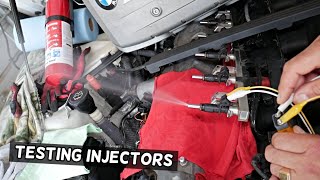
We Have This Part in Stock


The information in this article is provided for general reference and educational purposes only. Vehicle specifications, procedures, and part compatibility can vary by production date, trim level, and region. Always consult your vehicle's factory service manual and verify part numbers before purchasing or performing repairs. Safety-critical components such as airbags, seat belts, and braking systems should be installed by a qualified professional.
- BMW 5 Series:
- 🧭 Diagnostic Flowchart
- 🎬 Helpful Videos
- 🛍️ Shop This Part
- What's Unique About the 1997-2003 BMW 5 Series
- Symptoms You May Notice
- Most Likely Causes
- Rare But Worth Checking
- Diagnosis Steps
- Parts You'll Likely Need
- Related Codes That Often Appear With This One
- Platform-Specific Known Issues
- Mechanic-Grade Diagnostic Values
- Hidden / Shadow Codes Worth Checking
- Scan Tool Commands That Help
- Wiring & Ground Locations
- Real Owner Repair Stories
- Model Year Variations Within This Range
- Other Known Issues on This Vehicle
- Used vs. New Parts: Buying Guide for This Vehicle
- Real Owner Stories
- BMW 5 Series M52/M54
- BMW 3 Series (E90)
- Related OBD-II Codes
- Frequently Asked Questions
- 🎟️ Get 5% Off