

P0206 on 2002-2005 Ford Explorer 4.6L V8: Injector Circuit Malfunction Fixes
This code means there's an electrical problem with the cylinder 6 fuel injector. Most often, the fuel injector itself has failed. Expect to pay $40-$80 for a new injector and replace it yourself (2/5 difficulty) or pay a shop $150-$350 for diagnosis and replacement.
- P0206 is an electrical circuit code for the cylinder 6 fuel injector, not a mechanical or fuel flow problem.
- The most likely culprit on a 2002-2005 Explorer is the fuel injector itself failing internally.
- Cylinder 6 is the second cylinder from the front on the driver's side of the 4.6L V8 engine.
- Do not drive if the Check Engine Light is flashing, as this can quickly lead to expensive catalytic converter damage.
- A simple resistance test with a multimeter or a signal test with a noid light can quickly diagnose the problem and save you from replacing the wrong parts.
What's Unique About the 2002-2005 Ford Explorer
On the 4.6L 2V Triton V8, this code is a straightforward electrical fault. Unlike some platforms with known wiring harness design flaws that cause this code, the Explorer's issue is typically a simple component failure. After many years and miles, the fuel injectors are a common failure point. Locating the correct cylinder is key: on this V8, cylinder 6 is the second one from the front on the driver's side. This issue is shared across the many Ford vehicles that used this engine, including the F-150 and Mustang GT, with the injector itself being the most common point of failure.
Symptoms You May Notice
- Check Engine Light is on
- Flashing Check Engine Light (indicates severe misfire)
- Rough, unstable idle
- Significant loss of engine power and poor acceleration
- Engine stumbling or hesitating
- Reduced fuel economy
- A raw fuel smell from the exhaust if the injector is stuck open
- Replacing the spark plug or ignition coil on cylinder 6. While these can cause a misfire (P0306), they will not cause an injector circuit code (P0206). The P0206 code is specifically for an electrical fault in the fuel injector circuit. A forum user mistakenly replaced the spark plug and swapped coils before realizing the code pointed specifically to the injector circuit.
Most Likely Causes
- Failed Cylinder 6 Fuel Injector 🔴 High Probability → Shop Fuel Injector After years of heat cycles and millions of pulses, the internal coil winding inside the injector can break, creating an 'open' circuit. This is the most common failure mode for this code on high-mileage vehicles. Owner experiences on forums confirm that replacing the single injector for cylinder 6 almost always resolves the P0206 and accompanying P0306 misfire code.
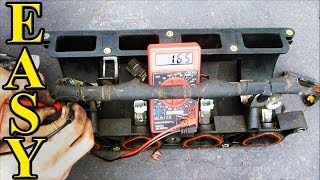
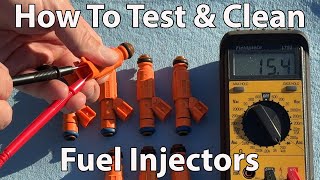
How to confirm: Disconnect the injector and measure the resistance between its two electrical pins using a multimeter. A good injector 🎬 Watch: How to test fuel injector resistance with a multimeter for this engine should read between 11 and 18 ohms. If it reads infinite resistance (OL) or is far outside this range, it's bad. A user on Ford Truck Enthusiasts confirmed a new Motorcraft injector fixed their intermittent P0206 issue.
Typical fix: Replace the failed fuel injector. It's often recommended to replace all 8 injectors if they are original and have high mileage, but replacing just the failed one will resolve the code.
Est. part cost: $40-$90 - Wiring Harness or Connector Issue 🟡 Medium Probability The engine bay environment is harsh. Wires can become brittle and crack, or the plastic locking tab on the connector can break, leading to a poor connection. Owners have reported that the harness can sometimes chafe against the firewall or other brackets, causing a short or open circuit. It's worth inspecting the harness loom where it bends around the back of the engine.
How to confirm: Visually inspect the wiring going to the cylinder 6 injector. Look for any signs of melting, chafing, or corrosion. Unplug the connector and check for bent or corroded pins. Wiggle the harness while the engine is running to see if it affects the misfire. Use a multimeter to check for continuity from the injector connector back to the PCM.
Typical fix: Repair the damaged section of wire or replace the injector pigtail connector if it's broken or corroded. The pigtail connector is often available as a separate part (e.g., Motorcraft WPT-158 or equivalent).
Est. part cost: $10-$25 for a pigtail connector
Rare But Worth Checking
- Faulty Powertrain Control Module (PCM): → Shop Engine Control Module (ECM) This is very rare. The injector driver circuit inside the PCM can fail, but you should exhaust all other possibilities before condemning the PCM. This should be your last resort after confirming the injector and wiring are good.
- Blown Fuse: Though less common for a single injector code, some Ford wiring architectures use a shared fuse for a bank of injectors. A Ford TSB for F-150s (TSB 15-0137) notes that various injector circuit codes (P0201-P0208) can be caused by a blown fuse (Fuse 27 in that specific F-150 case) due to a separate fuel pump relay issue. While a different vehicle, it highlights the possibility of a fuse-related cause.
Diagnosis Steps
- Verify the code with an OBD-II scanner. Note if P0306 and P0316 are also present. 🎬 See this step-by-step P0306 and P0316 misfire repair guide
- Locate cylinder 6. On the 4.6L V8, this is the second cylinder from the front on the driver's side.
- Visually inspect the wiring harness and connector for cylinder 6. Pay close attention to the loom where it runs near the firewall and intake manifold for any signs of chafing or melting.
- Check for a signal from the PCM. Use a 'noid light' (a special tool that plugs into the injector connector). Start the engine; the light should flash, indicating the PCM is sending a signal. If it doesn't flash, the problem is likely in the wiring or the PCM. If it does flash, the wiring is likely okay, and the injector is the problem.
- Test the injector resistance. Disconnect the injector and use a multimeter set to ohms. Touch the probes to the two pins on the injector. A reading between 11-18 ohms is good. A reading of 'OL' (Open Loop) or zero means the injector is internally faulty.
- If the injector tests good but the noid light doesn't flash, check for continuity on the two wires from the injector connector back to the PCM connector to rule out a wire break. You will need a wiring diagram for your specific model year to identify the correct pins at the PCM. For the 4.6L, the control wire for injector #6 is a Light Green/Orange 🎬 Watch: Diagnostic walkthrough of a Ford P0306 code wire at pin 37 of the C175e PCM connector.
- If all else fails, consider swapping the cylinder 6 injector with an adjacent one (like cylinder 5). Clear the codes and run the engine. If the code changes to P0205, you have definitively proven the injector is the faulty component. This is a common and highly effective diagnostic step mentioned frequently in owner forums.
Parts You'll Likely Need
- Fuel Injector
(OEM #CM5157)— This is the most common cause of a P0206 code, due to an internal electrical failure of the injector coil after many years of service.
Trusted brands: Motorcraft, Bosch, Standard Motor Products (SMP), Delphi
OEM price range: $70-$100
Aftermarket price range: $40-$80 - Fuel Injector Connector Pigtail
(OEM #Motorcraft WPT-158)— Needed if the original connector's locking tab is broken or if the terminals are corroded or melted, preventing a secure connection to the new injector.
Trusted brands: Motorcraft, Dorman, Painless Performance
OEM price range: $20-$30
Aftermarket price range: $10-$20
Related Codes That Often Appear With This One
- P0306 — This code means 'Cylinder 6 Misfire Detected'. It is a direct result of the P0206 fault, as the electrical problem prevents fuel from being delivered, causing the cylinder to misfire.
- P0316 — This code means 'Misfire Detected on Startup (First 1000 Revolutions)'. It often appears with a hard fault like P0206 because the misfire is present from the moment the engine starts.
- P0175 — This code means 'System Too Rich Bank 2'. While counterintuitive with an open injector circuit, a failing injector can sometimes leak or get stuck open before the coil fails completely, fouling the plug and causing a rich condition on that bank. One owner reported a P0206 accompanied by a P0175 and a wet, fouled plug on cylinder 6.
Technical Service Bulletins (TSBs) & Recalls
- TSB 15-0137 (for 2009-2014 F-150): While not for this specific Explorer, this TSB is relevant as it shows a history of Ford vehicles where injector circuit codes (including P0206) can be triggered by a seemingly unrelated fuse that powers the fuel pump control module. This reinforces the need to check all related fuses before condemning expensive components.
Platform-Specific Known Issues
- source — A user on Ford-Trucks.com with a P0206 and P0306 described an intermittent miss that would be severe (flashing CEL) for the first few miles of driving, then clear up and run fine with a solid CEL. After trying a spark plug and coil swap with no change, replacing the cylinder 6 fuel injector (Motorcraft CM-5188 for their specific application) completely resolved the problem. This highlights how an injector can fail intermittently as it heats up.
Mechanic-Grade Diagnostic Values
- Fuel Injector Coil Resistance — expected: 11 - 18 Ohms. Failure: A reading of infinity (OL) indicates an open coil, near zero indicates a shorted coil.
- Injector Power Wire Voltage (Key On, Engine Off) — expected: ~12 Volts (Battery Voltage). Failure: 0 Volts or significantly low voltage points to a break in the power supply wire or a blown fuse.
- Injector Control Wire Voltage (at PCM, KOEO) — expected: 0 Volts. Failure: If you measure 12V at the PCM control pin (Pin 37) with the injector disconnected, it indicates a short to power in the harness. If you measure 0V at the injector connector but 12V at the PCM pin, it indicates an open wire between the PCM and the injector.
- Injector Pulse Width (at idle, warm engine) — expected: 2.5 - 4.0 milliseconds (ms). Failure: A value of 0 ms on cylinder 6 while others are in spec indicates the PCM is not commanding the injector. Inconsistent readings or a pulse width significantly different from other cylinders can indicate a failing injector or driver.
Scan Tool Commands That Help
- Ford IDS (or high-end equivalent): Power Balance Test — This is a highly effective graphical test to confirm which cylinder is not contributing power. While a P0206/P0306 already points to cylinder 6, the power balance test visually confirms the severity of the power loss compared to other cylinders in real-time, helping to rule out intermittent issues or multiple failing cylinders.
- Ford IDS (or high-end equivalent): Injector Buzz Test / KOEO Injector Test — This Key-On-Engine-Off test commands the PCM to cycle each injector sequentially, producing an audible 'click' or 'buzz'. If all injectors except #6 make a sound, it strongly suggests a failure in the #6 injector itself or its specific wiring, as the PCM driver is confirmed to be sending the command.
Wiring & Ground Locations
- C175e, Pin 37 — This is the main 72-pin engine connector at the Powertrain Control Module (PCM), which is typically located on the passenger-side firewall in the engine bay.. This is the specific pin for the cylinder 6 fuel injector control circuit. The wire color should be Light Green with an Orange stripe (LG-OG). Testing for a ground pulse here is the definitive way to determine if the PCM driver is functioning correctly.
- G101 — On the passenger side inner fender, often near the battery or on the firewall behind the PCM.. This is a primary power and case ground for the PCM and engine control system. A loose or corroded connection here can cause a host of erratic electrical issues, including phantom sensor readings and incorrect driver operations, potentially leading to an injector circuit code.
- G104 — On the driver's side fender apron, sometimes near the hood hinge or air intake.. This is another critical engine compartment ground. Verifying all major grounds on the firewall and inner fenders are clean and tight is a crucial step before condemning the PCM for a P0206 code.
Real Owner Repair Stories
- Ford F150 Forum user (1998 Ford F-150 4.6L 2V with 266k miles) — Misfire on cylinder 6 only under load, slightly elevated idle.
❌ Tried (didn't work) New spark plug on cylinder 6, New Motorcraft spark plug wire on cylinder 6, Tested ignition coil resistance (was within spec), Listened to injectors with a stethoscope (all sounded the same)
✅ What actually fixed it Replacing the single fuel injector on cylinder #6 resolved the misfire completely.
OEM Part Supersession History
1L2E-D4A→1L2Z-9F593-EA, which is often sold under the Motorcraft number CM5157.— Standard part evolution for minor manufacturing improvements or supplier changes.
Heads up: The 4.6L 2V engine uses a high-impedance, EV6-style injector with a USCAR electrical connector. Be cautious of aftermarket injectors listed as 'universal' as they may have different flow rates or coil resistance, causing performance issues even if they physically fit.
Diagnostic Flowchart
Other Known Issues on This Vehicle
Issues unrelated to this code that are worth knowing about as an owner of this generation:
- Cracked Plastic Intake Manifold 🔴 High → Shop Engine Intake Manifold — Very common, especially on earlier models with all-plastic crossovers. Failure can occur without warning, typically over 100k miles, leading to rapid coolant loss and overheating. (Ref: No recall, but a class-action lawsuit occurred for earlier models. The updated Ford design with an aluminum crossover is less prone to cracking but can still leak at the gaskets.)
- Timing Chain Tensioner & Guide Failure 🔴 High — Common after 100,000-150,000 miles. Plastic timing chain guides break apart, and hydraulic tensioners can leak or fail, causing chain rattle on startup, and if ignored, can lead to jumped timing and catastrophic engine damage.
- 5R55S/W Automatic Transmission Failures 🔴 High — Extremely common. Issues include harsh shifting, loss of gears (especially reverse), and a blinking Overdrive light. Problems are often related to a worn solenoid body or servo bores in the case. Failures can occur as early as 80,000 miles. (Ref: Multiple TSBs exist for various shifting complaints, but no overarching recall for the primary failure modes.)
- Cracked Rear Tailgate Panel 🟡 Low — Almost guaranteed to happen. A cosmetic crack develops in the plastic panel below the rear window, typically originating from the Ford emblem.
- Wheel Bearing Failure 🟠 Medium — Front and rear wheel bearings are a common wear item, often requiring replacement around 100,000 miles. Symptoms include a humming or grinding noise that changes with vehicle speed.
Used vs. New Parts: Buying Guide for This Vehicle
When a used part is the smart pick: For a single injector replacement on a high-mileage vehicle, a used OEM injector from a junkyard can be a cost-effective choice, especially if you can pull it yourself from a lower-mileage donor.
Donor-vehicle mileage cap: roughly under 120000 miles for the part to have meaningful remaining life.
What to inspect on the donor part:
- Check the donor vehicle's mileage if possible; aim for under 120,000 miles.
- Inspect the plastic body of the injector for cracks or signs of extreme heat.
- Ensure the electrical connector isn't broken and the pins are straight and clean.
- Look at the pintle (nozzle) end; avoid injectors that are heavily caked with carbon or rust.
OEM-only on this vehicle (don't cheap out):
- Powertrain Control Module (PCM) - Aftermarket or improperly programmed used PCMs can cause a host of issues with the PATS anti-theft system and other modules.
Aftermarket brands forum-validated for this vehicle:
- Bosch (often the original OEM supplier)
- Motorcraft (Ford's OEM brand)
- Standard Motor Products (SMP)
- Delphi
Brands owners have reported issues with on this vehicle:
- Unnamed, no-brand injectors from online marketplaces. Forum and user experiences frequently report issues with inconsistent flow rates, premature failure, and poor spray patterns on cheap, unbranded injectors, sometimes causing new lean or rich codes.
Real Owner Stories
Aggregated from forums and TSBs cited above. Mileages and costs reflect what owners reported in those sources.
2017 Ford Explorer 3.5L
Symptoms: Intermittent miss that was severe with a flashing CEL for the first few miles of driving, then would clear up and run with a solid CEL. Owner tried swapping spark plugs and coils with no change.
What fixed it: Replacing the cylinder 6 fuel injector (Motorcraft CM-5188).
Source hint: Ford-Trucks.com thread titled '2017 explorer 3.5 cyl 6 codes p0206 p0306'
2003 Ford Explorer 4.6L V8
Symptoms: P0206 code accompanied by a P0175 (Rich Bank 2) and a fouled spark plug on cylinder 6.
What fixed it: The symptoms indicated a leaking injector on cylinder 6.
Source hint: 2CarPros.com user post from 2011
2002-2005 Ford Explorer 4.6L V8
Symptoms: Intermittent P0206 issue.
What fixed it: Installation of a new Motorcraft fuel injector.
Source hint: Ford Truck Enthusiasts Forums
Related OBD-II Codes
Frequently Asked Questions
Where is cylinder 6 located on my 2002-2005 Ford Explorer 4.6L V8?
Does TSB 15-0137 apply to my 2002-2005 Explorer?
What is the correct resistance for a new Motorcraft fuel injector on this engine?
Can I just replace the electrical connector if the plastic tab is broken?
My Explorer has a flashing Check Engine Light and a P0206; is it safe to drive?
Is there a specific wire color I should look for when testing the PCM signal for cylinder 6?
Helpful Videos

We Have This Part in Stock


The information in this article is provided for general reference and educational purposes only. Vehicle specifications, procedures, and part compatibility can vary by production date, trim level, and region. Always consult your vehicle's factory service manual and verify part numbers before purchasing or performing repairs. Safety-critical components such as airbags, seat belts, and braking systems should be installed by a qualified professional.
- Ford Explorer:
- 🧭 Diagnostic Flowchart
- 🎬 Helpful Videos
- 🛍️ Shop This Part
- What's Unique About the 2002-2005 Ford Explorer
- Symptoms You May Notice
- Most Likely Causes
- Rare But Worth Checking
- Diagnosis Steps
- Parts You'll Likely Need
- Related Codes That Often Appear With This One
- Technical Service Bulletins (TSBs) & Recalls
- Platform-Specific Known Issues
- Mechanic-Grade Diagnostic Values
- Scan Tool Commands That Help
- Wiring & Ground Locations
- Real Owner Repair Stories
- OEM Part Supersession History
- Other Known Issues on This Vehicle
- Used vs. New Parts: Buying Guide for This Vehicle
- Real Owner Stories
- 2017 Ford Explorer 3.5L
- 2003 Ford Explorer 4.6L V8
- 2002-2005 Ford Explorer 4.6L V8
- Related OBD-II Codes
- Frequently Asked Questions
- 🎟️ Get 5% Off