

P0206 on 2011-2019 Ford Explorer 3.5L: Cylinder 6 Injector Circuit Causes and Fixes
P0206 on a 2011-2019 Ford Explorer almost always means the cylinder 6 fuel injector has failed or its connector is loose. Since cylinder 6 is on the easily accessible front bank, this is a straightforward DIY fix costing $50-$150 for a new injector. The issue is often confirmed by swapping the injector with an adjacent one and seeing if the code follows.
- P0206 is an electrical fault for the cylinder 6 injector, not a clog or fuel pressure issue.
- Cylinder 6 is on the front, radiator-side bank of the engine, making it easy to access.
- Before buying parts, check that the injector's electrical connector is securely plugged in.
- You can confirm a bad injector by testing its resistance with a multimeter (expect 11-14 ohms) or by swapping it with another cylinder and seeing if the code moves.
- Do not drive with a flashing check engine light, as this can quickly ruin your catalytic converter.
What's Unique About the 2011-2019 Ford Explorer
On the 2011-2019 Ford Explorer with the transverse-mounted 3.5L V6, the cylinder layout is a key factor for this repair. The rear cylinders (1, 2, 3) are tucked against the firewall, making access difficult. However, cylinder 6 is located on the front bank (closest to the radiator) on the driver's side. This makes its fuel injector, wiring, and connector much easier to access for diagnosis and replacement compared to the rear bank, turning a potentially complex job into a manageable one for a DIYer.
Symptoms You May Notice
- Check Engine Light is on
- Flashing Check Engine Light (in cases of severe misfire)
- Rough, shaky engine idle
- Engine stumbling or hesitating during acceleration
- Noticeable loss of engine power
- Reduced fuel economy
- Replacing the spark plug or ignition coil. While these parts can cause a misfire code (P0306), they will not cause an injector circuit code like P0206. The P0206 code is specifically for an electrical fault in the injector circuit, not a combustion failure.
Most Likely Causes
- Faulty Cylinder 6 Fuel Injector 🔴 High Probability → Shop Fuel Injector Fuel injectors are wear-and-tear components. The internal electronic coil can fail over time, creating an open circuit, which is a common failure mode for this code. This is the most frequent resolution reported by owners.
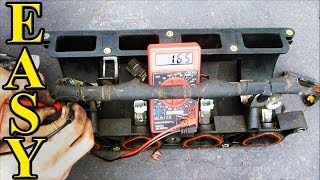
How to confirm: Disconnect the injector and measure the resistance across its two pins with a multimeter. 🎬 Watch: How to test fuel injector resistance A good injector for this engine should read between 11 and 14 ohms. A reading of infinity (OL) indicates an open circuit and a bad injector. You can also swap the cylinder 6 injector with an adjacent one (like cylinder 5). Clear the codes and run the engine. If the code changes to P0205, the injector is confirmed bad.
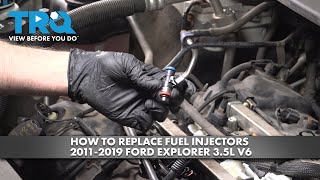
Typical fix: Replace the faulty fuel injector. Since cylinder 6 is on the front bank, this can be done without removing the intake manifold. 🎬 Watch this step-by-step fuel injector replacement video
Est. part cost: $50-$180 - Poor Connection at Injector 🟡 Medium Probability Engine vibration and heat cycles can cause the electrical connector to become loose or the internal pins to lose tension or corrode over time. The locking tab on the connector can also become brittle and break.
How to confirm: Visually inspect the connector for damage, corrosion, or backed-out pins. Firmly unplug and replug the connector to ensure a solid connection. Perform a "wiggle test" on the connector and wiring while the engine is running to see if it causes a change in the idle.
Typical fix: Clean the connector pins with electrical contact cleaner. If the connector is damaged or the lock tab is broken, replace the connector pigtail.
Est. part cost: $10-$40 - Damaged Wiring Harness ⚪ Low Probability While less common, wires can be damaged by heat, abrasion against other components, or rodents. The plastic loom can become brittle and break, exposing the wires between the PCM and the front injector bank.
How to confirm: Visually inspect the wiring harness leading to the cylinder 6 injector for any signs of chafing, melting, or breaks. Use a multimeter to perform a continuity test on the two wires (power and ground signal) from the injector connector back to the PCM connector to check for an open or a short to ground.
Typical fix: Repair the damaged section of wire with a new piece of wire and solder/heat-shrink connections. In severe cases, a harness jumper wire may be available from Ford.
Est. part cost: $5-$50
Rare But Worth Checking
- Powertrain Control Module (PCM) Failure: → Shop Engine Control Module (ECM) This is the least likely cause. The internal driver circuit for the cylinder 6 injector can fail, but you should exhaust all other possibilities first. A PCM failure is often misdiagnosed when the actual problem is a simple wiring issue. If a noid light fails to flash and all wiring tests good, a PCM fault is more likely.
Diagnosis Steps
- Confirm the presence of the P0206 code with an OBD-II scanner. Note any other codes, especially P0306, which is expected.
- Locate cylinder 6. On the 3.5L V6 Explorer, it is the cylinder on the front bank (near the radiator) on the driver's side.
- Visually inspect the fuel injector's electrical connector and nearby wiring for any obvious signs of damage, looseness, or corrosion.
- Perform a "wiggle test" by gently wiggling the connector and wire with the engine running. If the engine's idle changes, you have found a loose connection.
- Use a 'noid light'. Disconnect the injector and plug the noid light into the harness connector. Start the engine. The light should flash steadily. If it doesn't flash, the problem is in the wiring or the PCM. If it does flash, the wiring and PCM are good, and the injector itself is the primary suspect.
- Test the injector's resistance. Turn the engine off and disconnect the injector. Set a multimeter to the ohms (Ω) setting and measure between the two pins on the injector. The reading should be between 11-14 ohms for a typical injector of this type. If it reads near zero, it's shorted. If it reads 'OL' or a very high number, it's open. In either case, the injector is bad.
- As a final confirmation, swap the cylinder 6 injector with the cylinder 5 injector. Clear the codes and run the engine. If the code returns as P0205, you have definitively proven the injector is faulty.
- If the noid light doesn't flash and a continuity test confirms the wiring from the PCM to the injector connector is good, suspect a rare PCM failure. This should be diagnosed by a professional.
Parts You'll Likely Need
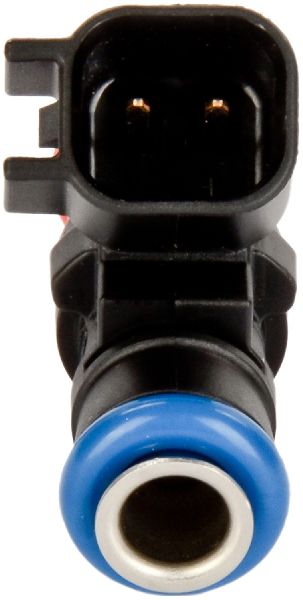
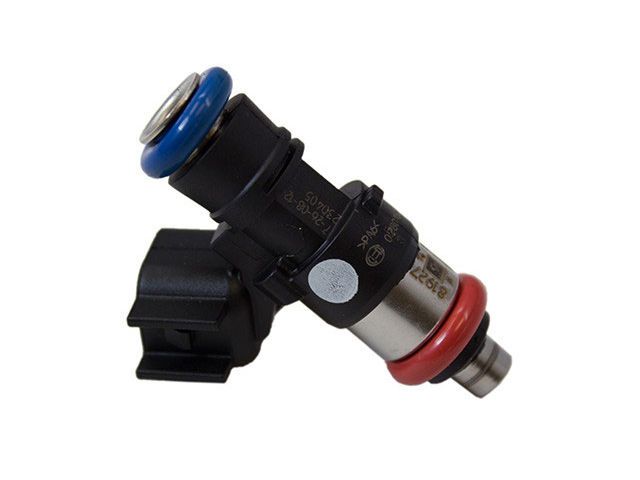
- Fuel Injector
(OEM #BR3Z-9F593-B (also sold as Motorcraft CM-5165))— This is the most common cause of a P0206 code. The internal coil winding fails, creating an open circuit.
Trusted brands: Motorcraft, Bosch, Standard Motor Products (SMP)
OEM price range: $120-$180
Aftermarket price range: $50-$100 - Fuel Injector Connector Pigtail
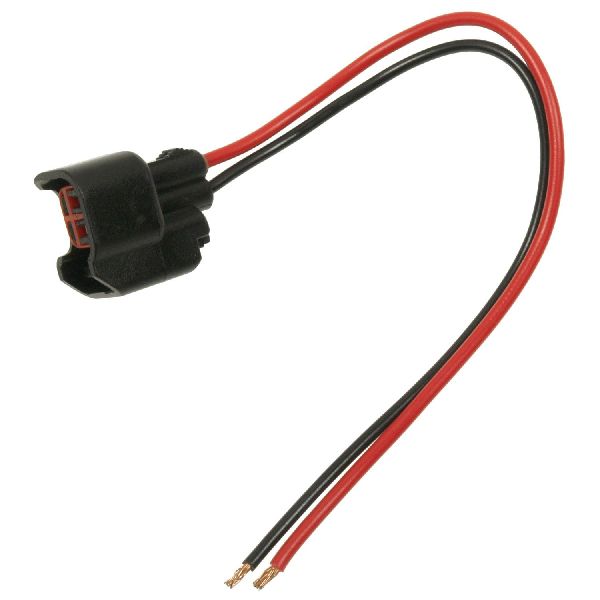
(OEM #WPT-1282 (Motorcraft))— If the electrical connector is cracked, corroded, or has a broken locking tab, it will need to be replaced to ensure a solid connection.
Trusted brands: Motorcraft, Dorman
OEM price range: $25-$40
Aftermarket price range: $10-$20
Related Codes That Often Appear With This One
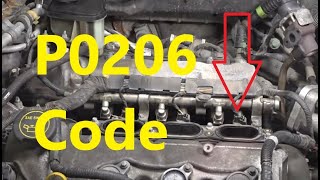
- P0306 — P0306 indicates a misfire on cylinder 6. Since a P0206 code means the injector isn't firing, the cylinder will inevitably misfire. A P0206 will almost always be accompanied by a P0306. 🎬 See this guide on P0206 causes and fixes
- P0300 — This is a 'Random/Multiple Cylinder Misfire' code. You might see this along with P0206 if the engine is running very poorly and the vibrations or fueling issues cause other cylinders to misfire intermittently.
Technical Service Bulletins (TSBs) & Recalls
- TSB 15-0137: While not directly for the Explorer, this TSB for 2009-2014 F-150s addresses a melting fuel pump fuse (Fuse 27) that can cause a variety of fuel system DTCs, including P0201-P0208. It highlights a potential, though less common, systemic electrical issue that could manifest as an injector circuit code if the fuel pump power is intermittent.
Mechanic-Grade Diagnostic Values
- Fuel Injector Resistance — expected: 11 - 14 Ohms. Failure: A reading of infinity (OL) indicates an open circuit, while a reading near zero indicates a shorted injector. Both require replacement.
- Injector Connector Voltage (Key On, Engine Off) — expected: One pin should show battery voltage (approx. 12V) relative to a good chassis ground.. Failure: No voltage indicates a problem in the power supply wire, a blown fuse, or a faulty fuel pump relay.
- Noid Light Test (Engine Cranking/Running) — expected: The noid light should flash steadily, indicating the PCM is commanding the injector to fire.. Failure: No flash indicates a break in the control wire to the PCM or a faulty PCM driver. A light that stays on constantly indicates a short to ground on the control wire.
Scan Tool Commands That Help
- Ford IDS / FORScan: Power Balance Test — This test graphically displays the power contribution of each cylinder. For a P0206, the graph for cylinder 6 would show a significant drop compared to the others, confirming the misfire is isolated to that cylinder. It helps verify the problem is active before beginning disassembly.
- Ford IDS / FORScan: Injector Buzz Test — This is an active test that commands each injector to cycle on and off with the engine off. The technician can listen for an audible click from each injector. If cylinder 6's injector does not 'buzz' or 'click' while others do, it points strongly to a bad injector or a complete open in the wiring, assuming power is present.
Wiring & Ground Locations
- Cylinder 6 Injector Connector — On the fuel rail, connected to the rearmost injector on the front bank (driver's side).. This is the primary point for testing. The two pins are for power (typically a shared color across the injectors) and the control signal from the PCM (unique color for cylinder 6).
- PCM Connector C1551E (example) — At the Powertrain Control Module (PCM), located in the engine bay.. The control wire for the cylinder 6 injector terminates here. For example, on some 3.5L diagrams, the control wire is Green-White and goes to Pin 95. This pin is the endpoint for a continuity test from the injector connector to confirm the wire is intact. Verifying the specific pin for the vehicle's exact year is critical.
- Engine Ground Points (e.g., G101, G104) — Multiple locations in the engine bay, typically from the engine block/head to the chassis or firewall.. While not a direct cause of a single injector circuit code, a poor main engine ground can cause a host of bizarre electrical issues, including weak injector or coil performance. If multiple, seemingly unrelated codes are present, checking main grounds is a wise step.
Real Owner Repair Stories
- Ford Truck Enthusiasts Forum (2017 Ford Explorer, 3.5L V6, 144,000 miles) — Check engine light on, sometimes flashing. Codes P0206 and P0306. Noticeable engine miss when light is flashing.
❌ Tried (didn't work) Swapping ignition coils between cylinder 5 and 6., Replacing the spark plug in cylinder 6.
✅ What actually fixed it The owner replaced the fuel injector on cylinder #6 with a new Motorcraft CM-5188 injector, which resolved the problem. - Ford Edge Forum (Ford Edge with 3.5L V6 (year not specified)) — Car riding rough, codes P0206 and P0306.
❌ Tried (didn't work) Swapping ignition coils.
✅ What actually fixed it The owner unplugged the electrical connector for the cylinder 6 fuel injector and plugged it back in securely. This simple reseating of the connector fixed the issue, indicating a poor connection was the root cause.
OEM Part Supersession History
BR3Z-9F593-B→This part number appears current for the 2011-2019 Explorer 3.5L NA engine.— N/A
Heads up: The service part is often sold as Motorcraft CM-5165. A forum user with a 2017 model used Motorcraft CM-5188, which may be an updated or alternative part number; it's crucial to verify the correct part for the specific model year before purchasing.
Model Year Variations Within This Range
- 2011-2019: While the fundamental diagnosis is the same, there can be minor variations in PCM pinouts and wire colors between early (2011-2015) and facelift (2016-2019) models. Always consult a wiring diagram specific to the vehicle's year. A 2017 model owner reported using injector CM-5188, while the base part number often cross-references to CM-5165, highlighting potential running changes.
Diagnostic Flowchart
Other Known Issues on This Vehicle
Issues unrelated to this code that are worth knowing about as an owner of this generation:
- Internal Water Pump Failure 🔴 High — Common after 80,000-150,000 miles. A known design flaw of the transverse 3.5L/3.7L V6. (Ref: No recall, but subject of class-action lawsuits. Failure can cause coolant to mix with engine oil, leading to catastrophic engine failure.)
- Power Transfer Unit (PTU) Failure 🔴 High — Common in AWD models, often due to fluid overheating and breakdown. Ford calls the fluid 'lifetime,' but it often fails, leading to expensive PTU replacement. (Ref: No recall, but a widely documented problem among owners and mechanics.)
- Electronic Throttle Body (ETB) Failure 🟠 Medium — Common across the generation, causing sudden 'limp mode,' stalling, and codes like P2111 and P2112. (Ref: Ford issued TSBs (e.g., 16-0139) and Customer Satisfaction Program 16B32, extending the warranty for some vehicles.)
- Exhaust Fumes / Carbon Monoxide in Cabin 🔴 High — A significant issue, especially in 2011-2017 models, where exhaust gases can enter the cabin under acceleration. (Ref: Addressed by multiple TSBs (e.g., TSB 14-0130) which attempt to seal body seams, though some owners report the fix is ineffective.)
- Rear Suspension Toe Link Fracture 🔴 High — Primarily affects 2011-2017 models, where the rear toe links can fracture unexpectedly, causing loss of steering control. (Ref: Subject of Ford safety recall 19S17.)
Used vs. New Parts: Buying Guide for This Vehicle
When a used part is the smart pick: For this repair, a used part is generally not recommended for the fuel injector itself due to its nature as a wear item with unknown history. However, sourcing a used electrical connector pigtail from a junkyard harness is a very smart and cost-effective choice if the original connector is broken or damaged.
Donor-vehicle mileage cap: roughly under 80000 miles for the part to have meaningful remaining life.
What to inspect on the donor part:
- For a connector pigtail: Ensure the plastic is not brittle or cracked.
- Check that the locking tab is intact and functional.
- Inspect the internal pins for corrosion or signs of being spread apart.
- Ensure you get at least 6 inches of wire to make splicing easy.
OEM-only on this vehicle (don't cheap out):
- Fuel Injector (Recommended): While quality aftermarket options exist, the OEM Motorcraft injector is proven and reliable. Given the relative ease of access for cylinder 6, the cost difference for peace of mind is often worth it.
Aftermarket brands forum-validated for this vehicle:
- Bosch (often the OEM manufacturer)
- Standard Motor Products (SMP)
Brands owners have reported issues with on this vehicle:
- Unnamed, no-brand injectors from online marketplaces like Amazon or eBay. These often have poor quality control, incorrect resistance, or bad spray patterns that can cause performance issues or fail prematurely.
Real Owner Stories
Aggregated from forums and TSBs cited above. Mileages and costs reflect what owners reported in those sources.
2017 Ford Explorer 3.5L V6 — 144000 miles
Symptoms: Experienced P0206 and P0306 codes. Initially attempted to swap the coil and spark plug, but the issue persisted.
What fixed it: Replaced the cylinder 6 fuel injector with a Motorcraft CM-5188.
Source hint: Ford Truck Enthusiasts Forum - A 2017 Explorer owner with 144k miles experienced P0206 and P0306.
Related OBD-II Codes
Frequently Asked Questions
Where is cylinder 6 located on my 2011-2019 Ford Explorer 3.5L V6?
Do I need to remove the intake manifold to replace the cylinder 6 fuel injector?
What should the resistance reading be for a healthy fuel injector on this engine?
Could a blown fuel pump fuse cause P0206 on my Explorer?
Is there a specific replacement part recommended by other owners for this fix?
What does it mean if my Check Engine Light is flashing while driving?
Helpful Videos
We Have This Part in Stock


The information in this article is provided for general reference and educational purposes only. Vehicle specifications, procedures, and part compatibility can vary by production date, trim level, and region. Always consult your vehicle's factory service manual and verify part numbers before purchasing or performing repairs. Safety-critical components such as airbags, seat belts, and braking systems should be installed by a qualified professional.
- Ford Explorer:
- 🧭 Diagnostic Flowchart
- 🎬 Helpful Videos
- 🛍️ Shop This Part
- What's Unique About the 2011-2019 Ford Explorer
- Symptoms You May Notice
- Most Likely Causes
- Rare But Worth Checking
- Diagnosis Steps
- Parts You'll Likely Need
- Related Codes That Often Appear With This One
- Technical Service Bulletins (TSBs) & Recalls
- Mechanic-Grade Diagnostic Values
- Scan Tool Commands That Help
- Wiring & Ground Locations
- Real Owner Repair Stories
- OEM Part Supersession History
- Model Year Variations Within This Range
- Other Known Issues on This Vehicle
- Used vs. New Parts: Buying Guide for This Vehicle
- Real Owner Stories
- 2017 Ford Explorer 3.5L V6 — 144000 miles
- Related OBD-II Codes
- Frequently Asked Questions
- 🎟️ Get 5% Off