

P0206 on 2009-2019 Ford Flex 3.5L: Injector Circuit Malfunction Cylinder 6 Causes and Fixes
P0206 on a Ford Flex indicates an electrical fault with the cylinder 6 fuel injector. The most common cause is a failed injector. Replacing the injector is a moderately difficult DIY job, costing around $50-$90 for the part, as the intake manifold must be removed for access.
- P0206 is an electrical problem with the cylinder 6 injector circuit, not a fuel flow or pressure issue.
- On the 3.5L Flex, cylinder 6 is conveniently located on the front bank (radiator side), but the intake manifold must still be removed for the repair.
- The most likely fix is replacing the fuel injector itself. A simple resistance test with a multimeter can confirm if the injector has failed.
- Be sure to buy the correct injector for your vehicle's year, as the part changed with the engine update in 2013.
- If the Check Engine Light is flashing, stop driving to prevent expensive damage to the catalytic converter.
What's Unique About the 2009-2019 Ford Flex
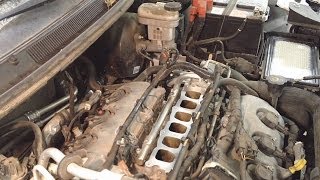
On the Ford Flex's transversely mounted 3.5L V6, the cylinders are numbered 1-2-3 against the firewall and 4-5-6 towards the radiator. This is good news for a P0206 code, as cylinder 6 is located on the front bank on the driver's side, making it much easier to access than the rear cylinders. However, replacing any injector on this engine still requires removing the upper intake manifold to access the fuel rail, making the job more involved than on engines with fully exposed injectors.
🎬 Watch this step-by-step fuel injector replacement guideGeneration note: The 2009-2019 Ford Flex covers a single generation, but it received a major facelift for the 2013 model year. This included an update to the 3.5L V6 engine, adding Twin Independent Variable Camshaft Timing (Ti-VCT). This engine change means the fuel injectors are different between the 2009-2012 and 2013-2019 models, so it is critical to buy the correct part for your year.
Symptoms You May Notice
- Rough or shaking idle
- Engine stumbling or hesitating on acceleration
- Noticeable loss of engine power
- Reduced fuel economy
- Solid or flashing Check Engine Light
- Replacing the spark plug or ignition coil. While these can cause a misfire (P0306), they will not cause an injector circuit code (P0206). P0206 is strictly an electrical fault related to the fuel injector circuit.
Most Likely Causes
- Failed Cylinder 6 Fuel Injector 🔴 High Probability → Shop Fuel Injector Fuel injectors are a common failure item on many modern engines after 80,000-100,000 miles due to heat cycles and internal coil winding degradation. The internal coil winding can break, creating an 'open' circuit.
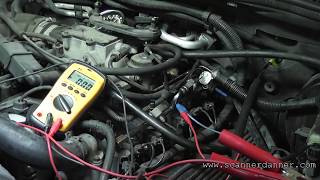
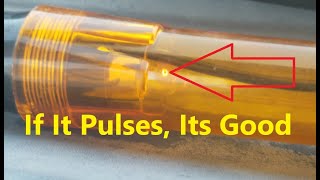
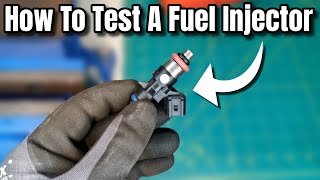
How to confirm: Disconnect the injector and measure the resistance between its two electrical pins with a multimeter. A healthy injector for this engine should read between 11 and 14 ohms. A reading of infinity (OL) indicates an open circuit and a failed injector. 🎬 See how to test fuel injectors using simple DIY methods A popular DIY method is to swap the cylinder 6 injector with the adjacent cylinder 5 injector. If the code changes to P0205 after clearing and re-running the engine, the injector is confirmed to be faulty.
Typical fix: Replace the faulty fuel injector. It is often recommended to replace all injectors on the same bank or all six at once to ensure balanced fuel flow, especially on higher mileage vehicles.
Est. part cost: $45-$90 for a single OEM Motorcraft injector. - Damaged Wiring or Connector 🟡 Medium Probability The engine wiring harness can become brittle from heat and vibration over time, leading to broken wires or loose pins in the connector. Rodent damage is also a possible cause, as critters may chew on the wiring.
How to confirm: Visually inspect the wiring going to the cylinder 6 injector for any signs of cracking, melting, chafing, or being chewed. Unplug the connector and check for corrosion or damage on the pins. Use a 'noid light' plugged into the injector connector; it should flash steadily while the engine is cranking, confirming the PCM is sending a signal.
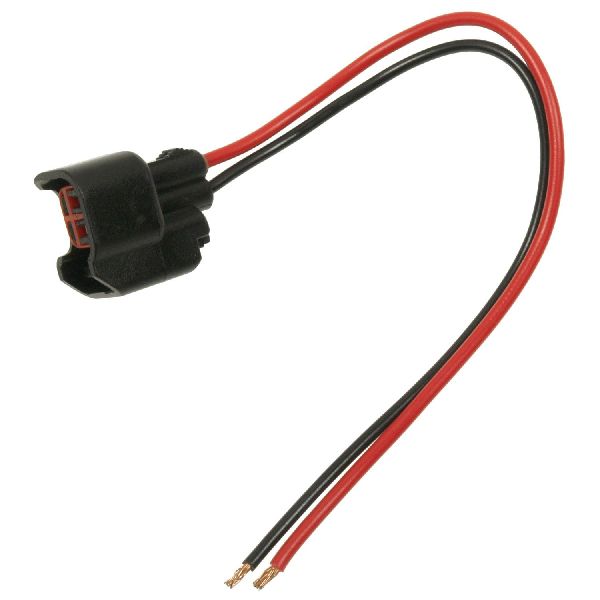
Typical fix: Repair the broken section of wire or replace the damaged connector pigtail.
Est. part cost: $10-$30 for a new connector pigtail.
Rare But Worth Checking
- Faulty Powertrain Control Module (PCM): → Shop Engine Control Module (ECM) This is the least likely cause. The internal driver circuit for the injector can fail. In some cases, a shorted injector can damage the PCM driver, requiring both parts to be replaced. All other possibilities, especially the injector and wiring, must be exhaustively ruled out before condemning the PCM.
- Chafed Engine Harness on A/C Line: TSB 22-2223 was issued for other Ford vehicles (2021-2022 F-150s) with the 3.5L engine family for the engine harness rubbing through on an A/C line stud, causing injector circuit faults. While not specific to the Flex, it highlights a known Ford issue and reinforces the importance of inspecting the entire harness routing for similar chafe points during diagnosis.
Diagnosis Steps
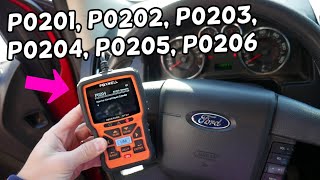
- Confirm the code P0206 is present using an OBD-II scanner. Note any other codes, like P0306, which is expected.
- Locate cylinder 6. On the 3.5L Flex, it is on the bank closest to the radiator, on the driver's side.
- Visually inspect the wiring harness and electrical connector for the cylinder 6 fuel injector. Look for obvious signs of damage, melting, rodent chew marks, or corrosion.
- Disconnect the injector connector. Use a 'noid light' to test for a signal. Plug the noid light into the harness connector and crank the engine. The light should flash consistently. If it does, the wiring and PCM are likely okay. If it's off or stays on solid, there is a problem in the wiring or PCM.
- If the noid light test passes, test the injector itself. With the injector disconnected, set a multimeter to Ohms (Ω) and measure the resistance across the two pins on the injector. The reading should be between 11-14 Ohms. If it's outside this range (especially 'OL' for open loop), the injector has failed.
- As an alternative to the multimeter test, swap the potentially bad injector from cylinder 6 with a known good one from an adjacent cylinder (e.g., cylinder 5). Clear the codes, run the engine, and rescan. If the code has moved to P0205 ('Injector Circuit/Open - Cylinder 5'), you have definitively proven the injector is the faulty component.
- If the injector resistance is good and the noid light flashes, perform a continuity test on the wiring harness between the injector connector and the PCM to find a potential intermittent open or short. The control wire runs to the C175B connector at the PCM.
- If all wiring and the injector test good, the fault may lie within the PCM, but this is rare and should be the last consideration.
Parts You'll Likely Need
- Fuel Injector (2013-2019 Models)
(OEM #BR3Z-9F593-B)— This is the OEM injector for the updated 3.5L Ti-VCT engine. The internal coil is the most common failure point causing the P0206 code. This part is used across a wide variety of Ford and Lincoln vehicles.
Trusted brands: Motorcraft (CM-5188), Bosch, Standard Motor Products
OEM price range: $45-$75
Aftermarket price range: $30-$60 - Fuel Injector (2009-2012 Models)
(OEM #7T4Z-9F593-A)— This is the OEM injector for the original 3.5L V6. It is a different part than the 2013+ models.
Trusted brands: Motorcraft (CM-5165), Bosch
OEM price range: $55-$90
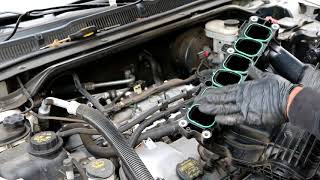
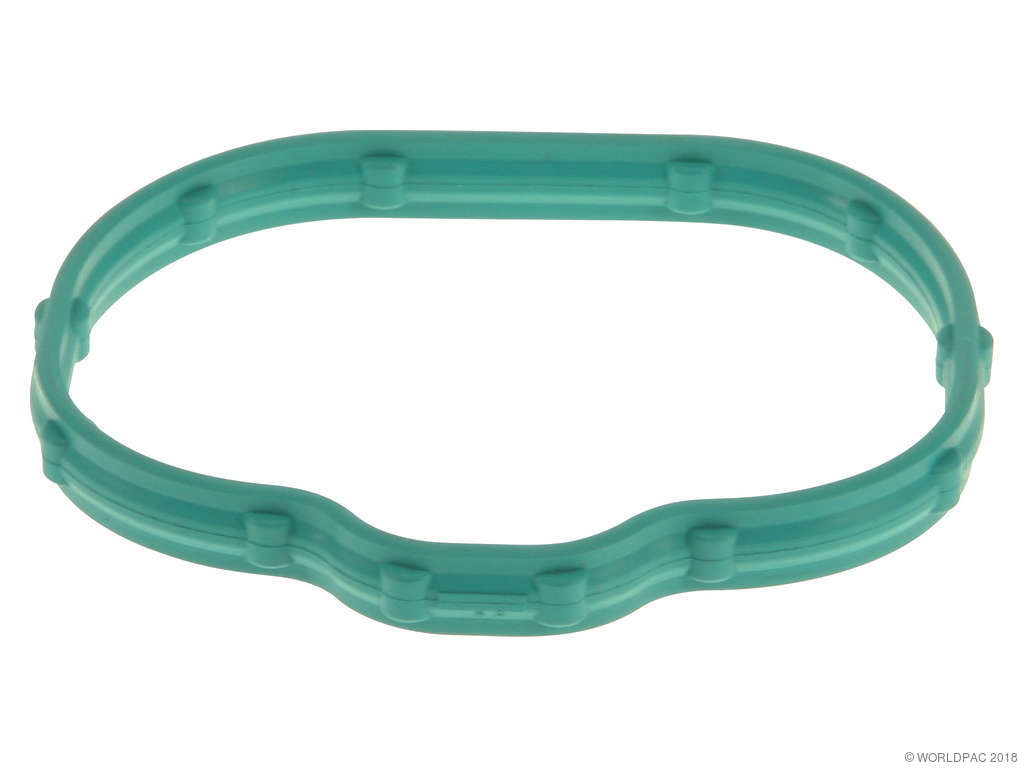
Aftermarket price range: $35-$65 - Upper Intake Manifold Gasket Set — The upper intake manifold must be removed to access the fuel rail and injectors. The gaskets are single-use and must be replaced to prevent vacuum leaks upon reassembly. 🎬 Watch: How to remove the upper intake manifold
Trusted brands: Fel-Pro, Motorcraft
OEM price range: $20-$40
Aftermarket price range: $10-$25
Related Codes That Often Appear With This One
- P0306 — P0306 means 'Cylinder 6 Misfire Detected'. An electrical fault in the injector circuit (P0206) will prevent proper fueling, directly causing a misfire in that cylinder. These two codes almost always appear together.
- P0174 — P0174 means 'System Too Lean (Bank 2)'. If the injector is not firing, it creates a lean condition that the oxygen sensor on that bank will detect. On the Flex, Cylinder 6 is on Bank 2 (the front bank).
Technical Service Bulletins (TSBs) & Recalls
- TSB 22-2223: While not for the Flex specifically, it notes a known issue on the 3.5L engine family in other models (F-150) where the engine harness can chafe on an A/C line stud, causing an open in an injector circuit. This is a good potential issue to check for during diagnosis.
Platform-Specific Known Issues
- The P0206 fault on the Ford Flex is shared identically with its platform mates like the Ford Edge, Ford Taurus, and Lincoln MKX. Owners can benefit from searching forums and repair guides for these vehicles, as the diagnostic steps, part numbers, and repair procedures are often the same.
Mechanic-Grade Diagnostic Values
- Injector Pulse Width (at idle) — expected: 0.8 ms to 2.5 ms. Failure: A value of zero or one that is significantly different from the other five cylinders.
- Injector Connector Voltage (Key On, Engine Off) — expected: Greater than 10.0 Volts DC on the power supply wire.. Failure: Voltage below 10.0V indicates an open or high resistance in the power supply wire (VPWR).
- PCM Injector Circuit Test — expected: A voltage spike of approximately 50V after the injector is commanded off.. Failure: If the PCM does not see this voltage spike from the collapsing magnetic field, it will set the circuit fault code.
Hidden / Shadow Codes Worth Checking
- P062D: 'Fuel Injector Driver Circuit Performance Bank 1'. While P020x codes point to a specific cylinder, P062D can indicate a broader problem with the group of injector driver transistors within the PCM for that entire bank. (see via Professional scan tools like Ford IDS or advanced consumer tools like FORScan.)
- Mode $06, Test ID $0A, Comp ID $06: This is not a DTC, but a raw data monitor for misfire counts on cylinder 6 for the current and last ten drive cycles. It can be used to confirm the misfire is consistently happening on the cylinder indicated by the P0206 code. (see via Advanced scan tool with Mode $06 capabilities.)
Scan Tool Commands That Help
- Ford IDS / FORScan: KOEO Injector Electrical Self Test ('Injector Buzz Test') — With the Key On, Engine Off, this test commands the PCM to cycle each injector solenoid sequentially. A technician can listen with a stethoscope to each injector for an audible 'buzz' or 'click'. A silent injector #6 points directly to an electrical failure in the injector or its wiring.
- Ford IDS / FORScan: Power Balance Test — While the engine is running, this test allows the user to disable each injector one at a time. When the cylinder 6 injector is commanded off, there should be no change in engine RPM or smoothness, confirming it was not contributing in the first place. This definitively proves the cylinder is 'dead'.
Wiring & Ground Locations
- PCM Connector C175B — Located on the Powertrain Control Module (PCM) on the right (passenger) side of the engine compartment, near the firewall.. This is the main engine connector where the control wire for the cylinder 6 fuel injector originates. A continuity test between the pin for injector 6 on this connector and the corresponding pin at the injector itself is the definitive test for a broken wire in the harness. A specific wiring diagram is needed for the exact pin number.
- G104 / G107 — G104 is on the driver's side front fender apron or radiator support. G107 is on the right rear of the engine compartment.. These are primary engine and PCM ground points. A loose or corroded connection at these locations can cause a variety of erratic electrical faults, including injector circuit codes, due to an unstable ground reference for the PCM's driver circuits.
Real Owner Repair Stories
- Ford Edge Forum (2007-2014 Ford Edge 3.5L V6 (platform mate)) — Check Engine Light with codes P0206 and P0306.
❌ Tried (didn't work) Initial diagnosis pointed towards a failed injector or wiring.
✅ What actually fixed it The owner simply unplugged the electrical connector for the cylinder 6 fuel injector, inspected it, and plugged it back in securely. This re-established the connection and resolved the codes without replacing any parts. - Auto Repair Guys YouTube Channel (2009 Ford Edge 3.5L V6 (platform mate)) — Rough running engine with Check Engine Light and code P0204 (Cylinder 4, but same procedure for P0206).
❌ Tried (didn't work) Checking for loose wiring.
✅ What actually fixed it After confirming the wiring was intact, the mechanic replaced the faulty fuel injector for the affected cylinder, which resolved the code and the rough running condition.
Model Year Variations Within This Range
- 2009-2012 vs 2013-2019: The 3.5L V6 was updated in 2013 with Ti-VCT. This resulted in different fuel injectors. Part number 7T4Z-9F593-A is for 2009-2012 models, while BR3Z-9F593-B is for 2013-2019 models. The parts are not interchangeable.
Diagnostic Flowchart
Other Known Issues on This Vehicle
Issues unrelated to this code that are worth knowing about as an owner of this generation:
- Internal Water Pump Failure 🔴 High — Common after 80,000-120,000 miles. A design flaw places the pump inside the engine, driven by the timing chain. Failure can cause coolant to mix with engine oil, leading to catastrophic engine damage. Repair costs are extremely high ($2,000-$5,000+).
- Power Transfer Unit (PTU) Failure (AWD Models) 🔴 High — Very common failure, sometimes as early as 50,000 miles. The unit's fluid overheats and degrades, leading to failure. Ford considered it 'lifetime fluid' with no drain plug. Proactive fluid changes every 30,000 miles are recommended by owners to prevent failure. (Ref: TSB 19-2017 (addresses fluid leaks))
- Electronic Throttle Body (ETB) Failure 🟠 Medium — Widespread, well-documented issue causing the vehicle to suddenly enter a low-power 'limp mode'. The fault is internal to the ETB electronics. Cleaning is ineffective; replacement is the only fix. (Ref: Ford Customer Satisfaction Program 13N03 (Expired))
Used vs. New Parts: Buying Guide for This Vehicle
When a used part is the smart pick: For this repair, a used part is only recommended for the wiring connector pigtail if it needs to be replaced. A used pigtail from a junkyard is a cost-effective and reliable solution if the original connector is cracked or corroded.
Donor-vehicle mileage cap: roughly under 120000 miles for the part to have meaningful remaining life.
What to inspect on the donor part:
- For a connector pigtail, ensure the plastic is not brittle or cracked.
- Check that the locking tab is intact.
- Inspect the internal pins to ensure they are not corroded, bent, or pushed back.
- Ensure there is at least 4-6 inches of wire attached for splicing.
OEM-only on this vehicle (don't cheap out):
- Powertrain Control Module (PCM). While used PCMs are available, they require vehicle-specific programming (PATS key matching, VIN programming) that often makes a pre-programmed unit from a specialized vendor or a new OEM unit a more reliable choice.
Aftermarket brands forum-validated for this vehicle:
- Bosch
- Standard Motor Products (SMP)
- Fel-Pro (for intake gaskets)
Brands owners have reported issues with on this vehicle:
- Unnamed, 'white-box' injectors from online marketplaces. Forum discussions frequently warn against ultra-cheap injector sets that often fail prematurely or have inconsistent flow rates, leading to performance issues.
Real Owner Stories
Aggregated from forums and TSBs cited above. Mileages and costs reflect what owners reported in those sources.
2008-2009 Ford Taurus X SEL 3.5L
Symptoms: The owner experienced a P0206 and P0306. Upon testing with a multimeter, the injector was found to have an open circuit.
What fixed it: Replacement of the faulty fuel injector after confirming the open circuit with a multimeter.
Source hint: YouTube - 'Ford Taurus X SEL 3.5L P0206 P0306 Repair PART 2'
Ford Edge 3.5L
Symptoms: The owner documented receiving both the injector circuit code (P0206) and a misfire code (P0306), confirming the direct relationship between the two faults.
What fixed it: Repairing the injector circuit/replacing the injector.
Source hint: Ford Edge Forum - 'P0206 and P0306 easy fix???'
2013-2019 Ford Flex AWD — ~50000 miles
Symptoms: While diagnosing powertrain issues, the owner noted fluid expulsion from the vent port after driving for an hour.
What fixed it: The owner was diagnosing a failing Power Transfer Unit (PTU), which is a common platform issue where fluid overheats and degrades.
Source hint: Reddit r/FordFlex - 'Overheating PTU, failing transmission? Both?'
Related OBD-II Codes
Frequently Asked Questions
Where is cylinder 6 located on my Ford Flex 3.5L V6?
Does TSB 22-2223 apply to the Ford Flex regarding injector circuit issues?
What is the correct resistance for a replacement Motorcraft fuel injector on this engine?
Can I use parts from a Ford Edge or Taurus to fix my P0206 code?
Is it common for the P0206 code to appear alongside a misfire code?
Should I replace just the cylinder 6 injector or all of them?
Helpful Videos


We Have This Part in Stock


The information in this article is provided for general reference and educational purposes only. Vehicle specifications, procedures, and part compatibility can vary by production date, trim level, and region. Always consult your vehicle's factory service manual and verify part numbers before purchasing or performing repairs. Safety-critical components such as airbags, seat belts, and braking systems should be installed by a qualified professional.
- Ford Flex:
- 🧭 Diagnostic Flowchart
- 🎬 Helpful Videos
- 🛍️ Shop This Part
- What's Unique About the 2009-2019 Ford Flex
- Symptoms You May Notice
- Most Likely Causes
- Rare But Worth Checking
- Diagnosis Steps
- Parts You'll Likely Need
- Related Codes That Often Appear With This One
- Technical Service Bulletins (TSBs) & Recalls
- Platform-Specific Known Issues
- Mechanic-Grade Diagnostic Values
- Hidden / Shadow Codes Worth Checking
- Scan Tool Commands That Help
- Wiring & Ground Locations
- Real Owner Repair Stories
- Model Year Variations Within This Range
- Other Known Issues on This Vehicle
- Used vs. New Parts: Buying Guide for This Vehicle
- Real Owner Stories
- 2008-2009 Ford Taurus X SEL 3.5L
- Ford Edge 3.5L
- 2013-2019 Ford Flex AWD — ~50000 miles
- Related OBD-II Codes
- Frequently Asked Questions
- 🎟️ Get 5% Off