

P0206 on 2010-2012 Ford Fusion 3.5L V6: Injector Circuit Malfunction Causes and Fixes
This code means there's an electrical problem with the fuel injector in cylinder #6. Most often, the fuel injector itself has failed. Replacing it involves removing the upper intake manifold. Expect to pay $40-$100 for an aftermarket injector or $120-$180 for an OEM Motorcraft part.
- P0206 on your Fusion points directly to an electrical issue with the cylinder 6 fuel injector, not a spark plug or coil.
- The most likely cause is a failed fuel injector, which is a common wear item.
- Cylinder 6 is located on the front side of the engine (near the radiator), on the driver's side.
- Repair requires removing the upper intake manifold, so replacing the intake gaskets is mandatory.
- Do not drive with a flashing Check Engine Light, as expensive catalytic converter damage can occur quickly.
What's Unique About the 2010-2012 Ford Fusion
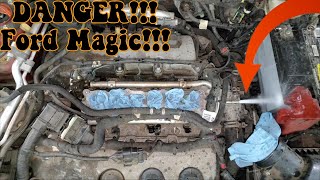
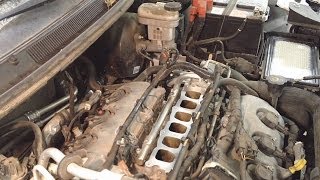
On the Ford Fusion's transversely mounted 3.5L Duratec V6, the cylinder layout places #6 on the front bank of cylinders (Bank 2), closest to the radiator, on the driver's side. While this makes it more accessible than the rear cylinders (Bank 1) against the firewall, replacing the injector still requires removing the entire upper intake manifold to access the fuel rail. 🎬 Watch: Step-by-step upper intake removal procedure This adds significant labor time compared to engines where the fuel rail is exposed, turning a simple part swap into a more involved job.
Symptoms You May Notice
- Check Engine Light is on (solid or flashing)
- Rough, shaky idle
- Engine hesitation or stumbling during acceleration
- Noticeable loss of engine power
- Reduced fuel economy
- A raw fuel smell from the exhaust
- Engine may be difficult to start
- Replacing the spark plug or ignition coil for cylinder 6. While these parts can cause a misfire code (P0306), they will not cause an injector circuit code like P0206. The P0206 code points specifically to an electrical fault in the injector circuit itself.
Most Likely Causes
- Failed Cylinder 6 Fuel Injector 🔴 High Probability → Shop Fuel Injector Injectors are electro-mechanical parts that wear out over time. An internal coil winding can break, creating an 'open' circuit, which is the most common failure mode that triggers P0206. In some cases, the failure is intermittent and only occurs when the engine is hot.
How to confirm: After confirming the wiring is good using a noid light, swap the cylinder 6 injector with an adjacent one (like cylinder 5). If the code changes to P0205, the injector is confirmed bad. You can also measure the injector's resistance with a multimeter; it should typically be between 11 and 16 ohms. An infinite resistance reading (OL) means it's open and faulty.
Typical fix: Replace the faulty fuel injector. It is often recommended to replace all injectors on the same bank (or all six) at the same time, especially on higher mileage vehicles, to ensure balanced fuel delivery and prevent future failures.
Est. part cost: $40-$180 - Wiring Harness or Connector Issue 🟡 Medium Probability Engine vibration and heat can cause wires to chafe, break, or corrode over time. The injector connector's plastic locking tab can also become brittle and break, leading to a poor connection that may be intermittent.
How to confirm: Visually inspect the wiring harness leading to the cylinder 6 injector for any signs of melting, chafing, or breaks. Check the connector for corrosion, backed-out pins, or damage. Use a noid light in the injector connector; if it flashes while cranking the engine, the wiring and PCM are likely okay. If it doesn't light up, there is an issue in the circuit. Sometimes simply unplugging and securely re-plugging the connector can fix a poor connection.
Typical fix: Repair the damaged section of wire or replace the injector connector pigtail.
Est. part cost: $10-$30 - Powertrain Control Module (PCM) Fault ⚪ Low Probability → Shop Engine Control Module (ECM) While rare for an injector circuit, the internal transistor (driver) in the PCM that controls the injector can fail. This is a diagnosis of exclusion after the injector and wiring have been proven good.
How to confirm: This is diagnosed by exclusion. If the injector and the entire wiring harness (both power and ground control wires back to the PCM) have been tested and are known to be good, the fault lies with the injector driver circuit inside the PCM.
Typical fix: Replace and reprogram the Powertrain Control Module. Some specialized services can repair the original PCM.
Est. part cost: $300-$800
Diagnosis Steps
- Confirm the code with an OBD-II scanner. Note any other codes present, such as P0306 and P0174.
- Locate cylinder 6. On the transverse 3.5L V6, it is on the bank closer to the radiator (Bank 2), on the driver's side. The front bank cylinders are 4-5-6, from passenger to driver.
- Inspect the wiring harness and connector going to the #6 fuel injector. Look for obvious signs of damage, melting, or corrosion. Try firmly reseating the connector, as a loose connection is a possible simple fix.
- Disconnect the injector and test for a command signal using a noid light. Plug the noid light into the connector and crank the engine. A flashing light indicates the PCM and wiring are sending the signal correctly. If there is no light, there is a problem in the wiring or the PCM.
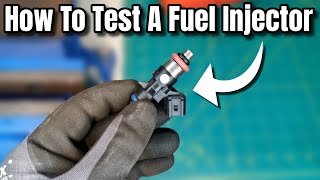
- If the noid light flashes, the injector is the prime suspect. Turn the engine off. Use a multimeter to measure the resistance across the two pins of the fuel injector. It should be between 11-16 ohms. If it reads as an open circuit (infinite resistance) or is far out of spec, the injector is bad.
- For a definitive test, swap the cylinder 6 injector with the cylinder 5 injector (middle, front bank). Clear the codes and run the engine. If the code returns as P0205, you have confirmed the injector is the faulty component.
- If the noid light did not flash, check for 12V power on one of the connector pins with the key on, engine off. If power is present, the issue is on the ground-side control wire going back to the PCM. If no power is present, check the fuel injector power supply circuit, which may involve fuses or relays.
Parts You'll Likely Need
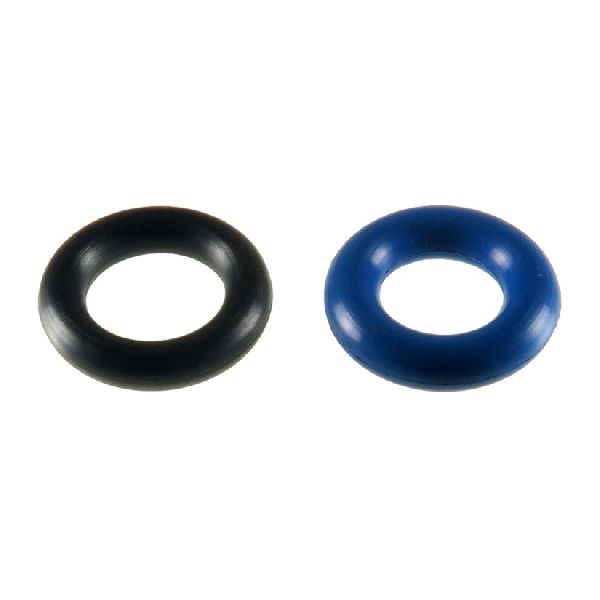
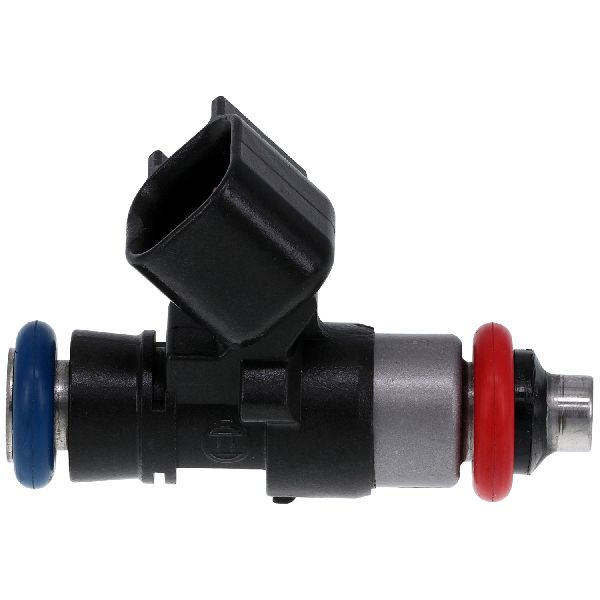
- Fuel Injector
(OEM #Motorcraft CM-5165 (interchangeable with Ford 7T4Z-9F593-B))— This is the most common failure point for a P0206 code. The internal coil fails, creating an open circuit.
Trusted brands: Motorcraft, Bosch, Standard Motor Products (SMP)
OEM price range: $120-$180
Aftermarket price range: $40-$100 - Upper Intake Manifold Gasket Set
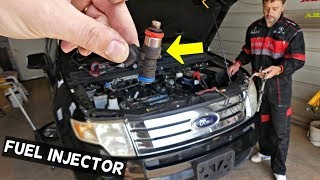
(OEM #Motorcraft 7T4Z-9439-A (or Fel-Pro MS 96684))— The upper intake manifold must be removed to access the fuel injectors on the 3.5L V6. The gaskets are single-use and must be replaced to prevent vacuum leaks. 🎬 See this complete 3.5L fuel injector replacement walkthrough
Trusted brands: Motorcraft, Fel-Pro, Mahle
OEM price range: $30-$50
Aftermarket price range: $15-$30
Related Codes That Often Appear With This One
- P0306 — P0306 means 'Cylinder 6 Misfire Detected'. Since the P0206 code indicates the injector isn't firing, the cylinder will not have combustion, which the PCM detects as a misfire. A P0206 will almost always be accompanied by a P0306.
- P0174 — P0174 means 'System Too Lean (Bank 2)'. Bank 2 is the front bank of cylinders (4-5-6). If cylinder 6 is not getting any fuel, the oxygen sensor in that bank's exhaust will detect an excess of oxygen, leading the PCM to believe the bank is running lean.
- P0316 — P0316 means 'Misfire Detected on Startup (First 1000 Revolutions)'. If the injector circuit is open from the moment the car is started, the PCM will detect the immediate misfire and log this code along with P0306.
Technical Service Bulletins (TSBs) & Recalls
- While no TSBs directly address P0206 on this model, TSB 13-4-17 for the related Ford Edge addresses MIL illumination with coil codes, and some PCM-related TSBs for ignition faults (like those from Circuit Board Medics) are relevant if the PCM is suspected.
Platform-Specific Known Issues
- Intermittent Hot Failure: Some owners report the P0206 code and misfire only appear after the engine has reached full operating temperature, suggesting the injector coil fails when hot. The issue may disappear after the car cools down, only to return on the next drive cycle.
Mechanic-Grade Diagnostic Values
- Fuel Injector Coil Resistance — expected: 11 to 16 Ohms. Failure: A reading of infinity (OL) indicates an open circuit. A reading significantly outside the expected range, or that differs by more than 0.5-1.0 Ohm from other injectors, indicates a fault.
- Injector Connector Power Pin Voltage (Key On, Engine Off) — expected: Battery Voltage (~12.6V). Failure: 0V or significantly low voltage indicates a problem with the power supply circuit, potentially a fuse, relay, or wiring issue upstream from the injector.
- Injector Connector Ground/Control Pin (Noid Light Test) — expected: Flashing light while cranking or running. Failure: No light indicates an open in the control wire to the PCM or a failed PCM driver. A constantly lit noid light indicates the control wire is shorted to ground.
- Injector Pulse Width (at idle, via scan tool) — expected: ~1-5 milliseconds (ms). Failure: A value of 0 ms for cylinder 6 while other cylinders show a pulse width confirms the PCM is not commanding the injector, or the command is not being executed.
Scan Tool Commands That Help
- Ford IDS (or high-end aftermarket scanner): Injector Balance Test / Power Balance — This function allows a technician to individually disable each fuel injector while the engine is running. When cylinder 6 is disabled, if there is no change in engine RPM or smoothness, it confirms that cylinder was not contributing in the first place, supporting the P0206 diagnosis.
- Ford IDS (or high-end aftermarket scanner): Active Command - Fuel Injector #6 — This bidirectional control allows the technician to command the #6 injector on and off with the engine off. While commanding it on, one can listen for the injector's 'click' or use a test light to confirm the circuit is being completed, helping to isolate the fault between the PCM, wiring, and injector.
Wiring & Ground Locations
- Cylinder 6 Injector Connector — On the front bank of cylinders (closest to radiator), driver's side.. This is the primary connection point to test. Pin 1 (typically a colored wire, e.g., Violet/Orange) is the control (ground pulse) from the PCM. Pin 2 (typically a common color for all injectors, e.g., Green/Red) is the 12V+ power supply from the fuse/relay.
- G104 — On the right side of the engine compartment (passenger side).. This is a key grounding point for the engine control system. While a bad ground here would likely cause multiple codes and issues, a corroded or loose connection could potentially cause intermittent electrical problems for various sensors and actuators, including the injector circuit.
Real Owner Repair Stories
- YouTube video by 'FIX CODE P0201...' (Ford Edge with 3.5L V6 (same engine and platform)) — Check engine light with injector circuit codes, rough running.
❌ Tried (didn't work) The video directly proceeds to diagnosis, but implies that simply clearing the code does not work.
✅ What actually fixed it The video diagnoses the issue by identifying the correct cylinder bank and injector. The problem was resolved by replacing the faulty fuel injector for the corresponding cylinder. After replacement and clearing the codes, the engine ran smoothly and the check engine light stayed off.
OEM Part Supersession History
7T4Z-9F593-B→Motorcraft CM-5165— Standard branding change from a Ford production part number to a Motorcraft service part number.
Heads up: These part numbers are directly interchangeable.
Model Year Variations Within This Range
- 2010-2012: The 3.5L V6 in the Fusion Sport uses a different, more robust Aisin AWF21 automatic transmission than the 3.0L V6 models, which use the Ford 6F35. The Sport model with the 3.5L also retained hydraulic power steering, while other models may have had electric power-assisted steering (EPAS), offering a different steering feel.
Diagnostic Flowchart
Other Known Issues on This Vehicle
Issues unrelated to this code that are worth knowing about as an owner of this generation:
- Internal Water Pump Failure 🔴 High — Common after 80,000-120,000 miles. A known design flaw of the transverse 3.5L Duratec. (Ref: No recall, but subject of class-action lawsuits. A weep hole behind the alternator is the only external indicator of failure before coolant mixes with oil.)
- Electronic Throttle Body Failure 🟠 Medium — Can occur at various mileages, leading to 'limp mode' or sudden deceleration. (Ref: Ford issued TSBs to help with diagnosis and some models were subject to customer satisfaction programs.)
- 6F50/6F35 Transmission Issues 🟠 Medium — Issues like harsh shifting, shift flares when cold, or fluid leaks from the left half-shaft seal are reported. (Ref: TSB 15-0079 addresses the half-shaft seal leak.)
- Power Steering Failure (2010-2012 models) 🔴 High — The 2010-2012 models introduced electronic power steering, which is prone to sudden failure, causing a complete loss of steering assist. (Ref: Subject of many complaints, but recalls were often limited and didn't cover all affected model years.)
Used vs. New Parts: Buying Guide for This Vehicle
When a used part is the smart pick: Using a used fuel injector is generally not recommended. The cost of a new, quality aftermarket injector is low, and the labor to access it (removing the intake manifold) is significant. A used injector carries an unknown history and could fail shortly after installation, forcing you to repeat the labor-intensive job. A used wiring harness pigtail is a viable option if the connector is damaged and you can find one in good condition.
Donor-vehicle mileage cap: roughly under 80000 miles for the part to have meaningful remaining life.
What to inspect on the donor part:
- For a wiring pigtail: ensure the plastic is not brittle, the locking tab is intact, and there is no corrosion on the pins.
- For an injector (if you must): check for physical damage, cracks, or heavy corrosion. Ask for the donor vehicle's mileage if possible.
OEM-only on this vehicle (don't cheap out):
- Powertrain Control Module (PCM) - Due to the need for specific programming (VIN matching), a new or professionally remanufactured and programmed unit is essential.
Aftermarket brands forum-validated for this vehicle:
- Bosch
- Standard Motor Products (SMP)
- GB Remanufacturing
Brands owners have reported issues with on this vehicle:
- Unbranded, no-name injectors from online marketplaces should be avoided due to inconsistent quality control, which can lead to incorrect flow rates, poor spray patterns, and premature failure.
Real Owner Stories
Aggregated from forums and TSBs cited above. Mileages and costs reflect what owners reported in those sources.
2011 Ford Fusion Sport 3.5L V6
Symptoms: Intermittent misfire that would temporarily clear after replacing spark plugs or cleaning components, but ultimately returned. Codes P0206, P0306, and P0174 were present.
What fixed it: Replacing the failing fuel injector.
Source hint: Reddit r/mechanic - '2011 Ford fusion sport V6 3.5L'
Ford Edge 3.5L V6 — ~150000 miles
Symptoms: The owner initially thought reseating the connector fixed the P0206 and P0306 issue, but the problem returned, appearing to fail specifically when the engine was hot.
What fixed it: The owner suspected a fuel injector failing when hot (intermittent failure).
Source hint: Ford Edge Forum - 'P0206 and P0306 easy fix???'
2010 Ford Fusion 3.5L V6
Symptoms: Check engine light with associated codes P0206, P0306, and P0174.
What fixed it: Fuel injector replacement, which required removing the upper intake manifold.
Source hint: YouTube - Rust Belt Auto - '2010 3.5L Ford Fusion Fuel injector replacement'
Related OBD-II Codes
Frequently Asked Questions
Where is cylinder 6 located on my 2010-2012 Ford Fusion 3.5L V6?
Does TSB 13-4-17 apply to my P0206 code?
Why does my P0206 code only appear after the engine is hot?
What should the resistance be for a healthy injector on my Duratec 35 engine?
Can I just reseat the connector to fix P0206 on my Fusion?
Is it necessary to remove the intake manifold to fix this?
Helpful Videos
We Have This Part in Stock


The information in this article is provided for general reference and educational purposes only. Vehicle specifications, procedures, and part compatibility can vary by production date, trim level, and region. Always consult your vehicle's factory service manual and verify part numbers before purchasing or performing repairs. Safety-critical components such as airbags, seat belts, and braking systems should be installed by a qualified professional.
- Ford Fusion:
- 🧭 Diagnostic Flowchart
- 🎬 Helpful Videos
- 🛍️ Shop This Part
- What's Unique About the 2010-2012 Ford Fusion
- Symptoms You May Notice
- Most Likely Causes
- Diagnosis Steps
- Parts You'll Likely Need
- Related Codes That Often Appear With This One
- Technical Service Bulletins (TSBs) & Recalls
- Platform-Specific Known Issues
- Mechanic-Grade Diagnostic Values
- Scan Tool Commands That Help
- Wiring & Ground Locations
- Real Owner Repair Stories
- OEM Part Supersession History
- Model Year Variations Within This Range
- Other Known Issues on This Vehicle
- Used vs. New Parts: Buying Guide for This Vehicle
- Real Owner Stories
- 2011 Ford Fusion Sport 3.5L V6
- Ford Edge 3.5L V6 — ~150000 miles
- 2010 Ford Fusion 3.5L V6
- Related OBD-II Codes
- Frequently Asked Questions
- 🎟️ Get 5% Off