

P0206 on 2006-2011 Mercury Milan 3.0L V6: Injector Circuit Malfunction Causes and Fixes
P0206 on a Mercury Milan 3.0L V6 indicates an electrical fault with the fuel injector in cylinder 6. The most common cause is a failed fuel injector, followed by wiring issues. Replacing the injector is the typical fix, costing around $40-$90 for the part. Cylinder 6 is located on the front bank (near the radiator), making access relatively straightforward.
- P0206 is an electrical circuit code for the cylinder 6 fuel injector, not a mechanical fuel flow problem.
- The most likely culprit is a failed fuel injector, which can be confirmed by testing its electrical resistance.
- Cylinder 6 is on the front bank (near the radiator), making it one of the easier injectors to access on this V6 engine.
- Always check the wiring and connector for damage before replacing the injector.
- Do not drive if the Check Engine Light is flashing, as this indicates a severe misfire that can quickly destroy your catalytic converter.
What's Unique About the 2006-2011 Mercury Milan
The Duratec 30 3.0L V6 is a widely used and generally reliable Ford engine. For the P0206 code, there are no major platform-specific issues or widespread design flaws noted in TSBs or recalls for the Milan or its direct platform-mate, the Ford Fusion. The diagnostic process is standard for this type of port-injected engine. The key for this vehicle is correctly identifying the location of cylinder 6. On the transverse-mounted Duratec 30, the cylinders are numbered 1-2-3 on the rear bank (against the firewall) and 4-5-6 on the front bank (closer to the radiator). This makes cylinder 6 the passenger-side cylinder on the front bank, which is relatively easy to access for testing and replacement.
Symptoms You May Notice
- Check Engine Light is on
- Rough or shaky idle
- Engine misfire, which may feel like a stutter or hesitation during acceleration
- Reduced engine power and poor acceleration
- Decrease in fuel economy
- Engine may be hard to start
- A smell of raw gasoline from the exhaust
- Replacing the spark plug or ignition coil for cylinder 6. While these can cause a misfire (P0306), they will not cause an injector circuit code like P0206. The P0206 code is specifically for an electrical fault in the injector circuit, not a combustion failure.
Most Likely Causes
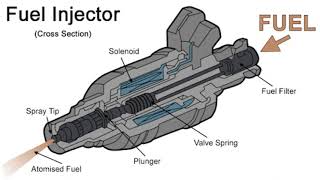
- Failed Cylinder 6 Fuel Injector 🔴 High Probability → Shop Fuel Injector Injectors are electro-mechanical parts that cycle millions of times. Over time, the internal coil winding can break from heat and vibration, creating an open circuit that triggers the P0206 code. This is the most frequent point of failure.
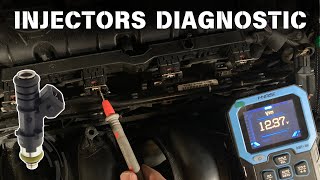
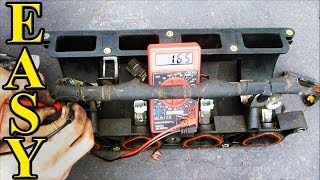
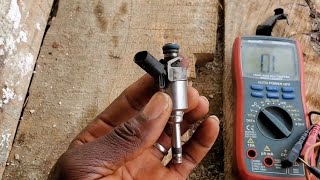
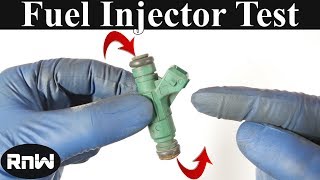
How to confirm: Disconnect the injector and measure its resistance with a multimeter. 🎬 See how to test fuel injector resistance with a multimeter A good injector for this engine should read between 12 and 16 ohms. A reading of infinite resistance (OL) confirms an open circuit and a failed injector. You can also swap the cylinder 6 injector with an adjacent one (e.g., cylinder 5). If the code changes to P0205, the injector is confirmed to be the faulty part.
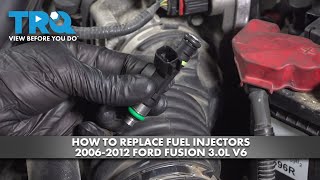
Typical fix: Replace the faulty fuel injector. While you can replace just the single failed injector to resolve the code, it is often recommended on higher-mileage vehicles to replace all three injectors on the same bank or all six for balanced performance, as they have all experienced the same wear.
Est. part cost: $40-$90 - Wiring Harness or Connector Issue 🟡 Medium Probability The wiring harness in the engine bay is exposed to heat and vibration, which can cause wires to become brittle, chafe against brackets, or break over time. The plastic connector itself can also become corroded, or the locking tab can break, leading to a poor connection at the injector.
How to confirm: Visually inspect the wiring going to the cylinder 6 injector for any signs of melting, chafing, or breaks. Check the connector for corrosion or loose pins. Perform a 'wiggle test' on the harness with the engine running to see if it causes the misfire to change. Use a noid light plugged into the injector connector; it should flash steadily while the engine is cranked or running, confirming the PCM is sending a signal.
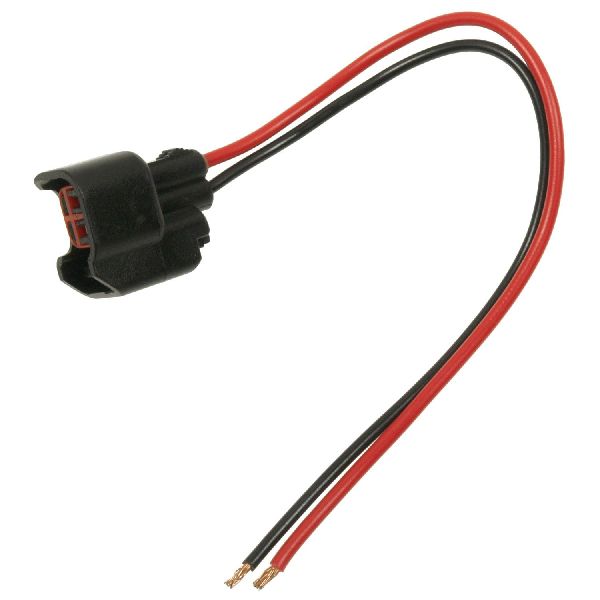
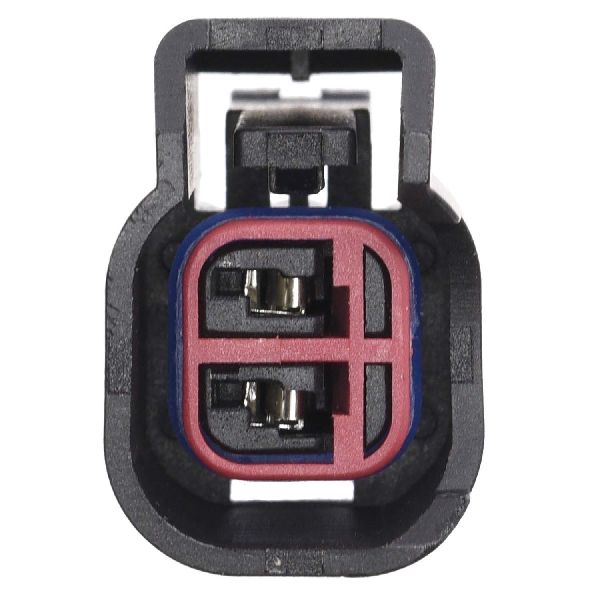
Typical fix: If the connector is damaged, it can be replaced with a new pigtail connector (e.g., Motorcraft WPT-1051 or equivalent). Damaged sections of wire must be repaired by soldering and sealing with heat-shrink tubing to prevent future corrosion.
Est. part cost: $10-$35
Rare But Worth Checking
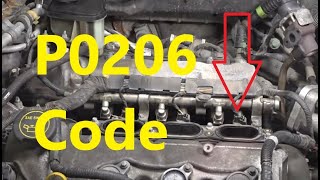
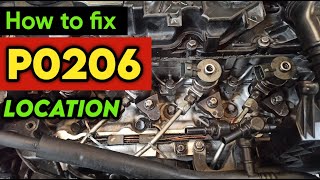
- Powertrain Control Module (PCM) Failure: → Shop Engine Control Module (ECM) This is the least likely cause. The internal transistor 🎬 Watch: Overview of common causes and fixes for code P0206 (driver) in the PCM that controls the cylinder 6 injector can fail. This should only be considered after the injector and wiring have been exhaustively tested and proven to be good. In some cases on Ford platforms, repeated ignition coil failures can damage the PCM, although this is less directly linked to an injector circuit code.
Diagnosis Steps
- Read the codes with an OBD-II scanner to confirm P0206 and note any other codes present, like P0306.
- Locate cylinder 6. On the transverse 3.0L V6, it is the third cylinder from the timing belt side (passenger side) on the front bank, closest to the radiator.
- Visually inspect the wiring harness and connector for the cylinder 6 fuel injector. Look for any obvious damage, corrosion, or loose connections. Pay attention to where the harness may rub against engine components.
- Perform a noid light test. Disconnect the injector and plug a noid light into the harness connector. Crank the engine. If the light flashes, the PCM and wiring are sending the signal correctly, and the injector is almost certainly at fault. If it does not flash, there is a problem with the wiring or the PCM.
- Test the fuel injector resistance. Disconnect the injector and use a multimeter set to ohms to measure the resistance between the two terminals. It should be between 12 and 16 ohms. If it's outside this range or shows an open circuit (OL), the injector has failed and needs to be replaced.
- If the noid light test failed, check for power at the injector connector. One wire should have battery voltage (~12V) when the key is on. If not, trace the power supply wire for a break or short.
- If power is present but the noid light doesn't flash, check the signal (ground) wire for continuity between the injector connector and the PCM. If the wire is intact, the problem may be a rare failure of the PCM's injector driver.
Parts You'll Likely Need
- Fuel Injector
(OEM #CM-5121)— This is the most common failure point for a P0206 code. The internal coil of the injector fails, creating an open circuit.
Trusted brands: Motorcraft, Bosch, Standard Motor Products
OEM price range: $70-$110
Aftermarket price range: $40-$90 - Fuel Injector Connector Pigtail
(OEM #WPT-1051)— If the electrical connector is corroded, melted, or the locking tab is broken, it will need to be replaced to ensure a solid connection to the new injector.
Trusted brands: Motorcraft, Dorman, Standard Motor Products (S-587)
OEM price range: $25-$40
Aftermarket price range: $10-$25
Related Codes That Often Appear With This One
- P0306 — P0306 means 'Cylinder 6 Misfire Detected.' Since P0206 indicates the injector isn't firing correctly, that cylinder won't have proper combustion, directly causing a misfire.
- P0300 — This code means 'Random/Multiple Cylinder Misfire Detected.' While P0206 is specific to cylinder 6, the resulting imbalance in engine operation can sometimes be interpreted by the PCM as a more general misfire condition.
- P0316 — This code indicates a 'Misfire Detected on Startup (First 1000 Revolutions).' It often appears with a specific cylinder misfire code like P0306.
- P0171 / P0174 — These codes for 'System Too Lean' on Bank 1 or Bank 2 can sometimes accompany injector codes if the PCM is trying to compensate for the lack of fuel in one cylinder, or if there are other underlying fuel system issues.
Mechanic-Grade Diagnostic Values
- Fuel Injector Coil Resistance — expected: Approximately 12.5 Ohms at room temperature. All injectors should measure within 0.5 Ohms of each other.. Failure: A reading of infinite resistance (OL) indicates an open coil. A reading significantly outside the 12-16 Ohm range or that differs from the other injectors by more than 0.5 Ohms indicates a faulty injector.
- Injector Connector Power Supply Voltage (Key On, Engine Off) — expected: One of the two pins in the connector should show battery voltage (approx. 12.0-12.6V) when tested against a known good ground.. Failure: No voltage indicates a break in the power supply wire from the fuse/relay.
Scan Tool Commands That Help
- Ford IDS (Integrated Diagnostic System) or equivalent professional scanner: Power Balance Test — To confirm which cylinder is misfiring and not contributing power. The graph will show a significant drop for cylinder 6, visually confirming the impact of the P0206 fault. It can also be used to command individual injectors off to test circuit response.
Wiring & Ground Locations
- Cylinder 6 Injector Control Wire — Runs from the fuel injector connector for cylinder 6 to the PCM. On the platform-sharing 2008 Fusion 3.0L, this wire is Violet with a Brown stripe and connects to Pin 10 of PCM connector 'E'.. This is the specific wire the PCM uses to ground-trigger the injector. A break or short on this wire is a direct cause of P0206. Knowing the color and pin number is critical for performing a continuity test between the injector and the PCM.
- Injector Power Supply Wire — Runs from a shared power source (fuse/relay) to one pin on each of the fuel injectors.. While less common to fail than the control wire, a break in this wire before it reaches the cylinder 6 injector will cause a P0206. If multiple injector codes are present, a fault in this shared power wire is more likely.
Model Year Variations Within This Range
- 2010-2011: For the 2010 model year facelift, the 3.0L Duratec V6 received a power increase from 221 hp to 240 hp. This may correspond with a change in fuel injector part number or PCM software. While the diagnostic process is identical, a technician should verify the correct injector part number for the 2010-2011 models, as it may differ from the earlier 2006-2009 models.
Diagnostic Flowchart
Other Known Issues on This Vehicle
Issues unrelated to this code that are worth knowing about as an owner of this generation:
- Harsh/Delayed Automatic Transmission Shifting 🔴 High — Common issue, particularly on 2006-2009 models with the Aisin TF-81 6-speed automatic. Can occur at any mileage but often worsens over time. (Ref: No specific recall, but PCM/TCM software updates were an early fix. Later issues often point to internal valve body failure.)
- Electronic Throttle Body (ETB) Failure 🔴 High — A well-documented problem across many Ford models with this engine, including the Milan. Can cause sudden deceleration ('limp home mode') without warning. (Ref: Ford Customer Satisfaction Program 13N03 extended the warranty on the ETB to 10 years/150,000 miles for certain vehicles.)
- Internally-Driven Water Pump Failure 🔴 High — While the pump itself is not unusually failure-prone, its location is problematic. It is driven by the timing chain. Failure can lead to coolant mixing with engine oil, causing catastrophic engine damage if not caught immediately. Replacement is very labor-intensive.
- Ticking Noise from Valvetrain/Camshafts 🟠 Medium — Some 2006-2007 models with the 3.0L V6 may develop a ticking noise from the cylinder head when warm. (Ref: TSB 08-23-5 addresses a procedure to re-torque the exhaust camshaft caps, which may resolve the noise without major parts replacement.)
- Canister Purge Valve Failure (2010-2011) 🔴 High — Affects 2010-2011 models. A faulty canister purge valve can cause the fuel tank to deform and crack, leading to a fuel leak and fire risk. (Ref: NHTSA Campaign #15V793000 (Ford Recall 15S34).)
Used vs. New Parts: Buying Guide for This Vehicle
When a used part is the smart pick: A used wiring pigtail connector from a junkyard is a reasonable choice if the plastic is not brittle and the wires are in good condition. Given the low cost of new aftermarket fuel injectors, buying used injectors is generally not recommended.
Donor-vehicle mileage cap: roughly under 80000 miles for the part to have meaningful remaining life.
What to inspect on the donor part:
- For wiring pigtails: Inspect for cracked or brittle plastic on the connector body.
- Check for any green or white corrosion on the metal pins inside the connector.
- Ensure there are several inches of clean, uncut wire attached.
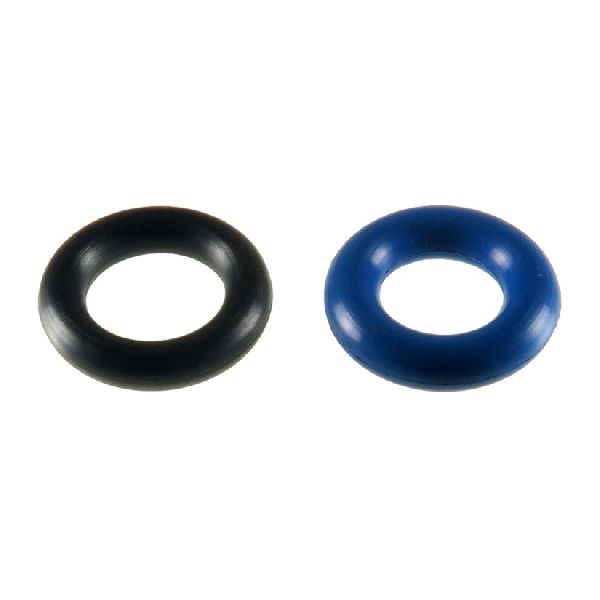
- For injectors (if unavoidable): Look for physical cracks in the plastic body and ensure O-rings are present, but be aware that internal electrical failure is not visible.
OEM-only on this vehicle (don't cheap out):
- Powertrain Control Module (PCM): Due to programming and software matching requirements, it is highly recommended to use an OEM new or professionally remanufactured PCM. A used PCM from a donor car will likely not work without specialized reprogramming.
Aftermarket brands forum-validated for this vehicle:
- Bosch
- Standard Motor Products (SMP)
- TRQ
Real Owner Stories
Aggregated from forums and TSBs cited above. Mileages and costs reflect what owners reported in those sources.
2012 Ford Fusion 3.0L V6
Symptoms: Owner reported diagnostic trouble codes P0206 and P0306 were present.
What fixed it: The issue was successfully resolved by replacing the fuel injectors.
Source hint: Reddit r/MechanicAdvice - 'Car is acting funny after repair'
Related OBD-II Codes
Frequently Asked Questions
Where exactly is cylinder 6 on my 2008 Mercury Milan's 3.0L V6 engine?
I'm testing my fuel injectors. What is the correct resistance reading for this engine?
The plastic connector for my fuel injector is broken. Is there a specific part number I can use to replace it?
My 2010 Milan is having issues with the fuel tank deforming. Is this a known problem or recall?
My Milan's engine has a ticking noise when it's warm. Is there a simple fix for this?
My car suddenly lost power and went into 'limp home mode'. Could this be the throttle body problem I've heard about?
I've confirmed the injector for cylinder 6 is bad. Should I replace just the one, or all of them?
Helpful Videos
We Have This Part in Stock


The information in this article is provided for general reference and educational purposes only. Vehicle specifications, procedures, and part compatibility can vary by production date, trim level, and region. Always consult your vehicle's factory service manual and verify part numbers before purchasing or performing repairs. Safety-critical components such as airbags, seat belts, and braking systems should be installed by a qualified professional.
- Mercury Milan:
- 🧭 Diagnostic Flowchart
- 🎬 Helpful Videos
- 🛍️ Shop This Part
- What's Unique About the 2006-2011 Mercury Milan
- Symptoms You May Notice
- Most Likely Causes
- Rare But Worth Checking
- Diagnosis Steps
- Parts You'll Likely Need
- Related Codes That Often Appear With This One
- Mechanic-Grade Diagnostic Values
- Scan Tool Commands That Help
- Wiring & Ground Locations
- Model Year Variations Within This Range
- Other Known Issues on This Vehicle
- Used vs. New Parts: Buying Guide for This Vehicle
- Real Owner Stories
- 2012 Ford Fusion 3.0L V6
- Related OBD-II Codes
- Frequently Asked Questions
- 🎟️ Get 5% Off