

P0206 on 2006-2012 Toyota RAV4 3.5L V6: Injector Circuit Malfunction Causes and Fixes
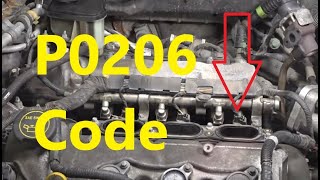
P0206 on a V6 RAV4 indicates an electrical fault with the fuel injector for cylinder 6. This is most often a failed injector, but can also be a wiring issue. Because cylinder 6 is on the rear bank against the firewall, expect a higher repair cost (~$650-$800) due to the labor required to remove the intake manifold.
- P0206 on your V6 RAV4 means there's an electrical problem with the fuel injector in cylinder #6.
- The most likely cause is a failed fuel injector, followed by a wiring issue.
- Cylinder 6 is located on the rear bank against the firewall, requiring removal of the intake manifold for access, which significantly increases labor time and cost.
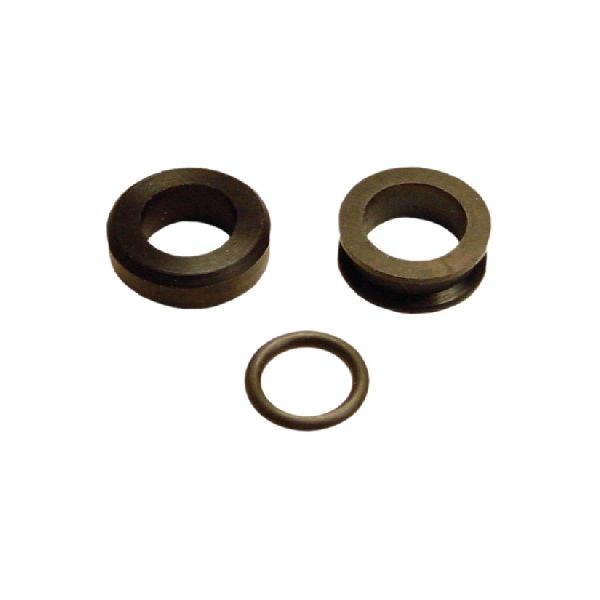
- While performing the repair, it is highly recommended to replace all three rear bank injectors, the intake gaskets, and the PCV valve.
What's Unique About the 2006-2012 Toyota RAV4
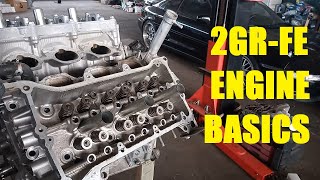
On the 2GR-FE V6 engine, the cylinders are divided into two banks. Cylinders 1, 3, and 5 are on the front bank (near the radiator) and are easy to access. Cylinders 2, 4, and 6 are on the rear bank, tucked against the firewall. The P0206 code points to cylinder 6, which is one of the hard-to-reach injectors. This makes diagnosis and repair significantly more labor-intensive than for a code related to a front-bank injector, as the upper intake manifold must be removed for access.
Symptoms You May Notice
- Check Engine Light is on
- Rough or shaking idle
- Engine misfire (feels like a stutter or hesitation)
- Reduced engine power and poor acceleration
- Decreased fuel economy
- Noticeable fuel smell from the exhaust
- Engine vibration that is more pronounced under load
- Replacing the spark plug or ignition coil for cylinder 6. While a P0306 (Cylinder 6 Misfire) code could be caused by spark issues, the P0206 code is specific to the fuel injector's *electrical circuit*. Replacing ignition components will not fix a P0206.
Most Likely Causes
- Failed Fuel Injector (Cylinder 6) 🔴 High Probability → Shop Fuel Injector Injectors are electro-mechanical parts that can fail electrically (internal coil opens or shorts) or mechanically over time. While not a systemic defect, it is the most common point of failure for this code. The internal coil winding breaks, creating an open circuit.
How to confirm: After gaining access to the injector, unplug it and measure its resistance with a multimeter. A good injector for this engine should have a resistance between 11.6 to 12.4 Ohms at 20°C (68°F). An infinite reading (open) or zero reading (short) confirms a bad injector. An alternative is to swap the #6 injector with another cylinder's injector (e.g., #5) and see if the trouble code follows the injector (changes to P0205).
Typical fix: Replace the faulty fuel injector. It is often recommended to replace all three rear injectors at the same time due to the high labor cost to access them. It's also wise to replace the intake manifold gaskets at the same time.
Est. part cost: $60-$180 for one OEM-quality (Denso) injector - Wiring Harness or Connector Issue 🟡 Medium Probability The wiring harness is tucked behind the engine and can be susceptible to heat damage over many years, leading to brittle wires or connectors. Rodents are also known to chew on the soy-based wiring insulation used in many modern vehicles, causing an open or short circuit.
How to confirm: Visually inspect the wiring leading to the cylinder 6 injector for any signs of chewing, melting, or corrosion. Unplug the connector and check for bent or corroded pins. Use a 'noid light' plugged into the injector connector; it should flash when the engine is cranked, indicating the ECM is sending a pulse. If there is no flash, a wiring or ECM problem is likely.
Typical fix: Repair the damaged section of the wiring harness or replace the injector pigtail connector.
Est. part cost: $10-$30 for a pigtail connector
Rare But Worth Checking
- Faulty Engine Control Module (ECM): → Shop Engine Control Module (ECM) This is the least likely cause. The injector driver circuit within the ECM can fail, but this is rare. All other possibilities, including the injector and wiring, must be exhaustively ruled out before condemning the ECM.
Diagnosis Steps
- Confirm the presence of the P0206 code with an OBD-II scanner. Note any other codes present, especially P0306.
- Locate cylinder 6. On the 2GR-FE, it is on the rear bank (against the firewall), on the passenger side of the engine.
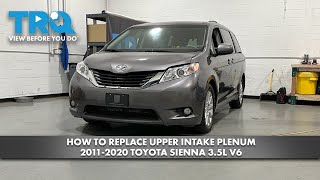
- To perform further diagnosis, the upper intake manifold must be removed to access the rear fuel rail and injectors. 🎬 See: How to remove the upper intake plenum This is a complex job requiring careful labeling of bolts and hoses.
- Once access is gained, visually inspect the wiring harness and connector for injector #6. Look for any obvious signs of damage, melting, or rodent activity.
- Disconnect the injector connector. Plug in a noid light. Have a helper crank the engine and observe the light. A consistent flashing light indicates the ECM and wiring are likely good. No light or a steady light points to a wiring or ECM issue.
- If the noid light flashes correctly, the problem is likely the injector itself. Turn the ignition off.
- Use a multimeter set to Ohms to measure the resistance across the two pins of the fuel injector. It should be between 11.6 and 12.4 Ω. Compare this reading to an injector on the front bank. If the resistance is infinite (open), zero (shorted), or out of spec, the injector has failed.
- For ultimate confirmation, swap the suspected bad injector (#6) with a known good one from another cylinder (e.g., #5). Reassemble enough to run the engine, clear the codes, and see if the fault code changes to P0205. If it does, the injector is definitively bad.
- If the noid light test fails and the wiring appears intact, check for continuity between the injector connector and the ECM connector pins. This will rule out a hidden break in the wire. You will need a wiring diagram for your specific vehicle to identify the correct pins at the ECM.
Parts You'll Likely Need
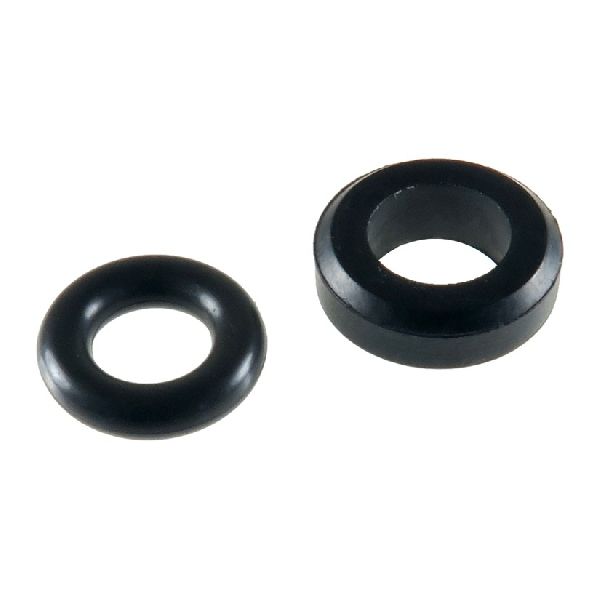
- Fuel Injector
(OEM #23250-31050 (interchangeable with 23250-0P040))— This is the most common failure point for a P0206 code. The internal coil of the injector fails, creating an open or short circuit.
Trusted brands: Denso (OEM), Aisan
OEM price range: $120-$180
Aftermarket price range: $60-$110 - Upper and Lower Intake Manifold Gaskets
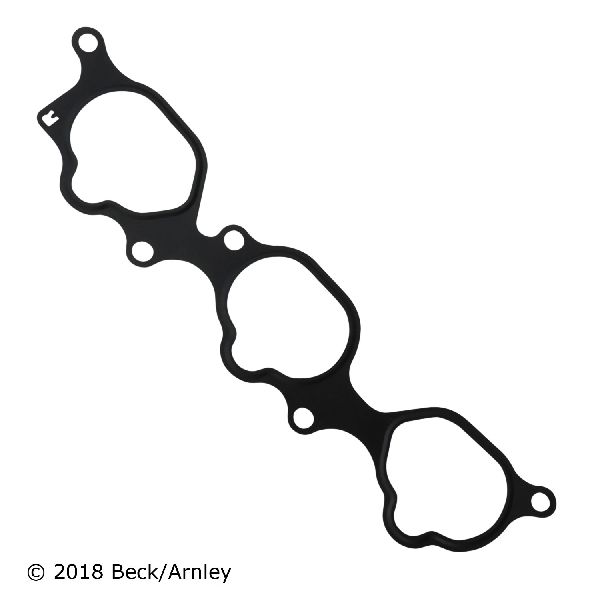
(OEM #Upper: 17176-0P021, Lower: 17177-31040 (Set of 2))— These must be replaced whenever the intake manifold is removed to access the rear injectors. Re-using old gaskets will cause vacuum leaks.
Trusted brands: Fel-Pro, Mahle, Toyota (OEM)
OEM price range: $40-$70
Aftermarket price range: $20-$40 - PCV Valve
(OEM #12204-31040)— The PCV valve is located under the intake manifold and is inexpensive. It's a 'while you're in there' replacement item that is difficult to access otherwise.
Trusted brands: Toyota (OEM)
OEM price range: $10-$20
Aftermarket price range: $5-$15
Related Codes That Often Appear With This One
- P0306 — P0306 means "Cylinder 6 Misfire Detected." Since the P0206 code indicates cylinder 6 isn't getting fuel, a misfire is an expected and direct consequence. You will almost always see P0306 alongside P0206.
- P0300 — "Random/Multiple Cylinder Misfire Detected." If the wiring issue is intermittent or affects other injectors, or if the fuel delivery issue is more widespread, this code may appear.
- P0171 / P0174 — These are "System Too Lean" codes for Bank 1 and Bank 2. While less common, an injector circuit issue could contribute to a lean condition that the ECM tries to correct, potentially triggering these codes as a secondary effect.
Platform-Specific Known Issues
- Owner Experience: Rodent Damage: A user on a Toyota forum with a P0206 and P0306 on their Sienna (same 2GR-FE engine) discovered that rodents had chewed through the injector wire for cylinder 6. The damage was hidden under the plastic engine cover near the firewall, requiring removal of the intake manifold to properly repair the harness.
Mechanic-Grade Diagnostic Values
- Fuel Injector Resistance — expected: 11.6 to 12.4 Ω at 20°C (68°F). Failure: An infinite reading (Open Loop) or near-zero reading (Short Circuit) indicates a failed injector coil.
- Injector Pulse Width (at idle) — expected: 1.2 to 2.4 milliseconds (ms) on a scan tool data list when the engine is warm and idling.. Failure: A value of 0 ms for the affected cylinder, or a value that does not change with RPM, points to a circuit or ECM driver issue.
- Fuel Pressure (at fuel rail) — expected: 304 to 343 kPa (44 to 50 psi). Failure: While not a direct cause for a P0206 circuit code, verifying correct pressure is a baseline check. Low pressure will not trigger P0206.
- Injector Connector Voltage (Key On, Engine Off) — expected: Battery voltage (~12V) on one of the two pins (the power feed wire).. Failure: No voltage indicates a problem with the power supply circuit to the injector, likely a fuse or relay issue upstream.
Hidden / Shadow Codes Worth Checking
- Internal ECM Logic: IJT vs. IJF Signal: Toyota ECUs do not typically set user-facing 'shadow codes' for this fault. Instead, the ECM internally monitors the injector circuit by sending an Injection Command (IJT) signal and expecting an Injection Confirmation (IJF) signal back from the injector driver. P0206 is set when the ECM sends an IJT for cylinder 6 but does not receive the corresponding IJF confirmation, indicating a fault in the circuit, injector, or driver. (see via This is an internal ECM process, not a viewable code. The result of this failed check is the P0206 code itself.)
Scan Tool Commands That Help
- Toyota Techstream: Active Test: Control the Injection Volume — This test allows the technician to command a percentage increase or decrease in fuel volume across all cylinders. While not cylinder-specific, observing if the engine's running condition changes (or fails to change) can help confirm if the fuel system is responding to ECM commands at all.
- Toyota Techstream: Active Test: Control the Fuel Pump/Speed — This allows you to turn the fuel pump on and off manually. It is used to rule out a fuel supply problem, which would typically set different codes but can be a useful baseline test.
- Toyota Techstream: Data List Monitoring — The most valuable function for this code. Monitor the 'Injector' or 'Injection Period' Parameter ID (PID) for each cylinder. For a P0206, you would expect to see a static or zero value for cylinder 6 while other cylinders show a fluctuating pulse width in milliseconds.
Wiring & Ground Locations
- Engine Harness Ground (Bank 1) — On the side of the rear cylinder head (Bank 1, which includes cylinder 6), located underneath the throttle body assembly.. A loose or corroded main ground for the engine harness can cause erratic electrical behavior for all sensors and actuators on that bank, including the fuel injectors. While it would likely cause multiple codes, a poor ground here should be inspected when diagnosing any rear-bank electrical issue.
- Injector #6 Wiring Harness — Runs from the main engine harness trunk over the top of the rear valve cover and down to the injector, underneath the upper intake manifold.. This specific section of the harness is a primary suspect. It is exposed to significant heat and vibration and is a known target for rodents seeking shelter, leading to chewed wires that cause an open or short circuit.
OEM Part Supersession History
23250-31050→23250-0P040— Standard part number update/interchange. Both refer to the same Denso injector assembly.
Heads up: These part numbers are interchangeable. Note that '23250-xxxxx' refers to the injector assembly, while the injector component itself may be stamped with '23209-31050' or its supersession '23209-0P040'.
Model Year Variations Within This Range
- Early vs. Late Production: In some early 2GR-FE applications, the ECM was located inside the vehicle (e.g., behind the glovebox), while in later models it was moved into the engine bay. This can change the diagnostic process for testing wire continuity, as the location of the ECM connector will differ.
Diagnostic Flowchart
Other Known Issues on This Vehicle
Issues unrelated to this code that are worth knowing about as an owner of this generation:
- VVT-i Oil Line Rupture 🔴 High — Common on 2006-2009 models with the original rubber/metal hose. Failure can be sudden and lead to catastrophic engine failure from oil starvation. (Ref: Limited Service Campaign (LSC) announced by Toyota to replace the rubber hose with an all-metal line (Part No. 15772-31030).)
- Water Pump Failure 🟠 Medium — Typically fails between 80,000 and 150,000 miles. It's an internal pump, so initial leaks are not visible and can contaminate the engine oil if not caught.
- Steering Intermediate Shaft Clunk 🟡 Low — A common issue causing a clunking or knocking noise when turning the steering wheel at low speeds. More of an annoyance than a safety risk. (Ref: Toyota TSB T-SB-0032-11 addresses this issue.)
- Ignition Coil Failure 🟠 Medium — Fairly common failure item leading to misfires (e.g., P030X codes). Often misdiagnosed for a P020X code, but relates to spark, not fuel injection circuit.
Used vs. New Parts: Buying Guide for This Vehicle
When a used part is the smart pick: For the fuel injector, a professionally cleaned, tested, and flow-matched set of used OEM Denso injectors can be a smart, cost-effective alternative to brand new OEM parts. Avoid pulling a single used injector from a junkyard vehicle without knowing its history or having it tested, as you may inherit a different problem.
Donor-vehicle mileage cap: roughly under 120000 miles for the part to have meaningful remaining life.
What to inspect on the donor part:
- For used injectors, buy from a reputable refurbisher that provides a flow chart showing the performance of each injector in the set.
- Ensure the seller guarantees they are genuine OEM Denso parts, not cheap knock-offs.
- Inspect the plastic connector for cracks and the pintle cap for damage before installation.
OEM-only on this vehicle (don't cheap out):
- PCV Valve: Aftermarket versions can have incorrect flow rates, causing oil consumption issues. Given the low cost of the OEM part, it is the only recommended option.
Aftermarket brands forum-validated for this vehicle:
- Injectors: Denso (OEM), Bosch, Standard Motor Products (SMP).
- Gaskets: Fel-Pro, Mahle, OEM Toyota.
Brands owners have reported issues with on this vehicle:
- Unbranded, no-name fuel injectors from online marketplaces. These are frequently reported on forums to have inconsistent flow rates, fail prematurely, or cause other fuel trim issues.
Real Owner Stories
Aggregated from forums and TSBs cited above. Mileages and costs reflect what owners reported in those sources.
2008 Toyota RAV4 3.5L V6
Symptoms: The owner experienced a P0206 and P0306 code. Diagnosis required removing the intake manifold to access the rear bank.
What fixed it: Replacement of the faulty fuel injector after confirming the failure through diagnosis.
Source hint: RAV4World: P0206 and P0306 on my 08 V6 RAV
2007 Toyota Sienna 3.5L V6
Symptoms: P0206, P0306, and P0300 codes were present. The fault was traced to the wiring harness for the #6 injector.
What fixed it: Repair of the wiring harness where rodents had chewed through the injector wire near the firewall.
Source hint: ToyotaNation: 2007 Sienna P0206, P0306, P0300
2006-2012 Toyota RAV4 3.5L V6 — ~115000 miles
Symptoms: Internal leaks that were not initially visible, potentially contaminating engine oil.
What fixed it: Replacement of the internal water pump using genuine Toyota parts.
Source hint: BobIsTheOilGuy: Toyota 2GR-FE (3.5L) Water Pump Leaking
Related OBD-II Codes
Frequently Asked Questions
Where is cylinder 6 located on my 2006-2012 RAV4 3.5L V6?
Can I test the P0206 injector myself on this RAV4?
Is there a TSB for the clunking noise I hear while steering my RAV4?
Why is the labor cost so high to fix a P0206 on the V6 RAV4?
Is there a known issue with the oil lines on the 2006-2012 RAV4 V6?
Could a rodent be responsible for my P0206 code?
Helpful Videos
We Have This Part in Stock


The information in this article is provided for general reference and educational purposes only. Vehicle specifications, procedures, and part compatibility can vary by production date, trim level, and region. Always consult your vehicle's factory service manual and verify part numbers before purchasing or performing repairs. Safety-critical components such as airbags, seat belts, and braking systems should be installed by a qualified professional.
- Toyota RAV4:
- 🧭 Diagnostic Flowchart
- 🎬 Helpful Videos
- 🛍️ Shop This Part
- What's Unique About the 2006-2012 Toyota RAV4
- Symptoms You May Notice
- Most Likely Causes
- Rare But Worth Checking
- Diagnosis Steps
- Parts You'll Likely Need
- Related Codes That Often Appear With This One
- Platform-Specific Known Issues
- Mechanic-Grade Diagnostic Values
- Hidden / Shadow Codes Worth Checking
- Scan Tool Commands That Help
- Wiring & Ground Locations
- OEM Part Supersession History
- Model Year Variations Within This Range
- Other Known Issues on This Vehicle
- Used vs. New Parts: Buying Guide for This Vehicle
- Real Owner Stories
- 2008 Toyota RAV4 3.5L V6
- 2007 Toyota Sienna 3.5L V6
- 2006-2012 Toyota RAV4 3.5L V6 — ~115000 miles
- Related OBD-II Codes
- Frequently Asked Questions
- 🎟️ Get 5% Off