

P0217 on 2020-2024 Hyundai Palisade: Engine Overtemperature Causes and Fixes
This code means your engine is overheating. On the 2020-2022 Palisade, this is often caused by a leaking radiator, a known issue covered by a Technical Service Bulletin (TSB). A failed thermostat is another common culprit. Stop driving immediately to prevent catastrophic engine damage.
- P0217 is a critical code indicating your Palisade's engine is overheating. Stop driving immediately.
- For 2020-2022 models, the first thing to suspect is a leaking radiator, as this is a known issue with a specific TSB.
- The second most likely cause is a failed thermostat that is stuck closed.
- Always check the coolant level first. Low coolant is a symptom of a leak that must be found and fixed.
- Do not simply replace the temperature sensor; the overheating condition is almost always a real mechanical or electrical problem with the cooling system.
What's Unique About the 2020-2024 Hyundai Palisade
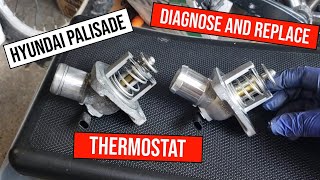
For the 2020-2022 model years, Hyundai has issued a Technical Service Bulletin (TSB 23-EM-003H) acknowledging that these Palisades can develop coolant leaks directly from the radiator. This TSB applies to vehicles produced between April 11, 2019, and May 9, 2022. Additionally, the 3.8L V6 uses a modern, electronically controlled thermostat integrated into a larger housing. This assembly is a known failure point, capable of sticking closed (causing a rapid overheat) or failing electrically, which can also lead to cooling problems.
Symptoms You May Notice
- Check Engine Light is on
- Temperature gauge reading in the red or 'H' zone
- Engine temperature warning light on the dashboard
- Steam coming from under the hood
- Smell of sweet coolant
- Reduced engine power or vehicle entering 'limp mode'
- Loud boiling or gurgling sounds from the engine bay
- Replacing the coolant temperature sensor without confirming it's faulty. While a bad sensor can theoretically cause a false P0217, it's much more likely that a real overheating event is occurring.
Most Likely Causes
- Leaking Radiator 🔴 High Probability → Shop Radiator A known issue for 2020-2022 models, as documented in Hyundai TSB 23-EM-003H. The bulletin notes that vehicles produced between April 2019 and May 2022 may exhibit a 'slight coolant leak at the radiator'.
How to confirm: Visually inspect the radiator for signs of coolant leakage (pink, crusty residue) or wetness, particularly at the top and bottom seams. A cooling system pressure test will confirm the leak.
Typical fix: Replacement of the radiator assembly.
Est. part cost: $250-$450 - Failed Thermostat 🔴 High Probability → Shop Integrated Thermostat Housing Assembly The integrated electronic thermostat housing is a common failure point on this engine platform. It can fail mechanically (stuck closed) or electrically. A service campaign (SA346) was issued for the same part on the Kia Cadenza, highlighting its known issues.
How to confirm: After a cold start, the upper radiator hose becomes hot very quickly while the lower hose remains cold, indicating no circulation. A scan tool may also show related thermostat circuit codes (e.g., P0599, P0128).
Typical fix: Replace the entire thermostat housing assembly.
Est. part cost: $80-$150 - Low Coolant Level (from other leaks) 🟡 Medium Probability
How to confirm: The coolant reservoir is below the 'MIN' mark when the engine is cold. Look for signs of leaks from hoses, the water pump, or the thermostat housing.
Typical fix: Find and repair the source of the leak (e.g., replace a hose, water pump, or gasket) and refill the cooling system.
Est. part cost: $10-$600 (depending on the leaking part) - Cooling Fan Malfunction 🟡 Medium Probability → Shop Engine Cooling Fan Blade
How to confirm: With the engine at operating temperature and the A/C turned on, observe if both cooling fans are spinning. If not, check fuses, relays, and the fan motor itself.
Typical fix: Replacement of the faulty component, which could be a fuse, relay, or the entire fan assembly.
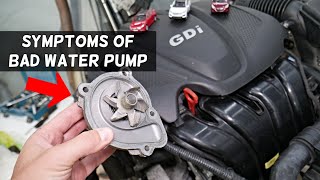
Est. part cost: $5-$500 - Failing Water Pump ⚪ Low Probability → Shop Engine Water Pump
How to confirm: Look for coolant leaks from the weep hole on the water pump. A grinding or whining noise from the pump area can also indicate failure. In some cases, the impeller can fail without an external leak, causing poor circulation.
Typical fix: Replacement of the water pump.
Est. part cost: $150-$300
Rare But Worth Checking
- Blown Head Gasket: This is a severe failure. A chemical block tester can be used to check for combustion gases in the coolant, which is a definitive sign of a failed head gasket.
- Clogged Radiator: → Shop Radiator Internal blockage from using incorrect coolant or external blockage from debris can restrict airflow and coolant flow.
Diagnosis Steps
- SAFETY FIRST: Do not open the radiator cap when the engine is hot. Allow the vehicle to cool completely.
- Check the coolant level in the overflow reservoir and the radiator (when cold). If low, you have a leak.
- Visually inspect the engine bay for obvious signs of coolant leaks: check the radiator, all hoses, the thermostat housing, and the water pump area for pink/white residue or drips.
- If no obvious leaks are seen, perform a cooling system pressure test to reveal hard-to-find leaks. Pay close attention to the radiator, as per TSB 23-EM-003H.
- Start the engine and turn the A/C on high. Verify that both electric cooling fans turn on and are spinning at high speed.
- With a cold engine, start the vehicle and feel the upper radiator hose. It should stay cool for several minutes and then get hot suddenly as the thermostat opens. If it gets hot gradually right away, or never gets hot, the thermostat is likely faulty.
- Use an OBD-II scanner to monitor the live Engine Coolant Temperature (ECT) data to see if the readings are plausible and match the dashboard gauge.
- If no other cause is found, inspect the water pump for leaks or bearing play.
Parts You'll Likely Need
- Radiator Assembly
(OEM #25310-S8700FFF)— A known failure point on 2020-2022 models that can leak and cause coolant loss, as documented in a Hyundai TSB.
Trusted brands: Hyundai (OEM)
OEM price range: $350-$450
Aftermarket price range: $250-$350 - Thermostat Housing Assembly
(OEM #25500-3L300)— This integrated electronic thermostat is a common failure point that can stick closed, preventing coolant circulation and causing a rapid overheat.
Trusted brands: Hyundai (OEM)
OEM price range: $100-$150
Aftermarket price range: $80-$120 - Water Pump — Though less common than the radiator or thermostat, the water pump is a critical component that will cause overheating if it fails.
Trusted brands: Hyundai (OEM), GMB, Aisin
OEM price range: $200-$300
Aftermarket price range: $150-$250 - Cooling Fan Assembly — If the fan motor or control module fails, the radiator cannot dissipate heat effectively in slow traffic or at idle.
Trusted brands: Hyundai (OEM), TYC
OEM price range: $400-$500
Aftermarket price range: $250-$350 - Hyundai Genuine Coolant
(OEM #00232-19098)— When refilling the system after a repair, it is critical to use the correct OEM-specified Pink P-HOAT (Phosphate-Hybrid Organic Acid Technology) coolant to prevent corrosion and compatibility issues.
Trusted brands: Hyundai (OEM)
OEM price range: $25-$40 per gallon
Related Codes That Often Appear With This One
- P0128 — Coolant Thermostat (Coolant Temperature Below Thermostat Regulating Temperature) - This can appear if the thermostat is stuck open, causing the engine to warm up too slowly, which is another failure mode of the same part.
- P0599 — Thermostat Heater Control Circuit High - This code points directly to an electrical fault in the Palisade's electronically controlled thermostat housing.
- P0597 — Thermostat Heater Control Circuit Open - This indicates an open circuit in the thermostat's integrated heater, a common failure mode for this part.
Technical Service Bulletins (TSBs) & Recalls
- 23-EM-003H: RADIATOR COOLANT LEAK REPAIR. This TSB directly addresses a potential cause for coolant loss and overheating in 2020-2022 Palisades.
Platform-Specific Known Issues
- TSB 23-EM-003H: Documents a 'slight coolant leak at the radiator' for certain 2020-2022 Palisade models produced between April 2019 and May 2022, and provides the procedure for inspection and replacement.
Mechanic-Grade Diagnostic Values
- Engine Coolant Temperature (ECT) Sensor Resistance — expected: 2000-3000 Ω at 20°C (68°F); 200-300 Ω at 90°C (194°F).. Failure: Resistance is outside the expected range for a given temperature, or does not change smoothly as the engine warms up.
- Engine Coolant Temperature (ECT) Sensor Signal Voltage — expected: Approximately 2.0V-3.0V on a cold engine, decreasing to around 0.5V on a fully warmed engine.. Failure: Voltage is stuck high or low, or does not correspond to the actual engine temperature.
- Electronic Thermostat Heater Coil Resistance — expected: Approximately 15 Ω.. Failure: An open circuit (infinite resistance) or a short (near zero resistance) indicates a failed heater element within the thermostat assembly.
Scan Tool Commands That Help
- Hyundai GDS (Global Diagnostic System): Actuation Test for Cooling Fan — To manually command the cooling fans on and off to verify the functionality of the fan motors, relays, and control module, bypassing the temperature sensors.
- Hyundai GDS (Global Diagnostic System): Actuation Test for Thermostat Heater — To test the electronic heater element inside the thermostat housing. This can help confirm an electrical fault when codes like P0597, P0598, or P0599 are present.
- Hyundai GDS (Global Diagnostic System): Reset Adaptive Values — After replacing major components like the thermostat or ECM, resetting adaptive values can be necessary to ensure the system relearns and operates correctly.
Wiring & Ground Locations
- Cooling Fan Relay — Located in the under-hood fuse/relay box.. A stuck or failed cooling fan relay can prevent the fans from activating when needed, leading to overheating at idle or in slow traffic.
- Engine/Chassis Ground Points — Multiple ground points exist on the chassis and engine block. Specific diagrams are often required for precise locations.. A poor ground for the ECM, cooling fan module, or ECT sensor can cause erratic readings and incorrect operation of cooling system components, potentially leading to an overheat condition.
Real Owner Repair Stories
- Reddit user Hutch719 on r/HyundaiPalisade (2022 Palisade Calligraphy) — Engine overheated randomly in bumper-to-bumper traffic, temperature gauge went to 'H', and an alarm sounded. No visible coolant leaks were noted.
❌ Tried (didn't work) Initial observation did not reveal the cause.
✅ What actually fixed it The dealership diagnosed a broken radiator, which was replaced under warranty. This aligns with the known issue covered by TSB 23-EM-003H. - Reddit user Itwasalljustadream19 on r/HyundaiPalisade (2020 Palisade with 61k miles) — Radiator fan continuously runs, even with the engine off, draining the battery. Pulling the fuse stops it.
❌ Tried (didn't work) Dealer initially suggested replacing the cooling fan assembly and rear heater core for $3k, which the owner questioned.
✅ What actually fixed it After 10 weeks at the dealer (due to a backordered part), the Engine Control Module (ECM) was replaced, which resolved the fan control issue. - Reddit user cakagaba on r/HyundaiPalisade (2022 Palisade) — Engine overheating warning and an empty coolant reservoir.
❌ Tried (didn't work) The dealership claimed a rock must have cracked the radiator and quoted $2,000 for the repair, refusing warranty coverage.
✅ What actually fixed it The owner took the vehicle to an independent mechanic who replaced the radiator for approximately $600, fixing the leak and overheating. This strongly suggests the common radiator failure, which should have been a warranty repair.
OEM Part Supersession History
25310-S8700→25310-S8700FFF— The original radiator part number is associated with the leaks described in TSB 23-EM-003H. The 'FFF' suffix typically denotes a factory-refurbished or revised part supplied for warranty claims.
Model Year Variations Within This Range
- 2020-2022: Models produced between April 11, 2019, and May 9, 2022, are explicitly covered by TSB 23-EM-003H for radiator leaks. Vehicles produced after this date likely have the revised radiator from the factory.
- 2023-2024: The 2023 model year marked a significant facelift for the Palisade. While the core 3.8L engine and cooling system architecture remained the same, part numbers for components like the radiator may have different revisions. The known TSB for radiator leaks does not apply to these model years.
Diagnostic Flowchart
Other Known Issues on This Vehicle
Issues unrelated to this code that are worth knowing about as an owner of this generation:
- Tow Hitch Wiring Harness Fire Risk 🔴 High — Affects 2020-2022 models with an accessory tow hitch. Widespread enough to trigger a major safety recall (NHTSA #22V-633). (Ref: Recall 235 / NHTSA #22V-633)
- Excessive Wind/Whistling Noise from Door/Mirror Area 🟡 Low — Common complaint on 2020-2021 models, particularly those built before late 2020. (Ref: TSB 19-BD-010H / TSB 21-01-003H)
- Unpleasant Interior Odor ('Stinky Headrests') 🟡 Low — Reported on 2020-2021 Limited and Calligraphy trims with Nappa leather. Caused by a manufacturing flaw in the imitation leather on the headrests. (Ref: TSB 20-BD-018H)
- Excessive Engine Oil Consumption 🟠 Medium — Some owners report rapid oil loss, potentially due to carbon deposits. This is a known issue across many Hyundai gasoline engines. (Ref: TSB 23-EM-007H)
- Malfunctioning Sunroof Wind Deflector 🟠 Medium — Can cause the sunroof to become inoperable or stuck. Affects certain Palisade models. (Ref: TSB 23-BD-003H-1)
Used vs. New Parts: Buying Guide for This Vehicle
When a used part is the smart pick: For components not known for high failure rates, such as the cooling fan assembly or coolant hoses, a used part from a low-mileage donor vehicle can be a cost-effective option. Inspect for any signs of damage, brittleness, or wear before purchasing.
Donor-vehicle mileage cap: roughly under 50000 miles for the part to have meaningful remaining life.
What to inspect on the donor part:
- For radiators/condensers: Check for bent fins, signs of previous leaks (white or pink crust), and cracked plastic end tanks.
- For hoses: Squeeze the hose to check for excessive softness, hardening, or cracking.
- For fan assemblies: Spin the fan blades by hand to check for smooth bearing operation and ensure there are no cracked or broken blades.
- Verify the part number on the used component matches the required part for your vehicle year.
OEM-only on this vehicle (don't cheap out):
- Radiator Assembly: Due to the known defect and TSB on 2020-2022 models, it is highly recommended to use a new OEM part (25310-S8700FFF) to ensure you get the revised, non-leaking version.
- Thermostat Housing Assembly: This is an electronically controlled, high-failure-rate part. Aftermarket versions may not have the same reliability or precise electronic control as the OEM unit (25500-3L300).
- Engine Coolant: Use only Hyundai Genuine Pink P-HOAT coolant (00232-19098) to prevent corrosion and system damage.
Brands owners have reported issues with on this vehicle:
- Unbranded/white-box radiators and thermostats from online marketplaces should be avoided due to the critical nature of the cooling system and the known OEM part issues.
Real Owner Stories
Aggregated from forums and TSBs cited above. Mileages and costs reflect what owners reported in those sources.
2020 Hyundai Palisade 3.8L V6
Symptoms: The owner described getting multiple codes at once, including for the thermostat.
What fixed it: Replacing the thermostat did not solve the issue, indicating a more complex electrical or system-wide problem.
Source hint: Reddit - r/AskAMechanic - 2020 Hyundai Palisade
2020-2022 Hyundai Palisade 3.8L V6
Symptoms: Slight coolant leak at the radiator.
What fixed it: Replacement of the radiator assembly as per the TSB procedure.
Source hint: TSB 23-EM-003H: RADIATOR COOLANT LEAK REPAIR
Related OBD-II Codes
Frequently Asked Questions
Does TSB 23-EM-003H apply to my 2021 Hyundai Palisade?
I replaced my thermostat but still have overheating codes; what else could it be on this 3.8L V6?
Is the thermostat failure on the Palisade a known issue?
What are the signs of a radiator leak on a 2020-2022 model?
Can a faulty tow hitch wiring harness cause engine overheating?
Should I use a used radiator to fix my P0217 code?
Helpful Videos

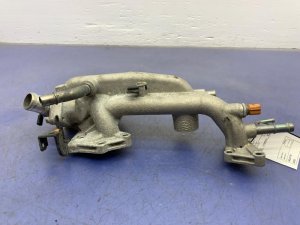
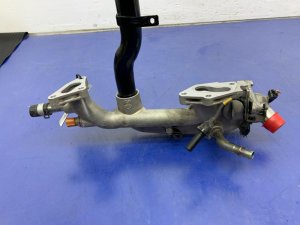
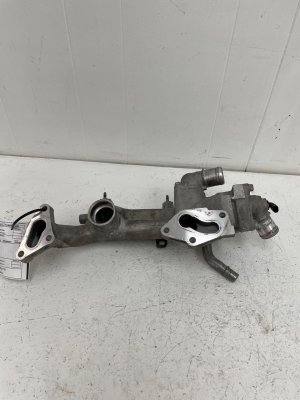
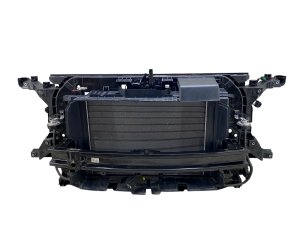
Used OEM Parts in Stock
New Aftermarket Parts Available


The information in this article is provided for general reference and educational purposes only. Vehicle specifications, procedures, and part compatibility can vary by production date, trim level, and region. Always consult your vehicle's factory service manual and verify part numbers before purchasing or performing repairs. Safety-critical components such as airbags, seat belts, and braking systems should be installed by a qualified professional.
- Hyundai Palisade:
- 🧭 Diagnostic Flowchart
- 🎬 Helpful Videos
- 🛍️ Shop This Part
- What's Unique About the 2020-2024 Hyundai Palisade
- Symptoms You May Notice
- Most Likely Causes
- Rare But Worth Checking
- Diagnosis Steps
- Parts You'll Likely Need
- Related Codes That Often Appear With This One
- Technical Service Bulletins (TSBs) & Recalls
- Platform-Specific Known Issues
- Mechanic-Grade Diagnostic Values
- Scan Tool Commands That Help
- Wiring & Ground Locations
- Real Owner Repair Stories
- OEM Part Supersession History
- Model Year Variations Within This Range
- Other Known Issues on This Vehicle
- Used vs. New Parts: Buying Guide for This Vehicle
- Real Owner Stories
- 2020 Hyundai Palisade 3.8L V6
- 2020-2022 Hyundai Palisade 3.8L V6
- Related OBD-II Codes
- Frequently Asked Questions
- 🎟️ Get 5% Off