

P0217 on 2016-2024 Volvo XC90: Engine Over Temperature Causes and Fixes
P0217 means your XC90's engine is overheating. Stop driving immediately. The most common causes are a coolant leak (especially from a recalled bleeder hose on 2016 models), a faulty electronically controlled thermostat, or a failing electric water pump. Prompt diagnosis is critical to prevent severe engine damage like a warped cylinder head.
- P0217 is a critical code indicating your engine is overheating. Stop driving immediately to prevent severe damage.
- The most common causes on the XC90 are coolant leaks (check for recalled hoses on 2016 models), a stuck thermostat, or a failed electric water pump.
- Due to the complexity of the electronically controlled cooling system and the risk of engine damage, professional diagnosis is highly recommended.
- Always use the correct Volvo-specification coolant when refilling the system to prevent corrosion and clogs.
- After any repair, the cooling system must be properly bled to remove all air pockets, which can cause overheating on their own.
What's Unique About the 2016-2024 Volvo XC90
The 2.0L Drive-E engine in the second-generation XC90 (and its platform mates) uses a sophisticated, electronically controlled cooling system. Unlike older cars, the water pump and thermostat are managed by the ECM to optimize engine temperature for performance and efficiency. While this allows for precise control, it also adds complexity and potential electronic failure points. A notable issue on early models (2016) was NHTSA Recall 19V308000 (Volvo Recall R29936) for a coolant bleeder hose that could degrade from heat and humidity, crack, and leak coolant. This posed a fire risk if coolant dripped onto the hot catalytic converter.
Symptoms You May Notice
- Temperature gauge reading in the red or 'HOT' zone.
- Dashboard warning message for high engine temperature, such as "Engine temperature High temperature Stop safely".
- Reduced engine power or 'limp mode' activation.
- Steam or smoke coming from the engine bay.
- A sweet smell of burning coolant.
- Cooling fans running at maximum speed.
- Loud boiling or gurgling sounds from the engine.
- Coolant puddle under the vehicle.
- Replacing the coolant temperature sensor when the engine is genuinely overheating due to a mechanical fault like a stuck thermostat or bad water pump.
- Assuming a coolant leak is fixed after replacing one hose, when another component (like the reservoir or radiator end tank) is also cracked and leaking.
- Refilling coolant without properly bleeding the air out of the system, which can cause air pockets and lead to overheating.
Most Likely Causes
- Low Coolant Level / Coolant Leak 🔴 High Probability Early 2016 models were subject to Recall R29936 for a coolant bleeder hose that could crack due to heat and humidity. Beyond the recall, plastic components like coolant lines, the reservoir, and radiator end tanks can become brittle and leak over time.
How to confirm: Visually inspect the coolant reservoir to see if the level is below the 'MIN' mark when the engine is cold. Look for puddles of green or blue fluid under the car. A cooling system pressure tester is the professional way to find the source of a leak by pressurizing the system.
Typical fix: Identify and replace the leaking component. For the recalled hose, an improved part is used. For other leaks, replace the cracked reservoir, hose, or radiator. Refill with the correct Volvo-spec coolant and bleed the system.
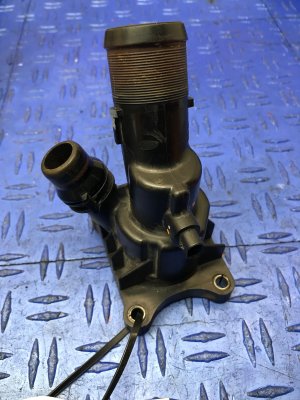
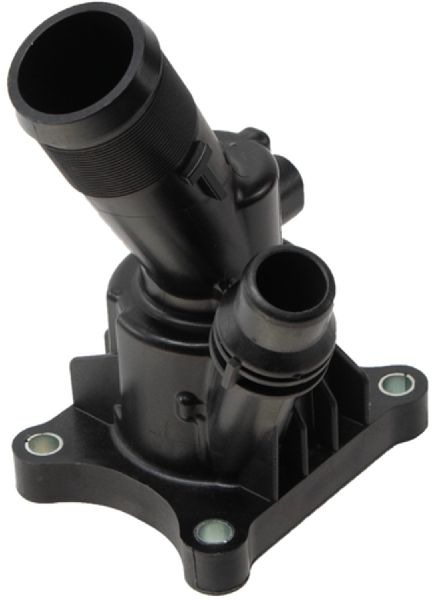
Est. part cost: $50-$300 - Faulty Thermostat 🟡 Medium Probability → Shop Integrated Thermostat Housing Assembly The electronically controlled thermostat (part of the housing assembly) can fail to open, preventing coolant from circulating to the radiator. This is a common failure point in many modern cooling systems, and failure can be mechanical (stuck) or electrical.
How to confirm: When the engine is hot, feel the upper and lower radiator hoses. If the upper hose is hot and the lower hose is cool, the thermostat is likely stuck closed. A capable scan tool like Volvo's VIDA can also command the thermostat to open and monitor its response and any related fault codes.
Typical fix: Replace the entire thermostat and housing assembly. It is sold as a kit that includes the thermostat, housing, and gasket. Always use a new gasket.
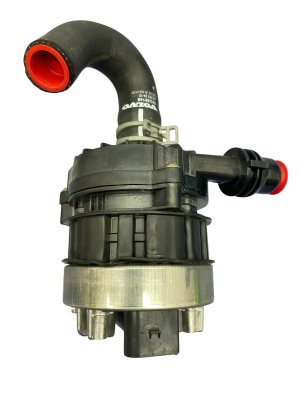
Est. part cost: $80-$200 - Failing Water Pump 🟡 Medium Probability → Shop Engine Water Pump The Drive-E engine uses an electric water pump controlled by the ECM. Like any electric motor, it can fail, leading to a complete loss of coolant circulation. Signs of failure include leaks from the weep hole or whining noises.
How to confirm: With the engine running, there should be signs of coolant circulation in the reservoir. A scan tool can check the pump's RPM and command it to run. A lack of flow with a commanded 'ON' state, or specific water pump fault codes, indicates failure.
Typical fix: Replace the electric water pump. This is a labor-intensive job that requires draining the cooling system.
Est. part cost: $150-$400 - Cooling Fan Malfunction ⚪ Low Probability → Shop Engine Cooling Fan Blade The electric cooling fan assembly is crucial for cooling when the vehicle is stationary or in slow traffic. The fan motor or its integrated control module can fail, preventing the fan from activating when needed.
How to confirm: Turn on the air conditioning, which should command the fan to run. If the fan does not spin, check fuses, relays, and power/ground at the fan motor connector. Inspect the fan for physical damage or obstructions.
Typical fix: Replace the cooling fan assembly or the fan control module.
Est. part cost: $250-$500
Rare But Worth Checking
- Clogged or Restricted Radiator: → Shop Radiator External fins can get blocked by road debris, or internal passages can become clogged from using incorrect coolant or from contaminants. This reduces the radiator's ability to dissipate heat.
- Faulty Engine Coolant Temperature (ECT) Sensor: → Shop Engine Coolant Temperature Sensor A faulty sensor can send an incorrect high-temperature reading to the ECM, triggering the P0217 code even if the engine isn't actually overheating. This is less common than a true overheat condition but can happen if the sensor shorts or its wiring is damaged.
- Blown Head Gasket: A failed head gasket can allow hot combustion gases to enter the cooling system, causing rapid overheating and pressurization. This is a major engine repair and is usually accompanied by other symptoms like white exhaust smoke, coolant in the oil (milky appearance), or persistent, unexplained coolant loss.
Diagnosis Steps
- SAFE-T FIRST: Do not open the coolant reservoir cap when the engine is hot. The system is under pressure and can cause severe burns.
- Check Coolant Level: Once the engine is completely cool, check the coolant level in the expansion tank. If it's low, you have a leak.
- Visual Inspection: Look for obvious signs of coolant leaks (puddles on the ground, white or colored residue on engine components, cracked hoses). Pay close attention to the bleeder hose on 2016 models, the radiator seams, and the coolant reservoir.
- Scan for Codes: Use an OBD-II scanner to confirm P0217 and check for any other related codes (e.g., for the thermostat or water pump circuits).
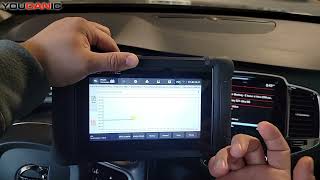
- Check Live Data: Use a capable scanner to monitor the Engine Coolant Temperature (ECT) reading in real-time. Does the temperature rise steadily and then stabilize, or does it climb uncontrollably? Compare front and rear ECT sensor readings if available.
- Verify Cooling Fan Operation: Start the engine and turn on the A/C. The cooling fan(s) should activate. If not, investigate the fan circuit (fuses, relays, wiring, and fan control module).
- Check Thermostat Operation: With the engine at operating temperature, carefully feel the upper and lower radiator hoses. Both should be hot. If the lower hose is significantly cooler, the thermostat is likely not opening.
- Pressure Test System: If a leak is suspected but not visible, use a cooling system pressure tester to pressurize the system (when cold) and reveal the leak source.
- Verify Water Pump Operation: With an advanced scan tool (like VIDA), you can monitor the commanded vs. actual speed of the electric water pump to confirm it is functioning. Listen for whining noises from the pump area.
Parts You'll Likely Need
- Engine Coolant Thermostat
(OEM #31686560)— The thermostat can get stuck closed, blocking coolant flow and causing overheating. It's a common failure point on modern engines. This part number supersedes 31293912, 31439968, and 31474989.
Trusted brands: Volvo (OEM), Mahle (TM60105), Pro Parts
OEM price range: $120-$180
Aftermarket price range: $80-$130 - Electric Water Pump
(OEM #31368715)— The electric water pump is essential for circulation. If the motor fails, the engine will overheat quickly. Note: Pass 1 part number 32368715 appears to be for a windshield, not a water pump. The correct number is likely 31368715 or similar, which should be verified with a VIN.
Trusted brands: Volvo (OEM), Aisin
OEM price range: $350-$500
Aftermarket price range: $150-$300 - Coolant Bleeder Hose
(OEM #31439933)— This was a specific recall item for 2016 models due to its tendency to crack and leak coolant, posing a fire risk.
Trusted brands: Volvo (OEM)
OEM price range: $40-$70
Aftermarket price range: $20-$40 - Coolant Reservoir / Expansion Tank
(OEM #31401299)
Technical Service Bulletins (TSBs) & Recalls
- NHTSA Recall 19V308000 / Volvo Recall R29936: Affects 34,006 model year 2016 XC90s in the US. The engine coolant bleeder hose can crack from heat and humidity, causing a coolant leak that poses a fire risk if it contacts the catalytic converter. The fix is to replace the hose with an improved part.
Platform-Specific Known Issues
- Recall R29936: Affecting 2016 XC90 models, this recall was issued to replace a coolant bleeder hose that could degrade, crack, and leak coolant onto the catalytic converter, creating a fire hazard when the vehicle is stationary.
- Owner Experience: A 2016 XC90 T6 owner reported on the Volvo Owners Club Forum a year-long struggle with intermittent overheating on the highway that mechanics had difficulty diagnosing, eventually pointing towards a possible head gasket issue.
Mechanic-Grade Diagnostic Values
- Engine Coolant Temperature (ECT) Sensor Resistance — expected: Approximately 2,200-3,000 Ω at 20°C (68°F) and 250-350 Ω at 80°C (176°F).. Failure: Resistance is significantly outside the expected range for a given temperature, or shows an open/short circuit. A reading that doesn't change as the engine warms up indicates a failed sensor.
- Engine Coolant Temperature (ECT) Sensor Voltage — expected: Signal voltage should decrease as temperature rises. Typically around 2.0-3.0V when cold and drops to ~0.5V when at full operating temperature.. Failure: Voltage is static, or reads near 5V (open circuit) or 0V (short circuit) regardless of temperature.
Hidden / Shadow Codes Worth Checking
- ECM-P011600: Engine Coolant Temperature Sensor 1 Circuit Range/Performance. This code often accompanies P0217 and points more directly at the sensor/thermostat assembly's logic, such as the engine not warming up as expected. (see via Volvo's VIDA diagnostic software or a professional-grade scanner with manufacturer-specific capabilities.)
- ECM-P059F00: Active Grille Air Shutter 'A' Performance/Stuck Off. This indicates the grille shutter is stuck open, which would not cause overheating. A related code for 'Stuck On' (stuck closed) would be more relevant to P0217. (see via Volvo's VIDA diagnostic software or a professional-grade scanner.)
- U0284: Lost Communication With Active Grille Air Shutter Module 'A'. This code indicates a communication problem with the shutter module, which could result in it being stuck in any position, including closed. (see via Professional-grade OBD-II scanner.)
Scan Tool Commands That Help
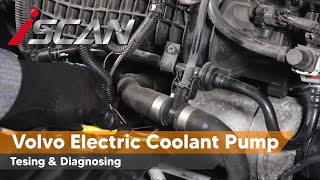
- Volvo VIDA: Component Activation: Coolant Pump — To verify if the electric water pump responds to a command from the ECM. If the pump can be activated with VIDA but doesn't run on its own, it points to a control or sensor issue rather than a failed pump motor.
- Volvo VIDA: Component Activation: Thermostat — To test the electronic heater element within the thermostat housing. This helps confirm if the thermostat is capable of opening when commanded by the ECM.
- Volvo VIDA: Component Activation: Engine Coolant Fan — To test the cooling fan at various speeds (e.g., 33%, 66%, 100%). This is used to diagnose a fan that isn't engaging, separating a faulty fan motor/module from a command signal problem.
Wiring & Ground Locations
- ECM Ground Point — Typically located on the inner fender near the battery tray or directly on the chassis frame rail in the engine bay. Multiple ground wires converge at a single stud.. A corroded or loose main ECM ground can cause erratic voltage readings from sensors, including the ECT sensor, and improper operation of controlled components like the electric water pump and thermostat heater, leading to false overheating codes or actual overheating.
- Turbocharger Coolant Line O-rings — At the point where the two metal coolant pipes connect to the turbocharger housing.. These O-rings can degrade and cause a slow coolant leak that is difficult to spot and may not show up on a standard pressure test unless the engine is fully hot and running. This leads to a gradual loss of coolant and eventual overheating.
Real Owner Repair Stories
- Volvo Forums user (2019 Volvo XC90 T8) — Slow coolant leak requiring periodic top-offs, "low coolant" message on dash. Passed a pressure test at the dealer and an independent mechanic.
❌ Tried (didn't work) Pressure testing the cooling system (showed no leak).
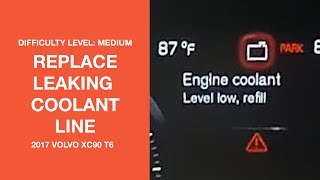
✅ What actually fixed it The leak was finally traced to degraded O-rings on the two metal coolant tubes that connect to the turbocharger. Replacing the O-rings (part number 31109234) resolved the leak. - YouTube DIY video (2017 Volvo XC90 T6) — Coolant leak causing a low coolant warning light and a visible puddle on the ground.
✅ What actually fixed it The leak was from a cracked plastic coolant pipe (part number 32382362). The repair involved removing the airbox, intake piping, and thermostat housing to access and replace the failed pipe. The thermostat gasket and water pump O-ring were also replaced as a preventative measure during the repair.
"I Checked Everything" — The Actual Cause
- A cooling system pressure test may come back clean, but the vehicle still has a slow coolant leak. In one documented case, the leak was from the turbocharger coolant line O-rings, which only leaked when the engine was hot and running for an extended period (45+ minutes), a condition not replicated by a static pressure test on a cold or warm engine.
OEM Part Supersession History
31293912, 31439968, 31474989→31686560— The electronically controlled thermostat housing went through several revisions to improve reliability of the integrated heater element and sensor.31368419→31368715, 32382249— Updates to the electric water pump for improved durability and performance.
Heads up: Always verify the correct part number with the vehicle's VIN, as multiple numbers may be applicable depending on the production date.
Model Year Variations Within This Range
- 2016: Subject to NHTSA Recall 19V308000 (Volvo Recall R29936) for a coolant bleeder hose that could crack and leak. Later models have an improved hose from the factory.
- 2016-2024: The ECM software controlling the cooling system logic (fan activation, thermostat control) has been updated multiple times. A dealer can check and apply the latest software, which may resolve some edge-case cooling issues or overly sensitive code triggers.
Diagnostic Flowchart
Other Known Issues on This Vehicle
Issues unrelated to this code that are worth knowing about as an owner of this generation:
- Excessive Oil Consumption / Piston Ring Failure 🔴 High — Primarily reported in 2016-2017 models but can affect later years. Often becomes apparent between 60k-100k miles. Caused by carbon buildup on oil control rings. (Ref: Volvo has an extended warranty program in the US (but not initially in Canada) to address this, often requiring an oil consumption test to qualify for piston/ring replacement.)
- Warped Brake Rotors 🟠 Medium — A common complaint across all SPA platform vehicles. Owners report brake judder/vibration, often requiring rotor and pad replacement sooner than expected. Some attribute it to a poor pad/rotor material combination. (Ref: No specific recall, but often addressed under warranty. Some owners switch to aftermarket pads/rotors to resolve the issue permanently.)
- Premature Suspension Bushing and Component Wear 🟡 Low — Some owners report knocking or clunking sounds from the front suspension over minor bumps at relatively low mileage (30k-50k miles), often traced to worn bushings or stabilizer links.
- Sensus Infotainment System Glitches / Battery Drain 🟡 Low — Owners report occasional screen freezes, reboots, or modules failing to shut down when the car is locked, leading to a slow battery drain. (Ref: Various software updates have been released to address stability. In some cases, a faulty module like the VCM (Vehicle Communication Module) requires replacement.)
- Supercharger Issues (T6 Models) 🟠 Medium — While not extremely common, failure of the supercharger (or its seals) on the twin-charged T6 engine has been reported, leading to noise or performance loss.
Used vs. New Parts: Buying Guide for This Vehicle
When a used part is the smart pick: For purely mechanical or cosmetic parts like a fan shroud, coolant reservoir (if carefully inspected for hairline cracks), or mounting brackets. A radiator from a verified low-mileage donor vehicle could be a cost-effective option.
Donor-vehicle mileage cap: roughly under 40000 miles for the part to have meaningful remaining life.
What to inspect on the donor part:
- For radiators, inspect fins for damage and look for any signs of past leaks (white or colored crust).
- For plastic parts like reservoirs, ensure there is no yellowing, brittleness, or hairline cracks, especially around the hose connections.
- Check the VIN of the donor vehicle to ensure it falls within a compatible year range.
OEM-only on this vehicle (don't cheap out):
- Electronically Controlled Thermostat: Aftermarket versions are known to fail prematurely or have incorrect temperature calibration, causing persistent issues on this platform.
- Engine Coolant Temperature (ECT) Sensor: Since this is integrated into the thermostat housing, the same OEM-only recommendation applies.
Aftermarket brands forum-validated for this vehicle:
- Aisin (for electric water pump - often the original OEM supplier)
- Mahle / Behr (for thermostats and radiators - check application, often OEM)
- Rein (for coolant hoses)
Brands owners have reported issues with on this vehicle:
- Unbranded, 'white-box' electronic components (thermostats, sensors, water pumps) from major online marketplaces. The high labor cost for these repairs makes it risky to use parts with questionable reliability.
Real Owner Stories
Aggregated from forums and TSBs cited above. Mileages and costs reflect what owners reported in those sources.
2016 Volvo XC90 T6
Symptoms: Intermittent overheating specifically while driving on the highway; the issue persisted for over a year and was difficult for mechanics to diagnose.
What fixed it: After multiple failed diagnostic attempts, the issue was suspected to be a head gasket failure.
Source hint: Volvo Owners Club Forum: Overheating issue?
2017 Volvo XC90 T6 — ~59030 miles
Symptoms: The owner discussed major engine concerns including piston ring issues common to the Drive-E platform, highlighting the complexity of the engine's thermal and mechanical management.
What fixed it: Piston ring replacement (noted as a separate major Drive-E platform issue).
Source hint: SwedeSpeed Forum: 2017 XC90 T6 - Needs new Piston Rings after 95,000km
2016 Volvo XC90
Symptoms: Engine overheated due to a burst hose. After the hose was replaced, the engine would no longer reach its proper operating temperature.
What fixed it: The thermostat was found to be stuck in the open position following the initial overheating event.
Source hint: Volvo Forums: Engine temp problem
Related OBD-II Codes
Frequently Asked Questions
My 2016 XC90 T6 is overheating; is there a specific recall I should check for?
What specific thermostat part is used in the Drive-E engine for the XC90?
Can I just replace the thermostat itself, or do I need the whole housing?
Why is my XC90 showing a 'Stop Safely' message instead of just a check engine light?
Does the XC90 use a traditional mechanical water pump?
I have a 2017 XC90; does it share the same cooling system issues as the 2016 model?
Helpful Videos


Used OEM Parts in Stock
New Aftermarket Parts Available


The information in this article is provided for general reference and educational purposes only. Vehicle specifications, procedures, and part compatibility can vary by production date, trim level, and region. Always consult your vehicle's factory service manual and verify part numbers before purchasing or performing repairs. Safety-critical components such as airbags, seat belts, and braking systems should be installed by a qualified professional.
- Volvo XC90:
- 🧭 Diagnostic Flowchart
- 🎬 Helpful Videos
- 🛍️ Shop This Part
- What's Unique About the 2016-2024 Volvo XC90
- Symptoms You May Notice
- Most Likely Causes
- Rare But Worth Checking
- Diagnosis Steps
- Parts You'll Likely Need
- Technical Service Bulletins (TSBs) & Recalls
- Platform-Specific Known Issues
- Mechanic-Grade Diagnostic Values
- Hidden / Shadow Codes Worth Checking
- Scan Tool Commands That Help
- Wiring & Ground Locations
- Real Owner Repair Stories
- "I Checked Everything" — The Actual Cause
- OEM Part Supersession History
- Model Year Variations Within This Range
- Other Known Issues on This Vehicle
- Used vs. New Parts: Buying Guide for This Vehicle
- Real Owner Stories
- 2016 Volvo XC90 T6
- 2017 Volvo XC90 T6 — ~59030 miles
- 2016 Volvo XC90
- Related OBD-II Codes
- Frequently Asked Questions
- 🎟️ Get 5% Off