

P0222 on 2010-2014 Hyundai Sonata: Throttle Position Sensor Causes and Fixes
On a 2010-2014 Sonata, P0222 almost always means the entire electronic throttle body assembly has failed. The sensor is internal and not sold separately. Cleaning the throttle body of carbon is a good first step, but replacement is the most common fix, costing ~$250-$450 for an OEM part.
- P0222 on your Sonata will cause a dangerous 'limp mode' and should be addressed immediately.
- The most likely cause is a failed electronic throttle body assembly. The sensor that triggers the code is part of this assembly and cannot be bought separately.
- Before replacing the throttle body, it's worth spending a few dollars on cleaner to thoroughly clean the throttle plate and bore, as carbon buildup can sometimes cause this code.
- The OEM part number for the 2.4L engine's throttle body is 35100-2G700, and for the 2.0L Turbo, it is 35100-2G710. Always verify with your VIN.
What's Unique About the 2010-2014 Hyundai Sonata
The 2010-2014 Hyundai Sonata (YF generation), along with its platform-mates like the Kia Optima and Santa Fe, uses an electronic throttle body where the position sensors are integrated and cannot be replaced separately. While wiring or carbon buildup can be culprits, an internal electronic failure of the sensor within the throttle body assembly is the most frequent cause of P0222 on this specific vehicle. Owners often experience a sudden and alarming loss of power as the car enters a protective 'limp mode', a symptom frequently discussed in owner forums.
Symptoms You May Notice
- Check Engine Light is on
- Vehicle enters 'limp mode' with drastically reduced engine power
- Poor, delayed, or no acceleration
- Hesitation or stumbling when pressing the gas pedal
- Engine may stall
- Rough idle
- Flashing check engine light during acceleration
- Replacing the accelerator pedal position sensor. While it is part of the same system, P0222 specifically points to the 'B' circuit at the throttle body, not the pedal.
- Confusing the limp mode symptom with the KSDS (Knock Sensor Detection System) recall issue. A similar limp mode can be triggered by the KSDS, but it will set a different code, typically P1326.
Most Likely Causes
- Faulty Electronic Throttle Body Assembly 🔴 High Probability → Shop Fuel Injection Throttle Body The Throttle Position Sensor (TPS) is integrated into the throttle body and is not serviceable separately. Internal failure of the sensor's electronics is the most common point of failure for this code on Theta II engines.
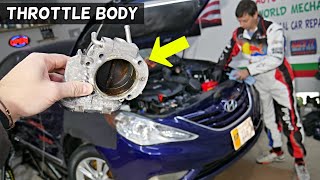
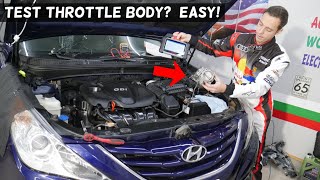
How to confirm: Using a scan tool, monitor live data for TPS1 and TPS2 voltages while pressing the accelerator pedal (engine off, key on). The voltage for TPS2 will likely be stuck low (under 0.5V), be erratic, or not respond at all. If wiring is confirmed good, the throttle body is faulty. 🎬 Watch: How to test the throttle position sensor on your Sonata.
Typical fix: Replace the entire throttle body assembly. An idle relearn procedure should be performed after installation, which often involves letting the car idle for several minutes after reconnecting the battery.
Est. part cost: $200-$450 - Dirty or Carbon-Clogged Throttle Body 🟡 Medium Probability → Shop Fuel Injection Throttle Body Direct injection engines, like the Theta II, are prone to carbon buildup in the intake system. This can cause the throttle plate to stick or move slowly, leading to incorrect position readings.
How to confirm: Remove the air intake hose from the throttle body and visually inspect the throttle plate and bore for significant black carbon deposits.
Typical fix: Thoroughly clean the throttle body bore and plate using a dedicated throttle body cleaner and a soft cloth. Do not force the throttle plate open manually on an electronic throttle body; use the accelerator pedal with the key on to open it. 🎬 See this walkthrough for servicing the throttle actuator.
Est. part cost: $5-$15 - Wiring Harness or Connector Issue ⚪ Low Probability The harness connector to the throttle body is located near the front of the engine and can be susceptible to damage, corrosion, or oil contamination.
How to confirm: Visually inspect the wiring harness and connector going to the throttle body for any signs of damage, corrosion, chafing, or loose pins. Use a multimeter to check for the correct 5V reference voltage and a good ground at the connector.
Typical fix: Repair the damaged section of the wiring harness or clean/replace the connector.
Est. part cost: $10-$100
Rare But Worth Checking
- Faulty Powertrain Control Module (PCM): → Shop Engine Control Module (ECM) This is very rare. The PCM should only be suspected after all other possibilities, including the throttle body and its wiring, have been exhaustively tested and ruled out.
Diagnosis Steps
- Connect an OBD-II scanner and confirm P0222 is present. Check for any other related codes (e.g., P0122, P2135, P0638).
- With the key on and engine off, use the scanner's live data function to observe the voltage of TPS1 and TPS2.
- Slowly press the accelerator pedal to the floor and release it. TPS1 voltage should rise smoothly (approx. 0.5V to 4.5V), and TPS2 voltage should fall smoothly (approx. 4.5V to 0.5V).
- For P0222, you will likely observe the TPS2 voltage is stuck low (often below 0.25V), jumps erratically, or doesn't change. This confirms a sensor/circuit fault.
- Turn the ignition off. Disconnect the air intake hose from the throttle body.
- Inspect the throttle body bore and plate for heavy carbon buildup. If dirty, clean it thoroughly with throttle body cleaner and a rag. Re-test.
- If the problem persists, inspect the throttle body electrical connector and nearby wiring for any visible damage, corrosion, or loose pins. Check for 5V reference and ground at the connector with a multimeter.
- If wiring appears intact and cleaning did not solve the issue, the throttle body assembly is almost certainly faulty and requires replacement. 🎬 Watch: Step-by-step guide to removing and replacing the throttle body.
- After replacement, perform a throttle body relearn procedure. This typically involves disconnecting the battery for 15 minutes, reconnecting it, turning the key to the 'ON' position for 10 seconds (without starting), turning it off for 10 seconds, and then starting the engine and letting it idle for 5-10 minutes to stabilize.
Parts You'll Likely Need
- Electronic Throttle Body Assembly
(OEM #35100-2G700 (for 2.4L GDI), 35100-2G710 (for 2.0L Turbo))— This is the most common failure for code P0222, as the internal, non-serviceable throttle position sensor fails.
Trusted brands: Hyundai (OEM), Mando, Standard Motor Products (SMP), Hitachi, Dorman
OEM price range: $250-$450
Aftermarket price range: $150-$250 - Throttle Body Gasket
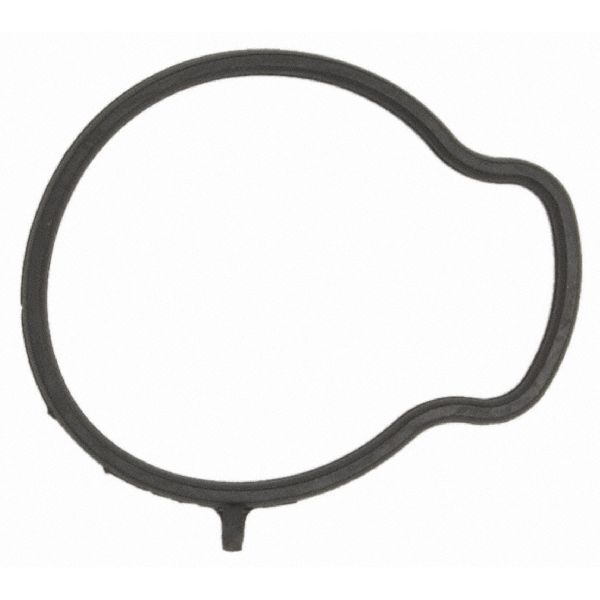
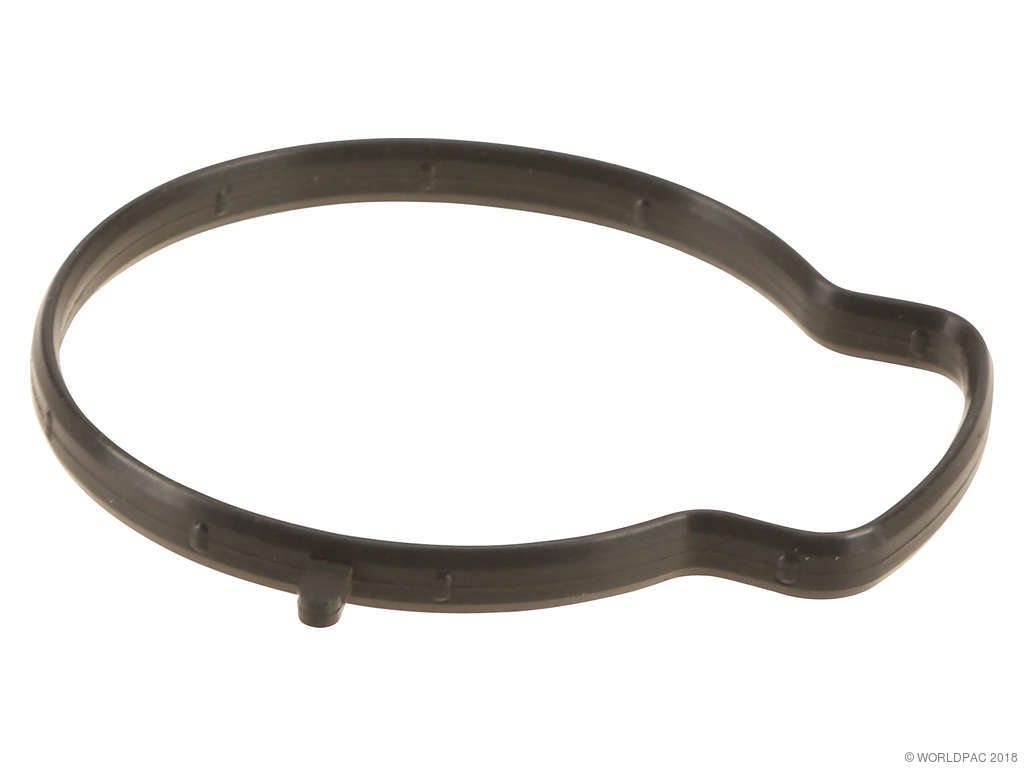
(OEM #35170-2G700 (or verify by VIN))— It is best practice to replace the gasket whenever the throttle body is removed to ensure there are no vacuum leaks.
Trusted brands: Hyundai (OEM), Mahle, Fel-Pro
OEM price range: $5-$15
Aftermarket price range: $3-$10
Related Codes That Often Appear With This One
- P0122 — This is the low voltage code for the primary throttle position sensor ('A' circuit). Seeing both P0122 and P0222 together strongly points to a problem with the throttle body assembly or its main connector.
- P2135 — This code means 'Throttle/Pedal Position Sensor/Switch 'A'/'B' Voltage Correlation'. It indicates the ECM sees a disagreement between the two TPS signals, which is a direct consequence of one sensor failing.
- P0638 — This code for 'Throttle Actuator Control Range/Performance' can appear because the ECM cannot control the throttle motor correctly if it's receiving bad data from the position sensors.
Platform-Specific Known Issues
- Owner Experience: Sudden Limp Mode: A common story on forums involves driving normally when the check engine light illuminates, followed by a sudden loss of power where the car refuses to accelerate past 20-25 mph. Pulling over and restarting the car sometimes temporarily resolves the issue, only for it to return minutes later, confirming an intermittent electronic fault.
Mechanic-Grade Diagnostic Values
- PCM Detection Threshold for P0222 — expected: TPS2 signal voltage must remain above 0.1V.. Failure: The PCM will set DTC P0222 if the TPS2 signal is less than 0.1V for more than 0.05 seconds.
- TPS2 (Sensor 'B') Signal Voltage — expected: At idle, voltage should be high (approx. 4.5V) and decrease smoothly as the throttle opens.. Failure: Voltage is stuck below 0.1V regardless of throttle plate angle.
- TPS1 (Sensor 'A') Signal Voltage — expected: At idle, voltage should be low (approx. 0.5V) and increase smoothly to approx. 4.5V at wide-open throttle.. Failure: While not the direct cause of P0222, an erratic or flatlined signal indicates a comprehensive throttle body failure.
- Throttle Position Angle (Live Data) — expected: Should read a low angle at idle (e.g., 5.2 degrees) and increase smoothly to a high angle (e.g., 88.8 degrees) as the throttle plate is opened manually (with key on, engine off).. Failure: The angle does not change or jumps erratically, indicating a sensor failure.
Scan Tool Commands That Help
- Hyundai GDS (Global Diagnostic System): Actuation Test: ETC Motor — Use this test with the engine off and ignition on to verify if the throttle motor is physically responding to commands from the PCM. This helps differentiate between a wiring/PCM issue and a failed motor/sensor assembly.
Wiring & Ground Locations
- Throttle Body Connector (6-pin) — Connected directly to the electronic throttle body assembly at the front of the engine, on the intake manifold.. This is the primary connection point for all signals related to P0222. Testing voltages and grounds at these specific pins is the most direct way to diagnose the circuit.
- Pin 1 (TPS2 Signal) — Pin 1 on the 6-pin throttle body connector.. This is the signal wire for the 'B' sensor. A low voltage reading here (below 0.1V) is the direct cause for the P0222 code.
- Pin 2 (TPS1 Signal) — Pin 2 on the 6-pin throttle body connector.. This is the signal wire for the 'A' sensor. It should show an opposing voltage sweep to Pin 1. Used for correlation checks (P2135).
- Pin 3 (Ground) — Pin 3 on the 6-pin throttle body connector.. This is the sensor ground provided by the PCM. A bad ground here will cause incorrect readings on both TPS1 and TPS2.
- Pin 5 (5V Reference) — Pin 5 on the 6-pin throttle body connector.. This pin supplies the 5-volt reference power from the PCM to both sensors. Loss of this voltage will cause both sensors to fail and set multiple codes.
- Pins 4 & 6 (Throttle Motor) — Pins 4 and 6 on the 6-pin throttle body connector.. These pins control the electric motor that opens and closes the throttle plate. While not directly related to the P0222 sensor code, a failure in the motor can sometimes accompany sensor failure within the same unit.
Real Owner Repair Stories
- YouTube - Hyundai Tech (Hyundai Sonata (YF Generation)) — Check engine light with active code P2110 (Throttle Actuator Control System - Forced Limited RPM), which is often triggered by underlying sensor codes like P0222.
❌ Tried (didn't work) Initial diagnosis showed the code was active and could not be cleared, indicating a hard fault.
✅ What actually fixed it The technician diagnosed a faulty throttle body. After replacing the entire electronic throttle body assembly with a new unit and clearing the codes, the vehicle's throttle response was restored and the fault code did not return. The bolts for the new throttle body were torqued to 10 ft-lbs.
OEM Part Supersession History
35100-2G700→N/A— This is the current and widely available OEM part number for the 2.4L engine in the specified vehicle range.
Heads up: Hyundai and Kia often share part numbers. You may receive a genuine part in either a Hyundai or Kia branded box, but the part itself is identical.
Diagnostic Flowchart
Other Known Issues on This Vehicle
Issues unrelated to this code that are worth knowing about as an owner of this generation:
- Theta II Engine Failure (Rod Bearing Wear) 🔴 High — Widespread across 2.0L and 2.4L GDI engines, particularly in 2011-2014 models. Can occur at various mileages, often heralded by engine knocking. (Ref: Subject of multiple recalls (e.g., NHTSA 15V568000) and a class-action lawsuit settlement extending the engine warranty for life.)
- Steering Coupler Wear 🟠 Medium — Very common. Owners notice a distinct clicking or clunking sound from the steering column when turning the wheel at low speeds. (Ref: Hyundai issued a warranty extension (TXX7 / TSB 17-ST-002) to 10 years/100,000 miles to cover the replacement of the small, flexible rubber coupler.)
- Peeling White Paint 🟡 Low — Affects vehicles with specific white paint codes (e.g., Quartz White Pearl). Paint can bubble and flake off in large sheets, often on the hood and roof. (Ref: Hyundai extended the paint warranty for this issue (e.g., TSB TXXW) to 10 years with unlimited mileage for affected vehicles.)
Used vs. New Parts: Buying Guide for This Vehicle
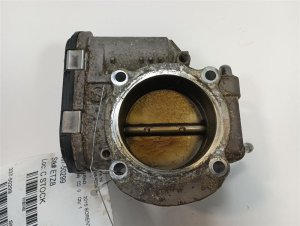
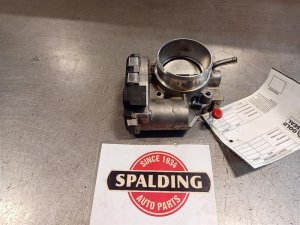
When a used part is the smart pick: A used OEM throttle body from a low-mileage donor vehicle can be a cost-effective alternative to a new OEM part, given the high price of a new unit. Since the failure is electronic rather than a high-wear mechanical issue, a used part can offer good longevity if inspected properly.
Donor-vehicle mileage cap: roughly under 80000 miles for the part to have meaningful remaining life.
What to inspect on the donor part:
- Verify the OEM part number (35100-2G700 for 2.4L) matches exactly.
- Inspect the electrical connector pins to ensure they are straight, clean, and free of corrosion.
- Look inside the throttle bore. A thin, dry layer of black carbon is normal, but avoid parts with heavy, oily sludge or signs of coolant contamination.
- Ensure there is no physical damage, cracks, or broken plastic on the housing or connector.
Aftermarket brands forum-validated for this vehicle:
- Mando (often the original equipment manufacturer)
- Standard Motor Products (SMP)
- Hitachi
Brands owners have reported issues with on this vehicle:
- Unbranded, no-name parts from online marketplaces should be treated with caution, as quality control can be inconsistent.
Real Owner Stories
Aggregated from forums and TSBs cited above. Mileages and costs reflect what owners reported in those sources.
2013 Hyundai Sonata
Symptoms: Check engine light, dirty throttle body, and potential wiring harness issues leading to P0222.
What fixed it: Cleaning the throttle body or replacing the throttle body assembly and checking the wiring harness.
Source hint: YouTube - Auto Repair Guys
2018 Hyundai Sonata 2.4L
Symptoms: Sudden, intermittent limp mode where the car won't exceed 25 mph.
What fixed it: Replacing the throttle body or addressing the knock sensor software update.
Source hint: Reddit r/Hyundai
2011-2014 Hyundai Sonata
Symptoms: Driving normally when the check engine light illuminates, followed by a sudden loss of power where the car refuses to accelerate past 20-25 mph. Restarting the car only temporarily resolves it.
What fixed it: Replacement of the entire throttle body assembly due to an intermittent electronic fault.
Source hint: Owner Experience: Sudden Limp Mode
Documented NHTSA Reports
Hyundai Electrical System Faults
Symptoms: An owner reported that even after a mechanic replaced the throttle body, the vehicle continued to show codes P0222 and P0123. The owner noted difficulties in obtaining the necessary parts for the repair.
Source hint: NHTSA ODI #11445835
Multiple Sensor Correlation Issues
Symptoms: A manufacturer report describes a situation where a vehicle experienced a cascade of codes including P0122, P0222, P0123, and P2106. The issue persisted even after checking grounding points and resulted in the vehicle entering limp mode.
Source hint: NHTSA ODI #11292479
Related OBD-II Codes
Frequently Asked Questions
Can I just replace the sensor on my 2011-2014 Sonata's throttle body to fix P0222?
Is there a specific procedure I need to follow after replacing the throttle body on my Sonata?
My Sonata is stuck in 'limp mode' and won't go over 25 mph. Is this related to P0222?
Could carbon buildup cause this code on my GDI engine?
Is there a recall for the engine issues mentioned in the context for the 2011-2014 models?
Is the clicking sound in my steering wheel related to the throttle body code?
Helpful Videos


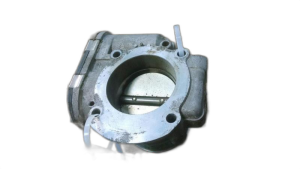
Used OEM Parts in Stock
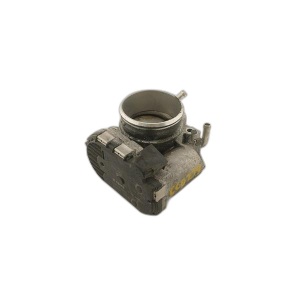
New Aftermarket Parts Available


The information in this article is provided for general reference and educational purposes only. Vehicle specifications, procedures, and part compatibility can vary by production date, trim level, and region. Always consult your vehicle's factory service manual and verify part numbers before purchasing or performing repairs. Safety-critical components such as airbags, seat belts, and braking systems should be installed by a qualified professional.
- Hyundai Sonata:
- 🧭 Diagnostic Flowchart
- 🎬 Helpful Videos
- 🛍️ Shop This Part
- What's Unique About the 2010-2014 Hyundai Sonata
- Symptoms You May Notice
- Most Likely Causes
- Rare But Worth Checking
- Diagnosis Steps
- Parts You'll Likely Need
- Related Codes That Often Appear With This One
- Platform-Specific Known Issues
- Mechanic-Grade Diagnostic Values
- Scan Tool Commands That Help
- Wiring & Ground Locations
- Real Owner Repair Stories
- OEM Part Supersession History
- Other Known Issues on This Vehicle
- Used vs. New Parts: Buying Guide for This Vehicle
- Real Owner Stories
- 2013 Hyundai Sonata
- 2018 Hyundai Sonata 2.4L
- 2011-2014 Hyundai Sonata
- Documented NHTSA Reports
- Hyundai Electrical System Faults
- Multiple Sensor Correlation Issues
- Related OBD-II Codes
- Frequently Asked Questions
- 🎟️ Get 5% Off