

P0223 on 2006-2010 Hyundai Sonata 3.3L: Throttle Position Sensor 'B' Circuit High Causes and Fixes
For the 2006-2010 Sonata 3.3L V6, code P0223 almost always points to a faulty standalone Throttle Position Sensor (TPS). This is an inexpensive part (around $40-$90) and is a DIY-friendly fix with basic tools. Unlike the 4-cylinder model which requires replacing the entire throttle body, this V6 allows for a much cheaper repair.
- P0223 on a 2006-2010 Sonata 3.3L V6 is a specific code for a high voltage fault in the secondary throttle position sensor (TPS 'B').
- The most probable cause is a failed standalone TPS, which is a relatively inexpensive and easy part to replace on this engine.
- Before replacing parts, always check the wiring connector at the throttle body for obvious damage or corrosion.
- Do not confuse this issue with a faulty gas pedal sensor; the problem is located at the engine's throttle body.
- Driving with this code is not recommended as the vehicle can unexpectedly lose power, creating a safety hazard.
What's Unique About the 2006-2010 Hyundai Sonata
What's important on the 2006-2010 Sonata is the engine difference. The 3.3L V6, unlike the 2.4L 4-cylinder from the same era, uses a standalone Throttle Position Sensor (TPS) that can be replaced separately from the entire throttle body. This often makes the repair significantly cheaper and easier, as owners of the 4-cylinder model typically have to replace the whole throttle body assembly to fix the same issue. This design choice makes the V6 model a much more straightforward DIY repair for this specific code.
Symptoms You May Notice
- Check Engine Light is illuminated
- Vehicle enters 'limp mode' (forced reduced power)
- Poor, hesitant, or complete lack of acceleration
- Engine may stall, especially when returning to idle
- Rough or unstable idle
- Engine surging
- ESC (Electronic Stability Control) light may illuminate, as the throttle control system is tied into traction and stability management.
- Replacing the entire throttle body assembly when only the inexpensive, standalone TPS was needed (specific to the 3.3L V6).
- Replacing the Accelerator Pedal Position (APP) sensor. P0223 specifically refers to the sensor on the throttle body, not the one connected to the gas pedal.
Most Likely Causes
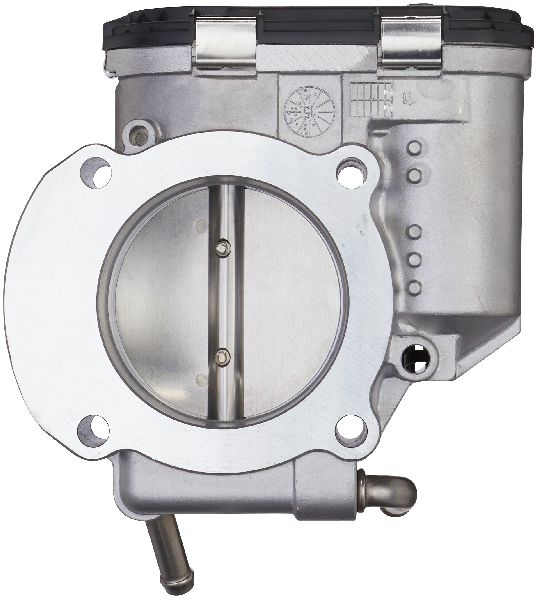
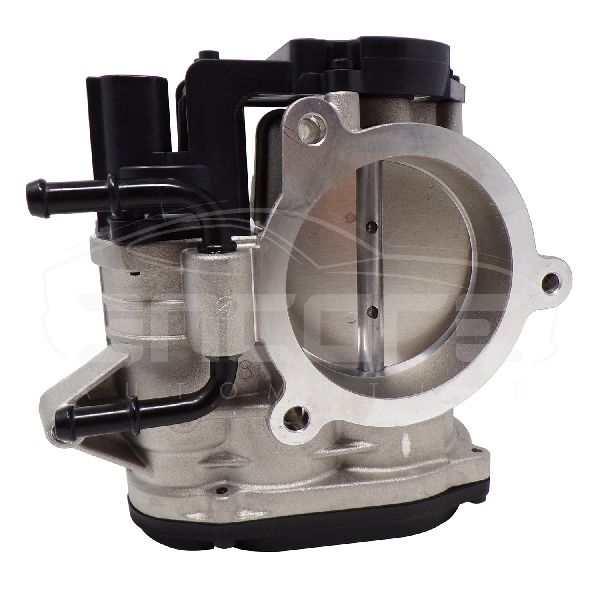
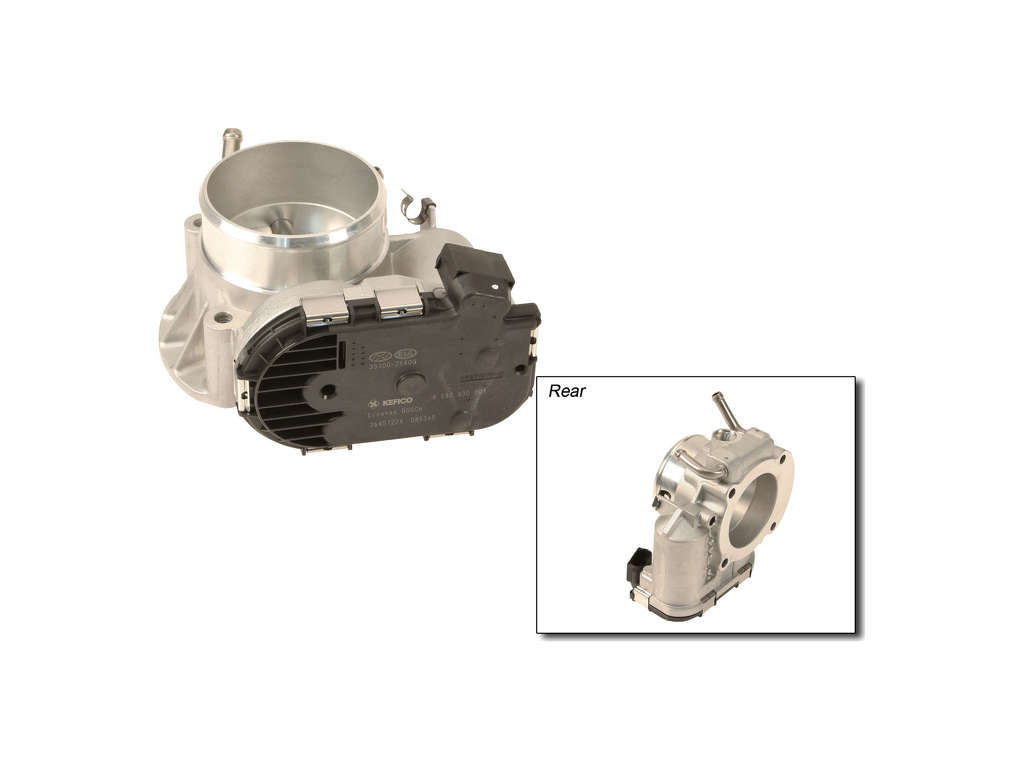
- Faulty Throttle Position Sensor (TPS) 🔴 High Probability → Shop Fuel Injection Throttle Body On the 3.3L V6, the TPS is a separate, serviceable component that is a common failure point due to heat and wear. It is much more likely to fail than the entire throttle body assembly.
How to confirm: Using a scan tool, observe the live data for TPS Sensor 2 ('B'). The voltage should be high at closed throttle (around 4.5V) and sweep smoothly downwards as the throttle opens. If the voltage is stuck high (above 4.75V) and does not change, the sensor has failed.
Typical fix: Replace the standalone Throttle Position Sensor located on the throttle body.
Est. part cost: $40-$90 - Wiring Harness or Connector Issue 🟡 Medium Probability The engine harness connector at the throttle body is exposed to heat and vibration, which can lead to corrosion on the pins or wires breaking over time.
How to confirm: Visually inspect the wiring harness and connector going to the throttle body for any signs of corrosion, bent pins, or physical damage. With the sensor disconnected and key on, use a multimeter to check for a 5V reference and a good ground at the connector pins. A short to power on the signal wire can also cause this code.
Typical fix: Repair the damaged section of the wiring harness or clean/replace the connector pigtail.
Est. part cost: $5-$50 - Dirty or Sticking Throttle Body ⚪ Low Probability → Shop Fuel Injection Throttle Body Carbon buildup from the PCV system is common on Lambda engines and can cause the throttle plate to not return to its home position correctly, which can sometimes cause an incorrect sensor reading.
How to confirm: Remove the air intake hose and visually inspect the throttle plate and bore for heavy carbon buildup. A sticking plate can cause the sensor to report an incorrect value. This is more likely to set a P1523 'Throttle Valve Stuck' code but can be a contributing factor.
Typical fix: Clean the throttle body thoroughly with a dedicated throttle body cleaner and a soft brush. Hyundai has a TSB for this procedure (13-FL-002).
Est. part cost: $10-$20
Rare But Worth Checking
- Faulty Powertrain Control Module (PCM): → Shop Engine Control Module (ECM) This is extremely rare. The PCM should only be considered after the sensor, wiring, and throttle body have all been confirmed to be in good working order. A PCM failure on this platform is more likely to present as a P0606 code.
Diagnosis Steps
- Connect a scan tool and confirm P0223 is the primary code. Note any other codes present, such as P0123 or P2135.
- Access the scan tool's live data stream. Monitor the voltage for 'TPS Sensor 1' and 'TPS Sensor 2'.
- With the key on and engine off, TPS2 voltage should be high (approx. 4.2-4.8V). As you slowly press the accelerator pedal, the voltage should decrease smoothly. If the voltage is stuck high (above 4.75V) and doesn't change, the sensor or its circuit is faulty.
- Turn the ignition off and disconnect the electrical connector at the throttle body.
- Inspect the connector terminals and wiring for corrosion, damage, or loose pins. Pay close attention to the harness for any signs of chafing or melting.
- If the wiring looks good, the standalone Throttle Position Sensor is the most likely cause of failure on this 3.3L V6 engine.
- For advanced diagnosis: Check for a 5V reference signal and a good ground at the connector with a multimeter. If these are missing, there is a wiring issue between the PCM and the sensor. If they are present, the sensor itself is confirmed to be faulty.
Parts You'll Likely Need
- Throttle Position Sensor (TPS)
(OEM #35107-3C100FFF)— This is the most common failure item for a P0223 code on the 3.3L V6 engine, as it is a separate component that wears out over time.
Trusted brands: Standard Motor Products (SMP), Beck/Arnley, Delphi, SKP
OEM price range: $70-$110
Aftermarket price range: $40-$90
Related Codes That Often Appear With This One
- P0123 — This code indicates 'TPS 'A' Circuit High Input'. Seeing both codes together strongly suggests a general failure of the TPS unit or a wiring issue affecting both sensor circuits.
- P2135 — This code means 'Throttle/Pedal Position Sensor/Switch 'A'/'B' Voltage Correlation'. It is set when the PCM sees that the signals from the two throttle position sensors do not agree with each other, which is a direct consequence of one sensor failing as indicated by P0223.
- P2106 — This code for 'Throttle Actuator Control System - Forced Limited Power' is not a cause, but a result. It confirms the PCM has intentionally put the vehicle into 'limp mode' because of the critical fault detected by P0223. 🎬 Learn how to diagnose and escape limp mode.
Technical Service Bulletins (TSBs) & Recalls
- TSB 13-FL-002: This Technical Service Bulletin addresses issues related to carbon buildup in the throttle body for various Hyundai models. It advises technicians to perform a thorough cleaning of the throttle plate and bore before replacing the entire assembly for throttle-related codes.
Platform-Specific Known Issues
- Owner Experience: Intermittent Limp Mode Resolved with TPS: A user on Hyundai-Forums reported experiencing intermittent limp mode with codes P0223 and P2135. After verifying the wiring was intact, they replaced the standalone TPS sensor (part number 35107-3C100FFF) on their 2007 Sonata 3.3L. The repair took less than 30 minutes and completely resolved the issue, avoiding a costly throttle body replacement.
- DIY Repair Story: Easy Fix on a 2008 Azera (Platform Mate): An owner of a 2008 Hyundai Azera with the same 3.3L engine documented their P0223 repair. They noted the car would barely accelerate. After confirming the high voltage reading on TPS2 with a basic OBD-II scanner, they purchased an aftermarket sensor for ~$60. The replacement involved removing the air intake hose, unscrewing two small bolts holding the sensor to the throttle body, and swapping the part. The check engine light and limp mode were gone after the fix.
Mechanic-Grade Diagnostic Values
- TPS1 vs. TPS2 Voltage (Key On, Engine Off) — expected: The two sensors operate inversely. At closed throttle (pedal released), TPS1 should be ~0.2-0.8V and TPS2 should be ~4.2-4.8V. At wide-open throttle (pedal depressed), TPS1 should be ~4.2-4.8V and TPS2 should be ~0.2-0.8V.. Failure: For P0223, the TPS2 voltage will be stuck high (above 4.75V) and will not decrease when the pedal is pressed.
- TPS Connector Power Supply Voltage (Key On, Engine Off, Connector Disconnected) — expected: Approximately 5.0V between the 5V reference pin and the ground pin at the harness connector.. Failure: Significantly lower or no voltage indicates a wiring or PCM problem, not a sensor failure.
Scan Tool Commands That Help
- Hyundai GDS (or equivalent professional scanner): Reset Adaptive Values — After replacing the TPS or cleaning the throttle body, this function should be used to clear the old learned throttle position values from the PCM, forcing it to relearn the new sensor's baseline positions.
- Hyundai GDS (or equivalent professional scanner): Active Test: ETC Motor — This command allows the technician to directly order the throttle plate to open and close. It helps differentiate a mechanical problem with the throttle body motor/gears from a purely electronic sensor fault.
Wiring & Ground Locations
- TPS Harness Connector Pins — The electrical connector on the Electronic Throttle Control (ETC) assembly.. A service manual procedure specifies checking for voltage between terminal 1 and terminal 5 of the TPS harness connector to verify the ground circuit. Testing at specific pins is crucial for accurate circuit diagnosis.
- G109 — Top of the engine.. This is a major engine ground point. A loose or corroded ground here can cause erratic behavior in various engine sensors, including the TPS, leading to incorrect voltage readings.
Real Owner Repair Stories
- briansmobile1 YouTube Channel (2008 Hyundai Vera Cruz 3.8L V6 (Lambda engine family mate), 50,000 miles) — Check engine light on with codes P2135, P1295, and P2106, vehicle in limp mode with poor acceleration.
❌ Tried (didn't work) The video directly diagnoses the TPS as the cause based on the codes.
✅ What actually fixed it The standalone Throttle Position Sensor was replaced. The video notes the replacement part has an 'FFF' suffix, indicating it is an updated/revised part from Hyundai, which resolved the limp mode and codes.
OEM Part Supersession History
35107-3C000FFF→35107-3C100FFF— Standard part revision and improvement by the manufacturer.35107-3C100FFF→35107-3C100NFFF— Standard part revision. The 'FFF' suffix often denotes a specific kit or remanufactured status, while 'NFFF' is the newer replacement designation.
Heads up: The parts are interchangeable; 35107-3C100NFFF is the current recommended replacement for the older versions.
Model Year Variations Within This Range
- 2006-2010: No significant variations were found for the throttle position sensor or related diagnostics on the 3.3L V6 engine within this model year range, including the 2009 facelift. The key variation remains the difference between the V6 (standalone TPS) and the 4-cylinder (integrated TPS) models.
Diagnostic Flowchart
Other Known Issues on This Vehicle
Issues unrelated to this code that are worth knowing about as an owner of this generation:
- Rear Subframe Corrosion 🔴 High — Very common in 'Salt Belt' regions, but can occur anywhere. Affects 2006-2010 models. (Ref: NHTSA Recall 13V113000 (Campaign 113) was issued for the rear crossmember.)
- Timing Chain Tensioner Rattle 🟠 Medium — A common issue on the 3.3L Lambda V6. A distinct 2-5 second rattle on cold startup indicates the hydraulic tensioner is failing to hold oil pressure. (Ref: No specific recall, but it is a widely documented problem. TSB 19-EM-001H discusses updated timing chain parts for later GDI engines.)
- Valve Cover Gasket Leak onto Alternator 🟠 Medium — A common design flaw where the front (Bank 2) valve cover gasket degrades and leaks oil directly onto the alternator below, causing premature alternator failure.
- Malfunctioning Stop Lamp Switch 🔴 High — Widespread across many Hyundai models of this era. Can cause brake lights to fail or stay on, and may prevent shifting out of Park. (Ref: NHTSA Recall 09V122000 (Campaign 090).)
- Occupant Classification System (OCS) Sensor Fault 🟠 Medium — Commonly reported issue where the passenger seat sensor fails, causing the passenger airbag light to illuminate and disabling the airbag. (Ref: NHTSA Recall 08V161000 (Campaign 084).)
Used vs. New Parts: Buying Guide for This Vehicle
When a used part is the smart pick: For this repair, a used part from a salvage yard is NOT recommended. The Throttle Position Sensor is an electronic wear item, and the low cost of a new aftermarket part (often under $60) makes a used part a poor value proposition with a high risk of early failure.
What to inspect on the donor part:
- Not applicable as a used part is not recommended.
OEM-only on this vehicle (don't cheap out):
- The Throttle Position Sensor for this vehicle is not an 'OEM-only' part. Reputable aftermarket options are widely available and perform well.
Aftermarket brands forum-validated for this vehicle:
- Standard Motor Products (SMP)
- Beck/Arnley
- Delphi
- NTK
- Duralast
Brands owners have reported issues with on this vehicle:
- Unbranded, 'white-box' sensors from online marketplaces like eBay or Amazon without a clear brand name or warranty should be avoided due to inconsistent quality control.
Real Owner Stories
Aggregated from forums and TSBs cited above. Mileages and costs reflect what owners reported in those sources.
2007 Hyundai Sonata 3.3L V6
Symptoms: Intermittent limp mode with codes P0223 and P2135.
What fixed it: Replaced the standalone TPS sensor (part number 35107-3C100FFF). The repair took less than 30 minutes.
Source hint: Hyundai-Forums thread titled '2006-sonata-3-3l-limp-mode-p2135-p0123-p0223'
2008 Hyundai Azera 3.3L V6
Symptoms: The car would barely accelerate; check engine light and limp mode were active.
What fixed it: Confirmed high voltage on TPS2 with a scanner and replaced the sensor by removing the air intake hose and two small bolts.
Cost: $60-$60
Source hint: DIY Repair Story: Easy Fix on a 2008 Azera (Platform Mate)
Documented NHTSA Reports
Hyundai Platform Reference (NHTSA ODI #10845644)
Symptoms: An owner of a related Hyundai model reported active codes P0223, P0445, and P2106. In this instance, a compression and leak down test revealed low compression in 3 out of 4 cylinders, with air blowing towards the valve cover, leading technicians to suspect piston rings.
Related OBD-II Codes
Frequently Asked Questions
Do I need to replace the entire throttle body on my 2007 Sonata 3.3L to fix P0223?
Is there a Hyundai Technical Service Bulletin for throttle issues on the Lambda 3.3L engine?
Why is my ESC light on at the same time as the P0223 code?
Can I use a sensor from a 2008 Hyundai Santa Fe 3.3L to fix my Sonata?
What voltage should I see on my scan tool for TPS Sensor 2 on this vehicle?
Are there any recalls for the 2006-2010 Sonata I should be aware of while fixing this?
Helpful Videos
Used OEM Parts in Stock
New Aftermarket Parts Available


The information in this article is provided for general reference and educational purposes only. Vehicle specifications, procedures, and part compatibility can vary by production date, trim level, and region. Always consult your vehicle's factory service manual and verify part numbers before purchasing or performing repairs. Safety-critical components such as airbags, seat belts, and braking systems should be installed by a qualified professional.
- Hyundai Sonata:
- 🧭 Diagnostic Flowchart
- 🎬 Helpful Videos
- 🛍️ Shop This Part
- What's Unique About the 2006-2010 Hyundai Sonata
- Symptoms You May Notice
- Most Likely Causes
- Rare But Worth Checking
- Diagnosis Steps
- Parts You'll Likely Need
- Related Codes That Often Appear With This One
- Technical Service Bulletins (TSBs) & Recalls
- Platform-Specific Known Issues
- Mechanic-Grade Diagnostic Values
- Scan Tool Commands That Help
- Wiring & Ground Locations
- Real Owner Repair Stories
- OEM Part Supersession History
- Model Year Variations Within This Range
- Other Known Issues on This Vehicle
- Used vs. New Parts: Buying Guide for This Vehicle
- Real Owner Stories
- 2007 Hyundai Sonata 3.3L V6
- 2008 Hyundai Azera 3.3L V6
- Documented NHTSA Reports
- Hyundai Platform Reference (NHTSA ODI #10845644)
- Related OBD-II Codes
- Frequently Asked Questions
- 🎟️ Get 5% Off