

P0234 on 2017-2023 Audi S5: Turbo Overboost Causes and Fixes
On the 2017-2023 Audi S5, code P0234 is most often caused by a faulty boost pressure control valve (N75 solenoid) or a sticking electronic wastegate actuator. This leads to the turbo producing too much pressure, forcing the car into a low-power 'limp mode'. Diagnosis should focus on control solenoids and actuator movement before condemning the expensive turbocharger assembly.
- P0234 on your S5 means the turbo is creating dangerously high pressure, and the car is protecting itself by cutting power.
- Do not immediately assume you need a new turbo. The cause is very often a less expensive part like the N75 boost control solenoid.
- Diagnosis should start by using a scan tool to confirm the overboost condition by comparing requested vs. actual boost pressure.
- Due to the electronic wastegate on the EA839 engine, diagnosis should focus on the control solenoid, the actuator itself, and the boost pressure sensor.
- Driving with an active P0234 code is not recommended as it can lead to severe and expensive engine or turbocharger damage.
What's Unique About the 2017-2023 Audi S5
The Audi S5 from 2017-2023 uses the EA839 3.0L V6 engine, which features a single turbocharger located in the 'hot-vee' between the cylinder banks. This design improves turbo response but also subjects the turbo and its control components to extreme heat, potentially accelerating failure of electronic parts. The boost control system is entirely electronic, using an electronic wastegate actuator rather than a pneumatic (vacuum-operated) one found on many older Audis. This means diagnosis focuses on electronic components like sensors and the actuator motor, and mechanical binding of the wastegate arm, rather than vacuum leaks which are a common cause on prior generations.
Symptoms You May Notice
- Check Engine Light and/or EPC light illuminated on the dashboard.
- Vehicle enters 'limp mode' with drastically reduced engine power and acceleration.
- Erratic acceleration or sudden surges of power, followed by a cut in power.
- Audible 'whoosh' or other unusual sounds from the engine bay under load as the diverter valve tries to release pressure.
- Engine knocking or misfiring under acceleration.
- Replacing the turbocharger immediately. The issue is often a much cheaper, external control component like the N75 valve or a sensor. Always diagnose the control system first.
Most Likely Causes
- Faulty Wastegate Control Solenoid (N75 Valve / Pressure Converter) 🔴 High Probability This solenoid, also known as a pressure converter, regulates the signal to the wastegate actuator. It can fail electronically or become clogged, leading to incorrect wastegate operation and is a common failure point on VAG vehicles.
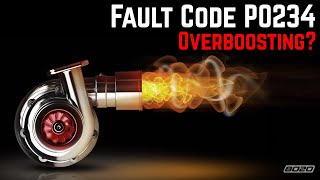
How to confirm: Use a scan tool to monitor requested vs. actual boost pressure. A diagnostic tool can also be used to command the solenoid and check for a response. Check for related fault codes like P0243. 🎬 Watch: How to diagnose a P0234 turbo overboost code
Typical fix: Replace the N75 valve. It is a relatively accessible component on the engine.
Est. part cost: $50-$150 - Sticking or Failed Electronic Wastegate Actuator 🟡 Medium Probability → Shop Turbocharger The electronic actuator motor can fail, or the wastegate arm it controls can bind due to carbon buildup or heat in the hot-vee, preventing the wastegate from opening to release excess pressure. The actuator is considered integral to the turbocharger assembly by Audi.
How to confirm: Visually inspect the wastegate actuator arm for free movement with the engine off. A scan tool with bidirectional control can be used to run an actuator test to see if it moves through its full range of motion. Listen for any grinding or binding sounds.
Typical fix: If the linkage is simply binding, it may be possible to clean and lubricate it. However, if the electronic actuator motor has failed or the wastegate itself is seized internally, the entire turbocharger assembly must be replaced as the actuator is not sold separately by Audi.
Est. part cost: $1800-$2800 for a new OEM turbocharger assembly - Faulty Boost Pressure Sensor (MAP Sensor) ⚪ Low Probability The sensor provides the primary reading for boost pressure to the ECM. If it sends an inaccurately low reading, the ECM may command the turbo to produce more boost than necessary, leading to an overboost condition.
How to confirm: With the engine off, the boost pressure reading on a scan tool should match the atmospheric pressure. Compare the sensor's readings to a known good sensor or a manual boost gauge during operation. Check for corrosion on the connector pins.
Typical fix: Replace the boost pressure sensor.
Est. part cost: $40-$100
Rare But Worth Checking
- Aftermarket Engine Tuning: An aggressive or poorly configured ECU tune ('Stage 1', 'Stage 2') can request boost levels that exceed the stock turbo's safety parameters or have overly aggressive wastegate settings, triggering an overboost code. If the vehicle is tuned, this should be the first suspect.
- Restricted Exhaust: A clogged catalytic converter or collapsed exhaust component downstream of the turbo can prevent exhaust gas from flowing freely. This can cause pressure to back up and prevent the wastegate from effectively regulating boost.
- Coolant Migration from Water Pump Failure: A well-documented issue on the EA839 is water pump failure, where coolant leaks into the engine's vacuum system. While the wastegate is electronic, other vacuum-controlled solenoids related to boost control can be damaged by this coolant contamination, leading to erratic behavior and potentially triggering P0234. An owner on Reddit reported a P0299 underboost code caused by this exact issue, showing the system's sensitivity.
Diagnosis Steps
- Connect a diagnostic scan tool (like VCDS or OBDeleven) to read the fault codes and any associated freeze-frame data.
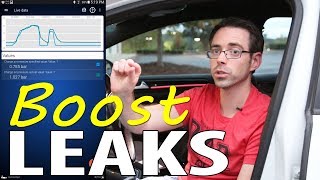
- Use the scan tool to monitor live data, specifically comparing 'Requested Boost Pressure' to 'Actual Boost Pressure' during a controlled test drive to confirm the overboost condition.
- Visually inspect all boost-related hoses and connections for cracks, looseness, or damage.
- Inspect the wiring and connectors for the boost pressure sensor and the wastegate control solenoid (N75 valve) for any signs of damage, melting, or corrosion.
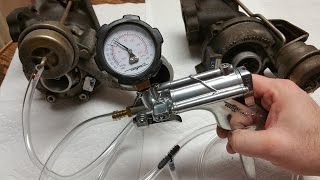
- With the engine cool, physically reach down to the turbocharger and attempt to move the electronic wastegate actuator arm by hand. 🎬 See: How to manually test your wastegate It should move smoothly with some spring resistance. Any binding or grittiness indicates a problem.
- If possible, use the scan tool to perform an actuator test on the electronic wastegate. Listen for its operation and verify its range of motion.
- Test the boost pressure sensor by comparing its reading with the key on, engine off, to the current atmospheric pressure.
- If the vehicle is tuned, flash the ECU back to the stock map and re-test to see if the issue persists.
- If all control components test correctly, the issue may be a mechanical fault within the turbocharger itself, such as a sticking internal wastegate flap.
Parts You'll Likely Need
- Boost Pressure Control Valve (N75 Solenoid)
(OEM #06H906283J (or similar variant, verify by VIN))— This is a very common failure point for controlling boost on VAG vehicles and is often the primary cause of P0234.
Trusted brands: Pierburg (OEM supplier), Bosch
OEM price range: $70-$120
Aftermarket price range: $50-$90 - Turbocharger Assembly
(OEM #06M145689J (or superseding part numbers like 06M145689H, verify by VIN))— Required if the electronic wastegate actuator has failed or if the wastegate flap itself is seized. On this engine, the actuator is typically integral to the turbo.
Trusted brands: BorgWarner (OEM), APR (Performance Upgrade)
OEM price range: $1800-$2800
Aftermarket price range: $1200-$1800 - Boost Pressure Sensor (MAP Sensor)
(OEM #06L906051K (verify by VIN))— A less common but possible cause. A faulty sensor can provide incorrect data to the ECM, leading to improper boost control.
Trusted brands: Bosch (OEM supplier), Delphi
OEM price range: $60-$100
Aftermarket price range: $40-$70
Related Codes That Often Appear With This One
- P0243 — This code specifically points to a malfunction in the wastegate solenoid circuit, strongly suggesting the N75 valve or its wiring is the root cause of the P0234 overboost.
- P0299 — An underboost code can sometimes appear with an overboost code if the wastegate or control solenoid is behaving erratically, sticking both open (causing underboost) and closed (causing overboost) at different times.
Technical Service Bulletins (TSBs) & Recalls
- Audi TSB 2070349/2: While not directly for P0234, this TSB for 'loss of coolant from coolant pump' is highly relevant. It details the diagnosis of the common water pump failure on the EA839 engine. A leaking pump can introduce coolant into the vacuum system, damaging boost control components and potentially causing boost-related fault codes.
- TSB Bulletin #01133020270825: Although issued for the Audi Q5, this manufacturer bulletin confirms that DTC P0234 (Turbo/Super Charger Overboost Condition) can be stored in the engine control module (J623) as a standalone fault without other DTCs present.
Platform-Specific Known Issues
- A user on Reddit with a 2017 Audi A4 (different engine, but similar VAG logic) experienced P0234 along with a shutter, which they suspected was turbo-related after other driveline fixes failed.
- On the related EA839 2.9TT engine in a Porsche Cayenne, an owner experienced wastegate failure that led to underboost, but the failure mechanism (actuator lever) is relevant to the S5's overboost potential if it were to stick in the opposite manner.
Mechanic-Grade Diagnostic Values
- N75 Boost Control Solenoid Resistance — expected: 25-35 Ohms (cold). Failure: A reading outside this range, or a reading that significantly increases (e.g., to 40+ Ohms) when the part is heated with a heat gun, indicates an internal failure that may only occur when the engine is hot.
- Boost Pressure (MAP) Sensor Voltage (Key On, Engine Off) — expected: Approx. 0.5 V at sea level. Failure: A value significantly outside the 0.4-2.0 V range can indicate a faulty sensor or wiring issue.
- Live Data: Charge Air Pressure (Actual vs. Specified) — expected: Actual pressure should closely track specified pressure during a test drive.. Failure: If 'Actual' consistently and significantly exceeds 'Specified' under load, it confirms an overboost condition that the ECU is unable to control.
Hidden / Shadow Codes Worth Checking
- P023400: This is the extended version of the P0234 code often seen on dealer-level scan tools like ODIS. The '00' suffix typically indicates a primary fault without a specific subtype, reinforcing that the 'Limit Exceeded (Overboost Condition)' is the core issue. (see via ODIS (dealer tool), VCDS, or other advanced VAG-specific scanners.)
Scan Tool Commands That Help
- VCDS (VAG-COM): Basic Settings > Turbocharger Adaptation — This procedure should be run after replacing the turbocharger assembly. It allows the ECU to learn the physical stop limits and operational range of the new electronic wastegate actuator, which is critical for proper boost control.
- VCDS (VAG-COM): Output Tests > Charge Pressure Control Solenoid (N75) — This test cycles the N75 valve on and off, allowing a technician to audibly check for its clicking operation and visually inspect the wastegate actuator arm for corresponding movement, helping to isolate a faulty solenoid from a stuck actuator.
- VCDS (VAG-COM) or OBDeleven: Live Data Blocks: IDE00190 (Charge air pressure: specified) & IDE00191 (Charge air pressure: actual) — This is the primary diagnostic step. Graphing these two values during a 3rd or 4th gear pull from low RPM to redline will clearly show the deviation between what the ECU wants and what the turbo is actually producing.
Wiring & Ground Locations
- Engine Ground Strap — On the B9 platform, a key engine-to-chassis ground point is located on the front right long member, near the alternator.. A poor or corroded engine ground can introduce electrical noise and voltage drops, potentially affecting the accuracy of sensor readings like the boost pressure sensor and the control signals sent to the N75 valve and wastegate actuator. While not a primary cause, it should be checked if electrical issues are suspected.
OEM Part Supersession History
06M145689H→06M145689J— Likely an internal revision by the manufacturer (BorgWarner) to improve reliability or address a known issue with the wastegate or actuator.
Model Year Variations Within This Range
- 2020-2023 (B9.5 Facelift): The B9.5 refresh (2020+) introduced a larger MMI touchscreen, removing the rotary control dial, and featured updated exterior styling (headlights, taillights, bumpers). While the core EA839 3.0T engine and turbocharger assembly remained mechanically the same, there may be minor software and transmission tuning differences. For the purpose of diagnosing P0234, the causes and procedures are identical between B9 (2017-2019) and B9.5 (2020-2023) models.
Diagnostic Flowchart
Other Known Issues on This Vehicle
Issues unrelated to this code that are worth knowing about as an owner of this generation:
- Rocker Arm Failure 🔴 High — Most common on early 2018-2019 models. Needle bearings in the rocker arms can fail, causing a distinct ticking noise and potentially leading to catastrophic engine damage if not addressed. (Ref: No official recall, but Audi has released updated rocker arm parts. Some repairs may be covered under warranty or goodwill on a case-by-case basis.)
- Water Pump & Thermostat Failure 🔴 High — Extremely common across all model years. The water pump can leak coolant internally into the engine's vacuum system, causing widespread damage to other vacuum-actuated components. (Ref: Audi TSB 2070349/2 addresses coolant loss from the pump and provides diagnostic criteria. A class-action lawsuit was also filed regarding this issue.)
- PCV System Failure 🟠 Medium — The check valves within the PCV breather hose are known to fail, leading to improper crankcase pressure regulation, oil leaks, and in severe cases, risk of engine fire. (Ref: Audi issued a TSB for a revised part, though some aftermarket solutions are considered more robust.)
- Active Motor Mount Failure 🟡 Low — The electronically controlled hydraulic engine mounts tend to fail and leak fluid, typically around 50,000-80,000 miles, causing increased vibration at idle.
- Piston Skirt Wear / Cylinder Scoring 🔴 High — A less common but severe issue on some EA839 engines, attributed to excessive piston rocking. It can lead to oil consumption and eventual engine failure. (Ref: Audi has extended the warranty for piston skirts to 8 years/80,000 miles for affected vehicles.)
Used vs. New Parts: Buying Guide for This Vehicle
When a used part is the smart pick: A used part is generally not recommended for the key components in this repair. The electronic wastegate actuator is integrated into the turbo and is a high-failure item due to heat. A used turbo assembly carries a significant risk of having the same wastegate issue or other wear. Used sensors or solenoids are also risky due to their low cost when new.
Donor-vehicle mileage cap: roughly under 40000 miles for the part to have meaningful remaining life.
What to inspect on the donor part:
- For a turbocharger, insist on seeing video of the donor car running without smoking.
- Check the wastegate actuator arm for smooth, free movement with no binding.
- Inspect the compressor wheel for any signs of blade damage from debris.
- Look for excessive oil residue in the compressor inlet/outlet, which could indicate failing seals.
OEM-only on this vehicle (don't cheap out):
- Turbocharger Assembly: Due to the integrated and failure-prone electronic wastegate, a new OEM (BorgWarner) or a reputable remanufactured unit with a warranty is the safest choice. The actuator is not sold separately.
- Boost Pressure (MAP) Sensor: Given its critical role in engine management and relatively low cost, using an OEM supplier like Bosch is highly recommended to avoid inaccurate readings from cheap aftermarket alternatives.
Aftermarket brands forum-validated for this vehicle:
- Pierburg (for N75 Solenoid - often the OEM supplier)
- Bosch (for MAP Sensor - often the OEM supplier)
- APR, TTE (for performance upgrade turbochargers)
Brands owners have reported issues with on this vehicle:
- Unbranded, low-cost turbochargers from online marketplaces. These often use inferior materials, have poor balancing, and are prone to premature failure of the wastegate actuator or bearings.
Real Owner Stories
Aggregated from forums and TSBs cited above. Mileages and costs reflect what owners reported in those sources.
2021 Audi S5 EA839 3.0L Turbo V6
Symptoms: Water pump failure just out of warranty leading to coolant contaminating the vacuum system.
What fixed it: Replacement of the water pump and affected vacuum-actuated components.
Cost: $7,000-$7,000
Source hint: Reddit r/Audi thread titled '2 Month Ownership Update: Another B9.5 S5 Water Pump Disaster'
2017 Audi A4 (VAG Platform)
Symptoms: Experienced a P0234 code along with a shuttering sensation.
What fixed it: The owner suspected turbo-related failure after other driveline fixes failed to resolve the issue.
Source hint: Reddit r/Audi thread titled 'Help please P0234'
Related OBD-II Codes
Frequently Asked Questions
Can a leaking water pump on my EA839 engine cause boost-related codes like P0234?
Is there a specific TSB for coolant loss that might be related to my S5's performance issues?
If my electronic wastegate actuator has failed, can I replace just the motor?
Should I check my rocker arms if I'm diagnosing a P0234 code?
Could an aftermarket ECU tune be causing my P0234 overboost code?
Helpful Videos

We Have This Part in Stock

The information in this article is provided for general reference and educational purposes only. Vehicle specifications, procedures, and part compatibility can vary by production date, trim level, and region. Always consult your vehicle's factory service manual and verify part numbers before purchasing or performing repairs. Safety-critical components such as airbags, seat belts, and braking systems should be installed by a qualified professional.
- Audi S5:
- 🧭 Diagnostic Flowchart
- 🎬 Helpful Videos
- 🛍️ Shop This Part
- What's Unique About the 2017-2023 Audi S5
- Symptoms You May Notice
- Most Likely Causes
- Rare But Worth Checking
- Diagnosis Steps
- Parts You'll Likely Need
- Related Codes That Often Appear With This One
- Technical Service Bulletins (TSBs) & Recalls
- Platform-Specific Known Issues
- Mechanic-Grade Diagnostic Values
- Hidden / Shadow Codes Worth Checking
- Scan Tool Commands That Help
- Wiring & Ground Locations
- OEM Part Supersession History
- Model Year Variations Within This Range
- Other Known Issues on This Vehicle
- Used vs. New Parts: Buying Guide for This Vehicle
- Real Owner Stories
- 2021 Audi S5 EA839 3.0L Turbo V6
- 2017 Audi A4 (VAG Platform)
- Related OBD-II Codes
- Frequently Asked Questions
- 🎟️ Get 5% Off