

P0234 on 2019-2026 Genesis G70 3.3T: Engine Overboost Causes and Fixes
On a 2019-2026 Genesis G70 3.3T, code P0234 is almost always caused by a failing electronic wastegate actuator on the passenger-side turbo. This is a known issue, often preceded by a rattle sound on engine shutdown. The official fix is a full turbo replacement, but replacing just the actuator is a more affordable, though advanced, DIY or independent shop repair. This problem is shared with its platform-mate, the Kia Stinger GT.
- P0234 on a G70 3.3T is a serious code that indicates the engine is receiving too much boost pressure, risking damage.
- The most likely cause is a failed electronic wastegate actuator (EWGA) on the passenger-side turbo, a known weak point for this engine.
- A tell-tale symptom is a metallic rattle from the engine bay right after you turn the car off.
- Do not waste time or money looking for a boost leak (e.g., with a smoke test), as leaks cause underboost (P0299), not overboost.
- While the dealer repair involves replacing the entire turbo, sourcing and replacing only the actuator is a possible, more affordable fix for advanced DIYers or independent shops.
What's Unique About the 2019-2026 Genesis G70
The Genesis G70 and its sibling, the Kia Stinger, are known for the impressive power of the 3.3L twin-turbo engine. However, this platform has a well-documented weakness in its electronic wastegate actuators (EWGA). Due to the high-heat, tight-packed engine bay, these actuators are prone to failure from heat and vibration, often getting stuck in the closed position. This prevents the system from bleeding off excess boost, directly causing the P0234 overboost condition and making it the most probable cause, far more so than on other turbocharged vehicles where causes might be more varied.
Symptoms You May Notice
- Check Engine Light is on
- Vehicle enters 'limp mode' with significantly reduced engine power.
- A distinct metallic rattle or squeak from the passenger side of the engine bay immediately after shutting the engine off.
- Erratic or surging acceleration under load.
- Audible knocking or pinging from the engine under boost (a very severe sign).
- Replacing the turbocharger for a boost leak. Boost leaks (leaking air after the turbo) cause an underboost condition (code P0299), not an overboost. Performing a smoke test is the wrong primary diagnostic for P0234.
Most Likely Causes
- Failing Electronic Wastegate Actuator (EWGA) 🔴 High Probability → Shop Turbocharger This is a widely documented pattern failure on the 3.3T engine platform, shared with the Kia Stinger. The actuator's internal motor or electronics fail from heat and vibration, causing it to stick closed.
How to confirm: Listen for a rattle from the turbo area on engine shutdown. A technician can use a high-level scan tool to perform an actuation test on the wastegate and check its position voltage with Key On, Engine Off. A reading outside the typical 3.9V-4.1V range when closed (e.g., 4.5V or higher) indicates a fault or miscalibration.
Typical fix: Genesis dealers typically replace the entire Bank 1 (passenger side) turbocharger assembly. Independent shops or skilled DIYers may be able to source and replace only the actuator, which then requires a specific calibration procedure with a scan tool to set the correct voltage.
Est. part cost: $150-$400 (actuator only, if sourced aftermarket), $1459 (full OEM turbo assembly). - Faulty Boost Pressure Sensor (MAP Sensor) 🟡 Medium Probability The MAP sensor is another component with a notable failure rate across Hyundai, Kia, and Genesis platforms using the 3.3T engine. A faulty sensor can send erroneously high pressure readings to the PCM, triggering a P0234 code even if the boost level is normal.
How to confirm: Use a scan tool to monitor live data. With the Key On, Engine Off (KOEO), the MAP sensor reading (often labeled 'Boost Pressure Sensor') should be nearly identical to the Barometric Pressure (BARO) sensor reading. If they differ significantly, the MAP sensor is likely faulty. The correct OEM part number is 39300-3L000.
Typical fix: Replace the boost pressure sensor. It is located on the intake manifold and is relatively easy to access, typically requiring only a 10mm socket.
Est. part cost: $60-$120 (OEM Part No. 39300-3L000). - Sticking or Bent Wastegate Linkage Rod ⚪ Low Probability
How to confirm: Visually inspect the wastegate arm and the rod connecting it to the actuator. Check if it moves freely or if it is binding, bent, or excessively corroded. This often requires some disassembly to access.
Typical fix: If the rod is simply stuck, it may be possible to free it up with lubricant and manipulation. If it is bent or the wastegate pivot itself is seized, the turbocharger assembly will need to be replaced.
Est. part cost: $0 (if freed), $1200-$2500 (if turbo replacement is required)
Diagnosis Steps
- Read the fault codes with an OBD-II scanner to confirm P0234 is present and note any other codes, especially P0299 or P2563.
- Start the engine, let it run for a moment, and then shut it off. Listen carefully for a metallic rattle or squeak from the passenger side of the engine bay as it shuts down. This is a strong indicator of a failing wastegate actuator.
- Use a scan tool to monitor live data. Compare the Manifold Absolute Pressure (MAP) sensor reading to the Barometric Pressure (BARO) reading with the key on and engine off. They should be almost identical.
- If you have an advanced scan tool, perform a wastegate actuator test. This will command the actuator to move and report its position voltage. The target voltage for a closed wastegate is 3.9V - 4.1V. A reading of 4.5V or higher is a common failure indicator.
- Visually inspect all vacuum and boost reference hoses connected to the turbochargers and wastegate control solenoids for cracks, disconnections, or blockages.
- With the engine cool, locate the Bank 1 (passenger side) turbo and attempt to move the wastegate actuator arm by hand. It should move smoothly, though it will be stiff. If it is completely seized, the actuator or wastegate itself is stuck.
- If all other components check out, the issue may be a mechanical failure within the turbocharger itself, though this is far less common than an actuator failure on this platform.
Parts You'll Likely Need
- Electronic Wastegate Actuator (Bank 1) — This is the most common failure point on the 3.3T engine that directly causes the P0234 overboost code. It is not typically sold separately by Genesis, but may be available from aftermarket suppliers.
Trusted brands: Hyundai/Genesis OE (as part of turbo assembly), Eturbotec
OEM price range: $1459 (as part of turbo assembly).
Aftermarket price range: $150-$400 - Turbocharger Assembly (Bank 1)
(OEM #28231-3L110)— This is the official dealer fix, as the wastegate actuator is not sold as a separate part by Genesis. This assembly includes the turbo, manifold, and actuator.
Trusted brands: Hyundai/Genesis OE
OEM price range: $1200-$2500 - Boost Pressure Sensor (MAP Sensor)
(OEM #39300-3L000)— A faulty sensor can send incorrect data to the PCM, causing an erroneous overboost code. It's a known failure item on this platform and an inexpensive first step in diagnosis.
Trusted brands: Bosch, Hyundai/Genesis OE
OEM price range: $80-$120
Aftermarket price range: $30-$80
Related Codes That Often Appear With This One
- P2563 — This code for 'Turbocharger Boost Control Position Sensor 'A' Circuit Range/Performance' directly indicates a problem with the sensor integrated inside the electronic wastegate actuator assembly, making an actuator fault extremely likely when seen with P0234.
- P0299 — This code for 'Turbocharger 'A' Underboost Condition' can sometimes be seen intermittently if the wastegate actuator is failing erratically, sometimes sticking open (causing underboost) and sometimes sticking closed (causing overboost). Seeing both codes together strongly points to a failing EWGA.
- P0237 — This code indicates 'Turbocharger Boost Sensor 'A' Circuit Low'. It can appear if the boost sensor has failed electrically, which can be a root cause of the P0234 code.
Platform-Specific Known Issues
- There is a critical safety recall (NHTSA ID: 24V-191, Genesis Recall 019G) for the driver's side (Bank 2) turbo oil feed pipe on 2019-2022 models. The pipe can crack, leak oil onto the hot exhaust manifold, and potentially cause an engine fire. The remedy is to replace the pipe with a more durable stainless steel version. While this does not cause code P0234, it is a vital safety issue for owners to be aware of.
Mechanic-Grade Diagnostic Values
- Electronic Wastegate Actuator (EWGA) Position Sensor Voltage — expected: 3.9V - 4.1V with Key On, Engine Off (KOEO) when wastegate is closed.. Failure: A reading of 4.5V or higher is a common indicator of a failed or miscalibrated actuator.
- Electronic Wastegate Actuator (EWGA) Motor Resistance — expected: 10 - 20 Ohms between the two motor pins.. Failure: An open circuit (infinite resistance) or a short (near-zero resistance) indicates the internal motor has failed.
- Manifold Absolute Pressure (MAP) Sensor Voltage at KOEO — expected: ~4.5V at sea level, should match the BARO sensor reading.. Failure: A reading that is stuck low (e.g., below 0.5V) or does not match the BARO sensor reading indicates a faulty sensor.
- Manifold Absolute Pressure (MAP) Sensor Voltage at Idle — expected: 1.0V - 1.5V. Failure: A reading that does not respond to throttle changes when the engine is running points to a failed sensor.
Scan Tool Commands That Help
- Hyundai/Genesis GDS (or equivalent advanced scanner): Wastegate Actuator Test — Use this bidirectional control to command the wastegate open and closed to test its range of motion and response while monitoring its position voltage. This is a primary method to confirm a suspected faulty actuator.
- Hyundai/Genesis GDS (or equivalent advanced scanner): Wastegate Voltage Adjustment / Adaptation — This procedure is mandatory after installing a new electronic wastegate actuator. It calibrates the new part's closed position to the target voltage (typically 3.9V-4.1V) that the PCM expects to see. Failure to perform this step will likely result in the P0234 code returning.
Real Owner Repair Stories
- Reddit user in r/GenesisG70 (2023 Genesis G70 3.3T) — Check Engine Light, 'Too much Boost Pressure' message, no turbo activity (limp mode).
❌ Tried (didn't work) Restarting the vehicle after a 20-minute wait.
✅ What actually fixed it The user reported that the dealer identified K&N drop-in air filters as the cause, stating they let in too much air. The user later confirmed that changing back to the stock OEM air filters resolved the issue and the Check Engine Light did not return. - YouTube channel 'Frankenstein Stinger' (Kia Stinger 3.3T (mechanically identical to G70)) — Boost issues and fault codes related to wastegate position.
❌ Tried (didn't work) The owner was facing the prospect of replacing the actuator or the entire turbo assembly.
✅ What actually fixed it The owner discovered the wastegate position sensor voltage was incorrect (4.23V). Instead of replacing parts, they physically adjusted the length of the wastegate actuator rod to bring the sensor's voltage back into the correct specification. This resolved the issue without replacing any components.
"I Checked Everything" — The Actual Cause
- For a P0234 overboost code, a smoke test is expected to be clean and is not the correct primary diagnostic step. A smoke test is used to find air leaks (which cause an underboost condition, P0299), whereas P0234 is caused by the system's inability to vent excess pressure, typically due to a wastegate stuck closed.
Model Year Variations Within This Range
- 2019-2026: The Genesis G70 received a significant facelift for the 2022 model year, which included revised styling and interior technology. However, the 3.3T Lambda II V6 powertrain, including the turbochargers and electronic wastegate control system, did not undergo changes that would alter the diagnosis or common failures related to the P0234 code. The issue is consistent across the entire generation.
Diagnostic Flowchart
Other Known Issues on This Vehicle
Issues unrelated to this code that are worth knowing about as an owner of this generation:
- Interior Rattles (Sunroof/Overhead Console) 🟡 Low — Very common across all model years. Often appears early in the vehicle's life. The overhead console and sunroof assembly are the most frequent sources.
- Brake Rotor Warping / Vibration 🟠 Medium — Commonly reported on the platform-mate Kia Stinger, leading to steering wheel vibration under braking. Less frequently but still noted on the G70. Typically occurs after 20,000+ miles.
- Paint & Trim Durability Issues 🟡 Low — Some owners of early models (2019-2020) reported issues with paint chipping easily and dark chrome trim oxidizing or fading.
- High-Pressure Fuel Pump (HPFP) Failure 🔴 High — A known issue that can cause stalling and loss of power. Less common than the wastegate issue but more severe. Genesis has issued recalls and warranty extensions for this part on related platforms. (Ref: Genesis Safety Recall 023G / Warranty Extension Z05G (mentioned for platform, check VIN for applicability))
- Potential for Oil Consumption 🟠 Medium — Like many modern turbocharged GDI engines, the 3.3T can consume oil between changes. Owners are advised to check oil levels regularly, especially if using extended oil change intervals. Modifying the exhaust (e.g., catless downpipes) can sometimes exacerbate oil bypassing turbo seals due to changes in backpressure.
Used vs. New Parts: Buying Guide for This Vehicle
When a used part is the smart pick: A used OEM MAP sensor (Boost Pressure Sensor) from a low-mileage donor vehicle is a reasonable choice as it is a simple electronic component with a lower failure rate than the wastegate actuator. A complete used turbocharger assembly could be considered, but only if its history is known and mileage is low, as the actuator is the primary failure point.
Donor-vehicle mileage cap: roughly under 40000 miles for the part to have meaningful remaining life.
What to inspect on the donor part:
- For a turbo assembly, verify the wastegate arm moves freely without binding.
- Check the actuator connector for any signs of corrosion, melting, or damaged pins.
- Look for any signs of oil leakage around the turbo seals.
- Ask for the VIN of the donor car to check its service history and confirm it's not from a vehicle that had the same P0234 issue.
OEM-only on this vehicle (don't cheap out):
- Turbocharger Assembly: While aftermarket options exist, the OEM unit is a known quantity. Given the high labor cost, using a proven OEM part is recommended to avoid repeat repairs.
- Electronic Wastegate Actuator: If purchasing separately, OEM (from a supplier like Kamtec) or a highly reputable aftermarket brand like Eturbotec is critical. Cheap, unbranded actuators are very likely to fail quickly or be impossible to calibrate.
Aftermarket brands forum-validated for this vehicle:
- Eturbotec (for replacement electronic wastegate actuators)
Brands owners have reported issues with on this vehicle:
- Unbranded, generic electronic wastegate actuators from marketplaces like Amazon or eBay, as calibration and longevity are major concerns.
Real Owner Stories
Aggregated from forums and TSBs cited above. Mileages and costs reflect what owners reported in those sources.
2023 Genesis G70 3.3T
Symptoms: Check Engine Light and a code for 'Too much Boost Pressure' on an unmodified engine during normal driving; no turbo activity.
What fixed it: The issue is illustrated as a commonality on the platform, often requiring wastegate or turbo service.
Source hint: Reddit: r/GenesisG70 - 'Check engine light - 23 3.3T - no turbo activity'
2019-2023 Genesis G70 3.3T
Symptoms: Wastegate noise (metallic rattle) from the turbo area.
What fixed it: The dealer replaced the turbocharger assembly, though the owner noted the noise returned shortly after.
Source hint: Reddit: r/GenesisG70 - 'Wastegate actuator issue : is there a permanent fix for this ?'
Related OBD-II Codes
Frequently Asked Questions
Is there a safety recall for the turbo system on my 2019-2022 Genesis G70?
I hear a metallic rattle from the passenger side after I turn off my 3.3T engine; is this related to P0234?
Can I just replace the sensor to fix the 'Too much Boost Pressure' code?
What voltage should the wastegate actuator show if it's working correctly?
Does the Kia Stinger have this same overboost issue?
Will I have to replace the whole turbocharger to fix P0234?
Helpful Videos
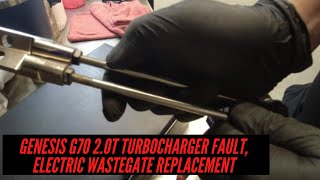
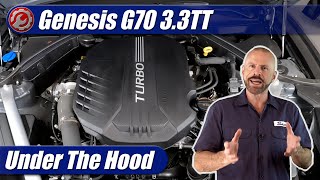
We Have This Part in Stock
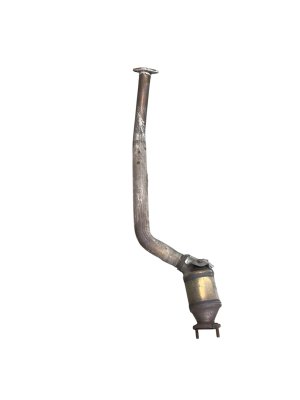
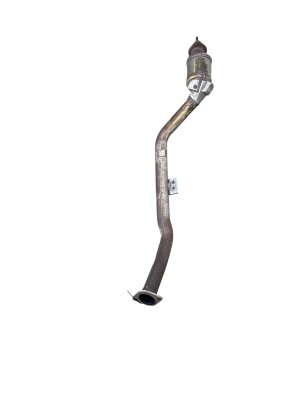

The information in this article is provided for general reference and educational purposes only. Vehicle specifications, procedures, and part compatibility can vary by production date, trim level, and region. Always consult your vehicle's factory service manual and verify part numbers before purchasing or performing repairs. Safety-critical components such as airbags, seat belts, and braking systems should be installed by a qualified professional.
- Genesis G70:
- 🧭 Diagnostic Flowchart
- 🎬 Helpful Videos
- 🛍️ Shop This Part
- What's Unique About the 2019-2026 Genesis G70
- Symptoms You May Notice
- Most Likely Causes
- Diagnosis Steps
- Parts You'll Likely Need
- Related Codes That Often Appear With This One
- Platform-Specific Known Issues
- Mechanic-Grade Diagnostic Values
- Scan Tool Commands That Help
- Real Owner Repair Stories
- "I Checked Everything" — The Actual Cause
- Model Year Variations Within This Range
- Other Known Issues on This Vehicle
- Used vs. New Parts: Buying Guide for This Vehicle
- Real Owner Stories
- 2023 Genesis G70 3.3T
- 2019-2023 Genesis G70 3.3T
- Related OBD-II Codes
- Frequently Asked Questions
- 🎟️ Get 5% Off