

P0234 on 2018-2020 Genesis G80 3.3T: Turbo Overboost Causes and Fixes
On the 2018-2020 Genesis G80 3.3T, code P0234 is almost always caused by a failed electronic wastegate actuator (EWGA) that is stuck closed on the Bank 1 (passenger side) turbo. This is a well-documented weak point on this engine platform, shared with the Kia Stinger and G70. A classic symptom is a distinct rattle or squeak from the engine bay upon shutdown. The official dealer repair is to replace the entire turbocharger assembly, a very expensive job. However, sourcing and replacing only the a
- P0234 on a 2018-2020 G80 3.3T is a critical code indicating a dangerous engine overboost condition that should be addressed immediately.
- The most likely cause by a wide margin is a failed electronic wastegate actuator (EWGA) on the passenger-side turbocharger.
- A squeaking or rattling noise when you turn the engine off is a tell-tale symptom of a failing EWGA.
- The official dealer repair involves replacing the entire turbocharger assembly, as the actuator is not sold as a separate part, making this a very expensive fix.
- Ensure your vehicle has had the safety recall performed for the driver's side turbo oil feed line (NHTSA 24V-191) to prevent a fire risk.
What's Unique About the 2018-2020 Genesis G80
The Lambda II 3.3L twin-turbo engine uses two electronic wastegate actuators (EWGAs) for precise boost control, one for each turbo. These electronic actuators are a known, high-frequency failure point on this platform due to constant exposure to extreme heat and vibration in the engine bay. When the actuator's internal motor or electronics fail, it often sticks in the closed position. This prevents the wastegate valve from opening to release excess exhaust pressure, causing the turbo to spin too fast and create an overboost condition, triggering the P0234 code.
Symptoms You May Notice
- Check Engine Light is on.
- Drastic reduction in engine power as the vehicle enters 'limp mode'.
- Sluggish, hesitant, or erratic acceleration.
- A distinct squeaking or rattling noise from the passenger-side engine bay immediately after the car is shut off, which is a classic, widely-reported sign of a failing wastegate actuator.
- Abrupt or harsh transmission shifting as the engine power is cut.
- Unusual whining or whooshing sounds from the engine bay under acceleration.
- Replacing the turbocharger assembly without first testing the boost pressure (MAP) sensor. A faulty sensor can mimic a mechanical overboost problem and is much cheaper and easier to replace.
- Performing a smoke test to look for boost leaks. A leak in the charge air system causes an underboost condition (P0299), not an overboost condition (P0234).
Most Likely Causes
- Failing Electronic Wastegate Actuator (EWGA) 🔴 High Probability → Shop Turbocharger The electronic actuators are a well-documented, common failure point on the 3.3T engine platform, shared with the Kia Stinger and Genesis G70. Their location subjects them to intense heat and vibration, leading to internal electronic failure or the motor sticking.
How to confirm: A technician can use a bidirectional scan tool (like Hyundai GDS) to command the wastegate open and closed while observing its position sensor voltage. With Key On, Engine Off (KOEO), the closed position voltage should be 3.9V-4.1V; a reading of 4.5V or higher indicates a fault. A rattling noise on engine shutdown is also a very strong indicator.
Typical fix: Replace the faulty electronic wastegate actuator. Genesis/Hyundai dealerships only sell the actuator as part of the complete turbocharger assembly. Some aftermarket actuators are available ($120-$400), but they require a special calibration ('Wastegate Voltage Adjustment' or 'Adaptation') with a scan tool after installation to set the closed-position voltage.
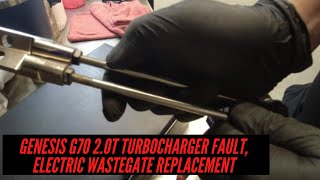
Est. part cost: $1500-$2500 (OEM Turbo Assembly) / $150-$400 (Aftermarket Actuator Only) 🎬 Watch: Step-by-step electric wastegate replacement guide
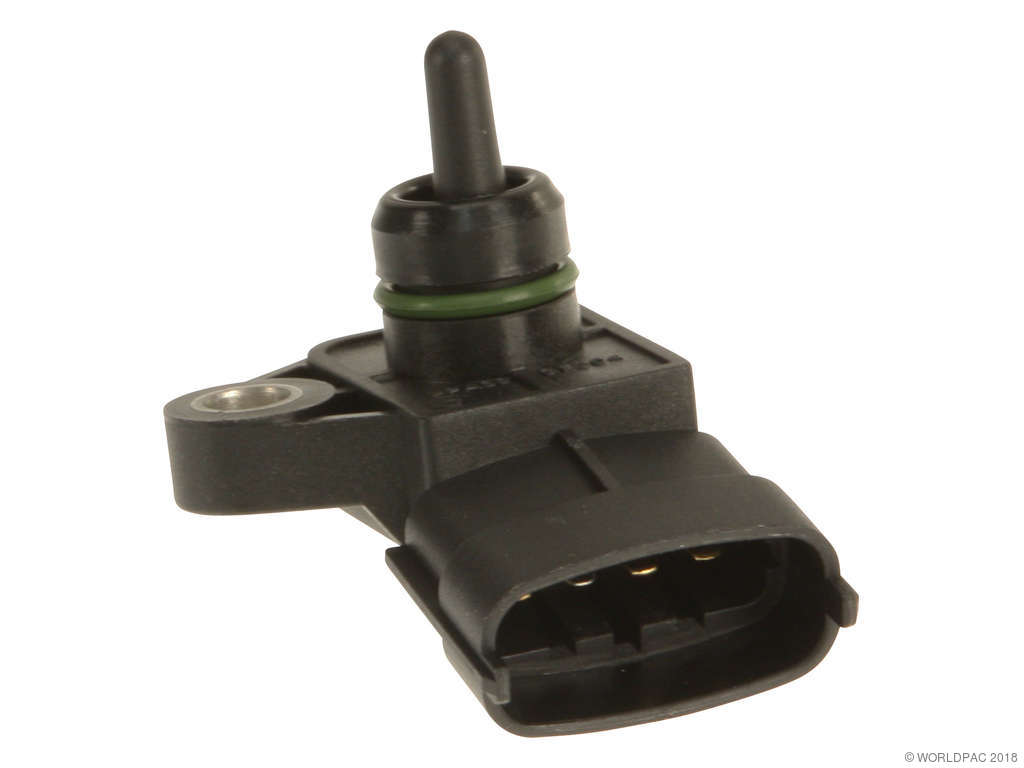
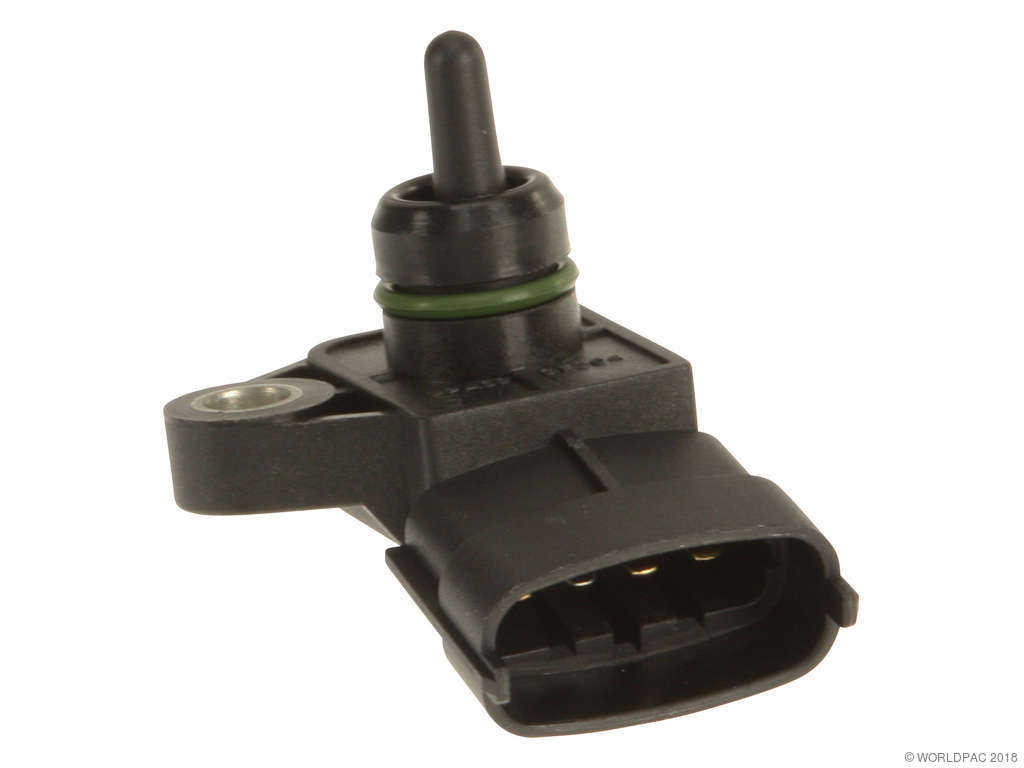
- Faulty Boost Pressure Sensor (MAP Sensor) 🟡 Medium Probability The MAP sensor is a known common failure point on the 3.3T engine across multiple Hyundai/Kia/Genesis platforms. A faulty sensor can send incorrect low-pressure readings to the ECU, causing it to command more boost than necessary, leading to an overboost condition.
How to confirm: Use a scan tool to monitor the MAP sensor's live data. With the Key On, Engine Off (KOEO), the MAP sensor reading should be nearly identical to the Barometric Pressure (BARO) sensor reading. If it's not, the sensor is likely faulty. This is a critical first check before condemning the turbo.
Typical fix: Replace the MAP sensor. This is a relatively simple and inexpensive repair, located on the intake manifold.
Est. part cost: $50-$150 - Sticking or Damaged Wastegate Control Solenoid ⚪ Low Probability The solenoid that regulates the signal to the electronic wastegate can fail, preventing it from bleeding off excess boost pressure. This is a more common issue on older, vacuum-operated turbo systems but can still occur.
How to confirm: Test the solenoid's resistance with a multimeter to see if it's within the manufacturer's specified range. A technician can also command it with a scan tool to verify operation.
Typical fix: Replace the boost control solenoid.
Est. part cost: $80-$200
Rare But Worth Checking
- Wiring Harness Damage: The high-temperature engine bay can cause wiring insulation to become brittle and crack, or connectors to corrode. An intermittent short or open in the wiring to the boost pressure sensor or wastegate actuator could cause erratic signals and trigger the code.
- Failed Turbocharger: → Shop Turbocharger While the actuator is the most common point of failure, the internal wastegate valve within the turbocharger housing itself could seize due to carbon buildup or mechanical failure, though this is much less common than actuator failure.
- Restricted Exhaust: A clogged catalytic converter or crushed exhaust pipe can trap exhaust pressure, leading to an overboost condition as the turbo cannot expel gases efficiently. This will usually be accompanied by other codes and a more general lack of performance.
Diagnosis Steps
- Connect an OBD-II scanner to verify the P0234 code and check for any other related codes, such as P0299 or P2563.
- Analyze the freeze-frame data to understand the engine conditions (RPM, load, speed) when the overboost condition was detected.
- Listen carefully for a rattling or squeaking sound from the passenger side of the engine bay immediately after shutting the engine off. This is a strong, platform-specific sign of a failing wastegate actuator.
- With the engine off and key on (KOEO), use a scan tool to compare the Manifold Absolute Pressure (MAP) sensor reading to the Barometric Pressure (BARO) reading. They should be nearly identical. If not, the MAP sensor is likely faulty and should be replaced first.
- Visually inspect all wiring and connectors going to the MAP sensor and the electronic wastegate actuator on the passenger-side turbo for any signs of damage, corrosion, or looseness.
- Using a high-level scan tool (like Hyundai GDS), perform a bidirectional 'Actuation Test' on the Bank 1 wastegate actuator. Command it to move and monitor its position sensor voltage to see if it responds correctly and moves through its full range of motion without binding.
- While monitoring the actuator's position sensor voltage at KOEO, check if it is within the specified range of 3.9V-4.1V. A reading of 4.5V or higher indicates a failed or miscalibrated actuator.
- If the actuator is unresponsive, its position voltage is out of range, or it makes noise during the actuation test, it is the cause. If the sensor and actuator test well, the issue may be a mechanical problem with the turbocharger's internal wastegate valve itself or a control solenoid issue.
Parts You'll Likely Need
- Turbocharger Assembly (Bank 1 / Passenger Side)
(OEM #28231-3L110)— This is the most common official fix because the primary cause, the electronic wastegate actuator, is not sold separately by Genesis/Hyundai and comes as part of the complete turbocharger assembly. This part fits G80, G70, and G90 models.
Trusted brands: Hyundai/Genesis OE
OEM price range: $900-$2500
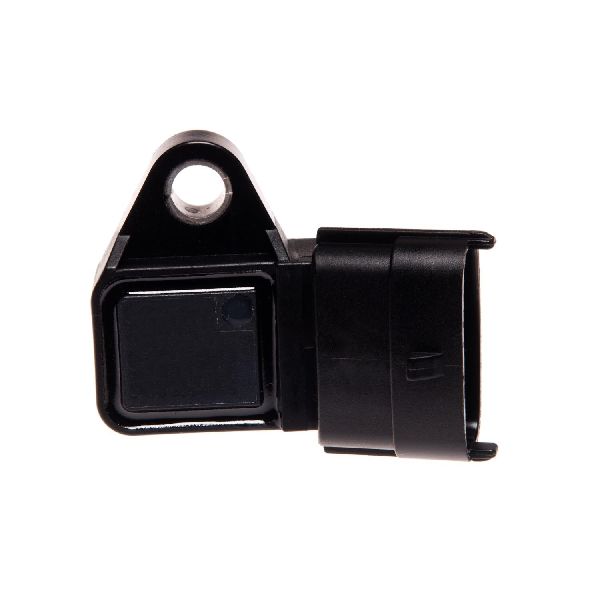
Aftermarket price range: N/A - Manifold Absolute Pressure (MAP) Sensor
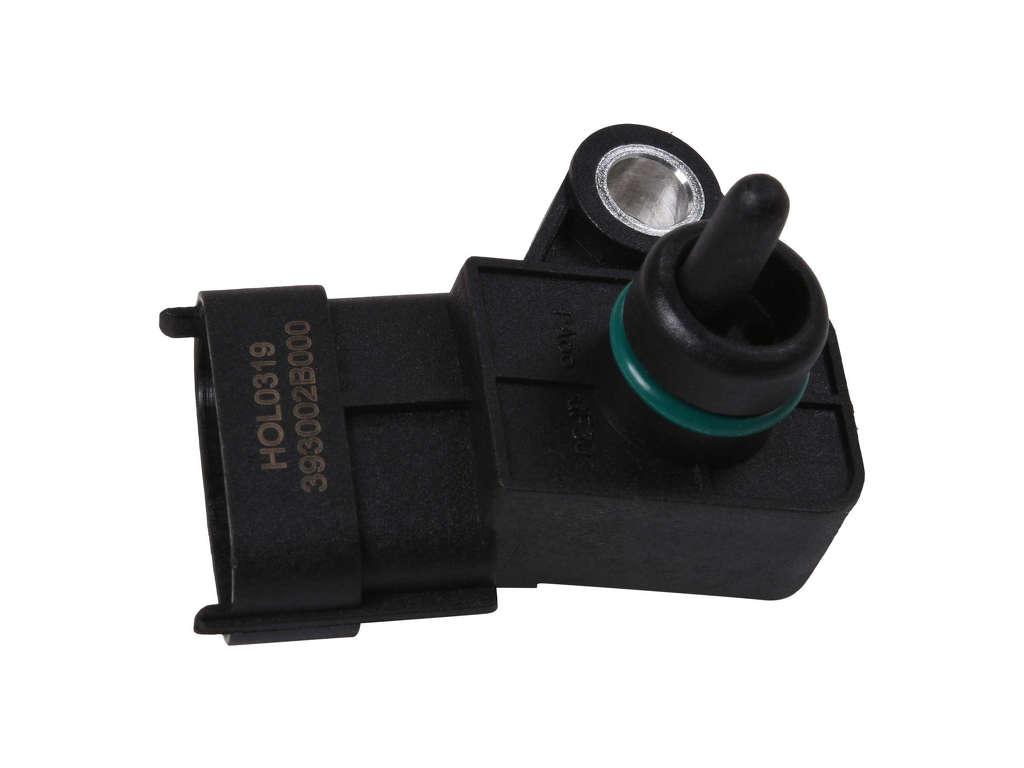
(OEM #39300-3L000)— This is a known failure point on the 3.3T engine and can cause an incorrect P0234 code. It should always be checked before condemning the expensive turbocharger. This part fits G70, G80, and G90 models.
Trusted brands: Bosch, Delphi, Hyundai/Genesis OE
OEM price range: $80-$110
Aftermarket price range: $50-$90 - Electronic Wastegate Actuator (EWGA)
(OEM #K6T52674 / K6T52673)— For those attempting a non-dealer repair, replacing only the actuator is the most cost-effective solution. This part is not officially sold by Genesis but can be sourced from aftermarket suppliers like Eturbotec or FEDIC. It requires calibration after installation.
Related Codes That Often Appear With This One
- P0299 — This is an 'Underboost' code. Seeing P0299 and P0234 intermittently strongly suggests a failing electronic wastegate actuator that is sticking in both open and closed positions at different times.
- P2563 — This code for 'Turbocharger Boost Control Position Sensor 'A' Circuit Range/Performance' directly points to a problem with the sensor inside the electronic wastegate actuator, making an actuator fault highly likely when seen with P0234.
Technical Service Bulletins (TSBs) & Recalls
- NHTSA 24V-191 / Genesis Recall 019G: Addresses a cracking left-side (Bank 2) turbo oil feed pipe that can leak oil and cause a fire. This is not for P0234 but is a critical safety issue for the 3.3T engine. This recall expands and replaces a previous recall (19V-538).
Platform-Specific Known Issues
- There is a critical safety recall for the driver's side (Bank 2) turbo oil feed pipe on 2018-2020 G80 models (NHTSA Recall 24V-191 / Genesis Recall 019G). The pipe can crack, leak oil onto the hot exhaust, and cause a fire. The remedy is to replace the original pipe with a more durable stainless steel version. While not directly related to P0234, it is a critical issue for all 3.3T owners to be aware of and have addressed.
Mechanic-Grade Diagnostic Values
- Electronic Wastegate Actuator (EWGA) Position Sensor Voltage (KOEO) — expected: 3.9V - 4.1V when closed.. Failure: A reading of 4.5V or higher is a common indicator of a failed or miscalibrated actuator.
- Electronic Wastegate Actuator (EWGA) Motor Resistance — expected: 10 - 20 Ohms between the two motor pins.. Failure: An open circuit (infinite resistance) or a short (near-zero resistance) indicates the internal motor has failed.
- Manifold Absolute Pressure (MAP) Sensor Voltage (KOEO) — expected: Should be nearly identical to the Barometric Pressure (BARO) sensor reading, typically ~4.5V at sea level.. Failure: A reading that is stuck low (e.g., below 0.5V) or does not match the BARO sensor reading indicates a faulty sensor.
- Manifold Absolute Pressure (MAP) Sensor Voltage (Engine Idling) — expected: 1.0V - 1.5V.. Failure: A reading that is stuck high (near 5.0V) or does not respond to throttle changes when the engine is running points to a failed sensor.
Scan Tool Commands That Help
- Hyundai GDS (or equivalent advanced scanner): Wastegate Actuator Test / Actuation Test — This is the primary bidirectional test to confirm a suspected wastegate actuator failure. It commands the actuator through its full range of motion, allowing a technician to check for smooth movement, listen for binding/noise, and verify the position sensor voltage changes accordingly.
- Hyundai GDS (or equivalent advanced scanner): Wastegate Voltage Adjustment / Adaptation / Relearn — This procedure is mandatory after installing a new electronic wastegate actuator or manually adjusting the actuator rod. The ECU must learn the new closed-position voltage (targeting 3.9V-4.1V) to ensure proper boost control and prevent the code from returning.
Wiring & Ground Locations
- EWGA Connector — Directly on the electronic wastegate actuator on the Bank 1 (passenger side) turbocharger assembly.. This 6-pin connector is the primary test point for the actuator. The two motor pins can be checked for resistance (10-20 Ohms), and the position sensor pins can be back-probed to check for the correct voltage (3.9V-4.1V at KOEO).
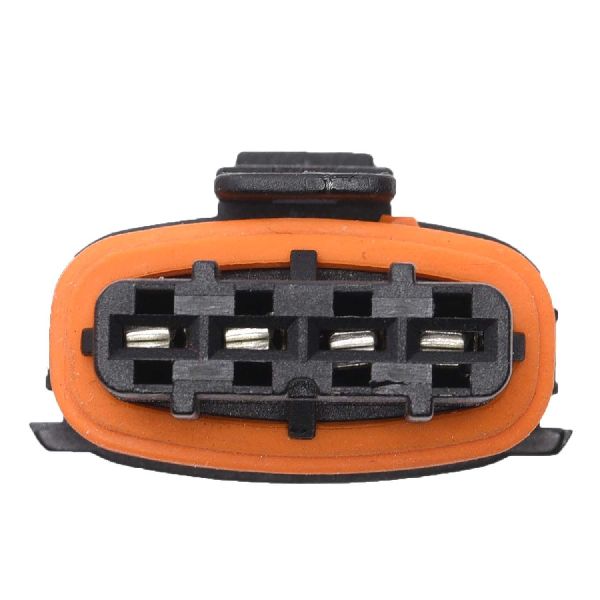
- MAP Sensor Connector — On the passenger side of the intake manifold, plugged directly into the MAP/Boost Pressure Sensor.. This is the primary test point for the MAP sensor circuit. The 3 pins are typically for 5V Reference, Signal, and Ground. Verifying voltage and ground integrity here is the first step in diagnosing a potential sensor or wiring issue.
- Main Engine Ground Strap (e.g., GE04) — Main ground strap connecting the engine block to the chassis, often on the lower right rear of the engine compartment.. A loose, corroded, or broken main engine ground can cause floating or erratic voltage readings on multiple sensors, including the MAP sensor and EWGA position sensor, leading to false codes that are not caused by the components themselves.
"I Checked Everything" — The Actual Cause
- For a P0234 overboost code, a smoke test is expected to come back clean. The test is designed to find air leaks in the intake system, which cause an underboost condition (P0299). The root cause of P0234 is the system's inability to vent excess pressure, which is an internal control problem (stuck wastegate), not an external leak.
OEM Part Supersession History
28231-3L110 (Full Turbo Assembly)→N/A— No supersession found for the full assembly.
Heads up: Genesis/Hyundai do not sell the electronic wastegate actuator as a separate service part from the turbocharger assembly. While the actuator is not sold separately by the OEM, aftermarket actuators are available (e.g., from Eturbotec). Using an aftermarket part is a common non-warranty repair strategy but requires careful sourcing and mandatory scan tool calibration after installation.
Diagnostic Flowchart
Other Known Issues on This Vehicle
Issues unrelated to this code that are worth knowing about as an owner of this generation:
- Cracking Driver-Side Turbo Oil Feed Pipe 🔴 High — Common enough to trigger a major safety recall across multiple model years and platforms. (Ref: NHTSA 24V-191 / Genesis Recall 019G)
- Panoramic Sunroof Creaking/Rattling 🟡 Low — A common complaint on G80 and G70 models, often requiring dealer service to lubricate or adjust the mechanism.
- Oxidation of Exterior Window Trim 🟡 Low — The black trim around the windows on G80 Sport models can develop a hazy or oxidized appearance. A TSB exists for this issue on the G70. (Ref: TSB exists for G70)
- Premature Brake Rotor Warping 🟠 Medium — Some owners of the platform-mate Kia Stinger report brake vibration/shaking due to warped rotors, which may also affect the G80 Sport.
- Broken Driver's Seat Back Panel Snaps 🟡 Low — Reported by some 2020 G80 Sport owners; the plastic snaps holding the rear panel of the driver's seat can break. A TSB and DIY fixes are available. (Ref: TSB available)
Used vs. New Parts: Buying Guide for This Vehicle
When a used part is the smart pick: A complete, low-mileage used turbocharger assembly from a reputable salvage yard can be a cost-effective option. This is because it includes the electronic wastegate actuator (EWGA), which is the most common failure point and is not sold separately by Genesis/Hyundai.
Donor-vehicle mileage cap: roughly under 60000 miles for the part to have meaningful remaining life.
What to inspect on the donor part:
- Verify the donor vehicle's mileage.
- Inspect the actuator arm for free movement; it should not be seized or bent.
- Check for excessive shaft play in the turbocharger itself.
- Ensure there is no visible damage to the compressor or turbine wheels.
- If possible, get the VIN of the donor car to check its history for related issues.
OEM-only on this vehicle (don't cheap out):
- Turbocharger Assembly (if not buying used) - While aftermarket actuators exist, the quality of a complete OEM turbo assembly is generally higher and better integrated.
Aftermarket brands forum-validated for this vehicle:
- Eturbotec (for EWGA only)
- FEDIC (for EWGA only)
Brands owners have reported issues with on this vehicle:
- Unbranded, no-name electronic actuators from online marketplaces can be a gamble regarding quality control and longevity.
Real Owner Stories
Aggregated from forums and TSBs cited above. Mileages and costs reflect what owners reported in those sources.
2020 Genesis G80 Sport 3.3T
Symptoms: Owner mentioned the driver-side oil feed line recall as a known concern for this engine platform while discussing common 3.3T issues.
What fixed it: Address the critical safety recall (NHTSA 24V-191) to replace the oil feed pipe with a stainless steel version.
Source hint: Reddit r/GenesisMotors
2018-2020 Genesis G80 3.3T
Symptoms: Owners confirmed a wastegate rattle on shutdown and received dealer quotes for full turbo replacement after seeing P0234/P0299 codes.
What fixed it: Some users reported success with independent shops replacing only the actuator rather than the full turbo assembly.
Source hint: genesisowners.com
2018-2023 Kia Stinger GT 3.3T
Symptoms: Experienced P0234 and P0299 codes accompanied by the characteristic electronic wastegate actuator (EWGA) rattle upon shutting down the engine.
What fixed it: Replacement of the electronic wastegate actuator followed by a specific calibration process to set the voltage.
Source hint: stingerforum.org
Related OBD-II Codes
Frequently Asked Questions
I hear a rattling noise from the passenger side after I turn off my 2018 G80 3.3T. Is this related to the P0234 code?
Does the turbo oil feed pipe recall (NHTSA 24V-191) fix the P0234 overboost issue?
Can I replace just the wastegate actuator on my G80, or do I need a whole new turbo?
My G80 is in 'limp mode' with P0234. Is there a simple sensor check I should do before replacing the turbo?
Is the P0234 issue on my G80 the same as the one found on the Kia Stinger?
Helpful Videos
Used OEM Parts in Stock
New Aftermarket Parts Available


The information in this article is provided for general reference and educational purposes only. Vehicle specifications, procedures, and part compatibility can vary by production date, trim level, and region. Always consult your vehicle's factory service manual and verify part numbers before purchasing or performing repairs. Safety-critical components such as airbags, seat belts, and braking systems should be installed by a qualified professional.
- Genesis G80:
- 🧭 Diagnostic Flowchart
- 🎬 Helpful Videos
- 🛍️ Shop This Part
- What's Unique About the 2018-2020 Genesis G80
- Symptoms You May Notice
- Most Likely Causes
- Rare But Worth Checking
- Diagnosis Steps
- Parts You'll Likely Need
- Related Codes That Often Appear With This One
- Technical Service Bulletins (TSBs) & Recalls
- Platform-Specific Known Issues
- Mechanic-Grade Diagnostic Values
- Scan Tool Commands That Help
- Wiring & Ground Locations
- "I Checked Everything" — The Actual Cause
- OEM Part Supersession History
- Other Known Issues on This Vehicle
- Used vs. New Parts: Buying Guide for This Vehicle
- Real Owner Stories
- 2020 Genesis G80 Sport 3.3T
- 2018-2020 Genesis G80 3.3T
- 2018-2023 Kia Stinger GT 3.3T
- Related OBD-II Codes
- Frequently Asked Questions
- 🎟️ Get 5% Off