

P0234 on 2014-2018 Subaru Forester XT: Turbo Overboost Causes and Fixes
For the 2014-2018 Forester XT, code P0234 almost always points to a problem with the turbo's boost control system. The most common cause is a failed wastegate control solenoid (also called a boost control solenoid), which is a relatively affordable and accessible part to replace. Do not immediately suspect the turbo itself.
- P0234 is a critical code that means your engine is receiving too much boost pressure; stop driving immediately to prevent severe engine damage.
- The most likely cause on a 2014-2018 Forester XT is a faulty wastegate control solenoid, a common and relatively inexpensive part.
- Before assuming the expensive turbocharger has failed, always diagnose the cheaper components first: the control solenoid and all related vacuum lines.
- Check for other codes, as a code like P0245 can pinpoint an electrical failure in the boost control solenoid, confirming the diagnosis.
What's Unique About the 2014-2018 Subaru Forester
The FA20F Direct Injection Turbo (DIT) engine in the Forester XT uses an electronic wastegate controlled by a solenoid. This solenoid is a known high-failure item, often sticking or failing electrically, making it the primary suspect for a P0234 code. While other issues can cause overboost, on this specific platform, the diagnostic process should always start with the boost control system before suspecting a more serious turbocharger failure. The issue is also common on the FA20F-equipped Subaru WRX, a close platform mate.
Symptoms You May Notice
- Check Engine Light is on
- Sudden and significant loss of engine power as the vehicle enters 'limp mode'
- Erratic acceleration or surging, sometimes described as 'kangarooing' at low RPMs.
- Audible 'whoosh' sound from the turbo or unusual engine noises.
- Engine misfiring or running rough.
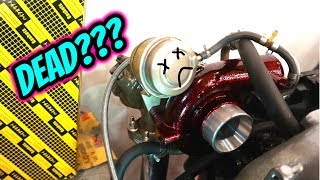
- A feeling of hesitation followed by a sudden, uncontrolled surge of power. 🎬 Watch: Learn more about overboost symptoms and causes
- Replacing the entire turbocharger before thoroughly testing the boost control solenoid and checking all vacuum lines. The solenoid is a much cheaper and more common point of failure.
- Replacing the MAP sensor without first checking if it is simply dirty. On the FA20F, cleaning a carbon-fouled MAP sensor can sometimes restore normal operation.
Most Likely Causes
- Failed Wastegate Control Solenoid (Boost Control Solenoid) 🔴 High Probability The solenoid that controls the turbo wastegate is a very common failure point on Subaru turbo models, including the FA20F engine. It can fail electrically or become mechanically stuck, preventing it from bleeding off pressure to control the wastegate actuator.
How to confirm: Use a scan tool to perform a bidirectional test on the solenoid to see if it clicks. Check for voltage at the connector. A common accompanying code is P0245, which points directly to an electrical fault in this solenoid. Resistance can be checked with a multimeter; a healthy Pierburg-style solenoid used on these platforms should have a resistance of approximately 30-35 Ohms.
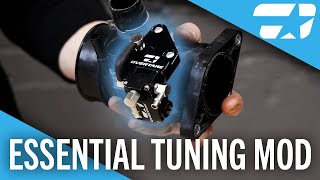
Typical fix: Replace the wastegate control solenoid and clear the codes. This is often a straightforward DIY job. 🎬 See this electronic boost control solenoid install guide
Est. part cost: $90-$250 - Sticking or Binding Wastegate Actuator 🟡 Medium Probability → Shop Turbocharger The mechanical arm that opens the wastegate flap can seize or bind due to carbon buildup or corrosion, preventing it from opening to relieve excess boost. This is more common on vehicles that are driven short distances and don't get fully up to temperature.
How to confirm: With the engine off and cool, disconnect the actuator rod from the wastegate arm. Manually move the arm to check for smooth, free travel. If it is stuck, the wastegate is the problem. A hand-held vacuum pump can also be used to apply pressure to the actuator to see if it moves correctly.
Typical fix: In some cases, the linkage can be freed up with penetrating oil and manual manipulation. More often, if the internal wastegate is seized, the entire turbocharger assembly needs to be replaced as the wastegate is integrated.
Est. part cost: $1500-$2500 for a new turbocharger - Cracked, Leaking, or Clogged Vacuum/Boost Hoses 🟡 Medium Probability → Shop Turbocharger Outlet Hose The rubber hoses that control the wastegate actuator can become brittle, cracked, or disconnected due to heat and age. A small brass restrictor 'pill' inside one of the lines can also become clogged with debris, preventing proper pressure signals from reaching the wastegate actuator.
How to confirm: Visually inspect all vacuum lines running between the turbo compressor housing, the wastegate solenoid, and the wastegate actuator. Check for cracks, loose fittings, or blockages. Pay special attention to the line containing the small brass 'restrictor pill'. A smoke test is the most effective way to find small, hard-to-see leaks.
Typical fix: Replace the damaged sections of vacuum hose and ensure the restrictor pill is present and clear. It's often best to replace all related vacuum lines at once.
Est. part cost: $10-$50
Rare But Worth Checking
- Faulty Manifold Absolute Pressure (MAP) Sensor: → Shop Manifold Absolute Pressure Sensor A MAP sensor that is reading lower than the actual pressure can cause the ECM to command more boost than necessary. This would usually throw its own specific sensor code, but it's a possibility if no other cause is found. On FA20F engines, the MAP sensor can become caked in oil/carbon deposits, leading to inaccurate readings.
- Aftermarket Engine Tuning: If the vehicle has been modified with an aftermarket tune (e.g., from Cobb, EcuTek), an overly aggressive boost map can trigger a P0234. The first step should be to revert to the stock engine map to see if the problem persists.
- Restricted Exhaust: A clogged catalytic converter or collapsed muffler baffle can increase exhaust backpressure, which can affect how the turbocharger and wastegate operate, sometimes leading to an overboost condition.
Diagnosis Steps
- Check for any other stored trouble codes. Codes like P0245 can point directly to the cause.
- If the vehicle is tuned, flash it back to the stock map to rule out a software issue.
- Visually inspect all vacuum and boost reference lines connected to the turbocharger, wastegate actuator, and boost control solenoid. Look for cracks, kinks, or loose connections. Pay close attention to the restrictor pill.
- Perform a boost leak test using a smoke machine or a low-pressure air source to check for leaks in the intake tract post-turbo.
- With the engine off, manually check the wastegate actuator arm for free movement. It should move smoothly without binding. Use a vacuum pump to verify the actuator holds vacuum and moves the arm at the correct pressure. 🎬 Watch: How to test a wastegate actuator
- Using a capable OBD-II scanner (like a Cobb Accessport or RomRaider), monitor live data for Commanded Boost vs. Actual Boost Pressure (MAP) during a cautious test drive to confirm the overboost condition.
- Test the wastegate control solenoid. Check for an audible click using a bidirectional scan tool or by applying 12V directly. Check the solenoid's resistance with a multimeter to ensure it is within spec (approx. 30-35 Ohms is a reported value for this platform).
- If all control components test good, the issue may be an internal failure of the turbocharger's wastegate.
- Check the MAP sensor readings at idle and under load to ensure they are plausible. Remove and inspect the sensor for physical contamination.
Parts You'll Likely Need
- Turbocharger Wastegate Control Solenoid (Boost Control Solenoid)
(OEM #16102AA490)— This is the most common failure point for the P0234 code on the FA20F engine. Note: Part number 16102AA490 is listed for many earlier Subaru turbo models as a 'Vapor Canister Purge Solenoid' but is often cross-referenced for this boost control application. Always verify with VIN.
Trusted brands: Subaru (OEM), Dorman
OEM price range: $150-$250
Aftermarket price range: $90-$150 - Vacuum Hose Kit — Cracked or leaking vacuum lines are a common cause of boost control issues. It's good practice to replace them when working on the system.
Trusted brands: Z1 Motorsports, Generic Silicone Hose
OEM price range: $20-$40
Aftermarket price range: $10-$20
Related Codes That Often Appear With This One
- P0245 — This code for 'Wastegate Solenoid 'A' Circuit Low' points directly to an electrical fault with the boost control solenoid, which is a primary cause of P0234.
- P0299 — This code for 'Turbocharger Underboost' is the opposite problem, but seeing it appear intermittently with P0234 can indicate a very erratic boost control solenoid or a wastegate that is sticking in both open and closed positions.
Technical Service Bulletins (TSBs) & Recalls
- No specific TSB for P0234 on this platform was found. However, Subaru has issued recalls and TSBs for related components on similar models. For example, NHTSA ID #10169833 (Subarunet Announ) was a service campaign for 2015-2018 Forester 2.0L Turbo models for loosening front exhaust pipe nuts, which could potentially affect exhaust flow and turbo performance.
Platform-Specific Known Issues
- Owner Experience: P0234 Limp Mode During Part-Throttle: A user on the NefMoto forums with a tuned vehicle reported experiencing P0234 and limp mode not during wide-open throttle, but during part-throttle driving. This indicates the overboost condition can be triggered by erratic control system behavior under normal driving conditions, not just peak load.
- Owner Experience: Sticky Wastegate Diagnosis: A Subaru Legacy owner on a WordPress blog detailed a long troubleshooting process for symptoms including hesitation and sudden power loss, which were ultimately traced to a stuck turbo wastegate. The ECU was cutting boost to protect the engine, but no codes were thrown initially. This highlights that a mechanical wastegate issue can cause P0234 symptoms before the code is set. The fix required a specialist to free the seized wastegate.
Mechanic-Grade Diagnostic Values
- Wastegate Control Solenoid Resistance — expected: 30-35 Ohms. Failure: A reading significantly outside this range (open circuit or short) indicates a failed solenoid coil.
- MAP Sensor Voltage (Key On, Engine Off) — expected: ~4.5 - 4.8V at sea level. Failure: Voltage significantly lower than atmospheric pressure reading, or stuck at a fixed value, suggests a sensor or wiring issue.
- MAP Sensor Voltage (Engine at Idle, Warm) — expected: 1.0 - 1.8V. Failure: Voltage remains high (near KOEO value) at idle, indicating the sensor is not reading engine vacuum.
- Live Data: Wastegate Duty Cycle (WGDC) vs. Boost Error — expected: During an overboost event (Actual Boost > Target Boost), WGDC should drop to 0% as the ECU attempts to open the wastegate.. Failure: If Actual Boost exceeds Target Boost but WGDC does not drop to 0%, it points to a faulty MAP sensor (not seeing the overboost) or an ECU issue. If WGDC drops to 0% but boost remains high, it points to a mechanical/hydraulic issue (stuck solenoid, stuck wastegate, clogged lines).
Scan Tool Commands That Help
- Subaru Select Monitor (SSM) or equivalent professional scanner: Active Test: Wastegate Control Solenoid Valve Duty — This is the most direct way to test the boost control solenoid. A technician can command the solenoid to cycle (e.g., from 0% to 90%) with the engine running or off. An audible click should be heard, and the effect on boost pressure (or actuator movement) can be observed, isolating the solenoid as the failure point.
Wiring & Ground Locations
- D27 (Wastegate Control Solenoid Valve Connector) — On the boost control solenoid itself, located near the turbocharger assembly on the passenger side of the engine bay.. This connector and its wiring are exposed to significant heat and vibration, making them a potential point of failure. A corroded pin or broken wire here will cause a P0245 and lead to a P0234, as the ECM loses control of the wastegate. One pin is a 12V ignition feed, and the other is a ground signal modulated by the ECM.
- GE (Engine Ground) — Multiple ground points exist on the engine block and intake manifold. A primary ground strap connects the engine to the chassis, typically near the passenger side strut tower.. A poor engine ground can cause floating voltages and erratic behavior from all engine sensors, including the MAP sensor and the ECM's solenoid driver. This can lead to incorrect readings and control signals, potentially causing an overboost condition.
Real Owner Repair Stories
- subaruforester.org forum user (2015 Subaru Forester XT) — P0234 code, limp mode, overboosting.
❌ Tried (didn't work) Replacing the boost control solenoid
✅ What actually fixed it The internal wastegate flapper inside the turbocharger was seized. The entire turbocharger assembly had to be replaced to resolve the issue. - NASIOC forum user (Subaru WRX with FA20F engine) — Intermittent P0234 overboost code, especially under certain load conditions.
❌ Tried (didn't work) Smoke test (passed), Replacing boost control solenoid, Cleaning MAP sensor
✅ What actually fixed it A small, hard-to-see crack was found in the plastic turbo inlet pipe. The crack would only open under specific vibration and pressure conditions, causing a momentary disruption to the boost control system that led to an overboost spike. Replacing the turbo inlet pipe fixed the code.
"I Checked Everything" — The Actual Cause
- A cracked plastic turbo inlet pipe was found to be the cause of a P0234 on an FA20F engine. A standard smoke test did not reveal the leak, as the crack likely only opened under specific engine torque or vibration conditions, leading to a sudden change in airflow that the wastegate system could not compensate for quickly enough.
When the Usual Fixes Don't Work
- In one documented case on a subaruforester.org forum, an owner with a 2015 Forester XT replaced the boost control solenoid—the most common fix—but the P0234 code persisted. Further diagnosis revealed the mechanical wastegate arm inside the turbocharger housing was seized, preventing it from opening. The final repair required replacing the entire turbocharger assembly, demonstrating that while the solenoid is the most probable cause, it is not the only one, and a mechanical failure of the wastegate itself must be considered if a new solenoid doesn't solve the problem.
OEM Part Supersession History
16102AA490→16102AA500 / 16102AA50A— Part number consolidation and potential minor revisions. Subaru often uses the same Pierburg-style solenoid for multiple functions (EVAP purge, boost control).
Heads up: While physically similar, ensure the part number is correct for the specific application (boost control vs. EVAP). The part number 16102AA500 is often listed for EVAP systems on other models but is cross-referenced for boost control on the FA20F. Always confirm with VIN.
Model Year Variations Within This Range
- 2014-2018: While the core engine and turbo hardware remained consistent, Subaru may have released ECU software updates over the years. These updates could alter boost targeting, wastegate duty cycles, or the sensitivity thresholds for setting the P0234 code. It is advisable to check with a dealer if any factory re-flashes are available for the vehicle's VIN, as this could be a required step in the diagnostic process.
Diagnostic Flowchart
Other Known Issues on This Vehicle
Issues unrelated to this code that are worth knowing about as an owner of this generation:
- Intake Valve Carbon Buildup 🟠 Medium — Becomes a potential issue around 60,000 - 100,000 miles. Caused by the Direct Injection (DIT) system not washing fuel over the intake valves.
- Lineartronic CVT Transmission Reliability 🔴 High — More prevalent in earlier years of the generation (2014-2015). Can manifest as shuddering, hesitation, or complete failure. (Ref: Subaru extended the CVT warranty to 10 years/100,000 miles for many affected vehicles (e.g., TSB 16-106-17R for other models). TSB 16-111-18R was issued for a TCM reprogram to address DTC P0841 on the TR580 CVT.)
- Excessive Oil Consumption 🟠 Medium — Primarily affects the 2.5L non-turbo engine in this generation, but some FA20F owners also report consumption. It was the subject of a class-action lawsuit for the 2.5L engine.
- Cracked Turbo Air Intake Duct 🔴 High — Affects 2015-2016 model year Forester 2.0XTs. (Ref: NHTSA Recall 16V738000)
Used vs. New Parts: Buying Guide for This Vehicle
When a used part is the smart pick: A used boost control solenoid from a reputable salvage yard can be a cost-effective choice, as it's an external component that is easy to test and replace if it's faulty. Other small electronic sensors or connectors can also be sourced used.
Donor-vehicle mileage cap: roughly under 75000 miles for the part to have meaningful remaining life.
What to inspect on the donor part:
- For a turbocharger: Check the wastegate actuator arm for smooth, free movement with no binding. Inspect turbine and compressor wheels for any blade damage or excessive shaft play.
- For a solenoid: Ensure the plastic housing and connector are not cracked or brittle. Check that the vacuum nipples are intact.
- Look for donor vehicles from dry climates to minimize corrosion on mechanical parts like the wastegate linkage.
OEM-only on this vehicle (don't cheap out):
- Turbocharger Assembly: Due to the known issue of internal wastegate seizure, buying a new or professionally remanufactured OEM turbo is the safest bet. Aftermarket turbos are typically performance upgrades that require custom tuning and may not be as reliable for a daily driver.
Aftermarket brands forum-validated for this vehicle:
- Boost Control Solenoid: GrimmSpeed and Cobb Tuning are highly regarded in the Subaru community for their 3-port EBCS upgrades, which offer more precise boost control than the OEM unit (note: requires a professional tune).
- Turbo Inlet Hoses: Perrin, Cobb, GrimmSpeed offer more durable silicone or cast aluminum replacements for the stock plastic inlet, which can crack over time.
Brands owners have reported issues with on this vehicle:
- Unbranded 'eBay special' boost control solenoids. These often use low-quality coils and valves that fail quickly or provide inconsistent boost control, potentially leading to more engine problems.
Real Owner Stories
Aggregated from forums and TSBs cited above. Mileages and costs reflect what owners reported in those sources.
2014-2018 Subaru Forester FA20F
Symptoms: The vehicle experienced a sudden and significant loss of engine power as it entered 'limp mode'.
What fixed it: Replacement of the wastegate control solenoid (Boost Control Solenoid).
Source hint: subaruforester.org: Multiple threads discuss P0234, with the community consensus pointing towards the boost control solenoid as the first part to check.
Subaru FA20F (Tuned)
Symptoms: Experienced P0234 and limp mode during part-throttle driving rather than wide-open throttle.
What fixed it: Identified as erratic control system behavior under normal driving conditions, often requiring a flash back to the stock map or tuner consultation.
Source hint: Owner Experience: P0234 Limp Mode During Part-Throttle (NefMoto forums)
Subaru Legacy (FA20F platform mate)
Symptoms: Hesitation and sudden power loss; the ECU was cutting boost to protect the engine, though no codes were thrown initially.
What fixed it: A specialist was required to free the seized/stuck internal turbo wastegate.
Source hint: Owner Experience: Sticky Wastegate Diagnosis (WordPress blog)
2015+ Subaru WRX (FA20F)
Symptoms: Overboost Check Engine Light P0234.
What fixed it: Consulting the tuner or flashing back to the stock map to resolve software-induced overboost.
Source hint: Reddit r/WRX: A thread titled 'Overboost Check Engine Light P0234'
Related OBD-II Codes
Frequently Asked Questions
Is there a TSB for the 2014-2018 Subaru Forester 2.0L Turbo regarding exhaust issues that might affect turbo performance?
I'm seeing P0234 on my Forester; what is the most common part to fail on the FA20F engine?
Can an aftermarket tune cause the P0234 overboost code on my 2015 Forester?
How can I tell if my Forester's overboost is caused by a mechanical wastegate issue versus a solenoid?
What is the 'restrictor pill' I keep reading about in Forester forums?
My Forester is 'kangarooing' at low RPMs and hit limp mode. Is this related to P0234?
Helpful Videos
We Have This Part in Stock



The information in this article is provided for general reference and educational purposes only. Vehicle specifications, procedures, and part compatibility can vary by production date, trim level, and region. Always consult your vehicle's factory service manual and verify part numbers before purchasing or performing repairs. Safety-critical components such as airbags, seat belts, and braking systems should be installed by a qualified professional.
- Subaru Forester:
- 🧭 Diagnostic Flowchart
- 🎬 Helpful Videos
- 🛍️ Shop This Part
- What's Unique About the 2014-2018 Subaru Forester
- Symptoms You May Notice
- Most Likely Causes
- Rare But Worth Checking
- Diagnosis Steps
- Parts You'll Likely Need
- Related Codes That Often Appear With This One
- Technical Service Bulletins (TSBs) & Recalls
- Platform-Specific Known Issues
- Mechanic-Grade Diagnostic Values
- Scan Tool Commands That Help
- Wiring & Ground Locations
- Real Owner Repair Stories
- "I Checked Everything" — The Actual Cause
- When the Usual Fixes Don't Work
- OEM Part Supersession History
- Model Year Variations Within This Range
- Other Known Issues on This Vehicle
- Used vs. New Parts: Buying Guide for This Vehicle
- Real Owner Stories
- 2014-2018 Subaru Forester FA20F
- Subaru FA20F (Tuned)
- Subaru Legacy (FA20F platform mate)
- 2015+ Subaru WRX (FA20F)
- Related OBD-II Codes
- Frequently Asked Questions
- 🎟️ Get 5% Off