

P0236 on 2005-2018 Audi A6 2.0T: Boost Sensor (G31) Causes and Fixes
P0236 on a 2.0T Audi A6 most often means the Boost Pressure Sensor (G31) is faulty or there's a boost leak. On later models (2012+), it frequently points to a failing electronic turbo wastegate actuator. Expect to pay $40-$90 for a new sensor, or over $1,000 if the turbo actuator is the culprit.
- Start by scanning for codes. If you only have P0236, suspect a bad G31 sensor or a boost leak.
- If you have a 2012+ A6 and see P0236 along with P2563 or P00AF, the turbo wastegate actuator is the most likely culprit, and you may need a new turbocharger.
- A smoke test is the best way to rule out or confirm a boost leak before buying any parts.
- The G31 Boost Pressure Sensor is a relatively inexpensive part and a common point of failure; it's a logical first replacement if diagnosis points to it.
- Don't ignore this code. Driving in limp mode is unsafe, and the underlying fault can cause further damage if left unaddressed.
What's Unique About the 2005-2018 Audi A6
The 2005-2018 year range covers two distinct generations of the A6 (C6 and C7) with different turbo systems and engines (EA113 and EA888). While a faulty G31 boost sensor or a simple boost leak can cause this code on any model, the C7 generation (2012-2018) with its EA888 engine is known for failures of the electronic turbocharger wastegate actuator. This failure is a very common cause for P0236 on these later models and is often accompanied by codes P2563 (position sensor) and P00AF (actuator stuck), pointing directly to a turbo-related mechanical/electrical fault rather than just a bad sensor.
Generation note: This range covers the C6 (2005-2011) with the EA113 engine and C7 (2012-2018) generations with the EA888 engine. The C6 models are more prone to issues like vacuum leaks, failing diverter valves, or a faulty PCV valve causing boost/vacuum irregularities. The C7 models are well-documented to have issues with the electronic wastegate actuator on the IHI turbocharger, which is a much more probable cause for this code on a 2012+ vehicle, especially if other turbo-related codes are present.
Symptoms You May Notice
- Check Engine Light (MIL) illuminated
- Reduced engine power and performance (Limp Mode)
- Sluggish or hesitant acceleration
- Noticeably poor fuel economy.
- Engine surging or rough idle
- In some cases, excessive black smoke from the exhaust under load.
- Whining or hissing noises from the engine bay, indicating a boost or vacuum leak.
- Replacing the turbocharger when the actual fault is just a simple boost leak or a bad sensor. A full diagnosis including a smoke test should always be performed first.
- Replacing the G31 sensor without checking for other codes. If P2563 or P00AF are present on a C7 model, the problem is almost certainly the turbo wastegate actuator, not the G31 sensor itself.
- Replacing the G31 sensor when the root cause is a wiring issue. TSB 2060098/2 explicitly states that parts replacement does not solve the issue of a broken wire at the connector.
Most Likely Causes
- Faulty Boost Pressure Sensor (G31) 🔴 High Probability The sensor can fail internally from age and heat cycles, providing incorrect voltage signals or getting stuck at a certain value. Owners report that using non-OEM sensors can cause immediate or recurring issues.
How to confirm: With the engine off, the sensor should read atmospheric pressure (approx. 1000 mbar or 14.7 psi). Using a scan tool like VCDS, compare 'Actual Boost Pressure' to 'Desired Boost Pressure' while driving. If the actual reading is stuck, erratic, or doesn't follow the desired value, the sensor is likely bad. Unplugging and reconnecting the sensor may temporarily restore its function, pointing to an internal fault.
Typical fix: Replace the boost pressure sensor. It is typically located on the charge pipe just before the throttle body. 🎬 See this quick walkthrough for replacing the boost pressure sensor.
Est. part cost: $40-$90 - Failing Turbocharger Wastegate Actuator 🔴 High Probability → Shop Turbocharger This is a very common issue on C7 generation (2012+) A6 models with the EA888 2.0T engine. The electronic actuator can stick, or its internal position sensor can fail, leading to incorrect boost control. This is a known failure point on the IHI turbos used in this generation.
How to confirm: This cause is almost always accompanied by other fault codes, specifically P2563 (Turbocharger Boost Control Position Sensor Circuit) and/or P00AF (Actuator Module for Turbocharger 1 - Stuck). A scan tool can be used to run a wastegate adaptation/basic setting; failure of this test points to the actuator. You can also visually inspect the wastegate arm for smooth movement.
Typical fix: Historically, Audi only sold the actuator as part of a complete turbocharger assembly. However, some aftermarket suppliers now offer replacement actuators or repair services. The official dealer repair is to replace the entire turbocharger. 🎬 Watch: How to fix the wastegate actuator without replacing the turbo.
Est. part cost: $1200-$2200 - Charge Air (Boost) Leak 🟡 Medium Probability Plastic and rubber components in the charge pipe system, including the intercooler and various hoses, can crack with age and heat, and hose clamps can loosen, allowing pressurized air to escape. A failed PCV valve is also a common source of a significant vacuum/boost leak on these engines.
How to confirm: Perform a smoke test on the intake and charge air system. 🎬 Watch: A step-by-step guide to checking your Audi for boost leaks. Smoke will visibly escape from any cracked hoses, loose connections, or a leaking intercooler. A hissing sound may also be audible while the engine is running under boost. To check the PCV, see if there is strong vacuum at the breather port on the valve cap at idle; if so, the diaphragm is torn.
Typical fix: Replace the failed hose, tighten the clamp, or replace the leaking intercooler or PCV valve assembly.
Est. part cost: $50-$400 - Wiring Harness or Connector Issue ⚪ Low Probability A VW/Audi TSB (2037108 / 97-14-03) exists for the similar 2.0T engine, noting that increased resistance in the engine wiring harness connector pins can cause P0236. Another TSB (2060098/2) notes that the wire to the G31 sensor can break at the connector due to vibration. Owners have confirmed this is a real-world issue.
How to confirm: Visually inspect the wiring and connector for the G31 sensor, paying close attention to the wire right at the base of the connector. The wire can break inside the insulation, making the damage invisible. Check for 5V reference voltage and a good ground at the connector with the ignition on. Check for continuity between the sensor connector and the ECM. Wiggling the harness while monitoring sensor data can reveal intermittent faults.
Typical fix: Repair the damaged section of the wiring harness using approved crimp connectors and gold-plated contacts (Part No. 000 979 025 EA). Do not solder. Wrap the repaired harness with textile tape to prevent future vibration damage.
Est. part cost: $10-$50
Rare But Worth Checking
- Faulty Diverter Valve (DV): → Shop Turbocharger
Diagnosis Steps
- Read all fault codes from the ECM. Pay close attention to any other turbo-related codes like P0299, P2563, or P00AF.
- Using a scan tool, monitor live data for the Boost Pressure Sensor (G31). With the key on, engine off, it should read close to atmospheric pressure (approx. 970-1010 mbar depending on altitude).
- Compare 'Requested Boost' vs. 'Actual Boost' during a test drive. A significant deviation, or a value that is stuck or erratic, points to a problem.
- Perform a thorough visual inspection of all charge air pipes and vacuum hoses from the turbo to the intake manifold. Look for cracks, loose clamps, or obvious damage.
- Conduct a smoke test on the intake system to find any leaks that are not visually apparent.
- Inspect the G31 sensor connector and wiring for any signs of corrosion, damage, or loose pins. Pay special attention to the wire right at the connector base, as it is prone to breaking from vibration.
- Test the G31 sensor circuit: verify a 5-volt reference and good ground at the connector.
- If codes P2563 or P00AF are present (C7 models), focus diagnosis on the electronic turbo wastegate actuator. Attempt to run the basic setting/adaptation for the actuator with a capable scan tool.
Parts You'll Likely Need
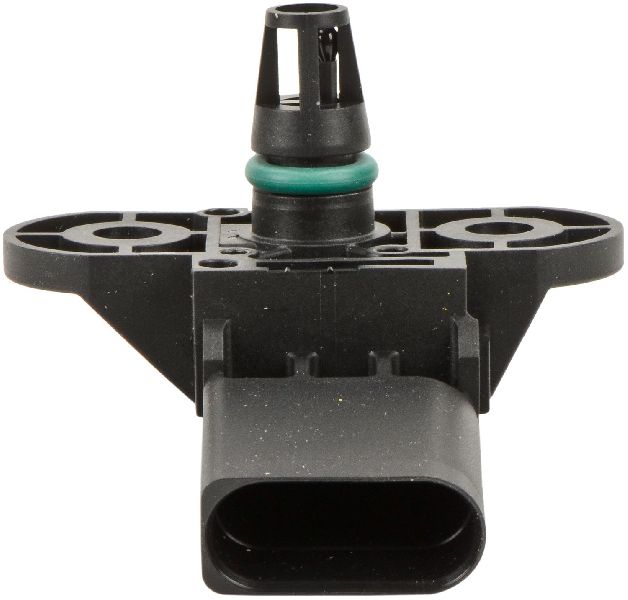
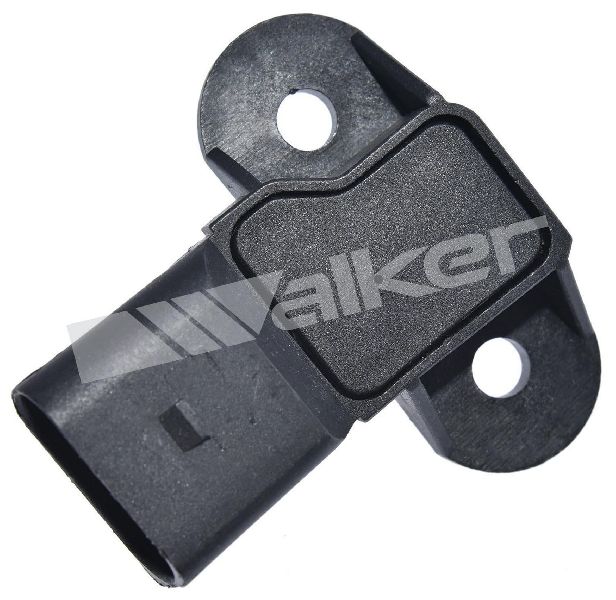
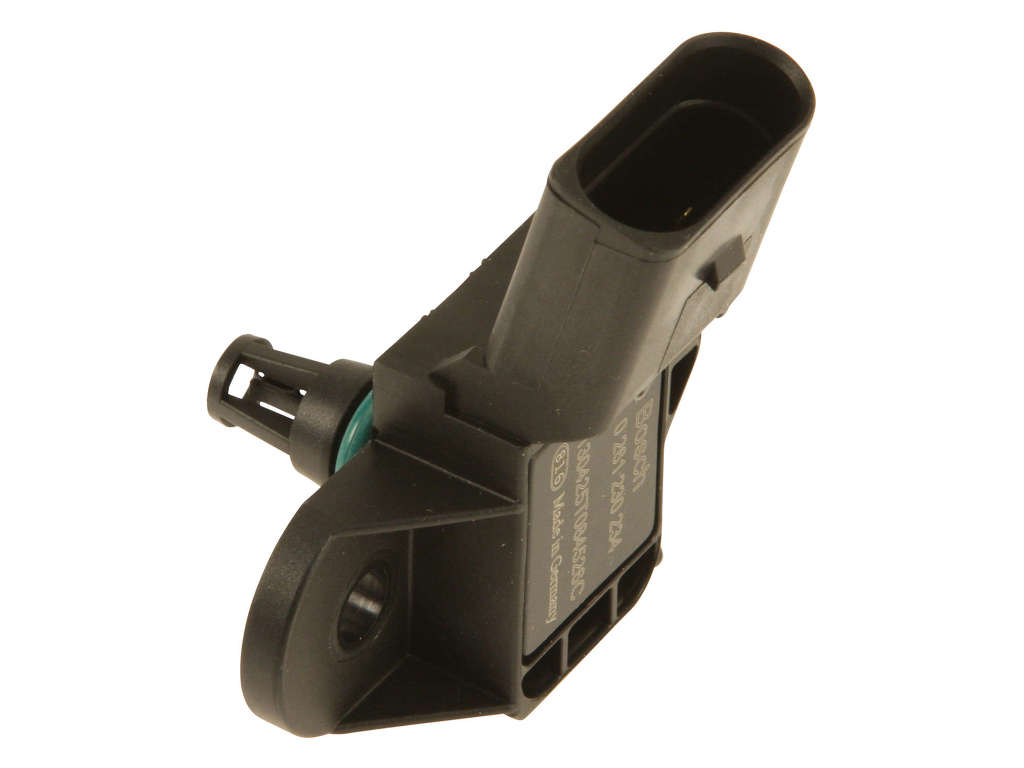
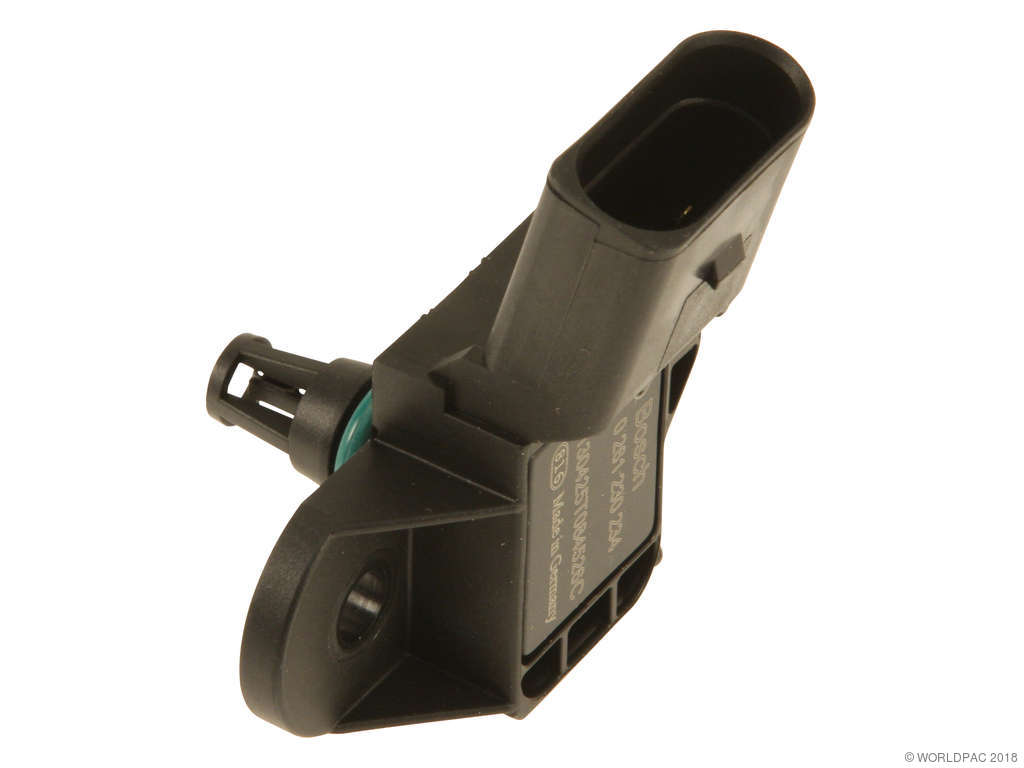
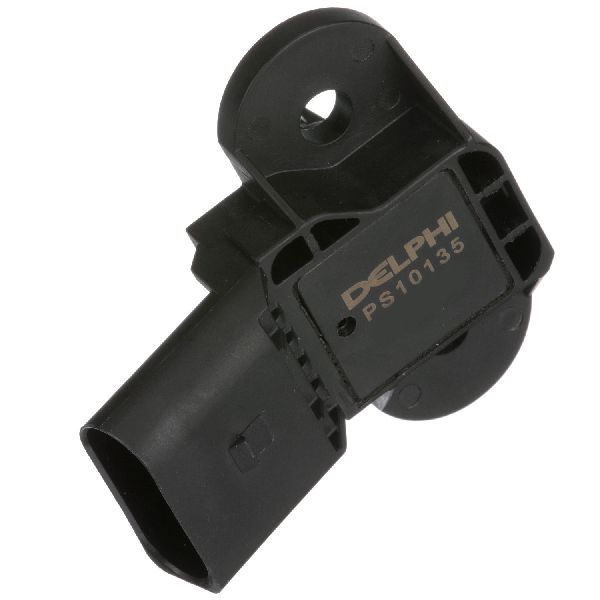
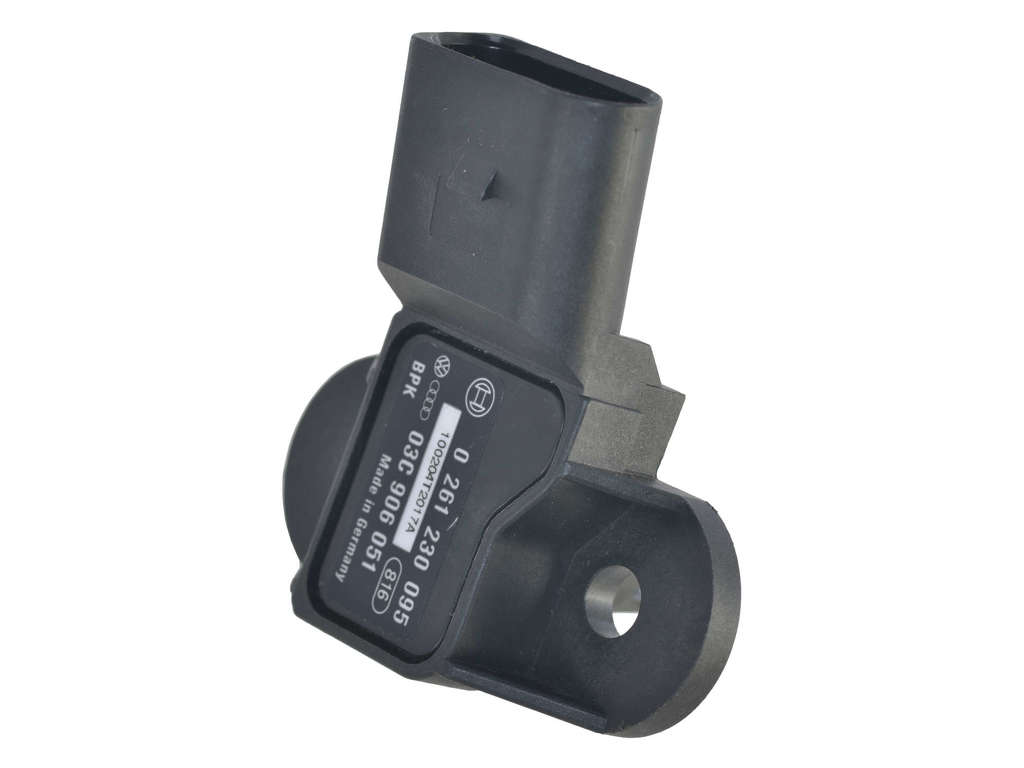
- Boost Pressure Sensor (G31 / MAP Sensor)
(OEM #038906051D (or 03K906051 for later models))— This is the most common and simplest part to fail that directly causes this code. Sticking with an OEM Bosch or Genuine Audi part is highly recommended.
Trusted brands: Bosch, Genuine VW/Audi
OEM price range: $70-$110
Related Codes That Often Appear With This One
- P0238 — Indicates 'Boost Sensor A Circuit High'. Seeing both P0236 and P0238 often points to an intermittent electrical fault in the sensor or its wiring.
- P0299 — Indicates 'Turbocharger Underboost'. A boost leak from a bad hose, PCV valve, or diverter valve that causes P0236 can also lead to an underboost condition.
- P2563 — Indicates 'Turbocharger Boost Control Position Sensor 'A' Circuit'. On C7 models, this is a strong indicator that the electronic wastegate actuator on the turbo is the root cause of the P0236 code.
- P00AF — Indicates 'Actuator Module for Turbocharger 1 - Stuck'. This code, along with P0236 and P2563 on a C7 model, almost guarantees the turbocharger needs to be replaced due to a failed wastegate actuator.
Technical Service Bulletins (TSBs) & Recalls
- VW TSB 2037108 / 97-14-03: Addresses high resistance in T14 engine harness connector causing P0236.
- Audi TSB 2060098/2: Details repair for a broken wire at the G31 boost sensor connector due to vibration.
Platform-Specific Known Issues
- A Technical Service Bulletin (TSB 2037108 / 97-14-03) was issued for VWs with the 2.0T engine for P0236 caused by poor crimps in the engine wiring harness. While not for the A6 specifically, it highlights a known potential issue with the wiring on the shared engine platform.
- Audi TSB 2060098/2 addresses P0236 caused by a broken wire at the G31 sensor connector due to vibration. The fix is a harness repair, not sensor replacement.
- On C7 models, a P0236 code is very frequently a symptom of a failing electronic wastegate actuator, often appearing with P2563 and P00AF. This is a widely discussed failure among owners and technicians.
Mechanic-Grade Diagnostic Values
- G31 Boost Pressure Sensor Voltage (Key On, Engine Off) — expected: Approx. 0.5V at sea level, corresponding to atmospheric pressure (~1000 mbar).. Failure: A voltage significantly outside the 0.4V-2.0V range, or a reading that does not correlate with the barometric pressure sensor, indicates a faulty sensor or wiring.
- G31 Boost Pressure Sensor Power Supply — expected: 4.5V to 5.0V at Pin 4 of the sensor connector (with ignition on).. Failure: No voltage or low voltage indicates a wiring or ECU problem, not a sensor failure.
- Wastegate Actuator Position Sensor Voltage (Key On, Engine Off) — expected: For C7 models, a healthy actuator should read between 3.4V and 3.8V on VCDS Advanced Measuring Value block IDE00396.. Failure: A reading stuck high (e.g., 4.7V) or low, or one that doesn't change when running the basic setting test, indicates a failed actuator.
Scan Tool Commands That Help
- VCDS (VAG-COM): Engine (01) -> Basic Settings -> 'Initial adaptation of charge-air pressure actuator' (IDE04304) — This command cycles the electronic wastegate actuator to learn its end stops. It must be run after replacing the actuator or adjusting the linkage rod. If the test fails or reports 'Finished incorrectly', it confirms a fault in the actuator or its adjustment.
- VCDS (VAG-COM): Engine (01) -> Adv. Meas. Values -> Check 'Charge air pressure actuator: acknowledgment' (IDE00396) — Use this to monitor the real-time position voltage of the wastegate actuator. Before running the basic setting, the rod should be manually adjusted to achieve a target voltage (typically ~3.6V) here.
Wiring & Ground Locations
- G31 Sensor Connector — On the charge pipe leading to the throttle body.. The wire for the signal can break inside the insulation right at the connector due to engine vibration, as noted in TSB 2060098/2. The pinout is typically: Pin 1 - Ground, Pin 3 - Signal, Pin 4 - 5V Reference.
- Engine Block Ground Strap — On the C7 platform, a primary engine-to-chassis ground is located on the frame rail near the driver's side engine mount. On the C6, a common corrosion point is a ground braid from the cylinder head to the ABS module bracket.. A corroded or loose main engine ground can cause floating voltages and erratic behavior from multiple sensors, including the G31, leading to implausible signal faults.
- Terminal 30 Wire Junction (TV22) — Located in the E-Box in the engine compartment, often near the strut tower.. This is a major power distribution point. Corrosion or loose connections here can cause widespread electrical issues, including intermittent power to the ECU and its sensor reference voltages.
Real Owner Repair Stories
- Ross-Tech Forums user 'dustin4kq' (2016 Audi A6 2.0T, 197,068 km) — P0236 and P2563 codes. G31 sensor reading would get stuck, but unplugging/re-plugging would temporarily fix it.
❌ Tried (didn't work) Replacing the G31 sensor with an aftermarket Bosch part, which did not read correctly.
✅ What actually fixed it The user installed a genuine Audi G31 sensor which read correctly. The ultimate fix was replacing the charge pressure (wastegate) actuator, which was sourced from the dealer. The user noted the critical step of adjusting the actuator rod to ~3.6V before running the basic settings adaptation with VCDS.
"I Checked Everything" — The Actual Cause
- A torn diaphragm in the PCV (Positive Crankcase Ventilation) valve. A low-pressure smoke test may not reveal the leak, but under the engine's actual operating vacuum and boost, the torn diaphragm can cause a significant unmetered air leak, leading to an implausible signal from the G31 sensor.
- A small crack in a plastic vacuum line leading to the N75 boost control solenoid. These cracks can be temperature- and vibration-sensitive, only opening up under specific conditions that are not replicated during a static smoke test in a cool engine bay.
OEM Part Supersession History
038906051D→03K906051— Revision and update. The 03K part is the latest version for many 2.0T applications.
Heads up: While generally interchangeable, forum reports and parts suppliers stress verifying the correct part number for your specific VIN. Using a non-genuine or incorrect aftermarket sensor is a very common cause of repeat failures for P0236.
Model Year Variations Within This Range
- 2005-2011 (C6 Generation): These models with the EA113 engine are more susceptible to vacuum-related failures due to aging rubber and plastic lines. The diverter valve is a common failure point, and the turbo uses a vacuum-operated wastegate actuator, which is generally more reliable than the electronic one on the C7.
- 2012-2016 (Early C7 Generation): These models with the EA888 Gen 2 engine are the primary group affected by the high-failure-rate electronic wastegate actuator on the IHI turbocharger. P0236 on these cars, especially with P2563, should immediately shift focus to the actuator.
Diagnostic Flowchart
Other Known Issues on This Vehicle
Issues unrelated to this code that are worth knowing about as an owner of this generation:
- EA888 Timing Chain Tensioner Failure 🔴 High — Common on pre-2013 EA888 Gen2 engines, typically between 60k-100k miles. Failure is catastrophic, leading to bent valves. (Ref: Multiple TSBs exist. An updated tensioner part was released to fix the issue.)
- Excessive Oil Consumption 🟠 Medium — Very common on early EA888 Gen2 engines (approx. 2009-2012) due to piston ring design. Can start as early as 50k miles. (Ref: A class-action lawsuit led to an extended warranty program for affected vehicles, but it has since expired.)
- Water Pump / Thermostat Housing Failure 🟠 Medium — Common across all 2.0T engines. The plastic housing becomes brittle and cracks, causing coolant leaks. Failure can occur anytime from 30k to 120k+ miles. (Ref: A class-action lawsuit settlement provided reimbursement for some owners, but the program is closed.)
- PCV Valve Failure 🟠 Medium — Extremely common. The internal diaphragm tears, causing a large vacuum leak, rough idle, and potential for other seals to fail. Often occurs every 60k-80k miles.
- Carbon Buildup on Intake Valves 🟡 Low — Inevitable on all direct-injection engines. Causes a gradual loss of performance and rough idle. Typically requires cleaning every 60k-80k miles.
- High-Pressure Fuel Pump (HPFP) Cam Follower Wear 🟠 Medium — Primarily affects the C6 generation's EA113 engine. The cam follower wears down, which can damage the camshaft and HPFP, causing fuel cuts (code P0087). (Ref: TSB 2014909 addresses worn intake camshafts related to this issue.)
Used vs. New Parts: Buying Guide for This Vehicle
When a used part is the smart pick: Used parts like intercoolers or charge pipes can be a cost-effective option, provided they are thoroughly inspected for cracks, damage, or internal blockages before installation.
Donor-vehicle mileage cap: roughly under 80000 miles for the part to have meaningful remaining life.
What to inspect on the donor part:
- For intercoolers/pipes: Check for any cracks, especially on plastic end tanks. Ensure all mounting points are intact. Look for signs of heavy oil residue inside, which could indicate a failing turbo on the donor car.
- For a complete turbocharger: Check for excessive shaft play (in-and-out and side-to-side). Spin the turbine to ensure it moves freely without noise or binding. Inspect the wastegate arm for smooth, unrestricted movement.
OEM-only on this vehicle (don't cheap out):
- Boost Pressure Sensor (G31): Aftermarket sensors are notoriously unreliable and a frequent cause of repeat repairs. Only use a Genuine Audi or OEM Bosch part.
- Turbocharger Wastegate Actuator: While some aftermarket repair kits have proven successful, purchasing a used actuator is extremely risky as it is the single most common failure point on the C7 turbocharger.
Aftermarket brands forum-validated for this vehicle:
- Bosch for the Boost Pressure Sensor (G31) as they are the OEM supplier.
- Go Fast Bits (GFB) for an upgraded Diverter Valve (DV+), which replaces the failure-prone factory diaphragm valve with a more durable piston design.
Brands owners have reported issues with on this vehicle:
- Unbranded, generic MAP/Boost sensors from online marketplaces like eBay or Amazon. These frequently have incorrect calibrations or fail quickly.
Real Owner Stories
Aggregated from forums and TSBs cited above. Mileages and costs reflect what owners reported in those sources.
Audi A6 2.0T (C7 Models)
Symptoms: Check Engine Light with code P0236, often appearing together with P2563 and P00AF. The car may enter limp mode with reduced power.
What fixed it: Replacing the electronic wastegate actuator. For many, this meant replacing the entire turbocharger assembly, as that was the official dealer repair. Some were able to source an aftermarket actuator.
Source hint: Vehicle Specific Issues section, citing widespread owner and technician discussions
Audi A6 2.0T
Symptoms: A persistent P0236 code that did not resolve after replacing the boost pressure sensor.
What fixed it: A wiring harness repair. The wire to the G31 sensor was found to be broken right at the connector, likely due to engine vibration. The fix involved repairing the harness, not replacing the sensor again.
Source hint: Audi TSB 2060098/2
Audi A6 2.0T
Symptoms: An intermittent P0236 code with erratic boost pressure readings.
What fixed it: Repairing the engine wiring harness to correct for increased resistance in the connector pins, as detailed in the technical service bulletin.
Source hint: VW TSB 2037108 / 97-14-03
2016 Audi A6 2.0T
Symptoms: P0236 code was present. Live data from a scan tool showed the boost pressure sensor reading was getting stuck at a certain value instead of changing with engine load.
What fixed it: The diagnostic thread pointed towards a faulty boost pressure sensor (G31) or a failing wastegate actuator as the most likely causes for the stuck reading.
Source hint: Ross-Tech forum thread titled '29851'
Related OBD-II Codes
Frequently Asked Questions
I have a P0236 code on my 2014 A6 2.0T. Is it more likely to be the sensor or the turbo?
My mechanic says the whole turbo needs to be replaced for a P0236 code. Is this correct?
I replaced the boost pressure sensor (G31) but P0236 came back. What's the next step?
Are there any official Audi TSBs I should know about for code P0236?
I'm hearing a hissing noise from the engine bay along with the Check Engine Light for P0236. What does that mean?
My scan tool shows codes P0236, P2563, and P00AF all at once. What's the likely problem?
Does it matter if I use an aftermarket boost pressure sensor (G31) to fix P0236?
Helpful Videos


We Have This Part in Stock

The information in this article is provided for general reference and educational purposes only. Vehicle specifications, procedures, and part compatibility can vary by production date, trim level, and region. Always consult your vehicle's factory service manual and verify part numbers before purchasing or performing repairs. Safety-critical components such as airbags, seat belts, and braking systems should be installed by a qualified professional.
- Audi A6:
- 🧭 Diagnostic Flowchart
- 🎬 Helpful Videos
- 🛍️ Shop This Part
- What's Unique About the 2005-2018 Audi A6
- Symptoms You May Notice
- Most Likely Causes
- Rare But Worth Checking
- Diagnosis Steps
- Parts You'll Likely Need
- Related Codes That Often Appear With This One
- Technical Service Bulletins (TSBs) & Recalls
- Platform-Specific Known Issues
- Mechanic-Grade Diagnostic Values
- Scan Tool Commands That Help
- Wiring & Ground Locations
- Real Owner Repair Stories
- "I Checked Everything" — The Actual Cause
- OEM Part Supersession History
- Model Year Variations Within This Range
- Other Known Issues on This Vehicle
- Used vs. New Parts: Buying Guide for This Vehicle
- Real Owner Stories
- Audi A6 2.0T (C7 Models)
- Audi A6 2.0T
- Audi A6 2.0T
- 2016 Audi A6 2.0T
- Related OBD-II Codes
- Frequently Asked Questions
- 🎟️ Get 5% Off