

P0236 on 2010-2019 Ford Flex 3.5L EcoBoost: Boost Sensor Causes and Fixes
On a 2010-2019 Ford Flex with the 3.5L EcoBoost, code P0236 is most often caused by a faulty Turbocharger Boost Pressure (TCBP) sensor located on the charge pipe before the throttle body. This is a common failure due to oil contamination from the PCV system. Expect to pay $30-$70 for an aftermarket sensor or $70-$120 for an OEM Motorcraft part. Before replacing, inspect the wiring and connector for damage, a known weak point.
- P0236 on a Ford Flex EcoBoost almost always points to the Turbocharger Boost Pressure (TCBP) sensor on the charge pipe, not the MAP sensor on the manifold.
- The most common cause is the TCBP sensor failing due to oil contamination from the PCV system.
- Before replacing parts, perform a Key On, Engine Off test with a scan tool to compare the TCBP, MAP, and BARO sensor readings. They should be nearly identical.
- Always inspect the wiring and connector to the sensor for damage, as this is a known weak point on this engine.
- Replacing the TCBP sensor is a relatively simple and inexpensive DIY job that can save you a trip to the mechanic.
What's Unique About the 2010-2019 Ford Flex
The 3.5L EcoBoost engine uses multiple pressure sensors to manage its twin-turbo system. Code P0236 specifically points to a problem with the Turbocharger Boost Pressure (TCBP) sensor, 🎬 Watch: Understanding P0236 causes and fixes sometimes called the TIP (Throttle Inlet Pressure) or TCBP/CACT sensor (as it's a dual-function pressure and Charge Air Cooler Temperature sensor). It is located on the cold-side charge pipe leading to the throttle body. This is NOT the MAP sensor on the intake manifold. This TCBP sensor is notoriously prone to contamination from oil vapors from the PCV system, which can coat the sensing element and cause it to send slow or inaccurate readings, triggering the code.
Symptoms You May Notice
- Check Engine Light illuminated
- Wrench light may appear on the dashboard
- Significant loss of engine power (Limp Mode)
- Poor or hesitant acceleration
- Turbo boost may be disabled by the PCM
- Jerky shifting or rough running
- Excessive smoke from exhaust in some cases
- Replacing the wrong sensor. Technicians unfamiliar with the EcoBoost platform may mistakenly replace the MAP sensor on the intake manifold instead of the correct TCBP/TIP sensor on the charge pipe.
Most Likely Causes
- Faulty Turbocharger Boost Pressure (TCBP) Sensor 🔴 High Probability → Shop Turbocharger The sensor is directly exposed to oil vapor from the PCV system, which coats the sensing element and causes it to fail or respond slowly over time. This is a very common failure point on the 3.5L EcoBoost engine across multiple vehicle platforms.
How to confirm: With the Key On, Engine Off (KOEO), use a scan tool to compare the TCBP (sometimes labeled TIP_PRESS), MAP, and BARO pressure readings. They should all be within 0.5 PSI of each other. If the TCBP reading is skewed, the sensor is the primary suspect. You can also visually inspect the sensor tip for heavy oil contamination after removal.
Typical fix: Replace the TCBP sensor located on the charge air pipe before the throttle body. It is typically held in by a single T20 Torx screw.
Est. part cost: $30-$120 - Damaged Wiring or Connector 🟡 Medium Probability The wiring harness to the TCBP sensor is exposed to engine heat, which can make the insulation brittle and cause it to crack over time, leading to intermittent shorts or opens. Ford issued TSB 13-6-12 for this exact issue on the F-150 with the same engine, detailing inspection and repair of the C1588 connector. Manufacturer Bulletin #TSB 16-0161 further notes that DTC P0236 may be caused by a wiring concern in the reference voltage circuit (VREF) splices.
How to confirm: Visually inspect the wiring harness and connector for the TCBP sensor. Look for cracked wire insulation (especially right at the connector), corrosion on the pins, or a loose-fitting connector. Wiggle the harness with the engine running while monitoring the sensor data on a scan tool to see if the reading fluctuates.
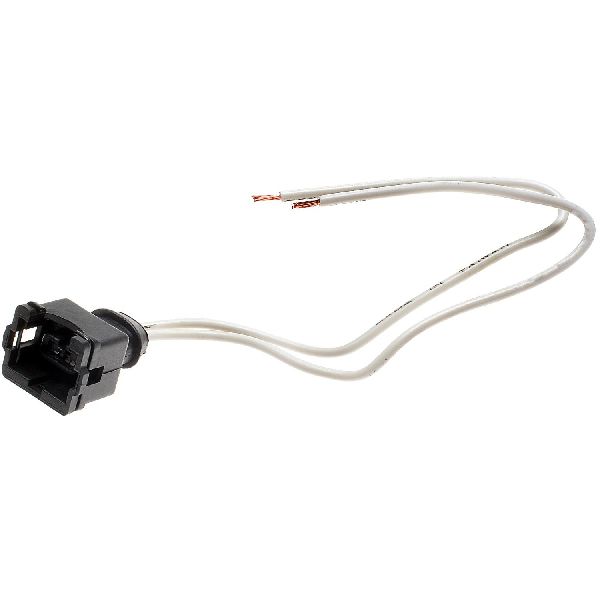
Typical fix: Repair the damaged section of wire. If the connector is damaged, replace it with a new pigtail connector (Motorcraft WPT-1055). This involves splicing the new connector in with butt connectors and heat shrink tubing.
Est. part cost: $15-$40 - Boost Leak ⚪ Low Probability Plastic and rubber components in the intake system, such as charge pipes and the intercooler, can crack or loosen with age and heat cycles, causing unmetered air pressure loss.
How to confirm: Perform a smoke test on the intake and charge air system. Smoke will be visible escaping from any cracks in hoses, loose clamps, or a leaking intercooler. A boost leak can sometimes be heard as a 'whooshing' or hissing sound under acceleration.
Typical fix: Tighten clamps or replace the leaking hose, seal, or intercooler.
Est. part cost: $20-$500
Rare But Worth Checking
- Clogged Air Filter: A severely restricted engine air filter can starve the turbos for air, potentially causing pressure correlation issues. Always check the basics first.
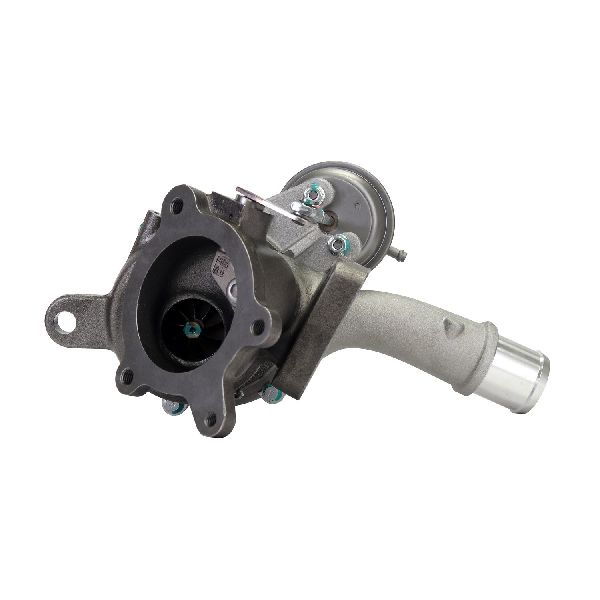
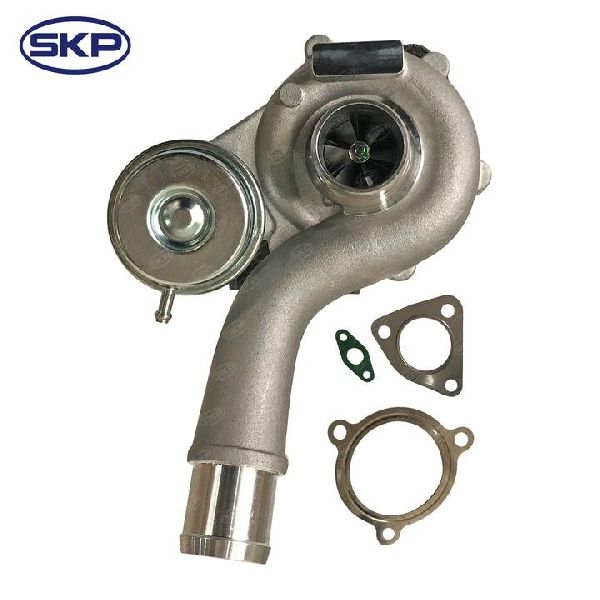
- Failing Turbocharger Wastegate or Actuator: → Shop Turbocharger If a wastegate is stuck open or not responding correctly to the wastegate control solenoid, it can cause the PCM to see boost levels that don't match its commands, which could potentially trigger a correlation code like P0236. This is less common than a sensor failure.
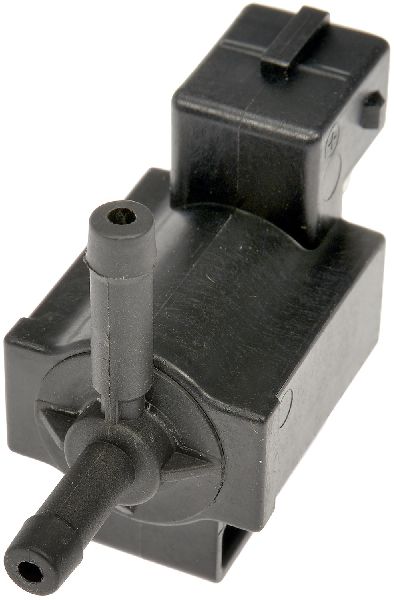
- Faulty Wastegate Control Solenoid: The 3.5L EcoBoost uses vacuum-actuated wastegates controlled by a solenoid. A common failure is the plastic vacuum nipple on the solenoid breaking off, causing a loss of wastegate control and potential boost correlation codes. The part number for this solenoid is often BL3E-9K378-BA.
Diagnosis Steps
- Connect a diagnostic scan tool. Verify that P0236 is the primary code. Note any other codes present, especially P0238, P007D, or P0299.
- With the Key On, Engine Off (KOEO), view live data. Compare the BARO (Barometric Pressure), MAP (Manifold Absolute Pressure), and TCBP (Turbocharger Boost Pressure, may be listed as 'TIP_PRESS_BOOST') sensor readings. All three should read nearly identically at atmospheric pressure (within ~0.5 PSI). If the TCBP reading is skewed, the sensor is the primary suspect.
- Turn the vehicle off. Locate the TCBP sensor on the charge pipe just before the throttle body.
- Carefully inspect the sensor's wiring harness and connector (C1588) for any signs of damage, such as chafing, melting, or cracked insulation right at the back of the connector. This is a known issue documented in TSB 13-6-12.
- If the wiring looks good, unplug and remove the sensor (usually one T20 Torx bolt). Inspect the sensor tip for oil, dirt, or other contamination. A heavily oiled sensor is a strong indicator of failure.
- If the sensor is contaminated or the KOEO test failed, replacing the sensor is the most likely fix. Clear codes and perform a test drive.
- If the sensor and wiring appear perfect and the KOEO test was inconclusive, the next step is to perform a smoke test to check for any leaks in the intake and charge air cooler system between the turbos and the throttle body.
- If no leaks are found, inspect the vacuum lines to the wastegate control solenoid and the wastegates themselves for proper movement and function.
Parts You'll Likely Need
- Turbocharger Boost Pressure Sensor
(OEM #BU5Z-9F479-A (superseded by AA5Z-9F479-E))— This is the sensor ('A') that provides the irrational reading. It is the most common failure point for this code on this engine due to oil contamination and heat stress.
Trusted brands: Motorcraft, Bosch, Standard Motor Products, NTK
OEM price range: $70-$120
Aftermarket price range: $30-$70 - Wiring Pigtail Connector
(OEM #WPT-1055)— If the wiring insulation is cracked at the connector, which is a common failure, replacing the connector pigtail is the standard repair procedure per TSB 13-6-12.
Trusted brands: Motorcraft
OEM price range: $25-$40
Aftermarket price range: $15-$25
Related Codes That Often Appear With This One
- P0238 — This code for 'Turbocharger Boost Sensor A Circuit High' can appear if the wiring issue involves a short to power or the sensor fails in a high-voltage state. TSB 13-6-12 explicitly lists this code alongside P0236. NHTSA ODI #11620504 also reports this code appearing simultaneously with P0236 and P007D.
- P0299 — This code for 'Turbocharger Underboost Condition' can occur if the faulty P0236 sensor is causing the PCM to misinterpret boost levels, leading to an actual underboost condition or a false report of one.
- P007D — This code for 'Charge Air Cooler Temperature Sensor Circuit High' is often seen with P0236 because the TCBP sensor is a dual-function unit that also measures charge air temperature (CACT). A wiring fault can affect both circuits. This code is also mentioned in TSB 13-6-12.
- P0106 — As noted in NHTSA ODI #10787972, this manifold absolute pressure code can appear alongside P0236 when a vehicle experiences hesitation or lack of power.
Technical Service Bulletins (TSBs) & Recalls
- TSB 13-6-12: While officially for the 2013 F-150, this TSB is highly relevant as it addresses P0236, P0238, and P007D caused by damaged wiring insulation on the TCBP sensor connector (C1588) for the same 3.5L EcoBoost engine. The diagnostic and repair procedure is identical for the Flex.
- Bulletin #TSB 16-0161: This bulletin notes that vehicles may exhibit rough running, lack of power, surging, or bucking with P0236 stored in the PCM, often caused by wiring concerns in the reference voltage circuit.
Platform-Specific Known Issues
- The 3.5L EcoBoost engine platform is known to have issues with the TCBP sensor wiring harness becoming damaged, as documented in Ford TSB 13-6-12 for the F-150. This TSB addresses cracked wiring insulation at the sensor connector, which can cause intermittent codes like P0236. This is directly applicable to the Flex.
- source — A user on 'Fiesta ST Forum' with a P0236 code documented their troubleshooting. After confirming with a scan tool that the 'TIP' (TCBP) sensor reading was low compared to MAP and BARO, they inspected the harness. They found no broken wires but noted that the reference voltage and signal return wires are spliced and shared with other components, complicating diagnosis. This highlights the importance of checking for wiring faults beyond just a simple visual break.
Mechanic-Grade Diagnostic Values
- TCBP/MAP/BARO correlation at Key On, Engine Off (KOEO) — expected: All three sensor readings should be within 0.5 PSI (3.4 kPa) of each other.. Failure: If the TCBP (TIP) sensor reading is significantly different from the MAP and BARO sensors, it points to a faulty TCBP sensor.
- Boost Pressure Sensor Signal Voltage — expected: Typically 0.5V at low boost to 4.5V at full boost.. Failure: A voltage reading that is stuck, or is consistently outside this range during operation, indicates a sensor or wiring fault.
- Sensor Reference Voltage (at sensor connector) — expected: 5.0V ± 0.5V. Failure: Low or no voltage points to a wiring issue or a problem with the PCM's voltage supply.
- Sensor Ground Circuit Voltage (at sensor connector) — expected: < 0.1V (100mV). Failure: Voltage higher than 0.1V indicates a poor ground connection, which can skew sensor readings.
Scan Tool Commands That Help
- Ford IDS (Integrated Diagnostic System): Key On Engine Off (KOEO) or Key On Engine Running (KOER) Self-Tests — To run an automated on-demand diagnostic routine that checks for faults. While it may not isolate P0236 specifically, it can uncover other related powertrain codes that are not yet illuminating the CEL.
- Ford IDS (Integrated Diagnostic System): Datalogger - Live Data — To monitor and graph the TCBP, MAP, and BARO PIDs simultaneously. This is the primary method for confirming the P0236 fault condition by observing the sensor's irrational readings compared to the others during KOEO and while driving.
Wiring & Ground Locations
- C1588 — The electrical connector for the Turbocharger Boost Pressure (TCBP) sensor itself, located on the charge pipe just before the throttle body.. This is the direct connection to the sensor in question. TSB 13-6-12 specifically calls out inspecting this connector and its wiring for cracks and damage as a primary cause of P0236.
- G101 — Left front of the engine compartment.. This is a primary engine bay ground that provides the ground path for the Engine Control Module (ECM) and Transmission Control Module (TCM). A corroded or loose G101 can cause erratic behavior and incorrect readings from multiple engine sensors, including the TCBP.
- G100 — Right front of the engine compartment.. Another key engine compartment ground point. Verifying all major grounds are clean and tight is a crucial step when diagnosing any electronic sensor code, as a bad ground can introduce voltage offsets that trigger performance/range codes.
Real Owner Repair Stories
- Ford F150 Forum (2011 Ford F-150 3.5L EcoBoost) — Wrench light on startup, stored P0236 code, noisy blow-off valves, noisy turbo spool on startup, and reduced MPG.
❌ Tried (didn't work) Initial dealer visit at 57k miles could not locate/repair the problem as it was a 'soft code'.
✅ What actually fixed it The dealer replaced the boost sensor and the wiring harness plug. A separate user with the same issue reported a dealer replaced the 'harness for the boost control module' which also solved the problem. This strongly supports the wiring/connector being a common failure point alongside the sensor itself. - NHTSA ODI #11667579 — An owner reported that the P0236 error message would not go away even after turning off the car, requiring a dealership appointment for repair.
- NHTSA ODI #11181564 — One driver experienced P0236 alongside P06A7 and P0106, noting that fuel pressures were normal but the codes became permanent developments.
OEM Part Supersession History
AA5Z-9F479-A / BU5Z-9F479-A→AA5Z-9F479-E (Motorcraft CX2619)— Part revision and consolidation. The -E version is the current replacement for several older Ford MAP/Boost sensors.
Heads up: When replacing some much older sensor versions (like 2R3Z-9F479-AA) with the modern AA5Z-9F479-E, a different wiring pigtail (Ford P/N 3U2Z-14S411-SPC) may be required because the connector keying and locking mechanism changed. However, for the 2010-2019 Flex, the WPT-1055 pigtail is the correct match for repairs to the existing harness.
Model Year Variations Within This Range
- 2013-2019: For the 2013 model year, the Ford Flex received a facelift. The 3.5L EcoBoost engine's output was increased from 355 hp to 365 hp. While this did not change the fundamental diagnosis for P0236, it's a notable variation in the engine's calibration and performance.
Diagnostic Flowchart
Other Known Issues on This Vehicle
Issues unrelated to this code that are worth knowing about as an owner of this generation:
- Internal Water Pump Failure 🔴 High — Common after 80,000-120,000 miles. Failure is often catastrophic as it leaks coolant directly into the engine oil, leading to severe engine damage if not caught immediately.
- Power Transfer Unit (PTU) Overheating/Failure 🔴 High — Common on AWD models. The PTU is located near the hot exhaust with no drain plug, causing the fluid to break down. Symptoms include a grinding/whining noise or a smell of propane/natural gas as fluid vents onto the exhaust.
- Turbocharger Coolant Line Leaks 🟠 Medium → Shop Turbocharger — The 'jiffy-tite' connectors and O-rings on the turbo coolant feed/return lines are known to degrade and leak over time. This can cause coolant loss and potential overheating.
- Timing Chain Stretch (Early Models) 🟠 Medium — Primarily affects 2010-2015 models. Symptoms include a brief but distinct rattling noise from the front of the engine on cold startups. Often requires replacement around 100,000 miles. (Ref: TSB 17-0026 (for F-150, but relevant))
- Intake Valve Carbon Buildup 🟡 Low — An inherent issue with all direct-injection engines. Over 60,000-80,000+ miles, carbon can accumulate on the back of intake valves, leading to reduced performance and potential misfires.
Used vs. New Parts: Buying Guide for This Vehicle
When a used part is the smart pick: A used part is NOT recommended for the TCBP sensor itself. Given that the primary failure mode is internal degradation from oil contamination and heat, a used sensor has unknown life remaining and may fail quickly. A used wiring pigtail from a donor vehicle is a viable option if a new one is unavailable, provided the wires and connector are in excellent condition.
Donor-vehicle mileage cap: roughly under 60000 miles for the part to have meaningful remaining life.
What to inspect on the donor part:
- For a wiring pigtail, inspect for any cracking in the wire insulation right where it enters the connector.
- Ensure the connector's locking tab is intact and clicks firmly.
- Check for any signs of green corrosion or pushed-out pins inside the connector.
- Avoid any parts from a vehicle with obvious signs of a front-end collision or engine fire.
OEM-only on this vehicle (don't cheap out):
- Wiring Pigtail Connector (Motorcraft WPT-1055). While aftermarket pigtails exist, the OEM version is known to fit correctly and is the specified part in Ford's own TSB for this repair.
Aftermarket brands forum-validated for this vehicle:
- Bosch
- NTK
- Standard Motor Products (SMP)
Brands owners have reported issues with on this vehicle:
- Avoid generic, no-name sensors from online marketplaces. Failure rates are high, and they can cause incorrect readings that lead to further misdiagnosis.
Real Owner Stories
Aggregated from forums and TSBs cited above. Mileages and costs reflect what owners reported in those sources.
Ford Fiesta ST
Symptoms: P0236 and P007D codes and Limp Mode. Scan tool showed the 'TIP' (TCBP) sensor reading was low compared to MAP and BARO.
What fixed it: Inspection of the harness; although no broken wires were found, the diagnosis noted that reference voltage and signal return wires are shared with other components.
Source hint: Fiesta ST Forum thread titled 'P0236 and P007D codes and limp mode'
Ford Fusion 2.0L EcoBoost
Symptoms: Intermittent stalling and jerky running with a P0236 code.
What fixed it: Replacement of the boost sensor.
Source hint: Reddit r/Ford thread titled 'What does the code P0236 mean?'
Ford Focus
Symptoms: Charged air sensor A fault and boost sensor range/performance fault with codes P0236, P0238, and P007D.
What fixed it: Reported in NHTSA ODI #11620504, the vehicle experienced multiple faults including boost sensor range issues upon cranking.
Ford Explorer
Symptoms: Hesitation, loss of idle RPM, difficulty starting, lack of power, and running rough.
What fixed it: NHTSA ODI #10787972 notes these symptoms are associated with DTCs P0106 and P0236, referencing Ford TSB #13-9-8 and TSB-13-5-29.
Related OBD-II Codes
Frequently Asked Questions
Does TSB 13-6-12 apply to my Ford Flex even though it mentions the F-150?
Where is the TCBP sensor located on the 3.5L EcoBoost Flex?
What should the TCBP sensor read compared to other sensors when the engine is off?
Why does the TCBP sensor fail so often on the Ford Flex?
What specific replacement connector is recommended if my wiring is damaged?
Can a P0236 code cause my Flex to lose power suddenly?
Helpful Videos
We Have This Part in Stock


The information in this article is provided for general reference and educational purposes only. Vehicle specifications, procedures, and part compatibility can vary by production date, trim level, and region. Always consult your vehicle's factory service manual and verify part numbers before purchasing or performing repairs. Safety-critical components such as airbags, seat belts, and braking systems should be installed by a qualified professional.
- Ford Flex:
- 🧭 Diagnostic Flowchart
- 🎬 Helpful Videos
- 🛍️ Shop This Part
- What's Unique About the 2010-2019 Ford Flex
- Symptoms You May Notice
- Most Likely Causes
- Rare But Worth Checking
- Diagnosis Steps
- Parts You'll Likely Need
- Related Codes That Often Appear With This One
- Technical Service Bulletins (TSBs) & Recalls
- Platform-Specific Known Issues
- Mechanic-Grade Diagnostic Values
- Scan Tool Commands That Help
- Wiring & Ground Locations
- Real Owner Repair Stories
- OEM Part Supersession History
- Model Year Variations Within This Range
- Other Known Issues on This Vehicle
- Used vs. New Parts: Buying Guide for This Vehicle
- Real Owner Stories
- Ford Fiesta ST
- Ford Fusion 2.0L EcoBoost
- Ford Focus
- Ford Explorer
- Related OBD-II Codes
- Frequently Asked Questions
- 🎟️ Get 5% Off