

P0236 on 2015-2024 Ford Transit 3.5L EcoBoost: Boost Sensor Performance Causes and Fixes
On a 3.5L EcoBoost Transit, code P0236 is most often caused by a faulty Turbocharger Boost Pressure (TCBP) sensor (Motorcraft Part No. BU5Z-9F479-A) located on the charge pipe before the throttle body. It's a common failure due to contamination or age. Expect to pay $30-$70 for an aftermarket sensor and $70-$120 for an OEM Motorcraft part. Replacement is a simple DIY task. If the sensor connector is damaged, a pigtail (Motorcraft WPT-1055) is required.
- P0236 on a 3.5L EcoBoost Transit points to a performance problem with the Turbocharger Boost Pressure (TCBP) sensor, not the MAP sensor on the intake manifold.
- The most likely cause is a faulty TCBP sensor itself, often due to oil contamination from the PCV system.
- Before replacing the sensor, carefully inspect its electrical connector and nearby wiring for cracks or corrosion, as this is a documented weak point on EcoBoost engines.
- Diagnosis can be confirmed with a scan tool by comparing TCBP, MAP, and BARO pressure readings with the key on and engine off; they should all be nearly identical.
- The repair is DIY-friendly and typically involves replacing the sensor located on the charge pipe leading to the throttle body.
What's Unique About the 2015-2024 Ford Transit
The 3.5L EcoBoost engine uses multiple pressure sensors to manage its twin-turbo system. Code P0236 specifically points to a problem with the Turbocharger Boost Pressure (TCBP) sensor (also called a TIP or MAPT sensor), not the more commonly discussed MAP sensor on the intake manifold. This TCBP sensor is prone to contamination from oil vapors from the PCV system, which can degrade its performance over time. 🎬 Watch: How to clean your EcoBoost sensors to restore performance. While no TSBs are specific to the Transit for this code, numerous bulletins and owner complaints for other Fords with the same engine family (like the F-150) point to recurring issues with this sensor's wiring and connector, suggesting a known weakness. For instance, manufacturer records such as Bulletin #TSB150160 note that various Ford vehicles may exhibit a MIL with DTC P0236 stored in the PCM memory.
Symptoms You May Notice
- Check Engine Light is on
- Wrench light may appear on the dashboard, sometimes intermittently
- Vehicle enters 'limp mode' with significantly reduced engine power
- Poor or sluggish acceleration
- Hesitation or stumbling during acceleration
- Symptoms may be intermittent and temporarily clear after restarting the engine
- Noticeable change in turbocharger sounds (louder spooling or blow-off valve noises)
- Replacing the MAP sensor on the intake manifold. P0236 refers to the 'A' sensor, which on the EcoBoost is the TCBP/TIP sensor located on the charge pipe before the throttle body, not the MAP sensor on the manifold itself.
Most Likely Causes
- Faulty Turbocharger Boost Pressure (TCBP) Sensor 🔴 High Probability → Shop Turbocharger This sensor is located in the charge pipe, where it can be contaminated by oil vapor from the crankcase ventilation (PCV) system. This contamination, along with age and heat cycles, can cause it to respond slowly or send inaccurate readings.
How to confirm: With the key on and engine off, use a scan tool to compare the 'TIP_PRESS' or 'TCBP' pressure reading to the 'BARO' (barometric pressure) and 'MAP' (manifold pressure) readings. They should all be nearly identical (within 0.5 PSI). If the TCBP reading is the outlier, the sensor is the primary suspect.
Typical fix: Replace the TCBP sensor. It is located on the charge air pipe leading to the throttle body and is typically held in by one or two small bolts. The OEM part is often a Motorcraft BU5Z-9F479-A or CM5226.
Est. part cost: $30-$120 - Damaged Wiring or Connector at TCBP Sensor 🟡 Medium Probability Ford has issued TSBs for other EcoBoost platforms (like F-150) for cracked wiring insulation and corrosion at the TCBP sensor connector, indicating a pattern of this failure. Engine vibration and heat can make the wires brittle over time, especially right at the connector where the harness makes a tight bend.
How to confirm: Visually inspect the wiring harness and connector for the TCBP sensor. Look for cracked or frayed insulation, green corrosion on the pins, or loose-fitting terminals. Gently wiggle the harness with the engine running to see if it affects performance or triggers the code. TSB 13-6-12 specifically calls out inspecting for cracks in the insulation near connector C1588.
Typical fix: If the connector is damaged, it can be replaced with a new pigtail connector, such as Motorcraft WPT-1055. This involves splicing the new wires in using butt connectors and heat shrink tubing for a durable, sealed repair.
Est. part cost: $15-$40 for a pigtail connector - Boost/Vacuum Leak ⚪ Low Probability The charge air system operates under high pressure. Plastic components like the intercooler end tanks or rubber/silicone couplers can crack or loosen over time, causing unmetered air to enter or exit.
How to confirm: Visually inspect all air ducts between the turbochargers, the intercooler, and the throttle body. Check for cracked hoses, loose clamps, or signs of oil residue which can indicate a leak. A smoke test is the most effective way to pinpoint hard-to-see leaks.
Typical fix: Tighten any loose clamps or replace the cracked hose or damaged component (e.g., intercooler, charge pipe).
Est. part cost: $20-$400 depending on the leaking part
Rare But Worth Checking
- Sticking Turbocharger Wastegate: → Shop Turbocharger A wastegate that is stuck partially open or closed can cause the actual boost pressure to deviate from what the PCM expects, triggering a performance code. This is less common than sensor or wiring issues.
- Faulty Powertrain Control Module (PCM): This is extremely rare. The PCM should only be considered after all other possibilities, including sensors, wiring, and mechanical faults, have been exhaustively ruled out.
Diagnosis Steps
- Read the code with an OBD-II scanner and confirm P0236 is present. Note any other codes.
- Use a scan tool with live data capability. With the Key On, Engine Off (KOEO), compare the BARO, MAP, and TCBP/TIP_PRESS PIDs. They should all read within about 0.5 PSI of each other. If TCBP/TIP_PRESS is the outlier, the sensor is the primary suspect.
- Visually inspect the TCBP sensor connector and its wiring harness for any signs of damage, corrosion, or cracked insulation, as this is a known issue per TSB 13-6-12. Pay close attention to the wires right at the connector.
- Inspect the entire air intake tract from the air filter to the throttle body. Look for loose clamps, cracked plastic pipes (especially at the intercooler end tanks), and torn silicone couplers.
- If no visual faults are found, perform a smoke test on the intake system to check for hidden leaks.
- If no leaks are found and the wiring appears intact, the most likely cause is a faulty TCBP sensor. Replace the sensor (Motorcraft BU5Z-9F479-A or equivalent).
- If the problem persists after replacing the sensor, a more in-depth diagnosis of the wiring harness (checking for continuity and resistance) or mechanical turbocharger components (wastegate actuation) may be required.
Parts You'll Likely Need
- Turbocharger Boost Pressure Sensor (TCBP)
(OEM #BU5Z-9F479-A (Motorcraft CM5226))— This is the most frequent cause of P0236 on the 3.5L EcoBoost due to its susceptibility to contamination and electronic failure.
Trusted brands: Motorcraft, Bosch, NTK/NGK, Standard Motor Products (SMP)
OEM price range: $70-$120
Aftermarket price range: $30-$70 - TCBP Sensor Connector Pigtail
(OEM #WPT-1055 (Motorcraft))— If the wiring at the sensor connector is cracked or corroded, replacing the pigtail is the standard repair. This is a known weak point on EcoBoost engines, as documented in TSB 13-6-12.
Trusted brands: Motorcraft, Dorman
OEM price range: $25-$40
Aftermarket price range: $15-$30
Related Codes That Often Appear With This One
- P0238 — This code for 'Turbocharger Boost Sensor A Circuit High' can appear if the wiring issue involves a short to power or the sensor fails in a high-voltage state. NHTSA ODI #11620504 describes a vehicle experiencing a "charged air sensor A fault" alongside P0236 and P0238.
- P0299 — This code for 'Turbocharger Underboost' can be triggered if the root cause is a significant boost leak or a faulty wastegate.
Technical Service Bulletins (TSBs) & Recalls
- TSB 13-6-12: While for the 2013 F-150 3.5L, it addresses P0236 caused by damaged wiring insulation at the Turbocharger Boost Sensor connector, a highly relevant issue. It instructs technicians to inspect for cracks and, if found, replace the connector with a pigtail.
- TSB 16-0161: For the 2015-16 Escape 1.6L, this TSB points to a wiring splice in the reference voltage (VREF) circuit as a cause for P0236, highlighting that wiring harness issues, not just at the connector, can trigger this code.
- Bulletin #TSB150160: Notes that some Ford vehicles may exhibit an illuminated MIL with DTC P0236 stored in the powertrain control module memory.
Documented NHTSA Reports
- NHTSA ODI #10787972: An owner reported that due to DTC P0236, the engine experienced hesitation, loss of idle RPM, difficulty in starting, lack of power, and running rough.
- NHTSA ODI #11181564: A report indicates that P0236 was present as a permanent code following fuel system issues, where fuel pressures were otherwise normal.
- NHTSA ODI #11667579: An owner noted that the P0236 error code message would not go away even after turning off the vehicle.
Mechanic-Grade Diagnostic Values
- TCBP, MAP, and BARO PID Comparison (Key On, Engine Off) — expected: All three pressure readings should be within 0.5 PSI of each other.. Failure: If the TCBP/TIP_PRESS reading is the outlier, the sensor or its circuit is faulty.
- TCBP Sensor Signal Voltage (Normal Operation) — expected: Should operate within a 0.5V to 4.5V range.. Failure: A Ford-specific trigger is the signal dropping below 0.4V during acceleration. A signal stuck at a constant voltage or outside the expected range indicates a failure.
- TCBP Sensor Ground Wire to Chassis Ground Resistance — expected: Less than 0.5 Ohms.. Failure: A reading greater than 1.0 Ohm indicates a poor ground connection in the harness or at the PCM.
Hidden / Shadow Codes Worth Checking
- Ford-Specific PIDs: This code is set based on a comparison of multiple sensors. Accessing Ford-specific PIDs is crucial. The key parameters are 'TIP_PRS_BOOST' (Throttle Intake Pressure / TCBP sensor), 'MAP' (Manifold Absolute Pressure), and 'BARO' (Barometric Pressure). (see via A professional scan tool like Ford's IDS or other high-end scanners capable of reading manufacturer-specific live data.)
Wiring & Ground Locations
- Engine Harness Chafe Point — While not a Transit-specific TSB, on the related F-150 3.5L EcoBoost, the engine harness is known to chafe against an A/C hose mounting stud near the passenger side valve cover.. This chafing can cause shorts or opens in the sensor circuits, including the TCBP sensor, leading to intermittent P0236 codes. It is a high-value inspection point.
- Primary Engine/Chassis Grounds — General locations for primary grounds on the Transit include the frame rail near the battery, on the engine block itself, and a strap from the engine block to the firewall. A key ground strap often runs from the gearbox to the inner wing below the under-hood fuse box.. A poor ground connection can cause floating voltage references and erratic sensor readings, directly triggering a 'performance' code like P0236.
- B-Pillar Ground Point — For van converters, the B-Pillar D-Ring is often used as a primary chassis ground point for auxiliary equipment.. If the vehicle has been upfitted, aftermarket equipment tied into this ground could potentially interfere with sensor ground references if not installed correctly.
Real Owner Repair Stories
- YouTube channel 'jiggaman1080' (Ford Focus ST (uses similar MAP/TCBP sensor setup)) — Check Engine Light with code P0236.
❌ Tried (didn't work) Inspecting charge pipes for cracks or loose connections., Checking air reference lines., Cleaning the existing MAP sensors.
✅ What actually fixed it The problem was an aftermarket Bosch MAP sensor purchased from a local auto parts store. Replacing the faulty aftermarket sensor with a genuine OEM Ford sensor immediately resolved the P0236 code.
"I Checked Everything" — The Actual Cause
- In some cases, the intake system may be perfectly sealed with no leaks found during a smoke test. The root cause can be a non-OEM sensor that is electronically faulty or has performance characteristics that differ from the original part, even if it fits correctly. One owner fixed a persistent P0236 code only after replacing a recently installed aftermarket Bosch sensor with a genuine Ford part.
OEM Part Supersession History
Varies by year→Varies by year— Sensor Revisions
Heads up: There is strong anecdotal evidence from Ford EcoBoost owners that aftermarket pressure sensors, even from reputable brands like Bosch, can fail to perform to OEM specifications and may not resolve the P0236 code. It is highly recommended to use genuine Motorcraft replacement sensors to ensure compatibility.
Model Year Variations Within This Range
- 2018-2024: Starting around 2018-2019, Ford implemented a more sensitive PCM software strategy often called a 'check sum'. This strategy more closely monitors the pressure differential between the TCBP (pre-intercooler) and MAP (post-intercooler) sensors. Later models are therefore more likely to set a P0236 if there is minor sensor drift or if performance modifications alter the expected pressure drop across the intercooler.
- 2015-2024: Throughout its production, the Ford Transit used a version of the 'Gen1' 3.5L EcoBoost engine. However, later model years reportedly received internal upgrades, such as a stronger crankshaft from the 'Gen3' design, even while retaining the Gen1 architecture. This does not directly affect the P0236 code but is a notable variation.
Diagnostic Flowchart
Other Known Issues on This Vehicle
Issues unrelated to this code that are worth knowing about as an owner of this generation:
- Driveshaft Flexible Coupling (Guibo) Failure 🔴 High — Very common, especially on vehicles over 60,000 miles. Ford issued a recall (19S34) for this part on many Transits. (Ref: Recall 19S34 / NHTSA 19V-799)
- Timing Chain Stretch and Rattle on Cold Start 🟠 Medium — A known issue on the 3.5L EcoBoost family, particularly first-generation engines. Fuel dilution and soot in the oil from direct injection can accelerate wear on the long timing chain. Less frequent on later model years but still possible with poor maintenance.
- Water Intrusion Causing Ignition Coil Failure 🟠 Medium — A design flaw in the cowl/rain tray can allow water to drip onto the engine, seeping into the spark plug wells of cylinders 4 and 5 (driver's side), causing corrosion and misfires.
- Sliding Door Misalignment and Latch Problems 🟡 Low — Common on commercially used vans due to heavy use. The door can become misaligned, making it difficult to open or close. The interior latch mechanism cable can also fail.
Used vs. New Parts: Buying Guide for This Vehicle
When a used part is the smart pick: Used parts can be a cost-effective option for larger mechanical components like the intercooler or charge pipes, provided they are inspected thoroughly for damage.
Donor-vehicle mileage cap: roughly under 100000 miles for the part to have meaningful remaining life.
What to inspect on the donor part:
- For an intercooler, check for cracks in the plastic end tanks.
- Inspect for significant fin damage that could impede airflow.
- Look for oily residue inside the ports, which could indicate excessive blow-by in the donor vehicle.
- For wiring harnesses, ensure there are no signs of brittle insulation, previous repairs, or corrosion on the connector pins.
OEM-only on this vehicle (don't cheap out):
- Turbocharger Boost Pressure (TCBP) Sensor: Due to sensitive calibration and documented issues with aftermarket parts, using a genuine Motorcraft sensor is strongly recommended to avoid repeat failures.
Aftermarket brands forum-validated for this vehicle:
- No specific aftermarket brands have been consistently validated as reliable for the TCBP sensor on this platform.
Brands owners have reported issues with on this vehicle:
- Bosch (specifically for the TCBP/MAP sensor, based on a documented failure case where it did not resolve the code)
- Generic, unbranded sensors from online marketplaces.
Real Owner Stories
Aggregated from forums and TSBs cited above. Mileages and costs reflect what owners reported in those sources.
2011 Ford F-150 3.5L EcoBoost
Symptoms: An intermittent P0236 code and wrench light appeared, which caused a loss in MPG and prevented smooth engine operation.
What fixed it: The issue was resolved by replacing both the boost sensor and the wiring harness plug (pigtail).
Source hint: F150forum.com: 'P0236 Ford Turbo/Boost Sensor Code'
Related OBD-II Codes
Frequently Asked Questions
How can I test the Turbocharger Boost Pressure (TCBP) sensor on my Transit before replacing it?
I saw TSB 13-6-12 mentioned for an F-150. Does this apply to my 2017 Ford Transit with the same P0236 code?
What is the part number for the boost sensor on the 3.5L EcoBoost Transit?
My van goes into limp mode with a wrench light, but it clears after I restart it. Could this be a P0236 issue?
The wiring connector for my boost sensor is damaged. What is the replacement part number?
Besides the sensor itself, what is a common failure point that causes P0236 on these vans?
Helpful Videos
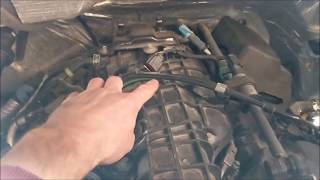
Used OEM Parts in Stock
New Aftermarket Parts Available


The information in this article is provided for general reference and educational purposes only. Vehicle specifications, procedures, and part compatibility can vary by production date, trim level, and region. Always consult your vehicle's factory service manual and verify part numbers before purchasing or performing repairs. Safety-critical components such as airbags, seat belts, and braking systems should be installed by a qualified professional.
- Ford Transit:
- 🧭 Diagnostic Flowchart
- 🎬 Helpful Videos
- 🛍️ Shop This Part
- What's Unique About the 2015-2024 Ford Transit
- Symptoms You May Notice
- Most Likely Causes
- Rare But Worth Checking
- Diagnosis Steps
- Parts You'll Likely Need
- Related Codes That Often Appear With This One
- Technical Service Bulletins (TSBs) & Recalls
- Documented NHTSA Reports
- Mechanic-Grade Diagnostic Values
- Hidden / Shadow Codes Worth Checking
- Wiring & Ground Locations
- Real Owner Repair Stories
- "I Checked Everything" — The Actual Cause
- OEM Part Supersession History
- Model Year Variations Within This Range
- Other Known Issues on This Vehicle
- Used vs. New Parts: Buying Guide for This Vehicle
- Real Owner Stories
- 2011 Ford F-150 3.5L EcoBoost
- Related OBD-II Codes
- Frequently Asked Questions
- 🎟️ Get 5% Off