

P0245 on 2008-2016 Audi A4 2.0T: Turbo Wastegate Solenoid 'A' Low Circuit Fixes
P0245 on an Audi A4 2.0T almost always indicates an electrical problem with the turbocharger wastegate solenoid (N75 valve) or its wiring. The most common fix is replacing the N75 valve itself. Expect to pay $50-$150 for the part for a DIY repair.
- P0245 on your A4 points to an electrical fault in the N75 turbo boost control valve circuit, not a mechanical turbo failure.
- The most likely culprit is a failed N75 valve itself, which is a relatively inexpensive and accessible part to replace.
- Before replacing parts, always perform a thorough visual inspection of the N75 valve's wiring and connector, as heat and oil damage are extremely common on this engine.
What's Unique About the 2008-2016 Audi A4
On the EA888 2.0T engine used in the B8 generation A4, the N75 valve and its wiring are subjected to significant heat and vibration in the engine bay. This environment makes the wiring harness and connector prone to becoming brittle, chafed, or corroded over time. Consequently, wiring issues are a very common cause for P0245 on this platform, sometimes even more so than the N75 valve itself failing. Furthermore, oil leaks from other common failure points on the EA888, such as the upper timing cover, vacuum pump, or camshaft bridge, can drip directly onto the N75 harness, saturating the wires and accelerating the degradation of the insulation, leading to a direct short.
Generation note: This guide covers the B8 generation of the Audi A4 (2008-2016). While the EA888 engine had revisions during this period (Gen 1 and Gen 2), the function, common failures, and diagnostic approach for the N75 valve circuit related to code P0245 are consistent across these models.
Symptoms You May Notice
- Check Engine Light is illuminated.
- Vehicle enters 'limp mode' with a significant loss of engine power.
- Sluggish or weak acceleration and a noticeable lack of turbo boost.
- Poor engine performance and hesitation.
- On TDI models, a flashing glow plug light may appear on the dashboard.
- Replacing the turbocharger. The P0245 code points specifically to an electrical circuit fault, not a mechanical failure of the turbocharger itself.
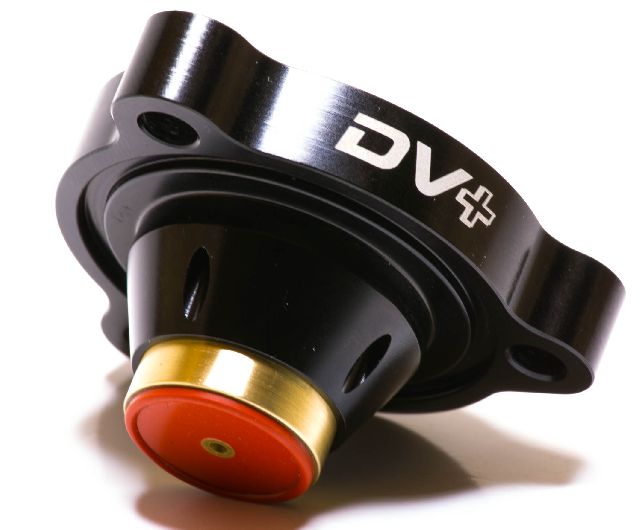
- Replacing the diverter valve (DV). While the DV is part of the boost control system, a P0245 code is for the N75 wastegate control circuit, not the DV circuit.
Most Likely Causes
- Faulty Turbocharger Wastegate Solenoid (N75 Valve) 🔴 High Probability → Shop Turbocharger The N75 valve is an electromechanical part that is constantly cycling (pulse-width modulated) in a high-heat environment, leading to eventual internal failure of the coil winding, causing a short or open circuit.
How to confirm: Measure the electrical resistance across the solenoid's terminals using a multimeter. For VW/Audi, the expected resistance is typically between 25-35 ohms. A reading far outside this range (like infinite for an open, or near-zero for a short) indicates a bad solenoid.
Typical fix: Replace the N75 valve.
Est. part cost: $50-$150 - Damaged Wiring or Electrical Connector 🟡 Medium Probability The wiring harness to the N75 valve is routed near hot engine and exhaust components, which can cause the insulation to become brittle and crack, leading to shorts or open circuits. The connector itself can also suffer from corrosion or loose pins. Oil leaks from higher up on the engine frequently contaminate this specific harness.
How to confirm: Visually inspect the entire length of the wiring harness for the N75 valve for any signs of chafing, melting, or breaks. Disconnect the connector and check for corrosion, moisture, or bent/damaged pins. Perform a voltage and ground check at the connector with the ignition on. Check for a short to ground on the signal wire.
Typical fix: Repair the damaged section of wiring or replace the connector pigtail.
Est. part cost: $15-$50 - Blown Fuse ⚪ Low Probability A short circuit in the N75 valve or its wiring can cause the corresponding fuse to blow, cutting power to the circuit.
How to confirm: Consult the owner's manual or a fuse diagram for the fuse that protects the engine management components, including the N75 valve. Visually inspect the fuse and test for continuity.
Typical fix: Replace the blown fuse. If the new fuse blows immediately, it confirms a short circuit is present in the system that must be located and repaired.
Est. part cost: $1-$5
Rare But Worth Checking
- Faulty Engine Control Module (ECM): → Shop Engine Control Module (ECM) This is a rare cause. Before condemning the ECM, all other possibilities, including the N75 valve, wiring, and fuses, must be exhaustively tested and ruled out. An ECM failure can sometimes cause multiple 'circuit low' faults for different sensors simultaneously. On some older VAG models, internal failure of the ECU driver for the N75 circuit is a known issue.
Diagnosis Steps
- Read the fault codes with an OBD-II scanner to confirm P0245 is present and note any other codes. Review freeze-frame data to understand the conditions when the fault occurred.
- Visually inspect the N75 valve's electrical connector and wiring harness for any obvious signs of damage, such as melted plastic, chafed wires, oil saturation, or corrosion.
- Check the fuse(s) related to the engine control systems in the engine bay fuse box.
- With the ignition on and engine off, use a multimeter to check for voltage at the N75 connector. You should have a power supply (typically 12V) on one pin.
- Disconnect the N75 valve and measure the resistance between its two electrical pins. A typical reading for a good valve is 25-35 ohms. An open circuit (infinite resistance) or a direct short (near zero resistance) indicates the valve has failed.
- If the valve tests good, check the signal wire for a short to ground. With the connector unplugged from the N75 and the ECM, check for continuity between the signal pin at the N75 connector and the chassis ground. There should be no continuity.
- If the valve and wiring are confirmed to be good, the issue may lie with the ECM, but this is rare and should be the last consideration.
Parts You'll Likely Need
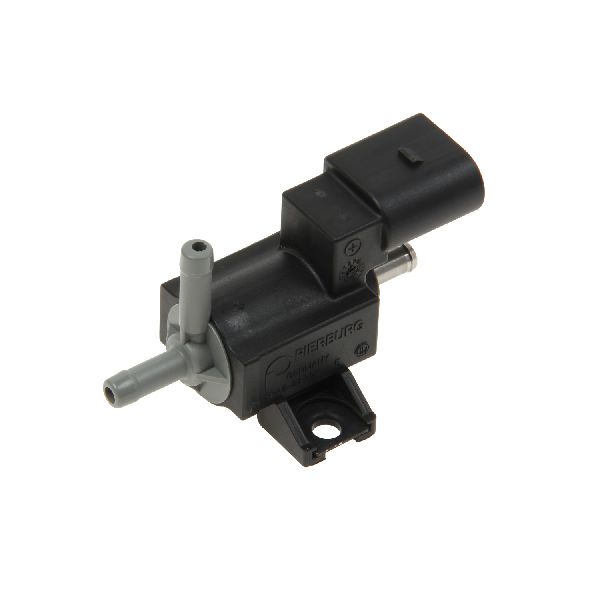
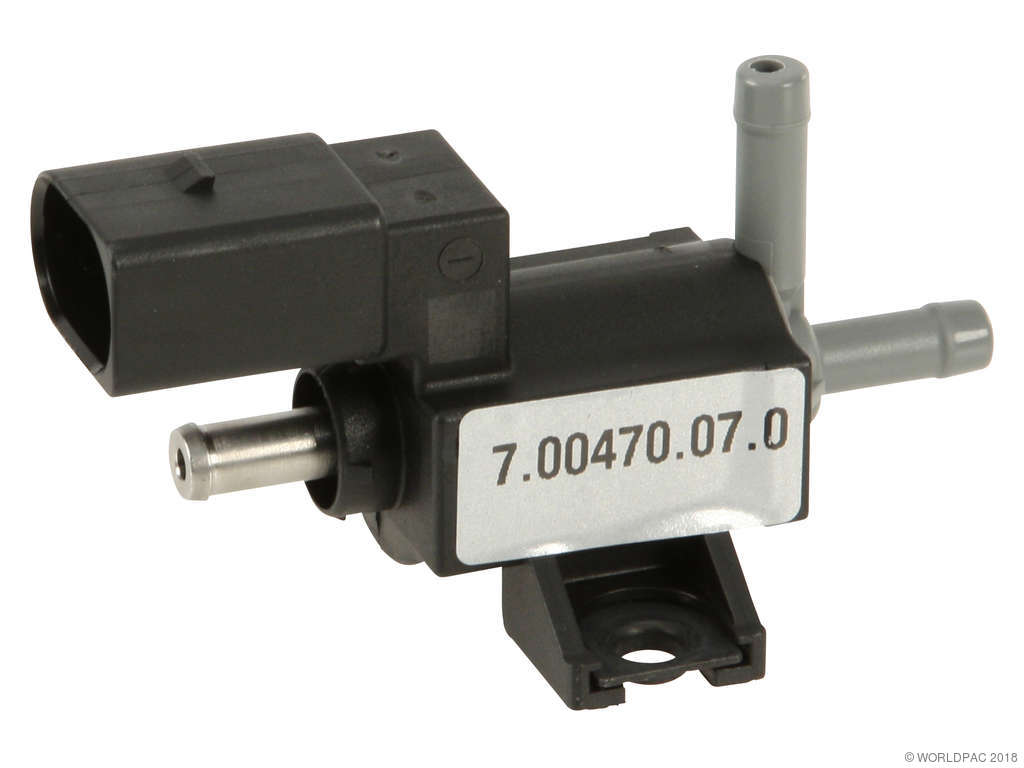
- Turbocharger Boost Pressure Control Valve (N75 Valve)
(OEM #06F906283F)— This solenoid is the most common component to fail in the circuit, triggering the P0245 code.
Trusted brands: Pierburg (OEM supplier), Bosch, Genuine Audi/VW
OEM price range: $100-$150
Aftermarket price range: $50-$90
Related Codes That Often Appear With This One
- P0299 — Turbocharger/Supercharger Underboost. If the N75 valve circuit fails, the ECM cannot properly control the wastegate, which can lead to an underboost condition. P0245 should always be fixed first as it is the root electrical cause. 🎬 See: Diagnosing and replacing the N75 valve for underboost codes
- P0246 — Turbocharger Wastegate Solenoid 'A' Circuit High. This code can sometimes appear intermittently with P0245 if there is a wiring issue causing fluctuating voltage readings, such as a wire intermittently shorting to power and then to ground.
Platform-Specific Known Issues
- Oil from a leaking vacuum pump or upper timing chain cover is known to drip down onto the N75 valve's wiring harness. Over time, the oil degrades the wire insulation, leading to a short circuit and triggering the P0245 code. When replacing the N75 or repairing the wiring, it is critical to first identify and fix the source of the oil leak.
Mechanic-Grade Diagnostic Values
- N75 Valve (Boost Pressure Control Valve) Coil Resistance — expected: 25 - 35 Ohms. Failure: A reading of near-zero Ohms indicates a short circuit. An infinite reading (OL) indicates an open circuit. Both confirm a failed solenoid.
- Voltage at N75 Connector (Harness Side) — expected: Pin 1: ~12V (Battery Voltage) with ignition on, engine off. Pin 2: 3-5V (Signal from ECU).. Failure: No voltage on the power pin points to a blown fuse or a break in the power supply wire. Incorrect voltage on the signal pin can indicate a wiring issue or a fault in the ECM driver.
Hidden / Shadow Codes Worth Checking
- 16629: This is the primary VAG-specific equivalent to P0245, explicitly defined as 'Solenoid Valve (A) for Boost Pressure Control (N75): Short to Ground'. (see via VCDS (VAG-COM), ODIS, or other advanced VAG-compatible scan tools.)
- 000581: An alternate VAG-specific fault code that may be displayed for the same 'N75: Short to Ground' issue. (see via VCDS (VAG-COM), ODIS, or other advanced VAG-compatible scan tools.)
Scan Tool Commands That Help
- VCDS (VAG-COM): Engine -> Output Tests -> Solenoid Valve for Boost Pressure Control (N75) — This is a bidirectional test that manually cycles the N75 valve. It allows a technician to listen for an audible click from the valve and verify with a multimeter that it is being commanded on and off. It's a definitive way to test the valve's electrical and mechanical function without removing it from the vehicle.
- VCDS (VAG-COM): Engine -> Basic Settings -> Group 011 — This function cycles the N75 valve while the engine is running. This allows you to visually inspect the turbo actuator rod for movement and observe the effect on boost pressure in live data, helping to distinguish between an electrical fault and a mechanical issue with the wastegate itself.
Wiring & Ground Locations
- N75 Connector — On the EA888 2.0T engine, the N75 valve is typically mounted directly on or very near the turbocharger housing, often accessible from the top of the engine bay.. This connector and its pigtail are the most common locations for wiring failure due to extreme heat and vibration. The locking tab can become brittle and break, and the wires can chafe or melt, causing a short to ground.
- Engine Block Ground Strap — The primary engine-to-chassis ground strap is typically located on the driver's side of the engine block, connecting to the frame rail.. While not a direct cause, a corroded or loose main ground can cause floating voltages and erratic behavior in various engine sensors and solenoids, including the N75 circuit. It should be inspected as part of a thorough electrical diagnosis.
Real Owner Repair Stories
- AudiWorld Forums User (Audi TT 1.8T (similar N75 function and failure mode)) — Car would lose boost and feel sluggish, but only after it had fully warmed up.
❌ Tried (didn't work) Testing the N75 valve's resistance when the engine was cold. It showed a perfectly normal reading within the 25-35 ohm specification.
✅ What actually fixed it Replacing the N75 valve. The internal coil was failing and shorting out only when it reached operating temperature, a condition a cold resistance test could not detect. - YouTube - Rowdy B5 (Audi A4 B5 1.8T) — Very low boost (4-5 PSI) and fault code P1548 / 17956 (VAG code for N75 open circuit, a related fault).
❌ Tried (didn't work) Swapping in a known-good N75 valve did not resolve the code.
✅ What actually fixed it Upon close inspection of the N75 connector, the two wires had broken internally and simply fell out of the back of the connector housing. Repairing the connector pigtail resolved the issue.
When the Usual Fixes Don't Work
- In one documented case, an owner experienced symptoms of a failing N75 valve (sluggishness only when hot) but found that the valve's resistance tested perfectly normal when the engine was cold. This highlights a key diagnostic trap: a component can fail under thermal load in a way that a static, cold test will not reveal. The fix was to replace the N75 valve despite it testing 'good'.
OEM Part Supersession History
06F906283A, 06F906283B, 06F906283D→06F906283F— Revisions by the OEM (Pierburg) for improved durability and performance. The newer revisions are built with tighter tolerances and higher-grade materials to better withstand heat and vibration.
Heads up: All part numbers listed are interchangeable. When replacing, it is always recommended to use the latest revision (06F906283F) for the best longevity.
Diagnostic Flowchart
Other Known Issues on This Vehicle
Issues unrelated to this code that are worth knowing about as an owner of this generation:
- Excessive Oil Consumption 🔴 High — Very common on 2009-2011.5 models, less so on later B8.5 models. Can start as early as 50,000-60,000 miles. Caused by faulty piston ring design. (Ref: Subject of multiple class-action lawsuits (e.g., Hernan A. Gonzalez v. Volkswagen) leading to settlement programs and extended warranties for affected vehicles.)
- Timing Chain Tensioner Failure 🔴 High — Prevalent in early EA888 engines (pre-2013). The original tensioner can fail without warning, often between 60,000 and 100,000 miles, causing the chain to jump and leading to catastrophic engine damage. (Ref: VW/Audi released updated tensioner designs. A TSB was issued addressing engine rattling noises on cold starts, a primary symptom.)
- Water Pump Failure 🟠 Medium — The OEM water pump has a plastic housing that is prone to cracking and leaking over time. Failure can occur anywhere from 40,000 to 100,000+ miles. (Ref: A class-action settlement resulted in an extended warranty for the water pump on some affected models.)
- PCV Valve Failure 🟠 Medium — The diaphragm inside the Positive Crankcase Ventilation (PCV) valve can tear, causing a significant vacuum leak. Symptoms include a rough idle, hissing noise, and lean fault codes.
- Intake Manifold Runner Flap Motor/Sensor Failure 🟠 Medium — The plastic intake manifold can have issues with the runner flaps sticking or the position sensor failing, leading to fault codes and performance issues. (Ref: An extended warranty was offered for this component on certain model years due to high failure rates.)
- Carbon Buildup on Intake Valves 🟠 Medium — As a direct-injection engine, fuel doesn't wash over the intake valves. This leads to carbon accumulation over 50,000-80,000 miles, restricting airflow and causing misfires and reduced performance.
Used vs. New Parts: Buying Guide for This Vehicle
When a used part is the smart pick: A used N75 valve is generally not recommended. It is an inexpensive electro-mechanical part subjected to high heat and constant cycling, meaning its lifespan is finite. A used part may have significant wear and could fail shortly after installation. A used wiring connector pigtail from a junkyard is a viable option if the donor vehicle shows no signs of engine bay fire or major oil leaks in that area.
Donor-vehicle mileage cap: roughly under 60000 miles for the part to have meaningful remaining life.
What to inspect on the donor part:
- For a wiring pigtail, inspect for any brittleness, cracking, or melting of the plastic connector.
- Ensure the wiring insulation is still flexible and not oil-saturated.
- Check that the connector's locking tab is intact and functional.
Aftermarket brands forum-validated for this vehicle:
- Pierburg (this is the Original Equipment Manufacturer and the most recommended choice)
- Bosch
Brands owners have reported issues with on this vehicle:
- Unbranded, no-name parts from online marketplaces should be avoided, as their internal coil windings and materials may not meet OEM specifications for heat resistance and durability, leading to premature failure.
Real Owner Stories
Aggregated from forums and TSBs cited above. Mileages and costs reflect what owners reported in those sources.
2010 Audi A4 2.0T
Symptoms: The owner noted the potential for a broken boost control solenoid and emphasized that the wiring harness itself often needs repair due to damage.
What fixed it: Replacement of the N75 valve and repair of the associated wiring harness.
Source hint: YouTube - NaptownTuner - "2.0t replacing Broken Boost control Solenoid N75 valve..."
2009-2016 Audi A4 2.0T
Symptoms: Oil dripping from the upper timing chain cover or vacuum pump onto the N75 wiring, causing the insulation to degrade and short out.
What fixed it: Identifying and fixing the source of the oil leak (vacuum pump or timing cover) and then repairing the damaged N75 wiring harness.
Source hint: vehicle_specific_issues
Related OBD-II Codes
Frequently Asked Questions
I have a 2010 Audi A4 with P0245; could an oil leak be causing this electrical code?
What is the specific resistance I should look for when testing the N75 valve on my B8 Audi?
My Audi A4 is in 'limp mode' with a flashing glow plug light; is this related to P0245?
Is there a specific fuse I should check for the N75 Boost Control Solenoid?
Can I just replace the N75 valve to fix the P0245 code on my 2.0T?
Are there any class-action settlements for the EA888 engine that I should be aware of while diagnosing my A4?
Helpful Videos


We Have This Part in Stock


The information in this article is provided for general reference and educational purposes only. Vehicle specifications, procedures, and part compatibility can vary by production date, trim level, and region. Always consult your vehicle's factory service manual and verify part numbers before purchasing or performing repairs. Safety-critical components such as airbags, seat belts, and braking systems should be installed by a qualified professional.
- Audi A4:
- 🧭 Diagnostic Flowchart
- 🎬 Helpful Videos
- 🛍️ Shop This Part
- What's Unique About the 2008-2016 Audi A4
- Symptoms You May Notice
- Most Likely Causes
- Rare But Worth Checking
- Diagnosis Steps
- Parts You'll Likely Need
- Related Codes That Often Appear With This One
- Platform-Specific Known Issues
- Mechanic-Grade Diagnostic Values
- Hidden / Shadow Codes Worth Checking
- Scan Tool Commands That Help
- Wiring & Ground Locations
- Real Owner Repair Stories
- When the Usual Fixes Don't Work
- OEM Part Supersession History
- Other Known Issues on This Vehicle
- Used vs. New Parts: Buying Guide for This Vehicle
- Real Owner Stories
- 2010 Audi A4 2.0T
- 2009-2016 Audi A4 2.0T
- Related OBD-II Codes
- Frequently Asked Questions
- 🎟️ Get 5% Off