

P0245 on 2011-2017 BMW X3: N20 Turbo Wastegate Actuator Low Voltage Fixes
On the 2011-2017 BMW X3 with the N20 engine, code P0245 is almost always caused by a failed electronic wastegate actuator on the turbocharger. This is a common failure item due to heat exposure. Expect to pay $250-$400 for an OEM replacement part, with DIY replacement being moderately difficult due to tight access and the need for a software-based adjustment procedure after installation using a tool like ISTA.
- P0245 on your X3 points directly to an electrical fault with the electronic wastegate actuator or its circuit.
- The most probable cause is a failed actuator itself, which is a serviceable part and does not require replacing the entire turbocharger.
- Before ordering parts, always inspect the wiring harness for heat damage
What's Unique About the 2011-2017 BMW X3
Unlike many earlier turbocharged engines that used less precise vacuum-operated wastegates, the BMW N20 engine features a more precise electronic wastegate actuator (EWG). While this allows for better boost control and efficiency, the actuator itself is a common failure point. The issue is rarely the turbocharger itself but rather this serviceable electronic component attached to it. Owners often first see a 'Drivetrain Malfunction' warning on the iDrive screen, which can be alarming, but the root cause is frequently this specific electrical fault.
Generation note: The 2011-2017 model years cover the second generation of the BMW X3, known as the F25. The N20 engine was used in the xDrive28i models within this generation starting from the 2013 model year. The issue is consistent across all F25 models equipped with the N20 engine.
Symptoms You May Notice
- Check Engine Light is on
- 'Drivetrain Malfunction: Drive moderately' warning on the iDrive display
- Significant loss of engine power and sluggish acceleration
- No boost or erratic boost from the turbocharger
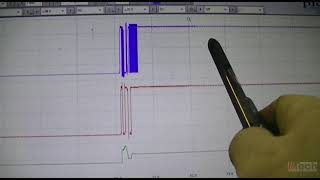
- Audible whining, hissing, or rattling sound from the turbo area, especially on startup 🎬 Watch: How to diagnose and fix wastegate rattle
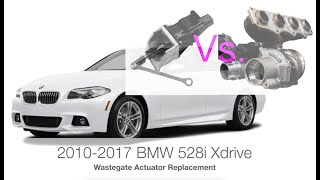
- Replacing the entire turbocharger assembly. The electronic actuator is a separate, serviceable part. Unless the turbo has other signs of failure (e.g., excessive shaft play, damaged fins, smoking on startup), replacing the entire unit is unnecessary and very expensive. Some dealers may recommend replacing the whole turbo, but the actuator can often be replaced independently. 🎬 See how to replace the actuator and save money
Most Likely Causes
- Failed Electronic Wastegate Actuator 🔴 High Probability → Shop Turbocharger The electronic actuator is subject to extreme heat cycles being mounted directly on the turbocharger, which can lead to internal electronic failure over time. It is a well-documented failure point on the N20 engine.
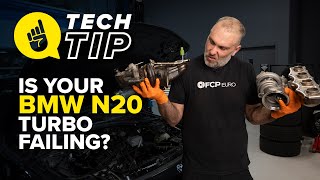
How to confirm: With a diagnostic scan tool (like ISTA), attempt to actuate the wastegate. 🎬 Watch: BMW N20 wastegate diagnostics and repair walkthrough If it doesn't move or fails the test, the actuator is likely faulty. You can also test the actuator's internal resistance with a multimeter; a reading outside of the manufacturer's specification indicates failure. A low voltage reading (below 11V) at the actuator's power pin with the ignition on also points to a circuit issue.
Typical fix: Replace the electronic wastegate actuator. This requires removing the old unit, installing the new one, and critically, performing a 'wastegate learning' or 'adjustment' procedure with a BMW-specific scan tool. The adjustment involves setting the actuator rod length to achieve a specific travel, which the software measures. One full turn of the adjustment nut corresponds to 0.75mm of travel.
Est. part cost: $250-$400 - Wiring Harness or Connector Damage 🟡 Medium Probability The wiring harness leading to the wastegate actuator is routed in a high-heat area of the engine bay, making it susceptible to melted insulation, corrosion, or broken wires from vibration.
How to confirm: Visually inspect the wiring harness from the DME to the wastegate actuator for any signs of melting, chafing, or corrosion at the connector. Perform a continuity and voltage drop test on the power and ground wires using a multimeter.
Typical fix: Repair the damaged section of the wiring harness or replace the connector pigtail. Ensure the repaired wiring is properly secured and shielded from heat.
Est. part cost: $10-$50
Rare But Worth Checking
- Faulty Digital Motor Electronics (DME): This is very uncommon. Before condemning the expensive DME, all other possibilities, especially the actuator and its wiring, must be exhaustively ruled out.
- Corroded or Seized Wastegate Linkage Pin: BMW issued a service bulletin (SI B11 14 17) for corrosion on the wastegate linkage pin. A seized or stiff linkage can put extra strain on the actuator motor, potentially leading to its premature failure or causing movement faults. The TSB provides a procedure for removing the seized pin and installing a repair clip (P/N 83 30 2 456 269).
Diagnosis Steps
- Read the fault codes from the DME using a BMW-compatible scan tool to confirm P0245 and any related BMW-specific codes.
- Visually inspect the electronic wastegate actuator's wiring harness and connector for any signs of damage, melting, or corrosion.
- Using the scan tool, command the wastegate actuator to open and close (run the 'wastegate valve adjustment' service function). Observe if it moves smoothly through its range of motion and if the test passes or fails.
- If the actuator does not move, disconnect the connector and check for power (typically 12V) and ground at the harness side with a multimeter.
- If power and ground are present, the actuator is the most likely culprit. You can also test the internal resistance of the actuator itself to confirm.
- If power or ground is missing, trace the wiring back to the DME to find the open or short in the circuit.
- If the actuator and wiring test good, the issue may be a mechanical restriction. Disconnect the actuator linkage from the wastegate arm and manually check if the arm moves freely without binding. If it's stiff, investigate the linkage pin for corrosion per TSB SI B11 14 17.
- Only after confirming the actuator, wiring, and mechanical linkage are all functioning correctly should a faulty DME be considered.
Parts You'll Likely Need
- Electronic Turbocharger Wastegate Actuator
(OEM #11657638783)— This is the most common failure point for the P0245 code on the N20 engine due to internal electronic failure.
Trusted brands: Mitsubishi (OEM), Hella, Turbosmart (Aftermarket upgrade)
OEM price range: $280-$400
Aftermarket price range: $200-$300 - Turbocharger Repair Clip
(OEM #83302456269)— Needed if the original wastegate linkage pin is seized with corrosion and must be cut off, per TSB SI B11 14 17.
Trusted brands: BMW (OEM)
OEM price range: $20-$40
Related Codes That Often Appear With This One
- P0299 — This code indicates a 'Turbocharger Underboost' condition. If the P0245 fault causes the wastegate to remain open, the turbo cannot build sufficient pressure, leading to a P0299 code.
- 120308 — This is a BMW-specific fault code for 'Charging pressure control, plausibility: Pressure too low,' which is another indication of an underboost condition often caused by the wastegate malfunction.
- 123401 — BMW-specific code for 'Electric wastegate, stop learning: stop position (wastegate closed) outside tolerance'. This often indicates the actuator needs adjustment or has failed.
- 123432 — BMW-specific code for 'Electric wastegate, learning limit stop: Malfunction'. This points directly to a failure in the actuator's ability to perform its self-calibration.
Technical Service Bulletins (TSBs) & Recalls
- SI B11 14 17: Describes a procedure for addressing a corroded or seized wastegate actuator linkage pin, which can affect actuator operation and may require a special repair clip.
Platform-Specific Known Issues
- The linkage pin connecting the actuator rod to the wastegate arm can corrode, causing it to bind. BMW has a TSB (SI B11 14 17) and a repair clip available for this specific issue. The repair may require removing the turbocharger to cut off the old pin.
Mechanic-Grade Diagnostic Values
- Wastegate Actuator Position Sensor Voltage (Key On, Engine Off) — expected: 1.26V to 1.43V. Failure: A voltage outside this range indicates the actuator rod length is incorrectly adjusted or the sensor has failed.
- Wastegate Actuator Position Sensor Supply Voltage — expected: 5V. Failure: Lack of 5V supply indicates a wiring issue or a fault in the DME's 5V reference circuit.
- Wastegate Actuator Motor Resistance — expected: ~4 ohms. Failure: A significantly higher or lower resistance reading suggests an internal failure of the actuator motor.
Hidden / Shadow Codes Worth Checking
- 123402: Electric wastegate, learning limit stop: Start position (wastegate open) not found. This indicates the actuator failed its self-test for the fully open position. (see via BMW-specific diagnostic software like ISTA.)
- 123422: Electric wastegate, learning limit stop: Start position (wastegate closed) not found. This indicates the actuator failed its self-test for the fully closed position. (see via BMW-specific diagnostic software like ISTA.)
Scan Tool Commands That Help
- ISTA: Service Function -> Power train -> Engine Electronics -> Adjustment functions -> Wastegate valve adjustment — This is a critical function used after replacing the wastegate actuator or if adjustment is suspected. The software will command the actuator through its range of motion and report the deviation in millimeters (mm), telling the technician exactly how much to adjust the linkage rod.
- ISTA: Service Function -> Power train -> Engine Electronics -> Adjustment functions -> Delete engine adaptation value — After a major repair like replacing the actuator, it is good practice to reset all engine adaptations to allow the DME to relearn component characteristics, including the new actuator's behavior.
Wiring & Ground Locations
- DME (Digital Motor Electronics) — Located in the engine bay on the passenger side, inside a white or black plastic electronics box near the firewall.. The DME is the source of power, ground, and control signals for the electronic wastegate actuator. All wiring for the actuator terminates at one of the large multi-pin connectors on the DME.
- Wastegate Actuator Connector (5-pin) — Directly on the electronic wastegate actuator, which is bolted to the turbocharger assembly on the passenger side of the engine.. This is the primary point for electrical testing. The 5 pins consist of a 5V supply, a signal ground, and a position signal for the sensor, plus two wires for the DC motor.
Real Owner Repair Stories
- Bimmerpost user @Cali_MSport (2013 BMW F30 328i (N20 Engine)) — Drivetrain malfunction error and check engine light.
❌ Tried (didn't work) Dealer diagnosis recommended replacing the entire turbocharger assembly.
✅ What actually fixed it The user adjusted the wastegate actuator rod instead of replacing any parts. They marked the original position of the two nuts on the rod, loosened the lock nut, and turned the adjustment nut to lengthen the rod by two and a half full rotations. This removed excessive play and allowed the wastegate to close properly, resolving the codes.
Model Year Variations Within This Range
- Early production (approx. 2011-2012): Very early N20 engines used a vacuum-operated (pneumatic) wastegate, not an electronic one. While the F25 X3 with the N20 engine started in the 2013 model year (which should all be electronic), it's a critical distinction for anyone sourcing parts or diagnosing issues on other N20-equipped BMWs from that era. A pneumatic system will have vacuum lines running to the actuator, while the electronic version has a 5-pin electrical connector. The DME hardware is also different between the two systems.
Diagnostic Flowchart
Other Known Issues on This Vehicle
Issues unrelated to this code that are worth knowing about as an owner of this generation:
- Timing Chain Guide Failure 🔴 High — Common on pre-2015 models, often appearing between 50,000-80,000 miles. Symptoms include a distinct whining noise from the front of the engine. (Ref: BMW extended the warranty for this issue to 7 years/70,000 miles under SIB 11 03 17, but it was not a formal recall.)
- Oil Filter Housing Gasket Leak 🟠 Medium — Very common failure. The gasket becomes brittle from heat cycles and leaks oil, often onto the serpentine belt.
- Valve Cover & Gasket Leak 🟠 Medium — A frequent source of oil leaks and a burning oil smell as oil drips onto the hot exhaust manifold.
- VANOS Solenoid Failure 🟠 Medium — Solenoids can become clogged with oil sludge, leading to rough idle, hesitation, and loss of power.
- Coolant System Leaks 🟠 Medium — Plastic components like the expansion tank and various hoses can become brittle and leak over time. Electric water pump failure is also common around 60,000-80,000 miles.
Used vs. New Parts: Buying Guide for This Vehicle
When a used part is the smart pick: A used OEM (Mitsubishi) actuator from a low-mileage, verified-running donor vehicle can be a cost-effective option. Given the high cost of a new OEM part, a used unit can save significant money. However, this part is a known failure item due to heat, so the risk of premature failure is higher than with a new part.
Donor-vehicle mileage cap: roughly under 60000 miles for the part to have meaningful remaining life.
What to inspect on the donor part:
- Verify the part number matches your original unit exactly.
- Inspect the electrical connector for any signs of melted plastic, corrosion, or broken locking tabs.
- Check the actuator rod and linkage for any signs of binding, excessive rust, or physical damage.
- If possible, get the VIN of the donor car to confirm it had no wastegate-related fault codes prior to being dismantled.
OEM-only on this vehicle (don't cheap out):
- While aftermarket options exist, the OEM Mitsubishi actuator is highly recommended for reliability and proper communication with the DME. Some aftermarket units may have quality control issues or fail to calibrate correctly with BMW's diagnostic software.
Aftermarket brands forum-validated for this vehicle:
- Hella (Often an OEM supplier, good quality)
- Turbosmart (Considered a performance upgrade, may require tuning)
Brands owners have reported issues with on this vehicle:
- Unbranded, low-cost actuators from online marketplaces like eBay or Amazon have a high reported failure rate and may not perform the ISTA adjustment procedure correctly.
Real Owner Stories
Aggregated from forums and TSBs cited above. Mileages and costs reflect what owners reported in those sources.
2013 BMW X3 N20
Symptoms: Drivetrain Malfunction error and low boost conditions.
What fixed it: The dealer replaced the turbocharger and timing chain under warranty.
Cost: $0-$6,000
Source hint: xbimmers.com forum citation
2014 BMW 328i (F30) N20
Symptoms: Wastegate valve code and significant loss of power.
What fixed it: Full turbo replacement was recommended by the service center.
Cost: $5,000-$7,500
Source hint: F30Post forum citation
2015 BMW 228i (F22) N20
Symptoms: P0245 fault related to the wastegate actuator.
What fixed it: Replacement of the electronic wastegate actuator.
Cost: $2,800-$2,800
Source hint: Reddit r/BmwTech
Related OBD-II Codes
Frequently Asked Questions
My 2013 BMW X3 is showing a 'Drivetrain Malfunction' warning and has no power. Could this be the wastegate issue mentioned in TSB SI B11 14 17?
Can I just replace the electronic wastegate actuator myself on my N20 engine?
Is there a specific voltage I should look for when testing the P0245 code on my X3?
I heard there is a warranty extension for the N20 engine; does it cover the wastegate actuator?
What is the 'repair clip' mentioned for the BMW X3 turbocharger?
Helpful Videos
Used OEM Parts in Stock
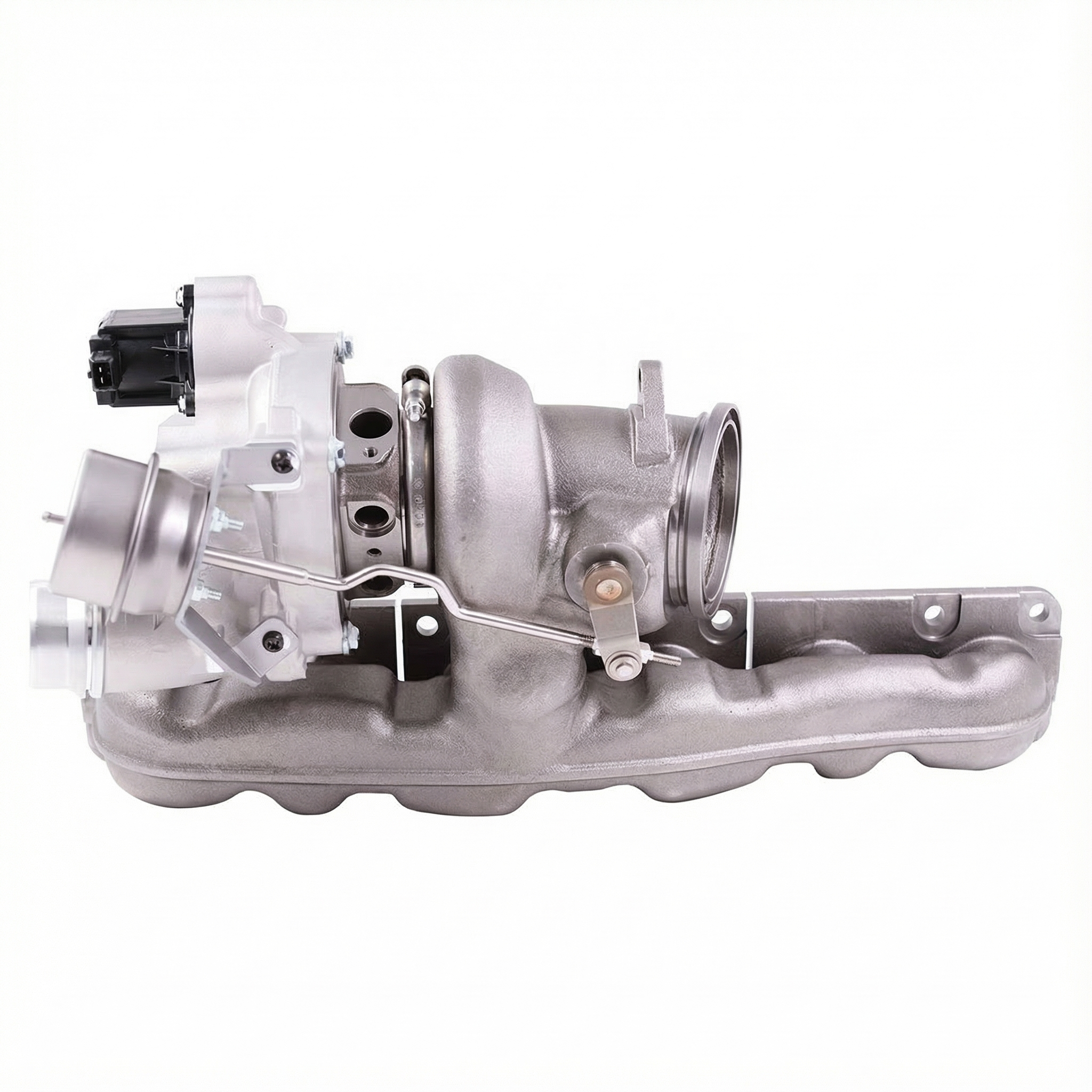
New Aftermarket Parts Available



The information in this article is provided for general reference and educational purposes only. Vehicle specifications, procedures, and part compatibility can vary by production date, trim level, and region. Always consult your vehicle's factory service manual and verify part numbers before purchasing or performing repairs. Safety-critical components such as airbags, seat belts, and braking systems should be installed by a qualified professional.
- BMW X3:
- 🧭 Diagnostic Flowchart
- 🎬 Helpful Videos
- 🛍️ Shop This Part
- What's Unique About the 2011-2017 BMW X3
- Symptoms You May Notice
- Most Likely Causes
- Rare But Worth Checking
- Diagnosis Steps
- Parts You'll Likely Need
- Related Codes That Often Appear With This One
- Technical Service Bulletins (TSBs) & Recalls
- Platform-Specific Known Issues
- Mechanic-Grade Diagnostic Values
- Hidden / Shadow Codes Worth Checking
- Scan Tool Commands That Help
- Wiring & Ground Locations
- Real Owner Repair Stories
- Model Year Variations Within This Range
- Other Known Issues on This Vehicle
- Used vs. New Parts: Buying Guide for This Vehicle
- Real Owner Stories
- 2013 BMW X3 N20
- 2014 BMW 328i (F30) N20
- 2015 BMW 228i (F22) N20
- Related OBD-II Codes
- Frequently Asked Questions
- 🎟️ Get 5% Off