

P0245 on 2010-2019 Ford Taurus 3.5L EcoBoost: Wastegate Solenoid 'A' Circuit Low Causes and Fixes
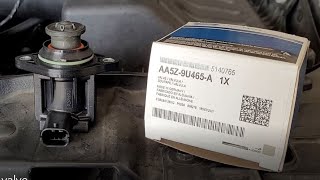
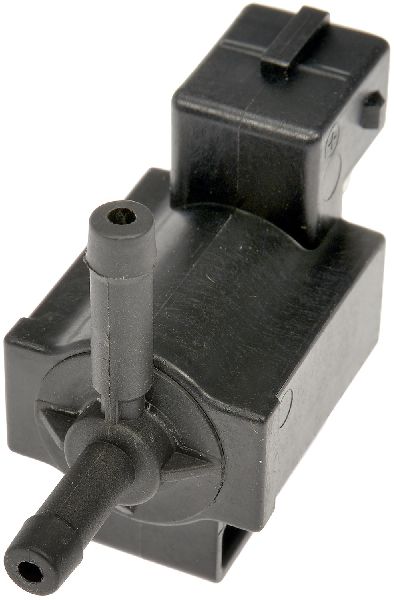
This code is most often caused by a failed turbocharger wastegate solenoid or a problem with its wiring. The PCM detects low voltage in the circuit, puts the car in 'limp mode,' and disables the turbos. Expect to pay around $50-$90 for a new Motorcraft solenoid (Part # AA5Z-9U465-A), and it's a DIY-friendly repair for many owners.
- P0245 on your Taurus means the Bank 1 turbo wastegate solenoid circuit has low voltage, which will put the car in a low-power limp mode.
- The most likely cause is a failed solenoid itself, which is a relatively inexpensive and accessible part to replace for a DIYer.
- Before buying parts, always check the fuse for the circuit first and perform a thorough visual inspection of the solenoid's wiring and connector for heat damage.
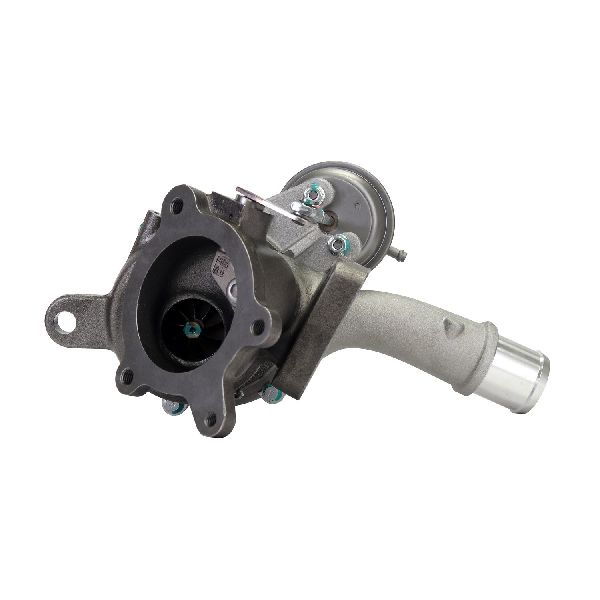
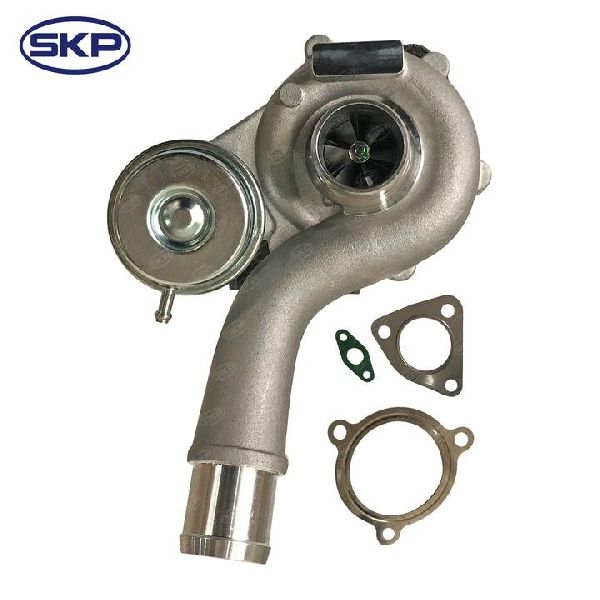
- Do not mistake this electrical control code for a failed turbocharger; this is a much cheaper fix.
- The Motorcraft replacement solenoid is part number SOL-2.
What's Unique About the 2010-2019 Ford Taurus
The 3.5L EcoBoost V6 is a twin-turbocharged engine, meaning it has two of everything in the turbo system, including wastegate solenoids. Solenoid 'A' refers to the one on Bank 1 (the cylinder bank closer to the firewall on the transverse-mounted Taurus engine). The high heat generated in the tightly packed engine bay of the Taurus SHO can cause the plastic solenoid and its wiring to become brittle and fail over time, which is a common theme across the entire EcoBoost engine family. Forum users on SHO Forum often discuss boost issues related to these components and their accessibility.
Symptoms You May Notice
- Check Engine Light is on
- Drastic reduction in engine power and acceleration ('limp mode')
- No boost from the turbochargers, feels like a non-turbo engine
- Sluggish throttle response
- In some cases on related platforms, other circuit-related issues like the A/C clutch may also stop working if they share a fuse.
- Replacing the turbocharger assembly. This code points specifically to an electrical fault in the control circuit, not a mechanical failure of the turbo itself.
- Replacing the boost pressure or MAP sensors. While these can cause performance issues, P0245 is very specific to the wastegate solenoid's electrical circuit.
- Assuming the wastegate actuator is bad. While possible, the P0245 code is for the *solenoid circuit*, not the mechanical actuator. The solenoid can be tested with a vacuum/pressure gun to confirm its mechanical operation separately.
Most Likely Causes
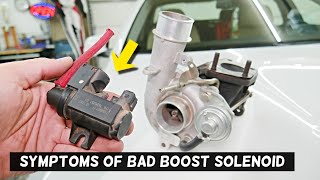
- Failed Turbocharger Wastegate Solenoid 🔴 High Probability → Shop Turbocharger The solenoid is an electro-mechanical part made of plastic that is exposed to significant heat cycles in the engine bay, leading to internal electrical failure (short circuit) over time. This is a common failure point on EcoBoost engines. It's also referred to as a boost pressure relief valve or bypass solenoid.
How to confirm: Test the solenoid's internal resistance using a multimeter. A reading that is out of the manufacturer's specification (a typical range is 10-40 ohms) or shows an open/short circuit indicates failure. Also, with the connector unplugged and key on, you should have ~12V on the power pin of the harness connector.
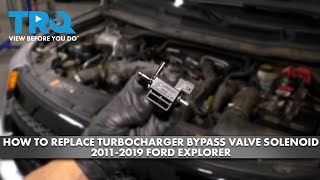
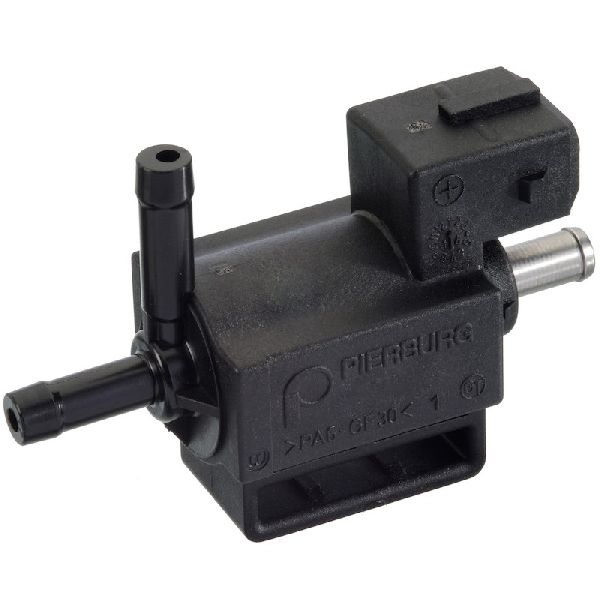
Typical fix: Replace the wastegate solenoid. It is typically mounted on the engine or a nearby bracket with three vacuum hoses and one electrical connector. The OEM part number is AA5Z-9U465-A. 🎬 Watch this step-by-step guide to replacing the solenoid.
Est. part cost: $50-$90 - Damaged Wiring or Connector 🟡 Medium Probability The wiring harness leading to the solenoid can be damaged by engine heat, causing it to melt, or it can chafe against other components (like engine brackets or the cylinder head), leading to a short to ground. This is a known issue on the 3.5L EcoBoost platform.
How to confirm: Visually inspect the entire length of the wiring harness for the solenoid. Check the connector for corrosion, pushed-out pins, or melted plastic. Use a multimeter to test for battery voltage (approx. 12V) at the power wire in the connector with the key on. A low voltage reading confirms a wiring issue upstream.
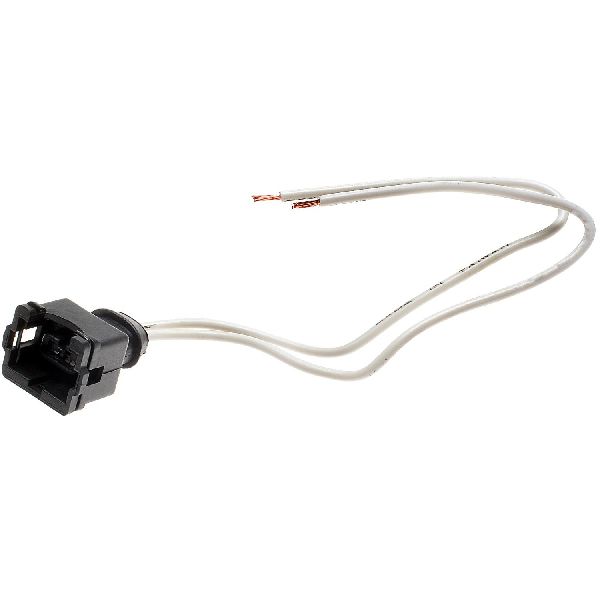
Typical fix: Repair the damaged section of wire or replace the connector pigtail (Motorcraft WPT-1054).
Est. part cost: $20-$65 - Blown Fuse ⚪ Low Probability An electrical short in the solenoid or another component on the same circuit can cause the fuse to blow, cutting power to the solenoid and triggering the P0245 code. On the related F-150 platform, multiple circuit-low codes (P0245, P0034, P0480, etc.) appearing at once almost always point to a single blown fuse.
How to confirm: Locate the fuse for the turbocharger control circuit in the vehicle's fuse box (consult the owner's manual). A forum post for an F-150 with the exact same engine and a cluster of similar codes pointed to fuse F77 in the underhood fuse box. While the fuse number may differ for the Taurus, the principle is the same.
Typical fix: Replace the blown fuse. If the fuse blows again immediately, it indicates a persistent short circuit that must be diagnosed and repaired.
Est. part cost: $1-$5
Rare But Worth Checking
- Faulty Powertrain Control Module (PCM): → Shop Engine Control Module (ECM) This is extremely rare. The PCM's internal driver for the solenoid circuit can fail. This should only be considered after all other possibilities (solenoid, wiring, fuse) have been definitively ruled out through testing.
Diagnosis Steps
- Read all diagnostic trouble codes (DTCs) with an OBD-II scanner. Note if other 'circuit low/high' codes are present.
- Check the fuse that supplies power to the wastegate solenoid circuit. On related platforms, this is often a shared fuse for several components. Replace if blown.
- Visually inspect the wastegate solenoid 'A' (Bank 1, firewall side) and its electrical connector for signs of heat damage, melting, or corrosion.
- Trace the wiring harness from the solenoid as far as possible, looking for chafing, melting, or breaks, especially near engine brackets.
- Disconnect the solenoid connector. With the ignition on and engine off, use a multimeter to verify battery voltage (around 12V) is present on the power supply wire. A low reading points to a wiring or fuse issue.
- With the connector still disconnected, measure the resistance across the two pins on the solenoid itself. Compare this reading to the manufacturer's specification (typically 10-40 ohms). An open circuit (infinite resistance) or short circuit (zero resistance) confirms a bad solenoid.
- If wiring and the solenoid test good, the fault may be intermittent or, in very rare cases, an issue with the PCM.
Parts You'll Likely Need
- Turbocharger Wastegate Solenoid
(OEM #AA5Z-9U465-A)— This is the most common point of failure for this code due to internal electrical shorts caused by heat and age. This part is also referred to as a Turbocharger Boost Solenoid, Bypass Valve, or Boost Pressure Relief Valve.
Trusted brands: Motorcraft
OEM price range: $50-$90
Aftermarket price range: $30-$60 - Wastegate Solenoid Connector Pigtail
(OEM #WPT-1054)— If the wiring connector itself is melted or corroded, replacing the pigtail is necessary to ensure a solid electrical connection to the new solenoid.
Trusted brands: Motorcraft
OEM price range: $40-$65
Aftermarket price range: $15-$30
Related Codes That Often Appear With This One
- P0246 — This code is for 'Wastegate Solenoid 'A' Circuit High'. Seeing both P0245 and P0246 can indicate an intermittent wiring problem, a shared power/ground issue, or a blown fuse affecting the entire circuit, as seen in F-150 forums.
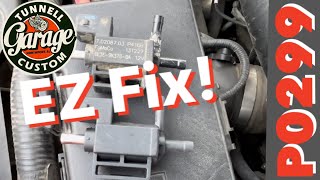
- P0299 — This code means 'Turbocharger Underboost'. It is a logical companion code because if the wastegate solenoid isn't working due to a circuit low fault, the PCM cannot command the turbo to build boost, resulting in an underboost condition. 🎬 Watch how to troubleshoot P0299 underboost and solenoid issues.
- P0034, P00C1, P0480 — Seeing a cluster of 'circuit low' or 'circuit high' codes for different components (Bypass Valve, Fan Control, etc.) simultaneously strongly suggests a single blown fuse that supplies power to all of them, rather than multiple component failures.
Technical Service Bulletins (TSBs) & Recalls
- TSB 15-0162: (For 1.6L GTDI engines) Notes that P0245 can be caused by a failed wastegate regulating valve solenoid, corroborating the solenoid as a common failure point on EcoBoost engines. Bulletin #TSB150162 specifically notes a lack of power with the MIL illuminated and DTCs P0234, P0245, P0246, and/or P0299.
- SSM 48895: (For 1.5L/2.0L Escape) Links P0245 and other circuit codes to a blown fuse, reinforcing the diagnostic step of checking fuses. This bulletin notes that vehicles may exhibit fuse F34 open with DTCs including P0034, P0245, and P0480.
- TSB 15-0149: (For 3.5L GTDI) Includes P0245 in the diagnostic tree for boost issues, pointing to inspection of tubes and lines.
- Bulletin #SSM 47575: Notes that certain vehicles may exhibit fuse F34 open, an illuminated MIL, and DTCs P0034, P0245, P0480, and P0645 among others in the PCM.
- Bulletin #SSM 47086: Describes a condition where vehicles built on or before 24-Jan-2018 may exhibit fuse F34 open and an illuminated MIL with DTCs P0245, P0480, and P06DB.
Platform-Specific Known Issues
- While no TSB is listed specifically for the Taurus 3.5L with P0245, Ford has issued TSBs for other EcoBoost engines for the same code. TSB 15-0162 addresses P0245 on 1.6L GTDI engines by replacing the solenoid, indicating a known pattern of failure for this component across the EcoBoost family.
- SSM 48895 for 1.5L and 2.0L Escape models links P0245 to a blown F34 fuse, highlighting the need to check fuses first when multiple circuit codes are present.
- A TSB (15-0149) for the 3.5L GTDI engine mentions P0245 as a code to check for when diagnosing boost issues, directing technicians to inspect charge air cooler tubes and vacuum lines.
Mechanic-Grade Diagnostic Values
- Wastegate Solenoid Internal Resistance — expected: 10 - 30 Ohms (General EcoBoost Specification).. Failure: Near 0 Ohms (short circuit) or infinite/OL (open circuit) on a multimeter.
- Solenoid Connector Power Pin Voltage (Key On, Engine Off) — expected: 12V (Battery Voltage) ± 0.5V.. Failure: A reading below 11V, like one owner's 0.71V, points to a wiring or fuse issue upstream.
- Solenoid Connector Control Wire to PCM Continuity — expected: < 0.5 Ohms.. Failure: High or infinite resistance (OL) indicates a break in the wire between the solenoid and the PCM.
Scan Tool Commands That Help
- Ford IDS, FORScan, or equivalent professional scanner: Output State Control (OSC) / Bidirectional Test for Turbocharger Wastegate Solenoid (TCWGS) — After verifying power and ground, this command manually cycles the solenoid on and off. A technician can listen for an audible click and watch live voltage data to confirm if the PCM driver, wiring, and solenoid coil are all functioning correctly. No click, despite good wiring, confirms a failed solenoid.
Wiring & Ground Locations
- C1581 — The 2-pin electrical connector at the turbocharger wastegate solenoid 'A' itself, on the Bank 1 (firewall side) turbo.. This is the primary point for testing. On related platforms, Pin 1 (e.g., YE-OG wire) is the 12V power from a fuse, and Pin 2 (e.g., VT-GY wire) is the control ground from the PCM.
- G100 / G101 — Main engine-to-chassis ground points, typically located on the frame rail or shock tower in the engine bay.. While not a direct cause of a single circuit-low code, a poor engine ground can cause a host of floating voltages and erratic behavior from multiple sensors and solenoids. Verifying grounds are clean and tight is a crucial step in any electrical diagnosis.
- PCM Connector (e.g., C175B) — The multi-pin main connector at the Powertrain Control Module (PCM), often on the driver's side of the engine compartment firewall.. This is the termination point for the solenoid's control wire (e.g., Pin 49 on a Ford Escape). A pin-out test for continuity between this connector and C1581 is the definitive way to rule out a broken wire in the harness.
Real Owner Repair Stories
- F150Forum user (2015 Lincoln Navigator (with 3.5L EcoBoost)) — P0245 code, no A/C compressor after remote start.
❌ Tried (didn't work) Replaced the wastegate solenoid., Visually inspected wiring., Performed a continuity test on the solenoid circuit wiring (showed near 0 resistance, indicating it was good).
✅ What actually fixed it The owner found that PCM fuse #79, while looking visually okay, failed an intermittent continuity test. Replacing this fuse resolved the P0245 code and the associated A/C issue. - F150Forum user (2015 Ford F-150 3.5L EcoBoost) — Check Engine Light with P0245.
❌ Tried (didn't work) Replaced the wastegate regulating valve solenoid.
✅ What actually fixed it After the new solenoid didn't fix the issue, the owner tested voltage at the connector and found only 0.71V instead of the required 12V. This confirmed a break in the power supply wire between the fuse/PCM and the solenoid. Repairing the wire fixed the problem.
OEM Part Supersession History
N/A→AA5Z-9U465-A— AA5Z-9U465-A is the current and widely cited OEM part number for the wastegate solenoid/boost pressure relief valve for this application.N/A→WPT-1054— WPT-1054 is the Motorcraft pigtail connector for the wastegate solenoid.
Diagnostic Flowchart
Other Known Issues on This Vehicle
Issues unrelated to this code that are worth knowing about as an owner of this generation:
- Internal Water Pump Failure 🔴 High — Common after 80,000-120,000 miles. Failure can be catastrophic, leaking coolant directly into the engine oil, leading to rapid engine failure.
- Power Transfer Unit (PTU) Overheating/Failure 🔴 High — Common on AWD models. The unit is located near the hot exhaust with no drain plug and insufficient cooling, causing the fluid to break down and leading to bearing/gear failure. Symptoms include a gear oil or 'propane' smell in the cabin.
- Timing Chain Stretch (Early Models) 🟠 Medium — More common on 2010-2015 models. Causes a distinct rattle on cold starts for a few seconds. If ignored, can lead to timing jump and engine damage. (Ref: TSB 18-2305 (supersedes others) for F-150, but the issue is common to the engine family.)
- Carbon Buildup on Intake Valves 🟠 Medium — Inherent to early direct-injection engines. Over time, carbon deposits can build up on the back of intake valves, causing misfires and reduced performance, especially at higher mileage (100k+ miles).
- Cracked Plastic Turbo Pipes 🟡 Low — The plastic charge pipes can become brittle with heat and age, developing cracks that cause boost leaks. This is more common on tuned vehicles running higher-than-stock boost.
Used vs. New Parts: Buying Guide for This Vehicle
When a used part is the smart pick: For this repair, sourcing used parts is generally not recommended for the electronic components. However, a used wiring harness connector pigtail (WPT-1054) from a junkyard can be a cost-effective option if the donor vehicle is low-mileage and the connector is in perfect condition with no signs of melting or corrosion.
Donor-vehicle mileage cap: roughly under 60000 miles for the part to have meaningful remaining life.
What to inspect on the donor part:
- For a pigtail: Ensure the plastic is not brittle, the locking tab is intact, and there are no signs of overheating (discoloration/melting).
- For a pigtail: Check that the wire insulation is flexible and not cracked.
- For any used part: Verify it comes from a vehicle that did not suffer a front-end collision or engine fire.
OEM-only on this vehicle (don't cheap out):
- Turbocharger Wastegate Solenoid (AA5Z-9U465-A): This is a relatively inexpensive electronic part where failure is common due to heat cycles. The risk of a used part failing shortly after installation is high. Given the low cost of a new OEM or quality aftermarket part, buying used is not worth the labor to potentially do the job twice.
Aftermarket brands forum-validated for this vehicle:
- Motorcraft (OEM)
- Standard Motor Products (SMP)
Brands owners have reported issues with on this vehicle:
- Unbranded, no-name parts from online marketplaces should be avoided. The solenoid's proper function is critical for engine performance and protection, and quality control on these parts is often poor.
Real Owner Stories
Aggregated from forums and TSBs cited above. Mileages and costs reflect what owners reported in those sources.
2012 Ford F-150 3.5L EcoBoost
Symptoms: The vehicle was throwing 10 different 'circuit low/high' codes simultaneously.
What fixed it: Replacing fuse F77 in the underhood fuse box.
Source hint: f150forum.com thread titled '2012-ecoboost-f150-throwing-10-codes-460169/'
2015 Ford Escape 1.5L/2.0L
Symptoms: P0245 present along with other circuit codes.
What fixed it: Replacing a blown F34 fuse.
Source hint: SSM 48895
2010-2019 Ford Taurus SHO 3.5L EcoBoost
Symptoms: Low boost conditions and difficulty accessing the firewall-side solenoid (Bank 1, 'A').
What fixed it: Troubleshooting the wastegate solenoids or related vacuum lines.
Source hint: shoforum.com discussions on troubleshooting low boost conditions
Related OBD-II Codes
Frequently Asked Questions
Does TSB 15-0162 apply to my 3.5L EcoBoost Taurus?
My Taurus has P0245 along with several other circuit codes; could it be a single fuse?
What is the specific replacement part number for the wastegate solenoid on a 3.5L Taurus?
I'm also seeing a P0245 code on my 2015 Taurus SHO; could this be related to the A/C not working?
Is there a specific connector pigtail I should use if my solenoid wiring is melted?
Which solenoid is 'A' (Bank 1) on the 3.5L EcoBoost Taurus?
Helpful Videos
We Have This Part in Stock


The information in this article is provided for general reference and educational purposes only. Vehicle specifications, procedures, and part compatibility can vary by production date, trim level, and region. Always consult your vehicle's factory service manual and verify part numbers before purchasing or performing repairs. Safety-critical components such as airbags, seat belts, and braking systems should be installed by a qualified professional.
- Ford Taurus:
- 🧭 Diagnostic Flowchart
- 🎬 Helpful Videos
- 🛍️ Shop This Part
- What's Unique About the 2010-2019 Ford Taurus
- Symptoms You May Notice
- Most Likely Causes
- Rare But Worth Checking
- Diagnosis Steps
- Parts You'll Likely Need
- Related Codes That Often Appear With This One
- Technical Service Bulletins (TSBs) & Recalls
- Platform-Specific Known Issues
- Mechanic-Grade Diagnostic Values
- Scan Tool Commands That Help
- Wiring & Ground Locations
- Real Owner Repair Stories
- OEM Part Supersession History
- Other Known Issues on This Vehicle
- Used vs. New Parts: Buying Guide for This Vehicle
- Real Owner Stories
- 2012 Ford F-150 3.5L EcoBoost
- 2015 Ford Escape 1.5L/2.0L
- 2010-2019 Ford Taurus SHO 3.5L EcoBoost
- Related OBD-II Codes
- Frequently Asked Questions
- 🎟️ Get 5% Off