

P0245 on 2015-2019 Ford Transit 3.5L EcoBoost: Wastegate Solenoid 'A' Low Circuit Fixes
On a 2015-2019 Ford Transit with the 3.5L EcoBoost, P0245 is most often caused by a faulty turbocharger wastegate control solenoid. Replacing this solenoid is the most common fix, with the part costing between $40 and $100. Before replacing, verify 12V power at the connector and check the solenoid's resistance (typically 10-40 ohms).
- P0245 on the 3.5L EcoBoost Transit indicates an electrical problem, not a mechanical turbo failure.
- The most likely cause is a failed turbocharger wastegate solenoid, which is a relatively inexpensive and accessible part.
- Before replacing the solenoid, always perform a quick visual inspection of the wiring and connector for obvious damage like melting or chafing, and test for 12V power at the connector.
- Driving with this code will result in significantly reduced engine power, so it should be addressed promptly for safe operation.
What's Unique About the 2015-2019 Ford Transit
The 3.5L EcoBoost engine in the Ford Transit uses a twin-turbo setup. While the P0245 code is common across many Ford EcoBoost engines, the specific part number and location can vary. Unlike some smaller EcoBoost engines where a chafed wiring harness blowing a fuse is the primary culprit, on the larger 3.5L platform as seen in F-150s and Transits, the solenoid itself is a more frequent point of failure due to heat and vibration in the engine bay. A known issue on this engine family is the wiring harness chafing on the corner of a cylinder head or other brackets, which can cause a short to ground and trigger P0245. The diagnosis remains focused on the electrical circuit of the 'A' solenoid, which controls one of the two turbochargers.
Generation note: The 2015-2019 Ford Transit covers a period where wastegate control systems evolved. 2015-2016 models primarily used vacuum-actuated wastegates controlled by an electronic solenoid (the focus of this P0245 fault). Starting in 2017, many 3.5L EcoBoost engines transitioned to fully electronic wastegate actuators. While the P0245 code still points to an electrical fault in the control circuit, the specific component being controlled is different. However, for this specific 'low circuit' code, the diagnostic process of checking the solenoid/actuator and wiring remains similar.
Symptoms You May Notice
- Check Engine Light is on
- Significant loss of engine power and sluggish acceleration
- Vehicle enters 'limp mode'
- Poor throttle response
- Turbo boost gauge reads low or zero
- Air conditioning may not blow cold, as the PCM can disable the A/C clutch during certain powertrain faults.
- Replacing the turbocharger assembly. P0245 is an electrical circuit code, not a mechanical turbo failure. Replacing the turbo will not fix a wiring or solenoid issue.
Most Likely Causes
- Failed Turbocharger Wastegate Solenoid 🔴 High Probability → Shop Turbocharger The solenoid operates in a high-heat, high-vibration environment and can fail electrically over time, causing an internal short or open circuit. This is the most common failure point for this code on many Ford EcoBoost engines.
How to confirm: After checking wiring, test the solenoid's resistance with a multimeter. A typical specification for EcoBoost solenoids is between 10 and 40 ohms. A reading near zero ohms indicates a short, and an infinite (OL) reading indicates an open circuit. You can also try applying 12V directly to the solenoid to see if it clicks.
Typical fix: Replace the wastegate control solenoid.
Est. part cost: $40-$100 - Wiring Harness or Connector Issue 🟡 Medium Probability The wiring harness can become damaged from heat, vibration, or rubbing against other components like the corner of the cylinder head, leading to a short to ground.
How to confirm: Visually inspect the wiring leading to the wastegate solenoid for any signs of melting, chafing, or corrosion at the connector. Perform a continuity test on the wires between the PCM and the solenoid connector. Check for battery voltage (~12V) at the power pin on the connector with the key on, engine off. A low reading, like one F-150 owner who found only 0.71V, points directly to a wiring issue upstream.
Typical fix: Repair the damaged section of the wiring harness and secure it away from heat sources or sharp edges. Clean or replace the connector if corroded.
Est. part cost: $5-$50 - Blown Fuse ⚪ Low Probability An electrical short in the solenoid or another component on the same circuit can blow the fuse, cutting power to the solenoid. This is more common on smaller EcoBoost engines but can still happen.
How to confirm: If multiple 'circuit low' or 'circuit high' codes appear simultaneously for different components (e.g., P0034, P0480, P0645), it strongly suggests a single blown fuse that powers all of them.
Typical fix: Identify and replace the blown fuse after diagnosing the short circuit that caused it to blow. 🎬 See how to find and test the EcoBoost wastegate fuse
Est. part cost: $1-$5
Rare But Worth Checking
- Faulty Powertrain Control Module (PCM): → Shop Engine Control Module (ECM) This is very rare. The PCM is the last thing to suspect after thoroughly checking the solenoid and its entire circuit. A PCM failure is unlikely but possible if all other components test good.
Diagnosis Steps
- Scan the PCM for any other stored trouble codes to get a complete picture of the issue. The presence of other 'circuit low' codes can point towards a shared power or fuse issue.
- Perform a close visual inspection of the wastegate solenoid's wiring harness and connector. Look for any signs of heat damage, chafing, or loose connections, paying special attention to where the harness may rub on the cylinder head.
- Using a multimeter, check for battery voltage (approx. 12V) at the solenoid connector's power pin with the key on, engine off. A reading below 11V indicates a problem with the power supply circuit.
- Test the resistance of the solenoid itself by measuring across its two pins. The reading should be within the manufacturer's specification, which is typically 10-40 ohms for these components. An infinite reading (open) or near-zero reading (short) indicates a failed solenoid. 🎬 Watch: Step-by-step guide to testing solenoid valves with a multimeter
- If the solenoid and power supply are good, check the ground control wire for continuity back to the PCM. A short to ground on this wire will also cause a 'low circuit' code.
- If the wiring and solenoid are confirmed to be good, the issue may lie with the PCM, but this is extremely rare and should be the last consideration.
Parts You'll Likely Need
- Turbocharger Wastegate Control Solenoid
(OEM #BL3Z-9K378-A)— This solenoid is the most common failure point for code P0245 on the 3.5L EcoBoost engine, as it is responsible for controlling the wastegate actuator. This part number supersedes the earlier AA5Z-9K378-A.
Trusted brands: Motorcraft, Dorman, Pierburg
OEM price range: $70-$100
Aftermarket price range: $40-$70
Related Codes That Often Appear With This One
- P0299 — An underboost condition (P0299) can occur if the wastegate solenoid fails in a way that leaves the wastegate partially open, preventing the turbo from building sufficient pressure.
- P0234 — An overboost condition (P0234) can occur if the solenoid fails in a way that leaves the wastegate stuck closed, which is a more dangerous condition for the engine.
- P0246 — This code for 'Wastegate Solenoid 'A' Circuit High' is the direct counterpart to P0245. Seeing both can indicate an intermittent wiring problem or a blown fuse affecting the entire circuit.
Technical Service Bulletins (TSBs) & Recalls
- TSB 15-0162: While this TSB is for the 1.6L GTDI engine (Escape, Fiesta ST, Fusion), it addresses DTCs P0234, P0245, P0246, and/or P0299 and identifies the root cause as a faulty wastegate regulating valve solenoid. This corroborates the common failure mode across the EcoBoost family.
Mechanic-Grade Diagnostic Values
- Wastegate Solenoid Internal Resistance — expected: 10 - 40 Ohms. Failure: A reading near 0 Ohms indicates a short circuit; an infinite or OL (Open Loop) reading indicates an open circuit.
- Solenoid Connector Power Pin Voltage (Key On, Engine Off) — expected: 11V - 14V (Battery Voltage). Failure: A reading below 11V points to a problem in the power supply circuit, such as a blown fuse, corroded wire, or bad connection.
- Solenoid Control Wire Continuity (from connector to PCM) — expected: < 0.5 Ohms. Failure: High or infinite resistance (OL) indicates a break or corrosion in the control wire running back to the PCM.
- FORScan Live Data PID: Wgate_A_DC_mess (Wastegate A Duty Cycle Measured) — expected: Percentage should change dynamically as the PCM commands boost changes (e.g., during light acceleration).. Failure: A static reading of 0% or 100% that does not change with engine load suggests a control circuit fault or a failed PCM driver.
Scan Tool Commands That Help
- Ford IDS, FORScan, high-end scanners: Wastegate Solenoid Test / Output State Control (OSC) — This bidirectional command allows a technician to manually command the wastegate solenoid on and off. It is used to verify if the solenoid itself is mechanically and electrically functional (you should hear it click) after confirming the wiring has proper power and ground. If the solenoid clicks with the scan tool but not during normal operation, the issue may be with the PCM's driver circuit.
Wiring & Ground Locations
- Solenoid Connector (e.g., C1581 on related platforms) — The 2-pin electrical connector at the wastegate solenoid itself. On the Transit, this solenoid is typically mounted on the engine or a nearby bracket, connected by three vacuum hoses.. This is the primary point for all electrical testing. Pin 1 is typically the 12V+ power supply from a fuse, and Pin 2 is the ground-side control wire from the PCM. All voltage and resistance measurements start here.
- G100 / G101 — Main engine-to-chassis ground points, typically located on the frame rail or shock tower area in the engine bay.. While a bad main ground usually causes multiple, widespread issues, a corroded or loose connection at these points can create floating voltages and erratic behavior in various sensors and solenoids, including the wastegate solenoid. It's a foundational check for any electrical DTC.
Real Owner Repair Stories
- Go-Parts forum citation (2015 Lincoln Navigator (shared 3.5L EcoBoost platform)) — Check Engine Light with P0245.
❌ Tried (didn't work) Replacing the wastegate solenoid.
✅ What actually fixed it The owner found that fuse #79 in the under-hood fuse box was intermittently failing a continuity test, despite looking visually intact. Replacing this fuse resolved the P0245 code permanently.
OEM Part Supersession History
AA5Z-9K378-A→BL3Z-9K378-A— Standard part revision and improvement by Ford.
Model Year Variations Within This Range
- 2015-2016: These model years primarily use vacuum-actuated wastegates controlled by the electronic solenoid (Part No. BL3Z-9K378-A). Diagnosis for P0245 focuses on this solenoid, its vacuum lines, and its electrical circuit.
- 2017-2019: Many 3.5L EcoBoost engines in this period transitioned to fully electronic wastegate actuators. While P0245 still indicates a low voltage condition in the control circuit, the component being controlled is an integrated electronic actuator motor, not a separate vacuum solenoid. Diagnosis still involves checking the wiring and connector, but the component itself is different and often part of the turbocharger assembly.
Diagnostic Flowchart
Other Known Issues on This Vehicle
Issues unrelated to this code that are worth knowing about as an owner of this generation:
- Driveshaft Flexible Coupling (Guibo) Failure 🔴 High — Common on 2015-2017 models, typically noticeable after 30,000-40,000 miles. Can lead to driveshaft separation. (Ref: Recall 19S38 (supersedes 17S15))
- Stretched Timing Chain 🔴 High — A well-documented issue on the first-generation 3.5L EcoBoost, often presenting as a cold-start rattle between 80,000-120,000 miles. Triggers codes like P0016/P0017. (Ref: SSM 49821 (and others related to VCT codes))
- Electronic Throttle Body (ETB) Failure 🟠 Medium — Common across many Ford models of this era. Failure is typically sudden, causing the 'wrench' light and immediate entry into limp mode. (Ref: TSB 16-0139 (for related vehicles))
- Intake Valve Carbon Buildup 🟠 Medium — Inherent to early direct-injection engines. Becomes problematic at higher mileage (100k+ miles), causing misfires and reduced performance.
Used vs. New Parts: Buying Guide for This Vehicle
When a used part is the smart pick: A used wiring harness pigtail from a junkyard is a smart choice if only the connector is damaged. A complete used engine wiring harness can also be cost-effective if a widespread short or damage is found. Buying a used solenoid is generally not recommended due to the high heat environment causing internal failures that are not visible.
Donor-vehicle mileage cap: roughly under 80000 miles for the part to have meaningful remaining life.
What to inspect on the donor part:
- For wiring/connectors: Check for intact locking tabs, no signs of melting or brittleness from heat, and no green corrosion on the pins.
- For a complete harness: Ensure no wires are cut, and the protective loom is mostly intact.
- Verify the donor vehicle is from a similar climate (avoid parts from heavy salt-belt regions if possible to minimize corrosion risk).
OEM-only on this vehicle (don't cheap out):
- Powertrain Control Module (PCM) - Must be programmed specifically to the vehicle's VIN and options, making used units difficult to implement without specialized tools.
Aftermarket brands forum-validated for this vehicle:
- Motorcraft (OEM)
- Dorman (Often provides reliable direct-replacement solenoids and connectors)
Brands owners have reported issues with on this vehicle:
- No-name, unbranded solenoids from online marketplaces can have high failure rates and may not meet OEM specifications for resistance and durability.
Real Owner Stories
Aggregated from forums and TSBs cited above. Mileages and costs reflect what owners reported in those sources.
2015 Ford F-150 3.5L EcoBoost
Symptoms: The owner replaced the wastegate regulating valve solenoid, but the P0245 code persisted. Upon further testing, they found a low voltage reading of only 0.71V at the solenoid connector.
What fixed it: The issue was identified as a wiring fault upstream from the connector rather than a failed solenoid.
Source hint: Ford F150 Forum - Community of Ford Truck Fans
2012 Ford F-150 3.5L EcoBoost
Symptoms: The vehicle threw 10 different codes including P0245, P0246, P0034, P00C1, and P0480. Additionally, the A/C stopped functioning.
What fixed it: The cluster of 'circuit low' and 'circuit high' codes across multiple systems pointed to a single blown fuse or a common power supply issue.
Source hint: Ford F150 Forum - '2012 Ecoboost f150 Throwing 10 Codes!!'
Related OBD-II Codes
Frequently Asked Questions
Does TSB 15-0162 apply to my 2015-2019 Ford Transit 3.5L EcoBoost?
Why is my A/C not blowing cold while the P0245 code is active?
Could my P0245 code be related to the driveshaft recall on my 2015-2017 Transit?
I replaced the solenoid but still have P0245; what should I check next on my Transit?
Is there a specific brand of solenoid I should use for the 3.5L EcoBoost?
Can a stretched timing chain cause the P0245 code?
Helpful Videos
Used OEM Parts in Stock
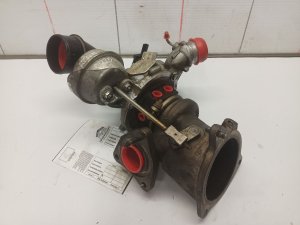
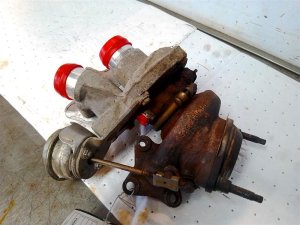
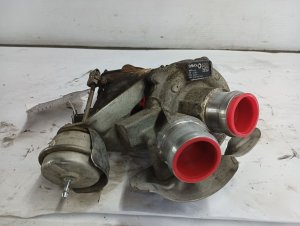
New Aftermarket Parts Available

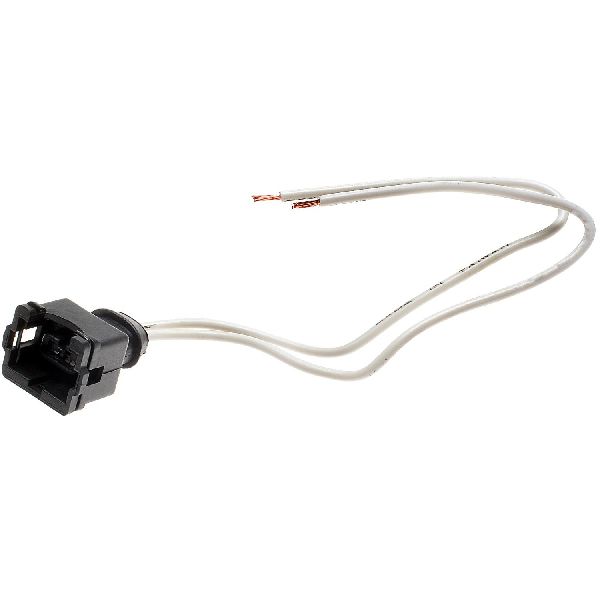

The information in this article is provided for general reference and educational purposes only. Vehicle specifications, procedures, and part compatibility can vary by production date, trim level, and region. Always consult your vehicle's factory service manual and verify part numbers before purchasing or performing repairs. Safety-critical components such as airbags, seat belts, and braking systems should be installed by a qualified professional.
- Ford Transit:
- 🧭 Diagnostic Flowchart
- 🎬 Helpful Videos
- 🛍️ Shop This Part
- What's Unique About the 2015-2019 Ford Transit
- Symptoms You May Notice
- Most Likely Causes
- Rare But Worth Checking
- Diagnosis Steps
- Parts You'll Likely Need
- Related Codes That Often Appear With This One
- Technical Service Bulletins (TSBs) & Recalls
- Mechanic-Grade Diagnostic Values
- Scan Tool Commands That Help
- Wiring & Ground Locations
- Real Owner Repair Stories
- OEM Part Supersession History
- Model Year Variations Within This Range
- Other Known Issues on This Vehicle
- Used vs. New Parts: Buying Guide for This Vehicle
- Real Owner Stories
- 2015 Ford F-150 3.5L EcoBoost
- 2012 Ford F-150 3.5L EcoBoost
- Related OBD-II Codes
- Frequently Asked Questions
- 🎟️ Get 5% Off