

P0299 on 2013-2018 Ford Focus ST: Turbo Underboost Causes and Fixes
On a 2013-2018 Focus ST, code P0299 is most often caused by a failed turbocharger wastegate actuator, a bad diverter (bypass) valve, or a boost leak from a cracked charge pipe. Expect to spend $50-$200 for a new valve or pipe, or potentially more for a wastegate repair.
- P0299 on a Focus ST means the turbo isn't making enough pressure, causing a major loss of power.
- Before suspecting a bad turbo, thoroughly check for boost leaks from charge pipes and inspect the diverter valve for tears; these are the most common and cheapest fixes.
- The wastegate actuator and its control solenoid are also frequent culprits and should be inspected for failure or excessive play.
- Replacing the whole turbo is expensive and often unnecessary; it should be the last resort after all other potential causes have been ruled out.
What's Unique About the 2013-2018 Ford Focus ST
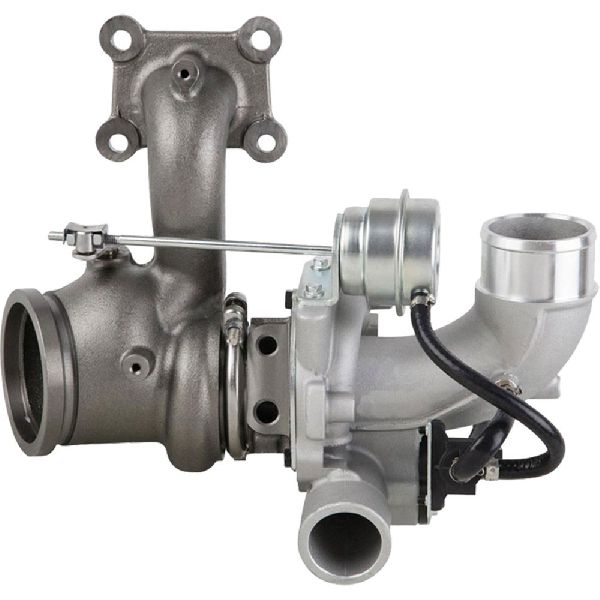
The 2.0L EcoBoost in the Focus ST uses a BorgWarner K03 turbocharger. While generally reliable, a very common failure point is the electronic wastegate actuator or the wastegate itself becoming loose or failing. Additionally, the factory electronic diverter valve (sometimes called a bypass valve) is known to fail, causing boost to leak back into the intake instead of being sent to the engine. The stock BPV is considered by Ford to be part of the turbo assembly and is not sold separately. These two issues account for a large percentage of P0299 codes on otherwise stock vehicles.
Symptoms You May Notice
- Significant loss of power and sluggish acceleration.
- Check Engine Light (MIL) is on.
- Vehicle may enter "limp mode," further restricting performance.
- More noticeable turbo lag.
- Hissing or whooshing sounds from the engine bay under boost, indicating a leak.
- Inability to build boost past a certain low level (e.g., 2-5 PSI).
- No longer hearing the normal sound of the bypass valve when letting off the throttle.
- Immediately replacing the entire turbocharger without first checking for simpler issues like a bad diverter valve, boost leak, or faulty boost control solenoid.
Most Likely Causes
- Failed Diverter Valve / Bypass Valve (BPV) 🔴 High Probability → Shop Turbocharger The factory-installed electronic diverter valve has a rubber diaphragm that is known to tear or the plastic housing can crack, causing pressurized air to leak instead of being routed to the engine.
How to confirm: Remove the valve (located on the turbo compressor housing, held by three bolts) and inspect it for tears in the rubber diaphragm or cracks in the body. You can also test the solenoid for proper function. A smoke test of the intake system may also reveal a leak from the BPV.
Typical fix: Replace the diverter valve. Many owners opt for more durable aftermarket units from brands like Go Fast Bits (GFB) or Turbosmart which use a piston design instead of a diaphragm. 🎬 See how to install a more durable GFB diverter valve. Ford does not sell the BPV separately from the turbocharger.
Est. part cost: $60-$180 - Boost Leak (Charge Pipes, Intercooler, Vacuum Lines) 🔴 High Probability The stock charge pipes are made of plastic and can develop cracks over time, especially at the seams. The cold-side charge pipe is a commonly reported failure point. Hose clamps can also loosen, causing pipes to separate under pressure, especially after modifications. A manufacturer report for a similar platform, NHTSA ODI #11522199, notes that a P0299 was triggered by a vacuum leak that required the owner to pull over and restart the vehicle to clear the condition.
How to confirm: Perform a boost leak test (or smoke test) by pressurizing the intake system with compressed air and listening for leaks. Visually inspect all charge pipes, couplers, and the intercooler for cracks or damage.
Typical fix: Replace the cracked pipe or damaged coupler. Tighten any loose clamps. Upgraded metal charge pipes are a common modification to prevent future failures.
Est. part cost: $100-$300 - Faulty Wastegate or Wastegate Actuator/Solenoid 🟡 Medium Probability → Shop Turbocharger The wastegate actuator arm can become loose or the electronic solenoid that controls it can fail, causing the wastegate to not close properly and bleed off exhaust pressure needed to spin the turbo. The solenoid is a common failure point and can stick open, closed, or operate erratically.
How to confirm: Visually inspect the wastegate actuator arm on the turbo for excessive play. Test the boost control solenoid (located near ignition coil #4) to ensure it is functioning electronically and holding vacuum.
Typical fix: If the solenoid has failed, it can be replaced. If the wastegate actuator or internal wastegate is the issue, Ford typically only sells the complete turbocharger assembly. Aftermarket actuators are available but may require a custom tune.
Est. part cost: $50-$80 for a solenoid, $1000+ for a full turbo assembly. - Faulty Boost Pressure Sensor (MAP Sensor) ⚪ Low Probability
How to confirm: Check the sensor's readings with an OBD-II scanner that can display live data. The pressure should read atmospheric pressure with the engine off and increase with boost. If the readings are erratic or do not change, the sensor is likely faulty.
Typical fix: Replace the boost pressure sensor. There are two on the Focus ST: one on the intake manifold and one on the cold-side intercooler charge pipe (this is the one most likely to cause false readings if faulty).
Est. part cost: $40-$80
Rare But Worth Checking
- Clogged Catalytic Converter: → Shop Catalytic Converter An exhaust restriction can prevent the turbo from spooling effectively. This is less common but can happen on higher-mileage vehicles and can be diagnosed by checking for exhaust flow.
- Failed Turbocharger: → Shop Turbocharger While often misdiagnosed, complete mechanical failure of the turbo (e.g., worn bearings, damaged turbine/compressor wheels) can cause underboost. NHTSA ODI #11567565 describes a situation where an owner found rubber and oil buildup inside vacuum lines which eventually led to the turbo failing.
- Faulty Vacuum Pump Check Valve: On some EcoBoost engines, a failed check valve in the vacuum pump can cause a lack of vacuum needed to operate the wastegate solenoid correctly. This is more documented on the 1.0L/1.5L but is worth considering if vacuum-related checks fail.
Diagnosis Steps
- Read the code with an OBD-II scanner to confirm P0299 is present. Note if any other codes are stored, such as P2262 or P024x codes.
- Perform a visual inspection of the engine bay. Look for any disconnected vacuum lines, loose charge pipe connections, or obvious cracks in plastic components, particularly the cold-side charge pipe. As noted in NHTSA ODI #11729819, a rough idle and P0299 code can occur if hoses are not hooked up correctly following service.
- Conduct a boost leak test (smoke test). Pressurize the system from the turbo inlet and listen/look for air escaping from charge pipes, couplers, the intercooler, or the diverter valve area. This is a critical step.
- Inspect the diverter valve (BPV). Remove the three bolts holding it to the compressor housing and check the diaphragm for tears. This is a very common failure point.
- Test the boost control solenoid (wastegate solenoid). It is located near the 4th ignition coil. Check for proper electrical function and ensure it holds vacuum when commanded.
- Inspect the wastegate actuator. With the engine off and cool, try to move the actuator arm. A small amount of play is normal, but excessive looseness ('wastegate rattle') can indicate a problem.
- If all else fails, inspect the turbocharger itself for shaft play or damage to the compressor/turbine wheels, which would indicate a mechanical failure requiring turbo replacement.
Parts You'll Likely Need
- Turbocharger Diverter Valve (Bypass Valve)
(OEM #Not sold separately by Ford. Part of turbo assembly.)— The factory valve's diaphragm is prone to tearing, causing a significant boost leak. It's one of the most common failure points for this code.
Trusted brands: Go Fast Bits (GFB T9354 or T9654), Turbosmart, Mountune
OEM price range: N/A
Aftermarket price range: $150-$220 - Boost Control Solenoid (Wastegate Solenoid)
(OEM #CJ5Z-9K378-A (Supersedes CJ5G-9K378-BA))— This solenoid controls the vacuum sent to the wastegate actuator. If it fails, the wastegate will not operate correctly, leading to underboost. It is a known failure point.
Trusted brands: Motorcraft/Pierburg (OEM)
OEM price range: $50-$80
Aftermarket price range: $40-$70 - Charge Pipe (Cold Side or Hot Side) — The stock plastic charge pipes can crack, especially along the factory seams, creating a boost leak. The cold side pipe is a frequent culprit. 🎬 Watch: How to replace your factory charge pipes with an upgraded kit.
Trusted brands: Ford (OEM), COBB Tuning, cp-e
OEM price range: $100-$150
Aftermarket price range: $150-$300
Related Codes That Often Appear With This One
- P2262 —
- P0243-P0250 —
Platform-Specific Known Issues
- A TSB (15-0040) was issued for the 2015 F-150 3.5L EcoBoost for a different code (P25B0), but no specific TSB for P0299 on the 2013-2018 Focus ST was found. The most relevant service action is Recall 18S32 for the Canister Purge Valve, which can cause general drivability issues but is not a direct cause of P0299.
Mechanic-Grade Diagnostic Values
- Manifold Absolute Pressure (MAP) Sensor Live Data — expected: Key On, Engine Off: Should read atmospheric pressure (~14.7 PSI at sea level). Engine Idling: Should read vacuum (significantly below atmospheric). Under Load: Should rise above atmospheric pressure as boost builds.. Failure: If the pressure reading does not rise above atmospheric pressure during a test drive under load, it confirms the turbo is not producing boost. If it rises, but not to the target level, it indicates an underboost condition (the code's trigger).
- Boost Control Solenoid Resistance — expected: While a specific Ohm value is not consistently documented, a typical automotive solenoid of this type measures between 20-40 Ohms.. Failure: A reading of infinite resistance (open circuit) or zero resistance (short circuit) indicates a failed solenoid coil.
Scan Tool Commands That Help
- FORScan / Ford IDS: Wastegate Control Solenoid (WGS) Duty Cycle Command — This bidirectional command allows a technician to manually command the wastegate solenoid to open or close while observing the physical movement of the wastegate actuator arm. This directly tests the entire control circuit and the actuator's mechanical function without having to drive the vehicle.
- FORScan / Ford IDS: Live Data PID Monitoring: 'BOOST_DSD' (Desired Boost) vs. 'MAP' (Actual Boost) — During a test drive, logging both the desired boost pressure commanded by the PCM and the actual boost pressure read by the MAP sensor can confirm the underboost condition. The P0299 code sets when the delta between these two values is too large for too long (e.g., >4 PSI for >5 seconds).
Wiring & Ground Locations
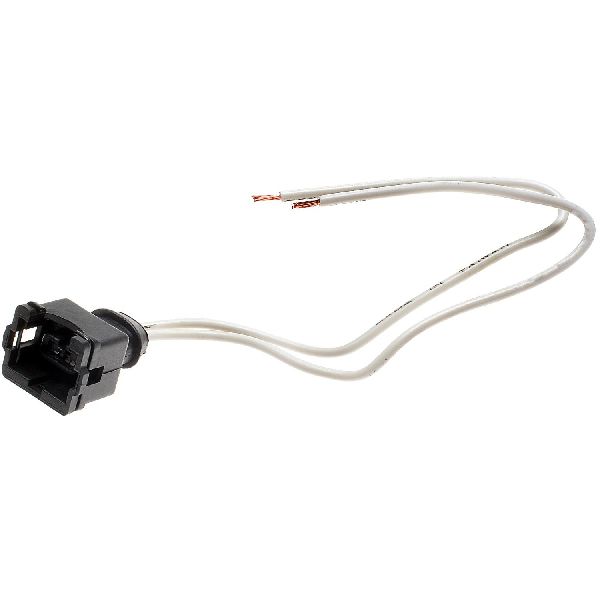
- Boost Control Solenoid Connector — On the solenoid itself, located near the 4th ignition coil, mounted to the valve cover.. Wiring to this solenoid can become brittle from heat or damaged, causing an open or short that prevents wastegate control. A forum user on a similar platform provided a diagram after their replacement pigtail had two wires of the same color. Pin 1: VREF (Voltage Reference), Pin 2: WGC (Wastegate Control - Signal from PCM).
Real Owner Repair Stories
- Reddit user 'No-Top1406' (Ford Focus ST (year not specified, but within range)) — P0299 Underboost code on a stock vehicle.
❌ Tried (didn't work) Initial visual inspection did not reveal the leak.
✅ What actually fixed it The cold side charge pipe had developed cracks, which were found and confirmed via a smoke test. Replacing the pipe resolved the code. - YouTube Commenter (Ford EcoBoost (model not specified, but common issue)) — P0299 code persisted after replacing a part.
❌ Tried (didn't work) Replacing the turbocharger bypass valve (blow-off valve).
✅ What actually fixed it A loose clamp on the charge pipe system was not properly tightened during reassembly. Tightening the clamp fixed the boost leak and cleared the code. - NHTSA ODI #11290067 — An owner reported taking their vehicle to the shop six times for a recurring P0299 error code. They noted the engine loses power when the code triggers, which is a protective measure for the vehicle.
- NHTSA ODI #11626996 — A manufacturer report for a similar EcoBoost platform describes a P0299 code that would return repeatedly after being reset. The owner noted the check engine light was preceded by a stall on acceleration while climbing a small hill.
"I Checked Everything" — The Actual Cause
- If a smoke test of the charge air system comes back clean, the cause is almost certainly not a static boost leak. The next most likely culprits are: 1) A failed boost control (wastegate) solenoid that isn't commanding the wastegate correctly. 2) An internal failure of the diverter valve (BPV), where the diaphragm is torn and only leaks under significant pressure, not the low pressure of a smoke test. 3) A mechanical issue with the wastegate itself, such as a loose actuator arm or worn internal flapper, preventing it from sealing properly.
OEM Part Supersession History
CJ5G-9K378-BA / CJ5G-9K378-BB (Engineering Numbers)→CJ5Z-9K378-A, which was then superseded by CJ5Z-9K378-B.— Likely internal revisions for improved reliability or manufacturing changes.
Heads up: The parts are generally interchangeable, but it is always recommended to use the latest revision (CJ5Z-9K378-B). Note that this part is shared with other EcoBoost engines like the 1.6L.
Model Year Variations Within This Range
- 2013-2018: No significant variations have been identified regarding the common causes or parts related to a P0299 code between the pre-facelift (2013-2014) and facelift (2015-2018) Focus ST models. The core 2.0L EcoBoost engine, K03 turbocharger, and control systems remained consistent.
Diagnostic Flowchart
Other Known Issues on This Vehicle
Issues unrelated to this code that are worth knowing about as an owner of this generation:
- Canister Purge Valve (CPV) Failure 🔴 High — Extremely common. Can fail multiple times. Often causes DTC P1450 and difficulty starting after refueling. (Ref: Recall 18S32 / NHTSA 18V735; Customer Satisfaction Program 24N07.)
- Weak Manual Transmission Synchronizers 🟠 Medium — Common, especially on pre-2015 models and tuned cars. Leads to grinding or being locked out of gears, most often 2nd and 3rd.
- Passenger Side Hydraulic Engine Mount Failure 🟠 Medium — The stock fluid-filled mount is prone to leaking and collapsing, often before 60,000 miles, causing excessive engine vibration.
- Low-Speed Pre-Ignition (LSPI) 🔴 High — A risk inherent to small-displacement, direct-injection turbo engines. Lugging the engine (high gear, low RPM) can cause destructive detonation. Mitigated by using correct spec oil (API SN PLUS or newer) and avoiding low-RPM, high-load situations.
- Cracked Cylinder Head 🟡 Low — Rare on stock vehicles but a known failure point, especially on tuned cars. The integrated exhaust manifold ('headifold') design can develop cracks near the turbo flange.
- Wiring Harness Faults (Pre-facelift) 🟡 Low — Some pre-2015 cars experienced issues with the engine wiring loom, causing fluctuating revs or stalling. A recall was issued in the US, and some UK cars were repaired under warranty. (Ref: US-specific recall)
Used vs. New Parts: Buying Guide for This Vehicle
When a used part is the smart pick: Used parts can be a smart choice for non-wear items. A used charge pipe (hot or cold side) or a used intercooler from a reputable salvage yard can offer significant savings, provided they are thoroughly inspected.
Donor-vehicle mileage cap: roughly under 80000 miles for the part to have meaningful remaining life.
What to inspect on the donor part:
- For charge pipes: Inspect plastic seams and mounting points for hairline cracks. Squeeze the pipe to check for brittleness.
- For intercoolers: Check for crushed or bent fins that could impede airflow and look for any signs of cracks or damage at the end tanks and hose connections.
- For a complete turbocharger: Check the compressor and turbine wheels for any chips or damage. Attempt to wiggle the center shaft; any significant side-to-side (radial) or in-and-out (axial) play indicates worn bearings and the unit should be rejected.
OEM-only on this vehicle (don't cheap out):
- While not strictly 'OEM-only', using a Motorcraft/Pierburg branded Boost Control Solenoid is highly recommended over cheap, unbranded aftermarket alternatives, which are a common source of repeat failures.
Aftermarket brands forum-validated for this vehicle:
- Diverter/Bypass Valve: Go Fast Bits (GFB), Turbosmart, Mountune
- Charge Pipes: COBB Tuning, cp-e, Mountune
Brands owners have reported issues with on this vehicle:
- Generic, unbranded electronic sensors and solenoids from online marketplaces are frequently reported on forums as being dead-on-arrival or failing prematurely.
Real Owner Stories
Aggregated from forums and TSBs cited above. Mileages and costs reflect what owners reported in those sources.
2013-2018 Ford Focus ST 2.0L EcoBoost
Symptoms: Running under boost code P0299 on a stock vehicle.
What fixed it: Found and repaired cracks in the cold side charge pipe.
Source hint: r/FocusST on Reddit: Thread 'Running under boost code P0299'
2013-2018 Ford Focus ST 2.0L EcoBoost
Symptoms: No longer hearing the normal sound of the bypass valve (BPV) and experiencing wastegate rattle.
What fixed it: Diagnosis pointed to the bypass valve and wastegate as the most common culprits.
Source hint: r/FocusST on Reddit: Thread 'Good ol' p0299: Thoughts?'
2013-2018 Ford Focus ST 2.0L EcoBoost
Symptoms: P0299 code present with sluggish acceleration.
What fixed it: Comprehensive diagnostic check of the boost leaks, solenoid, actuator, and MAP sensor.
Source hint: r/FocusST on Reddit: Thread 'P0299 code'
Related OBD-II Codes
Frequently Asked Questions
Does Ford sell the bypass valve (BPV) separately for the 2013-2018 Focus ST?
Is there a specific TSB for P0299 on the Focus ST?
Where is the boost control solenoid located on my Focus ST?
Which charge pipe is most likely to cause a P0299 code on this vehicle?
How many MAP sensors does the Focus ST 2.0L EcoBoost have?
Can I fix the P0299 code by replacing just the wastegate actuator?
Helpful Videos
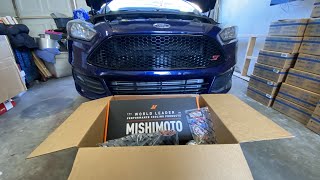
We Have This Part in Stock


The information in this article is provided for general reference and educational purposes only. Vehicle specifications, procedures, and part compatibility can vary by production date, trim level, and region. Always consult your vehicle's factory service manual and verify part numbers before purchasing or performing repairs. Safety-critical components such as airbags, seat belts, and braking systems should be installed by a qualified professional.
- Ford Focus ST:
- 🧭 Diagnostic Flowchart
- 🎬 Helpful Videos
- 🛍️ Shop This Part
- What's Unique About the 2013-2018 Ford Focus ST
- Symptoms You May Notice
- Most Likely Causes
- Rare But Worth Checking
- Diagnosis Steps
- Parts You'll Likely Need
- Related Codes That Often Appear With This One
- Platform-Specific Known Issues
- Mechanic-Grade Diagnostic Values
- Scan Tool Commands That Help
- Wiring & Ground Locations
- Real Owner Repair Stories
- "I Checked Everything" — The Actual Cause
- OEM Part Supersession History
- Model Year Variations Within This Range
- Other Known Issues on This Vehicle
- Used vs. New Parts: Buying Guide for This Vehicle
- Real Owner Stories
- 2013-2018 Ford Focus ST 2.0L EcoBoost
- 2013-2018 Ford Focus ST 2.0L EcoBoost
- 2013-2018 Ford Focus ST 2.0L EcoBoost
- Related OBD-II Codes
- Frequently Asked Questions
- 🎟️ Get 5% Off