

P0299 on 2017-2022 Genesis G90 3.3T: Turbo Underboost Causes and Fixes
P0299 on a Genesis G90 3.3T means one of the turbos isn't making enough boost. The most common causes are a vacuum leak in the charge pipes or a failing electronic wastegate actuator, which is often part of the turbocharger assembly. A critical recall (NHTSA 24V-191) for the left-side turbo oil feed line can also lead to turbo failure and this code. Expect a diagnostic cost of $100-$200, with repairs ranging from a simple clamp tightening to a full turbo replacement costing thousands.
- P0299 on the G90 3.3T indicates a turbo is not producing enough pressure, leading to a significant loss of power.
- Before suspecting expensive turbo failure, perform a thorough smoke test to check for cheaper-to-fix boost leaks.
- A faulty electronic wastegate actuator is a common cause, but it is integrated into the turbocharger, making replacement costly.
- Be aware of the safety recall (NHTSA 24V-191) for the left-side turbo oil feed line, as a failure here can destroy the turbo.
- Due to the complexity and need for special tools, diagnosis and repair are best left to a qualified professional.
What's Unique About the 2017-2022 Genesis G90
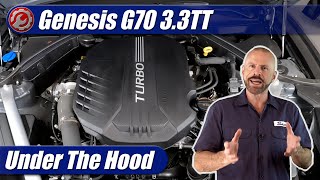
The Genesis 3.3L twin-turbo engine (Lambda II G6DP) uses two small, 🎬 Watch: A detailed breakdown of the 3.3L twin-turbo engine. fast-spooling turbos, each with its own electronic wastegate actuator (EWGA). Unlike simpler pneumatic systems, a failure in the electronic actuator often necessitates replacing the entire turbocharger assembly. Furthermore, these engines have a well-documented issue with the oil feed line to the left-side (driver-side) turbo that is subject to a major recall (NHTSA 24V-191 / Hyundai 019G); a failure here can starve the turbo of oil, leading to catastrophic failure and an underboost code.
Symptoms You May Notice
- Noticeable loss of engine power and sluggish acceleration.
- Check Engine Light is on.
- Vehicle may enter 'limp mode' with severely restricted power.
- Inability to use sport mode features; car feels like it's stuck in 'comfort' mode.
- Hissing or whistling sounds from the engine bay, especially under acceleration.
- High-pitched whining or siren-like noise from the engine that changes with RPM.
- Reduced fuel economy.
- Blue or gray smoke from the exhaust, particularly during acceleration (indicates failing turbo seals).
- Replacing the turbocharger when the actual problem is a small, hard-to-find vacuum leak or a cracked intercooler. A thorough smoke test should always be performed before condemning an expensive turbo.
Most Likely Causes
- Boost/Charge Air Leak 🔴 High Probability The complex plumbing of a twin-turbo system has many connection points (hoses, clamps, intercooler) that can fail, loosen, or crack over time, creating a leak. Split intercoolers have also been reported as a cause on related Kia/Hyundai models.
How to confirm: Perform a visual inspection of all charge pipes from the turbos to the throttle body for cracks or loose clamps. A professional smoke test is the most effective way to pinpoint a leak. 🎬 See how to find hidden boost leaks using a smoke machine.
Typical fix: Tighten loose clamps or replace the failed hose, intercooler, or gasket.
Est. part cost: $5-$500 - Faulty Electronic Wastegate Actuator (EWGA) 🔴 High Probability → Shop Turbocharger The electronic actuators are mounted directly to the hot turbo housing and can fail from heat and vibration. The wastegate linkage can also stick or develop excessive play.
How to confirm: A high-end scan tool can be used to command the wastegate and check its position sensor feedback. A diagnostic check of the EWGA voltage should show between 4.1-4.3V; readings outside this range suggest a fault. A visual inspection may show if the actuator rod is disconnected or stuck.
Typical fix: The wastegate actuator is typically integrated with the turbocharger. On the G90, this means the entire turbocharger assembly usually needs to be replaced. While some actuators are sold separately for related models, replacement often requires careful preload adjustment. 🎬 Watch: Professional guide to servicing electronic wastegate actuators.
Est. part cost: $1500-$2500 - Failing Turbocharger 🟡 Medium Probability → Shop Turbocharger Turbo failure can result from oil starvation or contamination. A known recall (NHTSA 24V-191) for the left-side turbo's oil feed pipe highlights a risk of oil leaks, which can lead to turbo failure. The original pipe material was not durable enough for the high heat and was updated in August 2021.
How to confirm: Remove the intake pipe to the turbo and check for excessive shaft play (no in-and-out movement is acceptable) or contact between the compressor wheel and housing. Blue/gray smoke from the exhaust is also a sign of failing internal seals.
Typical fix: Replacement of the affected turbocharger assembly. If one turbo fails due to age/wear, some owners replace both as a preventative measure due to the high labor cost.
Est. part cost: $1500-$2500 - Faulty Boost Pressure Sensor (MAP Sensor) ⚪ Low Probability
How to confirm: Use a scan tool to compare the boost pressure reading with a manual gauge. If the readings don't match, the sensor is likely faulty. Often, a faulty sensor will trigger other codes in addition to P0299.
Typical fix: Replace the boost pressure sensor.
Est. part cost: $50-$150
Rare But Worth Checking
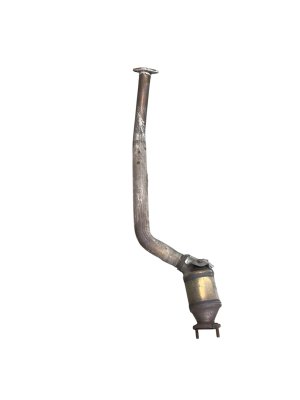
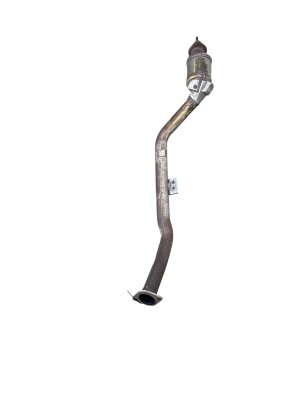
- Restricted Air Filter or Exhaust: → Shop Air Cleaner Assembly A severely clogged engine air filter or a blocked catalytic converter can restrict airflow enough to prevent the turbos from building sufficient boost.
- Carbon Buildup on Intake Valves: As a Gasoline Direct Injection (GDI) engine, the Lambda II is prone to carbon buildup over time, which can restrict airflow into the cylinders. This is a known pattern on these engines.
- Faulty Fuel Injectors: In some cases on related platforms (GV70), faulty fuel injectors have been identified as the root cause after a P0299 code, requiring multiple dealer visits to diagnose.
Diagnosis Steps
- Scan the vehicle for any other stored trouble codes. Address those first, as they can provide clues (e.g., P2563 for a wastegate sensor).
- With a capable scan tool, monitor the desired boost pressure versus the actual boost pressure while driving. A large discrepancy confirms the underboost condition.
- Perform a thorough visual inspection of the entire intake tract. Look for any cracked hoses, disconnected lines, or loose clamps between the air filters and the engine intake. Check for obvious signs of oil leaks, especially around the left-side turbo oil feed line.
- Conduct a smoke test on the intake and charge air system to identify any leaks that are not visually apparent. This is a critical step before replacing expensive parts.
- If no leaks are found, inspect the wastegate actuators. Check if the linkage is connected and moves freely. Use a scan tool to command the wastegates to open and close to verify electronic function. Check actuator voltage (should be 4.1-4.3V).
- Inspect the turbochargers. Remove the intake boots and check for oil in the intake, damage to the compressor wheels, and excessive shaft play. There should be no in-and-out (axial) play.
- Check the engine oil level and condition. Low or contaminated oil can damage the turbochargers. Verify the status of recall 24V-191.
- If all other components check out, test the boost pressure sensor by comparing its readings to a known-good mechanical gauge.
Parts You'll Likely Need
- Turbocharger Assembly (Right Side)
(OEM #28231-3L110)— This is required if the electronic wastegate actuator has failed or if the turbo has internal damage. The actuator is typically not sold separately.
Trusted brands: Hyundai/Kia OE
OEM price range: $1500-$2500
Aftermarket price range: $800-$1500 - Turbocharger Assembly (Left Side)
(OEM #28231-3L100)— This is required if the electronic wastegate actuator has failed or if the turbo has internal damage, potentially from the oil feed line issue.
Trusted brands: Hyundai/Kia OE, Garrett
OEM price range: $1500-$2500
Aftermarket price range: $800-$1500 - Turbocharger Oil Feed Pipe (Left Side)
(OEM #28240-3L100)— This is the subject of NHTSA recall 24V-191. The original can crack and leak oil, starving the turbo. The replacement part is made of more durable stainless steel.
Trusted brands: Hyundai/Kia OE
OEM price range: $50-$100 (Free if replaced under recall) - Charge Pipe / Intake Hose — These rubber or plastic components can crack with age and heat, causing a boost leak, which is a very common cause of P0299.
Trusted brands: Hyundai/Kia OE
OEM price range: $50-$250
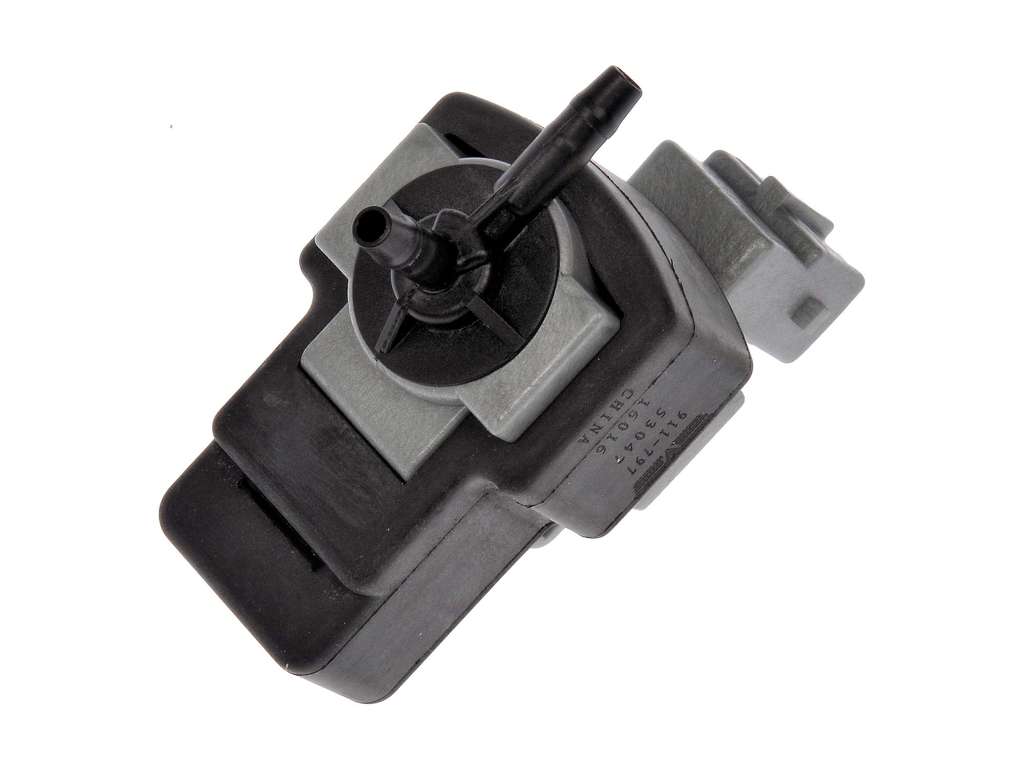
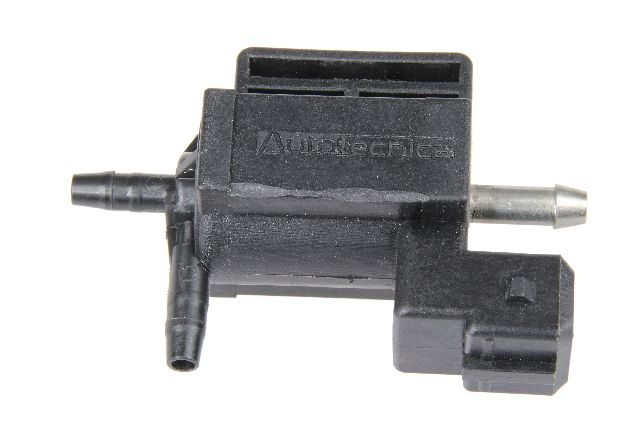
Aftermarket price range: $30-$150 - Boost Pressure Sensor — If the sensor provides inaccurate readings to the ECU, it can falsely trigger an underboost code.
Trusted brands: Bosch, Hyundai/Kia OE
OEM price range: $80-$150
Aftermarket price range: $40-$90
Related Codes That Often Appear With This One
- P0234 (Turbocharger Overboost Condition): Can appear intermittently with P0299 if the wastegate actuator is sticking, causing both underboost and overboost at different times.
- P2563 (Turbocharger Boost Control Position Sensor 'A' Circuit Range/Performance): This code points directly to a problem with the wastegate actuator's position sensor, which can be the root cause of the P0299 underboost.
Technical Service Bulletins (TSBs) & Recalls
- While not a TSB, NHTSA Recall 24V-191 (Manufacturer Recall 019G) is the most critical document related to this engine's turbo system. It supersedes a previous recall (19V-538) and covers approximately 28,439 Genesis G70, G80, and G90 vehicles with the 3.3L engine. The recall addresses the left turbocharger oil feed pipe's tendency to crack from heat, leak oil, and cause a fire risk.
Platform-Specific Known Issues
- Recall for Left-Side Turbo Oil Feed Pipe: Hyundai issued recall 24V-191 (Hyundai #019G) for the left-side (driver-side) turbocharger oil feed pipe (part 28240-3L100), which can degrade from heat, crack, and leak oil. This can lead to oil starvation, turbocharger failure, a risk of fire, and the P0299 code. The remedy is a replacement pipe made of stainless steel.
Mechanic-Grade Diagnostic Values
- P0299 Trigger Condition — expected: Actual boost pressure should be within 400hpa of target boost pressure.. Failure: Code is set when actual boost is >400hpa below target for 15 seconds above 2000 RPM.
- Electronic Wastegate Actuator (VGT) Duty Cycle — expected: The ECM controls the actuator via a duty cycle signal. A normal range is not specified, but a scan tool should show active changes.. Failure: A fixed duty cycle percentage (e.g., stuck at 8% or 92%) when commanding the wastegate suggests a failure in the actuator or circuit.
Scan Tool Commands That Help
- Hyundai GDS (or equivalent high-end scan tool): Component Change Routine — This procedure must be performed after replacing a Variable Geometry Turbocharger (VGT) to allow the ECU to learn the new component's characteristics. Failure to do so can result in incorrect performance and continued issues.
- Hyundai GDS (or equivalent high-end scan tool): Actuator Test (Wastegate) — Used to command the electronic wastegate actuator to open and close. This verifies if the actuator motor is responding to ECU commands and helps differentiate a mechanical jam from an electrical failure.
Wiring & Ground Locations
- ECU/PCM — The ECU for the 3.3T G90 is a Continental SIM2K-26x. On the related G70, the ECU is located in the engine bay on the driver's side, just ahead of the brake fluid reservoir and next to the strut tower. The G90 location is similar.. This is the control center for the turbo system. All sensor inputs (MAP, etc.) and actuator outputs (wastegate control) originate or terminate here. Checking for corrosion or damage at the ECU connectors is a valid, though rare, diagnostic step.
Real Owner Repair Stories
- Reddit user, r/GenesisGV70 (Brand new 2024 Genesis GV70 3.5T (similar twin-turbo setup)) — Check engine light with code P0299. Sport mode was disabled; the car felt stuck in comfort mode with no change in engine sound or seat bolster adjustment when selected.
❌ Tried (didn't work) Initial code read at an auto parts store.
✅ What actually fixed it The user took the brand new vehicle to the dealer for warranty repair. While the final fix was not posted by the user, the symptoms strongly point to an electronic wastegate actuator (or its calibration) being faulty from the factory, as it directly affected the drive mode selection logic.
OEM Part Supersession History
Unknown, pre-recall version→28240-3L100— The original left-side turbo oil feed pipe was made of a material that could degrade and crack under high heat, leading to oil leaks and potential engine fires. The new part is made of a more durable material (stainless steel).
Model Year Variations Within This Range
- 2020-2022: The Genesis G90 received a major facelift for the 2020 model year, with significant exterior and interior design changes. However, the powertrain, including the 3.3L Twin-Turbo V6 engine and its specifications (365 hp, 376 lb-ft torque), remained the same as the 2017-2019 models. Therefore, the causes and fixes for P0299 are consistent across the entire 2017-2022 range.
Diagnostic Flowchart
Used vs. New Parts: Buying Guide for This Vehicle
When a used part is the smart pick: For purely mechanical, non-wear items like charge pipes or intercoolers, a used part from a low-mileage, accident-damaged vehicle can be a cost-effective option. A used boost pressure sensor is also a reasonable choice if it comes with a warranty.
Donor-vehicle mileage cap: roughly under 60000 miles for the part to have meaningful remaining life.
What to inspect on the donor part:
- For Turbochargers: There must be ZERO in-and-out (axial) shaft play. Minimal side-to-side (radial) play is acceptable.
- Inspect compressor and turbine wheels for any signs of chipping, bending, or contact with the housing (shiny marks on blade edges).
- Check the housing for cracks, especially around the hot-side wastegate port.
- Ensure the electronic wastegate actuator arm is present and not seized.
- The turbo should be dry, with no heavy oil residue in the compressor inlet or turbine outlet, which would indicate seal failure.
OEM-only on this vehicle (don't cheap out):
- Turbocharger Oil Feed Line (Left Side): Only use the updated OEM part (28240-3L100) to ensure the recall-related defect is resolved. Do not use a used part from an older vehicle.
Aftermarket brands forum-validated for this vehicle:
- Garrett: Garrett is the Original Equipment Manufacturer (OEM) for the turbos on this engine, so a Garrett-branded replacement is equivalent to dealer quality.
Brands owners have reported issues with on this vehicle:
- Unbranded, no-name turbochargers from online marketplaces should be avoided. The risk of premature failure due to poor materials, incorrect balancing, or faulty wastegate actuators is extremely high, and can lead to catastrophic engine damage.
Real Owner Stories
Aggregated from forums and TSBs cited above. Mileages and costs reflect what owners reported in those sources.
2024 Genesis GV70 (3.3T Platform Mate) — ~1800 miles
Symptoms: Check engine light came on, and the vehicle lost its Sport mode functionality, feeling as if it were stuck in comfort mode.
What fixed it: The specific repair was not detailed in the source.
Source hint: Reddit r/GenesisGV70 - Brand New 2024 GV70 with Check Engine Light
Kia Stinger GT (3.3T Platform Mate)
Symptoms: A significant loss of engine torque and a feeling of no boost power.
What fixed it: Diagnosed as a failed Electronic Wastegate Actuator (EWGA) after a voltage check showed an out-of-spec reading (correct range is 4.1-4.3V).
Source hint: Kia Stinger Forum - No boost
Kia (3.3T Platform Mate)
Symptoms: P0299 code was present.
What fixed it: After a dealer incorrectly replaced a turbocharger, the actual problem was found to be a split intercooler. Replacing the intercooler resolved the code.
Source hint: Reddit r/Justrolledintotheshop - Kia dealer threw a turbo at this for a P0299...
Related OBD-II Codes
Frequently Asked Questions
Is there a recall for my 2017-2022 G90 that could cause the P0299 code?
My mechanic says the electronic wastegate actuator (EWGA) is bad. Can I just replace the actuator itself?
I have a P0299 code. Should I just replace the turbocharger?
What does the hissing or whistling sound I hear during acceleration mean?
How can my mechanic confirm the electronic wastegate actuator (EWGA) is faulty?
My G90 has a P0299 code and is emitting blue smoke from the exhaust. What does this indicate?
Helpful Videos
Used OEM Parts in Stock
New Aftermarket Parts Available

The information in this article is provided for general reference and educational purposes only. Vehicle specifications, procedures, and part compatibility can vary by production date, trim level, and region. Always consult your vehicle's factory service manual and verify part numbers before purchasing or performing repairs. Safety-critical components such as airbags, seat belts, and braking systems should be installed by a qualified professional.
- Genesis G90:
- 🧭 Diagnostic Flowchart
- 🎬 Helpful Videos
- 🛍️ Shop This Part
- What's Unique About the 2017-2022 Genesis G90
- Symptoms You May Notice
- Most Likely Causes
- Rare But Worth Checking
- Diagnosis Steps
- Parts You'll Likely Need
- Related Codes That Often Appear With This One
- Technical Service Bulletins (TSBs) & Recalls
- Platform-Specific Known Issues
- Mechanic-Grade Diagnostic Values
- Scan Tool Commands That Help
- Wiring & Ground Locations
- Real Owner Repair Stories
- OEM Part Supersession History
- Model Year Variations Within This Range
- Used vs. New Parts: Buying Guide for This Vehicle
- Real Owner Stories
- 2024 Genesis GV70 (3.3T Platform Mate) — ~1800 miles
- Kia Stinger GT (3.3T Platform Mate)
- Kia (3.3T Platform Mate)
- Related OBD-II Codes
- Frequently Asked Questions
- 🎟️ Get 5% Off