

P0300 on 2008-2013 BMW M3 (E90/E92/E93): Causes for S65 Random Misfire
On the E9x M3, a P0300 code is most often caused by failing throttle body actuators or a bad idle control valve, two well-known issues on the S65 engine. While standard ignition and fuel issues are possible, these platform-specific parts should be checked first, especially if accompanied by BMW-specific codes for these components. A DIY replacement of both actuators can cost around $800-$1200 in parts.
- For a P0300 on an E9x M3, immediately suspect the throttle body actuators and idle control valve, as these are the most common, platform-specific causes.
- Use a BMW-specific scan tool to check for other codes; codes like 2B15/2B16 are a definitive sign of throttle actuator failure.
- If the Check Engine Light is flashing, stop driving to prevent expensive damage to your catalytic converters.
- Due to the risk of catastrophic engine failure from a stuck-open fuel injector, consider preventative replacement if your car has over 80,000 miles, especially if you smell raw fuel.
- While standard tune-up parts like spark plugs can be the cause, don't overlook the well-documented electronic failures unique to the S65 engine.
What's Unique About the 2008-2013 BMW M3 (E90/E92/E93)
The high-revving, naturally aspirated S65 V8 is a masterpiece of engineering, but it has several well-documented weak points that directly lead to a P0300 code. Unlike more common engines where P0300 points to spark plugs or vacuum leaks, on the S65 it is frequently caused by the failure of electronic components specific to its design, namely the two throttle body actuators and the idle control valve. These parts are known to fail with age and mileage, often causing random misfires and limp mode before they fail completely. A unique feature of the S65 (and related S85 V10) is its use of Ionic Current Control Modules to detect knock and misfires, which can also be a point of failure. Owners should investigate these S65-specific issues before spending money on generic misfire causes, as they are the highest probability culprits.
Symptoms You May Notice
- Rough or unstable idle, sometimes described as 'hunting' for idle.
- Engine stalling at stops or when returning to idle.
- Reduced engine power and performance, often triggering 'limp mode' with an 'Engine Malfunction/Reduce Power' message.
- Illuminated or flashing Check Engine Light.
- Hesitation or jerking during acceleration.
- Noticeable decrease in fuel economy.
- Increased pops and bangs from the exhaust.
- Strong smell of raw fuel from the exhaust.
- Replacing only spark plugs and coils without investigating throttle actuators or the idle control valve. While ignition components are a valid cause, the platform-specific electronic parts are more probable culprits for a persistent P0300 on the S65.
- Assuming a vacuum leak. While possible, the S65 engine's individual throttle body design makes it less prone to the single large intake manifold leaks that plague other BMW engines. A smoke test is still a valid diagnostic step but should be performed after checking the more common S65-specific faults.
Most Likely Causes
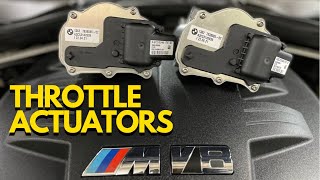
- Failing Throttle Body Actuators (TBA) 🔴 High Probability → Shop Fuel Injection Throttle Body The S65 uses two electronic throttle actuators, one for each bank of four cylinders. The internal plastic gears and electronic components are a known major failure point on the S65 engine, wearing out over time and causing erratic function or complete failure. The failure rate of the original units is considered to be 100% over the life of the vehicle.
How to confirm: Use a BMW-specific scan tool (like ISTA) to check for codes like 2B15 (Throttle Valve Actuator Control Monitor Bank 1) or 2B16 (Bank 2). The car will often enter limp mode with DSC and engine lights illuminated. Failure is often intermittent at first, getting progressively worse, especially when the engine is warm. A test plan in ISTA can be run to check actuator function.
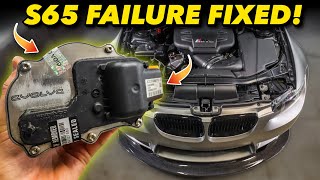
Typical fix: Replace both throttle body actuators. 🎬 See this step-by-step guide for replacing your throttle body actuators. It is strongly recommended to replace them in pairs, as the failure of one is often followed by the failure of the other. The OEM part number is 13627838085. Rebuild services with upgraded gears (Teflon-reinforced or other durable plastics) and electronics are a popular, cost-effective option from companies like G.A.S. German Auto Solutions, M Power Motorsports, and Euro Power Motorsports.
Est. part cost: $400-$600 per actuator (OEM or high-quality aftermarket) - Failing Idle Control Valve (ICV) 🔴 High Probability The ICV is an electronic actuator that regulates idle speed by bypassing the main throttle plates. Like the TBAs, it is a known failure point on the S65 that wears out, leading to an unstable or rough idle and stalling, especially when the engine is warm.
How to confirm: Symptoms include a hunting or surging idle, erratic RPM fluctuations at idle, and stalling when coming to a stop. A BMW-specific scan tool like ISTA can run a service function to test the ICV's operation. A faulty ICV can cause misfires across all cylinders.
Typical fix: Replacement of the idle control valve. The part is located deep within the engine's V, underneath the intake plenum, making replacement labor-intensive. The OEM part number is 13417838024.
Est. part cost: $350-$500 - Worn Spark Plugs or Faulty Ignition Coils 🟡 Medium Probability → Shop Ignition Coil The S65 is a high-performance engine that has a recommended spark plug change interval of around 30,000-37,000 miles. Worn plugs are a common cause of general misfires. While coils are robust, they can still fail, and a failure on multiple cylinders at once can trigger a P0300.
How to confirm: Check service records for the last spark plug change. The OEM plugs are NGK LKR8AP or Bosch YR7MPP33. Inspect plugs for wear, fouling, or incorrect gap. A BMW-specific scan tool can monitor misfires per cylinder in real-time ('smooth running values' in ISTA) to help isolate a weak coil, which can then be swapped to another cylinder to see if the misfire follows.
Typical fix: Replace all 8 spark plugs if they are due. Replace any faulty ignition coils. Recommended brands include Bosch and Delphi.
Est. part cost: $100-$150 for a set of 8 plugs; $30-$50 per ignition coil - Leaking or Clogged Fuel Injectors 🟡 Medium Probability → Shop Fuel Injector The S65's 'lifetime' in-tank fuel filter can degrade, allowing debris to reach and damage the injectors. A stuck-open injector is a known, and potentially catastrophic, failure mode that can lead to cylinder wall scoring from fuel wash or hydrolock.
How to confirm: A strong smell of raw fuel from the exhaust is a key indicator. A cold start may be very lumpy and rough as leaked fuel burns off. A mechanic can perform a fuel injector flow test. A DIY method involves removing the fuel rail, pressurizing the system, and visually checking for drips from the injector nozzles.
Typical fix: Replace the faulty injector(s). Many owners opt to replace all 8 as a preventative measure due to the high risk of engine damage from a failure. The OEM Bosch part number is 13647838440 (Bosch # 0280158164). Installing an in-line serviceable fuel filter is a popular modification to protect new injectors.
Est. part cost: $25-$50 per injector (Bosch OEM) - Faulty Oxygen (O2) Sensors ⚪ Low Probability → Shop Oxygen Sensor The pre-catalytic converter O2 sensors provide crucial data for fuel trim. If one or more are failing, they can send incorrect data to the DME, causing an entire bank to run too rich or lean, which can result in misfires across multiple cylinders.
How to confirm: Check for other codes related to O2 sensors or fuel trim (e.g., 275E, 275D, 29E0). A scan tool can monitor O2 sensor voltage in real-time to check for lazy or non-responsive sensors. A bad sensor can cause a rich condition, poor fuel economy, and a rotten egg smell from the exhaust.
Typical fix: Replace the faulty O2 sensor(s). It's best to use high-quality OEM brands like Bosch. Swapping sensors from bank to bank can help confirm if the fault follows the sensor.
Est. part cost: $100-$180 per sensor
Rare But Worth Checking
- Exhaust Leak: A significant leak at the header-to-midpipe gasket can introduce unmetered oxygen into the exhaust stream, confusing the pre-cat O2 sensors and causing incorrect fuel trims that lead to misfires. One owner on Reddit traced their persistent P0300 and P2099 codes to blown gaskets between the headers and mid-pipe.
- Low Fuel Pressure: While less common than injector issues, a weak low-pressure fuel pump (in-tank) or a failing fuel pressure sensor can starve the engine of fuel under load, causing misfires across all cylinders.
- Crankshaft Position Sensor: → Shop Engine Crankshaft Position Sensor A failing crankshaft position sensor can send erratic signals to the DME, causing it to misinterpret engine speed and trigger false misfire codes. This is a less common cause but can lead to a P0300.
- Ionic Current Control Module: The S65 uses two Ionic Current Control Modules (one per bank) to detect engine knock and misfires by measuring ion flow across the spark plug gap after combustion. A failing module can cause false misfire signals or actual misfires by disrupting ignition control. Swapping the modules between banks can help diagnose if the problem follows the module.
Diagnosis Steps
- Read all codes with a BMW-specific scan tool (like ISTA, INPA, or a high-end scanner). Pay close attention to any codes for throttle actuators (2B15/2B16), idle control, or O2 sensors, as these point to the most likely causes.
- If throttle actuator codes are present, this is your primary suspect. Diagnose and replace them, preferably in pairs.
- If no other codes are present, observe the idle behavior when the engine is fully warm. If the idle is erratic, hunting, or stalling, suspect the Idle Control Valve (ICV). Use ISTA to run the ICV test function.
- If idle is mostly stable but misfires occur under load, investigate the ignition and fuel systems.
- Check the service history for spark plugs. If they are over 30,000 miles old, replace them with OEM spec plugs (NGK LKR8AP).
- Use your scan tool's live data to monitor 'smooth running values' for each cylinder to identify which cylinders are misfiring. Swap ignition coils between a misfiring and a healthy cylinder to see if the misfire follows the coil.
- If misfires are isolated to one bank (e.g., cylinders 5-8) and ignition components are good, suspect a pre-cat O2 sensor or an Ionic Current Control Module. Swap the modules between banks to see if the misfire moves to the other bank.
- Check for exhaust leaks before the primary O2 sensors, especially at the header-to-X-pipe gaskets.
- If all else fails, investigate fuel delivery. Check fuel pressure and consider having the fuel injectors professionally cleaned and tested.
Parts You'll Likely Need
- Throttle Body Actuator
(OEM #13627838085)— This is a primary and very common failure point on the S65 engine that directly causes random misfires and limp mode.
Trusted brands: VDO (OEM), Bosch
OEM price range: $500-$700
Aftermarket price range: $400-$600 - Idle Control Valve
(OEM #13417838024)— Another common S65-specific failure that causes rough idle, stalling, and can contribute to a P0300 code.
Trusted brands: Bosch (OEM)
OEM price range: $400-$500
Aftermarket price range: $350-$450 - Spark Plug
(OEM #12120032273)— Standard maintenance item. Worn plugs are a common cause of misfires on any engine, including the S65.
Trusted brands: NGK, Bosch
OEM price range: $15-$20 per plug
Aftermarket price range: $10-$15 per plug - Fuel Injector
(OEM #13647838385)— Failure of the stock 'lifetime' fuel filter can lead to injector clogs or leaks, a known issue that can cause misfires or even engine failure.
Trusted brands: Bosch (OEM)
OEM price range: $150-$200 per injector
Aftermarket price range: $25-$50 per injector (Bosch non-BMW branded)
Related Codes That Often Appear With This One
- 2B15, 2B16, 2B21, 2B22 — These are BMW-specific codes for throttle body actuator faults on Bank 1 and Bank 2. If you see these with P0300, the actuators are almost certainly the cause.
- P0301-P0308 — These codes indicate misfires on specific cylinders. P0300 may appear alongside them if the misfires are happening on multiple cylinders but are still somewhat traceable.
- 27C4, 27C5, 275E, 275D, P2099 — These are BMW-specific and generic codes for oxygen sensor and fuel trim issues, which can cause the fuel mixture problems that lead to misfires.
- 2B57 — This is a BMW code for 'Limp Mode' or 'Motor Emergency Program Activated', which is often triggered alongside the component failure causing the P0300, such as a bad throttle actuator.
- 2B42-2B49, 2B4E — These are DME codes for 'Misfire impairing exhaust emission' for individual cylinders (2B42 for cyl 1, etc.) and multiple cylinders (2B4E). They can sometimes be triggered by the cold start routine and may not indicate a persistent hardware fault.
Platform-Specific Known Issues
- Throttle Body Actuator Failure: The plastic gears and electronics inside the actuators wear out, typically between 60,000 and 100,000 miles, leading to misfires and limp mode.
- Idle Control Valve Failure: Similar to the TBAs, this electronic component is prone to failure with mileage, causing significant idle stability problems.
- Fuel Injector Failure: Due to a non-serviceable stock fuel filter, debris can cause injectors to stick open, potentially leading to catastrophic engine damage (hydrolock). Many owners replace injectors preventatively and add an aftermarket in-line filter.
Mechanic-Grade Diagnostic Values
- Inductive Crankshaft Position Sensor Resistance — expected: 200 to 1000 ohms, with a typical value around 250-415 ohms for a good sensor.. Failure: A reading of zero or infinite resistance (open circuit) indicates a failed sensor. However, a sensor can test good for resistance when cold and still fail when hot.
- Inductive Crankshaft Position Sensor AC Voltage Output — expected: A small AC voltage (e.g., 100-200 mV or 0.1-0.2V) should be generated when a ferrous metal object is passed quickly by the sensor tip.. Failure: No AC voltage generated indicates a failed sensor.
- Fuel Injection Timing (Live Data) — expected: At idle, all cylinders should show similar injection timing values (e.g., ~3ms).. Failure: If an entire bank of cylinders shows 0ms injection timing while the other bank shows normal values, it indicates the DME has shut down that bank, likely due to a severe fault detected (e.g., bad O2 sensor, major misfire, or actuator fault).
Hidden / Shadow Codes Worth Checking
- 2BEE: High pressure fuel system, plausibility, cold start: Pressure too low. While often associated with N54/N55 engines, it can appear on S65s indicating a fuel delivery issue that could lead to misfires. (see via BMW-specific scan tools like ISTA, INPA, or advanced handheld scanners.)
- 2755: Control Line Ignition Cylinder X. This is a secondary code related to the Ionic Current Control Module, indicating a problem with the ignition monitoring on a specific cylinder. It can be accompanied by P-codes like P132B or P2307. (see via BMW-specific scan tools like the BT Cable or ISTA.)
- Misfire event counters (in DME logs): The DME logs misfire events even when they are not frequent enough to trigger a check engine light. A high number of logged misfires on one cylinder compared to others can indicate a developing problem with a plug, coil, or injector long before a fault code is set. (see via Advanced diagnostic software (ISTA/INPA) or specialized tuning software can read these internal counters from the DME.)
Scan Tool Commands That Help
- ISTA (Rheingold): Throttle Valve Actuator System Test — This function should be run after replacing throttle body actuators to ensure they are functioning correctly. It can also be used as a diagnostic step to confirm a suspected actuator failure.
- ISTA (Rheingold): Idle Control Valve (ICV) Test — If symptoms point to a faulty ICV (hunting idle, stalling), this service function will command the valve to operate through its range to check for proper function.
- ISTA / INPA: Smooth Running / Roughness Values — To diagnose misfires in real-time. This live data screen shows the relative rotational speed contribution of each cylinder. A cylinder that is misfiring will show a significantly higher value than the others, helping to pinpoint the source of a P0300.
Wiring & Ground Locations
- A6000 (DME Control Unit) — Located in the electronics box (E-box) on the passenger side of the engine bay, under the cabin air filter housing.. This is the main engine computer. All sensor inputs (crank, O2) and actuator outputs (coils, injectors, TBAs) route through its connectors. A bad connection or corrosion at a DME connector could theoretically cause a random misfire issue.
- X60001 — This is one of the main connectors on the DME (A6000).. This specific connector carries critical signals like the PT-CAN bus (Pins 1 & 14) and the signal for the electric fan (Pin 8). While not a direct cause, issues with the CAN bus can lead to widespread communication errors that could manifest in various ways, including engine running problems.
- Engine Ground Straps — The primary engine-to-chassis ground strap is located on the driver's side of the engine, connecting the engine block to the chassis rail. Other smaller grounds exist.. A corroded or loose main engine ground can cause a host of bizarre electrical issues, including weak spark and erratic sensor readings, which can lead to random misfires. It's a fundamental check for any electrical-related running problem.
Real Owner Repair Stories
- M3Post user 'aggieshan' (2009 E92 M3, 53k miles) — Sudden rough idle at a stop, followed by 'Engine Malfunction/Reduce Power' message. Misfires on all of Bank 2 (cylinders 5-8).
❌ Tried (didn't work) Replaced exhaust X-pipe gaskets., Spark plugs had been replaced 5k miles prior., Throttle actuators had been replaced 5k miles prior., Pre-cat O2 sensors had been replaced 3k miles prior.
✅ What actually fixed it The user's live data showed 0ms fuel injection timing for all of bank 2, indicating the DME had shut down the entire bank. The final confirmed cause was faulty fuel injectors on bank 2. - NHTSA ODI #10824381 — A BMW owner reported that multiple cylinders were misfiring, or the computer simply could not determine the specific cylinder, resulting in a P0300 being stored in the computer memory.
OEM Part Supersession History
Not specified, but multiple revisions exist.→13627838085 (current as of late 2023)— Revisions to improve reliability of the internal electronics and potentially the gear material.
Heads up: All versions are physically interchangeable. However, later part numbers are presumed to be more reliable than earlier ones. Rebuilt units from reputable companies often feature more durable internal components than any OEM version.
Model Year Variations Within This Range
- 2008 - May 2008: Early production models had a different serpentine belt routing, power steering pump, and oil cooler lines compared to later models. This does not directly affect the P0300 code but is important for general maintenance.
- 2008-2010 vs 2011-2013: There was a change in the material for the connecting rod bearings around 2011 from a lead-copper composition to a tin-aluminum one, though the exact changeover date is not precise. This is a major topic in the S65 community but is unrelated to the P0300 code.
- 2011+: The M3 Competition Package became available, which included different suspension and stability control programming, but no changes to the core engine components that would affect a P0300 diagnosis.
Diagnostic Flowchart
Other Known Issues on This Vehicle
Issues unrelated to this code that are worth knowing about as an owner of this generation:
- Connecting Rod Bearing Wear 🔴 High — Very common. Considered a mandatory preventative maintenance item. Wear can become critical from 60,000-80,000 miles, but varies greatly. Tighter-than-ideal clearances from the factory and oil formulation changes are contributing factors.
- Throttle Body Actuator (TBA) Failure 🔴 High → Shop Fuel Injection Throttle Body — Extremely common failure point, typically occurring between 50,000 and 100,000 miles. The plastic internal gears wear out, causing limp mode and misfire codes.
- Idle Control Valve (ICV) Failure 🟠 Medium — Common failure item, similar to TBAs, that leads to rough idle and stalling. Mileage at failure varies but is a frequent topic in owner forums.
- Main Bearing Wear 🔴 High — A more recently discussed issue, some specialists suggest that wear on the #1 main bearing may be a precursor to rod bearing failure due to crankshaft flex and load. Less documented than rod bearings but a growing concern.
- Leaking Fuel Injectors 🔴 High → Shop Fuel Injector — Becoming more common as the fleet ages. An injector sticking open can wash oil from cylinder walls or hydrolock the engine, causing catastrophic failure. Often recommended as a preventative replacement item.
Used vs. New Parts: Buying Guide for This Vehicle
When a used part is the smart pick: Used parts are generally a poor choice for the common failure items on the S65 that cause a P0300. Used Throttle Body Actuators and Idle Control Valves carry the same high failure risk as the part you are replacing. A used Ionic Control Module could be a cost-effective diagnostic tool (to swap and test) or a replacement, as they don't have the same mechanical wear issues.
Donor-vehicle mileage cap: roughly under 50000 miles for the part to have meaningful remaining life.
What to inspect on the donor part:
- For electronic modules, check for any signs of water intrusion or corrosion on the pins.
- Ask for the donor vehicle's VIN to check its service history if possible.
- Avoid parts from vehicles that show signs of sitting for a long time outdoors (heavy oxidation, rodent damage).
OEM-only on this vehicle (don't cheap out):
- Sensors (Crankshaft Position, O2 Sensors): While aftermarket versions exist, the community consensus strongly favors Genuine BMW or the direct OEM supplier (e.g., Bosch) for critical sensors to avoid compatibility and performance issues.
- Idle Control Valve: OEM is highly recommended due to the high-labor cost of replacement; a cheap part failing again would be very costly in terms of time.
Aftermarket brands forum-validated for this vehicle:
- Throttle Body Actuators (Rebuilt): Euro Power Motorsports, G.A.S. German Auto Solutions, Precision Dynamics, and other specialists offering rebuilt units with lifetime warranties and upgraded internal components (gears, MOSFETs) are highly regarded and often preferred over new OEM units.
- Ignition Coils: Bosch, Delphi, Eldor are all reputable OEM suppliers.
- Spark Plugs: NGK (LKR8AP) and Bosch (YR7MPP33) are the specified OEM plugs.
- Suspension/Cooling/Exhaust: Ohlins, CSF, Eisenmann, Akrapovic are well-regarded performance brands for other vehicle systems.
Brands owners have reported issues with on this vehicle:
- Unbranded/white-box electronic parts from marketplaces like eBay or Amazon. For critical components like throttle actuators or sensors, the risk of premature failure is very high.
- Throttle actuator rebuilds using metal (brass/bronze) gears are debated; some builders argue that metal shavings can contaminate the electronics, while others see them as more durable. Reputable rebuilders often use improved polymer/Teflon gears.
Real Owner Stories
Aggregated from forums and TSBs cited above. Mileages and costs reflect what owners reported in those sources.
2008-2013 BMW M3 S65 4.0L V8 — ~80000 miles
Symptoms: Misfires and limp mode caused by plastic gears and electronics inside the actuators wearing out.
What fixed it: Replacement of Throttle Body Actuators.
Source hint: vehicle_specific_issues: Throttle Body Actuator Failure
2011 BMW M3 E92 S65
Symptoms: Random multiple cylinder misfires affecting many cylinders simultaneously.
What fixed it: Replacement of the Idle Control Valve (ICV).
Source hint: m3post.com thread titled 'Thread discussing random multiple cylinder misfires, pointing towards Idle Control Valve'
2009 BMW M3 E92 S65
Symptoms: P0300 and P2099 codes present.
What fixed it: Replacing blown exhaust gaskets between the headers and mid-pipe.
Source hint: Reddit r/BmwTech thread 'e92_m3_misfires'
2008-2013 BMW M3 S65 4.0L V8
Symptoms: Strong smell of raw fuel from the exhaust and a very lumpy, rough cold start.
What fixed it: Replacement of faulty fuel injectors; some owners add an aftermarket in-line filter to prevent recurrence.
Source hint: forum_citations: Official M3Post thread for documenting S65 injector failures
Related OBD-II Codes
Frequently Asked Questions
My S65 is hunting for an idle and stalling at stops; could this be the Idle Control Valve (ICV)?
I have an 'Engine Malfunction/Reduce Power' message and codes 2B15/2B16. What does this mean for my M3?
Should I replace both Throttle Body Actuators if only one is failing?
Can I rebuild my S65 throttle actuators instead of buying new OEM units?
What spark plugs should I use for my 2008-2013 M3 to prevent misfires?
Is there a risk of engine damage if I ignore a P0300 and a fuel smell?
Helpful Videos



The information in this article is provided for general reference and educational purposes only. Vehicle specifications, procedures, and part compatibility can vary by production date, trim level, and region. Always consult your vehicle's factory service manual and verify part numbers before purchasing or performing repairs. Safety-critical components such as airbags, seat belts, and braking systems should be installed by a qualified professional.
- BMW M3 (E90/E92/E93):
- 🧭 Diagnostic Flowchart
- 🎬 Helpful Videos
- What's Unique About the 2008-2013 BMW M3 (E90/E92/E93)
- Symptoms You May Notice
- Most Likely Causes
- Rare But Worth Checking
- Diagnosis Steps
- Parts You'll Likely Need
- Related Codes That Often Appear With This One
- Platform-Specific Known Issues
- Mechanic-Grade Diagnostic Values
- Hidden / Shadow Codes Worth Checking
- Scan Tool Commands That Help
- Wiring & Ground Locations
- Real Owner Repair Stories
- OEM Part Supersession History
- Model Year Variations Within This Range
- Other Known Issues on This Vehicle
- Used vs. New Parts: Buying Guide for This Vehicle
- Real Owner Stories
- 2008-2013 BMW M3 S65 4.0L V8 — ~80000 miles
- 2011 BMW M3 E92 S65
- 2009 BMW M3 E92 S65
- 2008-2013 BMW M3 S65 4.0L V8
- Related OBD-II Codes
- Frequently Asked Questions
- 🎟️ Get 5% Off