

P0300 on 2015-2017 Chrysler 200 2.4L: Random Misfire Causes and Fixes
On the 2015-2017 Chrysler 200 with the 2.4L Tigershark engine, code P0300 is most often caused by oil-fouled spark plugs due to a leaking valve cover gasket or excessive oil consumption. Before buying parts, pull the ignition coils and check for oil in the spark plug tubes. A DIY fix with new plugs and a gasket costs around $100-$200.
- P0300 on this car is very often an oil-related problem. Your first and most important diagnostic step is to check the oil level and inspect the spark plug wells for oil.
- Do not simply replace spark plugs and coils without checking for oil leaks. If the valve cover gasket is leaking, the new parts will fail again quickly.
- A flashing check engine light is a serious warning. Pull over as soon as it is safe to do so to prevent expensive damage to your catalytic converter.
- The 2.4L Tigershark engine is known for consuming oil. Check your oil level regularly between changes to prevent low-oil conditions that can cause misfires and engine damage.
What's Unique About the 2015-2017 Chrysler 200
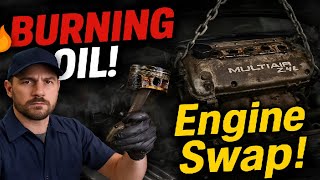
For the 2015-2017 Chrysler 200, the 2.4L Tigershark engine has two well-documented oil-related issues that are primary causes of a P0300 code. First, the engine is known for excessive oil consumption due to a piston ring design issue, which can foul spark plugs or, if the level gets too low, disrupt the MultiAir valvetrain system, causing misfires. A class-action lawsuit was settled regarding this issue, resulting in a warranty extension for some owners. 🎬 Watch: Understanding the 2.4L MultiAir oil consumption and warranty issues. Second, the valve cover gasket and its integrated spark plug tube seals frequently fail, allowing oil to flood the spark plug wells and short out the ignition coils.
Symptoms You May Notice
- Flashing or solid Check Engine Light
- Rough or shaking idle
- Engine hesitation or stumbling during acceleration
- Reduced engine power
- Poor fuel economy
- Difficulty starting the engine
- Audible ticking or tapping noise from the engine
- Replacing only the spark plugs and coils without addressing an underlying oil leak from the valve cover gasket. The new parts will quickly become fouled with oil, and the misfire will return.
- Replacing ignition components when the actual cause is an extremely low oil level affecting the MultiAir valvetrain system.
Most Likely Causes
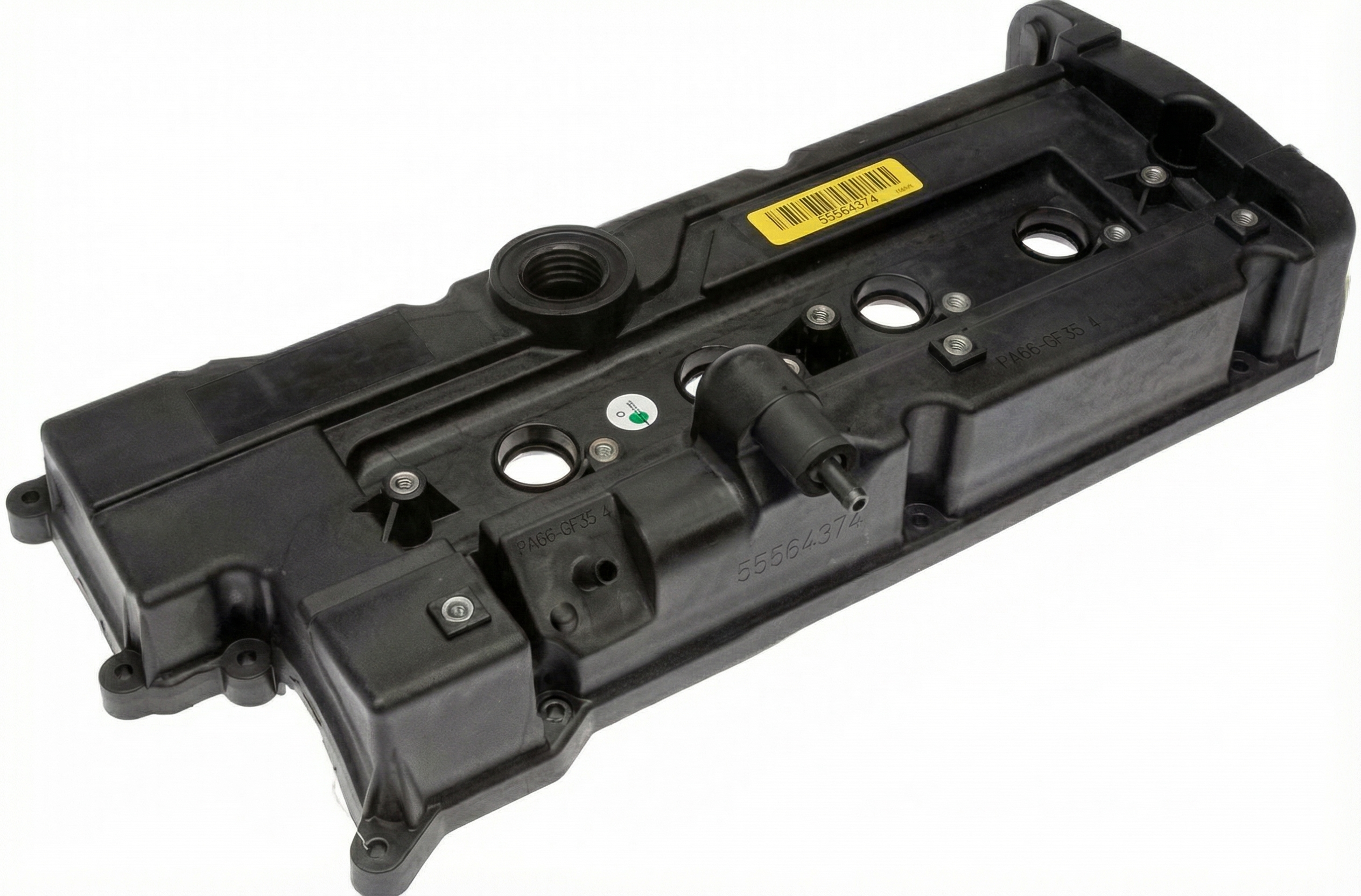
- Oil in Spark Plug Tubes from Leaking Valve Cover Gasket 🔴 High Probability → Shop Engine Valve Cover This is a very common failure on the 2.4L Tigershark engine. The spark plug tube seals, which are part of the valve cover gasket assembly, harden and fail, allowing oil to pool in the wells. This issue is widely documented across all platforms using this engine.
How to confirm: Remove the plastic engine cover and pull out one or more ignition coils using an 8mm socket for the bolt. Visually inspect the spark plug tube (the well the spark plug sits in) for liquid engine oil. The presence of oil is a definitive sign of a failed gasket.
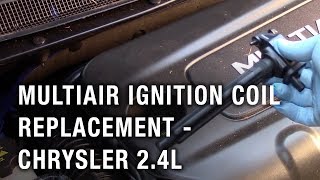
Typical fix: Replace the valve cover gasket, which includes new spark plug tube seals and bolt grommets. It is critical to also replace the oil-soaked spark plugs and any ignition coils/boots that were saturated with oil. Clean out any pooled oil from the tubes 🎬 See this step-by-step guide for replacing the valve cover gasket. before installing new parts.
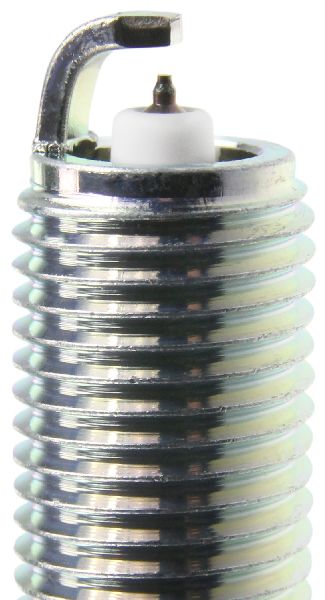
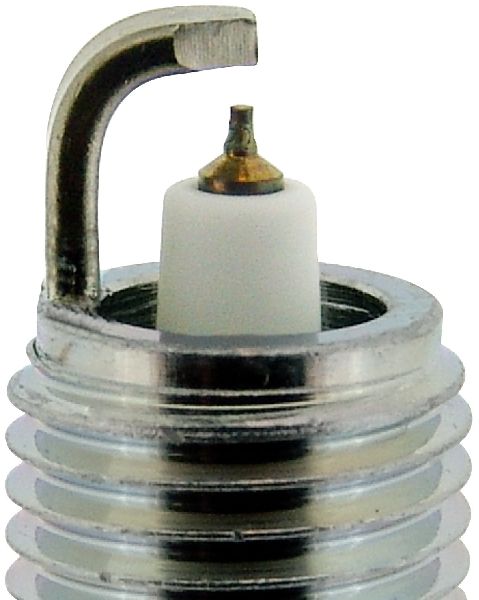
Est. part cost: $40-$80 - Worn or Fouled Spark Plugs 🔴 High Probability → Shop Spark Plug Aside from being a standard maintenance item, spark plugs on this engine are often fouled by oil due to the known oil consumption issue or valve cover leaks. Using incorrect spark plugs or an improper gap can also cause misfires.
How to confirm: Remove the spark plugs and inspect them for wear (widened gap), heavy carbon deposits, or oil contamination on the electrode. The correct gap for the 2.4L Tigershark is approximately 0.047 inches (1.2mm).
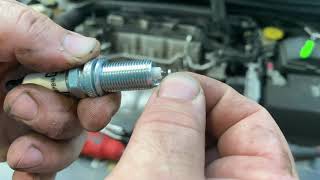
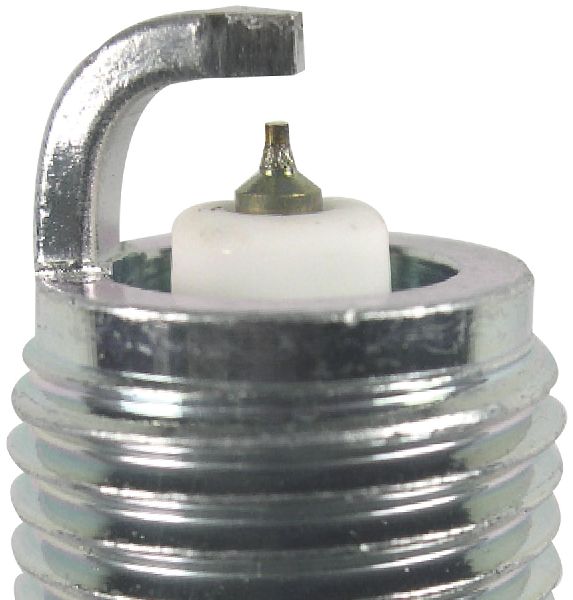
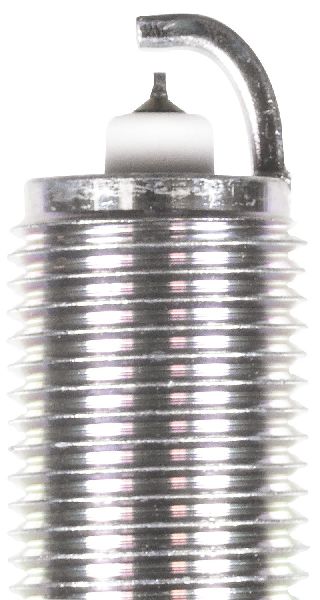
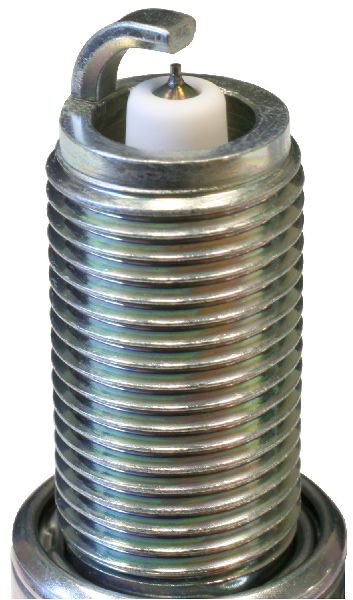
Typical fix: Replace all four spark plugs with high-quality Iridium plugs (e.g., NGK or Denso). Ensure they are gapped correctly before installation. Many owners recommend using the OEM-specified NGK plugs for best results. 🎬 Watch: How to properly replace and gap your spark plugs.
Est. part cost: $30-$60 - Faulty Ignition Coils or Boots 🟡 Medium Probability → Shop Ignition Coil Ignition coils can fail from normal heat and age, but on this engine, they are frequently damaged by being saturated in oil from a leaking valve cover gasket. Chrysler also issued a TSB (08-027-20) for replacing just the coil boots to resolve misfires, indicating the boots themselves are a weak point.
How to confirm: The easiest way is to swap the ignition coil from a misfiring cylinder (if a specific cylinder code like P0301 is also present) with a coil from a known good cylinder. If the misfire code follows the coil, the coil is bad. Inspect the coil boot for swelling, cracks, or oil saturation.
Typical fix: Replace the faulty ignition coil. It is often recommended to replace all four coils and spark plugs at the same time. If coils were oil-soaked, the valve cover gasket must also be replaced. Per TSB 08-027-20, sometimes only replacing the boots is sufficient if the coil itself is not damaged.
Est. part cost: $30-$70 per coil - Excessive Oil Consumption / Low Oil Level 🟡 Medium Probability The 2.4L Tigershark engine is known for high oil consumption, sometimes as much as a quart every 1,000 miles, often attributed to piston ring design. The MultiAir valvetrain system uses engine oil pressure to actuate the intake valves; if the oil level is critically low, it can cause improper valve lift and widespread misfires, often triggering a P0300.
How to confirm: Check the engine oil level via the dipstick. If it is significantly low, this is a likely cause. The low oil pressure warning light may not illuminate until the engine is about to stall.
Typical fix: Top off the engine with the correct specification oil (0W-20 full synthetic is mandatory for the MultiAir system). Monitor consumption closely. If consumption is excessive, contact a dealer to inquire about the 'XB1' warranty extension and TSB 09-003-23, which may qualify the vehicle for an oil consumption test and potential engine replacement.
Est. part cost: $10-$20 for oil
Rare But Worth Checking
- Faulty PCV Valve: → Shop PCV Valve The PCV valve is integrated into the valve cover on the 2.4L engine. If it sticks open, it can create a large vacuum leak, leading to a random misfire. The fix requires replacing the entire valve cover.
- Faulty Crankshaft Position Sensor: → Shop Engine Crankshaft Position Sensor The sensor that detects misfires can itself fail, sending erratic signals to the PCM and triggering a P0300 code without a true mechanical misfire.
- Intake Manifold Issues: → Shop Engine Intake Manifold While more commonly associated with code P2004, a cracked plastic intake manifold or a failed gasket can cause a vacuum leak sufficient to trigger a P0300 code.
- Fuel System Issues (Pump or Injectors): On related platforms with the 2.4L engine, TSB #18-044-26 has been issued for random misfires caused by a failing high-pressure fuel pump, which can lead to fuel contaminating the engine oil. While less documented for the 200 specifically, it's a possibility if the oil level is high and smells of gas.
Diagnosis Steps
- Check the engine oil level immediately. If it is low, top it off with 0W-20 full synthetic oil and see if symptoms improve. This is critical for the MultiAir system.
- Scan for other OBD-II codes. Cylinder-specific codes (P0301-P0304) can help narrow the search, while codes like P1524 point directly to an oil pressure problem.
- Remove the plastic engine cover and pull the ignition coils. Inspect the spark plug tubes for any signs of engine oil. If oil is present, the valve cover gasket is the primary suspect and must be replaced.
- If the spark plug tubes are dry, remove and inspect all four spark plugs. Look for signs of wear, oil fouling (black, sooty deposits), or an incorrect gap (should be ~0.047").
- If plugs look good, test the ignition coils. The easiest method is to swap a coil from a cylinder that has a specific misfire code with a known good cylinder and see if the code follows the coil.
- Listen for a hissing sound around the engine bay that could indicate a vacuum leak from a cracked hose or a bad intake manifold gasket.
- Check the oil for a strong smell of gasoline and a higher-than-full reading on the dipstick, which could indicate a rare fuel pump issue leaking into the crankcase.
- If the above steps do not reveal the cause, more advanced diagnostics like a fuel pressure test or a cylinder compression test may be needed. A compression test showing zero PSI on a cylinder would indicate a major internal engine failure.
Parts You'll Likely Need
- Valve Cover Gasket Kit
(OEM #68194324AC)— This is the most common root cause of P0300 on the 2.4L Tigershark, as the original gasket's spark plug tube seals fail and allow oil to flood the spark plug wells.
Trusted brands: Mopar, Fel-Pro, Mahle
OEM price range: $50-$70
Aftermarket price range: $30-$50 - Spark Plugs
(OEM #SP148183AB (NGK ILKAR7B11))— They are a standard maintenance item and are often fouled by oil from either a leaking valve cover gasket or the engine's inherent oil consumption.
Trusted brands: NGK, Denso
OEM price range: $40-$70
Aftermarket price range: $30-$60 - Ignition Coils
(OEM #68242286AB)— Coils are frequently damaged by oil saturation from a leaking valve cover gasket or fail from normal heat cycles.
Trusted brands: Mopar, Delphi, NGK
OEM price range: $50-$80 per coil
Aftermarket price range: $30-$60 per coil
Related Codes That Often Appear With This One
- P0301, P0302, P0303, P0304 — These codes indicate a misfire on a specific cylinder. They often appear with P0300 when the misfire is frequent on certain cylinders but also occurs randomly on others.
- P0456 — A small EVAP system leak. A PCM software update was issued under TSB 18-033-16 to address erroneously set misfire and EVAP codes.
- P1524 — This code indicates the oil pressure is too low to operate the variable valve timing/MultiAir system. It is often a direct result of the excessive oil consumption issue and will be accompanied by misfire codes like P0300.
- P106x (e.g., P1064, P106B) — These codes point directly to a fault within the MultiAir 'brick' actuator oil supply. Seeing these alongside a P0300 strongly suggests the misfire is caused by the valvetrain, not a simpler ignition or fuel problem.
Technical Service Bulletins (TSBs) & Recalls
- 08-027-20: Involves replacing all four ignition coil insulating boots to resolve misfire codes P0300-P0304.
- 18-033-16: A PCM software update to address erroneously set misfire and EVAP (P0456) codes.
- 09-003-23 REV. A / XB1 Warranty Extension: Addresses excessive oil consumption. Outlines the procedure for a dealer-performed oil consumption test which can lead to engine replacement.
- 09-006-20: Details the official oil consumption verification test procedure for dealers to confirm excessive oil use complaints.
Platform-Specific Known Issues
- Excessive Oil Consumption: Many 2.4L Tigershark engines consume oil at a high rate, which can lead to low oil levels that cause misfires in the MultiAir system. FCA has issued warranty extensions and TSBs to address this.
- Leaking Valve Cover Gasket: The spark plug tube seals integrated into the valve cover gasket are a very common failure point, leading to oil-soaked plugs and coils.
- PCM Software Updates: TSB 18-033-16 was released for the related Dodge Journey 2.4L to address falsely set misfire codes, suggesting software logic can be a factor.
Mechanic-Grade Diagnostic Values
- Low-Side Fuel Pressure (at fuel rail) — expected: 55 - 61 PSI. Failure: Pressure below 55 PSI indicates a weak fuel pump or clogged filter.
- Crankshaft Position Sensor (CKP) Internal Resistance — expected: 500 - 1500 Ohms (for variable reluctance type). Failure: A reading outside this range, or an open/short circuit. Note: Hall-effect sensors used on some models cannot be tested this way and require a voltage check.
- MultiAir (VVA) Solenoid Coil Resistance — expected: 0.5 - 1.0 Ohms. Failure: A reading near 0 Ohms indicates a shorted coil; an open circuit (OL) indicates a broken coil.
- Spark Plug Installation Torque — expected: 25-30 Newton-meters. Failure: Over-torquing can crack the porcelain insulator, causing a misfire.
Hidden / Shadow Codes Worth Checking
- Mode $06 Misfire Data: This is not a trouble code, but a diagnostic monitor that shows raw misfire counts for each individual cylinder before they are high enough to set a P030x fault code. It is extremely useful for identifying which cylinder is starting to fail. (see via A professional scan tool (like the dealer's wiTECH) is required. Navigate to PCM/ECM > Monitors > OBD II Monitors and look for misfire count PIDs for each cylinder.)
Scan Tool Commands That Help
- wiTECH or equivalent professional scanner: Crankshaft Position Sensor Relearn — This procedure is required after replacing the crankshaft position sensor on the 2.4L Tigershark engine to sync the new sensor with the PCM. Failure to perform the relearn can cause the P0300 code to return even with a good part.
- wiTECH or equivalent professional scanner: PCM Flash/Reprogram — Chrysler has issued multiple software updates for the PCM to correct overly sensitive diagnostic logic that could falsely trigger P0300 and other codes. If no mechanical fault is found, checking for an available PCM update is a valid diagnostic step.
- wiTECH or equivalent professional scanner: Injector Kill Test — This bidirectional command allows a technician to disable one fuel injector at a time while the engine is running. If disabling a specific injector causes no change in the engine's idle quality, it confirms that cylinder was not contributing (misfiring) in the first place.
Wiring & Ground Locations
- Cylinder Numbering Scheme — The cylinders are numbered 1-2-3-4, starting from the passenger side (serpentine belt side) and moving towards the driver's side (transmission side).. Correctly identifying the cylinder number is critical when a cylinder-specific code (P0301-P0304) is present, allowing for targeted testing of the correct spark plug, coil, and injector.
- Crankshaft Position Sensor Harness — The wiring for the crankshaft position sensor is routed very close to the exhaust manifold on the back of the engine.. This harness is highly prone to melting or becoming brittle from heat exposure, causing an intermittent short or open circuit. This can trigger a P0300 or P0335/P0339 code and is often missed, leading to replacement of a good sensor when the wiring is the actual fault.
- General Engine Harness Chafe Points — On related FCA platforms, common chafe points include where the harness rubs against the ECM/TCM mounting bracket, the upper control arm, and shock tower bolts.. An intermittent short in the ignition coil or injector wiring from a chafed harness can cause random misfires that are difficult to trace.
Real Owner Repair Stories
- Go-Parts.com user story compilation (Vehicle with 2.4L Tigershark MultiAir engine) — Engine stalls when making a sharp turn, especially when low on fuel or oil.
❌ Tried (didn't work) Diagnosing as a fuel pump issue., Looking for a steering-related electrical short.
✅ What actually fixed it The root cause was a low engine oil level. During the turn, oil sloshed away from the oil pickup tube, momentarily starving the MultiAir system of the hydraulic pressure needed to actuate the intake valves, causing the engine to misfire and stall. Topping off the engine oil resolved the symptom.
"I Checked Everything" — The Actual Cause
- In several documented cases on the 2.4L Tigershark, a vehicle may present with misfire symptoms (rough idle, stalling) that would typically suggest a vacuum leak, but a smoke test reveals no leaks. The actual cause was found to be a critically low engine oil level. The MultiAir valvetrain system, which uses oil pressure to actuate the intake valves, begins to function erratically when starved of oil, mimicking the symptoms of a major vacuum leak or ignition failure.
OEM Part Supersession History
5047980AA, 5047980AB, 5047980AC, 5047980AD→5047980AE— Progressive revisions to the MultiAir actuator assembly ('brick') to improve durability and performance.
Heads up: Using the latest available revision (AE or newer) is strongly recommended for any replacement to ensure longevity.68080580AB, 68242286AA→68242286AB— Standard part revision for the ignition coil.
Heads up: These part numbers are generally interchangeable for this application.
Model Year Variations Within This Range
- 2015-2017: While the core mechanical components of the 2.4L Tigershark engine remained consistent in the Chrysler 200, Chrysler released several PCM software updates for the broader engine platform in subsequent model years to address false or intermittent P0300 codes. This indicates that the diagnostic sensitivity was refined over time, and a vehicle that has never had a PCM update may be more prone to setting a false code than a later model year vehicle with the same engine.
Diagnostic Flowchart
Other Known Issues on This Vehicle
Issues unrelated to this code that are worth knowing about as an owner of this generation:
- ZF 9-Speed Automatic Transmission Failure/Harsh Shifting 🔴 High — Extremely common across all 2015-2017 model years. Complaints include lurching, hesitation, sudden shifts to neutral, and complete failure. (Ref: Multiple software updates and recall S55 / NHTSA 16V-529 were issued, but problems persist for many owners.)
- Excessive Oil Consumption 🔴 High — Widespread issue affecting the 2.4L Tigershark engine, often consuming a quart of oil in as little as 1,000 miles. This is a root cause of P0300 but is also a major standalone problem. (Ref: TSB 09-003-23 REV. A and warranty extension 'XB1' were issued, potentially leading to engine replacement after a failed consumption test.)
- Random Engine Stalling 🔴 High — Commonly reported problem where the engine shuts off while driving, sometimes without warning or any preceding trouble codes. (Ref: While often linked to low oil levels from the consumption issue, other electrical and fuel system causes have been reported.)
- Random Deployment of Active Head Restraints (AHR) 🟠 Medium — A significant number of owners have reported the active head restraints deploying without any impact, causing potential injury.
- Electrical and Uconnect System Glitches 🟡 Low — Owners report various electrical issues, including malfunctioning instrument panels and problems with the Uconnect infotainment system. (Ref: Various software updates have been released to address some of these concerns.)
Used vs. New Parts: Buying Guide for This Vehicle
When a used part is the smart pick: For this repair, using a used part is generally not recommended for the common failure items. However, a used intake manifold or a complete valve cover assembly (if the integrated PCV valve failed) from a low-mileage donor could be a cost-effective option if the original is physically cracked.
Donor-vehicle mileage cap: roughly under 70000 miles for the part to have meaningful remaining life.
What to inspect on the donor part:
- Check for a clean oil cap on the donor engine, suggesting regular maintenance.
- Inspect plastic parts like the intake or valve cover for hairline cracks or warping, especially around bolt holes.
- Avoid parts from an engine that clearly suffered a catastrophic failure (e.g., thrown rod, severe overheating).
OEM-only on this vehicle (don't cheap out):
- Crankshaft Position Sensor: Aftermarket sensors are widely reported to be unreliable, causing immediate or premature failure on the 2.4L Tigershark engine. Always use a genuine Mopar part.
- MultiAir Actuator ('Brick'): This is a complex electro-hydraulic component. Due to the precision required and high failure rates of early versions, only the latest revision OEM Mopar part should be used for replacement.
Aftermarket brands forum-validated for this vehicle:
- Valve Cover Gasket: Fel-Pro, Mahle
- Spark Plugs: NGK, Denso (often the Original Equipment supplier)
- Ignition Coils: Delphi, NGK
Brands owners have reported issues with on this vehicle:
- Avoid unbranded, 'white-box' electronic sensors and ignition coils. While tempting due to low cost, they have a high failure rate and can make diagnosis more difficult.
Real Owner Stories
Aggregated from forums and TSBs cited above. Mileages and costs reflect what owners reported in those sources.
2015 Chrysler 200 2.4L
Symptoms: P0300 code and high oil consumption.
What fixed it: The owner went through a dealer-performed oil consumption test which eventually led to a full engine replacement under warranty.
Source hint: 200forums.com thread titled '2015-chrysler-200-2-4l-misfire-and-oil-consumption-issues'
2016 Chrysler 200 S 2.4L — 150000 miles
Symptoms: Transmission codes and powertrain problems on a high-mileage unit.
What fixed it: The source discusses the dual nature of powertrain problems (engine and 9-speed ZF transmission) on high-mileage 2.4L models.
Source hint: Reddit r/MechanicAdvice post regarding 2016 Chrysler 200 S 2.4L
2015 Dodge Dart 2.4L
Symptoms: Misfire codes caused by oil pooling in the spark plug wells.
What fixed it: Replacing the leaking valve cover gasket to stop oil from saturating the spark plugs and coils.
Source hint: YouTube video by 'Auto Repair Guys' demonstrating 2.4L Tigershark valve cover leak
Related OBD-II Codes
Frequently Asked Questions
My 2015 Chrysler 200 2.4L is consuming a lot of oil; is there a warranty extension for this?
Can low oil levels actually cause a P0300 misfire on the Tigershark engine?
Is there a TSB for the ignition coils on the 2015-2017 Chrysler 200?
What kind of oil should I use to prevent MultiAir issues and misfires?
I found oil in my spark plug wells; what is the specific fix for this Chrysler 200 issue?
Is there a software update to fix false misfire codes on this platform?
Helpful Videos
Used OEM Parts in Stock
New Aftermarket Parts Available

The information in this article is provided for general reference and educational purposes only. Vehicle specifications, procedures, and part compatibility can vary by production date, trim level, and region. Always consult your vehicle's factory service manual and verify part numbers before purchasing or performing repairs. Safety-critical components such as airbags, seat belts, and braking systems should be installed by a qualified professional.
- Chrysler 200:
- 🧭 Diagnostic Flowchart
- 🎬 Helpful Videos
- 🛍️ Shop This Part
- What's Unique About the 2015-2017 Chrysler 200
- Symptoms You May Notice
- Most Likely Causes
- Rare But Worth Checking
- Diagnosis Steps
- Parts You'll Likely Need
- Related Codes That Often Appear With This One
- Technical Service Bulletins (TSBs) & Recalls
- Platform-Specific Known Issues
- Mechanic-Grade Diagnostic Values
- Hidden / Shadow Codes Worth Checking
- Scan Tool Commands That Help
- Wiring & Ground Locations
- Real Owner Repair Stories
- "I Checked Everything" — The Actual Cause
- OEM Part Supersession History
- Model Year Variations Within This Range
- Other Known Issues on This Vehicle
- Used vs. New Parts: Buying Guide for This Vehicle
- Real Owner Stories
- 2015 Chrysler 200 2.4L
- 2016 Chrysler 200 S 2.4L — 150000 miles
- 2015 Dodge Dart 2.4L
- Related OBD-II Codes
- Frequently Asked Questions
- 🎟️ Get 5% Off