

P0300 on 2019-2023 Dodge Challenger: Causes and Fixes for Random Misfires
Code P0300 on a Dodge Challenger indicates random or multiple cylinder misfires. The most common culprits are worn spark plugs and failing ignition coils. Start by inspecting these parts, as a full set of plugs (16 for a HEMI) and coils is a likely and relatively affordable fix. On HEMI engines, a persistent P0300 can also be an early warning of lifter failure.
- P0300 means your engine has a random misfire affecting multiple cylinders.
- Start your diagnosis with the most common and affordable fixes: spark plugs and ignition coils.
- If the check engine light is flashing, stop driving immediately to prevent damage to the catalytic converter.
- For 2019 models specifically, check your oil level and for a fuel smell. A high oil level could indicate leaking fuel injectors, as noted in TSB #18-044-26.
- A P0300 code can be caused by issues in the ignition, fuel, or air intake systems, so a systematic approach to diagnosis is key.
What's Unique About the 2019-2023 Dodge CHALLENGER
The Dodge Challenger in this year range was available with several engines, including the 3.6L Pentastar V6 and various HEMI V8s (5.7L, 6.4L, 6.2L Supercharged). While the root causes of P0300 are often universal (spark, fuel, air), some issues are more prevalent on certain engines. For instance, 3.6L Pentastar engines can suffer from failing rocker arm bearings, which can cause a ticking noise and eventually a P0300 misfire. 🎬 Watch: See how failing Pentastar rocker arms cause this misfire. For HEMI V8 engines, a P0300 code is often the first sign of the infamous 'HEMI tick,' which points to a failing lifter and subsequent camshaft lobe damage—a significant mechanical issue. Additionally, TSB #18-044-26 specifically links P0300 on some 2019 models with a low fuel rail pressure code (P00C6-00) and a high oil level warning, pointing towards a potential leaking fuel injector issue where fuel dilutes the engine oil.
Diagnostic Flowchart
Tap your situation to follow the diagnostic path that matches what you're seeing on this vehicle.
Symptoms You May Notice
- Rough or shaky idle.
- Engine hesitation or stumbling during acceleration.
- Flashing or solid Check Engine Light.
- Reduced engine power and poor acceleration.
- Poor fuel economy.
- A noticeable smell of gasoline from the exhaust.
- Audible ticking or tapping noise from the engine, especially in HEMI V8s (lifter failure) or Pentastar V6s (rocker arm failure).
- Replacing only one spark plug or coil when multiple are near the end of their service life.
- Replacing oxygen sensors. A misfire will cause erratic O2 sensor readings, but the sensor is usually reporting the problem, not causing it.
- Ignoring the possibility of mechanical failure (lifters/rockers) when a ticking noise is present, instead focusing only on spark and fuel.
Most Likely Causes
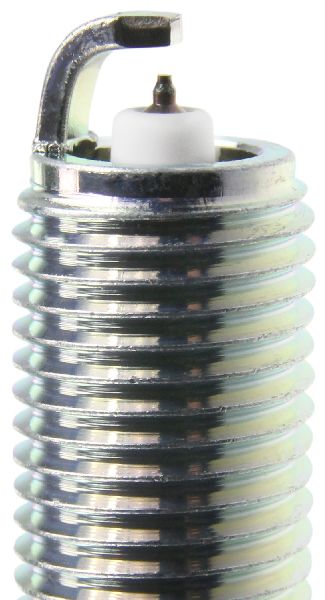
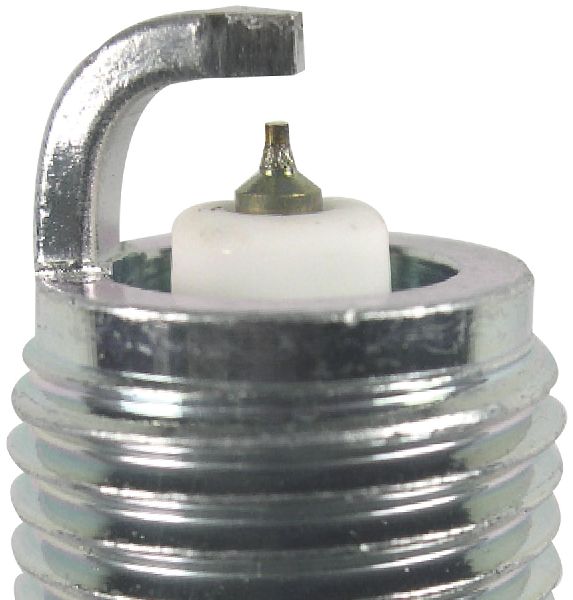
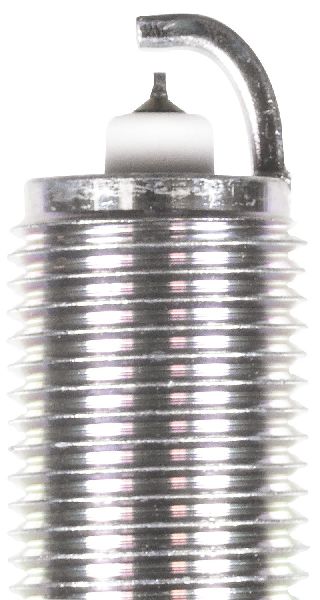
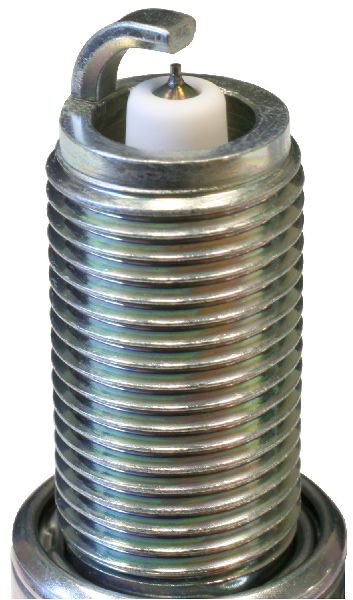
- Worn or Fouled Spark Plugs 🔴 High Probability → Shop Spark Plug Spark plugs are a regular maintenance item. High-performance HEMI engines are demanding on plugs and uniquely use two plugs per cylinder (16 total), increasing the chance of a failure. Fouled or incorrectly gapped plugs are a very common cause of random misfires.
How to confirm: Remove and visually inspect the spark plugs for wear, carbon fouling, oil contamination, or damage to the ceramic insulator. Check the spark plug gap against the manufacturer's specification (e.g., 0.044 inches for the 5.7L HEMI).
Typical fix: Replace all spark plugs as a set. For HEMI engines, this means replacing all 16 plugs. 🎬 See this step-by-step HEMI spark plug replacement walkthrough. It's often recommended to replace ignition coils at the same time, especially on higher-mileage vehicles.
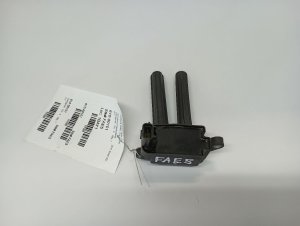
Est. part cost: $80-$250 - Failing Ignition Coil(s) 🔴 High Probability → Shop Ignition Coil Heat and vibration in the engine bay cause ignition coils to fail over time. Since P0300 indicates a random misfire, one or more coils may be failing intermittently before a complete failure that would trigger a cylinder-specific code.
How to confirm: Use a scan tool with live data or Mode $06 to monitor misfire counts on each cylinder. Swap the ignition coil from a suspected misfiring cylinder with one from a non-misfiring cylinder. If the misfire follows the coil, the coil is bad.
Typical fix: Replace the faulty ignition coil. It is often wise to replace them as a full set, especially on higher-mileage vehicles.
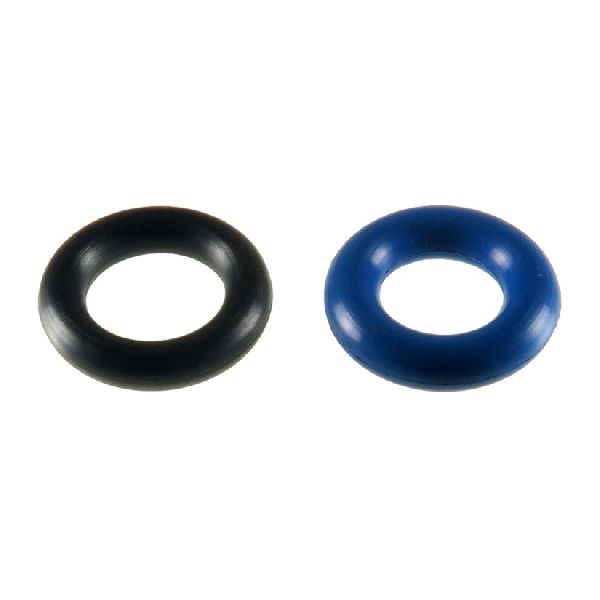
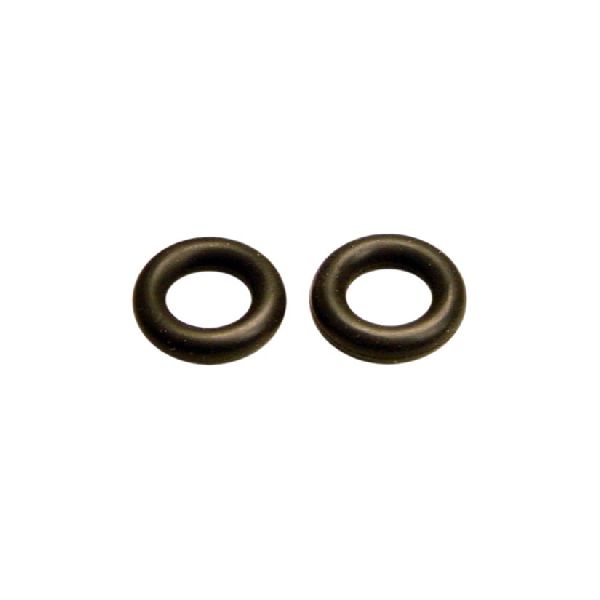
Est. part cost: $40-$100 per coil - Faulty Fuel Injectors 🟡 Medium Probability → Shop Fuel Injector TSB #18-044-26 for the 2019 Challenger specifically mentions P0300 in conjunction with fuel pressure codes and high oil levels, which strongly suggests leaking fuel injectors allowing fuel to seep into the crankcase. Clogged injectors can also disrupt the fuel spray pattern, causing a lean misfire.
How to confirm: A professional can perform a fuel injector balance test. You can also check the fuel rail pressure and monitor for a quick drop after the engine is shut off, which indicates a leak. Checking the oil for a strong fuel smell is another key indicator.
Typical fix: Replace the faulty fuel injector(s). If one is leaking or clogged, others may be in similar condition.
Est. part cost: $70-$250 per injector - Vacuum Leak 🟡 Medium Probability Vacuum hoses, especially the PCV (Positive Crankcase Ventilation) hose, can become brittle and crack from engine heat. A leaking intake manifold gasket can also introduce unmetered air, leaning out the air/fuel mixture and causing misfires across multiple cylinders.
How to confirm: A smoke test is the most effective method. A technician forces smoke into the intake system and looks for where it escapes. You can also visually inspect all vacuum lines for cracks and listen for a hissing sound at idle.
Typical fix: Replace the leaking hose or gasket. The PCV valve itself is also a common and inexpensive replacement part.
Est. part cost: $10-$300 - Low Fuel Pressure ⚪ Low Probability A weak fuel pump or clogged fuel filter can starve the entire engine for fuel, affecting all cylinders and leading to a random misfire condition, especially under load.
How to confirm: Connect a fuel pressure gauge to the fuel rail's service port and verify the pressure is within the manufacturer's specifications at idle and under load.
Typical fix: Replace the failing fuel pump or clogged fuel filter.
Est. part cost: $200-$800
Rare But Worth Checking
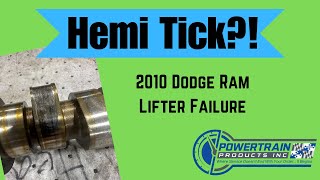
- Internal Engine Mechanical Failure (HEMI Lifter/Cam Failure): On HEMI engines, the most notorious cause of a P0300 code is lifter failure. The needle bearings in the lifter's roller can fail, causing the lifter to seize and grind down the camshaft lobe. This results in a cylinder not opening its valves correctly, causing a persistent misfire and a distinct 'HEMI tick'. If caught early, only the cam and lifters may need replacement; if ignored, metal shavings can circulate and destroy the entire engine.
- Internal Engine Mechanical Failure (Pentastar Rocker Arm Failure): On the 3.6L Pentastar V6, a similar ticking noise and P0300 code can be caused by the failure of needle bearings within the rocker arms. This prevents the valve from opening fully, leading to a misfire. The fix involves replacing the affected rocker arms, and often the camshaft if it has been damaged.
- Clogged Catalytic Converter: → Shop Catalytic Converter A restricted exhaust can create excessive backpressure, preventing cylinders from expelling exhaust gas efficiently, which leads to misfires. This is usually a consequence of long-term, unaddressed misfiring (which dumps raw fuel into the exhaust), not the initial cause.
- Faulty Crankshaft Position Sensor: → Shop Engine Crankshaft Position Sensor A failing crankshaft position sensor can send erratic or incorrect timing information to the PCM, causing intermittent misfires across all cylinders as the computer struggles to determine engine speed and position.
Diagnosis Steps
- Read all diagnostic trouble codes (DTCs) with an OBD-II scanner. Note any other codes present alongside P0300, especially cylinder-specific (P030x) or fuel/sensor codes.
- Check the freeze frame data to see the engine conditions (RPM, load, temperature) when the misfire occurred.
- Using a capable scanner, check Mode $06 data for misfire counts per cylinder. This can often reveal the problem cylinder(s) even if no P030x code is set.
- Perform a visual inspection of the engine bay. Look for obvious issues like disconnected vacuum hoses, cracked PCV lines, or damaged wiring.
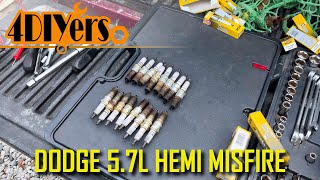
- Inspect the spark plugs. For HEMIs, remember there are 16. Look for wear, damage, or fouling. Replace if necessary.
- Test the ignition coils. The easiest way is to swap a coil from a suspected misfiring cylinder with a good one and see if the misfire count moves to the new cylinder.
- If ignition components are good, check fuel pressure to rule out a weak fuel pump or clogged filter.
- Listen carefully for engine ticking. A rhythmic tap that increases with RPM on a HEMI or Pentastar strongly suggests internal mechanical wear (lifters or rockers) and requires a more in-depth diagnosis.
- Perform a smoke test to check for vacuum leaks in the intake system.
- If a leaking injector is suspected (fuel smell in oil), a fuel pressure leak-down test can confirm it.
- If all else fails, a compression test and/or cylinder leak-down test is needed to check for internal engine mechanical problems like a worn camshaft or poor valve seating.
Parts You'll Likely Need
- Spark Plugs
(OEM #SP143877AB (5.7L HEMI), SP149212AC (6.4L HEMI), SP196724AC (6.2L Supercharged HEMI))— These are the most frequent cause of misfires and are a standard maintenance item. HEMI engines use two plugs per cylinder (16 total), doubling the chance of a single plug failing.
Trusted brands: Mopar, NGK, Champion
OEM price range: $150-$250 (for a set of 16)
Aftermarket price range: $80-$180 (for a set of 16) - Ignition Coil
(OEM #68238603AA (Fits most 5.7L, 6.2L, 6.4L HEMI engines, supersedes 56029129AF))— Coils are the second most common failure point for a P0300 code. They fail from heat and age, causing a weak or inconsistent spark.
Trusted brands: Mopar, NGK, Delphi
OEM price range: $70-$120 (per coil)
Aftermarket price range: $40-$100 (per coil) - PCV Valve
(OEM #53032940AB)— A stuck or leaking PCV valve or hose creates a vacuum leak, a common cause for a random misfire code. It's an inexpensive and easy part to replace during diagnosis.
Trusted brands: Mopar, Dorman
OEM price range: $40-$60
Aftermarket price range: $15-$30 - Fuel Injector — A leaking or clogged fuel injector can cause misfires and is specifically implicated in a TSB for the 2019 model year.
Trusted brands: Mopar, Bosch
OEM price range: $150-$250 (per injector)
Aftermarket price range: $70-$180 (per injector)
Related Codes That Often Appear With This One
- P0301-P0308 — These codes indicate a misfire on a specific cylinder (e.g., P0301 for Cylinder 1). They often accompany P0300 as the PCM attempts to, or succeeds in, pinpointing the issue to a particular cylinder.
- P00C6-00 — As per TSB #18-044-26, this 'Fuel Rail Pressure Too Low' code can appear with P0300 on 2019 models, pointing to a fuel delivery problem like a leaking injector.
- P0524 — This 'Engine Oil Pressure Too Low' code can sometimes appear, especially on HEMI engines. It can be a symptom of extended idling or, more seriously, related to the internal oiling issues that contribute to lifter failure.
Technical Service Bulletins (TSBs) & Recalls
- TSB #18-044-26: Notes P0300 with P00C6-00 and high oil level on 2019 models, suggesting leaking fuel injectors.
- TSB #18-035-26, #1400322REVA, #09-016-24: General TSBs listing P0300 as a primary code for which PCM software updates or other diagnostic procedures may apply.
- TSB #18-095-23 / #18-104-19: Involve reprogramming the PCM with updated software, which can sometimes resolve false or intermittent misfire detection logic.
Platform-Specific Known Issues
- TSB #18-044-26 notes that on some 2019 Challengers, P0300 can be accompanied by code P00C6-00 and a high oil level warning, indicating a leaking fuel injector is diluting the engine oil.
- HEMI V8 engines (5.7L, 6.4L, 6.2L) are known for potential lifter failure, which typically presents as an audible ticking sound and a P0300 code before causing catastrophic engine damage.
- 3.6L Pentastar V6 engines are prone to rocker arm bearing failure, which also creates a ticking noise and can lead to a P0300 code if a rocker arm seizes or damages the camshaft.
Mechanic-Grade Diagnostic Values
- Ignition Coil Primary Resistance — expected: 0.3 Ω - 1.0 Ω. Failure: A reading outside this range indicates a faulty coil.
- Ignition Coil Secondary Resistance — expected: 8.0 kΩ - 15.0 kΩ. Failure: A reading outside this range indicates a faulty coil.
- Fuel Injector Resistance (3.6L Pentastar) — expected: 12 Ω - 16 Ω. Failure: Readings outside this range, like a user who measured 11.4 Ω, suggest a failing injector even if it still functions intermittently.
- Crankshaft Position Sensor Resistance — expected: 200 Ω - 1000 Ω. Failure: A reading of 0 indicates a short, while an infinite (Megaohm) reading indicates an open circuit.
- Crankshaft Position Sensor (via Scan Tool) — expected: 100 - 500 RPM while cranking. Failure: A reading of 0 RPM while the engine is cranking indicates a failed sensor.
Scan Tool Commands That Help
- wiTECH (or other professional scan tool): Cylinder Power Balance Test — This test is crucial for isolating a weak or non-contributing cylinder when only a general P0300 code is present. The tool disables one cylinder at a time (usually by cutting fuel) and measures the drop in RPM. A healthy cylinder will cause a significant RPM drop, while a faulty one will cause little to no change. This helps pinpoint the problem cylinder for further spark, fuel, or compression testing.
Wiring & Ground Locations
- Engine Wiring Harness Chafe Points — On some GM vehicles with similar engine layouts, which can be analogous, chafe points are documented near the ECM/TCM bracket, the driver-side upper control arm, and the shock tower bolt.. Engine vibration can cause the main wiring harness to rub against sharp metal edges, eventually wearing through the insulation and causing a short circuit. This can affect circuits for ignition coils, fuel injectors, or critical sensors, leading to intermittent and random misfires that are difficult to trace.
- Crankshaft Position Sensor Fuses — In the underhood fuse box (passenger side), check fuses F31, F34, F35, F37, and relay 63. In the trunk fuse box (behind the battery), check relay 29 and potentially relay 14.. The crankshaft position sensor is critical for ignition timing. While a sensor failure is a common cause, a blown fuse or faulty relay in its circuit can mimic sensor failure, leading to misdiagnosis. Checking these fuses is a quick, essential first step.
Real Owner Repair Stories
- Reddit user in r/AskMechanics (2012 Dodge Challenger SXT (engine replaced with a 70,000-mile unit from a Grand Caravan)) — Blinking check engine light after moderate acceleration, rough idle, and power loss.
❌ Tried (didn't work) Checked for intake leaks with ether (none found)., Replaced ignition coil on cylinder 5 (no change)., Replaced a crushed section of exhaust pipe before the catalytic converter., Replaced both fuel pumps.
✅ What actually fixed it The user did not post a final resolution, but the story is a valuable example of how a P0300 can lead to extensive parts replacement without a clear diagnosis, highlighting the importance of systematic testing over guessing.
OEM Part Supersession History
53021720ab, 53021720ac, 53021720ad, 53021720ae, 5038686aa, 5038784aa, 5038784ab, 5038784ac→05038784AD— This is the part number for the heavy-duty, non-MDS 'Hellcat' lifter set. It is often used as an upgrade or replacement for failed standard or MDS lifters in 5.7L, 6.1L, and 6.4L HEMI engines.
Heads up: If replacing MDS (Multi-Displacement System) lifters with these non-MDS lifters, the MDS system must be disabled in the vehicle's computer calibration to prevent issues.N/A→05038785AD— This is the Mopar part number for the front MDS lifter and yoke assembly for HEMI engines (5.7L, 6.4L) manufactured after March 16, 2016.
Model Year Variations Within This Range
- 2019+: For the 2019 model year, the SRT Hellcat's 6.2L supercharged HEMI V8 received a power increase to 717 horsepower, up from 707 in previous years. While not a direct cause of P0300, changes in engine calibration and power output can sometimes expose different component sensitivities.
Helpful Videos
Used OEM Parts in Stock
New Aftermarket Parts Available

The information in this article is provided for general reference and educational purposes only. Vehicle specifications, procedures, and part compatibility can vary by production date, trim level, and region. Always consult your vehicle's factory service manual and verify part numbers before purchasing or performing repairs. Safety-critical components such as airbags, seat belts, and braking systems should be installed by a qualified professional.
- Dodge CHALLENGER:
- 🧭 Diagnostic Flowchart
- 🎬 Helpful Videos
- 🛍️ Shop This Part
- What's Unique About the 2019-2023 Dodge CHALLENGER
- Symptoms You May Notice
- Most Likely Causes
- Rare But Worth Checking
- Diagnosis Steps
- Parts You'll Likely Need
- Related Codes That Often Appear With This One
- Technical Service Bulletins (TSBs) & Recalls
- Platform-Specific Known Issues
- Mechanic-Grade Diagnostic Values
- Scan Tool Commands That Help
- Wiring & Ground Locations
- Real Owner Repair Stories
- OEM Part Supersession History
- Model Year Variations Within This Range
- 🎟️ Get 5% Off