

P0302 on 2010-2017 Toyota Camry 2.5L: Cylinder 2 Misfire Causes and Fixes
On a 2010-2017 Camry with the 2.5L engine, a P0302 code is most often caused by a failed ignition coil on cylinder 2. A simple coil swap to another cylinder is the fastest way to diagnose it. Expect to pay $50-$90 for a quality aftermarket coil and around $150 for an OEM part. Worn spark plugs are the second most likely cause, especially if they are over 80,000 miles old or are counterfeit parts purchased online.
- P0302 on a 2010-2017 Camry 2.5L almost always points to a bad ignition coil or spark plug on cylinder 2.
- The easiest and fastest way to diagnose the problem is to swap the ignition coil from cylinder 2 with an adjacent cylinder and see if the misfire code follows.
- Cylinder 2 is the second cylinder from the passenger side of the engine.
- Avoid buying critical ignition parts like spark plugs from Amazon or eBay due to the high risk of receiving counterfeit products that won't fix the problem.
- While you can drive with this code, it's best to fix it promptly to avoid damaging your expensive catalytic converter.
What's Unique About the 2010-2017 Toyota Camry
The Toyota 2AR-FE engine is generally very reliable, but like many modern engines, it is prone to ignition coil failure over time. For this specific platform and code, the cause is overwhelmingly likely to be a bad ignition coil, followed by a worn spark plug. Unlike some vehicles where misfires are commonly caused by complex fuel system or mechanical issues, the Camry's P0302 is usually a straightforward ignition problem that is easy to diagnose and inexpensive to fix for a DIYer. The accessibility of the coils and plugs on top of the engine makes diagnosis particularly simple.
Generation note: This range covers the late XV40 (2010-2011) and the full XV50 (2012-2017) generations of the Toyota Camry. Both generations used the 2AR-FE 2.5L engine as the standard powertrain, and the causes and fixes for a P0302 code are identical across this year range.
Symptoms You May Notice
- Rough or shaking idle, especially when stopped in gear.
- Hesitation or stumbling during acceleration.
- Noticeable loss of engine power.
- Flashing Check Engine Light (indicates a severe misfire that can damage the catalytic converter).
- Solid Check Engine Light.
- Reduced fuel economy.
- Engine is hard to start.
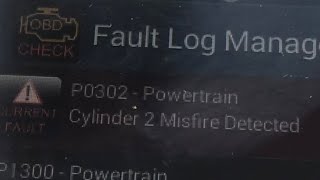
- Smell of unburnt gasoline from the exhaust. 🎬 See this video for a clear explanation of Camry rough idle symptoms.
- Replacing spark plugs with cheap or counterfeit parts. One of the most common issues reported by owners is buying spark plugs from non-reputable online sources like Amazon or eBay, which turn out to be fakes and do not resolve the misfire. Always buy from trusted auto parts suppliers or a dealership.
- Replacing only the spark plug when the ignition coil is also weak. If a coil is marginal, it may work with a brand new plug but fail again after a few thousand miles. It's often wise to replace the coil on the affected cylinder when replacing high-mileage plugs.
Most Likely Causes
- Failed Ignition Coil 🔴 High Probability → Shop Ignition Coil Ignition coils are a common wear item on modern engines. Heat cycles and high mileage (typically over 100,000 miles) cause the internal windings to degrade, leading to a weak or inconsistent spark.
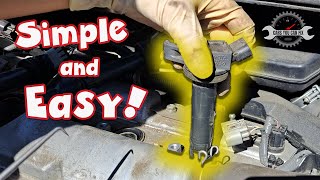
How to confirm: Swap the ignition coil from cylinder 2 with another cylinder (e.g., cylinder 3). Clear the codes and drive the vehicle. If the code changes to P0303, the ignition coil is confirmed to be faulty. This is the definitive DIY diagnostic step. 🎬 Watch: A 10-minute guide to diagnosing and fixing your P0302 code.
Typical fix: Replace the failed ignition coil. Many owners choose to replace all four coils if the vehicle has high mileage and they are original to prevent future failures. Use a small amount of dielectric grease inside the new coil boot to prevent it from seizing to the spark plug.
Est. part cost: $50-$150 - Worn or Fouled Spark Plug 🟡 Medium Probability → Shop Spark Plug Spark plugs are a routine maintenance item. While modern iridium plugs have a long life (Toyota specifies a 120,000-mile interval), they can wear out sooner, leading to a weak spark. Also, counterfeit Denso/NGK plugs sold on Amazon and eBay are a widely reported issue that can cause persistent misfires.
How to confirm: After ruling out the ignition coil, swap the spark plug from cylinder 2 with another cylinder. If the misfire code follows the plug (e.g., changes to P0301 if swapped with cylinder 1), the plug is the issue. Visually inspect the plug for heavy carbon buildup, oil fouling, a cracked insulator, or a worn electrode.
Typical fix: Replace the spark plug. It is best practice to replace all four spark plugs at the same time with high-quality OEM (Denso SK16HR11 or NGK equivalent) parts to ensure even performance. Ensure they are purchased from a reputable auto parts store. 🎬 Watch: Step-by-step spark plug replacement for 2012-2017 Camry models.
Est. part cost: $10-$25 per plug - Clogged or Faulty Fuel Injector ⚪ Low Probability → Shop Fuel Injector While Toyota fuel injectors are generally robust, they can become clogged from fuel deposits or fail electronically over many miles, preventing the correct amount of fuel from reaching cylinder 2.
How to confirm: If swapping the coil and spark plug does not change the P0302 code, the injector is a possible culprit. An advanced scanner can perform a power balance test. A more involved DIY method is to swap the cylinder 2 injector with another cylinder's injector to see if the misfire follows. This requires removing the fuel rail.
Typical fix: Replace the faulty fuel injector. It's often recommended to replace all four injectors if the vehicle has high mileage to ensure balanced fuel flow. The OEM part number is 23250-0V010.
Est. part cost: $70-$200
Rare But Worth Checking
- Intake Manifold Gasket Leak: → Shop Engine Intake Manifold A vacuum leak near the intake runner for cylinder 2 can cause a lean condition and trigger a misfire. This is not common on the 2AR-FE but is possible. A professional can diagnose this with a smoke test to see if smoke escapes from the gasket area for cylinder 2.
- Low Engine Compression: This is a serious mechanical issue, such as a burnt valve, worn piston rings, or a failing head gasket. A compression test is needed to diagnose this. If compression in cylinder 2 is significantly lower than the others (more than 15-20% difference), this is the likely cause. This is very rare on this engine.
- Oil Fouled Spark Plug from Leaking Valve Cover Gasket: → Shop Engine Valve Cover The valve cover gasket can leak oil into the spark plug tubes. When you remove the ignition coil, if you see liquid oil in the tube, the valve cover gasket and spark plug tube seals have failed. This oil can short out the spark plug and cause a misfire.
- Corroded ECM Connectors: Although more common on other Toyota models, manufacturer service bulletins like Bulletin #T-TT-0462-17 and Bulletin #T-SB-0072-19 note that corrosion or water in the ECM connector can cause low fuel pressure and DTCs including P0302.
Diagnosis Steps
- Read the code with an OBD-II scanner to confirm P0302 is the primary code present. If other codes are present, troubleshoot them first.
- Locate cylinder 2, which is the second cylinder from the passenger side of the engine (belt side).
- Disconnect the electrical connector from the cylinder 2 ignition coil and use a 10mm socket to remove the single bolt holding it in.
- Swap the ignition coil from cylinder 2 with the coil from cylinder 3. Reinstall the bolts and reconnect the electrical connectors.
- Clear the fault codes with the scanner and start the engine. Let it idle and/or drive it for a few minutes until the Check Engine Light returns.
- Re-scan for codes. If the code has changed to P0303 ('Cylinder 3 Misfire Detected'), the ignition coil is faulty and needs to be replaced.
- If the code remains P0302, the coil is likely good. Put the coils back in their original positions.
- Now test the spark plug. Remove the coils again. Using a 5/8" spark plug socket with an extension, remove the spark plug from cylinder 2 and cylinder 1. Inspect the cylinder 2 plug for oil fouling, carbon tracking, or electrode wear.
- Swap the spark plugs between cylinders 1 and 2. Reinstall the coils.
- Clear the codes and run the engine again. If the code changes to P0301, the spark plug is faulty.
- If the code remains P0302 after both swaps, the issue is likely with the fuel injector, wiring, or a mechanical problem. At this point, a fuel injector swap or a compression test is recommended. To perform a compression test, you may need to disable the fuel system by pulling the 7.5A 'INJ' fuse. Professional help may be needed for these more advanced steps.
Parts You'll Likely Need
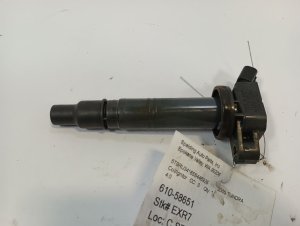
- Ignition Coil
(OEM #90919-02260)— This is the most frequent point of failure for a single-cylinder misfire on the 2AR-FE engine. Part number 90919-02248 is also an interchangeable OEM number.
Trusted brands: Denso (OEM), NGK, Toyota (OEM)
OEM price range: $120-$160
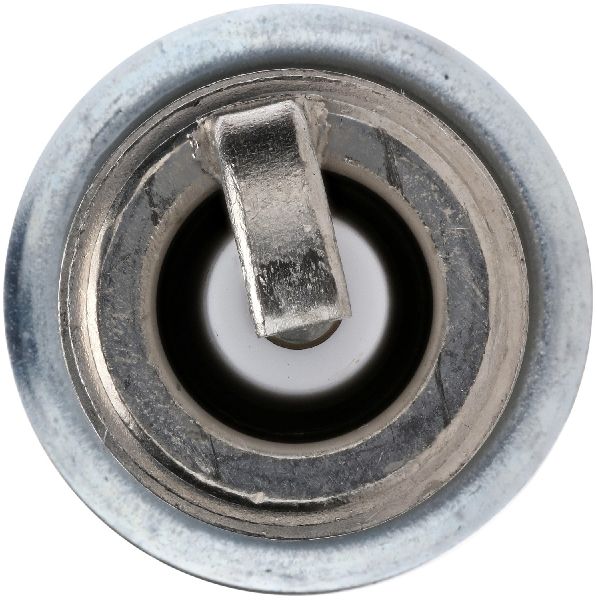
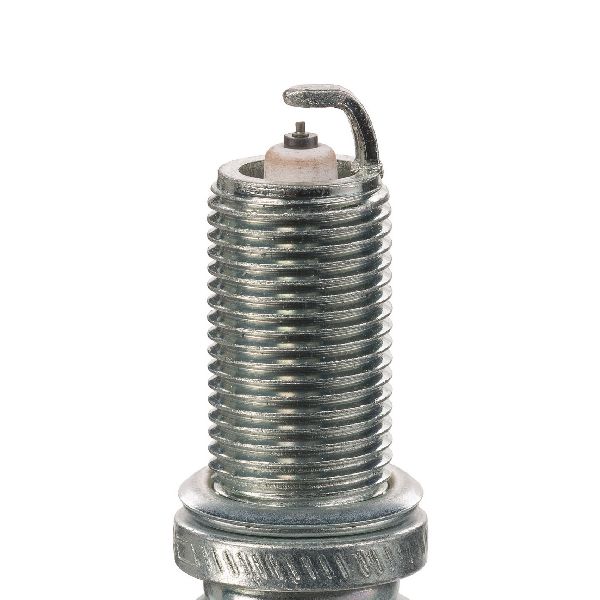
Aftermarket price range: $50-$90 - Iridium Spark Plug
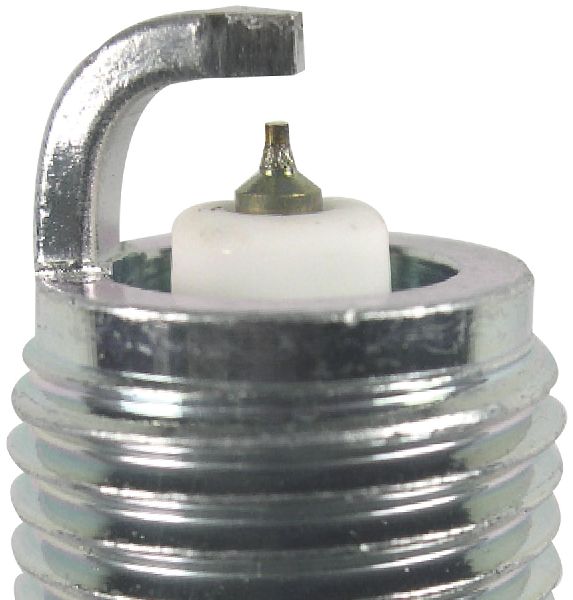
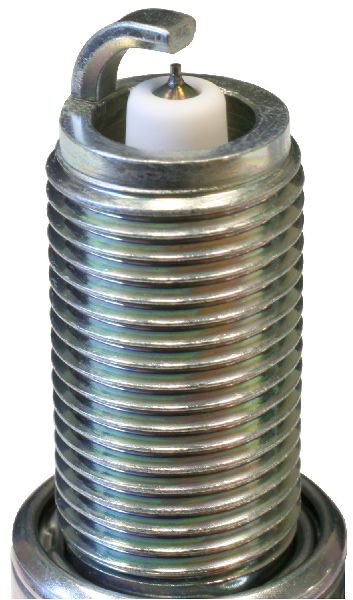
(OEM #90919-01233)— Spark plugs are a maintenance item and the second most likely cause of a misfire. The OEM part is a Denso SK20R11 or NGK IFR6A11.
Trusted brands: Denso, NGK
OEM price range: $15-$25
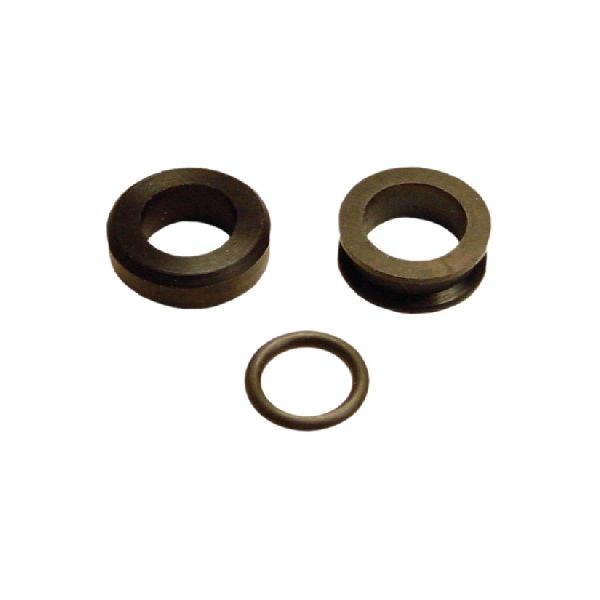
Aftermarket price range: $10-$18 - Fuel Injector
(OEM #23250-0V010)— A less common but possible cause if ignition components are confirmed good.
Trusted brands: Toyota (OEM), GP Sorensen
OEM price range: $180-$250
Aftermarket price range: $70-$120
Related Codes That Often Appear With This One
- P0300 — If the misfire is intermittent or severe, the computer may also log a P0300 (Random/Multiple Cylinder Misfire) code alongside the specific cylinder code.
- P0301, P0303, P0304 — These codes will appear if you are correctly diagnosing a bad component by swapping it to another cylinder. For example, if you swap a bad coil from cylinder 2 to cylinder 3, you should then get a P0303 code.
- P1605 — This code, often related to idling stability, has been documented alongside P0302 in Toyota manufacturer records such as NHTSA ODI #11725081.
Technical Service Bulletins (TSBs) & Recalls
- T-SB-0041-13 (supersedes T-SB-0146-10): Addresses a brief engine knock or rattle at cold startup on 2009-2013 vehicles with the 2AR-FE engine, caused by the VVT-i gear assembly. While not directly a misfire TSB, a failing VVT gear could potentially affect timing enough to contribute to rough running.
- T-SB-0012-11: For 2010-2011 Camry and 2009-2011 RAV4 with 2AR-FE, addresses a rattle noise and/or MIL with codes P0015/P0017 related to the camshaft timing exhaust gear. This is a timing-related issue that could be a rare cause of misfires.
- Bulletin #T-TT-0462-17: Notes that technicians commonly find P0302 and other DTCs caused by corrosion and water in the A43 ECM connector, which can lead to low fuel pressure concerns.
- Bulletin #T-SB-0072-19: Describes conditions where corrosion or water in the ECM connector can cause various drivability concerns and DTCs, including P0302 and P0304.
Platform-Specific Known Issues
- A notable issue is the prevalence of counterfeit Denso and NGK spark plugs on large online marketplaces like Amazon and eBay. These fake parts can cause persistent misfires and should be avoided by purchasing from reputable auto parts stores.
- Some ignition coils are specific to whether the vehicle was manufactured in Japan (VIN starting with 'J') or North America. Using the wrong coil can lead to fitment issues or premature failure.
Mechanic-Grade Diagnostic Values
- Fuel Injector Resistance — expected: 11.6 to 12.4 Ω at 20°C (68°F). Failure: A reading outside this range indicates an internal failure of the injector.
- Fuel Pressure at Idle — expected: 304 - 343 kPa (44 - 50 psi). Failure: Low pressure could indicate a weak fuel pump or clogged filter; high pressure could point to a faulty regulator.
- Ignition Coil #2 Power Wire Voltage — expected: 12-14V with ignition ON (Pin 4 at the coil connector). Failure: No voltage suggests an issue with the EFI relay, fuse, or wiring harness, not the coil itself.
- Ignition Coil #2 Ground Wire Resistance — expected: 0-1 Ω (Continuity from Pin 3 to chassis ground). Failure: High resistance indicates a poor ground connection, which can cause a weak spark.
Hidden / Shadow Codes Worth Checking
- Mode $06, Test ID $53: Provides raw misfire count data for each individual cylinder during the current and previous driving cycles. This is not a 'code' but a data stream. (see via A professional scan tool or a quality consumer OBD-II scanner with Mode $06 capability (e.g., BlueDriver, AutoEnginuity, or apps like Torque Pro). This data allows a technician to see if cylinder 2 is accumulating misfire counts, even if the count is not yet high enough to trigger the P0302 code and Check Engine Light.)
Scan Tool Commands That Help
- Toyota Techstream: Active Test: Control the Injector Cut — This function allows the technician to manually disable the fuel injector for a specific cylinder (e.g., cylinder 2). If the engine's idle does not change when cylinder 2's injector is cut, it confirms that cylinder is not contributing power, reinforcing the misfire diagnosis.
- Toyota Techstream: Misfire Count Data Stream — Similar to Mode $06, Techstream provides a dedicated data list to view live and historical misfire counts per cylinder. This is the most direct way to confirm which cylinder is misfiring and how frequently, which is essential for verifying the P0302 code is accurate.
Wiring & Ground Locations
- Ignition Coil #2 Connector — On top of the engine, second from the passenger (belt) side.. This is the connection point for testing. Pin 4 is 12V power, Pin 3 is ground, Pin 2 is the trigger signal (IGT2) from the ECU (Pin A12), and Pin 1 is the confirmation signal (IGF) back to the ECU (Pin B27).
- Ground Point EC — On the left fender (driver's side) in the engine compartment.. This is a primary engine compartment ground point. While not directly for the coil, a corroded or loose main ground can cause widespread electrical issues, including weak spark.
- Ground Point EG — On the left side of the cylinder head.. This is a critical engine ground. A poor connection here can directly affect the ignition system's performance and cause misfires.
Real Owner Repair Stories
- YouTube video by 'DIAGNOSE and FIX' (Toyota Camry, year not specified but with a similar coil-on-plug setup.) — Check engine light with a P0302 code.
❌ Tried (didn't work) The video directly demonstrates the successful diagnostic path.
✅ What actually fixed it The owner diagnosed a bad ignition coil by swapping the coil from the misfiring cylinder (#2) to an adjacent cylinder. The misfire code followed the coil, confirming the coil was the faulty component. A new coil was installed, which resolved the issue. - YouTube video by 'Live Free' (Toyota Camry, year not specified.) — Rough idle, stalling, and a cylinder 4 misfire code (P0304).
❌ Tried (didn't work) A compression test was performed and all cylinders showed good compression (around 180 psi).
✅ What actually fixed it The owner swapped the ignition coil from the misfiring cylinder (#4) to cylinder #3. After clearing the codes and running the engine, a new code (P0303) appeared. This confirmed the ignition coil was the faulty part. Replacing the coil fixed the misfire. - NHTSA ODI #11705647 — An owner reported misfire issues where the check engine light illuminated and diagnostic testing identified P0302. The vehicle experienced shaking, rough running, and reduced power during acceleration.
- NHTSA ODI #11623185 — A report describes a vehicle that intermittently lost motive power; a mechanic retrieved codes P0300, P0302, P0303, and P0304, indicating multiple parts required replacement to resolve the misfire.
- NHTSA ODI #11725081 — An owner troubleshooting their vehicle found codes P1605-00, P0300-27, and P0302-00; the drive was described as "brutal" as the vehicle continued to struggle on the road.
OEM Part Supersession History
90919-02248→90919-A2001, 90919-A2006, 90919-T2005, 90919-T2008, 90919-02260— Standard part evolution and consolidation by the manufacturer.
Heads up: The latest part number, 90919-02260, is the currently recommended replacement and is backward compatible with the previous numbers.
Model Year Variations Within This Range
- 2010-2017: Some 2AR-FE engines were in vehicles assembled in Japan (VIN starts with 'J'), while others were in North American-assembled vehicles. There can be different ignition coil part numbers for each. The Japan-made coils are reportedly shorter. While they may be interchangeable, it is best practice to verify the correct part for the vehicle's specific VIN to ensure proper fit and function.
Diagnostic Flowchart
Other Known Issues on This Vehicle
Issues unrelated to this code that are worth knowing about as an owner of this generation:
- Torque Converter Shudder 🟠 Medium — Common on 2012-2017 models (XV50) typically after 80,000 miles. Feels like driving over rumble strips at 30-45 mph under light acceleration. (Ref: TSB-0158-17 (recommends fluid flush); T-SB-0023-15 (recommends replacement).)
- Excessive Oil Consumption 🟠 Medium — More prevalent on earlier 2AR-FE engines (approx. 2010-2012), but can affect the whole generation. Caused by piston ring design. Owners report adding a quart of oil every 500-1,500 miles. (Ref: No recall for the 2AR-FE, but a similar issue was covered under an extended warranty for the previous 2AZ-FE engine. The primary solution is monitoring oil levels frequently.)
- VVT-i Gear Rattle at Cold Start 🟡 Low — A brief (1-2 second) rattle or knocking sound immediately after a cold start. Common on 2009-2013 models. (Ref: T-SB-0041-13.)
- Sticky/Melting Dashboard 🟡 Low — Common on 2007-2011 models in hot climates. The dashboard surface becomes shiny, sticky, and can melt. (Ref: Was covered under a Toyota Warranty Enhancement Program (ZE6), but that program has likely expired.)
Used vs. New Parts: Buying Guide for This Vehicle
When a used part is the smart pick: For this repair, obtaining a used ignition coil or fuel injector from a reputable auto recycler is a reasonable cost-saving measure. These parts are generally reliable and easy to access on the 2AR-FE engine.
Donor-vehicle mileage cap: roughly under 80000 miles for the part to have meaningful remaining life.
What to inspect on the donor part:
- Check for a vehicle that was in a rear-end collision, suggesting the engine was running well at the time of the accident.
- Ask for the donor vehicle's mileage; aim for a part from a vehicle with under 80,000 miles for good remaining life.
- For ignition coils, inspect the plastic housing for cracks or heat damage.
- For fuel injectors, ensure the plastic connector isn't brittle or cracked and the O-rings are intact (though you should replace O-rings regardless).
OEM-only on this vehicle (don't cheap out):
- Spark Plugs (Always buy new)
Aftermarket brands forum-validated for this vehicle:
- Denso (often the OEM supplier)
- NGK
- Bosch
Brands owners have reported issues with on this vehicle:
- Unbranded or 'no-name' parts from online marketplaces like eBay or Amazon, which have a high risk of being counterfeit or of poor quality.
Real Owner Stories
Aggregated from forums and TSBs cited above. Mileages and costs reflect what owners reported in those sources.
2014 Toyota Camry 2.5L I4
Symptoms: Owner experienced a P0302 code and tried swapping ignition coils between cylinders, but the misfire remained on cylinder 2.
What fixed it: Replacing spark plugs that were confirmed to be counterfeit parts previously purchased from Amazon.
Source hint: CarKiller.com (Ask Scotty Community)
2010-2017 Toyota Camry 2.5L I4 — ~115000 miles
Symptoms: High-mileage engine experiencing misfire symptoms; community discussion regarding common failure points for the 2AR-FE.
What fixed it: Standard diagnostic path of replacing ignition coils and spark plugs as the primary solution.
Source hint: Reddit (r/MechanicAdvice)
Related OBD-II Codes
Frequently Asked Questions
I have a 2012 Camry with a rattle at startup; could this be related to my P0302 code?
Which spark plugs should I use for my 2.5L Camry to avoid misfire issues?
Does it matter if my Camry was built in Japan or North America when buying parts for a P0302 fix?
My 2011 Camry has a P0017 code along with the misfire; is there a known issue?
I'm at 120,000 miles; is it time to replace my plugs to prevent P0302?
Could my P0302 code be related to the 'rumble strip' feeling I get at 40 mph?
Can water in the electrical connectors cause a P0302 code?
Helpful Videos
Used OEM Parts in Stock
New Aftermarket Parts Available

The information in this article is provided for general reference and educational purposes only. Vehicle specifications, procedures, and part compatibility can vary by production date, trim level, and region. Always consult your vehicle's factory service manual and verify part numbers before purchasing or performing repairs. Safety-critical components such as airbags, seat belts, and braking systems should be installed by a qualified professional.
- Toyota Camry:
- 🧭 Diagnostic Flowchart
- 🎬 Helpful Videos
- 🛍️ Shop This Part
- What's Unique About the 2010-2017 Toyota Camry
- Symptoms You May Notice
- Most Likely Causes
- Rare But Worth Checking
- Diagnosis Steps
- Parts You'll Likely Need
- Related Codes That Often Appear With This One
- Technical Service Bulletins (TSBs) & Recalls
- Platform-Specific Known Issues
- Mechanic-Grade Diagnostic Values
- Hidden / Shadow Codes Worth Checking
- Scan Tool Commands That Help
- Wiring & Ground Locations
- Real Owner Repair Stories
- OEM Part Supersession History
- Model Year Variations Within This Range
- Other Known Issues on This Vehicle
- Used vs. New Parts: Buying Guide for This Vehicle
- Real Owner Stories
- 2014 Toyota Camry 2.5L I4
- 2010-2017 Toyota Camry 2.5L I4 — ~115000 miles
- Related OBD-II Codes
- Frequently Asked Questions
- 🎟️ Get 5% Off