

P0303 on 2005-2013 Chevrolet Corvette: Cylinder 3 Misfire Causes and Fixes
P0303 indicates a misfire on cylinder 3. On a C6 Corvette, this is most often caused by a loose, burnt, or faulty spark plug wire. Other common causes are a bad spark plug or ignition coil. Start by checking the wire connection, then swap ignition parts to another cylinder to find the faulty component.
- P0303 is a misfire on cylinder 3, which is the second cylinder from the front on the driver's side.
- Always check the spark plug wire connection at the coil first, as this is a known issue documented by GM.
- The easiest and cheapest diagnostic step is to swap ignition components (plug, wire, coil) from cylinder 3 to another cylinder to see if the misfire code follows the part.
What's Unique About the 2005-2013 Chevrolet Corvette
For the C6 Corvette platform with LS3, LS7, and LS9 engines, the primary unique issue related to a P0303 code is documented in a GM Technical Service Bulletin (TSB). This TSB points to loose spark plug wires at the ignition coil as a frequent cause of misfires. The high-heat environment of the engine bay can also degrade spark plug wires over time. Additionally, while not exclusive to cylinder 3, LS7 engines are known for a serious potential issue with excessive valve guide wear, which can lead to misfires and catastrophic engine failure if not addressed.
Symptoms You May Notice
- Check Engine Light (CEL) is on and may be flashing
- Rough or unstable idle
- Engine hesitation or stumbling during acceleration
- Noticeable loss of engine power
- Increased fuel consumption
- Fuel smell from the exhaust
- Replacing the catalytic converter. A misfire code like P0303 can cause a catalyst efficiency code (like P0420) to appear because unburnt fuel is entering the exhaust. The misfire is the root cause, not the converter.
Most Likely Causes
- Loose or Damaged Spark Plug Wire 🔴 High Probability → Shop Spark Plug A GM Technical Service Bulletin (PIP4819A) specifically calls out loose spark plug wires at the coil as a common cause for misfires on these V8 engines. The connection can lose its grip, causing a weak or intermittent spark.
How to confirm: Visually inspect the spark plug wire for cylinder 3. Ensure it is securely clicked onto both the ignition coil and the spark plug. Check for any signs of burns, arcing (white or black marks), or physical damage.
Typical fix: Replace the spark plug wire. It is often recommended to replace all 8 wires as a set. 🎬 See this walkthrough on changing C6 spark plugs and wires.
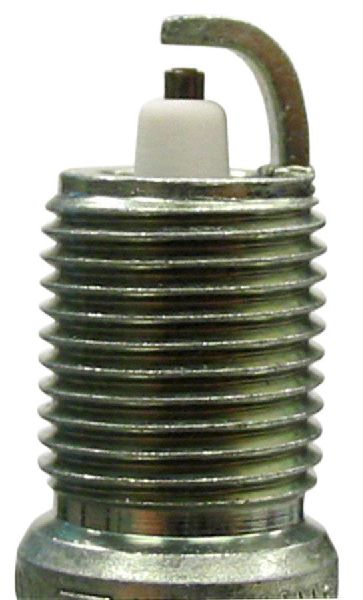
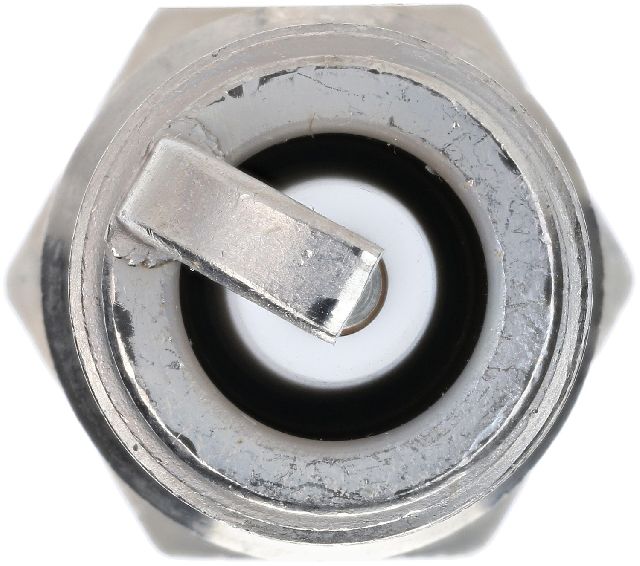
Est. part cost: $50-$150 - Worn or Fouled Spark Plug 🟡 Medium Probability → Shop Spark Plug Spark plugs are a standard maintenance item. High-performance engines can be sensitive to plug condition. Short-trip driving can also lead to carbon fouling.
How to confirm: Swap the spark plug from cylinder 3 with one from another cylinder (e.g., cylinder 1). Clear the codes and drive the car. If the code changes to P0301, the spark plug is the culprit.
Typical fix: Replace the faulty spark plug. It is best practice to replace all 8 spark plugs at the same time.
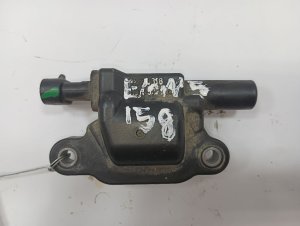
Est. part cost: $8-$20 per plug - Faulty Ignition Coil 🟡 Medium Probability → Shop Ignition Coil
How to confirm: Swap the ignition coil from cylinder 3 with one from another cylinder (e.g., cylinder 5). Clear the codes and drive the car. If the code changes to P0305, the ignition coil is bad.
Typical fix: Replace the failed ignition coil.
Est. part cost: $40-$100 - Clogged or Failed Fuel Injector ⚪ Low Probability → Shop Fuel Injector
How to confirm: Use a mechanic's stethoscope or a long screwdriver to listen to the injector; it should make a consistent clicking sound. A more definitive test is to swap the injector with another cylinder, but this is more labor-intensive. A professional can also perform a flow test.
Typical fix: Clean or replace the faulty fuel injector.
Est. part cost: $70-$200
Rare But Worth Checking
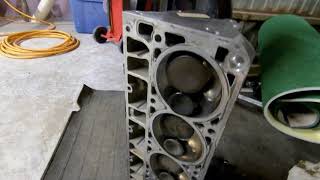
- Worn Valve Guides (LS7 Engine): This is a well-known and serious issue specific to the 7.0L LS7 engine. Excessive wear in the valve guides can cause the valve to not seat properly, leading to a loss of compression, misfires, and potentially catastrophic engine failure if a valve head breaks off. This usually presents with excessive valvetrain noise.
- Broken Valve Spring: While less common than ignition parts, LS engines can suffer from broken valve springs, which will cause a persistent misfire on one cylinder. This requires removing the valve cover for inspection.
- Intake Manifold Gasket Leak: → Shop Engine Intake Manifold A vacuum leak near the intake runner for cylinder 3 can lean out the air/fuel mixture enough to cause a misfire. This might be accompanied by a hissing sound or other vacuum-related codes.
Diagnosis Steps
- Read the code with an OBD-II scanner and note any other codes present. Check if the Check Engine Light is solid or flashing. 🎬 Watch: Complete DIY guide for diagnosing Corvette engine misfires.
- Locate cylinder 3 (driver's side, second from the front).
- Per TSB PIP4819A, first inspect the spark plug wire for cylinder 3. Ensure it is firmly connected at both the ignition coil and the spark plug. Check for any visible damage or signs of arcing.
- If the wire is secure, perform a component swap. Swap the ignition coil from cylinder 3 with cylinder 1. Clear the codes and drive. If the code returns as P0301, the coil is bad.
- If the code remains P0303, swap the spark plug from cylinder 3 with cylinder 1. Clear codes and drive. If the code becomes P0301, the spark plug is bad.
- If the code is still P0303, swap the spark plug wire from cylinder 3 with cylinder 5. If the code becomes P0305, the wire is bad.
- If ignition components are ruled out, check the fuel injector. Listen for a steady clicking sound. Check the wiring connector for a secure fit.
- If the cause is still not found, perform a compression test on cylinder 3 to check for mechanical issues like worn rings, a bad valve, or a failed head gasket. If compression is low, a cylinder leak-down test can pinpoint the source of the leak.
- For LS7 engines, if you hear excessive valvetrain noise, have a professional inspect the valve guides, as this is a known critical issue. 🎬 Watch: Why the LS7 valve guide issue is so serious.
Parts You'll Likely Need
- Spark Plug Wire Set — A loose or failed spark plug wire is a very common cause of P0303 on this platform, as noted by a GM TSB.
Trusted brands: ACDelco, NGK, MSD
OEM price range: $70-$120
Aftermarket price range: $50-$100 - Spark Plug
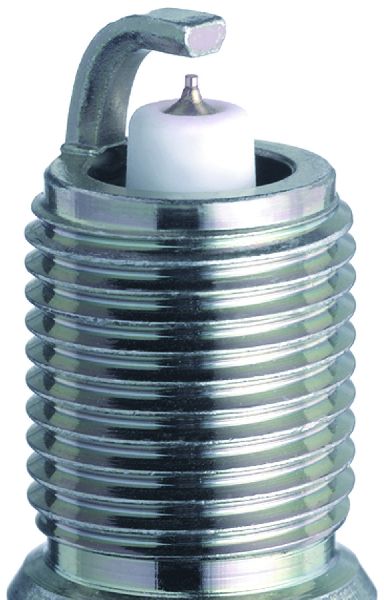
(OEM #41-162)— Spark plugs are a routine wear item and a frequent cause of single-cylinder misfires.
Trusted brands: ACDelco, NGK
OEM price range: $10-$15 each
Aftermarket price range: $8-$12 each - Ignition Coil
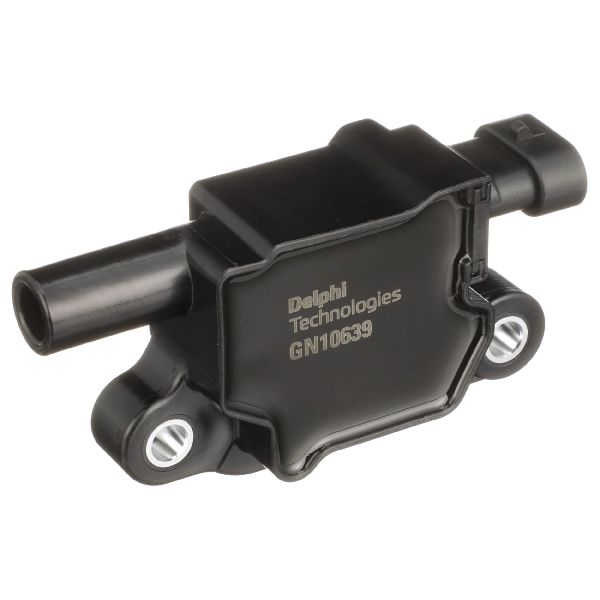
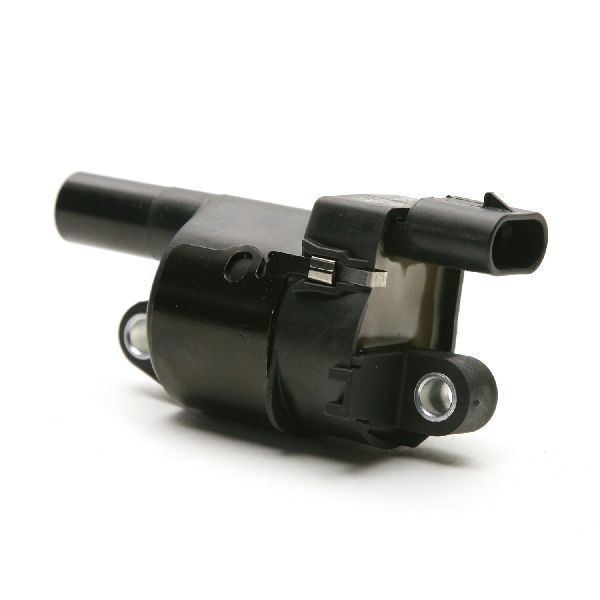
(OEM #D510C)— The individual ignition coils can fail over time due to heat and vibration, leading to a lack of spark.
Trusted brands: ACDelco, Delphi, Bosch
OEM price range: $80-$105
Aftermarket price range: $40-$75
Related Codes That Often Appear With This One
- P0300 — If the misfire is intermittent or other cylinders are also misfiring, a P0300 (Random/Multiple Cylinder Misfire) code may be stored alongside P0303.
- P0420 — A persistent misfire on cylinder 3 (Bank 1) can dump unburnt fuel into the exhaust, causing the Bank 1 catalytic converter to perform poorly and triggering a P0420 (Catalyst System Efficiency Below Threshold) code.
Technical Service Bulletins (TSBs) & Recalls
- PIP4819A: States that for engine misfire codes P0300-P0308, technicians should inspect for and replace any spark plug wires found to be loose at the ignition coil.
Platform-Specific Known Issues
- TSB PIP4819A: This bulletin specifically addresses engine misfire codes (P0300-P0308) on V8 engines from this era, identifying a loose spark plug wire at the ignition coil as a likely cause.
- LS7 Valve Guide Wear: 2006-2013 Z06 and 427 Convertible models with the 7.0L LS7 engine are susceptible to premature valve guide wear due to a machining issue at a supplier. This can cause misfires, noise, and potential engine failure. GM acknowledged this issue, which was reportedly contained by February 2011.
Mechanic-Grade Diagnostic Values
- Fuel Pressure (Key On, Engine Off) — expected: 55-62 PSI. Failure: Pressure below 55 PSI, or pressure that drops rapidly after the fuel pump primes (should hold steady). A rapid drop points to a bad check valve in the fuel pump assembly or a leaking fuel injector.
- Ignition Coil Primary Resistance — expected: 0.4 - 0.6 Ohms. Failure: A reading significantly outside this range indicates a faulty coil winding.
- Ignition Coil Secondary Resistance — expected: 5,000 - 7,200 Ohms (5.0k - 7.2k Ohms). Failure: A reading significantly outside this range, or an open circuit (infinite resistance), points to a failed coil.
- Fuel Injector Resistance — expected: ~12.0 Ohms. Failure: A reading significantly higher or lower suggests a failed injector coil. This applies to the stock high-impedance injectors.
Hidden / Shadow Codes Worth Checking
- Mode $06 Misfire Counters: GM ECMs track misfire events for each cylinder even before they are frequent enough to set a P030x code. A technician can view these raw counts in Mode $06 data. An elevated count for Cylinder 3 (CID $03) compared to others can confirm the misfire location, even if the CEL is not currently on. (see via A professional scan tool (like GM Tech 2, GDS2) or an advanced OBD-II scanner with Mode $06 capability.)
Scan Tool Commands That Help
- GM Tech 2 / GDS2 or equivalent professional scanner: Cylinder Power Balance Test — This test is used to confirm which cylinder is not contributing power. The tool deactivates each cylinder one by one and measures the drop in engine RPM. If deactivating cylinder 3 results in little or no RPM drop compared to other cylinders, it confirms cylinder 3 is the source of the misfire.
- GM Tech 2 / GDS2 or equivalent professional scanner: Fuel Injector Balance Test — This command can be used to individually fire each injector to check for a response or to disable an injector to see if it affects the misfire. This helps differentiate a fuel problem from a spark or compression issue after ignition parts have been swapped.
Wiring & Ground Locations
- G105 / G106 / G107 — G105 is on the lower left side of the engine block. G106 is on the engine block, often near the starter. G107 is on the left rear cylinder head.. These are the primary engine block and cylinder head grounds. A loose or corroded connection at these points can cause erratic behavior in the ignition system, including weak spark or inconsistent coil firing, leading to misfires.
- G104 — On the frame rail in the engine bay, near the battery.. This ground is critical for the underhood fuse block, which supplies power to the ignition coils and ECM. A poor connection here can cause widespread electrical issues, including misfires.
- ECM Connector (E38/E67) — Located in the front passenger-side wheel well, behind the fender liner.. The trigger signal for the cylinder 3 ignition coil comes from a specific pin on this connector. Water intrusion or corrosion in this area, while uncommon, can disrupt the signal and cause a misfire on a single cylinder.
Real Owner Repair Stories
- CorvetteForum user (2016 Corvette Z51 (similar LT engine architecture)) — Sudden CEL, car ran very poorly.
❌ Tried (didn't work) Directly taken to a shop for diagnosis.
✅ What actually fixed it The porcelain on the #3 spark plug was cracked, causing the spark to arc to the wire instead of firing the plug. Replacing the single spark plug and wire resolved the issue completely. - CorvetteForum user (2008 Corvette LS3, 65k miles) — Engine suddenly ran rough, wouldn't hold idle, kept stalling. MAP sensor codes were also present.
❌ Tried (didn't work) Replacing the Manifold Absolute Pressure (MAP) sensor.
✅ What actually fixed it A broken valve spring on one cylinder. The spring had fortunately bound up on itself, preventing the valve from dropping into the cylinder. Replacing the single broken spring fixed the misfire and rough running. - CorvetteForum user (C6 Z06 (LS7)) — Persistent misfire after installing new heads/cam.
❌ Tried (didn't work) Replacing spark plugs and wires., Swapping coil packs.
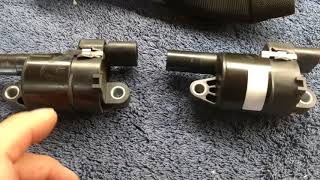
✅ What actually fixed it The owner discovered that recently manufactured OEM ACDelco coils with black epoxy tops were failing prematurely. He replaced them with older-style used OEM coils that have a white/beige epoxy top, which solved the misfire issue.
"I Checked Everything" — The Actual Cause
- A common scenario is chasing a P0303 code where all ignition and fuel parts check out and a smoke test reveals no vacuum leaks. The actual cause was found to be a broken valve spring or a collapsed/stuck hydraulic lifter. These are internal mechanical failures that won't be found by external tests like a smoke test, but will cause a persistent misfire and require removing the valve cover for diagnosis.
When the Usual Fixes Don't Work
- While swapping ignition components is the standard procedure, there are numerous documented cases on Corvette forums where a P0303 was not caused by a bad plug, wire, or coil. In these instances, the root cause was often a mechanical failure, such as a broken valve spring or a collapsed hydraulic lifter. Another frequently reported 'gotcha' is a hairline crack in the spark plug's porcelain that is not easily visible, leading mechanics to mistakenly rule out the plug as the cause.
OEM Part Supersession History
12570616, 12611424→12713668 (ACDelco D510C)— Standard part evolution and consolidation for various LS/LT engine platforms.
Heads up: Forum members have noted a potential quality decrease in newer production coils, identified by black epoxy on top, compared to older OEM coils with white or beige epoxy. While functionally interchangeable, some users report premature failure with the black-top versions.
Model Year Variations Within This Range
- 2005 only: The 2005 Corvette with the LS2 engine used the E40 Engine Control Module (ECM). This ECM has a different physical connector and pinout compared to later models.
- 2006-2013: Models from 2006 onward (LS2, LS3, LS7, LS9) used the E38 or E67 ECM. While causes for P0303 are similar, any diagnosis involving ECM wiring or pinouts must account for this change from the 2005 model year.
- 2008 (early LS3): Some early LS3 engines were equipped with valve springs known as 'yellow springs,' which some in the community consider to be weaker and more prone to breaking than springs used in later years. A broken valve spring is a known, though uncommon, cause of misfires on stock LS3s.
Diagnostic Flowchart
Used vs. New Parts: Buying Guide for This Vehicle
When a used part is the smart pick: Ignition coils are a good candidate for buying used, especially if you can find older OEM stock. Many owners specifically seek out used coils with a white or beige epoxy top, as they are perceived to be more reliable than newer black-topped versions. An entire engine harness or an ECM could also be sourced used from a reputable salvage yard.
Donor-vehicle mileage cap: roughly under 80000 miles for the part to have meaningful remaining life.
What to inspect on the donor part:
- For ignition coils, check for the white/beige epoxy top if possible.
- Inspect plastic connectors for brittleness or cracking.
- Ensure there is no physical damage or signs of extreme heat (melting, discoloration).
- For a wiring harness, check for any cut wires, damaged connectors, or amateurish-looking splices.
OEM-only on this vehicle (don't cheap out):
- Hydraulic Lifter Trays: It is strongly recommended to use genuine GM/ACDelco lifter trays. Aftermarket trays may have looser tolerances, increasing the risk of a lifter rotating in its bore, which can destroy the camshaft.
Aftermarket brands forum-validated for this vehicle:
- Spark Plugs: NGK (Iridium TR55IX, TR6IX for modified engines) are frequently recommended by owners as a more reliable alternative to stock ACDelco plugs.
- Spark Plug Wires: MSD, Texas Speed & Performance (TSP), and Granatelli are popular choices for their superior heat resistance, which is beneficial on LS engines, especially those with aftermarket headers.
Brands owners have reported issues with on this vehicle:
- Aftermarket Ignition Coils: While some have success, many owners report that factory ACDelco coils provide the most reliable performance. Some have experienced misfires under load with aftermarket brands like MSD, particularly on boosted applications.
Real Owner Stories
Aggregated from forums and TSBs cited above. Mileages and costs reflect what owners reported in those sources.
2007 Corvette C6 Z06 (LS7) — 14000 miles
Symptoms: The car began to drive rough on the highway with no power, a rough idle, and a flashing Check Engine Light.
What fixed it: The owner attempted replacing wires, plugs, and coils, and had the injector cleaned, but these only provided temporary relief; a definitive fix was not found at the time of the report.
Source hint: CorvetteForum thread titled '07 C6Z - P0303 Help - CorvetteForum - Chevrolet Corvette Forum Discussion'
Corvette C5 (year not specified)
Symptoms: The car started to hesitate at around 60-70 MPH, followed by a flashing Check Engine Light showing P0303 and P0420.
What fixed it: The issue was a cracked manifold causing misfires on cylinders 3, 5, and 7.
Source hint: CorvetteForum thread titled 'P0303 - CorvetteForum - Chevrolet Corvette Forum Discussion'
Related OBD-II Codes
Frequently Asked Questions
Is there a specific Technical Service Bulletin for misfires on my 2005-2013 Corvette V8?
Where is cylinder 3 located on my Corvette's engine?
I have a 2009 Z06 with an LS7; could my P0303 code be related to a known engine defect?
Can I use the 'component swap' method to diagnose a P0303 on this vehicle?
Why does my Corvette misfire more during short-trip driving?
Should I replace just the one spark plug wire for cylinder 3?
Helpful Videos
Used OEM Parts in Stock
New Aftermarket Parts Available

The information in this article is provided for general reference and educational purposes only. Vehicle specifications, procedures, and part compatibility can vary by production date, trim level, and region. Always consult your vehicle's factory service manual and verify part numbers before purchasing or performing repairs. Safety-critical components such as airbags, seat belts, and braking systems should be installed by a qualified professional.
- Chevrolet Corvette:
- 🧭 Diagnostic Flowchart
- 🎬 Helpful Videos
- 🛍️ Shop This Part
- What's Unique About the 2005-2013 Chevrolet Corvette
- Symptoms You May Notice
- Most Likely Causes
- Rare But Worth Checking
- Diagnosis Steps
- Parts You'll Likely Need
- Related Codes That Often Appear With This One
- Technical Service Bulletins (TSBs) & Recalls
- Platform-Specific Known Issues
- Mechanic-Grade Diagnostic Values
- Hidden / Shadow Codes Worth Checking
- Scan Tool Commands That Help
- Wiring & Ground Locations
- Real Owner Repair Stories
- "I Checked Everything" — The Actual Cause
- When the Usual Fixes Don't Work
- OEM Part Supersession History
- Model Year Variations Within This Range
- Used vs. New Parts: Buying Guide for This Vehicle
- Real Owner Stories
- 2007 Corvette C6 Z06 (LS7) — 14000 miles
- Corvette C5 (year not specified)
- Related OBD-II Codes
- Frequently Asked Questions
- 🎟️ Get 5% Off