

P0305 on 2010-2013 Chevrolet Express: Cylinder 5 Misfire Causes and Fixes
P0305 means cylinder 5 is misfiring. On this van, the most likely cause is a faulty spark plug, wire, or ignition coil. A simple diagnostic is to swap the ignition coil from cylinder 5 with another cylinder; if the code follows the coil, you've found the problem. This is a ~$50 part and an easy DIY fix. Check the spark plug wire connection first, as per a GM TSB.
- P0305 is a misfire on cylinder 5, which is the third cylinder back on the driver's side.
- Do not drive if the Check Engine Light is flashing, as this can quickly destroy your catalytic converter.
- The most common causes are simple ignition components: a spark plug wire, spark plug, or ignition coil.
- Use the 'swap test' to diagnose a bad ignition coil for free before buying parts.
- Listen for a persistent ticking noise, which could indicate a more serious AFM lifter failure on 5.3L/6.0L engines.
What's Unique About the 2010-2013 Chevrolet Express
The Vortec V8 engines in this generation of Express vans are known for their general reliability, but they have specific, well-documented weak points that can lead to a P0305 code. A General Motors Technical Service Bulletin (TSB #PIP4819A) specifically points to loose-fitting spark plug wires as a common cause of misfires, making a simple connection check the first order of business. Additionally, the 5.3L and some 6.0L versions feature Active Fuel Management (AFM), a system that can lead to lifter failure. While cylinder 5 is not an AFM-deactivated cylinder (those are typically 1, 4, 6, and 7), a failure of the system's Valve Lifter Oil Manifold (VLOM) or a non-AFM lifter can still cause a misfire on any cylinder. A persistent ticking noise is a strong indicator of this more serious mechanical issue.
Symptoms You May Notice
- Flashing or solid Check Engine Light
- Rough or shaking idle
- Hesitation or stumbling during acceleration
- Sensation of driving over a bump strip or the transmission slipping during acceleration
- Noticeable loss of engine power
- Decreased fuel economy
- A smell of raw fuel from the exhaust
- Replacing the catalytic converter when it has been damaged by a persistent misfire, without fixing the root cause of the misfire first.
- Replacing all eight ignition coils or fuel injectors when only one has failed. The 'swap test' saves significant money by isolating the single faulty component.
Most Likely Causes
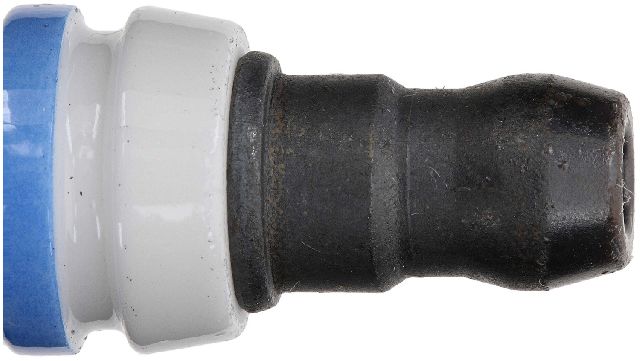
- Faulty Spark Plug Wire 🔴 High Probability → Shop Spark Plug A GM Technical Service Bulletin (TSB #PIP4819A) specifically calls out loose or faulty spark plug wires as a common cause of misfires on this engine family. The connection can become loose at the coil or plug over time. On similar platforms, the wire for cylinder 5 has been known to rub against the steering shaft, causing damage.
How to confirm: Visually inspect the wire for cylinder 5 for damage, chafing, or signs of arcing. Ensure it is firmly clicked into place on both the ignition coil and the spark plug. A solid click should be felt and heard.
Typical fix: Reseat the wire firmly. If the connection remains loose, the wire is damaged, or it has been rubbing, replace the full set of spark plug wires. Use zip ties if necessary to keep wires clear of the steering shaft.
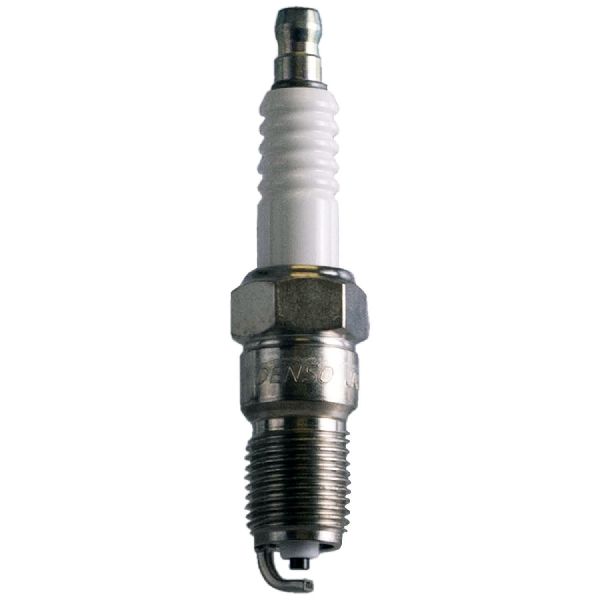
Est. part cost: $40-$80 - Worn or Fouled Spark Plug 🔴 High Probability → Shop Spark Plug
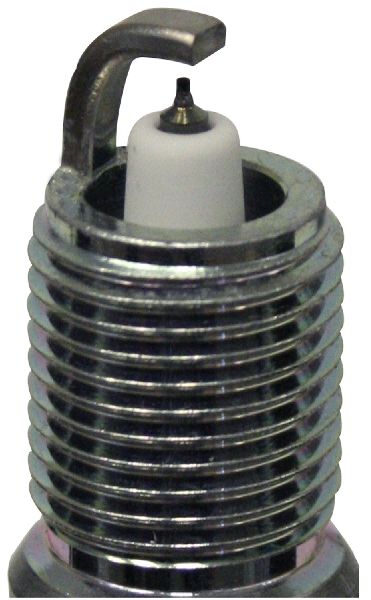
How to confirm: Remove the spark plug from cylinder 5 and inspect it for wear (rounded electrode), carbon fouling, oil, or a cracked insulator. The definitive test is to swap the cylinder 5 spark plug with one from another cylinder (e.g., cylinder 1). Clear the codes and drive. If the misfire code changes to P0301, the spark plug is bad.
Typical fix: Replace the spark plug. It is best practice to replace all 8 spark plugs at the same time if they are near the end of their 100,000-mile service life.
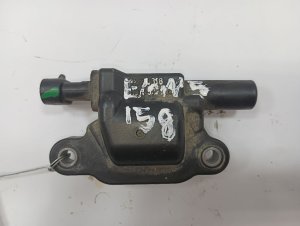
Est. part cost: $5-$15 per plug - Failed Ignition Coil 🟡 Medium Probability → Shop Ignition Coil
How to confirm: Swap the ignition coil from cylinder 5 with a coil from an adjacent, easy-to-access cylinder (e.g., cylinder 3). Clear the trouble codes, start the engine, and see if the misfire code moves to the other cylinder (e.g., P0303). If it does, the coil is faulty. This is a free and highly effective diagnostic step.
Typical fix: Replace the failed ignition coil. They are held on by a single bolt and are simple to replace.
Est. part cost: $35-$75 - Clogged or Failed Fuel Injector 🟡 Medium Probability → Shop Fuel Injector
How to confirm: If ignition components have been ruled out, the fuel injector is a likely suspect. A mechanic's stethoscope or a long screwdriver held to your ear can be used to listen to the injector; it should make a consistent, rapid clicking sound. To be certain, you can swap the cylinder 5 injector with another cylinder's injector. If the misfire code follows the injector, it needs to be replaced.
Typical fix: Replace the faulty fuel injector. Some owners opt for a professional fuel system cleaning service first, which can sometimes resolve a clogged injector without replacement.
Est. part cost: $40-$90 per injector
Rare But Worth Checking
- Failed AFM/DOD Lifter or Camshaft Lobe: → Shop Engine Valve Lifter This applies to the 5.3L and some 6.0L engines. If the misfire is accompanied by a persistent ticking or chirping noise that increases with engine RPM, it is a strong indicator of a collapsed lifter or worn camshaft lobe. This is a significant mechanical repair that requires removal of the cylinder head(s). 🎬 See how to diagnose and replace a collapsed AFM lifter
- Low Engine Compression: If all ignition and fuel-related causes are ruled out, the issue could be mechanical within the cylinder itself, such as a worn piston ring, a bad valve, a broken valve spring, or a leaking head gasket. This is confirmed with a compression test and a cylinder leak-down test.
- Intake Manifold Gasket Leak: → Shop Engine Intake Manifold A vacuum leak from a failed intake manifold gasket near the runner for cylinder 5 can lean out the air/fuel mixture enough to cause a misfire. This may be accompanied by a hissing sound at idle.
Diagnosis Steps
- Read the trouble codes with an OBD-II scanner to confirm P0305 is the primary code. Note if the 🎬 Watch: Step-by-step guide to fixing a P0305 misfire Check Engine Light is flashing and check for any other stored codes.
- Locate cylinder 5, which is the third cylinder back from the front on the driver's side.
- Inspect the spark plug wire for cylinder 5. Per TSB #PIP4819A, ensure it is securely fastened at both the ignition coil and the spark plug. Check for any visible damage or rubbing against the steering shaft.
- Perform a 'swap test' with the ignition coil. Swap the coil from cylinder 5 with the coil from cylinder 3. Clear the codes and drive. If the code changes to P0303, the ignition coil is faulty.
- If the code remains P0305, swap the spark plug from cylinder 5 with the plug from cylinder 1. Clear codes and drive. If the code changes to P0301, the spark plug is bad.
- If the misfire remains on cylinder 5, listen to the fuel injector with a stethoscope or long screwdriver. It should make a steady, rapid clicking sound. An absence of clicking or an irregular pattern suggests a problem.
- If ignition and fuel delivery seem okay, perform an engine compression test on cylinder 5 to check for mechanical problems like bad valves, piston rings, or a failed lifter. Compare the reading to other cylinders; a significant drop indicates an internal engine issue.
Parts You'll Likely Need
- Ignition Coil
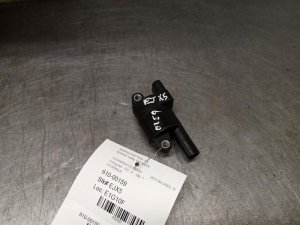
(OEM #ACDelco 12699382 (replaces 12573190))— A common failure point for ignition misfires. The 'swap test' is the easiest way to confirm failure.
Trusted brands: ACDelco, Delphi, NGK
OEM price range: $50-$75
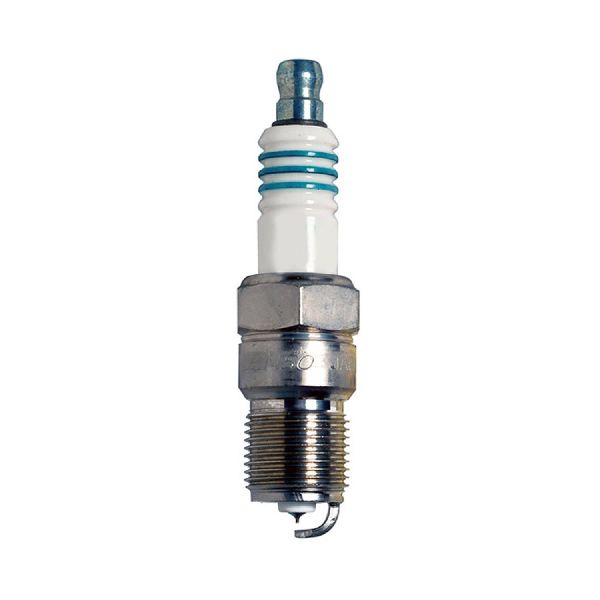
Aftermarket price range: $35-$60 - Spark Plug
(OEM #ACDelco 41-110 (Iridium))— Spark plugs are wear items and a primary cause of misfires. They are inexpensive and should be checked early in the diagnosis. The OEM plug is Iridium and should not be re-gapped.
Trusted brands: ACDelco, NGK
OEM price range: $10-$20
Aftermarket price range: $5-$15 - Spark Plug Wire Set
(OEM #ACDelco 9748UU)— GM has a TSB specifically for loose wires causing misfires on these engines. Wires can also degrade over time or get damaged by rubbing on other components.
Trusted brands: ACDelco, NGK/NTK
OEM price range: $60-$100
Aftermarket price range: $40-$80 - Fuel Injector
(OEM #ACDelco 217-3445)— Clogged or failed injectors are a known issue on Vortec engines that can cause a single-cylinder misfire.
Trusted brands: ACDelco, Bosch, Standard Motor Products
OEM price range: $70-$110
Aftermarket price range: $40-$90
Related Codes That Often Appear With This One
- P0300 — If the condition causing the P0305 is intermittent or begins to affect other cylinders, a P0300 (Random/Multiple Cylinder Misfire) code may also be stored.
- P0303 — This code for a cylinder 3 misfire will often appear during the diagnostic process if a faulty ignition coil from cylinder 5 is intentionally swapped to cylinder 3 to confirm the coil is the problem.
- P0205 — This code for 'Injector Circuit/Open - Cylinder 5' can appear if the misfire is caused by an electrically failed fuel injector or a wiring issue to that injector.
Technical Service Bulletins (TSBs) & Recalls
- PIP4819A: Notes that a Service Engine Soon light with misfire codes (P0300-P0308) can be caused by a poor connection between the spark plug wire and the spark plug or ignition coil. Technicians are advised to apply dielectric grease and ensure the wire is fully seated.
Platform-Specific Known Issues
- TSB #PIP4819A: A known issue where loose-fitting spark plug wires can cause intermittent misfire codes. The primary diagnostic step should be to check for a firm 'click' when seating the wire.
- Active Fuel Management (AFM) Lifter Failure: On 5.3L and some 6.0L engines, a failed AFM lifter can get stuck, causing
Mechanic-Grade Diagnostic Values
- Ignition Coil Primary Resistance — expected: 0.4 - 0.8 Ohms. Failure: A reading outside of this range indicates a faulty coil winding.
- Ignition Coil Secondary Resistance — expected: 8,000 - 12,000 Ohms (8K-12K Ohms). Failure: A reading significantly outside this range points to a failure in the secondary windings.
- Fuel Injector Resistance — expected: 11.0 - 14.0 Ohms (when tested between 50-90°F). Failure: A reading outside this range, or a variance greater than 3.0 Ohms between injectors, indicates a faulty injector coil.
- Fuel Pressure (Key On, Engine Off) — expected: 50 - 60 PSI. Failure: Pressure below this range can indicate a weak fuel pump or a leak, potentially causing a lean misfire.
Hidden / Shadow Codes Worth Checking
- Mode 6, Test ID $A6: Misfire counts for Cylinder 5. A professional scan tool can access Mode 6 data to see raw misfire counts for each cylinder, even before they are high enough to set a P0305 code. This is invaluable for diagnosing intermittent misfires. (see via A scan tool that supports GM Mode 6 data. The data is typically found under 'On-Board Monitor Test Results'. The specific monitor ID for cylinder 5 is often designated as $A6 (with $A2 being cylinder 1, $A3 for 2, etc., though some models have variations).)
Scan Tool Commands That Help
- GDS2 / Tech 2: Cylinder Power Balance Test — This function allows a technician to disable individual fuel injectors one at a time while monitoring the RPM drop for each cylinder. If disabling cylinder 5 causes little to no change in engine RPM compared to other cylinders, it confirms that cylinder 5 is not contributing power, verifying the misfire.
- GDS2 / Tech 2: Misfire Graphic — Provides a real-time graphical display of misfire events per cylinder. This is extremely useful for identifying if the misfire on cylinder 5 occurs under specific conditions like idle, acceleration, or deceleration.
Wiring & Ground Locations
- G102 — Located at the left rear of the engine (driver's side).. This is the primary ground for all 8 ignition coils. A loose or corroded G102 can cause weak or intermittent spark on multiple cylinders, including cylinder 5, leading to misfires that are hard to diagnose.
- G103 / G104 — On the rear of the driver's side cylinder head (G103) and the front of the passenger side cylinder head (G104).. These are critical engine-to-chassis grounds. A poor connection at these points can affect the ECM and sensor readings, potentially causing erratic behavior that could be misdiagnosed as a component failure.
- ECM Connector Pin (Varies) — At the Engine Control Module (ECM).. The ignition coil for cylinder 5 is triggered by a specific pin on the ECM. For a 2004 Vortec (similar wiring), the Cylinder 5 injector control wire is Pink/Black at pin 68 of the C1 (Blue) connector. A damaged wire or corroded pin at this specific location can cause a P0305 that won't be fixed by replacing the coil or plug.
Real Owner Repair Stories
- GM-Trucks.com forum user 'snailtrax' (2014 Chevrolet Silverado (mechanically similar)) — P0305 code popped up.
✅ What actually fixed it The spark plug wire on the coil end for cylinder 5 was loose. The user reported it 'fell off' when touched. Reconnecting it firmly until it clicked into place resolved the code. - Reddit user on r/MechanicAdvice (Unknown GM vehicle, likely V8) — Intermittent P0305, especially at idle.
❌ Tried (didn't work) Re-soldering the wiring for the sensor plug., Replacing the sensor plug wiring.
✅ What actually fixed it The intake manifold gasket for cylinder 5 was found to be severely damaged ('chewed up'), causing a vacuum leak specific to that cylinder. Replacing the intake manifold gasket resolved the misfire.
Diagnostic Flowchart
Other Known Issues on This Vehicle
Issues unrelated to this code that are worth knowing about as an owner of this generation:
- Fuel Level Sensor Failure 🟠 Medium — Very common. The fuel gauge becomes inaccurate or reads empty permanently. Often requires replacing the fuel sender unit, which is part of the fuel pump module inside the tank.
- Transmission Problems (4L60E/4L80E) 🔴 High — Common at higher mileage. Issues include slipping, harsh shifting, or failure to engage gears. The 4L60E is generally considered less robust than the 4L80E found in 2500/3500 models.
- Intake Manifold Gasket Leaks 🟠 Medium → Shop Engine Intake Manifold — A known issue where the gasket can develop coolant or oil leaks, potentially leading to overheating or oil loss.
- Excessive Oil Consumption 🟠 Medium — More prevalent on 5.3L engines with AFM, but can occur on others. Often caused by worn piston rings or issues with the PCV system.
- Tail Light Wiring Damage 🟡 Low — Common on cargo models. Wiring in the rear cargo area can be damaged by shifting cargo, leading to tail light failure.
Used vs. New Parts: Buying Guide for This Vehicle
When a used part is the smart pick: For this repair, obtaining a used ignition coil from a reputable auto recycler is a very cost-effective diagnostic step. Since the 'swap test' is the primary method of confirming a bad coil, having a known-good used coil on hand can speed up diagnosis if you don't want to swap with another cylinder.
Donor-vehicle mileage cap: roughly under 100000 miles for the part to have meaningful remaining life.
What to inspect on the donor part:
- For an ignition coil, check the plastic housing for cracks or signs of melting.
- Ensure the electrical connector pins are clean and not corroded.
- Look for a vehicle that was in a rear-end collision, suggesting the engine was likely running well at the time of the accident.
OEM-only on this vehicle (don't cheap out):
- Active Fuel Management (AFM) Lifters: If the cause is a failed lifter, using OEM or high-quality, well-regarded aftermarket lifters is critical. This is a labor-intensive job, and using cheap, unreliable parts risks a repeat failure.
- Intake Manifold Gaskets: While not strictly 'OEM-only', it is critical to use a high-quality, steel-reinforced gasket set like the Fel-Pro MS9800T to prevent repeat failures, which are common with cheaper, non-reinforced gaskets on Vortec engines.
Aftermarket brands forum-validated for this vehicle:
- Ignition Coils: ACDelco (OEM), Delphi, NGK
- Spark Plugs: ACDelco (OEM), NGK
- Spark Plug Wires: ACDelco (OEM), NGK/NTK
Brands owners have reported issues with on this vehicle:
- Unbranded, 'white-box' ignition coils and sensors from online marketplaces. While tempting due to low price, they have a very high failure rate and can cause diagnostic headaches.
Real Owner Stories
Aggregated from forums and TSBs cited above. Mileages and costs reflect what owners reported in those sources.
2010-2013 Chevrolet Tahoe 5.3L V8
Symptoms: Persistent P0305 misfire that remained even after replacing the spark plug, wire, coil, and fuel injector.
What fixed it: Removal of the cylinder head and replacement of a collapsed exhaust lifter on cylinder #5.
Source hint: TahoeYukonForum.com - 'Persistent P0305 misfire'
2010-2013 Chevrolet Express 4.8L/5.3L/6.0L V8
Symptoms: Intermittent P0305 at highway speeds; the truck felt like it was cutting power and stuttering.
What fixed it: The diagnostic process involves checking for loose-fitting spark plug wires per TSB #PIP4819A, ensuring a firm 'click' when seating the wire.
Source hint: GM-Trucks.com - 'Cylinder 5 Misfire (P0305) Help!'
2007-2018 GMC Sierra / Chevy Silverado 1500
Symptoms: Cylinder 5 misfire caused by a damaged aftermarket spark plug wire.
What fixed it: Replaced the damaged wire that was rubbing against the steering shaft and secured the new wire with a zip tie to maintain clearance.
Source hint: GM-Trucks.com - '2007-2018 GMC Sierra / Chevy Silverado 1500'
Related OBD-II Codes
Frequently Asked Questions
Does TSB #PIP4819A apply to my 2010-2013 Chevrolet Express V8?
I feel a sensation like driving over a bump strip in my Express; is this related to P0305?
Is there a specific physical part I should check for damage on the driver's side of the engine?
How can I tell if my P0305 is caused by the AFM system on my 5.3L engine?
My Check Engine Light is flashing while I drive my Express. Is it safe to continue?
Helpful Videos
Used OEM Parts in Stock
New Aftermarket Parts Available


The information in this article is provided for general reference and educational purposes only. Vehicle specifications, procedures, and part compatibility can vary by production date, trim level, and region. Always consult your vehicle's factory service manual and verify part numbers before purchasing or performing repairs. Safety-critical components such as airbags, seat belts, and braking systems should be installed by a qualified professional.
- Chevrolet Express:
- 🧭 Diagnostic Flowchart
- 🎬 Helpful Videos
- 🛍️ Shop This Part
- What's Unique About the 2010-2013 Chevrolet Express
- Symptoms You May Notice
- Most Likely Causes
- Rare But Worth Checking
- Diagnosis Steps
- Parts You'll Likely Need
- Related Codes That Often Appear With This One
- Technical Service Bulletins (TSBs) & Recalls
- Platform-Specific Known Issues
- Mechanic-Grade Diagnostic Values
- Hidden / Shadow Codes Worth Checking
- Scan Tool Commands That Help
- Wiring & Ground Locations
- Real Owner Repair Stories
- Other Known Issues on This Vehicle
- Used vs. New Parts: Buying Guide for This Vehicle
- Real Owner Stories
- 2010-2013 Chevrolet Tahoe 5.3L V8
- 2010-2013 Chevrolet Express 4.8L/5.3L/6.0L V8
- 2007-2018 GMC Sierra / Chevy Silverado 1500
- Related OBD-II Codes
- Frequently Asked Questions
- 🎟️ Get 5% Off