

P0305 on 2006-2010 Ford Explorer 4.6L V8: Cylinder 5 Misfire Causes and Fixes
P0305 on a 2006-2010 Explorer with the 4.6L V8 is most often a failed ignition coil on cylinder 5. Swapping the coil with an adjacent cylinder (like #6) is the fastest way to confirm. A single Motorcraft coil costs around $40-$60. If it's not the coil, the spark plug is next, but be aware of the high risk of the original two-piece plugs breaking during removal, a known issue covered by a Ford TSB.
- P0305 means cylinder 5 is misfiring; it's the front cylinder on the driver's side.
- The most likely cause is a bad ignition coil. Always perform a 'swap test' with another cylinder to confirm before buying parts.
- This engine has a known issue with spark plugs breaking during removal. Approach any spark plug work with extreme caution on a cold engine and be prepared with the correct tools.
- If the check engine light is flashing, pull over safely and shut off the engine to prevent expensive catalytic converter damage.
- Replacing the ignition coil is a simple DIY job; replacing the spark plugs can be very difficult and risky if they are the original two-piece design.
What's Unique About the 2006-2010 Ford Explorer
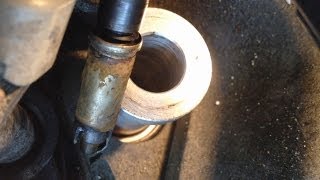
The 4.6L 3V V8 engine in this generation of Explorer, for engine build dates before November 30, 2007, is notorious for a specific spark plug issue covered by Ford's Technical Service Bulletin (TSB) 08-7-6. The original-equipment two-piece spark plugs (Motorcraft SP-515 and its predecessor) are prone to breaking during removal, leaving the lower ground electrode shield seized in the cylinder head due to carbon buildup. This turns a simple spark plug change into a complex and costly repair requiring a special extraction tool (like the Lisle 65600), making it critical to correctly diagnose the misfire before assuming the spark plugs are the cause.
Symptoms You May Notice
- Flashing or solid Check Engine Light
- Rough or shaking idle
- Engine hesitation or stumbling during acceleration
- Noticeable loss of power
- Poor fuel economy
- Fuel smell from the exhaust
- Engine dying at stops in extreme cases
- Replacing all spark plugs and coils without performing a swap test first. This can be very expensive and time-consuming, especially with the risk of breaking a spark plug.
- Assuming a bad catalytic converter is the cause of the misfire. A misfire can *destroy* a catalytic converter, but the converter itself is rarely the cause of a single-cylinder misfire code.
- Mistaking a parts-store scanner printout that lists 'fuel injector' as a definitive diagnosis rather than one of several possibilities.
Most Likely Causes
- Failed Ignition Coil (Coil-on-Plug) 🔴 High Probability → Shop Ignition Coil Coil-on-plug units are a common failure item on Ford modular engines due to age and repeated heat cycles. Aftermarket coils have also been reported to have a higher failure rate.
How to confirm: Swap the ignition coil from cylinder 5 with the coil from cylinder 6. Clear the codes and drive. If the code changes to P0306, the coil is faulty. Cylinder 5 is the front-most cylinder on the driver's side. The coil is held by a single 8mm bolt.
Typical fix: Replace the faulty ignition coil. It is recommended to use a high-quality OEM replacement like Motorcraft to avoid premature failure.
Est. part cost: $40-$70 - Worn or Fouled Spark Plug 🟡 Medium Probability → Shop Spark Plug The original two-piece spark plugs (Motorcraft PZT-14F / SP-515) are known for carbon buildup causing misfires and for breaking during removal. This is a well-documented issue covered in TSB 08-7-6 for engines built before 11/30/07.
How to confirm: After ruling out the ignition coil, inspect the spark plug. Look for heavy carbon deposits, oil fouling, or a cracked porcelain insulator. If swapping the coil didn't work, you can try swapping the plug with another cylinder, but given the risk of breakage, it's often better to just replace it if it looks old.
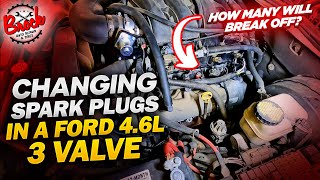
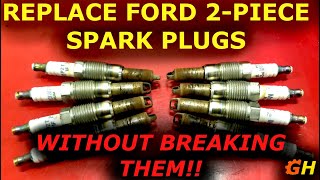
Typical fix: Replace the spark plug. Extreme caution is required. The engine must be completely cold (room temperature). Follow the TSB 08-7-6 procedure: 🎬 Watch: How to safely remove these fragile two-piece spark plugs. slightly loosen the plug (1/8 to 1/4 turn), soak the threads for at least 15 minutes with a penetrating fluid (Motorcraft Carburetor Tune-Up Cleaner is specified), and then slowly work the plug back and forth with a hand tool only. Having a broken plug extraction tool (like Lisle 65600) on hand is highly recommended. 🎬 See how to use the extraction tool if a plug breaks. Replace with the updated one-piece Motorcraft SP-546 plug.
Est. part cost: $10-$20 per plug - Failed or Clogged Fuel Injector ⚪ Low Probability → Shop Fuel Injector Fuel injectors can become clogged or fail electrically over time, though it is less common than ignition issues for a single-cylinder misfire.
How to confirm: Use a 'noid light' to verify the injector is receiving an electrical pulse from the PCM. You can also listen for a clicking sound from the injector with a mechanic's stethoscope. Swapping injectors between cylinders is a definitive but more labor-intensive test that requires removing the fuel rail.
Typical fix: Replace the fuel injector for cylinder 5. This is a more involved job that may require removal of the upper intake manifold.
Est. part cost: $50-$130 - Water Intrusion in Spark Plug Well ⚪ Low Probability → Shop Spark Plug On related Ford trucks with the 4.6L/5.4L engines, water has been known to leak past the cowl or hood weatherstripping and drip directly onto the cylinder 5 coil, filling the spark plug well with water 🎬 Watch: How water intrusion causes these common engine misfires. and shorting out the spark. This can also be caused by a leaking intake manifold gasket.
How to confirm: When you remove the ignition coil for cylinder 5, check for any signs of water, coolant, or corrosion in the spark plug well and on the coil boot.
Typical fix: Dry out the spark plug well completely, replace the coil and boot if corroded, and identify and seal the water leak source. Common sources are the windshield cowl drains/grommets or weatherstripping.
Est. part cost: $10-$30 for sealant/weatherstrip
Rare But Worth Checking
- Low Engine Compression: If ignition and fuel systems are confirmed to be working, a mechanical issue like a burnt valve, worn piston rings, or a failed/collapsed roller follower (lifter) could be the cause. A compression test is needed to verify the mechanical health of cylinder 5. NHTSA ODI #11652376 describes a case where a P0305 was caused by low compression on cylinder #5 (110 PSI) compared to others at 145-150 PSI, necessitating engine replacement.
- Damaged Wiring Harness: Check the wiring and connector for the cylinder 5 ignition coil and fuel injector for any signs of rodent damage, chafing, corrosion, or looseness. This can cause an intermittent connection and misfire.
- Vacuum Leak: A vacuum leak from a cracked hose or a faulty intake manifold gasket near the cylinder 5 runner can lean out the air/fuel mixture enough to cause a misfire. This would typically be accompanied by other lean codes (like P0171 or P0174).
- Crankshaft Pulley Issues: Manufacturer Bulletin #SSM 46391 notes that multiple misfire codes, including P0305, may be due to an under-torqued crankshaft pulley bolt on certain Ford engines.
Diagnosis Steps
- Read the code with an OBD-II scanner to confirm P0305 and check for any other related codes.
- Identify cylinder 5. On the 4.6L V8, it is the front-most cylinder on the driver's side of the engine (Bank 2).
- Swap the ignition coil from cylinder 5 with the coil from cylinder 6 (the one directly behind it). The coil is held by an 8mm bolt.
- Clear the codes and drive the vehicle until the check engine light returns. A short drive may be sufficient.
- If the code is now P0306 ('Cylinder 6 Misfire'), the ignition coil is bad and needs to be replaced.
- If the code is still P0305, the problem is not the coil. Inspect the spark plug well for water or oil contamination.
- If the well is dry, the next most likely cause is the spark plug. CAREFULLY attempt to remove the spark plug from cylinder 5, following the TSB 08-7-6 procedure on a completely cold engine. Inspect and replace the plug, preferably with the updated one-piece Motorcraft SP-546.
- If the misfire persists with a new coil and plug, check the fuel injector wiring with a noid light and listen for injector operation with a stethoscope.
- If fuel and spark are confirmed good, perform a compression test on cylinder 5 to check for mechanical engine problems like a bad valve or worn rings.
Parts You'll Likely Need
- Ignition Coil
(OEM #Motorcraft DG511)— This is the most common failure point for a single-cylinder misfire on this engine.
Trusted brands: Motorcraft, Denso, NGK
OEM price range: $50-$70
Aftermarket price range: $30-$50 - Spark Plug
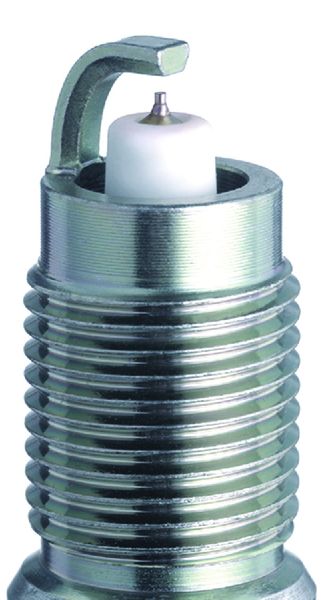
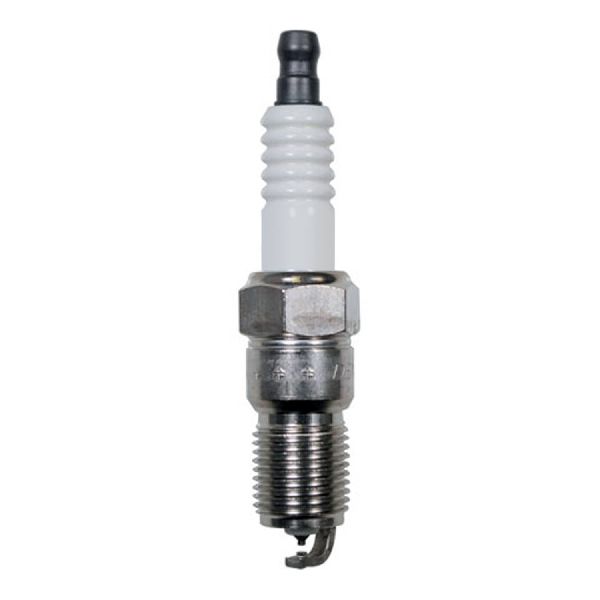
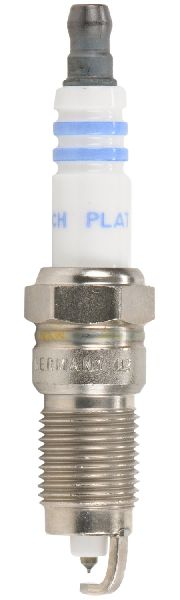
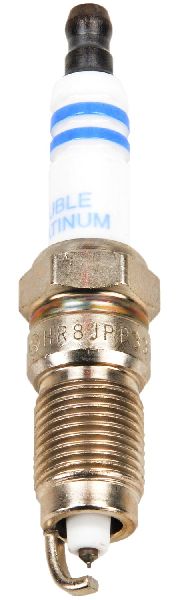
(OEM #SP-546 (replaces SP-515))— The second most common cause. The original two-piece plugs (SP-515 and predecessors like SP-507) are known to fail and break. SP-546 is the updated one-piece design that is recommended for replacement.
Trusted brands: Motorcraft, Autolite, Champion
OEM price range: $12-$20
Aftermarket price range: $8-$15
Related Codes That Often Appear With This One
- P0300 — Stands for 'Random Misfire Detected'. If the misfire on cylinder 5 is severe or intermittent, or if other cylinders are also misfiring, this code may appear alongside P0305.
- P0316 — Indicates a 'Misfire Detected on Startup (First 1000 Revolutions)'. This often points to a failing ignition component, like a coil or plug, that is weak when cold or a component at the edge of its operational tolerance.
- P0355 — Stands for 'Ignition Coil 'E' Primary/Secondary Circuit Malfunction'. This code specifically points to an electrical fault in the ignition coil circuit for cylinder 5, making a bad coil or wiring issue the most likely culprit.
Technical Service Bulletins (TSBs) & Recalls
- TSB 08-7-6: Outlines the specific, multi-step spark plug removal procedure for 4.6L/5.4L/6.8L 3V engines to minimize the risk of breakage. It specifies using Motorcraft Carburetor Tune-Up Cleaner as a soaking agent on a cold engine. It also details the procedure for extracting a broken plug using the Rotunda-approved toolset, which involves removing the porcelain center before pulling the metal shield.
- Bulletin #SSM 46363: Notes that an illuminated MIL with codes P0300-P0306 and P0316 may be caused by the cylinder heads. This bulletin also links these codes to potential excessive oil consumption.
Platform-Specific Known Issues
- The 4.6L 3V engine uses a two-piece spark plug design (pre-11/30/07 engine build dates) that is notorious for breaking during removal, as documented in Ford TSB 08-7-6. Carbon buildup seizes the lower part of the plug (the ground electrode shield) in the cylinder head, causing it to snap off from the upper threaded portion. This requires a special extraction tool and significantly increases repair time and cost. Following the TSB's cold-engine soak procedure is critical to minimize this risk.
Mechanic-Grade Diagnostic Values
- Ignition Coil Primary Resistance — expected: Approx. 0.55 ohms. Failure: Open circuit (infinite resistance) or significant deviation from spec.
- Ignition Coil Secondary Resistance — expected: Approx. 5,500 ohms (5.5k Ohms). Failure: Open circuit or significant deviation. One video measured a bad coil at over 6k Ohms.
- Fuel Injector Resistance — expected: 11 - 18 ohms. Failure: Readings outside of this range, especially very low (shorted) or infinite (open) resistance.
- Fuel Rail Pressure (KOEO or Idle) — expected: 35 - 55 PSI. Failure: Pressure that is significantly low or fails to hold after the pump primes may indicate a weak pump or a leak.
- PCM Main Ground Resistance — expected: Less than 0.2 ohms. Failure: Higher resistance indicates a poor ground connection, which can cause erratic sensor readings and PCM behavior.
- Mode 6 Misfire Count (Cylinder 5) — expected: A value of 0 or very close to 0.. Failure: A non-zero value indicates the number of misfire events counted in the last 10 driving cycles. A count significantly higher than other cylinders, even without a CEL, points to cylinder 5 as the problem.
Hidden / Shadow Codes Worth Checking
- Mode 6, TID $A6: This is not a DTC, but a specific monitor ID within Mode 6 diagnostic data that tracks the raw misfire count for cylinder 5. The PCM uses this data to decide when to set a P0305 code. (see via Use a scan tool with Mode 6 capabilities, such as FORScan or a professional-grade scanner. Navigate to Generic OBD-II functions and look for Test IDs $A2 through $A9 for V8 misfire data. $A6 corresponds to cylinder 5.)
Scan Tool Commands That Help
- Ford IDS, FORScan, Snap-on, Launch: Power Balance Test — This is a powerful bidirectional test to pinpoint a misfiring cylinder when a swap test is inconclusive or difficult. The tool commands the PCM to sequentially shut off the fuel injector to each cylinder. A healthy cylinder will cause a noticeable drop in engine RPM. If disabling cylinder 5 causes little or no change in RPM, it confirms that cylinder is not contributing power. Note that Ford's IDS is most effective as it can disable the PCM's automatic compensation strategy, which can mask a weak cylinder on some aftermarket tools.
Wiring & Ground Locations
- Cylinder 5 Coil Connector — On the ignition coil for the front-most cylinder on the driver's side.. The ground for the coil is pulsed by the PCM. The ground wire is Light Green with a Yellow stripe, and it goes to pin 25 on the PCM connector. The power feed is a Red wire.
- Cylinder 5 Injector Connector — On the fuel injector for the front-most cylinder on the driver's side, under the fuel rail.. The ground for the injector is pulsed by the PCM. The wire goes to pin 73 on the PCM connector. A noid light can be used here to verify the PCM is sending a pulse.
- G101 / G106 — G101 is a primary engine ground located on the front of the engine block. It may jumper to G106 on the frame cross rail under the crank pulley.. These are primary grounds for the PCM. A corroded or loose connection here can cause widespread, erratic electronic issues, including incorrect sensor readings that could lead to a misfire or misdiagnosis.
- G105 — Located on the bottom of the engine, near the starter motor.. This is another critical engine-to-chassis ground. Given its location, it is highly susceptible to corrosion, which can create high resistance and electrical gremlins.
Real Owner Repair Stories
- Auto E Clinic YouTube Channel (2006 Ford Explorer 4.6L V8) — Bucking and jerking under load at 45-50 mph, P0305, P0316, and P1285 (Cylinder Head Overtemp) codes.
❌ Tried (didn't work) The video directly diagnosed the issue without showing failed attempts.
✅ What actually fixed it The root cause was a leaking intake manifold gasket allowing coolant to drip into the cylinder 5 spark plug well. This saturated the ignition coil boot, causing it to arc and fail. Replacing the ignition coil and sealing the coolant leak resolved the misfire. The mechanic noted that simply replacing the boot and spring is unreliable and the entire coil should be replaced if it has been contaminated with coolant. - Reddit user on r/MechanicAdvice (Vehicle with 4.6L 3V engine (inferred from context)) — Intermittent P0305 code, noticeable misfire especially at idle.
❌ Tried (didn't work) Re-soldering the coil connector wiring.
✅ What actually fixed it The user had replaced the intake manifold a few months prior. The cause of the P0305 was a severely damaged (chewed up) intake manifold gasket for cylinder 5. The gasket was likely pinched or improperly seated during the previous repair, eventually leading to a massive vacuum leak localized to that cylinder. Replacing the damaged gasket fixed the misfire. - NHTSA ODI #11407153 — An owner reported that their engine started misfiring both while stationary and in motion. After pulling code P0305, they replaced the coils and spark plugs, but the engine continued to misfire.
- NHTSA ODI #10240001 — A driver reported that after a 3,000-mile trip, their vehicle exhibited multiple codes including P0305 and P0307. The dealership was unable to determine the exact cause and ultimately recommended that the engine needs to be replaced.
Documented NHTSA Reports
- NHTSA ODI #11652376: A report details a P0305 code caused by low compression on cylinder #5 (110 PSI), which was significantly lower than the 145-150 PSI found on other cylinders.
- NHTSA ODI #11407153: An owner documented a persistent misfire where replacing both the ignition coils and spark plugs failed to resolve the P0305 code.
- NHTSA ODI #10240001: This report describes a vehicle experiencing multiple codes, including P0305, P0022, and P0307, where the dealer eventually determined a full engine replacement was necessary.
"I Checked Everything" — The Actual Cause
- A common scenario for this vehicle is a misfire caused by a coolant leak, not a vacuum leak. A technician performing a smoke test to find a vacuum leak would find no issues. The actual cause, often a leaking intake manifold gasket, allows coolant to pool in the cylinder 5 spark plug well, shorting the ignition coil. The key is to physically inspect the plug well for moisture, not just rely on a smoke test.
OEM Part Supersession History
Motorcraft SP-507, SP-515 (PZT-14F)→Motorcraft SP-546 (PZT-2F)— The original SP-515 and its predecessors were a two-piece shell design. Carbon would build up on the ground electrode shield, causing it to seize in the cylinder head and break off from the rest of the spark plug during removal.Unknown/Varies→Motorcraft CM-5138 (Bosch 0280158091)— This is the current recommended OEM replacement fuel injector for many 4.6L 3V applications.
Heads up: Always verify part number by VIN. Some similar 4.6L engines may use a different injector like the CM-5157. Using the wrong flow-rate injector will cause fuel trim issues.
Model Year Variations Within This Range
- 2006 - 2008 (Engines built before 11/30/2007): These engines were originally equipped with the two-piece Motorcraft SP-515 (or earlier) spark plugs that are highly prone to breaking during removal. Engines built after this date came with an updated head design and/or one-piece spark plugs from the factory, largely mitigating the risk of breakage during a plug change.
Diagnostic Flowchart
Real Owner Stories
Aggregated from forums and TSBs cited above. Mileages and costs reflect what owners reported in those sources.
Ford 4.6L V8
Symptoms: Experienced a recurring P0305 code caused by water filling the number 5 spark plug well.
What fixed it: Identified the cowl weatherstripping as a common leak point dripping directly onto cylinder 5, requiring the leak source to be sealed and the well dried out.
Source hint: Ford Truck Enthusiasts Forum: P0305 - water in spark plug well 4.6L
Ford 4.6L/5.4L 3V V8
Symptoms: Concerns over the original two-piece SP-515 spark plugs breaking in the cylinder head during routine maintenance or misfire repairs.
What fixed it: Replaced the problematic original plugs with the updated one-piece Motorcraft SP-546 design to avoid the breakage issue entirely.
Source hint: F150online Forums: SP515 vs SP546 plugs
2006 Ford F-150 5.4L 3V
Symptoms: Dealt with a persistent P0305 misfire that would not go away despite replacing multiple parts.
What fixed it: After swapping the ignition coil, spark plug, and fuel injector, the owner discovered that the brand new replacement spark plug was faulty out of the box.
Source hint: Ford F150 Forum: 2006 F-150 5.4L constant misfire fixed!!!!
Related OBD-II Codes
Frequently Asked Questions
Does TSB 08-7-6 apply to my 2006-2010 Ford Explorer 4.6L?
Which spark plugs should I use to replace the old ones in my 4.6L 3V Explorer?
Where exactly is cylinder 5 located on the 4.6L V8 engine?
Why is there water in my cylinder 5 spark plug well?
What tool do I need if the spark plug breaks in my Explorer?
How do I safely remove the spark plugs to fix a P0305 code without breaking them?
Helpful Videos

We Have This Part in Stock

The information in this article is provided for general reference and educational purposes only. Vehicle specifications, procedures, and part compatibility can vary by production date, trim level, and region. Always consult your vehicle's factory service manual and verify part numbers before purchasing or performing repairs. Safety-critical components such as airbags, seat belts, and braking systems should be installed by a qualified professional.
- Ford Explorer:
- 🧭 Diagnostic Flowchart
- 🎬 Helpful Videos
- 🛍️ Shop This Part
- What's Unique About the 2006-2010 Ford Explorer
- Symptoms You May Notice
- Most Likely Causes
- Rare But Worth Checking
- Diagnosis Steps
- Parts You'll Likely Need
- Related Codes That Often Appear With This One
- Technical Service Bulletins (TSBs) & Recalls
- Platform-Specific Known Issues
- Mechanic-Grade Diagnostic Values
- Hidden / Shadow Codes Worth Checking
- Scan Tool Commands That Help
- Wiring & Ground Locations
- Real Owner Repair Stories
- Documented NHTSA Reports
- "I Checked Everything" — The Actual Cause
- OEM Part Supersession History
- Model Year Variations Within This Range
- Real Owner Stories
- Ford 4.6L V8
- Ford 4.6L/5.4L 3V V8
- 2006 Ford F-150 5.4L 3V
- Related OBD-II Codes
- Frequently Asked Questions
- 🎟️ Get 5% Off