

P0305 on 2008-2015 Mazda CX-9: Cylinder 5 Misfire Causes and Fixes
P0305 means cylinder 5 is misfiring. On the Mazda CX-9's 3.7L V6, cylinder 5 is on the front bank (near the radiator), making it easy to access. The most likely cause is a bad ignition coil or a worn spark plug. A faulty fuel injector is also a common culprit on this engine. A DIY fix is often possible, costing around $40-$150 for the part.
- P0305 on a 2008-2015 CX-9 is a misfire on cylinder 5, which is conveniently located in the front, near the radiator.
- The most probable cause is a bad ignition coil. A simple test is to swap the cylinder 5 coil with a neighboring one (like cylinder 4 or 6) and see if the misfire code follows.
- If the coil isn't the issue, the next most likely cause is a worn spark plug, followed by a faulty fuel injector.
- Because cylinder 5 is easy to access, diagnosing and replacing the most common parts is a straightforward DIY job that doesn't require removing the intake manifold.
What's Unique About the 2008-2015 Mazda CX-9
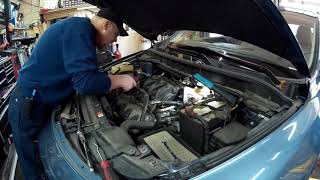
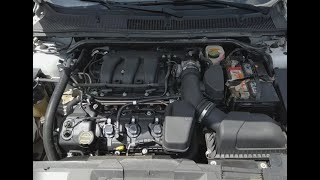
The 2008-2015 CX-9 uses a 3.7L V6 engine from Ford's 'Cyclone' family, also known as the Duratec 37 or Mazda MZI 3.7. Fortunately for this specific code, cylinder 5 is located in the front cylinder bank (closest to the radiator), making the most common culprits—the ignition coil and spark plug—very easy to access and replace. The cylinder order for the front bank, from passenger to driver side, is 4-5-6. 🎬 Watch: Visual guide to cylinder locations and firing order. This is a significant advantage, as accessing the rear cylinders (1-2-3) on this transverse engine requires removing the entire upper intake manifold, 🎬 See how to remove the intake manifold for rear access. a much more complex and costly job.
Symptoms You May Notice
- Rough or shaky idle
- Engine hesitation or stumbling during acceleration
- Noticeable loss of engine power
- Flashing or solid Check Engine Light
- Poor fuel economy
- Smell of unburnt fuel from the exhaust
- Engine jerking or stuttering
- Replacing the rear bank spark plugs and coils when the issue is on the easily accessible front bank.
- Assuming the problem is a spark plug or coil when it is actually a faulty fuel injector. Many owners replace ignition parts first, only to find the P0305 code remains until the injector is addressed.
- Replacing only the ignition coil when the PCM driver has been damaged, leading to an immediate return of the misfire code.
Most Likely Causes
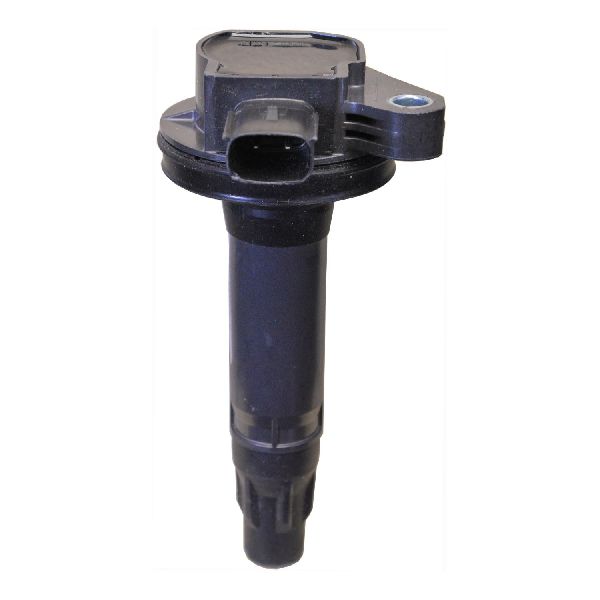
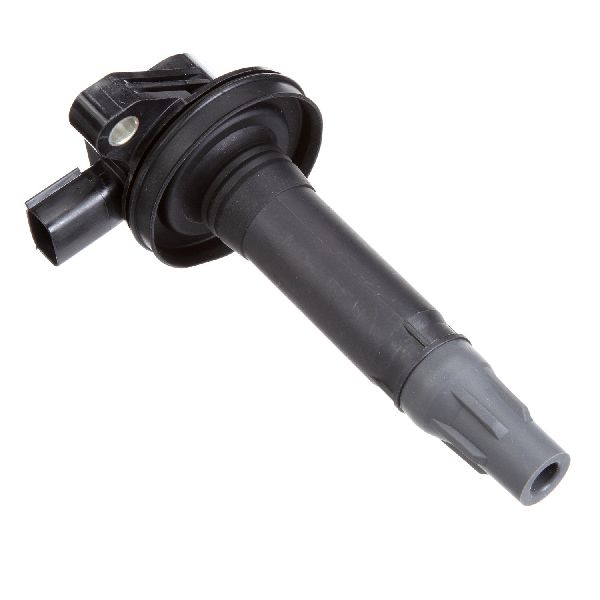
- Faulty Ignition Coil 🔴 High Probability → Shop Ignition Coil The Ford 3.5L/3.7L Cyclone engine family is known to experience ignition coil failures. Heat and vibration cause the internal windings to fail over time, leading to a weak or absent spark.
How to confirm: Swap the cylinder 5 ignition coil with the coil from an adjacent front-bank cylinder (e.g., cylinder 4 or 6). Clear the codes and drive the vehicle. If the code changes to P0304 or P0306, the ignition coil is faulty. Visually inspect the old coil for cracks or signs of arcing/melting.
Typical fix: Replace the faulty ignition coil. Since cylinder 5 is on the easily accessible front bank, this is a simple unbolt-and-replace job that takes only a few minutes.
Est. part cost: $40-$95 - Worn or Fouled Spark Plug 🔴 High Probability → Shop Spark Plug
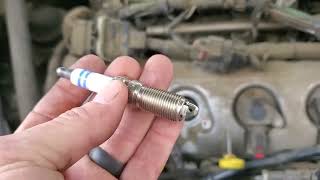
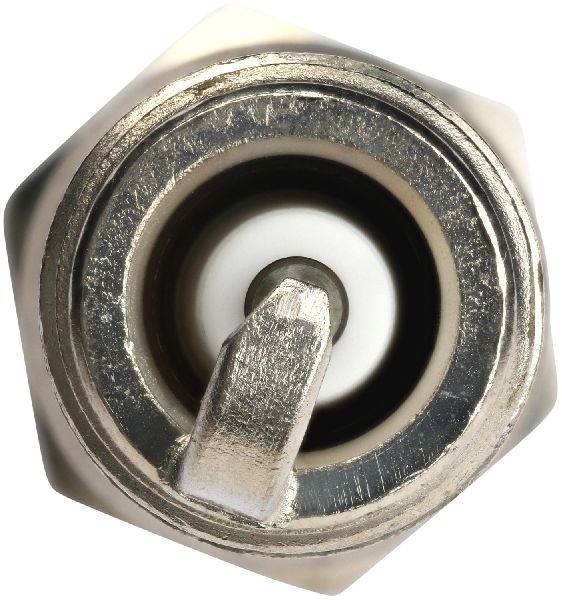
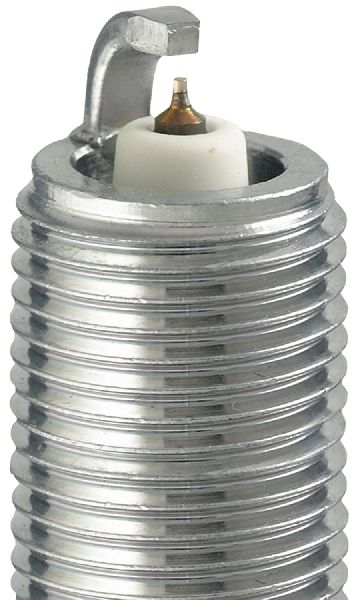
How to confirm: After ruling out the ignition coil, remove the spark plug from cylinder 5. Inspect it for wear (worn electrode), incorrect gap, or fouling from carbon or oil. A healthy plug should be light tan; a black, wet, or damaged plug indicates a problem. The correct gap for the OEM Motorcraft SP-520 plug is approximately 0.051 inches (1.3mm).
Typical fix: Replace the spark plug. It is best practice to replace all six spark plugs at the same time, especially if they are near their service interval (typically 60,000-100,000 miles for iridium plugs). However, replacing the rear three requires removing the intake manifold.
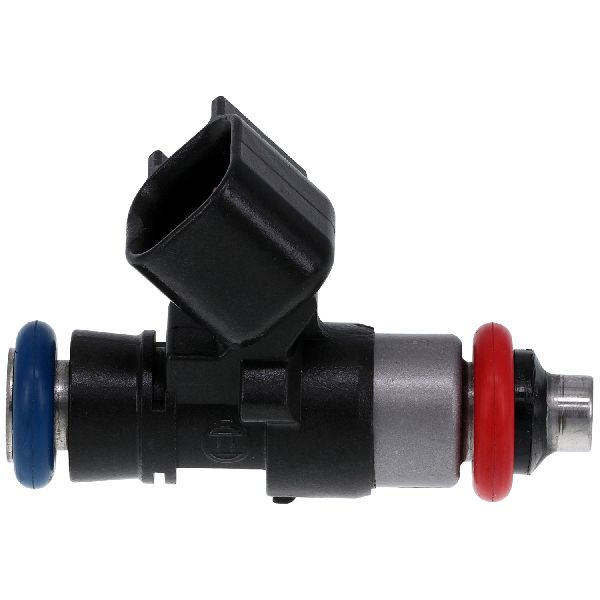
Est. part cost: $10-$25 per plug - Faulty Fuel Injector 🟡 Medium Probability → Shop Fuel Injector Fuel injector failure is a documented issue on the 3.7L V6, often occurring after 70,000+ miles. The injector's internal coil can fail, especially when hot, creating an 'open' circuit.
How to confirm: A DIY method is to listen to the injector with a mechanic's stethoscope or a long screwdriver while the engine is running; it should make a consistent, rapid clicking sound. No sound or an irregular click suggests a problem. A more definitive test is to measure the injector's resistance with a multimeter. A good injector should read around 11.3-12.7 ohms. A bad injector may read very high (into thousands of ohms) or show an open circuit, especially when the engine is hot. This issue is often accompanied by code P0205 (Injector Circuit/Open - Cylinder 5).
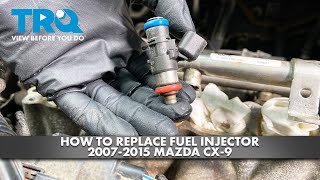
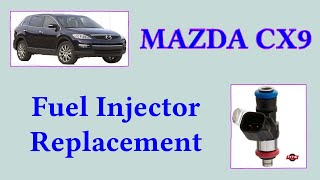
Typical fix: Replace the faulty fuel injector. For cylinder 5, this is more involved than a coil or plug as the fuel rail may need to be unbolted, but it does not require removing the intake manifold. 🎬 Watch: Step-by-step walkthrough for replacing a faulty fuel injector.
Est. part cost: $50-$150 - Vacuum Leak ⚪ Low Probability
How to confirm: Inspect all vacuum hoses connected to the intake manifold for cracks or loose connections, particularly near the runner for cylinder 5. A professional mechanic can perform a smoke test to definitively pinpoint the source of a hard-to-see leak.
Typical fix: Replace the cracked or disconnected vacuum hose.
Est. part cost: $5-$30
Rare But Worth Checking
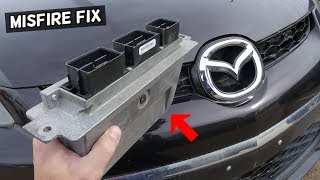
- Faulty Powertrain Control Module (PCM): This is a rare but critical issue on the Ford Cyclone engine family. A failing ignition coil can send a voltage spike back to the PCM, damaging the internal driver circuit for that cylinder. The symptom is a persistent misfire on the same cylinder (e.g., P0305) even after replacing the coil and plug. It is often accompanied by a P0355 code (Ignition Coil 'E' Primary/Secondary Circuit). Ford issued TSB 13-4-17 for this issue on related 3.5L engines, which instructs technicians to replace the PCM along with all coils and plugs if any coil shows heat damage. This should only be considered after all other possibilities are exhausted.
- Low Engine Compression: This indicates a more serious internal engine problem, such as worn piston rings, a bad valve, or a head gasket leak. A compression test is needed to confirm. This is an unlikely cause for a single cylinder misfire without other symptoms like smoke from the exhaust or coolant loss.
Diagnosis Steps
- Read the codes with an OBD-II scanner to confirm P0305 and check for any other related codes like P0205 or P0355.
- Identify Cylinder 5: It is the middle cylinder on the bank closest to the radiator (Bank 2).
- Swap Ignition Coils: Swap the ignition coil from cylinder 5 with the one from cylinder 4 (passenger side) or cylinder 6 (driver side). Clear codes and test drive. If the code changes to P0304 or P0306, the ignition coil is the problem. Replace it.
- If the P0305 code returns, inspect the spark plug. Remove the plug from cylinder 5 and check its condition. If it's worn, fouled, or damaged, replace it. The correct gap is ~0.051 inches. Consider replacing all six if they are due for service.
- If the misfire persists on cylinder 5, check the fuel injector. With the engine running, place the tip of a long screwdriver on the body of the injector and listen at the handle. You should hear a steady, fast clicking. If it's silent or erratic, the injector is likely faulty.
- For a more definitive test, measure the resistance of the fuel injector with a multimeter (engine off). It should be around 11.3-12.7 ohms. If it's open or has very high resistance (sometimes thousands of ohms when hot), it needs to be replaced.
- If all of the above check out, investigate less common causes. Check for vacuum leaks near cylinder 5's intake runner. If a P0355 code was present and the misfire continues after a coil swap, investigate the possibility of a damaged PCM driver circuit.
- As a final step, a compression test can be performed to rule out mechanical engine issues.
Parts You'll Likely Need
- Ignition Coil
(OEM #CY01-18-100B)— This is the most common failure part for a single-cylinder misfire and is a known issue on this engine. The OEM part number replaces the earlier CY01-18-100A.
Trusted brands: Mazda (OEM), NGK, Denso, Delphi
OEM price range: $55-$80
Aftermarket price range: $40-$70 - Iridium Spark Plug
(OEM #L3Y4-18-110)— Spark plugs are a regular maintenance item and the second most likely cause of a misfire. The Ford equivalent part number is Motorcraft SP-520.
Trusted brands: NGK, Motorcraft, Bosch
OEM price range: $15-$25
Aftermarket price range: $10-$20 - Fuel Injector
(OEM #ZZJ1-13-250A)— A common cause of P0305 on this engine, especially when codes P0205 and P0174 are also present. This part number supersedes CY01-13-250 and ZZJ1-13-250.
Trusted brands: Mazda (OEM), Bosch
OEM price range: $85-$120
Aftermarket price range: $50-$90
Related Codes That Often Appear With This One
- P0300 — If the misfire is intermittent or affecting multiple cylinders, a P0300 (Random/Multiple Cylinder Misfire) code may appear alongside P0305.
- P0205 — This code for 'Injector Circuit/Open - Cylinder 5' strongly points to a failed fuel injector as the root cause of the P0305 misfire. If you see these two codes together, the fuel injector is the primary suspect.
- P0355 — This code for 'Ignition Coil 'E' Primary/Secondary Circuit Malfunction' points to a problem in the ignition coil circuit for cylinder 5. If this code appears and persists after replacing the coil, it is a strong indicator of a damaged PCM driver.
- P0174 — This code indicates 'System Too Lean (Bank 2)'. Bank 2 is the front bank of cylinders (4-5-6). A failing fuel injector on cylinder 5 can cause this code to appear along with the misfire code.
Technical Service Bulletins (TSBs) & Recalls
- Ford TSB 13-4-17: While officially for 3.0L/3.5L engines in other Ford/Lincoln models, this TSB is highly relevant. It addresses a condition where a damaged ignition coil causes PCM failure, leading to persistent P035x codes. The prescribed fix is to replace the PCM and all six ignition coils and spark plugs. This exact failure pattern is reported by owners of 3.7L vehicles.
Platform-Specific Known Issues
- The 3.7L Cyclone V6 has a known critical design flaw with its internal, timing-chain-driven water pump. When the pump fails, it can leak coolant directly into the engine oil, leading to rapid and catastrophic engine failure. While this typically won't present as a simple P0305 code initially, it's a major issue owners of this platform should be aware of.
- A failing ignition coil on this engine can send a voltage spike to the Powertrain Control Module (PCM), damaging the coil driver and causing a persistent misfire on that cylinder that won't be fixed by a new coil alone. This is a known issue in the broader Ford engine family.
Mechanic-Grade Diagnostic Values
- Fuel Injector Resistance — expected: 11.3 - 12.7 Ohms at 20°C (68°F). Failure: Very high resistance (kOhms or MOhms) or an open circuit (OL), especially when the engine is hot. A reading of 2000 Ohms on a hot engine has been reported for a failed injector.
- Fuel Injector Control Wire Voltage — expected: Pulsing ground signal when tested with a noid light or oscilloscope while the engine is running. A test light connected to battery positive should flash when probing this wire.. Failure: No pulse (indicating an open/short in the harness or a bad PCM driver) or a constant ground (shorted PCM driver).
Hidden / Shadow Codes Worth Checking
- Mode 6, Test ID $53: This is not a DTC, but a diagnostic monitor in the OBD-II system that tracks misfire counts for each cylinder. Accessing Mode 6 data with an advanced scan tool can show you the raw number of misfire events detected on cylinder 5 (and others) before they are frequent enough to trigger a P0305 code. This is useful for diagnosing intermittent misfires. (see via An OBD-II scan tool with Mode 6 capability.)
Scan Tool Commands That Help
- Mazda IDS (or equivalent high-level scanner): Power Balance Test — This function allows a technician to disable one cylinder at a time and observe the corresponding drop in engine RPM. If disabling cylinder 5 results in little or no change in RPM, it confirms that cylinder 5 is not contributing power, pinpointing the misfire without swapping parts.
Wiring & Ground Locations
- PCM Connector Pin 2BL — At the Powertrain Control Module (PCM), which is located in the left rear corner of the engine compartment.. This is the specific terminal for the cylinder 5 fuel injector control wire. A technician can test for the pulse signal here to determine if the PCM is commanding the injector to fire, which helps isolate a wiring problem from a PCM problem.
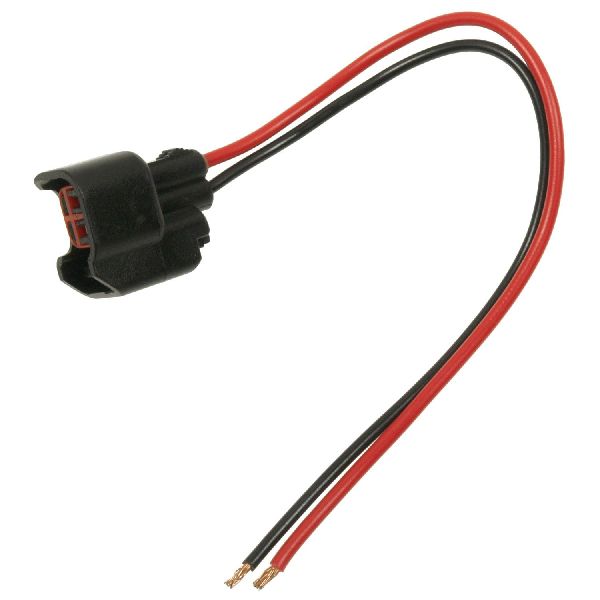
- Cylinder 5 Fuel Injector Wire Colors — At the fuel injector connector for cylinder 5.. Terminal A connects to PCM pin 2BL, and Terminal B receives power from the fuel pump relay. Knowing the wire functions is crucial for testing the circuit for power, ground pulse, and continuity.
Real Owner Repair Stories
- Reddit user in /r/AskAMechanic (2014 Mazda CX-9) — Persistent P0305 code.
❌ Tried (didn't work) Replaced all spark plugs, Replaced the ignition coil for cylinder 5
✅ What actually fixed it The fuel injector for cylinder 5 was faulty and replacing it resolved the issue. The user noted that testing the injector first with a screwdriver to listen for clicking would have saved time and money. - Mazdas247 Forum user 'jjw6455' (Mazda CX-9 with 71,000 miles) — P0205 (Injector Circuit Open), P0305 (Cylinder 5 Misfire), and P0174 (System Too Lean Bank 2) that appeared after the engine warmed up.
❌ Tried (didn't work) Initial diagnosis pointed towards common ignition issues.
✅ What actually fixed it The cylinder 5 fuel injector was the cause. When cold, it measured 20 ohms, but when hot, it measured 2000 ohms, indicating an internal failure under heat. Replacing just the single faulty injector fixed all codes.
OEM Part Supersession History
CY01-18-100A→CY01-18-100B— Revision/update by Mazda.CY01-13-250, ZZJ1-13-250→ZZJ1-13-250A— Revision/update by Mazda for the 3.7L fuel injector.
Heads up: Aftermarket suppliers recommend replacing injectors as a full set to avoid potential differences in flow rate and atomization between different revisions or brands.
Model Year Variations Within This Range
- 2008: The 2008 model year was the first to feature the 3.7L V6, replacing the 3.5L from 2007. Early production 3.7L engines may have minor differences from later versions.
- 2010-2012: A minor facelift was introduced for the 2010 model year, primarily affecting front fascia and interior features like standard Bluetooth. No significant engine changes were made that would affect a P0305 diagnosis.
- 2013-2015: A second facelift occurred in 2013 with a new grille and updated infotainment. Some service documentation distinguishes between VIN 'A' and VIN 'V' engines, which may denote Federal vs. California emissions specifications, but parts like injectors and coils generally remain the same.
Diagnostic Flowchart
Real Owner Stories
Aggregated from forums and TSBs cited above. Mileages and costs reflect what owners reported in those sources.
2009 Mazda CX-9 3.7L V6 — 71000 miles
Symptoms: Experienced a P0305 misfire accompanied by codes P0205 and P0174.
What fixed it: Replaced the faulty fuel injector with a Bosch W0133-2618710 unit. The old injector's resistance measured 2000 ohms when hot but a normal 20 ohms when cold, compared to 13 ohms for the good injectors.
Source hint: Mazdas247 - 'Fuel Injector Open Cyl 5'
2014 Mazda CX-9 3.7L V6
Symptoms: P0305 misfire that persisted even after changing both the spark plugs and ignition coils.
What fixed it: Replaced the fuel injector. The owner confirmed the issue beforehand using the 'screwdriver test' to listen for the injector's clicking sound.
Source hint: r/AskAMechanic - '2014 Mazda cx9 p0305'
2009 Mazda CX-9 3.7L V6
Symptoms: Triggered P0305 and P0205 codes. Swapping the ignition coil did not resolve the issue.
What fixed it: Traced the issue to a bad #5 fuel injector. A resistance test showed the bad injector had no reading (open circuit), while the good ones read 13 ohms.
Source hint: Mazdas247 - 'fuel injector question'
Ford Edge 3.5L V6
Symptoms: Persistent misfire issues caused by a bad ignition coil sending a voltage spike that damaged the Powertrain Control Module (PCM).
What fixed it: Replaced the PCM, all six ignition coils, and spark plugs as outlined in TSB 13-04-17.
Source hint: Ford Edge Forum - 'Coil/PCM issues and reimbursement for TSB 13-04-17'
Related OBD-II Codes
Frequently Asked Questions
Is cylinder 5 easy to access on my 3.7L CX-9?
I replaced the ignition coil on cylinder 5 but the misfire won't go away. What else could it be?
Does Ford TSB 13-4-17 apply to my Mazda CX-9?
How can I test if the fuel injector is causing my P0305 code?
What spark plugs should I use for the 3.7L V6, and what is the correct gap?
I have a P0305 and a P0205 code together. What does this mean?
Helpful Videos
We Have This Part in Stock

The information in this article is provided for general reference and educational purposes only. Vehicle specifications, procedures, and part compatibility can vary by production date, trim level, and region. Always consult your vehicle's factory service manual and verify part numbers before purchasing or performing repairs. Safety-critical components such as airbags, seat belts, and braking systems should be installed by a qualified professional.
- Mazda CX-9:
- 🧭 Diagnostic Flowchart
- 🎬 Helpful Videos
- 🛍️ Shop This Part
- What's Unique About the 2008-2015 Mazda CX-9
- Symptoms You May Notice
- Most Likely Causes
- Rare But Worth Checking
- Diagnosis Steps
- Parts You'll Likely Need
- Related Codes That Often Appear With This One
- Technical Service Bulletins (TSBs) & Recalls
- Platform-Specific Known Issues
- Mechanic-Grade Diagnostic Values
- Hidden / Shadow Codes Worth Checking
- Scan Tool Commands That Help
- Wiring & Ground Locations
- Real Owner Repair Stories
- OEM Part Supersession History
- Model Year Variations Within This Range
- Real Owner Stories
- 2009 Mazda CX-9 3.7L V6 — 71000 miles
- 2014 Mazda CX-9 3.7L V6
- 2009 Mazda CX-9 3.7L V6
- Ford Edge 3.5L V6
- Related OBD-II Codes
- Frequently Asked Questions
- 🎟️ Get 5% Off