

P0306 on 2007-2012 Audi S5 4.2L V8: Cylinder 6 Misfire Causes and Fixes
P0306 on your Audi S5 most likely means you have a bad ignition coil or spark plug on cylinder 6. If replacing those doesn't fix it, the cause is almost certainly carbon buildup on the intake valves, a common issue on this engine requiring professional cleaning. Start by swapping the cylinder 6 ignition coil with another cylinder to see if the fault follows.
- Always diagnose P0306 by first swapping the ignition coil and then the spark plug from cylinder 6 to another cylinder to see if the misfire follows the part.
- Cylinder 6 is located on the driver's side of the engine, second from the front.
- If the Check Engine Light is flashing, pull over and shut off the engine as soon as it is safe to do so to prevent catastrophic damage to your catalytic converters.
- If new coils and plugs don't fix the misfire, the cause is almost certainly carbon buildup on the intake valves, a very common and well-documented issue with this engine that requires professional service.
What's Unique About the 2007-2012 Audi S5
The 4.2L CAUA V8 engine in the B8 Audi S5 uses Fuel Stratified Injection (FSI), a form of direct injection. While efficient, this design is notoriously prone to heavy carbon buildup on the intake valves. Unlike port-injected engines that clean valves with fuel spray, the FSI system allows oil vapor and combustion byproducts from the PCV system to bake onto the valves, restricting airflow and becoming a primary cause of misfires, especially after 60,000-80,000 miles. This issue is so common that carbon cleaning is often considered a periodic maintenance item, with many owners on forums like Audizine and AudiWorld documenting the necessity of the service to restore performance and eliminate misfire codes.
Symptoms You May Notice
- Rough or vibrating idle
- Hesitation or stumbling during acceleration
- Noticeable loss of engine power
- Flashing Check Engine Light
- Reduced fuel economy
- Smell of unburnt fuel from the exhaust
- Replacing the catalytic converter. A misfire can cause a catalyst efficiency code, but the misfire is the root cause, not the converter.
- Replacing oxygen sensors. O2 sensors may report data that looks incorrect due to the misfire, but they are rarely the cause of a single-cylinder misfire code.
Most Likely Causes
- Faulty Ignition Coil 🔴 High Probability → Shop Ignition Coil Ignition coils are a very common failure item on many German vehicles of this era due to high heat exposure and electrical stress. They are considered a wear item.
How to confirm: Swap the ignition coil from cylinder 6 with another cylinder (e.g., cylinder 5 on the same bank). Clear the codes with a scanner and drive the vehicle. If the code changes to P0305, the ignition coil is faulty. This is the standard first diagnostic step recommended on all owner forums.
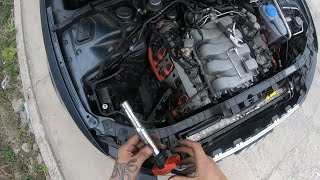
Typical fix: Replace the faulty ignition coil. 🎬 Watch: How to replace your ignition coils step-by-step. It is often recommended to replace all 8 coils at the same time for preventative maintenance, especially on higher mileage vehicles, as they tend to fail around the same time.
Est. part cost: $30-$60 per coil - Worn Spark Plug 🔴 High Probability → Shop Spark Plug Spark plugs are a standard maintenance item that wear out. The service interval is typically 35,000-55,000 miles. A worn electrode, incorrect gap, or fouling from oil or carbon can prevent a strong spark.
How to confirm: After ruling out the ignition coil, swap the spark plug from cylinder 6 to another cylinder (e.g., cylinder 7). Clear codes and drive. If the code changes to P0307, the spark plug is bad. Visually inspect the plug for fouling, oil, or excessive wear on the electrode.
Typical fix: Replace the spark plug. It is best practice to replace all 8 spark plugs as a set using the correct OEM-spec plugs (e.g., NGK Laser Platinum) to ensure balanced engine performance.
Est. part cost: $15-$25 per plug - Intake Valve Carbon Buildup 🟡 Medium Probability The FSI direct-injection design is the direct cause. Oil vapor from the crankcase ventilation (PCV) system bakes onto the hot intake valves, severely restricting airflow and causing turbulence that leads to misfires, particularly on cold starts or under load.
How to confirm: This requires visual inspection with a borescope. The intake manifold must be removed to access the intake ports. This is the most likely cause if new coils and plugs do not resolve the misfire, especially on cars with over 60,000 miles.
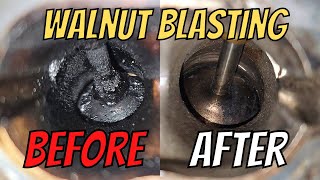
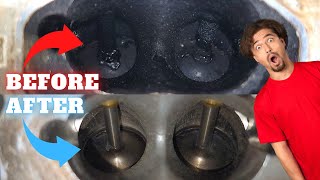
Typical fix: A professional 'carbon cleaning' service is required. This involves removing the intake manifold and media-blasting the valves with crushed walnut shells to remove the deposits without damaging the engine. This is a labor-intensive job, not a simple DIY task. 🎬 See how professional walnut blasting removes heavy carbon buildup.
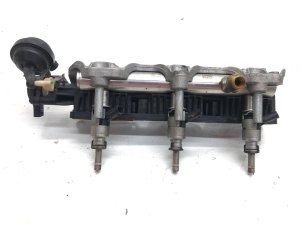
Est. part cost: $1000-$1800 for professional service - Faulty Fuel Injector ⚪ Low Probability → Shop Fuel Injector Direct injectors operate under extremely high pressure and can become clogged or fail electronically over time, though it is less common than ignition or carbon issues.
How to confirm: This is more difficult to diagnose. It involves checking fuel trims with an advanced scan tool (like VCDS) or having a professional perform an injector flow test. Swapping injectors between cylinders is possible but is a very involved job requiring intake manifold removal.
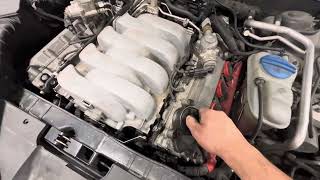
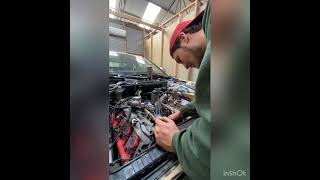
Typical fix: Replace the faulty fuel injector. Since the intake manifold must be removed, some owners elect to replace all injectors on the affected bank at the same time. 🎬 Watch this walkthrough on removing and replacing fuel injectors.
Est. part cost: $100-$200 per injector
Rare But Worth Checking
- Vacuum Leak: A vacuum leak from a cracked hose or failed PCV valve diaphragm typically causes random misfires on multiple cylinders (P0300), but a leak isolated near the cylinder 6 intake runner (e.g., a failed intake manifold gasket) could potentially cause a single-cylinder misfire.
- Low Compression: A mechanical engine problem such as a worn piston ring, damaged cylinder wall, or a valve train issue (e.g., from a failing timing chain guide causing jumped timing) can cause a loss of compression. This is a worst-case scenario and should be diagnosed with a compression test after all other causes are eliminated.
Diagnosis Steps
- Read the code(s) with an OBD-II scanner and note any other codes present. Confirm the code is P0306.
- Identify cylinder 6 (driver's side, second cylinder from the front).
- Swap the ignition coil from cylinder 6 to cylinder 5. Clear codes and drive. If P0305 appears, replace the faulty coil.
- If the misfire remains on cylinder 6, swap the spark plug from cylinder 6 to cylinder 7. Clear codes and drive. If P0307 appears, replace the spark plugs (as a set of 8 is recommended).
- If the misfire persists on cylinder 6, the next most probable cause is carbon buildup. This requires removing the intake manifold and using a borescope to visually inspect the intake valves.
- If significant carbon is present, a walnut-blasting service is needed.
- If the valves are clean, the next step is to investigate the fuel injector for cylinder 6. This may require professional diagnosis with tools to measure fuel trims or test injector flow.
- As a final measure, perform a compression test on cylinder 6 to rule out mechanical engine damage. A healthy reading should be above 120 PSI and within 10-15% of the other cylinders.
Parts You'll Likely Need
- Ignition Coil
(OEM #06E905115G (supercedes E, F))— This is one of the most common failure points for a single-cylinder misfire and is part of the initial diagnostic process.
Trusted brands: Bosch, NGK, Eldor, Delphi
OEM price range: $50-$70
Aftermarket price range: $30-$55 - Spark Plug
(OEM #101905621B (NGK PFR7S8EG))— This is a standard wear item and the second most common cause of a single-cylinder misfire.
Trusted brands: NGK, Bosch
OEM price range: $20-$28
Aftermarket price range: $15-$22 - Intake Manifold Gasket Set
(OEM #079129717B (Upper) / 079129717D (Lower))— These must be replaced if the intake manifold is removed for a carbon cleaning service or fuel injector replacement.
Trusted brands: Victor Reinz, Elring
OEM price range: $60-$90
Aftermarket price range: $30-$50 - Fuel Injector
(OEM #079906036D)— Replaced when it is identified as the source of the misfire after ignition and carbon issues are ruled out.
Trusted brands: Bosch, Hitachi
OEM price range: $150-$220
Aftermarket price range: $80-$150
Related Codes That Often Appear With This One
- P0300 — If the cause (like a major vacuum leak, severe carbon buildup, or a failing PCV valve) affects multiple cylinders, you may see a 'Random Misfire' code along with specific cylinder codes.
- P0305, P0307, P0308 — Misfires on other cylinders in the same bank (Bank 2, driver's side) can indicate a problem common to that bank, such as a clogged catalytic converter, a bank-specific vacuum leak, or widespread carbon buildup affecting the entire bank.
Technical Service Bulletins (TSBs) & Recalls
- TSB Bulletin #01138920337681 notes that a cylinder misfire fault (DTC P0301 – P0306) may be stored in the engine control module (ECM) J623 alongside DTC P130A.
Platform-Specific Known Issues
- Carbon Buildup on Intake Valves: This is the most significant issue for the CAUA 4.2L FSI V8. It is not a matter of 'if' but 'when' this service will be needed, typically every 60,000-80,000 miles, to prevent misfires and restore performance.
Mechanic-Grade Diagnostic Values
- Engine Compression — expected: 125-200 PSI, with minimal variation (less than 10-15%) between cylinders.. Failure: A reading below 125 PSI on cylinder 6, or a significant deviation from other cylinders, indicates a mechanical engine problem (rings, valves, head gasket).
- Fuel Injector Resistance — expected: Less than 1.5 ohms between terminals 1 and 2 of the injector connector.. Failure: Resistance greater than 1.5 ohms suggests a faulty injector winding.
- Low-Side Fuel Pressure (at idle) — expected: Approximately 6 bar (87 PSI).. Failure: Significantly lower pressure indicates a problem with the in-tank low-pressure fuel pump (LPFP) or its controller.
- High-Pressure Fuel Pump (HPFP) Rail Pressure (ignition on, engine off) — expected: Around 1.6 bar (23 PSI).. Failure: Pressure that does not build correctly or is erratic points to a failing HPFP.
- Crankcase Vacuum (Oil Cap Test) — expected: Slight suction on the oil filler cap at idle.. Failure: Very strong suction that makes the cap difficult to remove indicates a torn diaphragm in the PCV/oil separator, creating a large unmetered vacuum leak.
Scan Tool Commands That Help
- VCDS (VAG-COM): Advanced Measuring Values for Misfire Counters — To monitor live misfire counts for each individual cylinder (1-8) in real-time. Go to Engine -> Advanced Measuring Values, and select the items for 'Misfire counter cylinder X'. This is crucial for confirming the misfire is isolated to cylinder 6 and for verifying a fix after a repair.
- VCDS (VAG-COM): Measuring Block Groups 015 and 016 — On older VCDS software versions or ECUs, live misfire data is found in measuring blocks. Group 015 shows misfires for cylinders 4-6, and Group 016 shows cylinders 7-8. This allows you to see the misfire count for cylinder 6 specifically.
Wiring & Ground Locations
- Engine to Chassis Ground Straps — A primary ground strap connects the engine block to the chassis frame rail on each side of the engine compartment.. A corroded or loose ground strap can cause unstable voltage for the entire ignition and fuel system. This can lead to weak spark or erratic injector behavior, causing misfires that are difficult to trace to a specific component.
- ECU Ground Point — The Engine Control Module (ECM/ECU) is located in the plenum chamber (the box under the windshield wipers). Its main ground connections are typically made to dedicated studs on the chassis within that plenum area.. A compromised ECU ground can cause a wide range of erratic behaviors and fault codes, including false misfire detection or failure to properly fire the ignition coil or fuel injector for cylinder 6.
- Ignition Coil Wiring — The ignition coil for cylinder 6 has a 4-pin connector. Pin 1 is 12V+ power, Pin 2 is the trigger signal from the ECU, Pin 3 is a ground signal, and Pin 4 is the main power ground which grounds to the engine block/cylinder head.. A break or corrosion on any of these wires, particularly the trigger wire from the ECU or the power ground, will prevent the coil from firing, causing a persistent P0306.
Real Owner Repair Stories
- Audi A5 Club forum user 'Rickym1221' (2008 Audi S5 4.2L V8) — Misfire code, rough running, and a separate code for low fuel rail pressure.
❌ Tried (didn't work) Initial diagnosis was unclear, but the key was observing fuel pressure data.
✅ What actually fixed it The car was reading only 6 bar of fuel pressure at idle. After replacing both High Pressure Fuel Pumps (HPFPs), the car fired right up with no misfire and pulled strong.
OEM Part Supersession History
079906036C→079906036D, 079906036AB— Revisions for improved performance and reliability.
Heads up: Part number 079906036D is a common replacement for the CAUA engine. Hitachi is a known OEM supplier for these injectors. It's critical to replace injectors as a matched set, or at least replace all injectors on the same bank (Bank 2: Cylinders 5-8) to ensure balanced fuel delivery.
Diagnostic Flowchart
Other Known Issues on This Vehicle
Issues unrelated to this code that are worth knowing about as an owner of this generation:
- Timing Chain Guide Wear 🔴 High — Less common than the preceding B6/B7 S4 V8, but still a concern for higher mileage (100k+ miles) cars. The plastic guides can wear, causing chain rattle on startup. Repair is an engine-out job costing thousands.
- Thermostat Failure 🟠 Medium — The thermostat can fail, often getting stuck open, which prevents the engine from reaching full operating temperature and can trigger a check engine light. It can also get stuck closed, causing overheating.
- Intake Manifold Runner Flap Motor Failure 🟠 Medium → Shop Engine Intake Manifold — The motors controlling the intake manifold runner flaps can fail, or the flap linkages can break. This often results in a 'Stuck Open' or 'Stuck Closed' fault code (like P2004/P2005) and can cause rough running or loss of power.
- Upper Control Arm Bushing Wear 🟡 Low — The front upper control arm bushings are a common wear item, typically needing replacement every 50,000-70,000 miles. Worn bushings can cause clunking noises over bumps and imprecise steering feel.
Used vs. New Parts: Buying Guide for This Vehicle
When a used part is the smart pick: For this repair, used parts are generally not recommended for the most common failure items. However, if a rare failure occurs, used parts like an intact engine wiring harness or a complete intake manifold (if yours is physically damaged) can be a cost-effective choice from a reputable auto recycler.
Donor-vehicle mileage cap: roughly under 80000 miles for the part to have meaningful remaining life.
What to inspect on the donor part:
- For electrical parts like a harness, look for zero cuts, no brittle or cracked insulation, and clean connector pins.
- For mechanical parts like an intake manifold, ensure no cracks, all mounting points are intact, and no signs of extreme heat damage.
- Always try to source from a vehicle that was in a rear-end collision, suggesting the engine was running well prior to the accident.
OEM-only on this vehicle (don't cheap out):
- Fuel Injectors: Due to the high pressures and precise nature of FSI systems, only OEM (Bosch, Hitachi) or top-tier OE-equivalent brands should be used. Cheap aftermarket injectors are a common source of new problems.
- Ignition Coils: While many aftermarket brands exist, sticking to OEM suppliers like Bosch, NGK, or Eldor is highly recommended to avoid premature failure and ensure consistent spark energy.
- PCV / Oil Separator: This is a critical emissions and engine health component. Use an OEM part to ensure the internal diaphragm and check valves are calibrated correctly for proper crankcase pressure.
Aftermarket brands forum-validated for this vehicle:
- Ignition Coils: Bosch, NGK, Eldor, Delphi
- Spark Plugs: NGK (PFR7S8EG is the OEM plug), Bosch
- Gaskets: Victor Reinz, Elring
Brands owners have reported issues with on this vehicle:
- Unnamed or 'white box' ignition coils and fuel injectors from online marketplaces. These are notorious for failing quickly or being dead on arrival, wasting time and money.
Real Owner Stories
Aggregated from forums and TSBs cited above. Mileages and costs reflect what owners reported in those sources.
2011 Audi S5 4.2l — 200000 miles
Symptoms: It seems to run pretty strong/good overall, idle is high and a bit rough on start up maybe 1200 rpm but eventually drops to 670ish after warm up. The exhaust is loud... and you can hear that backfiring or "pop pop pop" sounds when letting off the gas.
What fixed it: The owner identified multiple codes including P0306 and P2004 (intake manifold runner control stuck open).
Source hint: AudiWorld Forums
Related OBD-II Codes
Frequently Asked Questions
Is the P0306 code on my Audi S5 4.2L FSI likely caused by the ignition coils?
How often should I replace the spark plugs on my 2007-2012 S5 to avoid misfires?
I've replaced my plugs and coils but still have a P0306; what is the next most likely Audi-specific issue?
Can I clean the intake valve carbon buildup myself on the S5 V8?
What is the estimated cost for a professional carbon cleaning on the Audi 4.2L FSI engine?
Could a P0306 be related to the intake manifold runner flaps on my S5?
Helpful Videos
We Have This Part in Stock

The information in this article is provided for general reference and educational purposes only. Vehicle specifications, procedures, and part compatibility can vary by production date, trim level, and region. Always consult your vehicle's factory service manual and verify part numbers before purchasing or performing repairs. Safety-critical components such as airbags, seat belts, and braking systems should be installed by a qualified professional.
- Audi S5:
- 🧭 Diagnostic Flowchart
- 🎬 Helpful Videos
- 🛍️ Shop This Part
- What's Unique About the 2007-2012 Audi S5
- Symptoms You May Notice
- Most Likely Causes
- Rare But Worth Checking
- Diagnosis Steps
- Parts You'll Likely Need
- Related Codes That Often Appear With This One
- Technical Service Bulletins (TSBs) & Recalls
- Platform-Specific Known Issues
- Mechanic-Grade Diagnostic Values
- Scan Tool Commands That Help
- Wiring & Ground Locations
- Real Owner Repair Stories
- OEM Part Supersession History
- Other Known Issues on This Vehicle
- Used vs. New Parts: Buying Guide for This Vehicle
- Real Owner Stories
- 2011 Audi S5 4.2l — 200000 miles
- Related OBD-II Codes
- Frequently Asked Questions
- 🎟️ Get 5% Off