

P0307 on 2004-2011 Audi A6 4.2L FSI V8: Cylinder 7 Misfire Causes and Fixes
P0307 on an Audi A6 4.2L FSI V8 is most often a failed ignition coil or worn spark plug on cylinder 7. If a simple coil swap doesn't fix it, the cause is very likely carbon buildup on the intake valves, a known issue for this engine requiring professional cleaning. In rare but serious cases, it can be an early symptom of timing chain guide failure.
- P0307 is a misfire on cylinder 7. On the 4.2L FSI V8, this is the second cylinder from the front on the driver's side.
- Always start diagnosis by swapping the ignition coil from cylinder 7 to another cylinder. This is the most common failure point and the easiest to check.
- If new ignition coils and spark plugs do not resolve the P0307 code, the cause is very likely carbon buildup on the intake valves, which requires professional cleaning service (walnut blasting).
- If the check engine light is flashing, do not drive the vehicle. A severe misfire can quickly destroy the expensive catalytic converters.
What's Unique About the 2004-2011 Audi A6
While ignition faults are common on many cars, the 4.2L FSI (Fuel Stratified Injection) V8 in the C6 Audi A6 is unique due to its direct injection design. This technology injects fuel directly into the cylinder, meaning gasoline and its detergents never wash over the intake valves. As a result, these engines are notoriously prone to heavy carbon buildup on the intake valves, which can restrict airflow or prevent the valves from sealing properly. This often leads to persistent misfires like P0307 that cannot be fixed by simply replacing ignition coils or spark plugs, making carbon buildup a primary suspect after basic ignition parts are ruled out.
Generation note: This guide covers the C6 generation of the Audi A6 (2004-2011). It's important to note that the 4.2L V8 engine changed during this period. Early models (approx. 2004-2006) used a port-injected V8 (engine code BAT), while later models (approx. 2007-2011) used the 4.2L FSI direct-injection V8 (engine code BVJ). This guide specifically addresses the FSI engine, which is highly susceptible to carbon buildup issues causing this code.
Symptoms You May Notice
- Flashing or solid Check Engine Light
- Rough or shaking idle
- Engine hesitation or stumbling during acceleration
- Noticeable loss of power
- Increased fuel consumption
- Strong smell of fuel from the exhaust
- Engine backfiring or running rough
- Replacing only the spark plug without testing the ignition coil first. The coil is a more common failure point and is easier to test via swapping.
- Assuming the issue is always a coil or plug. On high-mileage FSI engines, owners may replace ignition components multiple times without success, when the actual problem is carbon buildup.
- Mistaking a fuel injector issue for an ignition issue. If the spark plug in cylinder 7 is wet with fuel, it points towards a fuel delivery problem, not a lack of spark.
Most Likely Causes
- Ignition Coil Failure 🔴 High Probability → Shop Ignition Coil Ignition coils are a very common failure item on Audi vehicles of this era due to high heat and electrical stress. Worn spark plugs can overwork the coils, leading to premature failure. Many owners report this as the most frequent cause for a single-cylinder misfire.
How to confirm: Swap the ignition coil from cylinder 7 with another cylinder (e.g., cylinder 8). Clear the codes and drive the vehicle. If the code changes to P0308, the ignition coil is faulty. This is the standard first diagnostic step recommended by owners and technicians.
Typical fix: Replace the faulty ignition coil. It is highly recommended to replace all 8 coils and spark plugs at the same time if they are old to ensure reliability. Many owners choose to upgrade to the red 'R8' style coils (part number 06E905115G or newer revision) for improved durability.
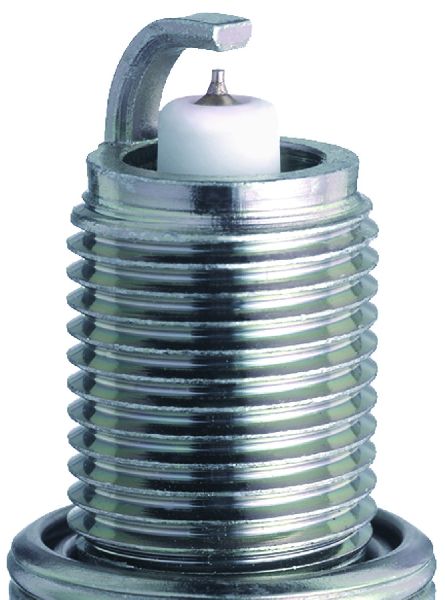
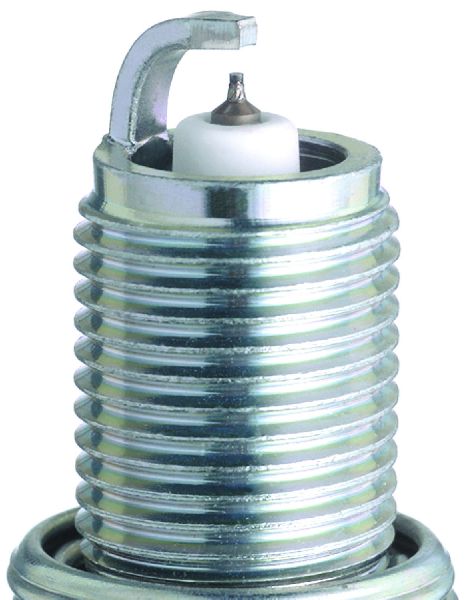
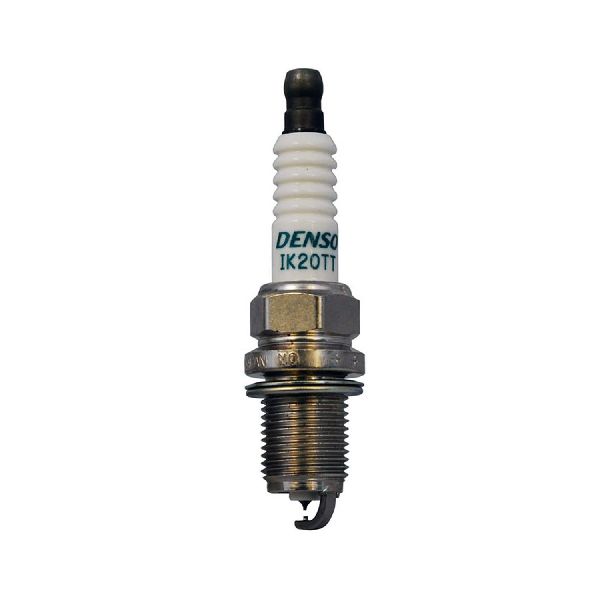
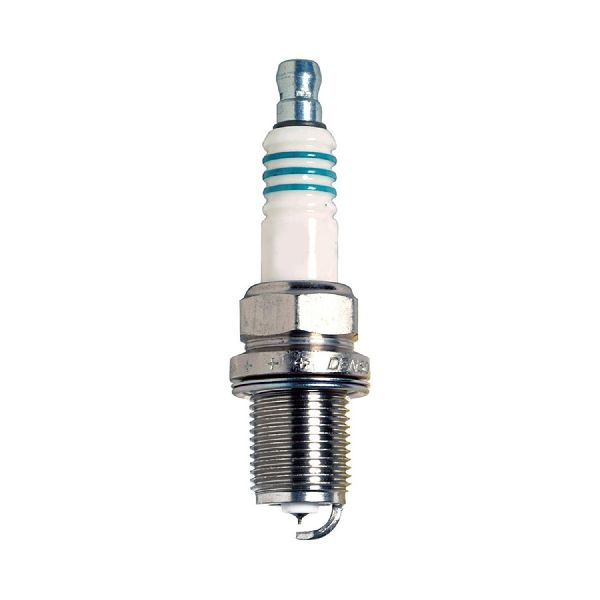
Est. part cost: $30-$60 per coil - Worn or Fouled Spark Plug 🔴 High Probability → Shop Spark Plug Spark plugs are a standard maintenance item with a finite lifespan. A worn plug with an excessive gap or fouling from oil (due to common valve cover gasket leaks) or carbon can cause a weak or inconsistent spark.
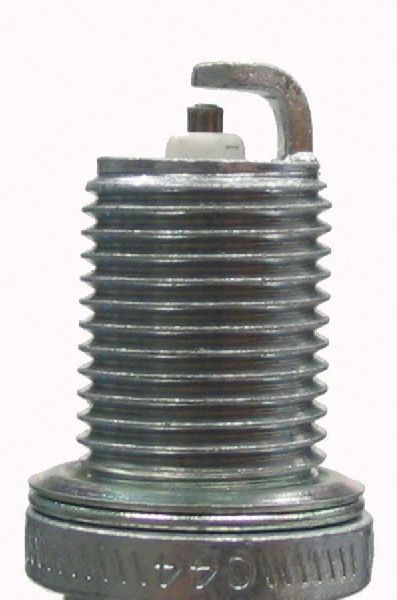
How to confirm: After ruling out the ignition coil, remove the spark plug from cylinder 7. Inspect it for wear (rounded electrode), damage, or fouling (black and sooty for carbon, wet for fuel, or oily). You can also swap it with another cylinder's plug to see if the misfire follows.
Typical fix: Replace the spark plug in cylinder 7. It is best practice to replace all 8 spark plugs at the same time with OEM-spec plugs (e.g., from brands like NGK or Bosch) to ensure consistent performance and prevent future misfires.
Est. part cost: $15-$30 per plug - Carbon Buildup on Intake Valves 🟡 Medium Probability The FSI direct injection engine design is inherently susceptible to carbon accumulation on intake valves, which is a very common cause for misfires on this specific engine, typically after 60,000 miles. This is considered a design flaw and a routine maintenance issue for FSI owners.
How to confirm: This is diagnosed after ruling out ignition and fuel injector issues. A borescope inspection of the intake ports (with the intake manifold removed) is required to visually confirm the presence and severity of carbon deposits.
Typical fix: Professional cleaning of the intake valves is required. The most effective method is walnut shell blasting, which removes the deposits without damaging the engine components. This is a labor-intensive job that requires removal of the intake manifold.
Est. part cost: $30-$60 for intake gaskets - Faulty Fuel Injector ⚪ Low Probability → Shop Fuel Injector Direct injectors operate under high pressure and can become clogged with carbon deposits or fail electronically over time, disrupting fuel delivery to the cylinder. A persistent single-cylinder misfire that isn't resolved with new plugs and coils often points to the injector.
How to confirm: This is more complex to diagnose. It involves swapping the injector with another cylinder, which requires removing the intake manifold and fuel rail. A technician can also perform a flow test. A stuck-open injector may cause a fuel-soaked spark plug and a strong fuel smell.
Typical fix: Replace the faulty fuel injector. It's often recommended to replace all injectors on the same bank or all 8 at once, as they tend to fail around the same time. The one-time-use Teflon seals must also be replaced using special tools.
Est. part cost: $80-$200 per injector
Rare But Worth Checking
- Vacuum Leak: A vacuum leak near cylinder 7, possibly from a deteriorated intake manifold gasket or a cracked vacuum line, could lean out the air/fuel mixture and cause a misfire. This might be accompanied by a lean code (e.g., P0171/P0174) and a rough idle.
- Low Compression: Internal engine issues like a burnt valve, worn piston rings, or cylinder wall scoring can cause a loss of compression, leading to a persistent misfire that isn't resolved by replacing external parts. A compression test is needed to confirm. Cylinder scoring is a known, albeit rare, issue on these engines.
- Timing Chain System Failure: A single misfire code can be an early symptom of a failing timing chain tensioner or stretched chain, a catastrophic and well-known issue on this engine. The key symptom is a rattling noise from the rear of the engine on cold startup. Ignoring this can lead to complete engine failure.
Diagnosis Steps
- Read the fault codes using an OBD-II scanner and note any other codes present.
- To test the ignition coil, swap the coil from cylinder 7 with the coil from cylinder 8. Clear the codes, run the engine, and see if the misfire code moves to P0308. If it does, the coil is bad.
- If the misfire remains on cylinder 7, swap the spark plug from cylinder 7 with cylinder 8. Clear codes and re-test. If the code moves to P0308, the spark plug is bad.
- Inspect the ignition coil connector and wiring for damage, corrosion, or oil contamination from a leaking valve cover gasket.
- Listen for a distinct 'ticking' sound from the cylinder 7 fuel injector using a mechanic's stethoscope. A silent injector may be dead.
- If ignition components are confirmed to be good, the next most likely causes are a faulty fuel injector or significant carbon buildup on the intake valves.
- A professional diagnosis from this point would involve a borescope inspection of the intake valves for carbon buildup (requires intake manifold removal) or testing the fuel injector's flow.
- As a final step to rule out mechanical failure, a compression test followed by a cylinder leak-down test can be performed on cylinder 7 to check for issues like worn rings or burnt valves.
Parts You'll Likely Need
- Ignition Coil
- Spark Plug
- Fuel Injector
- Intake Manifold Gasket
Related Codes That Often Appear With This One
- P0300 — If the underlying issue, such as severe carbon buildup, a vacuum leak, or a timing problem, affects multiple cylinders, a P0300 (Random/Multiple Cylinder Misfire) code may appear.
- P0305, P0306, P0308 — Misfire codes for other cylinders on the same bank (Bank 2) can appear if the problem, like carbon buildup or a fuel delivery issue, is not isolated to just cylinder 7.
- P0174 — A 'System Too Lean (Bank 2)' code can accompany the misfire if it's caused by an unmetered air leak (vacuum leak) or a clogged fuel injector on that bank.
Technical Service Bulletins (TSBs) & Recalls
- TSB 2019948 / TSB 2014753/8: While not for the A6 specifically, these TSBs for the Q7 4.2L FSI address the carbon buildup issue and cleaning procedures, which are directly applicable to the A6's BVJ engine.
- TSB 2069038: Mentions misfire detection (P0300-P0306) being corrected by a software update on some newer Audi engines, indicating that sometimes misfires can be software-related, though less likely on this specific platform for a single cylinder.
- Bulletin #A01166020322224: This technical service bulletin explains how to update the ECM software to correct an issue that causes DTCs P0300 through P0308, including the P0307 code.
- An Audi TSB acknowledges that it is 'normal' for oil pressure to be low and for the engine to chatter on startup, which an AudiWorld user found concerning as it can lead to component damage and misfires.
Platform-Specific Known Issues
- The 4.2L FSI V8 engine is widely known for developing heavy carbon deposits on the intake valves, which is a primary cause of misfire codes once the vehicle has higher mileage (typically over 60,000 miles). This is an inherent characteristic of the direct-injection engine design.
- This engine platform is also known for timing chain guide and tensioner failures, which is an engine-out repair. While less common to present as a single cylinder misfire initially, it's a critical issue to be aware of for this engine.
Mechanic-Grade Diagnostic Values
- High-Pressure Fuel System Pressure (at idle) — expected: 35 to 45 bar. Failure: Pressure significantly below this range at idle can indicate a failing High-Pressure Fuel Pump (HPFP).
- Low-Pressure Fuel System Pressure — expected: Approximately 7 bar (max). Failure: Pressure below 4-6 bar suggests a weak in-tank fuel pump or clogged filter, which can starve the HPFPs.
- Ignition Coil Primary Winding Resistance — expected: Approximately 0.4 to 2.0 ohms. Failure: A reading significantly outside this range or an open circuit (no reading) indicates a faulty coil.
- Ignition Coil Secondary Winding Resistance — expected: Approximately 8.0 to 14.0 kΩ (kilo-ohms). Failure: A reading outside this range or an open circuit points to an internal failure of the coil's secondary winding.
- Live Misfire Count (VCDS) — expected: 0 counts on all cylinders at idle and under load.. Failure: Any number that consistently increments in the counter for cylinder 7 confirms an active misfire.
Scan Tool Commands That Help
- VCDS (VAG-COM): Measuring Value Blocks (MVB) 015 and 016 — Use these blocks to view the live misfire counters for each cylinder. Group 015 shows cylinders 1-3, and Group 016 shows cylinders 4-6. For a V8, additional groups like 017 would show cylinders 7 and 8. This allows you to confirm in real-time if cylinder 7 is the one misfiring, and under what conditions (idle, load, etc.).
- VCDS (VAG-COM): Measuring Value Block (MVB) 140, Field 3 — This specific measuring block is used to read the actual high-pressure fuel rail pressure. It is critical for diagnosing if a misfire could be fuel-related due to a weak High-Pressure Fuel Pump (HPFP).
Wiring & Ground Locations
- Main Engine Ground Strap — Typically located between the engine block and the chassis frame rail, often on the passenger side of the engine bay.. A corroded or loose engine ground can cause a host of electrical issues, including erratic sensor signals and weak ignition spark, which can lead to misfire codes. While not a common cause, it's a fundamental check.
- Fuse Panel (Plenum Chamber) — In the plenum chamber (under the plastic cover at the base of the windshield on the driver's side).. A fuse in this panel (e.g., a 10A fuse in position 3) supplies power to multiple engine components, including camshaft actuators and intake runner motors. A user on a forum reported that accidentally grounding a wire while working on the intake manifold blew this fuse, causing multiple faults including misfires.
Real Owner Repair Stories
- AudiWorld Forums user (2008 Audi A6 4.2L FSI (BVJ)) — Rough idle, lopey exhaust sound, flashing CEL under hard acceleration, codes for random misfire and cylinder 1 & 2 misfires.
❌ Tried (didn't work) Replaced all 8 spark plugs, Replaced all 8 ignition coils, Replaced all 8 fuel injectors
✅ What actually fixed it The user suspected the PCV valve (oil separator). They tested it by removing the oil cap at idle; the engine stumbled badly and there was strong suction holding the cap on. This indicated a failed PCV diaphragm creating a massive internal vacuum leak. Replacing the PCV valve resolved the rough running. - AudiWorld Forums user (2007 Audi Q7 4.2L FSI (similar engine and systems)) — Persistent misfire on cylinder 4 after a tune-up (new plugs, coils). Misfire was bad enough to cause other cylinders to log misfires.
❌ Tried (didn't work) Swapping old good coil back, New spark plug, Crank position sensor, Carbon cleaning, New OEM fuel injector for cylinder 4, New cam position sensor
✅ What actually fixed it Another user suggested the PCV/breather box. The owner with the issue had not yet confirmed the fix, but the responding user stated they had a similar issue of a cylinder dropping out under hard acceleration which was resolved by replacing the PCV valve/box.
"I Checked Everything" — The Actual Cause
- A failed PCV (Positive Crankcase Ventilation) valve, also known as the oil separator, can cause a significant internal vacuum leak. This will not be found with a traditional smoke test of the intake tract. Symptoms include a strong suction when trying to remove the oil filler cap while the engine is running, a whistling noise, and rough idle/misfires.
OEM Part Supersession History
06E905115 (and revisions A, B, C, D)→06E905115E, 06E905115F, 06E905115G— Early revisions of the ignition coil were known for premature failure. The part was updated multiple times to improve durability and heat resistance.
Heads up: All revisions are physically and electrically interchangeable. However, it is strongly recommended to use the latest available revision (often red-topped, like 'G') and replace all 8 at once for reliability.079906036C→079906036D, 079906036F— Minor updates and manufacturer changes for the FSI fuel injector.
Heads up: When replacing injectors, it is critical to use the correct part for the FSI (BVJ) engine. The injectors for the earlier port-injected (BAT) engine are completely different. Aftermarket injectors may have different spray patterns (e.g., 6-hole vs. 1-hole) but are often sold as compatible.
Model Year Variations Within This Range
- 2004-2006: These earlier C6 A6 models used the 4.2L V8 with port fuel injection (engine code: BAT). They are NOT susceptible to the intake valve carbon buildup issue that plagues the later FSI engine. Misfire diagnosis on these models should focus more heavily on traditional causes like ignition, fuel, and vacuum leaks.
- 2007-2011: These later models use the 4.2L FSI V8 (engine code: BVJ). This guide is primarily focused on this engine, where carbon buildup is a primary suspect for misfires after ruling out coils and plugs.
Diagnostic Flowchart
Other Known Issues on This Vehicle
Issues unrelated to this code that are worth knowing about as an owner of this generation:
- Timing Chain Tensioner & Guide Failure 🔴 High — Medium frequency, typically after 80,000-125,000 miles. A startup rattle from the rear of the engine is the primary warning sign.
- Excessive Oil Consumption 🟠 Medium — High frequency, especially on higher mileage engines. Often caused by worn piston rings or valve seals.
- MMI System Failure 🟡 Low — Common issue where the MMI screen fails to turn on, or boots and then shuts off. Often caused by a failure in one of the fiber optic loop components (e.g., satellite radio, amplifier) or water damage in the trunk.
- Adaptive Air Suspension Leaks/Failure 🟠 Medium — Common on models equipped with air suspension. Air springs develop leaks, or the compressor fails, causing the car to sag at one corner.
- Intake Manifold Flap/Runner Issues 🟡 Low → Shop Engine Intake Manifold — The plastic intake manifold has internal flaps that can seize or the actuator motors can fail, leading to a loss of power and specific fault codes.
Used vs. New Parts: Buying Guide for This Vehicle
When a used part is the smart pick: Used parts are generally not recommended for the common failure items related to this code. However, major mechanical components with no inherent wear items, such as an intake manifold assembly (if needed), could be sourced from a low-mileage donor vehicle.
Donor-vehicle mileage cap: roughly under 70000 miles for the part to have meaningful remaining life.
What to inspect on the donor part:
- Verify the donor vehicle's mileage.
- For engine components, check for signs of oil leaks or overheating.
- Ensure plastic components like connectors and vacuum nipples are not brittle or cracked.
OEM-only on this vehicle (don't cheap out):
- Fuel Injectors: Due to the precision required for direct injection and the risk of counterfeit parts, OEM (e.g., Bosch) or OEM-supplier injectors are strongly recommended.
- PCV Valve / Oil Separator: Aftermarket versions of this critical emissions and vacuum-regulating part are known to fail quickly. Stick with OEM.
- Sensors (Crank/Cam): To avoid chasing issues caused by incorrect signals, OEM sensors are the most reliable choice.
Aftermarket brands forum-validated for this vehicle:
- Ignition Coils: Bosch (often the OEM supplier), Eldor, NGK, APR (performance upgrade).
- Spark Plugs: NGK, Bosch.
Brands owners have reported issues with on this vehicle:
- Unbranded/generic ignition coils and fuel injectors from online marketplaces. These are notorious for high failure rates, sometimes right out of the box, and can cause more diagnostic headaches.
Real Owner Stories
Aggregated from forums and TSBs cited above. Mileages and costs reflect what owners reported in those sources.
2007 Audi A6 4.2L V8
Symptoms: The owner replaced the coil pack and spark plugs, but the cylinder 7 misfire persisted.
What fixed it: The context indicates the discussion pointed toward other causes after coils and plugs failed, such as injectors or carbon buildup.
Source hint: AudiForums.com: Replaced Coil Pack, spark plugs, still misfiring!
Audi Q7 4.2L V8 (BAR engine)
Symptoms: Multiple misfires occurred even after the owner replaced the ignition coils and spark plugs.
What fixed it: A dealer scan confirmed the issue was caused by clogged fuel injectors.
Source hint: AudiWorld Forums: 4.2L V8 Injector Replacement DIY?
Audi A6 4.2L FSI (C6)
Symptoms: The vehicle experienced misfires and a lean bank error.
What fixed it: A full carbon clean and replacement of all 8 fuel injectors.
Cost: $3800-$3800
Source hint: PistonHeads: Audi reliability:S4 (B8) v A6 4.2 FSI (C6) v A8 4.2 FSI (D4)
Related OBD-II Codes
Frequently Asked Questions
Is there a specific ignition coil upgrade recommended for the 4.2L FSI V8 to prevent P0307?
Does TSB 2019948 apply to my Audi A6 4.2L FSI regarding misfires?
At what mileage does carbon buildup typically cause misfires on this engine?
Can a software update fix a P0307 code on my Audi?
Why is my 4.2L FSI engine chattering on startup along with the misfire?
What is the recommended method for cleaning the intake valves on the A6 4.2L?
Helpful Videos
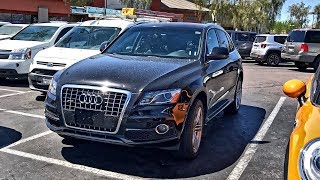
Used OEM Parts in Stock
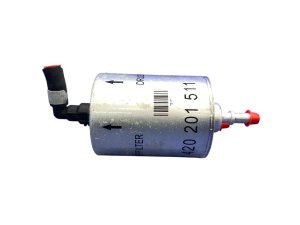
New Aftermarket Parts Available


The information in this article is provided for general reference and educational purposes only. Vehicle specifications, procedures, and part compatibility can vary by production date, trim level, and region. Always consult your vehicle's factory service manual and verify part numbers before purchasing or performing repairs. Safety-critical components such as airbags, seat belts, and braking systems should be installed by a qualified professional.
- Audi A6:
- 🧭 Diagnostic Flowchart
- 🎬 Helpful Videos
- 🛍️ Shop This Part
- What's Unique About the 2004-2011 Audi A6
- Symptoms You May Notice
- Most Likely Causes
- Rare But Worth Checking
- Diagnosis Steps
- Parts You'll Likely Need
- Related Codes That Often Appear With This One
- Technical Service Bulletins (TSBs) & Recalls
- Platform-Specific Known Issues
- Mechanic-Grade Diagnostic Values
- Scan Tool Commands That Help
- Wiring & Ground Locations
- Real Owner Repair Stories
- "I Checked Everything" — The Actual Cause
- OEM Part Supersession History
- Model Year Variations Within This Range
- Other Known Issues on This Vehicle
- Used vs. New Parts: Buying Guide for This Vehicle
- Real Owner Stories
- 2007 Audi A6 4.2L V8
- Audi Q7 4.2L V8 (BAR engine)
- Audi A6 4.2L FSI (C6)
- Related OBD-II Codes
- Frequently Asked Questions
- 🎟️ Get 5% Off