

P0307 on 2003-2008 Audi S4 4.2L V8: Cylinder 7 Misfire Causes and Fixes
P0307 indicates a misfire on cylinder 7. On the Audi S4 with the 4.2L V8, this is most often a failed ignition coil or spark plug, a relatively inexpensive DIY fix. However, it can also be an early symptom of a much more serious timing chain guide failure, a known and catastrophic issue with this engine that requires immediate attention.
- P0307 means cylinder 7 is misfiring. On your S4, this is the second cylinder from the front on the driver's side.
- Start diagnosis by swapping the ignition coil from cylinder 7 with another cylinder to see if the misfire moves. This is the most common fix.
- If the check engine light is flashing, pull over and have the vehicle towed to prevent expensive catalytic converter damage.
- Be aware that a persistent misfire that isn't solved by a new coil or plug could be an early sign of the infamous timing chain guide failure on this specific engine.
What's Unique About the 2003-2008 Audi S4
The B6/B7 generation S4, with its chain-driven BBK 4.2L V8, is unique and has a well-documented history of specific issues. While a P0307 code is often a simple ignition problem, this engine is infamous for the failure of its plastic timing chain guides. A misfire code can be one of the first signs of a stretched chain or failing guide, which, if ignored, can lead to catastrophic engine damage. This makes diagnosing any misfire on this platform more urgent than on a typical vehicle, as it could be a precursor to an engine-out repair costing over $8,000.
Generation note: This guide covers the B6 (2003-2005) and B7 (2005.5-2008) generations of the Audi S4. Both generations use the same BBK 4.2L V8 engine, and the causes and fixes for P0307 are identical between them.
Symptoms You May Notice
- Rough idle or engine vibration, sometimes feeling like the car is shaking.
- Flashing Check Engine Light (CEL).
- Solid Check Engine Light.
- Hesitation or stumbling during acceleration.
- Noticeable loss of engine power.
- Reduced fuel economy.
- Smell of unburned gasoline from the exhaust.
- A 'popping' or 'coughing' sound from the engine bay or exhaust.
- Replacing the Mass Airflow (MAF) sensor. A faulty MAF sensor will typically affect all cylinders and set a specific MAF code or fuel trim codes for both banks, not a single-cylinder misfire.
- Excessive Intake Valve Carbon Buildup. Unlike Audi's FSI (direct injection) engines, the BBK V8 uses port fuel injection, which continuously sprays fuel over the intake valves, providing a cleaning action. Significant carbon buildup on the valves is not a common cause of misfires on this specific engine.
Most Likely Causes
- Ignition Coil Failure 🔴 High Probability → Shop Ignition Coil Ignition coils are a very common failure item on Audi/VW engines of this era, often failing every 50,000-70,000 miles. Heat from the V8 engine accelerates the degradation of the coil's internal potting material.
How to confirm: Swap the ignition coil from cylinder 7 with another cylinder (e.g., cylinder 6 or 8). Clear the codes and drive the car. If the misfire code changes to P0306 or P0308, the ignition coil is faulty. This is the most definitive and cost-effective first step.
Typical fix: Replace the failed ignition coil. It is highly recommended to replace all 8 coils at once if they are original or have high mileage to prevent future failures. Many owners upgrade to the more robust 'red top' coils from the Audi R8 (Part No. 06E905115G or latest revision).
Est. part cost: $30-$60 per coil - Worn or Fouled Spark Plug 🟡 Medium Probability → Shop Spark Plug Spark plugs are a regular maintenance item. If they are past their service interval (typically 35k-55k miles), they are a likely cause. Oil leaks from failing valve cover gaskets can also foul the plugs, causing a misfire.
How to confirm: After ruling out the ignition coil, swap the spark plug from cylinder 7 to another cylinder. If the misfire follows the plug, the spark plug is the cause. Visually inspect the plug for wear, carbon fouling, oil, or coolant contamination.
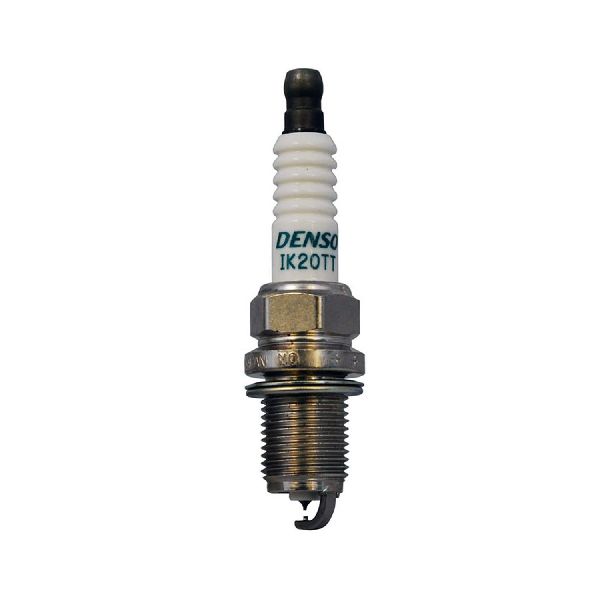
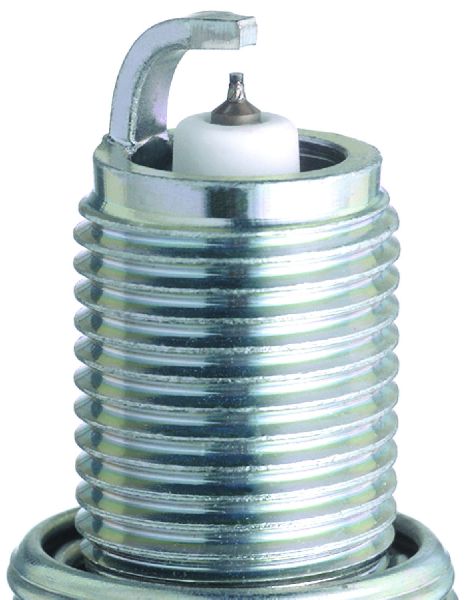
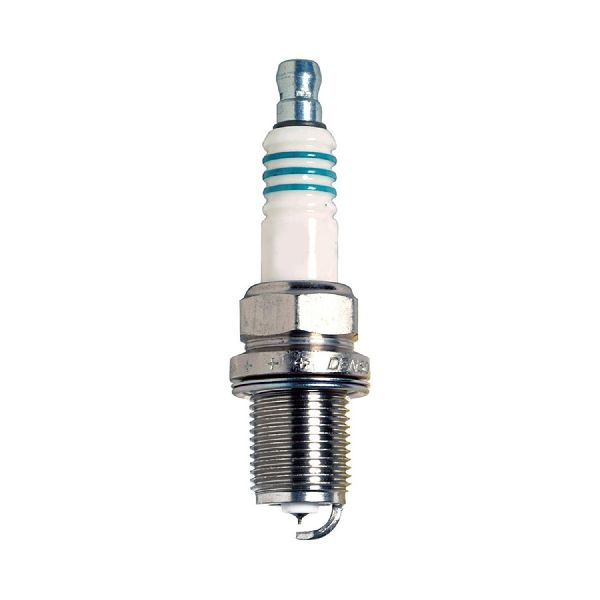
Typical fix: Replace the spark plug. Spark plugs should always be replaced as a full set of 8. Recommended plugs include NGK PFR6Q or BKR7EIX. Ensure they are gapped correctly before installation.
Est. part cost: $10-$25 per plug - Faulty Fuel Injector ⚪ Low Probability → Shop Fuel Injector Fuel injectors can become clogged with carbon deposits or fail electrically over time, leading to an incorrect fuel mixture in the cylinder. This is less common than ignition issues but still a possibility on higher mileage engines.
How to confirm: If swapping the coil and plug doesn't isolate the issue, the fuel injector is a likely suspect. A more advanced diagnostic step is to swap injectors between cylinders, but this requires removing the fuel rail. A professional can perform a flow test or use a scan tool to check injector balance.
Typical fix: Replace the faulty fuel injector. Since the intake manifold must be removed for access, it is often recommended to replace all 4 injectors on Bank 2 (driver's side) at the same time.
Est. part cost: $50-$150 per injector
Rare But Worth Checking
- Timing Chain Guide Failure / Stretched Chain: This is the most serious potential cause on the BBK engine. The plastic timing chain guides at the rear of the engine can break, or the chain can stretch. This causes the camshaft timing to deviate, leading to misfires. Early warning signs include a brief rattling noise from the back of the engine on a cold start that lasts MORE than 2-3 seconds. A persistent rattle at idle or on a warm starts is a critical warning. Diagnosis requires checking camshaft timing deviation (phase) in measuring blocks 091, 092, and 093 with a VCDS scan tool. Deviations greater than -9 degrees often indicate a critical issue requiring an engine-out service that can cost $6,000-$10,000.
- Failed PCV Valve / Vacuum Leak: The Positive Crankcase Ventilation (PCV) valve is a common failure point that creates a significant vacuum leak. This unmetered air leans out the air/fuel mixture, which can cause misfires, often on multiple cylinders (P0300) but sometimes isolated to one. Other symptoms include a rough idle, a whistling or sucking noise from the engine, and excessive oil consumption. A smoke test is the most effective way to diagnose a vacuum leak.
- Low Compression: Internal engine problems like a worn piston ring, a failing head gasket, or a burnt valve can cause a loss of compression in cylinder 7, leading to a persistent misfire. Cylinder wall scoring is also a known issue on these engines, often due to improper warm-up, which can lead to low compression. A compression test followed by a leak-down test is needed to confirm this.
Diagnosis Steps
- Read the fault codes using an OBD-II scanner to confirm P0307 and note any other codes present (e.g., P0300, P030x, P0174).
- Identify cylinder 7: On the 4.2L V8, cylinders 5-8 are on the US driver's side (Bank 2), front to back. Cylinder 7 is the third one from the front on the driver's side.
- Swap the ignition coil from cylinder 7 with the coil from cylinder 8. Clear the codes, run the engine, and check if the misfire code has moved to P0308. If it has, the coil is bad. This is the most common fix.
- If the misfire remains on cylinder 7, swap the spark plug from cylinder 7 with cylinder 8. Clear codes and re-test. If the code moves to P0308, the spark plug is bad.
- If the misfire still remains on cylinder 7, inspect the wiring and connector for the ignition coil and fuel injector on cylinder 7 for any damage or corrosion.
- Listen carefully to the rear of the engine during a cold start. A rattle lasting 1-2 seconds is considered normal. A rattle lasting longer, or any rattle on a warm start, is a strong indicator of a timing chain guide issue.
- If you have access to a VCDS (VAG-COM) scan tool, check the camshaft phase deviation in Measuring Block 093. Values approaching or exceeding -9 degrees are a major red flag for timing chain problems.
- If the simple swaps do not identify the problem, the next steps involve more complex diagnostics: performing a compression and leak-down test on cylinder 7, checking fuel pressure, and performing a smoke test to find vacuum leaks. These may require professional assistance.
Parts You'll Likely Need
- Ignition Coil
(OEM #06E905115G (latest revision, supersedes F, E, D, etc.))— This is the most frequent cause of a single-cylinder misfire on this engine. They are known to fail regularly. Many owners upgrade to this part, originally for the R8, for better durability.
Trusted brands: Bosch, NGK, Eldor
OEM price range: $45-$60
Aftermarket price range: $30-$50 - Spark Plug
(OEM #101905611A (or NGK PFR6Q))— A standard maintenance item that can cause a misfire when worn or fouled. Should be replaced as a set.
Trusted brands: NGK, Bosch
OEM price range: $20-$25
Aftermarket price range: $10-$18 - Fuel Injector
(OEM #079906036C)— A less common but known failure point that can cause a misfire if clogged or electrically faulty.
Trusted brands: Bosch
OEM price range: $120-$160
Aftermarket price range: $50-$90
Related Codes That Often Appear With This One
- P0300 — This code for 'Random/Multiple Cylinder Misfire' often appears alongside a specific cylinder misfire code like P0307, especially if the issue is starting to affect other cylinders or is caused by a systemic problem like a vacuum leak or timing issue.
- P0305, P0306, P0308 — These codes indicate misfires on other cylinders on the same bank (Bank 2, driver's side). If they appear with P0307, it strongly points to a common cause for that bank, such as a clogged catalytic converter for Bank 2, a vacuum leak affecting that side, or a timing issue on the Bank 2 camshaft.
- P0174 — System Too Lean (Bank 2). This code often accompanies misfire codes when the root cause is a vacuum leak, as the unmetered air causes the oxygen sensor to report a lean condition for that entire bank.
Technical Service Bulletins (TSBs) & Recalls
- While no specific TSB for P0307 exists, Audi has issued bulletins regarding the 'normal' 1-2 second timing chain rattle on cold starts, explaining it's due to the time taken to build oil pressure in the hydraulic tensioners. Any rattle beyond this is a sign of wear.
- Manufacturer TSB Bulletin #A01166020322224 (applicable to similar Audi platforms) explains how to update the ECM software to correct an issue that causes DTCs P0300 through P0308, including P0307.
Platform-Specific Known Issues
- Timing Chain System: The BBK V8 is notorious for premature failure of the plastic timing chain guides and tensioners located at the rear of the engine. A misfire code can be an early symptom of the timing being slightly off due to a stretched chain or broken guide. This is an engine-out repair that costs several thousand dollars ($6k-$10k).
Mechanic-Grade Diagnostic Values
- Live Misfire Count (Cylinder 7) — expected: 0 at idle and under load.. Failure: Any count greater than 0 indicates a misfire event. The ECU will log a fault code after a certain threshold is met.
- Cylinder Compression — expected: 120-150 PSI, with less than 10-15% variation between cylinders.. Failure: A reading significantly below 120 PSI, or a large variance compared to other cylinders, indicates a mechanical engine problem (e.g., piston rings, valves, head gasket, or cylinder scoring).
- Engine Coolant Temperature Sensor (G62) Reading — expected: Should accurately reflect ambient temperature when cold and climb to ~90°C when warm.. Failure: A reading that is stuck, erratic, or shows an impossible value (like -40°C) in VCDS suggests a failed sensor or wiring issue, which can cause rich running and misfires.
Hidden / Shadow Codes Worth Checking
- Live Misfire Counters: The Bosch Motronic ECU continuously counts misfire events for each cylinder even before they are frequent enough to trigger a P0307 code and Check Engine Light. Viewing these counters is like seeing 'shadow faults'. (see via Using a VAG-specific scan tool like VCDS, navigate to Engine -> Measuring Blocks -> Groups 015 and 016. Group 016 will show the live counter for cylinder 7.)
Scan Tool Commands That Help
- VCDS (VAG-COM): View Measuring Blocks 015 & 016 — This is the primary diagnostic step after reading codes. It allows you to watch for misfires on cylinder 7 (and others) in real-time under different engine loads and temperatures, which is crucial for diagnosing intermittent issues that may not have set a hard code yet.
- VCDS (VAG-COM): Reset Misfire Adaption Values — After performing a repair such as replacing an injector or fixing a mechanical issue, resetting the learned misfire adaptations in the ECU can be beneficial. This function is typically found under 'Basic Settings' or 'Adaptation'.
Wiring & Ground Locations
- Ground Point 19 — In the engine compartment, near the ignition coils.. This is the specific factory-designated ground connection for the ignition coil circuit. A loose or corroded connection here can cause a weak or intermittent spark on one or more cylinders, leading to misfires that are difficult to diagnose.
- Valve Cover Ground Stud — A bolt securing the ignition wiring harness ground wire directly to the valve cover.. This is a primary ground path for the coil harness. On high-mileage engines, this connection can become loose or corroded due to heat cycles and vibration, causing erratic misfires.
- Firewall Ground (Behind Intake Manifold) — On the firewall, behind the intake manifold. Often a brown wire.. This ground point is notorious for having brittle and disintegrating insulation on the B6/B7 S4. While it primarily serves the Secondary Air Injection motor, compromised wiring in this area can affect other nearby circuits or indicate a general state of harness degradation from engine heat.
Real Owner Repair Stories
- Reddit user on r/AudiS4 (B6 Audi S4) — Persistent misfire on Bank 1 (cylinder 3, minor on 1) that would spread to all cylinders on that bank. The main red wire on the battery terminal would get hot when starting the car.
❌ Tried (didn't work) Replaced all 8 ignition coils, Replaced all 8 spark plugs, Replaced all 8 fuel injectors, Replaced alternator and battery, Replaced throttle body, Replaced vacuum purge valve, Performed vacuum test, compression test, and fuel pressure test.
✅ What actually fixed it A faulty Lambda (pre-catalyst O2) sensor on Bank 1. The diagnostic trick was to unplug the MAF sensor; when the misfires stopped, it confirmed the engine was running poorly due to bad sensor data (from the O2 sensor) rather than a vacuum leak or ignition/fuel hardware failure. - Audi Revolution forum user (B7 Audi S4) — Misfire started on cylinder 8, then moved to cylinder 3 after swapping coils. Eventually became random misfires on multiple cylinders, primarily on Bank 1.
❌ Tried (didn't work) Replaced all spark plugs (twice), Swapped ignition coils (misfire followed initially, then became random), Replaced ignition coil on cylinder 3
✅ What actually fixed it A severely clogged ('gunked up') fuel injector on cylinder 3. After swapping plugs and coils failed to provide a definitive fix, the user removed the fuel injectors and found cylinder 3's was visibly fouled. Sending the injectors for professional cleaning and servicing resolved the issue.
"I Checked Everything" — The Actual Cause
- A common scenario is for a smoke test to show no vacuum leaks, yet the misfire persists. This often points away from intake gaskets or cracked hoses and towards 'data' problems. For example, a faulty pre-catalyst O2 sensor can feed the ECU incorrect information, causing it to create a lean or rich mixture that leads to misfires, but this will not be found with a smoke test.
OEM Part Supersession History
06E905115, 06E905115A, B, C, D, E, F→06E905115G— Improved design for better durability and heat resistance. The 'G' revision is often black with a red top and is the same part used in the Audi R8, making it a common and recommended upgrade.
Model Year Variations Within This Range
- 2005.5-2008 (B7): The B7 generation features a more advanced, full dual K-line CAN-BUS electrical architecture compared to the partial system in the B6. While this doesn't change the mechanical causes of P0307, it can affect the speed and depth of diagnostics with certain scan tools. The engine and ignition components themselves remain the same.
Diagnostic Flowchart
Other Known Issues on This Vehicle
Issues unrelated to this code that are worth knowing about as an owner of this generation:
- Timing Chain Guide & Tensioner Failure 🔴 High — Extremely common. Rattle on cold start is a universal characteristic, but rattle lasting more than 2-3 seconds or occurring on warm starts indicates guide/tensioner failure is imminent. Can occur anytime from 70,000 miles onward. (Ref: While no recall exists, Audi has issued technical bulletins acknowledging the cold start rattle is 'normal' for 1-2 seconds due to oil pressure building in the hydraulic tensioners.)
- High Oil Consumption 🟠 Medium — Common across the fleet, often starting around 60,000-80,000 miles. Caused by failing PCV system, valve cover gasket leaks, or worn piston rings/cylinder bore scoring.
- Intake Manifold Runner & Actuator Issues 🟡 Low → Shop Engine Intake Manifold — The variable intake manifold actuator can fail, or the internal flaps can get stuck due to carbon buildup or a seized bearing. This typically causes a loss of low-end torque or high-end power and may set codes like P2006/P2007.
- Valve Cover and Cam Tensioner Gasket Leaks 🟠 Medium — Very common failure point. Oil leaks from the valve cover gaskets and the half-moon cam tensioner seals are expected. The leaking oil can drip onto the exhaust manifold causing a burning smell, and can also damage the alternator.
Used vs. New Parts: Buying Guide for This Vehicle
When a used part is the smart pick: For this vehicle, using used parts for a P0307 fix is generally not recommended for ignition or fuel components. Given that ignition coils are a known high-failure part with a limited lifespan, a used coil is a significant gamble. A used fuel injector could be just as clogged as the one being replaced. The only time a used part might make sense is for a large, expensive, non-wear item like a wiring harness or a connector pigtail if the original is damaged.
Donor-vehicle mileage cap: roughly under 50000 miles for the part to have meaningful remaining life.
What to inspect on the donor part:
- For a wiring harness, inspect for any signs of brittle insulation, cracking, or previous repairs (splices, tape).
- Ensure all connector locking tabs are intact and not broken.
- Ask for the donor vehicle's history if possible; avoid parts from flood or fire-damaged cars.
OEM-only on this vehicle (don't cheap out):
- Ignition Coils: While aftermarket is available, OEM (Bosch, Eldor) or the OEM R8-spec 'red top' coils are highly recommended for reliability. Avoid cheap, unbranded online coils.
- Fuel Injectors: OEM Bosch injectors are recommended to ensure correct flow rate and spray pattern.
- Sensors (O2, MAF, Coolant Temp): Use OEM or OEM-supplier brands (Bosch, NTK) to avoid incorrect readings that can cause persistent issues.
Aftermarket brands forum-validated for this vehicle:
- NGK (Spark Plugs - PFR6Q, BKR7EIX)
- Bosch (Spark Plugs, Ignition Coils, Fuel Injectors, O2 Sensors)
- Eldor (Ignition Coils)
Brands owners have reported issues with on this vehicle:
- Generic, unbranded ignition coils and sensors from online marketplaces are frequently reported on forums to be dead-on-arrival or fail prematurely.
Real Owner Stories
Aggregated from forums and TSBs cited above. Mileages and costs reflect what owners reported in those sources.
2005 Audi S4 4.2L V8 — ~85000 miles
Symptoms: Owner experienced a P0307 misfire and attempted to swap the coil and plug with no change. The problem eventually escalated to involve multiple cylinders.
What fixed it: The discussion pointed toward a potential fuel delivery issue after basic ignition swaps failed to move the code.
Source hint: AudiWorld Forums: P0307 Misfire on Cylinder # 7 - tried a couple things
2004 Audi S4 4.2L V8 — ~70000 miles
Symptoms: Misfire codes appeared when the ECU could no longer compensate for timing deviation. Owner noted a rattle during startup.
What fixed it: The misfire was a symptom of severe chain stretch and timing chain guide wear.
Source hint: AudiSRS.com: S4 Chain Tensioner or Cold Start Up Rattle
2006 Audi S4 4.2L V8 — ~100000 miles
Symptoms: Brief cold start rattle (1-2 seconds) was present, but the owner was concerned about engine health and potential misfires.
What fixed it: A compression and leak-down test was recommended to verify engine health before proceeding with expensive timing repairs.
Source hint: Reddit r/AudiS4: B6 S4 timing chain rattle?
Related OBD-II Codes
Frequently Asked Questions
Is the 1-2 second rattle I hear on cold starts covered by a TSB or indicative of a P0307 failure?
Which cylinder is cylinder 7 on my 4.2L V8 engine?
Can I use 'red top' coils from the Audi R8 to fix my P0307 misfire?
What spark plugs are recommended for the 2003-2008 S4 to prevent misfires?
How much does it cost to fix the timing chain issues associated with this code?
Can I use VCDS to check if my P0307 code is related to the timing chain?
Helpful Videos
We Have This Part in Stock


The information in this article is provided for general reference and educational purposes only. Vehicle specifications, procedures, and part compatibility can vary by production date, trim level, and region. Always consult your vehicle's factory service manual and verify part numbers before purchasing or performing repairs. Safety-critical components such as airbags, seat belts, and braking systems should be installed by a qualified professional.
- Audi S4:
- 🧭 Diagnostic Flowchart
- 🎬 Helpful Videos
- 🛍️ Shop This Part
- What's Unique About the 2003-2008 Audi S4
- Symptoms You May Notice
- Most Likely Causes
- Rare But Worth Checking
- Diagnosis Steps
- Parts You'll Likely Need
- Related Codes That Often Appear With This One
- Technical Service Bulletins (TSBs) & Recalls
- Platform-Specific Known Issues
- Mechanic-Grade Diagnostic Values
- Hidden / Shadow Codes Worth Checking
- Scan Tool Commands That Help
- Wiring & Ground Locations
- Real Owner Repair Stories
- "I Checked Everything" — The Actual Cause
- OEM Part Supersession History
- Model Year Variations Within This Range
- Other Known Issues on This Vehicle
- Used vs. New Parts: Buying Guide for This Vehicle
- Real Owner Stories
- 2005 Audi S4 4.2L V8 — ~85000 miles
- 2004 Audi S4 4.2L V8 — ~70000 miles
- 2006 Audi S4 4.2L V8 — ~100000 miles
- Related OBD-II Codes
- Frequently Asked Questions
- 🎟️ Get 5% Off