

P0307 on 1996-2001 Ford Explorer 5.0L V8: Cylinder 7 Misfire Causes and Fixes
P0307 on a 1996-2001 Ford Explorer 5.0L V8 indicates a misfire in cylinder 7. The most common causes are a bad spark plug wire or a worn-out spark plug, often due to heat exposure. Cylinder 7 is the third cylinder back on the passenger side. A complete ignition tune-up (plugs and wires) is often the most effective fix, costing around $70-$150 for DIY parts.
- P0307 means cylinder 7 is misfiring. On this vehicle, start by inspecting the spark plug wire.
- A flashing Check Engine Light is a critical warning to stop driving to prevent expensive catalytic converter damage.
- The 'swap test' is your best diagnostic tool: move the spark plug and then the wire to another cylinder to see if the misfire code follows.
- Due to the age of the vehicle, if one spark plug or wire has failed, it is highly recommended to replace all plugs and wires as a set for reliability.
- If new plugs and wires don't fix the issue, investigate for a vacuum leak at the intake manifold gasket before suspecting more expensive parts like injectors or coils.
What's Unique About the 1996-2001 Ford Explorer
The 5.0L V8 in the second-generation Explorer is a variant of the classic Ford small-block engine, known for its reliability but also for specific wear patterns. Unlike modern coil-on-plug systems, this engine uses a distributorless ignition system with two coil packs and traditional spark plug wires. This design makes the long, heat-exposed spark plug wires a primary failure point for single-cylinder misfires. Forum users on Ford Truck Enthusiasts specifically note that the boot on cylinder 7 can become brittle and fall apart on removal, and the wires are prone to chafing. Additionally, the plastic composite upper intake manifold and its gaskets are a known weak point on this platform, which can cause vacuum leaks leading to lean misfires that are sometimes mistaken for ignition problems.
Symptoms You May Notice
- Rough or shaking idle
- Engine hesitation or stumbling during acceleration
- Noticeable loss of power
- Flashing or solid Check Engine Light
- Reduced fuel economy
- Scent of unburned gasoline from the exhaust
- Hard starting engine
- Replacing only the spark plug without checking the spark plug wire, which is a more common failure point on this engine.
- Replacing the fuel injector before confirming spark and compression are good.
- Replacing a coil pack when the spark plug wire is the actual point of failure.
- Assuming a vacuum leak is from a hose when the intake manifold gasket is the true culprit.
Most Likely Causes
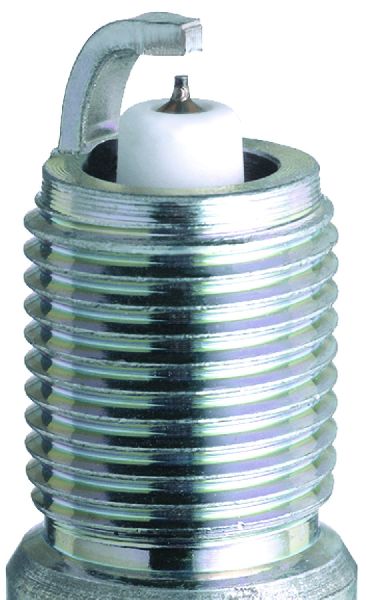
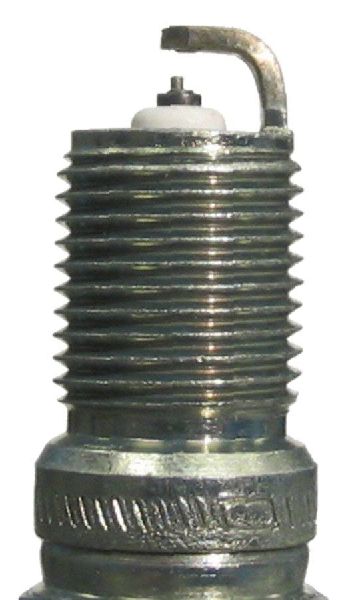
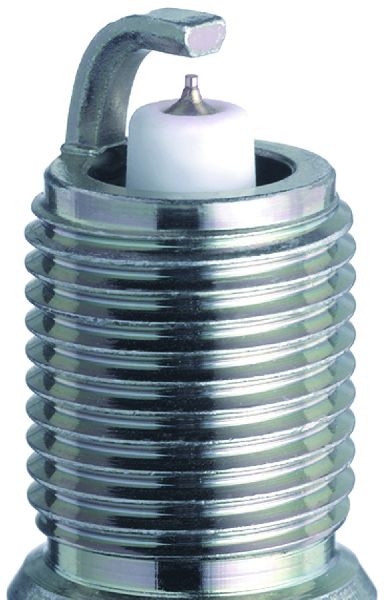
- Faulty Spark Plug Wire 🔴 High Probability → Shop Spark Plug This engine uses long spark plug wires that are exposed to high heat and vibration, causing the insulation to break down over time, leading to arcing or high resistance. Owners on forums specifically report that the boot for cylinder 7 becomes brittle and can disintegrate upon removal, and wires can chafe through their jackets.
How to confirm: Inspect the wire for cylinder 7 for any visible damage, cracks, or burns, especially where it routes near the exhaust manifold. At night, with the engine running, you may see sparks arcing from the wire to a metal part of the engine. The most definitive test is to swap the cylinder 7 wire with another cylinder's wire of similar length (e.g., cylinder 6 or 8) and see if the misfire code changes to P0306 or P0308.
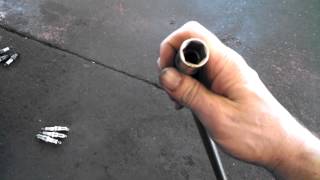
Typical fix: Replace the entire set of spark plug wires. 🎬 Watch: Step-by-step guide to replacing your spark plugs and wires. It is best practice to replace them as a set to ensure consistent performance and prevent future failures. Ensure the new wires are routed carefully to avoid contact with hot exhaust components.
Est. part cost: $40-$90 - Worn or Fouled Spark Plug 🔴 High Probability → Shop Spark Plug
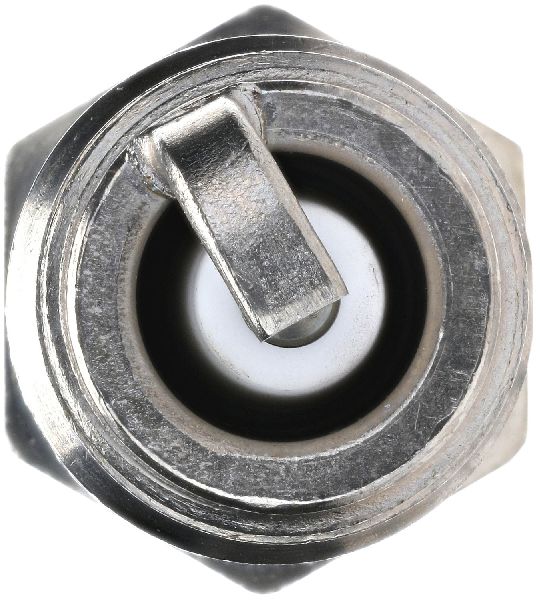
How to confirm: Remove the spark plug from cylinder 7 and inspect it. Look for a worn electrode, heavy carbon deposits, oil fouling, or cracks in the ceramic insulator. A common diagnostic step is to swap the spark plug with another cylinder (e.g., cylinder 6) and see if the misfire code follows, changing to P0306.
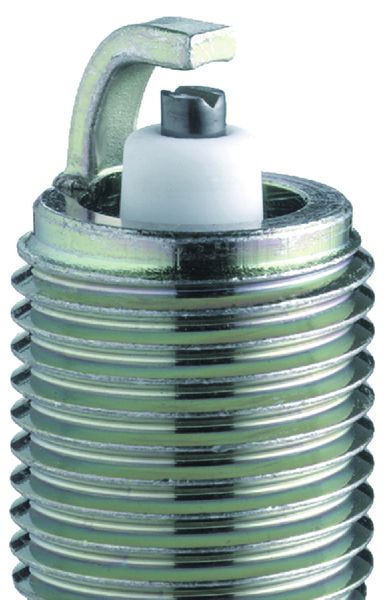
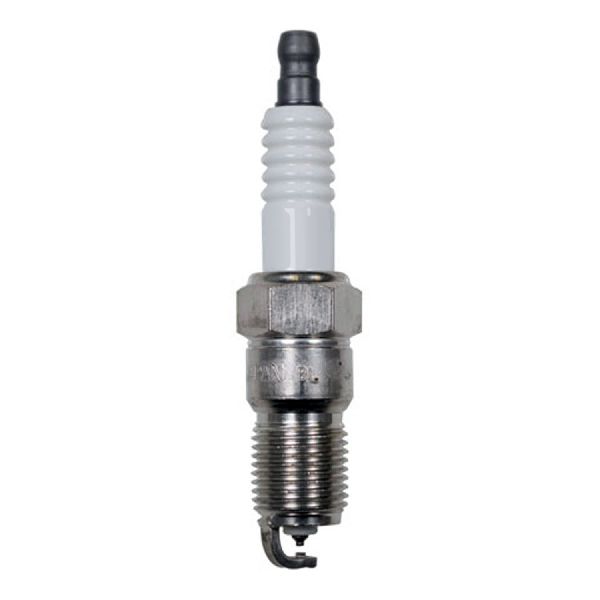
Typical fix: Replace the spark plug. It is highly recommended to replace all 8 spark plugs at the same time to maintain engine balance and prevent future misfires. Use a torque wrench for proper installation.
Est. part cost: $20-$60 for a set of 8 - Failed Ignition Coil Pack 🟡 Medium Probability → Shop Ignition Coil The 5.0L V8 uses two coil packs, each firing four cylinders in a waste-spark system. Cylinder 7 shares a coil with cylinder 2. The firing order for 1996+ models is 1-3-7-2-6-5-4-8. While less common than wire or plug failure, these coil packs can fail over time due to heat and age.
How to confirm: Since cylinder 7 and 2 fire from the same coil, a failure might also cause an intermittent P0302. A definitive test involves using a multimeter to check the primary and secondary resistance of the coil pack terminals for cylinder 7 and comparing the readings to the other terminals on the same pack or to manufacturer specifications. Another method is to use an inline spark tester to check for spark quality at the cylinder 7 wire.
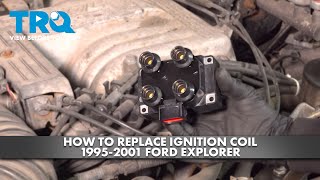
Typical fix: Replace the ignition coil pack that serves cylinder 7. They are typically sold individually. 🎬 See this walkthrough on how to replace the ignition coil.
Est. part cost: $30-$75 - Leaking Intake Manifold Gasket 🟡 Medium Probability → Shop Engine Intake Manifold The intake manifold gaskets on this engine, particularly where the plastic upper manifold meets the lower metal manifold, are a known weak point. They degrade over time, causing vacuum leaks. A vacuum leak near the cylinder 7 intake runner will lean out the air/fuel mixture and cause a misfire.
How to confirm: With the engine running, spray a small amount of carburetor cleaner or starting fluid around the intake manifold runner for cylinder 7. If the engine idle changes or stumbles, a vacuum leak is present. A professional smoke test is a more precise and safer method. Other symptoms include a hissing noise from the engine bay and other lean codes like P0171 or P0174.
Typical fix: Replace the upper and lower intake manifold gaskets. This is a more involved repair but well-documented. 🎬 Watch: How to replace the intake manifold gaskets on your Explorer. While the manifold is off, it is a good time to clean the throttle body and inspect for cracks in the manifold itself.
Est. part cost: $30-$80 for the gasket set - Clogged or Failed Fuel Injector ⚪ Low Probability → Shop Fuel Injector
How to confirm: Listen to the injector with a mechanic's stethoscope or a long screwdriver; you should hear a consistent clicking sound. Use a 'noid light' to confirm the injector is receiving an electrical pulse from the PCM. The most definitive DIY test is to swap the fuel injector from cylinder 7 with another cylinder (e.g., cylinder 6) and see if the misfire moves to P0306.
Typical fix: Replace the faulty fuel injector. It's good practice to replace the O-rings for the surrounding injectors at the same time.
Est. part cost: $40-$100
Rare But Worth Checking
- Low Engine Compression: This indicates a serious internal engine problem. A compression test is needed to confirm. Potential causes include a burnt valve, worn piston rings, or a damaged head gasket. Forum users have noted that persistent P0307 codes on Ford V8s, after all ignition and fuel causes are ruled out, can sometimes point to a burnt valve, which would require cylinder head removal to fix.
Diagnosis Steps
- Verify the code with an OBD-II scanner. Note any other codes present and review freeze frame data.
- Identify Cylinder 7: On the 5.0L V8, this is the third cylinder back from the front on the driver's side.
- Inspect the spark plug wire for cylinder 7. Look for cracks, burn marks, or corrosion. Ensure it is securely connected at both the coil pack and the spark plug.
- Perform a 'swap test'. Swap the spark plug from cylinder 7 with cylinder 6. Clear the codes and drive. If the code changes to P0306, the spark plug is bad.
- If the code remains P0307, swap the spark plug wire from cylinder 7 with a wire of similar length from another cylinder. If the code moves, the wire is bad.
- If the misfire is still on cylinder 7, check for spark using an inline spark tester on the cylinder 7 wire. A weak or inconsistent spark points towards the coil pack.
- If spark is strong, check for vacuum leaks around the intake manifold near cylinder 7 by spraying carb cleaner and listening for a change in engine idle. A hissing sound is also a strong indicator.
- If no vacuum leak is found, check the fuel injector. Listen for a steady clicking sound. Use a noid light to verify the electrical signal. Consider swapping the injector with another cylinder to see if the misfire moves.
- If all ignition and fuel components test good, perform a compression test on cylinder 7 to rule out mechanical engine damage like a burnt valve or bad rings.
Parts You'll Likely Need
- Spark Plug Wire Set
(OEM #WR-6034)— This is the most common failure point for a single-cylinder misfire on this engine due to age and heat exposure. The OEM Motorcraft set is recommended for proper fit and heat shielding.
Trusted brands: Motorcraft, NGK, Denso
OEM price range: $60-$90
Related Codes That Often Appear With This One
- P0300 — If the cause (like a major vacuum leak or failing fuel pump) affects multiple cylinders, a P0300 (Random/Multiple Cylinder Misfire) may accompany P0307.
- P0171 or P0174 — If the misfire is caused by a vacuum leak from a bad intake manifold gasket, the engine may run lean, triggering 'System Too Lean' codes for Bank 1 (P0171) or Bank 2 (P0174).
- P0302 — Because the 5.0L uses a waste-spark system, cylinder 7 is paired with cylinder 2 on the same coil. A failing coil pack could potentially cause misfires on both cylinders, leading to a P0302 code appearing alongside P0307.
Technical Service Bulletins (TSBs) & Recalls
- While no TSB is specific to P0307 on this exact model, TSB 95-9-10 for the 4.0L Explorer addresses internal coolant leaks from failed intake manifold gaskets, indicating a pattern of intake gasket issues on Explorers of this generation.
- Manufacturer TSB Bulletin #TSB 22-2464 notes that vehicles with a 5.0L engine may exhibit an illuminated MIL with DTC P0307 due to various strategies within the PCM software.
- Manufacturer TSB Bulletin #TSB 21-2158 describes a hesitation and/or lack of power condition with an illuminated MIL and DTC P0307, which may be due to software parameters within the PCM.
- Manufacturer TSB Bulletin #TSB18-2058 indicates that an illuminated MIL with DTC P0307 may be stored in the PCM even when the vehicle exhibits no drivability concerns.
- Manufacturer TSB Bulletin #16-0039 states that a 6.8L engine may exhibit an illuminated MIL with DTC P0307 present in the PCM memory with no other drivability symptom.
Platform-Specific Known Issues
- Cylinder 7 Location and Firing Order: For the Ford 5.0L (302) V8, cylinders are numbered 1-2-3-4 on the passenger side (front-to-back) and 5-6-7-8 on the driver's side (front-to-back). Cylinder 7 is the third one back on the driver's side. The firing order for 1996 and later models is 1-3-7-2-6-5-4-8.
- Spark Plug Wire Brittleness: → Shop Spark Plug Owners frequently report that the spark plug wires, especially the boots, become extremely brittle from heat cycling. The boot for cylinder 7 is often mentioned as one that breaks or crumbles during removal, making a wire replacement almost mandatory when changing plugs.
Mechanic-Grade Diagnostic Values
- Ignition Coil Pack Primary Resistance — expected: Approximately 0.53 Ohms. Failure: A reading significantly higher or lower than the specification, or an open circuit (infinite resistance).
- Ignition Coil Pack Secondary Resistance — expected: Approximately 13.7k Ohms (13,700 Ohms). Failure: A reading significantly outside the specified range, indicating an internal coil winding failure.
- Fuel Injector Coil Resistance — expected: 11-18 Ohms (High Impedance). Failure: A reading below 11 Ohms or an open circuit (infinite resistance) indicates a failed injector coil.
- Fuel Pressure (Key On, Engine Off) — expected: 35-45 PSI for 1996-1998 models (return-style); up to 65 PSI for 1999-2001 models (returnless-style).. Failure: Pressure below the specified range indicates a weak fuel pump, clogged filter, or faulty regulator.
- Mode $06, Test ID $53 — expected: A misfire count for cylinder 7 that is below the manufacturer's threshold.. Failure: A high number of misfire counts logged for cylinder 7, even if the Check Engine Light is not currently on. This can confirm an intermittent misfire.
Hidden / Shadow Codes Worth Checking
- Mode $06, Test ID $53 (CID $07): This is not a typical DTC, but a raw data output from the onboard misfire monitor. Test ID $53 tracks misfire counts for each cylinder. Component ID $07 corresponds to cylinder 7. Accessing this data can show if cylinder 7 is registering misfires, even if they aren't frequent enough to keep the P0307 code active. (see via Requires a scan tool capable of reading Mode $06 data. Many mid-range and professional scanners have this capability.)
Scan Tool Commands That Help
- Ford IDS (Integrated Diagnostic System) or equivalent professional scanner: Power Balance Test — This is a crucial bidirectional test for diagnosing a P0307. The command allows a technician to disable fuel to each cylinder one by one while the engine is running. When a healthy cylinder is disabled, the engine RPM will drop noticeably. If disabling cylinder 7 causes little or no change in RPM, it confirms that cylinder is not contributing power, pinpointing the misfire.
Wiring & Ground Locations
- PCM Connector Pin for Injector 7 — The Powertrain Control Module (PCM) is typically located in the engine bay on the passenger side firewall. The specific pin for the cylinder 7 fuel injector driver can be found on a factory wiring diagram.. To perform a 'noid light' test or to check for a signal from the PCM, you need to access the injector connector. If the noid light doesn't flash, testing for a signal directly at the PCM pin can determine if the fault is in the wiring harness (a common issue) or the PCM itself (a rare issue).
- PCM Connector Pin for Coil Pack (Cyl 7/2) — On the same PCM connector, a specific pin sends the trigger signal to the coil pack that fires cylinders 7 and 2.. If there is no spark on cylinder 7 (and potentially cylinder 2), checking for the trigger signal at the coil pack connector is the first step. If there is no signal, the next step is to check for the signal at the PCM pin to rule out a wiring break between the PCM and the coil.
- Main Engine to Chassis Ground — There are several grounds, but a primary one is typically a braided strap from the back of the engine block or cylinder head to the firewall.. A weak or corroded main ground can cause erratic behavior in the entire ignition system. While it usually causes multiple random misfires (P0300), it can sometimes manifest as a single-cylinder misfire if one part of the system is more sensitive to voltage fluctuations.
Real Owner Repair Stories
- Ford F150 Forum (2013 F150 5.0L (Note: Newer model, but same cylinder and common failure pattern)) — Intermittent P0307 code, misfire getting progressively worse, followed by a low oil pressure warning.
❌ Tried (didn't work) Replaced spark plugs, Swapped ignition coils, Replaced all ignition coil connectors and pins
✅ What actually fixed it The issue was diagnosed by a dealer as a loss of compression down to 70 PSI in cylinder 7. The underlying cause was determined to be a burnt intake valve, which required engine replacement or significant cylinder head repair. - NHTSA ODI #11267686 — An owner reported that their engine was clattering, missing, stalling, and backfiring with a P0307 code. The diagnosis revealed a broken #7 intake valve spring, which caused the valve to drop and be hit by the piston, requiring a full engine replacement.
OEM Part Supersession History
YU2Z-12259-BA→WR-6034— Standard part number update and consolidation by Motorcraft.
Heads up: WR-6034 is the correct service replacement for the original wires on 1998-2001 models. Ensure the kit is specified for the 5.0L V8, as the 4.0L V6 uses a different set.
Model Year Variations Within This Range
- 1996 - early 1997: These engines typically came with GT40-style cylinder heads. The fuel system used a return-style rail with a vacuum-referenced fuel pressure regulator, maintaining around 35-45 PSI.
- mid-1997 - 2001: These engines were fitted with GT40P-style cylinder heads, which have a different spark plug angle, making header/exhaust manifold choice critical. Some late 1998 or 1999-2001 models also transitioned to a returnless fuel system, which operates at a higher, constant pressure (around 55-65 PSI) with the regulator inside the fuel tank.
Diagnostic Flowchart
Other Known Issues on This Vehicle
Issues unrelated to this code that are worth knowing about as an owner of this generation:
- Cracked Plastic Intake Manifold 🔴 High → Shop Engine Intake Manifold — Common on higher mileage vehicles. The front coolant passage on the manifold is a frequent failure point, leading to coolant leaks. (Ref: No specific recall, but a widely documented failure.)
- 4R70W Automatic Transmission Failures 🔴 High — Problems like delayed/harsh shifting, loss of gears (especially 2nd or Overdrive), and torque converter shudder are common, particularly over 100,000 miles.
- Heater Blend Door Actuator Failure 🟠 Medium — Extremely common issue where the plastic blend door breaks, causing the climate control to be stuck on full heat.
- Worn Timing Chain Cassettes (4.0L SOHC V6) 🔴 High — While this article is for the 5.0L V8, the most notorious issue for the 2nd Gen Explorer platform overall is the failure of plastic timing chain guides on the V6 SOHC engine, causing a 'death rattle'. It's a critical, engine-out repair.
- Sway Bar Link Failure 🟡 Low — The original sway bar link bushings were too rigid and prone to breaking, causing clunking noises over bumps.
Used vs. New Parts: Buying Guide for This Vehicle
When a used part is the smart pick: For major components like the lower intake manifold or a complete cylinder head assembly, a used part from a reputable salvage yard can be a cost-effective option, provided it's from a lower-mileage, non-wrecked donor vehicle.
Donor-vehicle mileage cap: roughly under 120000 miles for the part to have meaningful remaining life.
What to inspect on the donor part:
- For a cylinder head, check for obvious signs of overheating (warped surfaces) and ensure there are no visible cracks.
- For an intake manifold, inspect carefully for any hairline cracks, especially around coolant passages and mounting points.
- Look for minimal corrosion and avoid parts that have been sitting exposed to the elements.
OEM-only on this vehicle (don't cheap out):
- Spark Plug Wires: Motorcraft (WR-6034) wires are strongly recommended for their correct length, fit, and heat-resistant properties.
- Intake Manifold Gaskets: Use high-quality gaskets from brands like Fel-Pro or Motorcraft to prevent premature failure.
Aftermarket brands forum-validated for this vehicle:
- Ignition Coils: MSD, Spectra Premium
- Spark Plugs: NGK, Denso, Motorcraft
- Intake Manifold (Upper): Dorman makes a common replacement (615-178) that addresses some original design flaws, though some user reviews mention fitment issues.
Brands owners have reported issues with on this vehicle:
- Unbranded, 'white-box' ignition coils and fuel injectors often have high failure rates and may not meet OEM resistance or flow specifications.
Real Owner Stories
Aggregated from forums and TSBs cited above. Mileages and costs reflect what owners reported in those sources.
1999 Ford Explorer 5.0L V8
Symptoms: P0307 code present.
What fixed it: Replacing the spark plugs and wires resolved the issue.
Source hint: Ford Truck Enthusiasts Forums thread titled '#7 cylinder misfire.'
1997-2001 Mercury Mountaineer 5.0L V8
Symptoms: The boot on cylinder 7 was brittle and fell apart during inspection, and other spark plug wires had chafed through their jackets.
What fixed it: Replacement of the spark plug wires.
Source hint: Ford Truck Enthusiasts Forums thread titled '#7 cylinder misfire.' (User comment regarding 5.0L Mountaineer platform mate)
Ford F150 5.0L
Symptoms: Persistent P0307 that was not fixed by replacing plugs or coils.
What fixed it: The dealer diagnosed low compression (10% lower than other cylinders) and recommended a head replacement for a possible burnt valve.
Source hint: Ford F150 Forum thread titled '5.0 P0307 Code - PLEASE HELP!'
Related OBD-II Codes
Frequently Asked Questions
Where is cylinder 7 located on my Ford Explorer 5.0L V8?
Does TSB 95-9-10 apply to my 5.0L Explorer's misfire?
Why did my spark plug boot crumble when I tried to check the P0307 code?
Could a single bad coil pack cause a misfire on both cylinder 7 and cylinder 2?
I have P0307 and P0171/P0174 codes; are they related?
Can I just swap wires to test if the wire is the problem?
Helpful Videos
We Have This Part in Stock

The information in this article is provided for general reference and educational purposes only. Vehicle specifications, procedures, and part compatibility can vary by production date, trim level, and region. Always consult your vehicle's factory service manual and verify part numbers before purchasing or performing repairs. Safety-critical components such as airbags, seat belts, and braking systems should be installed by a qualified professional.
- Ford Explorer:
- 🧭 Diagnostic Flowchart
- 🎬 Helpful Videos
- 🛍️ Shop This Part
- What's Unique About the 1996-2001 Ford Explorer
- Symptoms You May Notice
- Most Likely Causes
- Rare But Worth Checking
- Diagnosis Steps
- Parts You'll Likely Need
- Related Codes That Often Appear With This One
- Technical Service Bulletins (TSBs) & Recalls
- Platform-Specific Known Issues
- Mechanic-Grade Diagnostic Values
- Hidden / Shadow Codes Worth Checking
- Scan Tool Commands That Help
- Wiring & Ground Locations
- Real Owner Repair Stories
- OEM Part Supersession History
- Model Year Variations Within This Range
- Other Known Issues on This Vehicle
- Used vs. New Parts: Buying Guide for This Vehicle
- Real Owner Stories
- 1999 Ford Explorer 5.0L V8
- 1997-2001 Mercury Mountaineer 5.0L V8
- Ford F150 5.0L
- Related OBD-II Codes
- Frequently Asked Questions
- 🎟️ Get 5% Off