

P0307 on 2000-2004 Ford Mustang GT: Cylinder 7 Misfire Causes and Fixes
On a 2000-2004 Mustang GT, P0307 is almost always a bad ignition coil (Coil-on-Plug) for cylinder 7. A coil swap diagnosis is the fastest way to confirm. Expect to pay $25-$60 for a new coil. The OEM Motorcraft part number is 3W7Z-12029-AA (also known as DG-508).
- P0307 on your Mustang GT means cylinder 7 is misfiring.
- The most likely cause is a bad ignition coil (Motorcraft P/N 3W7Z-12029-AA), a common and relatively cheap part to replace.
- Use the 'coil swap' trick to diagnose the problem in minutes before buying any parts.
- If your Check Engine Light is flashing, do not drive the car to avoid damaging the catalytic converter.
- Cylinder 7 is the third one back from the front on the driver's side.
What's Unique About the 2000-2004 Ford Mustang GT
The 4.6L 2V Modular V8 in the 'New Edge' Mustang GT uses a Coil-on-Plug (COP) ignition system. These individual coils are a very common failure point as the cars age due to heat cycles and moisture intrusion. While the code itself is generic, the high probability of a COP failure is specific to this engine design, making it the first and most important part to check. Cylinder 7 is located on the driver's side, third cylinder back from the front.
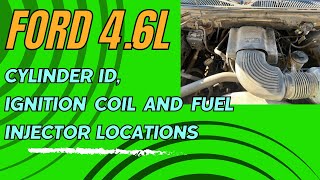
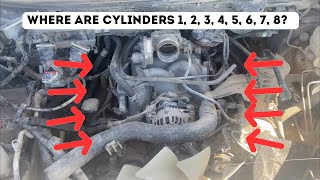
🎬 Watch: Identify cylinder 7 and locate the ignition coils.Symptoms You May Notice
- Rough or shaking idle
- Engine hesitation or stumbling during acceleration
- Noticeable loss of power
- Flashing or solid Check Engine Light
- Increased fuel consumption
- Engine vibration felt in the cabin
- Gasoline smell from the exhaust due to unburnt fuel
- Replacing the fuel filter. While important for maintenance, a clogged fuel filter would typically cause random misfires (P0300) or affect multiple cylinders under load, not just an isolated P0307.
- Replacing the mass airflow (MAF) sensor. A faulty MAF sensor would likely affect all cylinders, cause lean/rich codes, and present other driveability issues, not an isolated P0307.
Most Likely Causes
- Failed Ignition Coil (Coil-on-Plug) 🔴 High Probability → Shop Ignition Coil The Coil-on-Plug design is a known high-failure item on the 4.6L 2V Modular engine due to age and heat cycles. The coil boots can also degrade, allowing moisture from rain or car washes to enter the spark plug well and cause the spark to arc to ground.
How to confirm: Swap the ignition coil from cylinder 7 with an adjacent cylinder (e.g., cylinder 8). Clear the codes and drive. If the code changes to P0308, the coil is faulty. Cylinder 7 is the third cylinder back from the front on the driver's side. When removing the coil, check the boot for cracks and the spark plug well for any signs of oil or water.
Typical fix: Replace the faulty ignition coil. It is highly recommended to use a quality brand like Motorcraft (OEM P/N: 3W7Z-12029-AA or DG-508) for longevity. Applying a small amount of dielectric grease to the inside of the new coil boot is good practice.
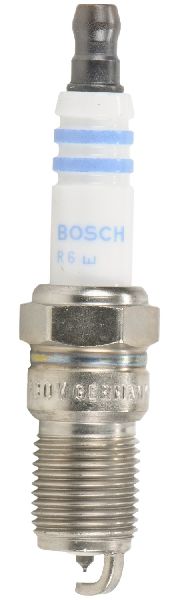
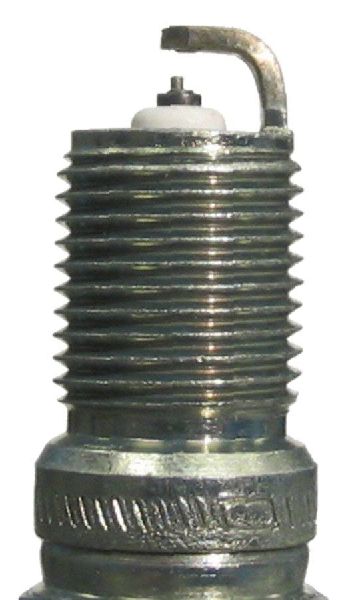
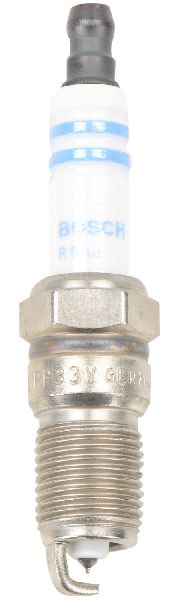
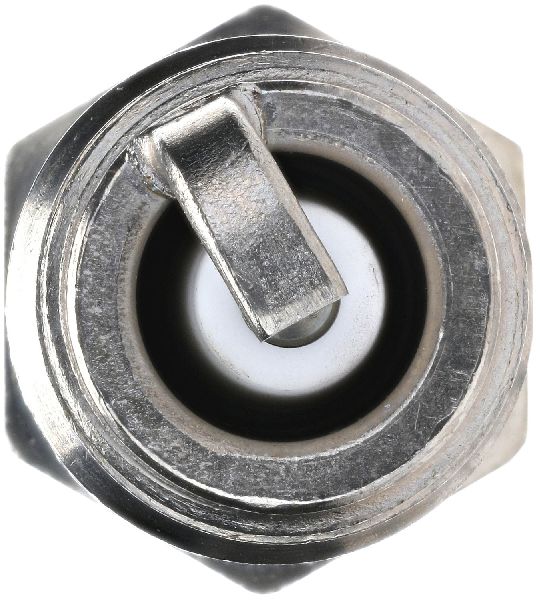
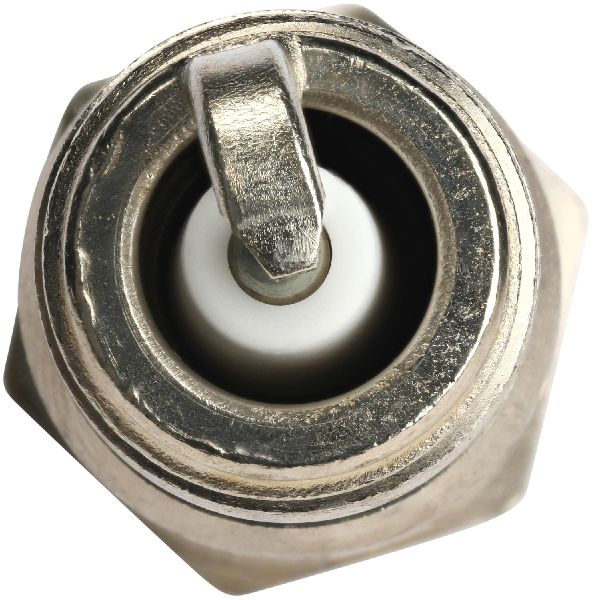
Est. part cost: $25-$60 - Worn or Fouled Spark Plug 🟡 Medium Probability → Shop Spark Plug Spark plugs are regular maintenance items. If they haven't been changed in over 50,000 miles, they are a likely cause. Carbon tracking on the porcelain or a worn electrode can prevent a strong spark.
How to confirm: After ruling out the coil, inspect the spark plug from cylinder 7. Look for wear, oil fouling, coolant contamination (white/sweet-smelling residue), or damage. You can also swap the plug with another cylinder to see if the misfire follows.
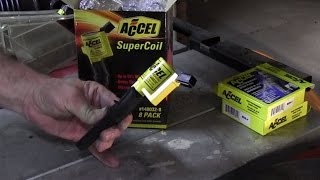
Typical fix: Replace the spark plug. The recommended OEM plug is often a Motorcraft SP-493, but verify for your specific vehicle. It is best practice to replace all 8 spark plugs at the same time 🎬 Watch: How to replace spark plugs and coil packs. for consistent performance.
Est. part cost: $5-$15 per plug - Faulty Fuel Injector ⚪ Low Probability → Shop Fuel Injector Less common than ignition issues, but injectors can become clogged with debris or fail electronically over time, preventing proper fuel delivery to cylinder 7.
How to confirm: Listen to the injector with a mechanic's stethoscope; it should make a consistent clicking sound. You can also check its resistance with a multimeter (compare to a known good injector). The most definitive test is to swap the injector from cylinder 7 with another cylinder (e.g., cylinder 6) and see if the misfire code moves to P0306.
Typical fix: Replace the faulty fuel injector. It's wise to also replace the O-rings on adjacent injectors during the repair.
Est. part cost: $40-$90
Rare But Worth Checking
- Intake Manifold Gasket Leak: → Shop Engine Intake Manifold The plastic intake manifolds on these engines can develop vacuum leaks at the gaskets. While this usually triggers lean codes (P0171/P0174) or multiple misfire codes, a leak isolated near the cylinder 7 runner could cause P0307. A smoke test is the best way to confirm a vacuum leak.
- Low Compression: A mechanical engine issue like a burnt exhaust valve, a bad piston ring, or a worn camshaft lobe can cause a persistent misfire that does not respond to ignition or fuel part swaps. A compression test on cylinder 7 is needed to diagnose this after ruling out other issues.
- Damaged Wiring or Connector: The wiring harness or connector for the ignition coil or fuel injector can become brittle and fail, causing an intermittent connection. Wiggling the connector while the engine is running may reveal the fault. A common issue on the 4.6L is a cracked/rotted PCV hose elbow at the back of the intake manifold, which can cause a vacuum leak and misfires.
Diagnosis Steps
- Read the code with an OBD-II scanner and confirm P0307 is present. Note if the Check Engine Light is flashing and if any other codes like P0316 or P0171/P0174 are stored.
- Locate cylinder 7. On the Ford 4.6L V8, this is the third cylinder from the front on the driver's side (Bank 2).
- Swap the ignition coil from cylinder 7 with the coil from cylinder 8 (the rearmost cylinder on the driver's side).
- Clear the codes using the scanner, then start the engine and drive for a few minutes to see if the Check Engine Light returns.
- Re-scan for codes. If the code is now P0308, the ignition coil is bad and needs to be replaced. This is the most common outcome.
- If the code remains P0307, the coil is likely good. Move on to the spark plug. Remove the plugs from cylinders 7 and 8 and swap them.
- Clear codes and drive again. If the code changes to P0308, the spark plug is the culprit.
- If the code is still P0307, inspect the wiring and connector to the coil and injector for any visible damage, corrosion, or looseness. Wiggle the harness with the engine running to check for an intermittent short.
- Perform a fuel injector test. Listen for a steady clicking with a stethoscope. If you are comfortable doing so, swap the injector with cylinder 6 and see if the code changes to P0306.
- If ignition and fuel delivery seem fine, check for vacuum leaks using a smoke machine or by carefully spraying brake cleaner around the intake manifold gasket near cylinder 7 (a change in idle indicates a leak). Pay close attention to the PCV hose elbow at the back of the manifold.
- If all else fails, perform a compression test on cylinder 7 to rule out internal engine damage like a bad valve or piston rings.
Parts You'll Likely Need
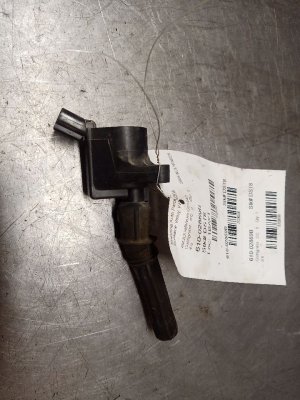
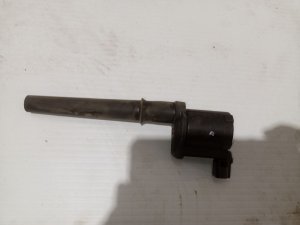
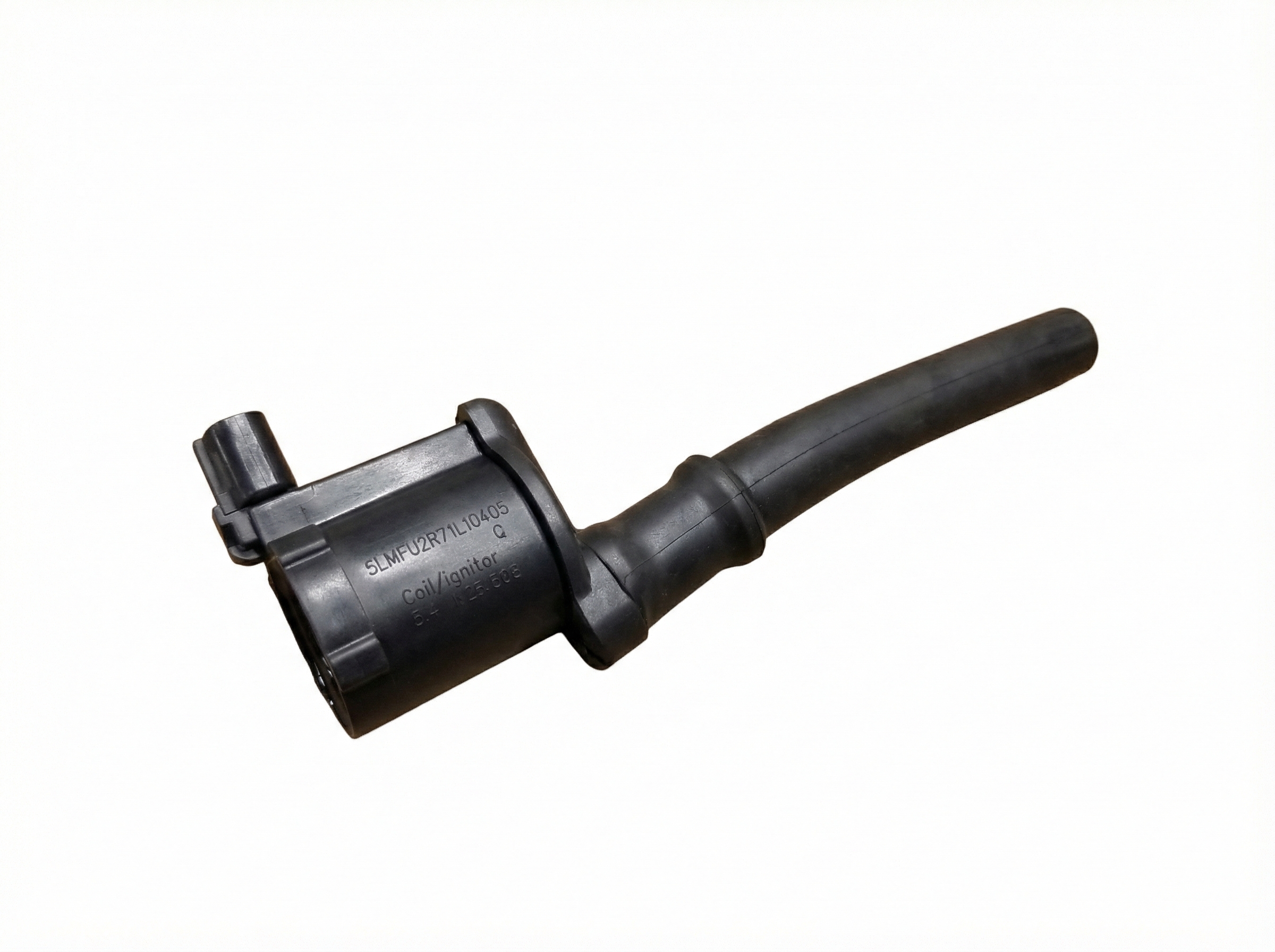
- Ignition Coil (Coil-on-Plug)
(OEM #3W7Z-12029-AA (Motorcraft DG-508))— This is the most common failure item causing a single-cylinder misfire on the 4.6L Modular V8.
Trusted brands: Motorcraft, NGK, Denso, Delphi
OEM price range: $45-$60
Aftermarket price range: $25-$45 - Spark Plug
(OEM #Motorcraft SP-493 (verify for specific year))— A worn or fouled spark plug is the second most likely cause after the ignition coil.
Trusted brands: Motorcraft, NGK, Autolite
OEM price range: $8-$15
Aftermarket price range: $5-$10
Related Codes That Often Appear With This One
- P0300 — If the cause of the misfire (like low fuel pressure or a large vacuum leak) starts to affect other cylinders, a P0300 (Random/Multiple Cylinder Misfire) may appear alongside P0307.
- P0316 — This code means 'Misfire Detected on Startup (First 1000 Revolutions)'. It often accompanies a specific cylinder misfire code if the problem is present immediately when the engine starts cold.
- P0171 / P0174 — These are 'System Too Lean' codes for Bank 1 and Bank 2. They can appear with P0307 if the misfire is caused by a vacuum leak, such as a bad intake manifold gasket or a cracked PCV hose, which allows unmetered air into the engine.
Technical Service Bulletins (TSBs) & Recalls
- TSB 02-2-2: While not for the Mustang specifically, this TSB for the F-150 addresses coolant seepage from the all-plastic intake manifold crossover on 4.6L 2V engines, a known issue shared with the Mustang. The fix involves replacing the manifold with a revised version featuring a cast aluminum crossover.
- Bulletin #TSB 22-2464: Notes that vehicles may exhibit an illuminated MIL with P0307 due to various strategies within the PCM software.
- Bulletin #TSB 21-2158: Describes a lack of power condition and an illuminated MIL with P0307 stored in the PCM, which may be due to various software parameters.
- Bulletin #TSB18-2058: Mentions that an illuminated MIL with codes P0316 and P0307 may be stored in the PCM even when the vehicle exhibits no drivability concerns.
- Bulletin #16-0039: A manufacturer service bulletin notes that the engine may exhibit an illuminated MIL with DTC P0307 present in the PCM memory with no other drivability symptom.
Platform-Specific Known Issues
- The plastic intake manifold on 1999-2001 Mustang GTs is a known weak point. It is famous for cracking at the front coolant crossover passage, causing a massive coolant leak. While less common, a failure of the intake manifold gaskets can cause vacuum leaks near a specific cylinder runner, leading to an isolated misfire code like P0307.
- The coil-on-plug wells are susceptible to moisture intrusion. After a car wash or heavy rain, water can seep past worn coil boots and cause the spark to arc against the cylinder head instead of firing the plug, leading to a misfire. Always check for moisture when diagnosing a misfire.
Mechanic-Grade Diagnostic Values
- Ignition Coil Primary Resistance — expected: 0.5 to 2.0 Ohms. Failure: A reading of OL (open) or significantly outside the expected range.
- Ignition Coil Secondary Resistance — expected: 6,000 to 15,000 Ohms (6k-15k Ω). Failure: A reading of OL (open) or significantly outside the expected range. Note that resistance tests are not always conclusive for heat-related failures.
- Fuel Injector Resistance — expected: 11 to 18 Ohms (High Impedance). Failure: A reading of OL (open), 0 (shorted), or a value significantly different from the other injectors.
- Fuel Pressure (Key On, Engine Running) — expected: ~30-40 PSI at idle. Should increase with throttle application.. Failure: Pressure that is significantly low or does not respond to engine load may indicate a weak pump or faulty regulator, typically causing multiple misfires, not just P0307.
- Mode $06 Misfire Count — expected: Value should be 0 or very close to 0 for a healthy cylinder.. Failure: A high or incrementing count under Test ID $53, Component ID $07 confirms the PCM is actively detecting misfires on cylinder 7.
Scan Tool Commands That Help
- Ford IDS (or equivalent high-end scanner): Power Balance Test — This is the most effective professional diagnostic step. The tool graphically displays the RPM drop and power contribution from each cylinder by sequentially disabling the fuel injector for each one. A cylinder with a misfire (like #7) will show little to no drop in RPM when its injector is cut, immediately confirming it's the source of the problem without swapping any parts.
Wiring & Ground Locations
- Cylinder 7 Coil Connector — Driver's side of the engine, third coil from the front.. The two pins on this connector supply power and the trigger signal from the PCM. Pin 1 (often Red/Light Green) should have +12V with key on. Pin 2 (often Tan/White or similar) is the ground-side signal from the PCM. A damaged wire or corroded pin here will directly cause P0307.
- Main Engine to Chassis Ground — A primary ground strap runs from the engine block (often near the starter or a motor mount) to the chassis/frame rail.. A poor main engine ground can cause widespread electrical issues, including weak spark across all cylinders. While it usually causes random misfires (P0300), it can sometimes manifest as a single cylinder code if that cylinder's ignition system is the most marginal.
- Firewall Ground Strap — A secondary ground strap is typically located between the back of the intake manifold and the driver's side firewall.. This ground is critical for various sensors and accessories. If it's loose or corroded, it can create electrical noise and intermittent issues for the ignition system and PCM, potentially leading to misfire detection.
Real Owner Repair Stories
- Ford F-150 Forum (similar 4.6L 2V engine) (2006 Ford F-150 5.4L (similar COP system and issues)) — Terrible shuttering/misfire between 45-55 MPH, which eventually became a rough idle.
❌ Tried (didn't work) Replacing ignition coil on the affected cylinder., Replacing fuel filter, cleaning MAF sensor, cleaning throttle body, replacing air filter, replacing an O2 sensor.
✅ What actually fixed it The owner discovered the brand new Motorcraft spark plug they had installed was faulty out of the box. Replacing the new, bad plug with another new plug resolved the misfire. - Mustang Forum Discussion (2000-2004 Mustang GT 4.6L) — Persistent P0307 misfire, rough idle, and hesitation.
❌ Tried (didn't work) Swapping ignition coils., Replacing the spark plug.
✅ What actually fixed it The lower O-ring on the fuel injector for cylinder 7 was torn. This created a cylinder-specific vacuum leak, leaning out the mixture for only that cylinder and causing the misfire. Replacing the inexpensive injector O-ring fixed the issue. - NHTSA ODI #11267686 — An owner reported that their engine was clattering, missing, stalling, and backfiring with code P0307. The diagnosis revealed a broken #7 intake valve spring and a dropped valve which the piston hit, requiring a full engine replacement.
OEM Part Supersession History
Various PNs for 1999-2001 all-plastic intake manifold→1L2Z-9424-DA (Ford PI intake with aluminum crossover)— The original all-plastic intake manifolds on 1999-2001 models were prone to cracking at the front coolant crossover. The revised part uses a cast aluminum crossover to prevent this failure.
Heads up: When replacing a 1999-2001 manifold with the revised aluminum crossover version, a different alternator bracket may be required.
Model Year Variations Within This Range
- 2000-2001: These years used an all-plastic intake manifold prone to cracking at the coolant crossover. While the primary symptom is a coolant leak, a crack in the manifold body near the cylinder 7 runner could cause an isolated vacuum leak and P0307.
- 2002-2004: These years came from the factory with the revised Performance Improved (PI) intake manifold, which features a more durable aluminum coolant crossover, eliminating the common cracking issue of the earlier design.
Diagnostic Flowchart
Other Known Issues on This Vehicle
Issues unrelated to this code that are worth knowing about as an owner of this generation:
- Cracked Plastic Intake Manifold 🔴 High → Shop Engine Intake Manifold — Very common on 1996-2001 models. The all-plastic coolant crossover is prone to cracking with heat cycles, causing a major coolant leak. Models from 2002+ have an improved design with an aluminum crossover but can still leak at the gaskets. (Ref: A class-action lawsuit was settled, and Ford issued TSB 02-2-2 for related vehicles, recommending replacement with the updated manifold.)
- Worn Timing Chain Tensioners and Guides 🟠 Medium — Typically occurs after 100,000 miles. The plastic guides can wear down and break, and the hydraulic tensioners can fail or their seals can leak, causing chain rattle, especially on startup, and potential timing jump.
- Spark Plug Thread Ejection 🟠 Medium → Shop Spark Plug — Affects 2V engines with aluminum heads, which have fewer threads in the spark plug ports. Over-torquing or frequent changes can weaken the threads, leading to a spark plug being ejected from the head. (Ref: Ford TSB 07-21-2014 addresses the repair procedure for stripped threads.)
- Idle Air Control (IAC) Valve Failure 🟡 Low — A common issue causing rough, hunting, or stalling idle. The valve gets clogged with carbon and fails. It's a relatively inexpensive and easy part to replace.
Used vs. New Parts: Buying Guide for This Vehicle
When a used part is the smart pick: Used fuel injectors from a known low-mileage donor vehicle can be a cost-effective option, as they are generally robust. A complete used intake manifold (the revised 2002+ version with aluminum crossover) is also a very common and smart upgrade/repair for owners of 2000-2001 models.
Donor-vehicle mileage cap: roughly under 80000 miles for the part to have meaningful remaining life.
What to inspect on the donor part:
- For fuel injectors, ensure the plastic connectors are not brittle or cracked and the pintle caps are intact.
- For an intake manifold, inspect carefully for any hairline cracks, especially around the bolt holes and runner bases. Ensure all gasket surfaces are smooth and free of deep gouges.
OEM-only on this vehicle (don't cheap out):
- Ignition Coils: While some aftermarket brands are acceptable, the general consensus in the Mustang community is that OEM Motorcraft (DG-508) coils offer the best reliability and longevity, making them worth the extra cost over cheap, unbranded aftermarket coils which have a high failure rate.
Aftermarket brands forum-validated for this vehicle:
- Ignition Coils: NGK, Denso, Delphi
- Spark Plugs: NGK, Autolite
- Intake Manifold (Replacement): Ford Performance (M-9424-P46)
Brands owners have reported issues with on this vehicle:
- Unbranded, 'no-name' ignition coil sets sold on auction sites are frequently reported to fail prematurely, sometimes within weeks or months, causing a repeat of the original misfire problem.
Real Owner Stories
Aggregated from forums and TSBs cited above. Mileages and costs reflect what owners reported in those sources.
2000 Mustang GT 4.6L V8
Symptoms: P0307 Cylinder misfire code.
What fixed it: Swapped all the spark plugs and COPs (Coil-on-Plugs).
Source hint: MustangForums.com thread titled 'P0307 Cylinder misfire code'
2004 Mustang GT 4.6L V8
Symptoms: Persistent P0307 code.
What fixed it: The owner was in the process of diagnosing by swapping components; the context notes the common diagnostic path involves checking plugs, coils, and boots.
Source hint: StangNet thread 'Trouble Code 0307... help please.'
Related OBD-II Codes
Frequently Asked Questions
Where is cylinder 7 located on my 4.6L V8 Mustang GT?
Which specific ignition coil should I buy for my 2000-2004 Mustang GT?
Does TSB 02-2-2 apply to my Mustang's misfire issue?
Can a car wash cause a P0307 code on this vehicle?
What spark plugs are recommended for the 4.6L Modular V8?
Is there a known issue with the intake manifold on 1999-2001 models?
Helpful Videos
![How to Fix P0307 Engine Code in 3 Minutes [2 DIY Methods / Only $4.12]](https://img.youtube.com/vi/t7x0HN1YOxQ/mqdefault.jpg)
Used OEM Parts in Stock
New Aftermarket Parts Available


The information in this article is provided for general reference and educational purposes only. Vehicle specifications, procedures, and part compatibility can vary by production date, trim level, and region. Always consult your vehicle's factory service manual and verify part numbers before purchasing or performing repairs. Safety-critical components such as airbags, seat belts, and braking systems should be installed by a qualified professional.
- Ford Mustang GT:
- 🧭 Diagnostic Flowchart
- 🎬 Helpful Videos
- 🛍️ Shop This Part
- What's Unique About the 2000-2004 Ford Mustang GT
- Symptoms You May Notice
- Most Likely Causes
- Rare But Worth Checking
- Diagnosis Steps
- Parts You'll Likely Need
- Related Codes That Often Appear With This One
- Technical Service Bulletins (TSBs) & Recalls
- Platform-Specific Known Issues
- Mechanic-Grade Diagnostic Values
- Scan Tool Commands That Help
- Wiring & Ground Locations
- Real Owner Repair Stories
- OEM Part Supersession History
- Model Year Variations Within This Range
- Other Known Issues on This Vehicle
- Used vs. New Parts: Buying Guide for This Vehicle
- Real Owner Stories
- 2000 Mustang GT 4.6L V8
- 2004 Mustang GT 4.6L V8
- Related OBD-II Codes
- Frequently Asked Questions
- 🎟️ Get 5% Off