

P0307 on 2008-2014 Lexus IS F: Cylinder 7 Misfire Causes and Fixes
On a 2008-2014 Lexus IS F, code P0307 is most often caused by a failed ignition coil on cylinder 7. A worn spark plug is the second most likely cause. Both are common maintenance items and relatively easy to diagnose by swapping components between cylinders. Cylinder 7 is the rearmost cylinder on the passenger side and can be difficult to access.
- P0307 on your IS F means cylinder 7 is misfiring, which is the cylinder at the back on the passenger's side.
- The most likely cause is a bad ignition coil, followed by a worn-out spark plug.
- The easiest way to diagnose a bad coil is to swap it with one from another cylinder and see if the misfire code follows the coil.
- Driving with a flashing check engine light can cause expensive damage to your catalytic converter.
- Replacing the coil and spark plug is a manageable DIY job, though access to cylinder 7 is tight and may require removing the battery and its tray.
What's Unique About the 2008-2014 Lexus IS F
The Lexus IS F's 2UR-GSE V8 is a high-performance, high-compression engine co-engineered with Yamaha, known for its reliability. However, like many modern engines with coil-on-plug ignition systems, the ignition coils are a common failure point due to high heat and vibration. The engine also features Toyota's D-4S dual injection system (both port and direct injection), which helps reduce the carbon buildup on intake valves that can cause misfires on direct-injection-only engines. For this code, the issue is almost always a simple ignition component rather than a more complex fuel system or mechanical problem.
Symptoms You May Notice
- Rough or vibrating idle
- Engine hesitation or stumbling during acceleration
- Noticeable loss of power
- Flashing Check Engine Light (especially under heavy load)
- Reduced fuel economy
- Engine may be difficult to start
- Replacing the oxygen (O2) sensor. A misfire will cause abnormal O2 sensor readings, but the sensor itself is rarely the cause of a single-cylinder misfire code.
- Assuming a catalytic converter failure. A misfire can destroy a catalytic converter, but a bad converter does not cause a P0307 code.
Most Likely Causes
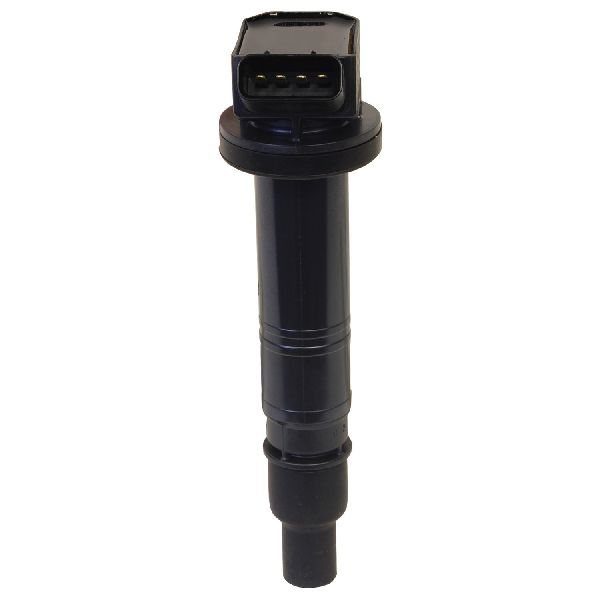
- Failed Ignition Coil 🔴 High Probability → Shop Ignition Coil The coil-on-plug units are subjected to significant heat cycles in the V8 engine bay, which can degrade their internal windings over time, leading to failure. This is the most common cause of a single-cylinder misfire on the 2UR-GSE.
How to confirm: Swap the ignition coil from cylinder 7 (rearmost on the passenger side) with another cylinder, such as cylinder 5 (in front of it). Clear the codes and drive. If the code changes to P0305, the ignition coil is faulty. 🎬 See this walkthrough on how to diagnose and fix a P0307 code. Accessing cylinder 7 requires removing the battery and fuse box for clearance.
Typical fix: Replace the failed ignition coil. Many owners choose to replace all eight coils and spark plugs at the same time as preventative maintenance, especially on higher mileage vehicles.
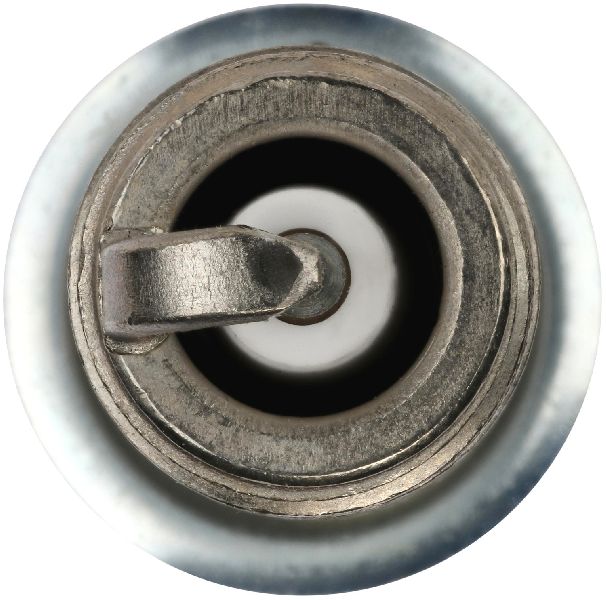
Est. part cost: $60-$100 per coil - Worn or Fouled Spark Plug 🟡 Medium Probability → Shop Spark Plug Spark plugs are a regular maintenance item with a 60,000-mile service interval. 🎬 Watch: Step-by-step guide for installing new spark plugs on an IS F. The high-performance nature of the 2UR-GSE engine requires specific iridium-tipped plugs, which can wear over time, leading to a weak spark.
How to confirm: After confirming the ignition coil is good, remove the spark plug from cylinder 7. Inspect it for wear (eroded electrode), carbon or oil fouling, or damage. The correct gap is 1.1mm (0.043"). You can also swap it with another cylinder's plug to see if the misfire code follows.
Typical fix: Replace the spark plug in cylinder 7. It is highly recommended to replace all eight spark plugs at the same time to ensure even performance and avoid repeated labor.
Est. part cost: $15-$25 per plug - Faulty Fuel Injector ⚪ Low Probability → Shop Fuel Injector While less common due to the D-4S system's self-cleaning effect on port injectors, both the port or direct injector for cylinder 7 can become clogged or fail electronically.
How to confirm: This is more complex. A technician can listen for the injector's clicking sound with a stethoscope or perform a resistance test. Swapping injectors is a labor-intensive diagnostic step as it requires removing the intake manifold.
Typical fix: Replace the faulty fuel injector. This is a more involved job than replacing a coil or plug.
Est. part cost: $150-$300 per injector - Damaged Ignition Coil Connector/Pigtail ⚪ Low Probability → Shop Ignition Coil The plastic connectors and wiring can become brittle from engine heat and vibration over time. The locking tab can break, or wires can fracture internally, leading to an intermittent connection.
How to confirm: After swapping the coil and plug without success, carefully inspect the wiring and connector for cylinder 7's ignition coil. Wiggle the connector and wiring with the engine running to see if it induces a misfire. A continuity test may not be sufficient as wires can break internally.
Typical fix: Replace the connector pigtail, which involves cutting the old connector off and splicing the new one in.
Est. part cost: $15-$30 for a pigtail
Rare But Worth Checking
- Vacuum Leak: A vacuum leak from a cracked hose or a failed intake manifold gasket near cylinder 7 could lean out the air/fuel mixture enough to cause a misfire. However, a vacuum leak is more likely to cause multiple or random misfires (P0300).
- Low Cylinder Compression: An internal engine issue like a burnt valve, worn piston rings, or a failed head gasket is a rare but serious cause of a dedicated misfire. This would be confirmed with a compression test after all ignition and fuel causes are ruled out.
Diagnosis Steps
- Confirm the code P0307 is present using an OBD-II scanner.
- Identify cylinder 7. On the 2UR-GSE engine, this is the rearmost cylinder on the passenger side (right bank, closest to the firewall).
- To gain access, you will likely need to remove the battery and the fuse box assembly. This makes cylinder 7 one of the most difficult to service.
- Swap the ignition coil from cylinder 7 with the coil from cylinder 5 (the cylinder directly in front of it on the same bank).
- Clear the trouble codes and drive the vehicle until the Check Engine Light returns.
- If the code changes to P0305 (Cylinder 5 Misfire), the ignition coil is the problem. Replace it.
- If the code remains P0307, the coil is likely good. Proceed to swap the spark plug from cylinder 7 with cylinder 5.
- Clear the codes and drive again. If the code changes to P0305, the spark plug is faulty. It is highly recommended to replace all eight plugs at this time.
- If the code remains P0307, the issue is likely not the coil or plug. Carefully inspect the wiring and connector for the ignition coil on cylinder 7 for any damage, corrosion, or broken locking tabs.
- If the wiring is intact, the next likely cause is the fuel injector for cylinder 7. This may require professional diagnosis as it involves significant labor to access.
- If all else fails, a mechanical compression test should be performed on cylinder 7 to rule out internal engine problems like worn rings or a bad valve.
Parts You'll Likely Need
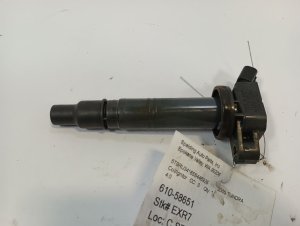
- Ignition Coil
(OEM #90919-02260)— This is the most common failure part for a P0307 code on this engine due to heat and age.
Trusted brands: Denso (OEM), NGK, Standard Motor Products 🎬 Watch: A helpful guide on replacing Lexus ignition coils and plugs.
OEM price range: $90-$130
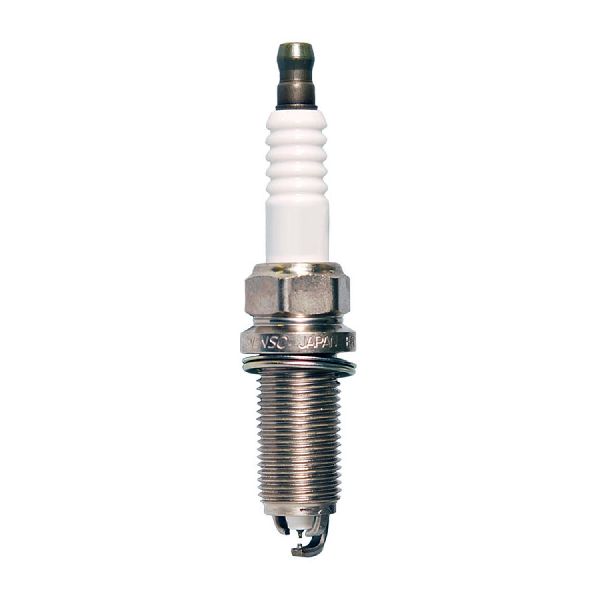
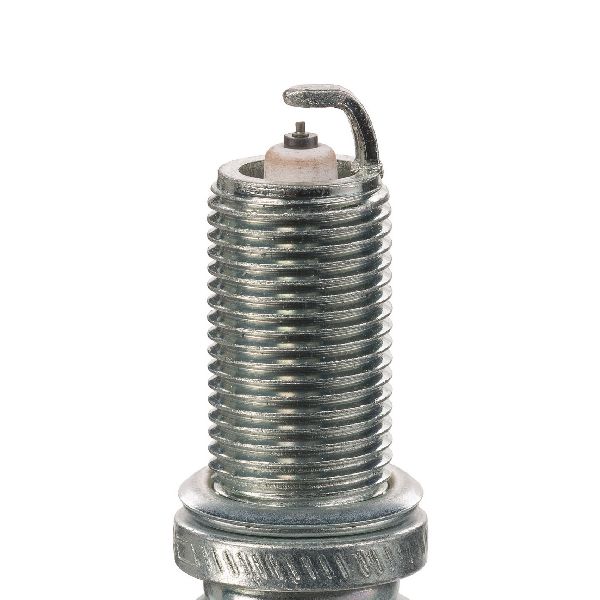
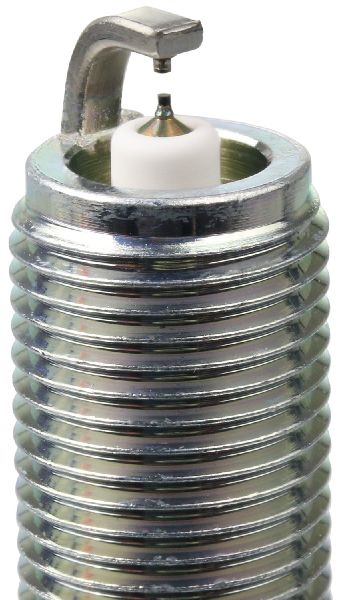
Aftermarket price range: $50-$80 - Iridium Spark Plug
(OEM #90919-01249)— This is the second most common failure part and a routine maintenance item that can cause a misfire when worn.
Trusted brands: Denso (FK20HBR11), NGK (DFH6B-11A)
OEM price range: $20-$30
Aftermarket price range: $15-$25
Related Codes That Often Appear With This One
- P0300 — If the misfire becomes more widespread or intermittent across multiple cylinders, a P0300 (Random/Multiple Cylinder Misfire) code may appear alongside P0307.
- P0305, P0306, P0308 — Misfires on adjacent cylinders on the same bank (Bank 1: 1, 3, 5, 7; Bank 2: 2, 4, 6, 8) could point to a more localized issue like a vacuum leak affecting that bank or a problem with the Bank 1 catalytic converter.
Platform-Specific Known Issues
- While the 2UR-GSE is known for a 'valley plate' coolant leak, this issue is unrelated to ignition misfires unless the leaking coolant directly damages a coil or wiring, which is not a common scenario.
- A recall was issued for the low-pressure fuel pump on some 2014 IS F models. While a failing pump can cause rough running and misfires, it typically affects all cylinders and would be more likely to trigger a P0300 code or a fuel system code.
- A safety recall (Campaign ELF) was issued for some 2008-2011 models for a fuel pressure sensor gasket that could leak. This would cause a fuel smell and is not directly related to a single cylinder misfire, but is a known issue on the platform.
Mechanic-Grade Diagnostic Values
- Ignition Coil Primary Resistance — expected: 0.5 - 0.7 Ohms. Failure: Reading outside of this range indicates a faulty coil.
- Ignition Coil Secondary Resistance — expected: 9.5 - 11.1 kOhms at 20°C (68°F). Failure: Resistance outside this range suggests the coil's secondary winding is failing.
- Port Fuel Injector Resistance — expected: 11.6 to 12.4 Ω at 20°C (68°F). Failure: Resistance outside of this range indicates a failed injector coil.
- High-Pressure Fuel System Pressure (Direct Injection) — expected: 4000 to 13000 kPa (580 to 1886 psi) while running. Failure: Pressure that is low, high, or erratic can indicate issues with the high-pressure fuel pump or sensor, though this would typically affect more than one cylinder.
- Low-Pressure Fuel System Pressure — expected: Approximately 400 kPa (58 psi). Failure: Low pressure from the in-tank pump can cause misfires, usually on multiple cylinders under load.
Hidden / Shadow Codes Worth Checking
- Mode $06, Test ID $0A, Component ID $07: This is not a traditional DTC but an entry in the ECU's Mode $06 diagnostic data. It represents the raw misfire count for cylinder 7 during the last and current driving cycle. A high count here, even without a CEL, confirms a misfire event. (see via Requires an advanced scan tool like Lexus Techstream or a high-end generic scanner capable of displaying Mode $06 data. Navigate to the misfire monitor data to view counts for each cylinder.)
Scan Tool Commands That Help
- Lexus Techstream: Power Balance Test (Active Test) — This function allows a technician to sequentially shut off fuel to each cylinder individually while monitoring the RPM drop. If disabling cylinder 7 results in little or no RPM drop compared to other cylinders, it confirms cylinder 7 is not contributing power. This is a definitive way to verify the misfire location before disassembling parts.
- Lexus Techstream: Control the Injection Way / Direct / Gas Misfire — This active test allows you to view individual misfire counters for each cylinder in real-time (Cylinder #1 Misfire Count to Cylinder #8 Misfire Count). This is useful for identifying intermittent misfires that may not immediately set a hard code.
- Lexus Techstream: Data List / Misfire RPM and Misfire Load — This allows you to see the engine speed (RPM) and load conditions under which the misfire was recorded and stored in the freeze frame data. This helps in recreating the conditions to diagnose an intermittent misfire (e.g., only happens at high RPM or low load).
Wiring & Ground Locations
- E2, E3, E4 — E2 is on the right rear of the engine, E3 and E4 are on the left side of the engine.. These are the main engine ground points. A loose or corroded ground at these locations can cause intermittent and hard-to-diagnose electrical issues, including weak spark or erratic sensor readings that could lead to a misfire code.
- Ignition Coil Connector (Cylinder 7) — On the ignition coil for the rearmost cylinder on the passenger side.. The 4-pin connector provides power, ground, and the trigger signal (IGT) from the ECM. A forum post confirmed the wire colors are typically Light Blue, Red, Green, and White. Checking for voltage and signal at this connector is a key diagnostic step after confirming the coil itself is good.
- A58(A), G42(B) ECM Connectors — The main Engine Control Module (ECM) connectors.. Wiring diagrams show the IGT7 (Ignition Trigger for cylinder 7) signal originates here. A continuity check from the ECM connector pin to the ignition coil connector pin can rule out a wiring break in the harness.
Real Owner Repair Stories
- ClubLexus Forum Member (Lexus IS F (year not specified, but 2UR-GSE)) — Persistent P0307 and misfires on other cylinders on the same bank (P0301, P0303, P0305).
❌ Tried (didn't work) Replacing spark plugs, Replacing ignition coils, Replacing fuel injectors
✅ What actually fixed it The final cause was determined to be excessive carbon buildup on the intake valves. The owner performed a manual carbon cleaning service (walnut blasting or similar) on the intake ports and valves, which resolved the misfire codes. This was an unusual case as the D-4S system is designed to prevent this.
OEM Part Supersession History
90919-02248→90919-A2001, 90919-A2006, and finally 90919-02260— Internal revisions by the manufacturer (Denso) to improve reliability and performance.
Heads up: All part numbers are generally interchangeable, but it is always recommended to use the latest revision (90919-02260) for all coils if replacing one. Mixing very old and very new revisions is not advised.
Model Year Variations Within This Range
- 2010-2014: Starting in model year 2010, the IS F came standard with a Torsen limited-slip differential (LSD). An updated water pump with a new part number was also introduced, potentially addressing issues on earlier models. These changes do not directly affect the cause of P0307 but are important distinctions in the platform.
- 2011-2014: Model year 2011 introduced a revised suspension, new instrument cluster, and LED daytime running lights. No changes were made to the core ignition or fuel systems that would alter P0307 diagnosis.
- 2012-2014: A suspension revision with different shocks and struts was implemented. This has no bearing on a P0307 code.
Diagnostic Flowchart
Other Known Issues on This Vehicle
Issues unrelated to this code that are worth knowing about as an owner of this generation:
- Valley Plate Coolant Leak 🔴 High — Common on 2008-2017 2UR-GSE engines. Failure is due to the degradation of the sealant over time and heat cycles, not strictly mileage. Can occur as early as 50k miles.
- Water Pump Failure 🟠 Medium — Can occur at various mileages, with some reports as early as 30k-40k miles. It's a common wear item.
- Fuel Pressure Sensor Gasket Leak 🟠 Medium — Affects 2008-2011 models specifically covered by a safety recall. (Ref: Safety Recall ELF)
Used vs. New Parts: Buying Guide for This Vehicle
When a used part is the smart pick: A used ignition coil can be a cost-effective tool for diagnosis (swapping it in to see if the misfire moves), but not recommended for a permanent repair due to unknown remaining lifespan. Used wiring connectors (pigtails) from a salvage yard are an excellent, low-cost repair for a broken connector tab or damaged wire.
Donor-vehicle mileage cap: roughly under 60000 miles for the part to have meaningful remaining life.
What to inspect on the donor part:
- For ignition coils, check the plastic housing for cracks or signs of melting.
- Inspect the electrical connector pins for corrosion or damage.
- For wiring pigtails, ensure the locking tab is intact and there is enough wire length for splicing.
OEM-only on this vehicle (don't cheap out):
- Fuel Injectors (Direct and Port)
- Engine Control Module (ECM)
- Injector Driver (EDU)
Aftermarket brands forum-validated for this vehicle:
- Denso (OEM for coils and plugs)
- NGK (Coils and Spark Plugs)
Brands owners have reported issues with on this vehicle:
- Unnamed or 'white box' ignition coils from online marketplaces. Forum discussions frequently mention premature failure of cheap, unbranded coils, often causing a repeat of the original misfire issue within a short period.
Real Owner Stories
Aggregated from forums and TSBs cited above. Mileages and costs reflect what owners reported in those sources.
2008-2014 Lexus IS F 2UR-GSE
Symptoms: Persistent misfire on cylinders 7 and 8.
What fixed it: Cleaning the ignition coil connections and checking for valve cover leaks.
Source hint: ClubLexus.com thread in the 'IS F (2008-2014)' sub-forum
Related OBD-II Codes
Frequently Asked Questions
Where is cylinder 7 located on my 2008-2014 Lexus IS F?
Why is the labor for cylinder 7 more difficult than other cylinders on the IS F?
Is there a recall for the 2008-2011 IS F that could cause fuel issues related to misfires?
Could the common 'valley plate' coolant leak be causing my P0307 code?
What is the recommended spark plug gap and service interval for the 5.0L V8?
Could a faulty fuel pump be the reason for my P0307 code on a 2014 IS F?
Helpful Videos
Used OEM Parts in Stock
New Aftermarket Parts Available


The information in this article is provided for general reference and educational purposes only. Vehicle specifications, procedures, and part compatibility can vary by production date, trim level, and region. Always consult your vehicle's factory service manual and verify part numbers before purchasing or performing repairs. Safety-critical components such as airbags, seat belts, and braking systems should be installed by a qualified professional.
- Lexus IS F:
- 🧭 Diagnostic Flowchart
- 🎬 Helpful Videos
- 🛍️ Shop This Part
- What's Unique About the 2008-2014 Lexus IS F
- Symptoms You May Notice
- Most Likely Causes
- Rare But Worth Checking
- Diagnosis Steps
- Parts You'll Likely Need
- Related Codes That Often Appear With This One
- Platform-Specific Known Issues
- Mechanic-Grade Diagnostic Values
- Hidden / Shadow Codes Worth Checking
- Scan Tool Commands That Help
- Wiring & Ground Locations
- Real Owner Repair Stories
- OEM Part Supersession History
- Model Year Variations Within This Range
- Other Known Issues on This Vehicle
- Used vs. New Parts: Buying Guide for This Vehicle
- Real Owner Stories
- 2008-2014 Lexus IS F 2UR-GSE
- Related OBD-II Codes
- Frequently Asked Questions
- 🎟️ Get 5% Off