

P0308 on 1997-2004 Chevrolet Corvette: Cylinder 8 Misfire Causes and Fixes
P0308 on a C5 Corvette indicates a misfire in cylinder 8. The most common causes are a bad spark plug, plug wire, or ignition coil, often due to heat exposure in the tight engine bay. Start by swapping the coil and plug from cylinder 8 to another cylinder (like #6 on the same bank) to see if the misfire follows.
- P0308 specifically points to a misfire on cylinder 8, the rearmost cylinder on the passenger side.
- The most effective and cost-free first step is to swap the ignition coil and spark plug from cylinder 8 to a different cylinder to see if the misfire code follows.
- Do not ignore a flashing check engine light, as it signals a severe misfire that can quickly damage your expensive catalytic converters.
- If swapping ignition and fuel parts doesn't fix the issue, the problem could be a more serious mechanical issue like a broken valve spring, which is a known possibility on LS engines.
What's Unique About the 1997-2004 Chevrolet Corvette
The C5 Corvette's LS1/LS6 engine uses a reliable coil-on-plug ignition system, making diagnosis straightforward. A single-cylinder misfire like P0308 is almost always caused by a component specific to that cylinder. While spark plugs, wires, and coils are the usual suspects, LS engines, especially those driven hard, with high mileage, or modified, can be susceptible to broken valve springs. This can cause a persistent misfire that standard ignition or fuel part swaps won't fix. Another known issue is the wiring harness for the #8 injector chafing against the back of the driver's side cylinder head, causing a short.
Symptoms You May Notice
- Rough or shaky idle
- Hesitation or stumbling during acceleration
- Noticeable loss of power, especially at higher RPM
- Flashing or solid Check Engine Light
- A possible smell of raw fuel from the exhaust
- Engine running noticeably rough, like it's full of ball bearings
- Ticking or hammering noise from the engine bay, which could indicate a mechanical issue like a broken valve spring
- Replacing the fuel pump for a single-cylinder misfire. A fuel pressure issue would typically cause random/multiple misfires (P0300) rather than an isolated P0308.
- Replacing oxygen sensors. While a faulty O2 sensor can affect fuel trims, it is unlikely to cause a consistent misfire on a single, specific cylinder.
Most Likely Causes
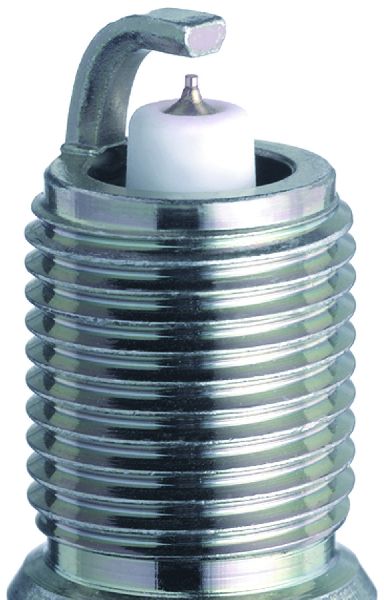
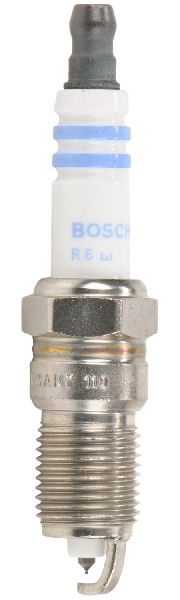
- Worn or Fouled Spark Plug 🔴 High Probability → Shop Spark Plug Spark plugs are regular wear items. The heat in the Corvette's engine bay, particularly near the firewall where cylinder 8 is located, can contribute to faster wear or fouling. A loose spark plug can also cause combustion gas to leak, fouling the plug.
How to confirm: Remove the spark plug from cylinder 8 and inspect it for wear, fouling (black, oily, or white deposits), or damage to the porcelain. A definitive test is to swap the cylinder 8 plug with one from another cylinder (e.g., cylinder 6). If the code changes to P0306, the spark plug is the culprit.
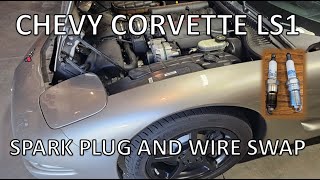
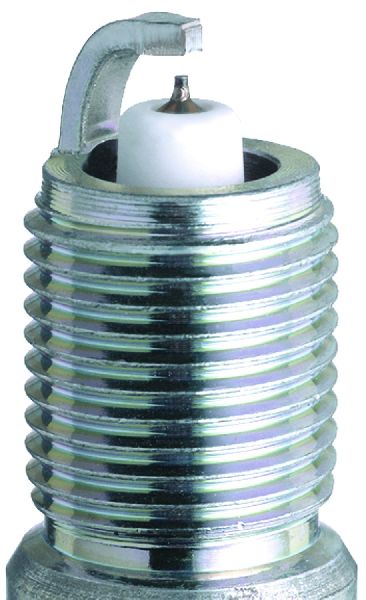
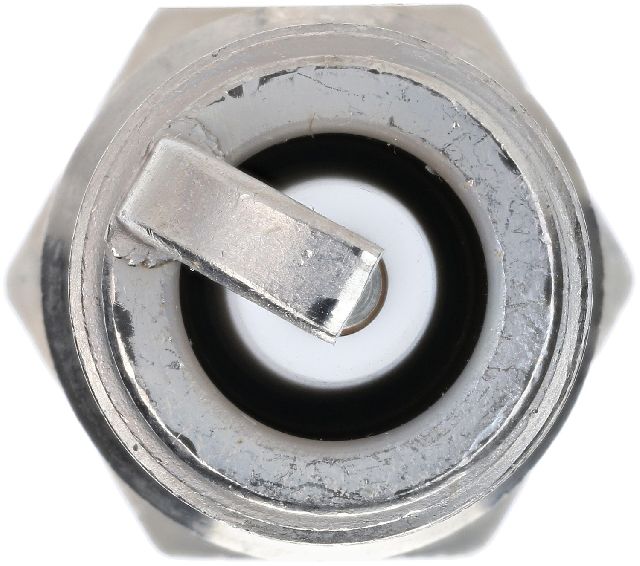
Typical fix: Replace the faulty spark plug. It is best practice to replace all 8 spark plugs at the same time for consistent performance. The OEM-recommended ACDelco Iridium plugs are a popular choice. 🎬 See this walkthrough for changing C5 spark plugs and wires.
Est. part cost: $5-$20 per plug - Faulty Spark Plug Wire 🔴 High Probability → Shop Spark Plug The spark plug wires on LS engines are routed near hot exhaust manifolds. The wire for cylinder 8 is particularly susceptible to heat damage due to its location, causing it to degrade, become brittle, or arc to the block.
How to confirm: Visually inspect the wire for cylinder 8 for any signs of cracking, melting, or chafing. Ensure it is securely clicked onto both the spark plug and the ignition coil. At night, with the engine running, you can sometimes see arcing (blue sparks) from a bad wire. A multimeter can be used to test resistance; a good OEM wire should measure around 350-400 ohms.
Typical fix: Replace the faulty spark plug wire. It is recommended to replace the full set of 8 wires. Many owners install high-temperature protective sleeves on the new wires for added durability.
Est. part cost: $50-$120 for a set - Failed Ignition Coil 🟡 Medium Probability → Shop Ignition Coil While generally reliable, ignition coils are subjected to high heat and vibration, and can fail electrically over time. The coil for cylinder 8 is mounted on the passenger-side valve cover.
How to confirm: Swap the ignition coil from cylinder 8 with another cylinder (e.g., cylinder 6). Clear the codes and drive the vehicle. If the misfire code moves to P0306, the ignition coil is bad.
Typical fix: Replace the failed ignition coil. They can be replaced individually.
Est. part cost: $30-$70 - Clogged or Faulty Fuel Injector ⚪ Low Probability → Shop Fuel Injector
How to confirm: After ruling out ignition components, swap the fuel injector from cylinder 8 with another cylinder. If the misfire code moves, the injector is the problem. You can also use a mechanic's stethoscope to listen to the injector; it should have a consistent, audible clicking sound similar to the other injectors. A noid light can also confirm if the injector is receiving a pulse signal from the PCM.
Typical fix: Replace the faulty fuel injector. It may be beneficial to have the other injectors professionally cleaned and tested at the same time, especially on higher mileage vehicles.
Est. part cost: $50-$150
Rare But Worth Checking
- Broken or Weak Valve Spring: This is a known, though uncommon, failure point on LS engines, particularly on higher-mileage or hard-driven cars. A broken spring will cause a constant, dead miss on one cylinder. A weak spring may cause misfires only at higher RPM. Diagnosis requires removing the valve cover for visual inspection. If a spring is broken, there is a risk of the valve dropping and causing catastrophic piston damage.
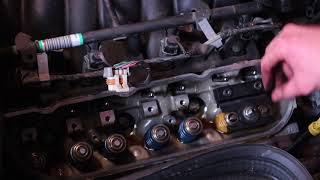
- Injector or Coil Wiring Harness Issue: The wiring harness for the fuel injectors can chafe on the back of the driver's side cylinder head, potentially shorting the wire for the #8 injector. A CorvetteForum user found a rubbed-through wire to the #8 injector was the cause of their persistent P0308 after swapping all other components. Inspect the harness loom for damage in that area.
- Low Cylinder Compression: Caused by issues like worn piston rings, a bent valve, or a poor valve seal from carbon buildup. A compression test is needed to confirm this. A forum user reported a leak-down test result of 18% on a C5 with a persistent P0308. A bent pushrod from a mechanical over-rev is another possible cause.
- Poor Engine Ground: A loose or corroded engine ground strap can cause a host of electrical issues, including weak spark and misfires. The primary grounds are on the back of the driver's side cylinder head (G107) and the passenger side of the block near the starter (G106). Cleaning these connection points can sometimes resolve mysterious electrical gremlins.
Diagnosis Steps
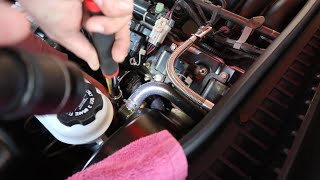
- Read the code with an OBD-II scanner to confirm P0308 is the primary misfire code. 🎬 Watch: Complete DIY guide for diagnosing Corvette engine misfires.
- Visually inspect the spark plug wire for cylinder 8. Ensure it is firmly connected at both the coil and the spark plug. Look for any signs of heat damage, cracking, or arcing.
- Swap the ignition coil from cylinder 8 with an adjacent one (like cylinder 6). Clear the codes, run the engine, and see if the misfire code changes to P0306. If it does, the coil is faulty.
- If the misfire remains on cylinder 8, swap the spark plug between cylinder 8 and 6. Clear codes and re-test. If the code moves to P0306, the spark plug is bad.
- If the misfire still remains on cylinder 8, test the spark plug wire's resistance with a multimeter (should be ~350-400 ohms) or swap it with another wire.
- If ignition parts are ruled out, inspect the wiring harness for the #8 fuel injector, particularly where it passes behind the driver's side cylinder head, for any signs of chafing or damage.
- If wiring appears intact, proceed to swap the fuel injector from cylinder 8 with another cylinder. If the code moves, the injector is the cause.
- If the misfire persists on cylinder 8 after all swaps, the problem is likely mechanical. Remove the passenger-side valve cover to visually inspect the valve springs for cylinder 8. A broken spring is often clearly visible. 🎬 Watch: How to replace LS valve springs the easy way.
- If the springs are intact, perform a cylinder compression test and a leak-down test to check for internal engine issues like a bad valve, bent pushrod, piston rings, or head gasket.
Parts You'll Likely Need
- Spark Plug
(OEM #ACDelco 41-162 (Supersedes 41-110))— This is the most common failure item causing a single cylinder misfire.
Trusted brands: ACDelco, NGK
OEM price range: $10-$20
Aftermarket price range: $5-$15 - Spark Plug Wire Set
(OEM #ACDelco 9748MM (Black) or GM 12495519 (Red Performance))— Wires degrade from engine heat and can cause spark to arc to ground instead of firing the plug. The #8 wire is especially prone to this.
Trusted brands: ACDelco, MSD, GM Performance
OEM price range: $70-$120
Aftermarket price range: $50-$90 - Ignition Coil
(OEM #12558693)— A failed coil will not produce the high voltage needed to create a spark.
Trusted brands: ACDelco, Delphi
OEM price range: $40-$70
Aftermarket price range: $30-$50
Related Codes That Often Appear With This One
- P0300 — If the condition causing the P0308 is intermittent or beginning to affect other cylinders, a P0300 (Random/Multiple Cylinder Misfire) code may also be present.
Platform-Specific Known Issues
- A CorvetteForum user with a 2004 C5 experienced a recurring P0308 code. Replacing the spark plug temporarily fixed the issue, but the problem returned. The discussion pointed towards a pot
Technical Service Bulletins (TSBs) & Recalls
- TSB Bulletin #PIP5628G: This manufacturer bulletin provides information to aid technicians in diagnosing vehicles that present with misfires and DTC codes ranging from P0300 to P0308.
Mechanic-Grade Diagnostic Values
- Fuel Pressure (at fuel rail test port) — expected: 55-61 psi, constant.. Failure: Pressure below 55 psi can cause lean misfires, especially under load. Pressure significantly above 61 psi could indicate a faulty regulator.
- Ignition Coil Primary Resistance — expected: 0.3 - 0.9 Ohms. Failure: A reading of 0 (short) or infinity (open circuit) indicates a failed coil.
- Ignition Coil Secondary Resistance — expected: 5,000 - 15,000 Ohms (5kΩ - 15kΩ). Failure: A reading far outside this range suggests an internal winding failure.
- Long Term Fuel Trim (LTFT) on Bank 2 (Scan Tool) — expected: Close to 0%, typically within +/- 5%. Failure: A high positive LTFT on Bank 2 (e.g., +10% to +15%) can indicate the PCM is adding fuel to compensate for a lean condition, which could be caused by a vacuum leak or a weak/clogged injector on that bank. An ignition misfire may also cause trims to rise due to unburned oxygen crossing the O2 sensor.
- Cylinder Compression — expected: 150-230 PSI, with less than 15% variation between cylinders.. Failure: Significantly lower compression on cylinder 8 points to a mechanical issue like rings, valves, or head gasket.
Hidden / Shadow Codes Worth Checking
- Mode 6 Misfire Counters: The PCM tracks misfire events for each cylinder, even if they aren't frequent enough to set a DTC. A professional scan tool (like a Tech 2) can view these counters to see if cylinder 8 has a higher count than others, confirming an intermittent issue before it becomes a steady code. (see via GM Tech 2 or equivalent professional scan tool with Mode 6 data capability.)
Scan Tool Commands That Help
- GM Tech 2: Misfire Data / Misfire Graph — To view current and history misfire counts for each individual cylinder. This is the primary screen to confirm the misfire is isolated to cylinder 8.
- GM Tech 2: Injector Balance Test — After ruling out ignition issues, this test pulses the selected injector (e.g., cylinder 8) and measures the corresponding fuel pressure drop. A smaller drop compared to other cylinders indicates a clogged or failing injector. Requires a fuel pressure gauge connected to the rail.
- GM Tech 2: Crankshaft Variation Learn (CASE Learn) — After major engine work or if the crank sensor has been replaced. An incorrect CASE learn can cause false misfire detection. Performing this procedure can sometimes resolve phantom misfire codes when no mechanical or electrical fault can be found.
Wiring & Ground Locations
- G107 — Bolted to the rear of the driver's side cylinder head.. This is a primary engine ground. A loose or corroded connection here can cause a variety of ignition and sensor issues, leading to misfires.
- G104 / G108 — On the frame rail in the engine bay, just forward of the battery.. This is a critical chassis ground point that serves the engine compartment fuse box, which powers the PCM and ignition relays. Corrosion here is common and can cause intermittent electrical problems.
- G106 — On the right side of the engine block, above the starter.. This ground is for the PCM, TAC module, MAF, and ignition relay. A bad connection here directly impacts the ignition system's power supply.
- PCM Connector C1, Pin 77 — On the blue PCM connector. The wire is Dark Blue with a White stripe.. This is the specific control wire from the PCM that fires the cylinder 8 fuel injector. A continuity test can be performed from this pin to the injector connector to rule out a broken wire.
Real Owner Repair Stories
- CorvetteForum Member (C5 Corvette (specific year not mentioned, LS1 architecture)) — Check engine light (flashed then went off), P0308 code, ticking noise from engine, flat feeling in high RPM range.
❌ Tried (didn't work) Initial diagnosis was uncertain.
✅ What actually fixed it A bent pushrod on cylinder #8 was discovered. The likely cause was a mechanical over-rev from a missed downshift. Replacing the bent pushrod resolved the misfire. - CorvetteForum User (2004 C5 Corvette) — Persistent P0308 misfire.
❌ Tried (didn't work) Swapping spark plugs, Swapping plug wires, Swapping coil packs, Swapping fuel injectors
✅ What actually fixed it The user discovered the wiring harness for the fuel injectors had rubbed through on the back of the driver's side cylinder head, causing the wire for the #8 injector to short to ground. Repairing the wire and protecting the harness fixed the problem. - CorvetteForum User (2001 C5 Corvette) — P0300 random misfire code, felt like a single cylinder misfire.
❌ Tried (didn't work) Initial visual inspection.
✅ What actually fixed it Using a GM Tech 2 scanner, the user was able to isolate the misfire to a specific cylinder. The problem was a burnt spark plug wire that was arcing. The user noted that holding a dollar bill to the exhaust tip can be a quick, low-tech way to detect a misfire; the bill will get sucked back toward the pipe between exhaust pulses.
OEM Part Supersession History
ACDelco 41-110→ACDelco 41-162— GM updated the recommended service part. Some users report the 41-162 is made by a different manufacturer (NGK vs Denso) than the original 41-110.
Heads up: Both plugs are compatible, but some owners have a strong preference for the original 41-110 plugs, claiming they look better made and result in a smoother running engine.GM 12558693→GM 19355500 (also listed as ACDelco D581)— Standard part number evolution and consolidation across product lines.
Heads up: No known incompatibility. This is a common ignition coil used across many GM LS-based truck and car engines from that era.
Model Year Variations Within This Range
- 1997-1998: Early C5s used perimeter-bolt valve covers. The ignition coils are mounted directly to the valve covers without a separate bracket.
- 1999-2004: Later C5s use center-bolt valve covers. The ignition coils are mounted to a dedicated bracket, which then bolts to the valve cover. This can affect how coils are removed and replaced.
Diagnostic Flowchart
Other Known Issues on This Vehicle
Issues unrelated to this code that are worth knowing about as an owner of this generation:
- Electronic Brake Control Module (EBCM) Failure 🔴 High — Very common, especially on 1997-2000 models. The module is prone to internal solder joint failure, disabling ABS and Traction Control. Replacements are scarce and expensive.
- Steering Column Lock Failure 🔴 High — Extremely common issue where the electronic steering column lock fails, potentially leaving the steering locked or triggering a 'Service Column Lock' message that can prevent the car from moving. (Ref: GM Safety Recall 04006)
- Leaking Battery Damage 🟠 Medium — The factory lead-acid battery is prone to leaking acid, which drips directly onto the PCM and wiring harness located below the battery tray, causing severe corrosion and electrical failures.
- Wobbling Harmonic Balancer 🟠 Medium — The rubber ring in the factory harmonic balancer can degrade, causing the outer ring to wobble. If it fails completely, it can cause damage to the crankshaft and oil pump.
- Faulty Fuel Gauge Sender 🟡 Low — The contacts on the fuel tank sending units can become corroded by sulfur in gasoline, leading to erratic or inaccurate fuel gauge readings. (Ref: TSB #01-06-04-022)
- Pop-up Headlight Motor Gear Failure 🟡 Low — The plastic gears inside the headlight motors wear out or break, causing a grinding noise and preventing the headlights from opening or closing properly.
Used vs. New Parts: Buying Guide for This Vehicle
When a used part is the smart pick: For this repair, used parts are generally not recommended for wear items. However, sourcing a used ignition coil bracket (for 1999-2004 models) or a used valve cover (for 1997-1998 models) from a reputable Corvette recycler like Vette2Vette is a smart choice if the original is damaged during repair. A used ignition coil can be a temporary diagnostic tool but should not be a permanent fix.
Donor-vehicle mileage cap: roughly under 80000 miles for the part to have meaningful remaining life.
What to inspect on the donor part:
- For a used coil, check for cracks in the housing or epoxy.
- For brackets or covers, ensure there are no cracks, stripped threads, or heavy corrosion.
- Ask the recycler about the donor car's history if possible (e.g., front-end collision vs. engine failure).
Aftermarket brands forum-validated for this vehicle:
- Spark Plugs: NGK (TR55 or Iridium equivalent), Denso
- Spark Plug Wires: MSD, GM Performance
- Ignition Coils: Delphi, MSD
Brands owners have reported issues with on this vehicle:
- Unbranded, no-name ignition coils and spark plugs from online marketplaces are frequently cited on forums as being unreliable and failing prematurely.
Real Owner Stories
Aggregated from forums and TSBs cited above. Mileages and costs reflect what owners reported in those sources.
2004 Chevrolet Corvette C5
Symptoms: Recurring P0308 code; replacing the spark plug only fixed the issue temporarily before the problem returned.
What fixed it: The discussion suggested the root cause was likely a loose spark plug or a leaky valve cover gasket fouling the plug.
Source hint: CorvetteForum - 'Ugly #8 spark plug (& PO308)'
1997-2004 Chevrolet Corvette LS1
Symptoms: Cylinder misfire on #8; owner performed extensive component swaps (plugs, wires, coils) with no success.
What fixed it: The fix was identifying and repairing a chafed wire for the #8 fuel injector.
Source hint: CorvetteForum - 'cylinder missfire'
1997-2004 Chevrolet Corvette LS1
Symptoms: Misfire on number 8 cylinder after the vehicle ran low on fuel.
What fixed it: The owner suspected a clogged injector caused by sediment being pulled from the bottom of the fuel tank.
Source hint: CorvetteForum - 'Misfire number 8 cylinder.'
1997-2004 Chevrolet Corvette LS1/LS6
Symptoms: Severe, constant misfire on one cylinder, rough idle, and a ticking or hammering noise from the engine bay.
What fixed it: Replacement of a broken valve spring, which was visible after removing the valve cover.
Source hint: LS1Tech - 'What are the symptoms of a broken spring?'
Related OBD-II Codes
Frequently Asked Questions
Is there a recall for the steering column issues on my 1997-2004 Corvette?
Which spark plugs should I use for my LS1/LS6 engine to fix a P0308?
Why is cylinder 8 specifically prone to misfires on the C5 Corvette?
What should the resistance be for a healthy spark plug wire on my LS1?
Could a P0308 code be related to my ABS or Traction Control lights being on?
I hear a hammering noise from the engine bay along with the P0308 code; what is that?
Helpful Videos
We Have This Part in Stock

The information in this article is provided for general reference and educational purposes only. Vehicle specifications, procedures, and part compatibility can vary by production date, trim level, and region. Always consult your vehicle's factory service manual and verify part numbers before purchasing or performing repairs. Safety-critical components such as airbags, seat belts, and braking systems should be installed by a qualified professional.
- Chevrolet Corvette:
- 🧭 Diagnostic Flowchart
- 🎬 Helpful Videos
- 🛍️ Shop This Part
- What's Unique About the 1997-2004 Chevrolet Corvette
- Symptoms You May Notice
- Most Likely Causes
- Rare But Worth Checking
- Diagnosis Steps
- Parts You'll Likely Need
- Related Codes That Often Appear With This One
- Platform-Specific Known Issues
- Technical Service Bulletins (TSBs) & Recalls
- Mechanic-Grade Diagnostic Values
- Hidden / Shadow Codes Worth Checking
- Scan Tool Commands That Help
- Wiring & Ground Locations
- Real Owner Repair Stories
- OEM Part Supersession History
- Model Year Variations Within This Range
- Other Known Issues on This Vehicle
- Used vs. New Parts: Buying Guide for This Vehicle
- Real Owner Stories
- 2004 Chevrolet Corvette C5
- 1997-2004 Chevrolet Corvette LS1
- 1997-2004 Chevrolet Corvette LS1
- 1997-2004 Chevrolet Corvette LS1/LS6
- Related OBD-II Codes
- Frequently Asked Questions
- 🎟️ Get 5% Off