

P0322 on 2008-2016 Audi A4 2.0L TDI: Crank Sensor Failure Causes and Fixes
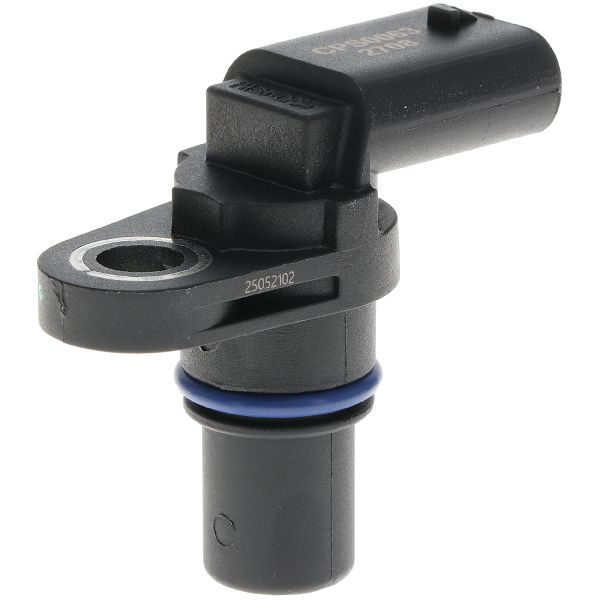
P0322 on an Audi A4 2.0L TDI almost always means a failed Crankshaft Position Sensor (also known as Engine Speed Sensor or G28), causing a no-start or stalling condition. The classic symptom is the engine stalling once hot and refusing to restart until it has cooled down. Replacing the sensor is the most common fix, with the part costing between $40 and $100.
- P0322 means the engine's computer has lost the signal from the Crankshaft Position Sensor (G28).
- The most common symptoms are the engine cranking but not starting, or stalling when hot and not restarting until it cools.
- Replacing the Crankshaft Position Sensor (G28) is the most common and effective fix.
- The sensor is in a tight spot near the oil filter, making DIY replacement moderately difficult.
- Always check for this code first if you have a crank/no-start condition to avoid misdiagnosing a fuel system problem.
What's Unique About the 2008-2016 Audi A4
On the Audi A4 B8 platform with the 2.0L TDI engine, the Crankshaft Position Sensor (G28) is a well-documented, common failure item. The primary symptom is often a sudden and frustrating "crank-no-start" condition, or the engine stalling without warning once it has warmed up. This heat-related failure, known as 'heat soak', is a classic indicator for this part. The failure is typically internal to the sensor itself, caused by years of exposure to high heat cycles in the engine bay. While the part itself is not expensive, its location on the driver's side of the engine block, near the oil filter housing, can make replacement a tight and messy job for DIY mechanics.
Generation note: This range covers the Audi A4 B8 generation (2008-2012) and its facelift, the B8.5 (2013-2016), which are built on the VW MLB platform. The 2.0L TDI engine and the common causes for P0322 are consistent across this entire platform and its platform mates.
Symptoms You May Notice
- Engine cranks but will not start.
- Engine stalls unexpectedly while driving, especially when hot.
- Engine will not restart after stalling until it has cooled down (heat-soak failure).
- Check Engine Light is on.
- EPC (Electronic Power Control) light is on. 🎬 Watch: P0322 code symptoms and fixes explained
- Tachometer reads 0 RPM during cranking.
- Engine hesitates or 'blips' in torque while driving, sometimes putting the car into limp mode.
- Activation of a rev limiter, as noted in some manufacturer-related reports.
- Replacing the Camshaft Position Sensor. While a faulty cam sensor can cause similar symptoms, the P0322 code specifically points to the Crankshaft Position Sensor (G28) circuit. A cam/crank correlation code like P0016 would be more likely if the cam sensor were the issue.
- Replacing the fuel pump or filter. A 'crank, no start' condition is a primary symptom, which can lead mechanics to suspect a fuel delivery issue. However, checking for the P0322 code first can save significant diagnostic time and money.
Most Likely Causes
- Failed Crankshaft Position Sensor (G28) 🔴 High Probability → Shop Engine Crankshaft Position Sensor The sensor is located in a high-heat area of the engine bay, and internal electronics are known to fail over time from thermal stress. This is a very common failure point on high-mileage VW and Audi vehicles, often manifesting as a heat-soak issue where the car stalls when hot and restarts when cool.
How to confirm: Using a diagnostic scan tool (like VCDS), check the live data for the 'Engine Speed' parameter while cranking the engine. If it consistently reads 0 RPM, the sensor or its circuit is faulty. An oscilloscope can also be used to verify the absence of a square wave signal. A multimeter can be used to check resistance between pins 2 and 3 on the sensor; a typical reading for a good sensor is between 480-1000 Ω. However, a sensor can test good when cold and still fail when hot.
Typical fix: Replace the Crankshaft Position Sensor. The sensor is held in by a single bolt (often a 5mm hex or T-30 Torx). Removing the oil filter first is highly recommended for better access.
Est. part cost: $40-$100 - Damaged Wiring or Connector 🟡 Medium Probability The wiring harness leading to the sensor is exposed to the same heat and potential oil leaks as the sensor itself, which can cause the insulation to become brittle and crack, or the connector pins to corrode. This is especially a problem in climates with high humidity or road salt usage.
How to confirm: Visually inspect the wiring harness from the sensor to the main engine loom for any signs of melting, chafing, or breaks. Check the 3-pin electrical connector for corrosion, moisture, or loose pins. Test for continuity from the ECU connector to the sensor connector pins.
Typical fix: Repair the damaged section of the wiring harness or replace the connector pigtail. In some cases, owners have had to replace the entire loom 🎬 See this step-by-step P0322 crank sensor replacement from the sensor to the ECU to resolve persistent issues.
Est. part cost: $15-$50
Rare But Worth Checking
- Faulty Engine Control Module (ECM): → Shop Engine Control Module (ECM) This is highly unlikely and should only be considered after the sensor and its entire circuit have been thoroughly tested and confirmed to be in good working order. An ECM failure is a last resort diagnosis.
- Damaged Reluctor Ring: The reluctor ring (or tone wheel) is what the crankshaft sensor reads. If it is damaged, loose, or has debris on it, it can cause a loss of signal. This is rare but requires removing the sensor to visually inspect the ring for damage or run-out. Fine metallic particulates from engine wear can sometimes stick to the reluctor wheel and disrupt the signal.
Diagnosis Steps
- Connect an OBD-II scanner and confirm that P0322 is the primary code stored. Note any other codes, especially P0321.
- Access the live data stream on the scanner and monitor the 'Engine Speed' (RPM) PID.
- Crank the engine. If the RPM reading remains at 0, it strongly indicates a fault in the crankshaft position sensor circuit.
- If the engine stalls when hot, wait for it to cool down and see if it restarts. If it does, this is a classic sign of a heat-soaking G28 sensor.
- Safely raise and support the vehicle. Locate the crankshaft position sensor. On the 2.0L TDI, it is found on the driver's side of the engine block, near the oil filter housing.
- Visually inspect the sensor's wiring harness for any signs of heat damage, melting, chafing, or oil contamination. Check that the connector is secure and free of corrosion.
- If the visual inspection passes, disconnect the sensor. Use a multimeter to test for resistance between pins 2 and 3 of the sensor. The expected value is typically 480-1000 Ohms. Note that a sensor can test good when cold but still fail when hot.
- If the wiring and sensor resistance (when cold) seem okay, but the problem persists, the Crankshaft Position Sensor itself is still the most likely culprit due to heat-related internal failure.
- Replace the Crankshaft Position Sensor. It is highly recommended to remove the oil filter for easier access. Clear the fault codes and start the engine to confirm the repair.
Parts You'll Likely Need
- Crankshaft Position Sensor / Engine Speed Sensor (G28)
(OEM #03L906433E (or superseding part numbers like 04L906433B))— This sensor is the direct cause of the P0322 code in the vast majority of cases on this vehicle due to internal electronic failure from heat and age. Using a non-OEM sensor can sometimes lead to persistent issues.
Trusted brands: Bosch (often the OEM supplier), Continental/VDO, Febi Bilstein
OEM price range: $80-$120
Aftermarket price range: $40-$75
Related Codes That Often Appear With This One
- P0321 — P0321 indicates an intermittent or 'out of range' signal from the same sensor, and it often appears as a precursor to the complete signal loss that triggers P0322.
- P0300-P0308 — Random or specific cylinder misfire codes can be triggered because the ECM loses the timing reference from the crank sensor, leading to incorrect spark and fuel delivery.
Platform-Specific Known Issues
- Access to the G28 sensor is notoriously tight. It is located on the driver's side of the block near the oil filter. Most DIY guides and mechanics strongly recommend removing the oil filter to gain adequate access to the single retaining bolt.
- The wiring connector can be difficult to release due to its location and the positive locking tab. Care must be taken not to break the connector or damage the aging wires.
Mechanic-Grade Diagnostic Values
- Crankshaft Position Sensor (G28) internal resistance — expected: 480 - 1000 Ω. Failure: An open circuit (infinite resistance) or a reading outside the specified range. However, a sensor can test good when cold and still fail when hot.
- Crankshaft Position Sensor (G28) 5V reference voltage — expected: ~5.0 V DC. Failure: No voltage or significantly low voltage indicates a problem with the ECU's 5V reference circuit or a short in the wiring.
- Crankshaft Position Sensor (G28) signal voltage (at sensor connector) — expected: Should also read ~5.0 V DC with key on, engine off.. Failure: A reading of 0V or significantly less than 5V points to an internal sensor failure or a short to ground in the signal wire.
- Engine-to-chassis ground voltage drop — expected: Less than 0.15 Volts. Failure: A reading higher than 0.15V indicates a degraded or corroded main engine ground strap, which can cause various electrical faults.
- VCDS Live Data 'Engine Speed' (while cranking) — expected: > 200 RPM. Failure: A consistent reading of 0 RPM while the engine is cranking is a definitive sign of no signal from the G28 sensor circuit.
Scan Tool Commands That Help
- VCDS (VAG-COM): Advanced Measuring Values (MVB) for Engine Speed (G28) — This is the primary method to confirm a 'No Signal' condition. While cranking the engine, the 'Engine Speed' value should rise. If it stays at 0, it confirms the ECU is not receiving a signal. It's important to note that if the G28 fails, the ECU may sometimes substitute the Camshaft Position Sensor (G40) signal, which can be misleading.
Wiring & Ground Locations
- G28 Sensor Connector — On the driver's side of the engine block, near the oil filter housing. It is a 3-pin grey or black connector.. This is the primary connection point for the sensor. Corrosion, oil contamination, or physical damage here will directly cause a P0322. The pins are: Pin 1: 5V Reference, Pin 2: Signal, Pin 3: Ground.
- ECM Connector (for G28 circuit) — The Engine Control Module (ECM) is located in the plenum chamber, under the plastic cover at the base of the windshield.. To perform a full continuity test, you must check the wires from the G28 connector to the ECM. According to repair documents, the pins are: G28 Pin 1 -> ECM Pin 108, G28 Pin 2 -> ECM Pin 90, G28 Pin 3 -> ECM Pin 82.
- G105 - Engine Block to Firewall Ground — A primary ground strap connecting the engine block to the vehicle's firewall.. A corroded or loose main engine ground can cause unstable voltage and intermittent sensor signal loss, leading to codes like P0322. A voltage drop test across this strap is recommended if sensor and wiring tests are inconclusive.
- G104 - Transmission to Chassis Ground — Located on the transmission bellhousing, connecting it to the chassis.. Similar to the firewall ground, this is another critical ground path for the powertrain. Degradation here can cause a host of electrical issues, including sensor signal problems.
Real Owner Repair Stories
- Ross-Tech Forums (2004 Audi A3 2.0 TDI (BKD Engine)) — Long crank before starting, random engine cut-out while driving, rough idle, and revs limited to 3400 RPM.
❌ Tried (didn't work) The owner had previously replaced the crank sensor and various fuel system parts., The mechanic repaired a messy wiring job with scotchlocks near the sensor connector., Continuity tests on the wiring from the sensor to the ECU passed.
NHTSA Cross-Reference: Similar behavior was documented in NHTSA ODI #11325248 for a related Audi model, where the owner reported a rev limiter activation and a P0322 code for "engine ignition distributor no signal."
✅ What actually fixed it The mechanic discovered the ECU was using the camshaft sensor (G40) signal to populate the engine speed reading in VCDS, masking the true fault. After unplugging the cam sensor, the car would not start at all, proving the crank sensor circuit was dead. Testing the G28 sensor's pins revealed it was internally dead despite being a replacement part. A new, quality sensor resolved the issue. - Ross-Tech Forums (Audi A4 B8.5 2.0 TDI) — Persistent P0322 code, odd 'blips' in torque while driving, and occasional limp mode.
❌ Tried (didn't work) Replacing the G28 sensor with an aftermarket Febi Bilstein part., Replacing the entire wiring loom from the sensor to the ECU.
✅ What actually fixed it The forum thread did not have a final confirmed fix, but the user's experience highlights a critical point: even after replacing the sensor (with a known aftermarket brand) and the entire wiring harness, the problem persisted. This suggests that either the aftermarket sensor was incompatible/faulty, or the issue was with the ECU itself. This story serves as a caution against assuming an aftermarket part is always a solution.
OEM Part Supersession History
03L906433E→04L906433, 04L906433A, 04L906433B— Standard part evolution and supplier changes over the vehicle's production life.
Heads up: While the newer part numbers are generally backward compatible, it is always best to use an OEM part (like Bosch) or a high-quality equivalent. Some forum users report persistent issues when using budget aftermarket sensors, even when the part is listed as compatible.
Model Year Variations Within This Range
- 2013-2016 (B8.5 Facelift): While the G28 sensor and its location are largely the same, some electrical components and modules were updated for the B8.5 facelift. For example, the B8.5 adopted electric power steering, changing some of the electrical load and wiring architecture compared to the B8.0's hydraulic system. However, for the P0322 code, the diagnostic process remains fundamentally identical.
Diagnostic Flowchart
Other Known Issues on This Vehicle
Issues unrelated to this code that are worth knowing about as an owner of this generation:
- High-Pressure Fuel Pump (HPFP) Failure 🔴 High — Common on the 2.0L TDI (CBEA/CJAA) engines. Failure can occur without warning and often contaminates the entire fuel system with metal particles, requiring a very expensive repair. (Ref: VW extended the warranty for this issue on some models, but it may not cover all vehicles.)
- Diesel Particulate Filter (DPF) Clogging 🟠 Medium — Frequent on vehicles used primarily for short trips, which prevents the DPF from reaching the temperature needed for passive regeneration. Leads to limp mode, warning lights, and reduced power.
- Intake Manifold Runner Flap / Motor Failure (P2015) 🟠 Medium — The plastic components of the intake manifold runner control system wear out, causing the actuator motor to over-travel and log a P2015 fault. This results in a check engine light and reduced performance. Often fixed with an inexpensive aftermarket repair bracket.
- Excessive Oil Consumption 🟠 Medium — More prevalent on the 2.0T TFSI (gasoline) engines, but some 2.0L TDI models can also experience higher-than-normal oil consumption, often attributed to worn piston rings or valve stem seals on higher mileage examples.
- EGR Valve Clogging 🟠 Medium — The Exhaust Gas Recirculation (EGR) valve and cooler can become clogged with soot over time, leading to rough idle, loss of power, and emissions-related fault codes.
Used vs. New Parts: Buying Guide for This Vehicle
When a used part is the smart pick: For this specific repair, buying a used Crankshaft Position Sensor is NOT recommended. It is a relatively low-cost electronic part known to fail from heat and age. A used sensor from a junkyard has an unknown history and is likely to have a very short remaining lifespan, making the labor to install it a waste of time and money.
What to inspect on the donor part:
- Not applicable as a used sensor is not advised.
OEM-only on this vehicle (don't cheap out):
- Crankshaft Position Sensor (G28)
Aftermarket brands forum-validated for this vehicle:
- Bosch (OEM supplier)
- Continental/VDO
Brands owners have reported issues with on this vehicle:
- Unbranded or generic 'white-box' sensors. Some forum users have reported persistent issues even with known aftermarket brands like Febi Bilstein, suggesting that sticking to the OEM supplier (Bosch) is the safest choice for this critical sensor.
Real Owner Stories
Aggregated from forums and TSBs cited above. Mileages and costs reflect what owners reported in those sources.
Audi A4 B8.5 2.0L TDI
Symptoms: Experienced persistent 'blips' in torque while driving. The car logged a P0322 code indicating an engine speed sensor circuit issue.
What fixed it: Replaced the G28 sensor with a Febi Bilstein part and replaced the wiring loom leading to the ECU.
Source hint: Ross-Tech Forums: 'A4 B8.5 persistent P0322 issue'
Audi A4 B6
Symptoms: The EPC light came on, the car began shuddering, and eventually reached a no-start condition.
What fixed it: Replacement of the Engine Speed Sensor (G28).
Source hint: AudiWorld Forums: 'Error Codes P0321 and P0322'
Audi A4
Symptoms: The engine would stumble when warm and stall specifically when the clutch was pressed in; the car then had significant trouble restarting.
What fixed it: Identified as a G28 sensor failure (Engine Speed Sensor).
Source hint: Bilforumet.no: 'Audi a4 1.6 Motorproblem P0322'
Documented NHTSA Reports
Audi A6 (Cross-Model Reference)
Symptoms: An owner reported that the vehicle encountered a rev limiter and threw codes P0322 and P0421. The diagnostic for P0322 was identified as "engine ignition distributor no signal."
What fixed it: Not specified in report.
Source hint: NHTSA ODI #11325248
Related OBD-II Codes
Frequently Asked Questions
Why does my Audi A4 2.0L TDI stall only when the engine is hot and then restart after cooling down?
My tachometer stays at 0 RPM while I'm cranking the engine. Is this related to P0322?
Is there a specific part brand recommended for the G28 sensor replacement on the B8.5 A4?
I'm trying to replace the sensor myself; do I really need to remove the oil filter?
Can a P0322 code cause my Audi to go into 'limp mode'?
Does the P0322 code on my A4 TDI mean I have a High-Pressure Fuel Pump (HPFP) failure?
Helpful Videos
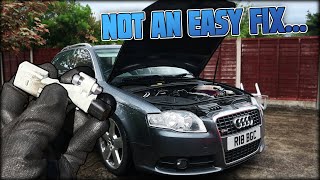

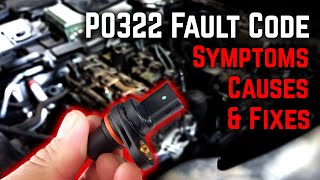
Used OEM Parts in Stock
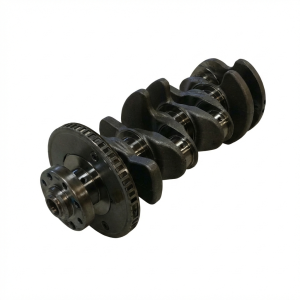
New Aftermarket Parts Available


The information in this article is provided for general reference and educational purposes only. Vehicle specifications, procedures, and part compatibility can vary by production date, trim level, and region. Always consult your vehicle's factory service manual and verify part numbers before purchasing or performing repairs. Safety-critical components such as airbags, seat belts, and braking systems should be installed by a qualified professional.
- Audi A4:
- 🧭 Diagnostic Flowchart
- 🎬 Helpful Videos
- 🛍️ Shop This Part
- What's Unique About the 2008-2016 Audi A4
- Symptoms You May Notice
- Most Likely Causes
- Rare But Worth Checking
- Diagnosis Steps
- Parts You'll Likely Need
- Related Codes That Often Appear With This One
- Platform-Specific Known Issues
- Mechanic-Grade Diagnostic Values
- Scan Tool Commands That Help
- Wiring & Ground Locations
- Real Owner Repair Stories
- OEM Part Supersession History
- Model Year Variations Within This Range
- Other Known Issues on This Vehicle
- Used vs. New Parts: Buying Guide for This Vehicle
- Real Owner Stories
- Audi A4 B8.5 2.0L TDI
- Audi A4 B6
- Audi A4
- Documented NHTSA Reports
- Audi A6 (Cross-Model Reference)
- Related OBD-II Codes
- Frequently Asked Questions
- 🎟️ Get 5% Off