

P0330 on 2001-2007 Toyota Sequoia 4.7L V8: Knock Sensor 2 Circuit Causes and Fixes
On a 2001-2007 Sequoia, P0330 almost always means the knock sensor wiring harness under the intake manifold has failed, often due to rodent damage or heat. Because of the 5+ hours of labor to access it, always replace both knock sensors and the harness at the same time. Expect to pay $500-$950 at a shop.
- P0330 on the Sequoia 4.7L V8 points to a fault in the passenger-side knock sensor circuit.
- The actual cause is most often the wiring harness located under the intake manifold, which gets damaged by heat or rodents.
- This is a difficult DIY repair (5/5) due to the need to remove the intake manifold.
- To avoid repeating this labor-intensive job, ALWAYS replace both knock sensors, the wiring harness, and the intake gaskets at the same time.
- Using high-quality OEM or Denso parts is strongly recommended for reliability.
What's Unique About the 2001-2007 Toyota Sequoia
The defining characteristic of this issue on the 4.7L 2UZ-FE V8 is the location of the knock sensors and their wiring. They are buried deep in the engine valley, underneath the entire intake manifold. This warm, protected area is a notorious nesting spot for rodents, who frequently chew through the soy-based wire insulation, causing the circuit to fail. Due to the intensive labor required for access (5+ hours), the universally accepted best practice is to replace both sensors and the sub-harness simultaneously, even if only one bank has a code. Many owners also replace the starter motor during this repair, as it is also located under the intake manifold and requires the same labor to access.
Symptoms You May Notice
- Check Engine Light is on
- Reduced engine power and sluggish acceleration (limp mode)
- Noticeably worse fuel economy
- Engine hesitation, especially under load
- VSC and TRAC lights may also illuminate 🎬 Watch: 4 common signs of a bad knock sensor
- Audible engine pinging or knocking (less common, but possible if the sensor has completely failed)
- Replacing only the Bank 2 knock sensor. This is a major mistake because the labor to access the components is the most expensive part of the job. If the original Bank 1 sensor or the old harness fails later, you will have to pay for the same 5+ hours of labor all over again.
- Assuming the sensor is bad when the wiring is the real culprit. Many owners and even some shops replace the sensors only to find the code returns because the chewed or brittle harness was the actual point of failure.
- Using cheap aftermarket sensors. Many experienced owners and technicians strongly advise using only Genuine Toyota or Denso-branded sensors, as aftermarket units have a high failure rate, which leads to repeating this very expensive labor job.
Most Likely Causes
- Damaged Knock Sensor Wiring Harness 🔴 High Probability → Shop Engine Wiring Harness The harness is located in the warm, sheltered engine valley under the intake manifold, making it a prime target for rodents seeking shelter. The wires also become brittle over time from constant engine heat cycles. Technicians and owners on forums report this is the cause in the vast majority of cases, often with visible evidence of chewing 🎬 See how rodent damage affects these sensor harnesses once the manifold is removed.
How to confirm: Visual inspection after removing the intake manifold is the only definitive way. You can test for continuity from the ECM connector pins to the sensor sub-harness connector, but this won't find a short between wires under the manifold. A break in the wire is the most common failure mode.
Typical fix: Replace the knock sensor sub-harness. It is strongly recommended to also replace both knock sensors at the same time. Using an OEM harness is highly advised.
Est. part cost: $40-$70 - Failed Knock Sensor (Bank 2) 🟡 Medium Probability → Shop Ignition Knock (Detonation) Sensor The sensor itself lives in a high-heat environment and can fail electronically over time. However, it is less likely to fail than the exposed wiring harness.
How to confirm: After removing the intake manifold, the sensor's internal resistance can be tested with a multimeter. However, given the intensive labor, it's almost always replaced as a preventative measure regardless of testing. Using only OEM/Denso sensors is critical for longevity.
Typical fix: Replace the Bank 2 knock sensor. Best practice is to replace the Bank 1 sensor and the wiring harness at the same time to avoid future repeat labor costs.
Est. part cost: $60-$215 per sensor
Rare But Worth Checking
- Faulty Engine Control Module (ECM): → Shop Engine Control Module (ECM) This is very uncommon. All other possibilities, especially wiring and sensors, should be exhaustively ruled out before considering the ECM as the cause. One owner on a forum replaced sensors, harness, and wiring before finding the ECM was the issue, but this is an outlier case.
- Loose or Corroded Connectors: The main connector where the sub-harness plugs into the engine harness, or the connection at the ECM, could be loose or corroded. However, the connectors under the intake manifold are more likely to be damaged by rodents or heat.
Diagnosis Steps
- Scan the vehicle for any other trouble codes. If codes for both P0330 and P0325 are present, it strongly suggests a problem with the shared wiring harness under the intake manifold.
- Confirm Bank 2 is the passenger side of the engine and Bank 1 is the driver's side.
- Due to the location, direct testing of the sensor or harness is impractical as a first step. The job should be quoted and approached with the assumption that the intake manifold will need to be removed.
- Once the intake manifold is removed, carefully inspect the entire knock sensor sub-harness for signs of rodent damage (chewed wires, nests), brittleness, or heat damage. This is the most likely culprit.
- Visually inspect the knock sensors for physical damage or corrosion.
- It is highly recommended to skip individual component testing and proceed with replacing both knock sensors and the wiring sub-harness as a complete job to ensure reliability and avoid repeat labor costs.
- 'While you're in there', strongly consider replacing the starter motor and any brittle coolant hoses located under the manifold 🎬 Watch this complete knock sensor and starter replacement walkthrough, as they require the same labor to access.
Parts You'll Likely Need
- Knock Sensor
(OEM #89615-06010)— This is the sensor that detects engine knock. It's recommended to replace both (Bank 1 and Bank 2) while the intake manifold is off. Use of OEM/Denso parts is critical.
Trusted brands: Genuine Toyota, Denso
OEM price range: $140-$215
Aftermarket price range: $30-$100 - Knock Sensor Wiring Harness
(OEM #82219-0C010)— This short sub-harness connects both knock sensors to the main engine harness. It is the most common point of failure due to rodent damage and heat degradation.
Trusted brands: Genuine Toyota, Dorman
OEM price range: $40-$70
Aftermarket price range: $25-$45 - Intake Manifold Gasket Set
(OEM #17171-50021 (replaces 17171-50020))— These are one-time-use gaskets that seal the intake manifold to the cylinder heads. They must be replaced anytime the intake manifold is removed.
Trusted brands: Genuine Toyota, Fel-Pro, Mahle
OEM price range: $30-$50 each (2 required)
Aftermarket price range: $20-$40 for a set
Related Codes That Often Appear With This One
- P0325 — P0325 is the equivalent code for Knock Sensor 1 (Bank 1). If the wiring harness under the intake is damaged by rodents, it's common for both sensor circuits to be affected, triggering both codes simultaneously.
Platform-Specific Known Issues
- Rodent Damage: The valley of the 2UZ-FE engine is a well-documented nesting ground for mice and other rodents. They frequently chew the knock sensor harness, causing P0330 and/or P0325. Some mechanics proactively wrap the new harness in capsaicin-infused tape (e.g., Honda part # 4019-2317) to deter future damage.
- Confusing Wiring Diagrams: At least one owner has reported that official Toyota wiring diagrams can be confusing, with the wire colors for Bank 1 and Bank 2 being swapped. On some models, the gray wire is for the driver's side (Bank 1) and the black wire is for the passenger's side (Bank 2), which may be counterintuitive.
Mechanic-Grade Diagnostic Values
- Knock Sensor Internal Resistance — expected: 120 to 280 kΩ at 20°C (68°F). Failure: A reading outside this range, or an open circuit (infinite resistance), indicates a faulty sensor.
- Knock Sensor Installation Torque (2001-2004 non-VVT-i) — expected: 45 Nm (33 ft-lbf). Failure: Incorrect torque can lead to improper vibration detection or damage to the sensor.
- Knock Sensor Installation Torque (2005-2007 VVT-i) — expected: 20 Nm (15 ft-lbf). Failure: Incorrect torque can lead to improper vibration detection or damage to the sensor.
- Knock Sensor Signal (Oscilloscope) — expected: A clean AC voltage waveform that increases in amplitude when the engine block is tapped. VVT-i models use a flat-type sensor detecting a wide frequency range (approx. 6-15 kHz). Older models may use a resonant sensor tuned to a specific frequency (e.g., 8.1 kHz).. Failure: No signal, a flat line, or a very noisy/jagged waveform indicates a bad sensor or wiring issue.
Hidden / Shadow Codes Worth Checking
- Freeze Frame Data (FFD): While not a hidden code, FFD is critical. It captures a snapshot of engine parameters (RPM, load, temp, etc.) at the moment the P0330 was set. This data is invaluable for determining the conditions that triggered the fault. (see via Accessible using a professional scan tool like Toyota Techstream or other advanced OBD-II scanners. Even if a code is 'Pending', the FFD may still be viewable.)
Scan Tool Commands That Help
- Toyota Techstream: Active Test / Data List Monitoring — A diagnostic procedure involves using a hand-held tester to monitor the knock sensor circuit while revving the engine to 4,000 RPM three times to confirm if a signal is being sent to the ECU. While direct knock sensor PID data is often unavailable, this test can help verify circuit integrity under specific conditions.
Wiring & Ground Locations
- KNK2 / EKN2 — At the Engine Control Module (ECM). KNK2 is the signal wire for the Bank 2 knock sensor. EKN2 is the corresponding ground return wire at the ECM.. These are the final termination points for the Bank 2 knock sensor circuit. Testing for continuity and voltage here can confirm if the signal is reaching the ECM, helping to differentiate between a wiring fault and an ECM fault.
- EB — Engine compartment ground point located on the rear of the right (passenger side) cylinder head.. This is a primary engine ground point for Bank 2. A loose or corroded ground here can cause a variety of electrical issues, including phantom sensor codes. While the knock sensor has a dedicated return wire to the ECM, ensuring main engine grounds are clean and tight is a crucial diagnostic step.
- Knock Sensor Sub-harness Connector — In the engine valley, under the intake manifold. It connects the short harness for the two knock sensors to the main engine wiring harness.. This connector is a common point of failure due to heat and rodent damage. It is also the logical place to test continuity up to the ECM once the intake manifold is removed.
Real Owner Repair Stories
- Tacoma World forum user 'MrRiverMan' (1996 Toyota T100 3.4L V6 (engine design and issue are analogous to the 2UZ-FE)) — Intermittent P0330 code.
❌ Tried (didn't work) Replaced both knock sensors., Replaced the knock sensor sub-harness.
✅ What actually fixed it The final fix was not explicitly stated, but the critical diagnostic step was swapping the Bank 1 and Bank 2 sensor wires at the ECU connector pins. When the code changed from P0330 to P0325, it proved the ECU was functioning correctly and that the fault lay somewhere in the sensor or wiring for that specific circuit. This allowed the owner to confidently rule out a very expensive ECU replacement. - YotaTech forum user 'jrock' (Toyota 3.4L V6) — P0325 and P0330 codes, poor engine performance.
❌ Tried (didn't work) Replacing the knock sensor wiring harness did not solve the codes.
✅ What actually fixed it As an unconventional workaround, the user bypassed the factory sensor and wired in an external GM knock sensor, mounting it to a bolt on the manifold. The signal wire was spliced into the ECU harness. This resolved the check engine light, indicating the original issue was with the sensor or wiring deep inside the engine that even a harness replacement didn't fix.
OEM Part Supersession History
89615-20090→89615-06010— Part consolidation and revision.
Heads up: There are different knock sensors made by Denso and Matsushita. Part number 89615-12040 (Matsushita) is noted to NOT be a replacement for Denso sensors. Ensure the replacement sensor manufacturer matches the original to avoid issues.82219-33030→82219-07010— Part revision.
Heads up: This part number trail (82219-07010) is for V6 engines (like 1MZ-FE, 3VZ-FE) and is INCORRECT for the 2UZ-FE V8, despite being commonly mis-sold. The correct harness for the V8 is 82219-0C010.
Model Year Variations Within This Range
- 2005-2007: Engines from 2005-onwards feature VVT-i and use a different 'flat type' non-resonant knock sensor that detects a wider frequency range (6-15 kHz). The installation torque for these sensors is lower at 20 Nm (15 ft-lbf).
- 2001-2004: Earlier non-VVT-i engines may use a resonant-type knock sensor tuned to a more specific frequency. The installation torque for these sensors is higher at 45 Nm (33 ft-lbf).
Diagnostic Flowchart
Other Known Issues on This Vehicle
Issues unrelated to this code that are worth knowing about as an owner of this generation:
- Cracked Exhaust Manifolds 🟠 Medium — Common, especially on higher mileage vehicles. Often presents as a ticking noise when the engine is cold, which may disappear as the manifold heats up and expands.
- Frame Rust/Corrosion 🔴 High — Very common, especially in regions that use road salt. Led to a massive class-action lawsuit and a warranty enhancement program (ZH8) from Toyota for frame inspection and replacement. (Ref: Warranty Enhancement Program ZH8)
- Secondary Air Injection Pump Failure 🟠 Medium — Common on later models (2005-2007) with this system. Failure triggers check engine light (e.g., P2445) and can put the vehicle in limp mode. Often sounds like a loud vacuum cleaner for a minute on cold start.
- Lower Ball Joint Failure 🔴 High — A recall was issued for premature wear and potential failure of the front lower ball joints, which could lead to a loss of steering control. (Ref: Toyota Safety Recall)
- Seized Front Brake Caliper Pistons 🟠 Medium — The four-piston front brake calipers are prone to seizing, especially in rust-belt states, leading to premature and uneven brake pad wear, and sometimes pulling or dragging.
Used vs. New Parts: Buying Guide for This Vehicle
When a used part is the smart pick: For this specific repair, using used parts is strongly discouraged. The only scenario where a used part might be considered is for a major structural component like the intake manifold itself if it were damaged during removal, but not for any of the electronic or wear items related to the P0330 code.
What to inspect on the donor part:
- Not applicable for the parts that cause this code.
OEM-only on this vehicle (don't cheap out):
- Knock Sensor: Due to the extreme labor cost of replacement, using anything other than an OEM (Toyota/Denso) sensor is a significant gamble. Aftermarket sensors have a high reported failure rate, which could force you to repeat the entire 5+ hour job.
- Knock Sensor Wiring Harness: This part fails due to heat degradation over time, becoming brittle. A used harness from a salvage yard has experienced the same heat cycles and is likely just as fragile as the one being replaced.
Aftermarket brands forum-validated for this vehicle:
- Denso (OEM supplier)
- NTK (NGK)
Brands owners have reported issues with on this vehicle:
- Unbranded, low-cost sensors from online marketplaces or chain auto parts stores are frequently cited in forums as failing prematurely.
Real Owner Stories
Aggregated from forums and TSBs cited above. Mileages and costs reflect what owners reported in those sources.
Toyota Sequoia 2UZ-FE
Symptoms: While driving at 45mph, the Check Engine, ABS, and stability control lights came on. A scan revealed code P0325 for the left bank knock sensor.
What fixed it: Upon removing the intake manifold, a chipmunk nest was found. The wiring harness had been chewed by rodents and required replacement.
Source hint: Tundras.com (from owner_reports)
2004 Toyota Tundra 4.7L V8
Symptoms: Owner dealt with a persistent P0330 code and ran into issues with aftermarket parts and confusing wiring diagrams during the repair.
What fixed it: The fix involved replacing the sensors and harness, with an emphasis on using correct OEM parts and carefully verifying the wiring, as the colors in the diagram were counterintuitive.
Source hint: Tundras.com - 'P0330 Code Experience and Fix on my 2004 Tundra'
Toyota Tundra 4.7L V8
Symptoms: A persistent P0330 code remained even after replacing both knock sensors, the sub-harness, and the ECM.
What fixed it: After replacing all the common components under the intake, the owner suspected the root cause was a break further up in the main engine wiring harness, not the sub-harness.
Source hint: Tundras.com - 'Knock sensor code po330'
Toyota 4Runner 4.7L V8
Symptoms: Check Engine Light was on, prompting a diagnosis for a knock sensor code.
What fixed it: After removing the intake manifold, a visibly chewed knock sensor wire was discovered, confirming rodent damage as the cause. The damaged harness was replaced.
Source hint: YouTube - '2uz-fe bad knock sensor diagnosis: 4Runner, GX470, Tundra'
Related OBD-II Codes
Frequently Asked Questions
What is the most common cause of a P0330 code on my 2001-2007 Sequoia?
My scanner shows both P0330 and P0325. What does that mean?
Since the intake manifold has to come off, what else should I replace at the same time?
Are there specific parts recommended for this repair?
Why did my VSC and TRAC lights also turn on with the Check Engine Light?
I'm doing this job myself. Is there anything to watch out for with the wiring?
Can I just replace the one failed knock sensor for Bank 2 to save money?
Helpful Videos
Used OEM Parts in Stock
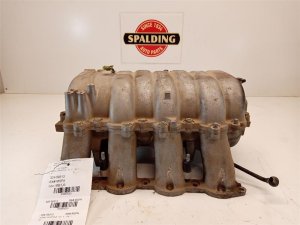
New Aftermarket Parts Available


The information in this article is provided for general reference and educational purposes only. Vehicle specifications, procedures, and part compatibility can vary by production date, trim level, and region. Always consult your vehicle's factory service manual and verify part numbers before purchasing or performing repairs. Safety-critical components such as airbags, seat belts, and braking systems should be installed by a qualified professional.
- Toyota Sequoia:
- 🧭 Diagnostic Flowchart
- 🎬 Helpful Videos
- 🛍️ Shop This Part
- What's Unique About the 2001-2007 Toyota Sequoia
- Symptoms You May Notice
- Most Likely Causes
- Rare But Worth Checking
- Diagnosis Steps
- Parts You'll Likely Need
- Related Codes That Often Appear With This One
- Platform-Specific Known Issues
- Mechanic-Grade Diagnostic Values
- Hidden / Shadow Codes Worth Checking
- Scan Tool Commands That Help
- Wiring & Ground Locations
- Real Owner Repair Stories
- OEM Part Supersession History
- Model Year Variations Within This Range
- Other Known Issues on This Vehicle
- Used vs. New Parts: Buying Guide for This Vehicle
- Real Owner Stories
- Toyota Sequoia 2UZ-FE
- 2004 Toyota Tundra 4.7L V8
- Toyota Tundra 4.7L V8
- Toyota 4Runner 4.7L V8
- Related OBD-II Codes
- Frequently Asked Questions
- 🎟️ Get 5% Off